Ranking Table and Annunciation Angel
Ranking Table and Annunciation Angel
from 1488 to 1489
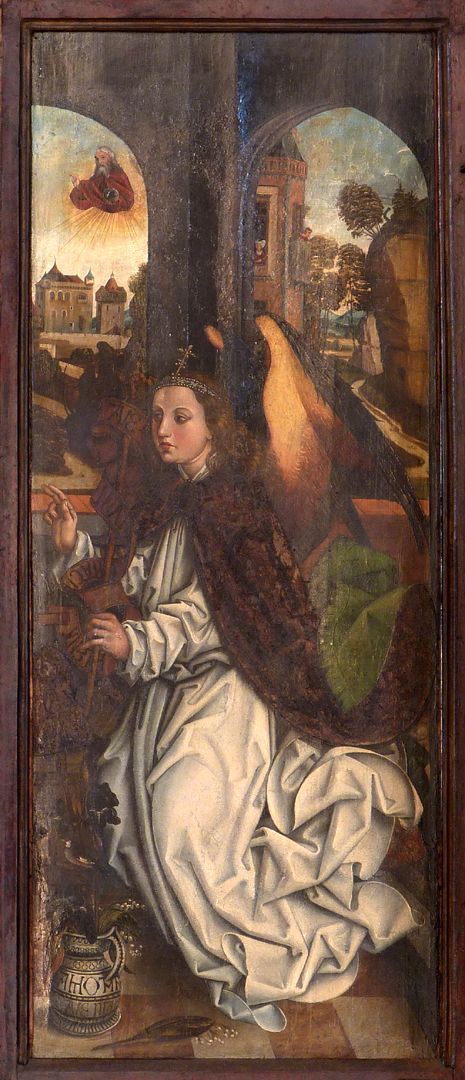
Outer side, general view
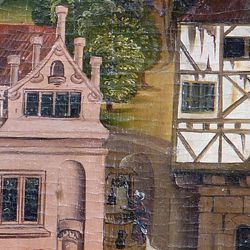
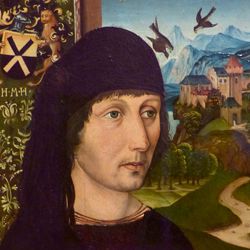
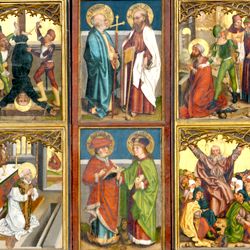
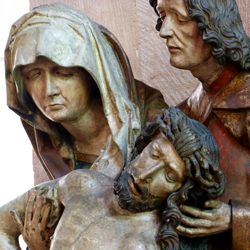
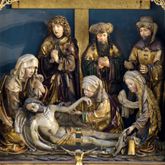
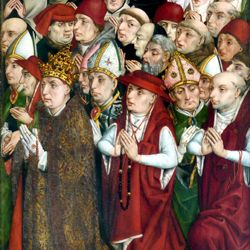
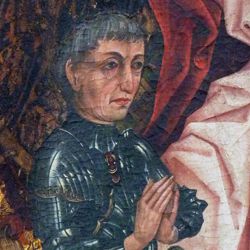
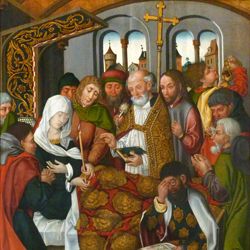
On the inside, representatives of the clergy, facing left in worship, in front of a landscape. Annunciation angel on the outside. Remains of an altar from the former Dominican church with a carved image of the Virgin Mary in a rosary (this one in the Germanic National Museum), in front of which the secular and clerical classes knelt on the painted wings.(...) Günther P. Fehring and Anton Ress, Bavarian art monuments, the city of Nuremberg, Short inventory 1977 The rosary tablet was completed in 1489 after a year of work. For the dating see Gerhard Weilandt: The Prince at Prayer, in: Lucas Cranach 1553/2003, Leipzig 2007, p. 62. ______________________________________
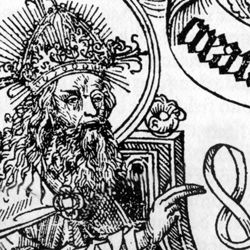
Landscape on the inside of Dürer? He was Wolgemut's apprentice at the time the altar was made. see Thomas Schauerte: Dürer. The distant genius. A biography, Stuttgart 2012, p. 35. For the castle in the background of the Annunciation Angel, however, a template was used that was also used for the woodcut for “macedonia” in the Schedel World Chronicle of 1493 (page 273) made in the Wolgemut workshop. The castle (siege of Ulm Fortress) can already be seen in a simplified form and reversed in Thomas Lirer's Swabian Chronicle, printed by Konrad Dinckmut in Ulm in 1486; the original is attributed to the “Master of Ulm Terence”.
photo 2019, Theo Noll
Ranking Table and Annunciation Angel
from 1488 to 1489
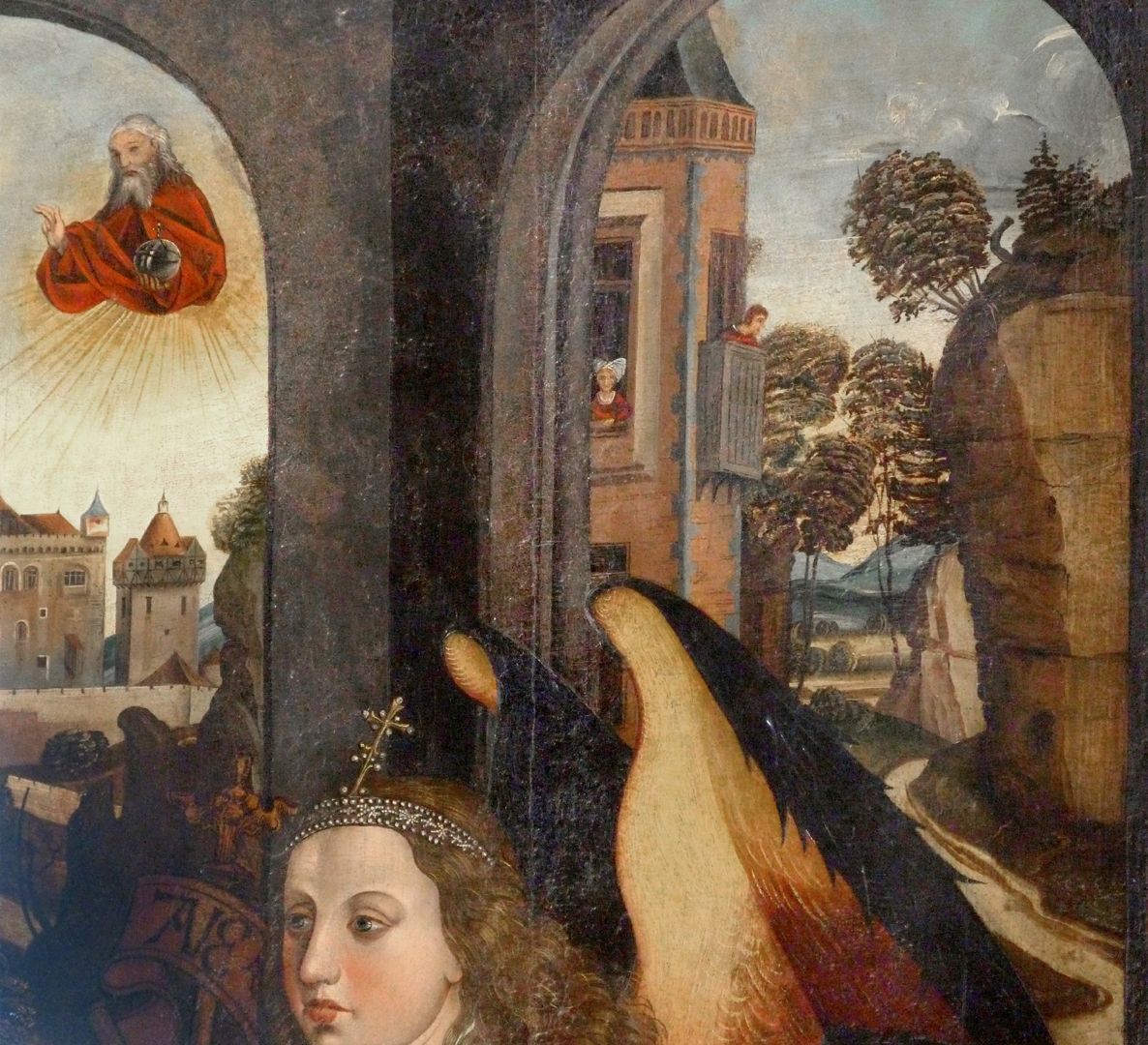
Outer side, upper third, detail with God the Father and balcony scene
On the inside, representatives of the clergy, facing left in worship, in front of a landscape. Annunciation angel on the outside. Remains of an altar from the former Dominican church with a carved image of the Virgin Mary in a rosary (this one in the Germanic National Museum), in front of which the secular and clerical classes knelt on the painted wings.(...) Günther P. Fehring and Anton Ress, Bavarian art monuments, the city of Nuremberg, Short inventory 1977 The rosary tablet was completed in 1489 after a year of work. For the dating see Gerhard Weilandt: The Prince at Prayer, in: Lucas Cranach 1553/2003, Leipzig 2007, p. 62. ______________________________________
Landscape on the inside of Dürer? He was Wolgemut's apprentice at the time the altar was made. see Thomas Schauerte: Dürer. The distant genius. A biography, Stuttgart 2012, p. 35. For the castle in the background of the Annunciation Angel, however, a template was used that was also used for the woodcut for “macedonia” in the Schedel World Chronicle of 1493 (page 273) made in the Wolgemut workshop. The castle (siege of Ulm Fortress) can already be seen in a simplified form and reversed in Thomas Lirer's Swabian Chronicle, printed by Konrad Dinckmut in Ulm in 1486; the original is attributed to the “Master of Ulm Terence”.
photo 2019, Theo Noll
Ranking Table and Annunciation Angel
from 1488 to 1489
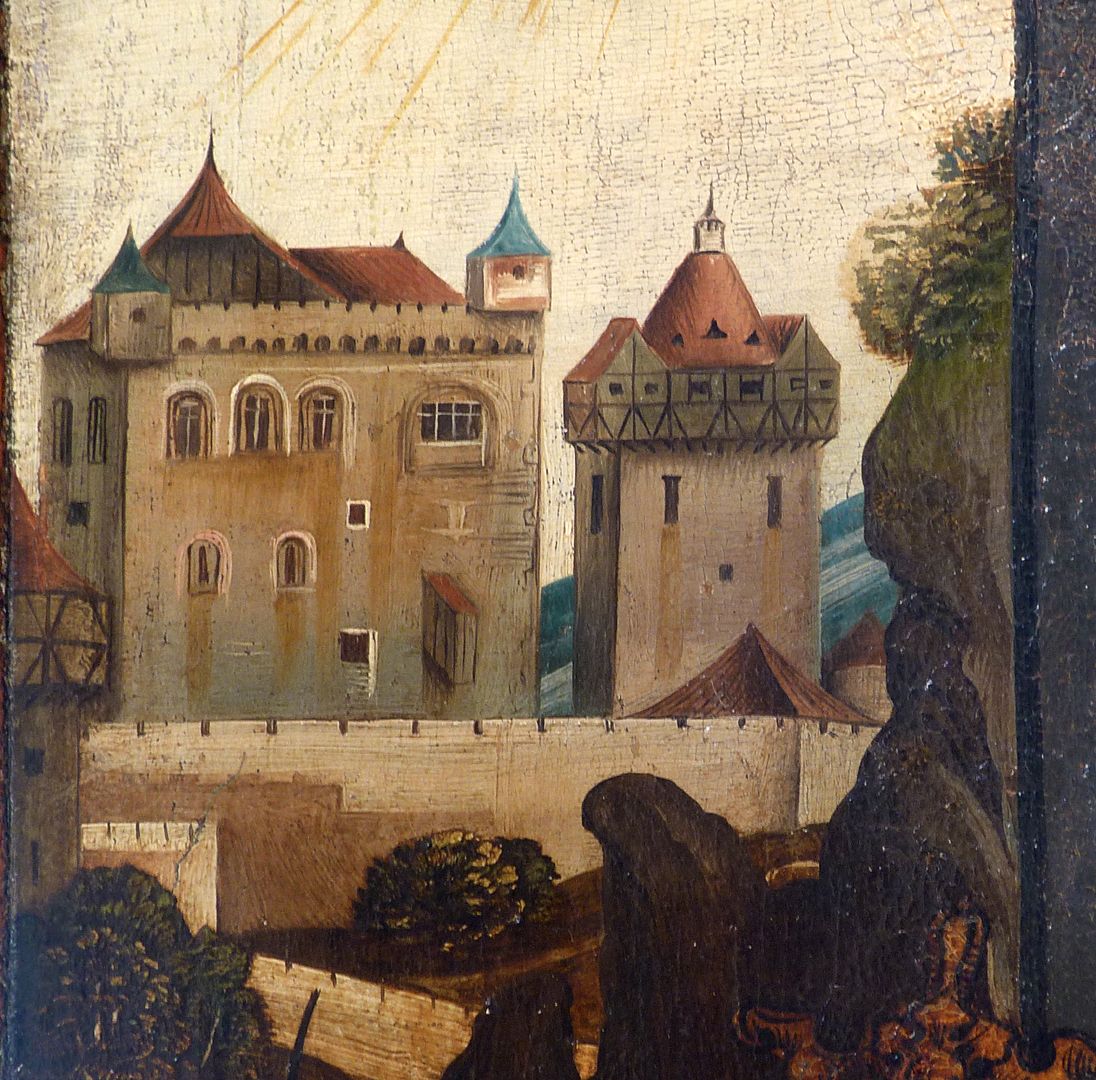
Outer side, upper third left, view of the castle
On the inside, representatives of the clergy, facing left in worship, in front of a landscape. Annunciation angel on the outside. Remains of an altar from the former Dominican church with a carved image of the Virgin Mary in a rosary (this one in the Germanic National Museum), in front of which the secular and clerical classes knelt on the painted wings.(...) Günther P. Fehring and Anton Ress, Bavarian art monuments, the city of Nuremberg, Short inventory 1977 The rosary tablet was completed in 1489 after a year of work. For the dating see Gerhard Weilandt: The Prince at Prayer, in: Lucas Cranach 1553/2003, Leipzig 2007, p. 62. ______________________________________
Landscape on the inside of Dürer? He was Wolgemut's apprentice at the time the altar was made. see Thomas Schauerte: Dürer. The distant genius. A biography, Stuttgart 2012, p. 35. For the castle in the background of the Annunciation Angel, however, a template was used that was also used for the woodcut for “macedonia” in the Schedel World Chronicle of 1493 (page 273) made in the Wolgemut workshop. The castle (siege of Ulm Fortress) can already be seen in a simplified form and reversed in Thomas Lirer's Swabian Chronicle, printed by Konrad Dinckmut in Ulm in 1486; the original is attributed to the “Master of Ulm Terence”.
photo 2019, Theo Noll
Ranking Table and Annunciation Angel
from 1488 to 1489
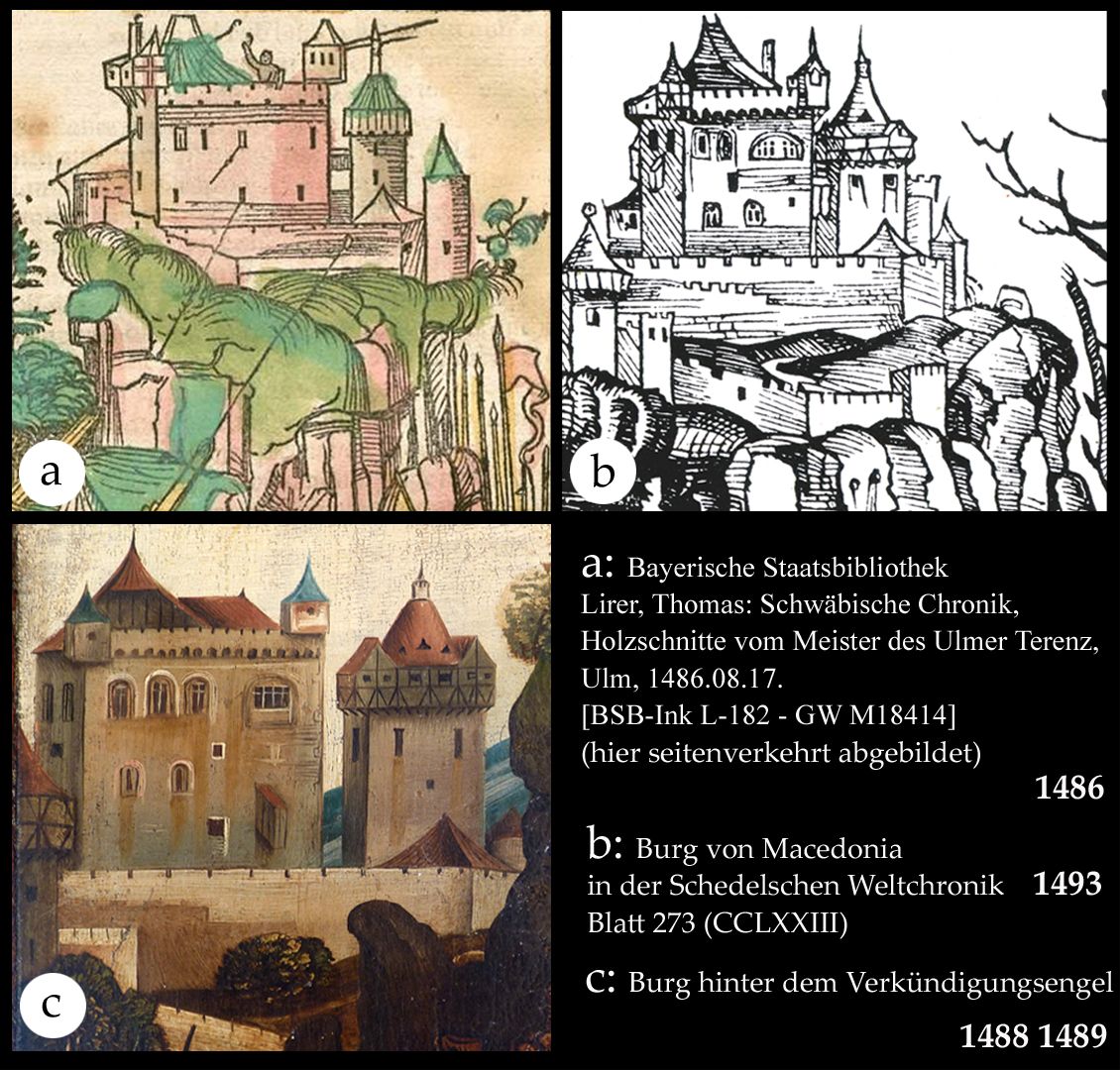
The same castle motif was also used in the woodcut in slightly different ways.
On the inside, representatives of the clergy, facing left in worship, in front of a landscape. Annunciation angel on the outside. Remains of an altar from the former Dominican church with a carved image of the Virgin Mary in a rosary (this one in the Germanic National Museum), in front of which the secular and clerical classes knelt on the painted wings.(...) Günther P. Fehring and Anton Ress, Bavarian art monuments, the city of Nuremberg, Short inventory 1977 The rosary tablet was completed in 1489 after a year of work. For the dating see Gerhard Weilandt: The Prince at Prayer, in: Lucas Cranach 1553/2003, Leipzig 2007, p. 62. ______________________________________
Landscape on the inside of Dürer? He was Wolgemut's apprentice at the time the altar was made. see Thomas Schauerte: Dürer. The distant genius. A biography, Stuttgart 2012, p. 35. For the castle in the background of the Annunciation Angel, however, a template was used that was also used for the woodcut for “macedonia” in the Schedel World Chronicle of 1493 (page 273) made in the Wolgemut workshop. The castle (siege of Ulm Fortress) can already be seen in a simplified form and reversed in Thomas Lirer's Swabian Chronicle, printed by Konrad Dinckmut in Ulm in 1486; the original is attributed to the “Master of Ulm Terence”.
photo
Ranking Table and Annunciation Angel
from 1488 to 1489
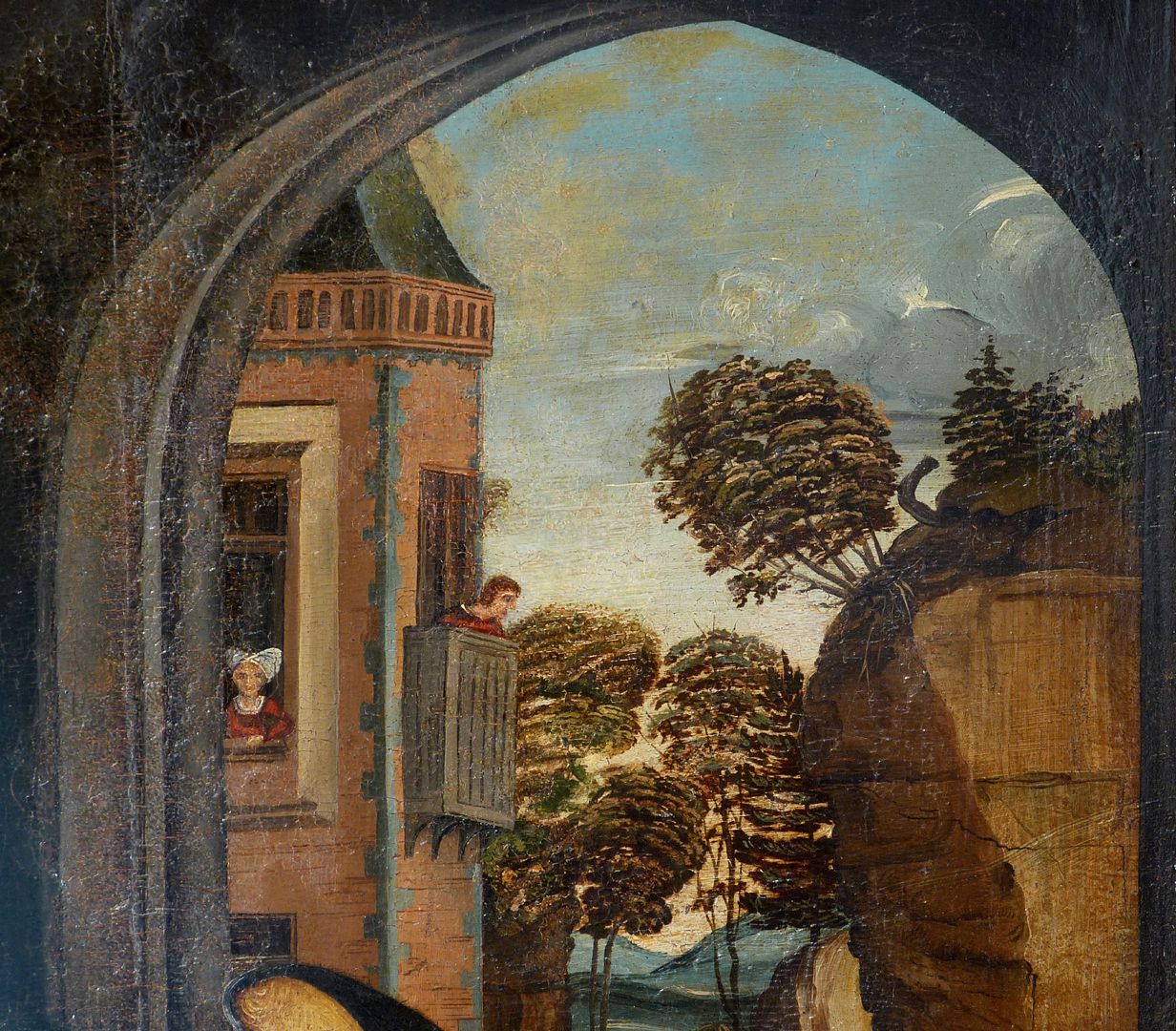
Outer side, upper third right, balcony scene
On the inside, representatives of the clergy, facing left in worship, in front of a landscape. Annunciation angel on the outside. Remains of an altar from the former Dominican church with a carved image of the Virgin Mary in a rosary (this one in the Germanic National Museum), in front of which the secular and clerical classes knelt on the painted wings.(...) Günther P. Fehring and Anton Ress, Bavarian art monuments, the city of Nuremberg, Short inventory 1977 The rosary tablet was completed in 1489 after a year of work. For the dating see Gerhard Weilandt: The Prince at Prayer, in: Lucas Cranach 1553/2003, Leipzig 2007, p. 62. ______________________________________
Landscape on the inside of Dürer? He was Wolgemut's apprentice at the time the altar was made. see Thomas Schauerte: Dürer. The distant genius. A biography, Stuttgart 2012, p. 35. For the castle in the background of the Annunciation Angel, however, a template was used that was also used for the woodcut for “macedonia” in the Schedel World Chronicle of 1493 (page 273) made in the Wolgemut workshop. The castle (siege of Ulm Fortress) can already be seen in a simplified form and reversed in Thomas Lirer's Swabian Chronicle, printed by Konrad Dinckmut in Ulm in 1486; the original is attributed to the “Master of Ulm Terence”.
photo 2019, Theo Noll
Ranking Table and Annunciation Angel
from 1488 to 1489
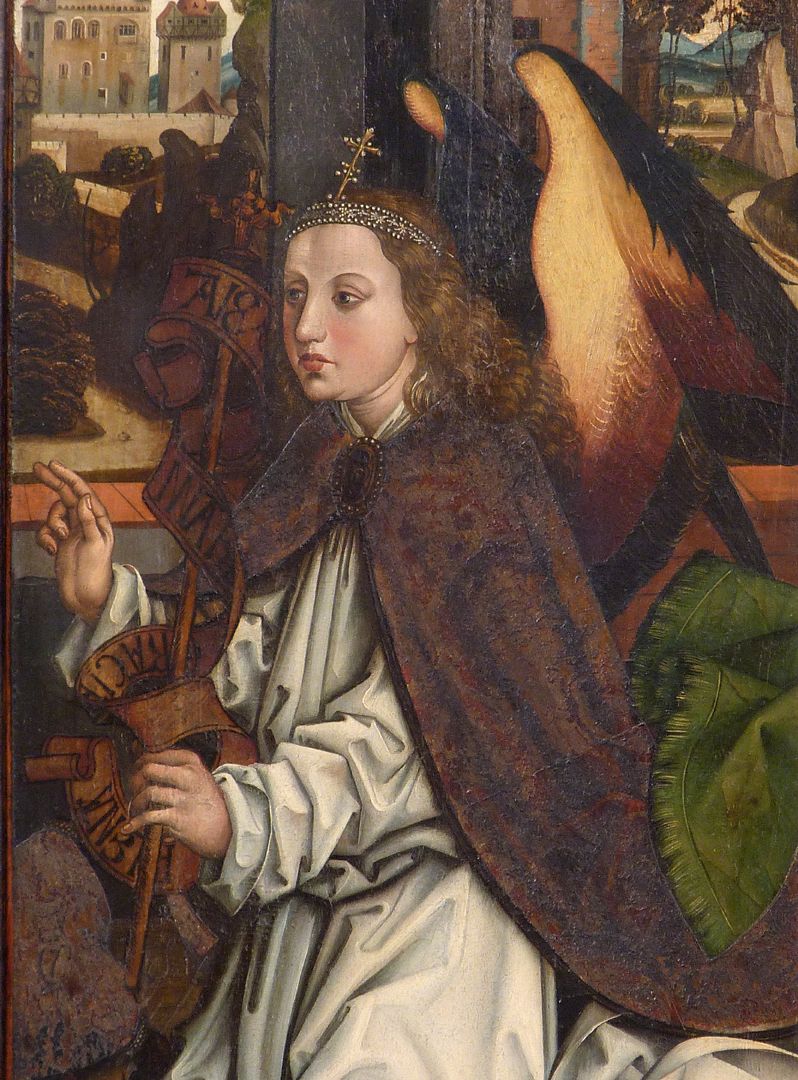
Outer side, centre of the picture, Annunciation angel
On the inside, representatives of the clergy, facing left in worship, in front of a landscape. Annunciation angel on the outside. Remains of an altar from the former Dominican church with a carved image of the Virgin Mary in a rosary (this one in the Germanic National Museum), in front of which the secular and clerical classes knelt on the painted wings.(...) Günther P. Fehring and Anton Ress, Bavarian art monuments, the city of Nuremberg, Short inventory 1977 The rosary tablet was completed in 1489 after a year of work. For the dating see Gerhard Weilandt: The Prince at Prayer, in: Lucas Cranach 1553/2003, Leipzig 2007, p. 62. ______________________________________
Landscape on the inside of Dürer? He was Wolgemut's apprentice at the time the altar was made. see Thomas Schauerte: Dürer. The distant genius. A biography, Stuttgart 2012, p. 35. For the castle in the background of the Annunciation Angel, however, a template was used that was also used for the woodcut for “macedonia” in the Schedel World Chronicle of 1493 (page 273) made in the Wolgemut workshop. The castle (siege of Ulm Fortress) can already be seen in a simplified form and reversed in Thomas Lirer's Swabian Chronicle, printed by Konrad Dinckmut in Ulm in 1486; the original is attributed to the “Master of Ulm Terence”.
photo 2019, Theo Noll
Ranking Table and Annunciation Angel
from 1488 to 1489
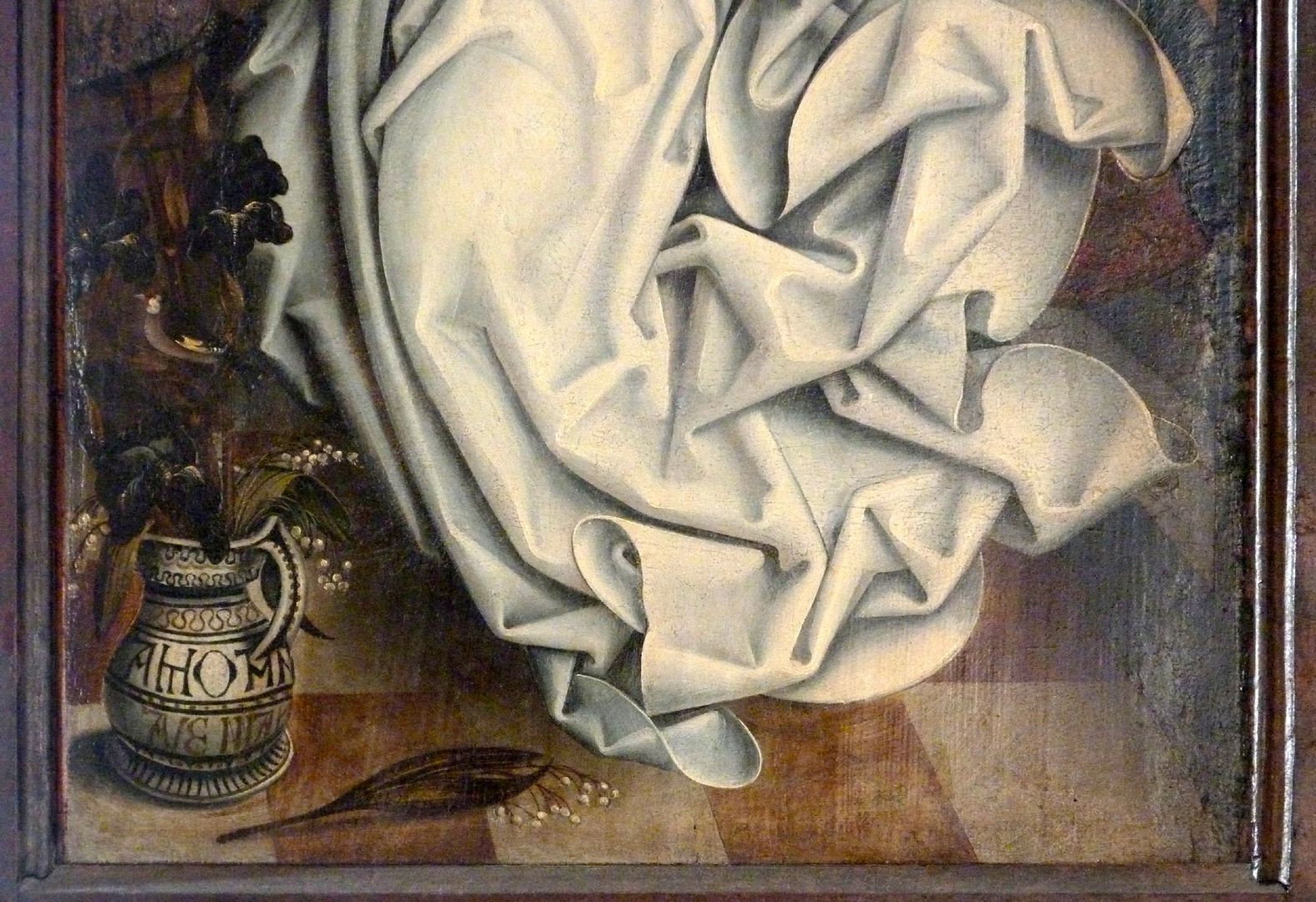
Outer side, lower third, jug of lilies and folds of the Annunciation angel's robe
On the inside, representatives of the clergy, facing left in worship, in front of a landscape. Annunciation angel on the outside. Remains of an altar from the former Dominican church with a carved image of the Virgin Mary in a rosary (this one in the Germanic National Museum), in front of which the secular and clerical classes knelt on the painted wings.(...) Günther P. Fehring and Anton Ress, Bavarian art monuments, the city of Nuremberg, Short inventory 1977 The rosary tablet was completed in 1489 after a year of work. For the dating see Gerhard Weilandt: The Prince at Prayer, in: Lucas Cranach 1553/2003, Leipzig 2007, p. 62. ______________________________________
Landscape on the inside of Dürer? He was Wolgemut's apprentice at the time the altar was made. see Thomas Schauerte: Dürer. The distant genius. A biography, Stuttgart 2012, p. 35. For the castle in the background of the Annunciation Angel, however, a template was used that was also used for the woodcut for “macedonia” in the Schedel World Chronicle of 1493 (page 273) made in the Wolgemut workshop. The castle (siege of Ulm Fortress) can already be seen in a simplified form and reversed in Thomas Lirer's Swabian Chronicle, printed by Konrad Dinckmut in Ulm in 1486; the original is attributed to the “Master of Ulm Terence”.
photo 2019, Theo Noll
Ranking Table and Annunciation Angel
from 1488 to 1489
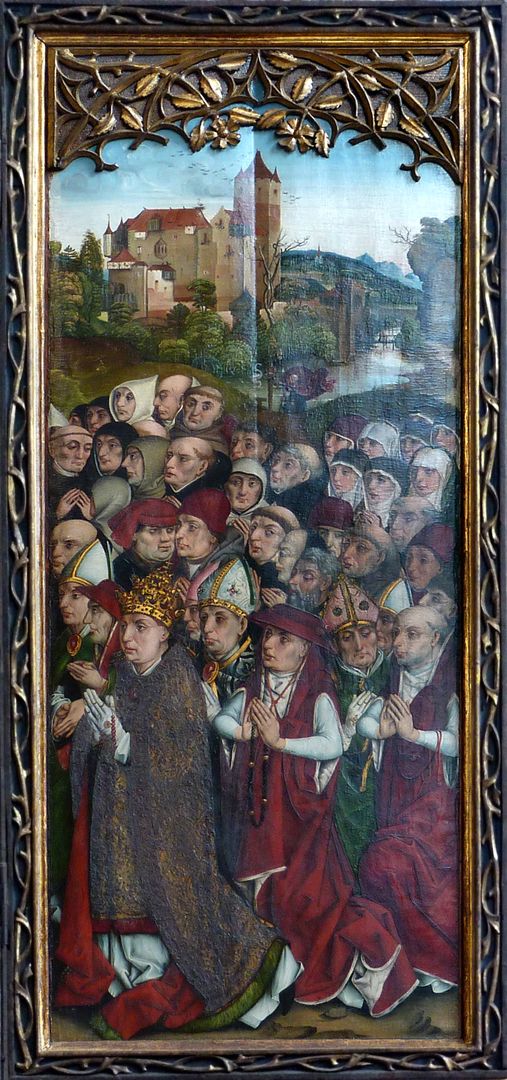
Inside, genaral view
On the inside, representatives of the clergy, facing left in worship, in front of a landscape. Annunciation angel on the outside. Remains of an altar from the former Dominican church with a carved image of the Virgin Mary in a rosary (this one in the Germanic National Museum), in front of which the secular and clerical classes knelt on the painted wings.(...) Günther P. Fehring and Anton Ress, Bavarian art monuments, the city of Nuremberg, Short inventory 1977 The rosary tablet was completed in 1489 after a year of work. For the dating see Gerhard Weilandt: The Prince at Prayer, in: Lucas Cranach 1553/2003, Leipzig 2007, p. 62. ______________________________________
Landscape on the inside of Dürer? He was Wolgemut's apprentice at the time the altar was made. see Thomas Schauerte: Dürer. The distant genius. A biography, Stuttgart 2012, p. 35. For the castle in the background of the Annunciation Angel, however, a template was used that was also used for the woodcut for “macedonia” in the Schedel World Chronicle of 1493 (page 273) made in the Wolgemut workshop. The castle (siege of Ulm Fortress) can already be seen in a simplified form and reversed in Thomas Lirer's Swabian Chronicle, printed by Konrad Dinckmut in Ulm in 1486; the original is attributed to the “Master of Ulm Terence”.
photo 2019, Theo Noll
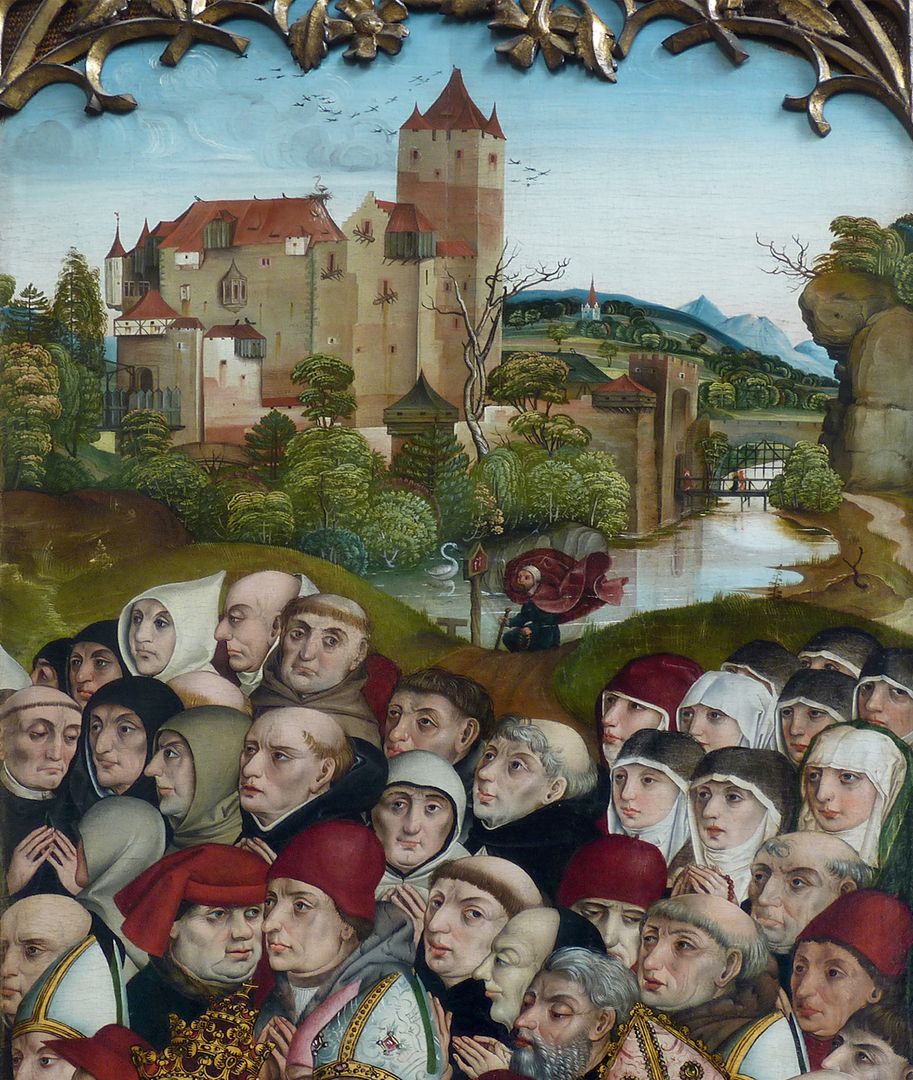
Ranking Table and Annunciation Angel
from 1488 to 1489
Inside, landscape background by Dürer ?
On the inside, representatives of the clergy, facing left in worship, in front of a landscape. Annunciation angel on the outside. Remains of an altar from the former Dominican church with a carved image of the Virgin Mary in a rosary (this one in the Germanic National Museum), in front of which the secular and clerical classes knelt on the painted wings.(...) Günther P. Fehring and Anton Ress, Bavarian art monuments, the city of Nuremberg, Short inventory 1977 The rosary tablet was completed in 1489 after a year of work. For the dating see Gerhard Weilandt: The Prince at Prayer, in: Lucas Cranach 1553/2003, Leipzig 2007, p. 62. ______________________________________
Landscape on the inside of Dürer? He was Wolgemut's apprentice at the time the altar was made. see Thomas Schauerte: Dürer. The distant genius. A biography, Stuttgart 2012, p. 35. For the castle in the background of the Annunciation Angel, however, a template was used that was also used for the woodcut for “macedonia” in the Schedel World Chronicle of 1493 (page 273) made in the Wolgemut workshop. The castle (siege of Ulm Fortress) can already be seen in a simplified form and reversed in Thomas Lirer's Swabian Chronicle, printed by Konrad Dinckmut in Ulm in 1486; the original is attributed to the “Master of Ulm Terence”.
photo 2019, Theo Noll
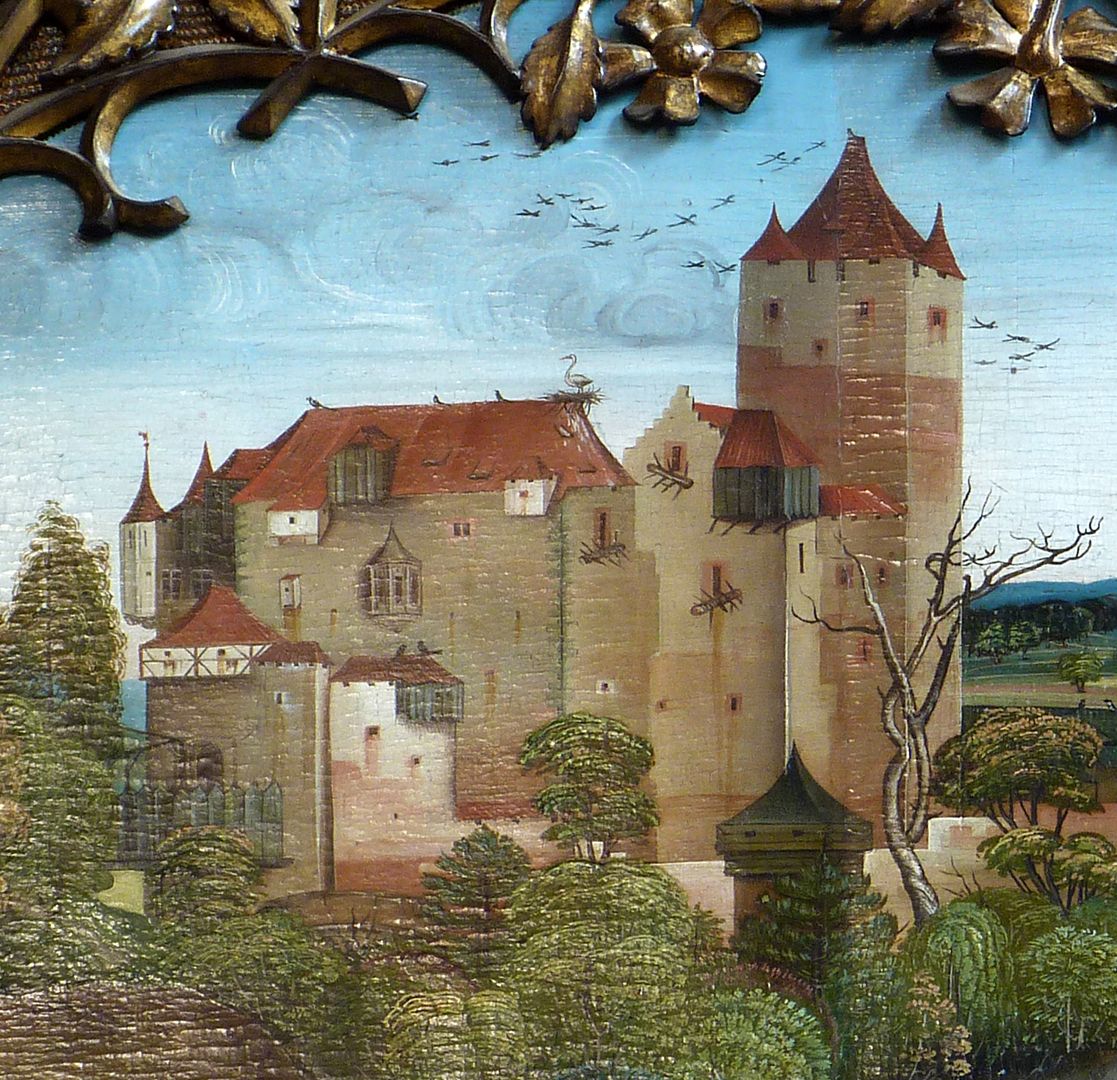
Ranking Table and Annunciation Angel
from 1488 to 1489
Inside, upper panel, view of castle
On the inside, representatives of the clergy, facing left in worship, in front of a landscape. Annunciation angel on the outside. Remains of an altar from the former Dominican church with a carved image of the Virgin Mary in a rosary (this one in the Germanic National Museum), in front of which the secular and clerical classes knelt on the painted wings.(...) Günther P. Fehring and Anton Ress, Bavarian art monuments, the city of Nuremberg, Short inventory 1977 The rosary tablet was completed in 1489 after a year of work. For the dating see Gerhard Weilandt: The Prince at Prayer, in: Lucas Cranach 1553/2003, Leipzig 2007, p. 62. ______________________________________
Landscape on the inside of Dürer? He was Wolgemut's apprentice at the time the altar was made. see Thomas Schauerte: Dürer. The distant genius. A biography, Stuttgart 2012, p. 35. For the castle in the background of the Annunciation Angel, however, a template was used that was also used for the woodcut for “macedonia” in the Schedel World Chronicle of 1493 (page 273) made in the Wolgemut workshop. The castle (siege of Ulm Fortress) can already be seen in a simplified form and reversed in Thomas Lirer's Swabian Chronicle, printed by Konrad Dinckmut in Ulm in 1486; the original is attributed to the “Master of Ulm Terence”.
photo 2019, Theo Noll
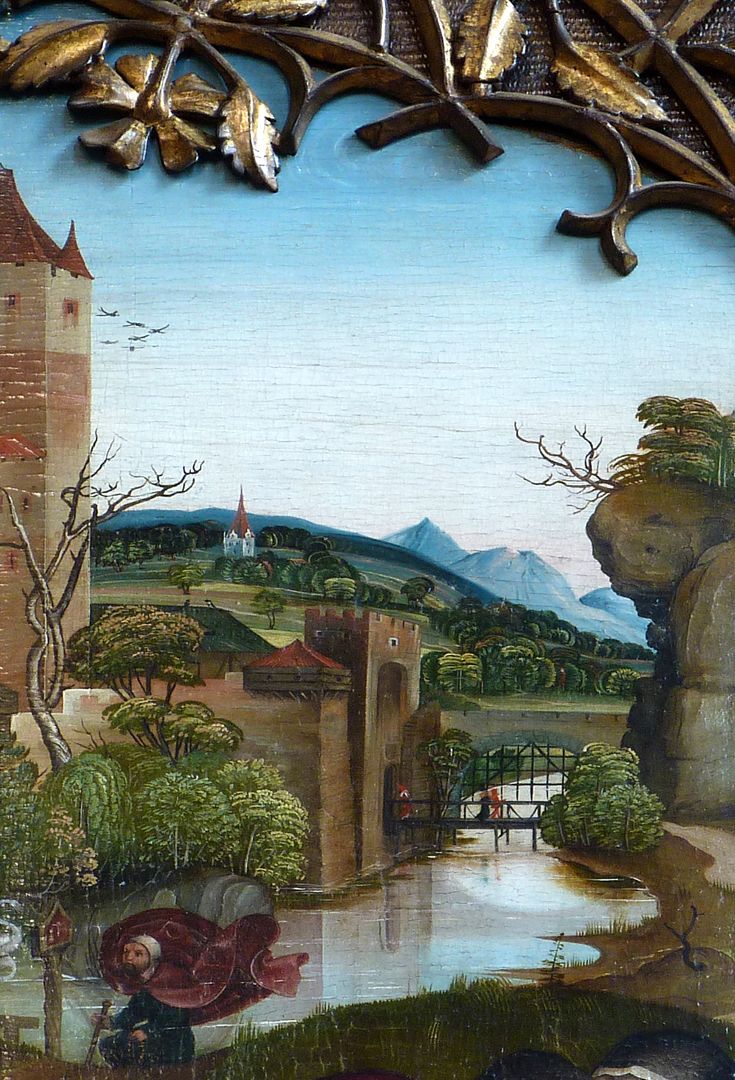
Ranking Table and Annunciation Angel
from 1488 to 1489
Inside, background with castle, river and landscape
On the inside, representatives of the clergy, facing left in worship, in front of a landscape. Annunciation angel on the outside. Remains of an altar from the former Dominican church with a carved image of the Virgin Mary in a rosary (this one in the Germanic National Museum), in front of which the secular and clerical classes knelt on the painted wings.(...) Günther P. Fehring and Anton Ress, Bavarian art monuments, the city of Nuremberg, Short inventory 1977 The rosary tablet was completed in 1489 after a year of work. For the dating see Gerhard Weilandt: The Prince at Prayer, in: Lucas Cranach 1553/2003, Leipzig 2007, p. 62. ______________________________________
Landscape on the inside of Dürer? He was Wolgemut's apprentice at the time the altar was made. see Thomas Schauerte: Dürer. The distant genius. A biography, Stuttgart 2012, p. 35. For the castle in the background of the Annunciation Angel, however, a template was used that was also used for the woodcut for “macedonia” in the Schedel World Chronicle of 1493 (page 273) made in the Wolgemut workshop. The castle (siege of Ulm Fortress) can already be seen in a simplified form and reversed in Thomas Lirer's Swabian Chronicle, printed by Konrad Dinckmut in Ulm in 1486; the original is attributed to the “Master of Ulm Terence”.
photo 2019, Theo Noll
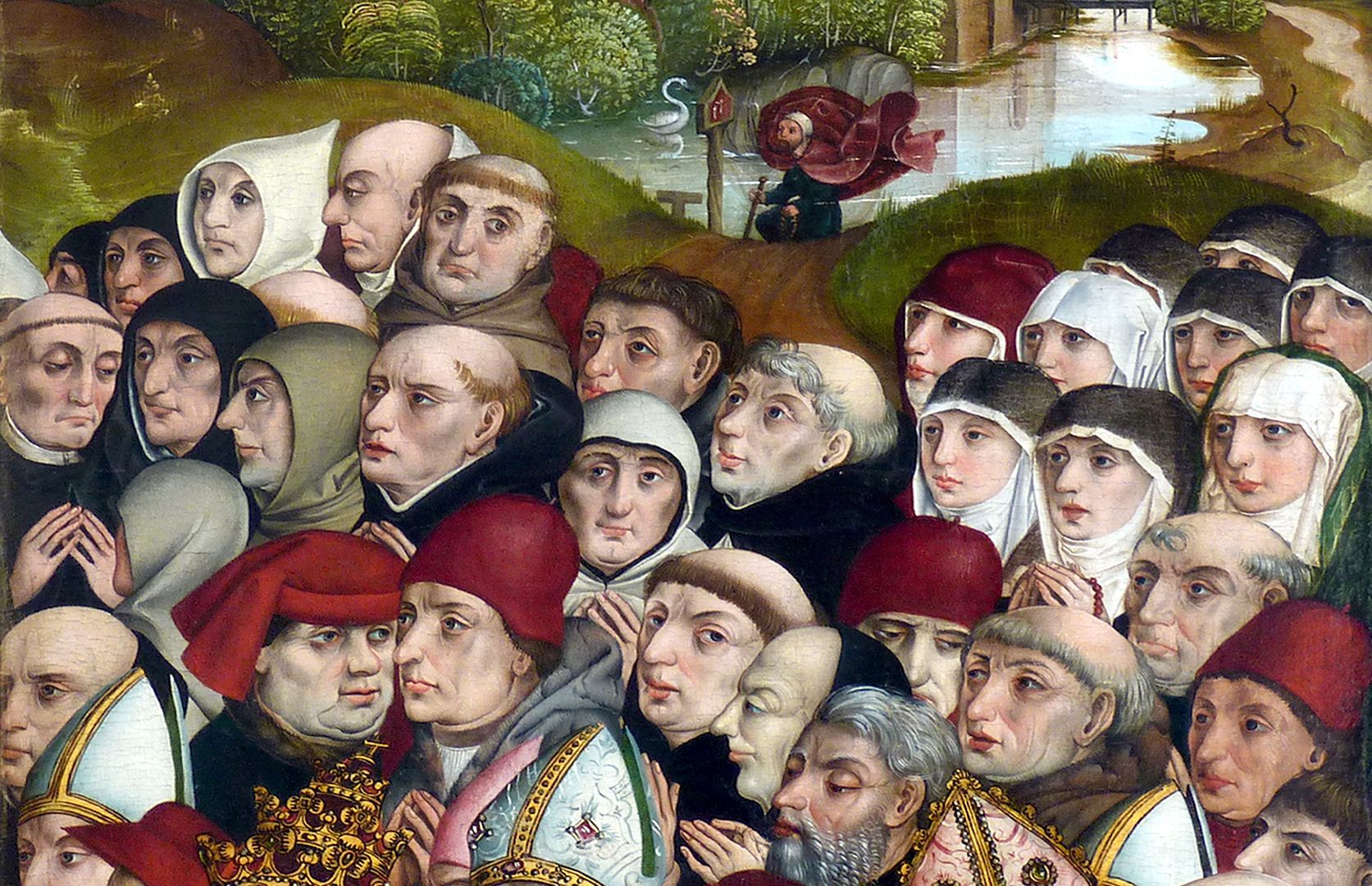
Ranking Table and Annunciation Angel
from 1488 to 1489
Society of the Pious Inside
On the inside, representatives of the clergy, facing left in worship, in front of a landscape. Annunciation angel on the outside. Remains of an altar from the former Dominican church with a carved image of the Virgin Mary in a rosary (this one in the Germanic National Museum), in front of which the secular and clerical classes knelt on the painted wings.(...) Günther P. Fehring and Anton Ress, Bavarian art monuments, the city of Nuremberg, Short inventory 1977 The rosary tablet was completed in 1489 after a year of work. For the dating see Gerhard Weilandt: The Prince at Prayer, in: Lucas Cranach 1553/2003, Leipzig 2007, p. 62. ______________________________________
Landscape on the inside of Dürer? He was Wolgemut's apprentice at the time the altar was made. see Thomas Schauerte: Dürer. The distant genius. A biography, Stuttgart 2012, p. 35. For the castle in the background of the Annunciation Angel, however, a template was used that was also used for the woodcut for “macedonia” in the Schedel World Chronicle of 1493 (page 273) made in the Wolgemut workshop. The castle (siege of Ulm Fortress) can already be seen in a simplified form and reversed in Thomas Lirer's Swabian Chronicle, printed by Konrad Dinckmut in Ulm in 1486; the original is attributed to the “Master of Ulm Terence”.
photo 2019, Theo Noll
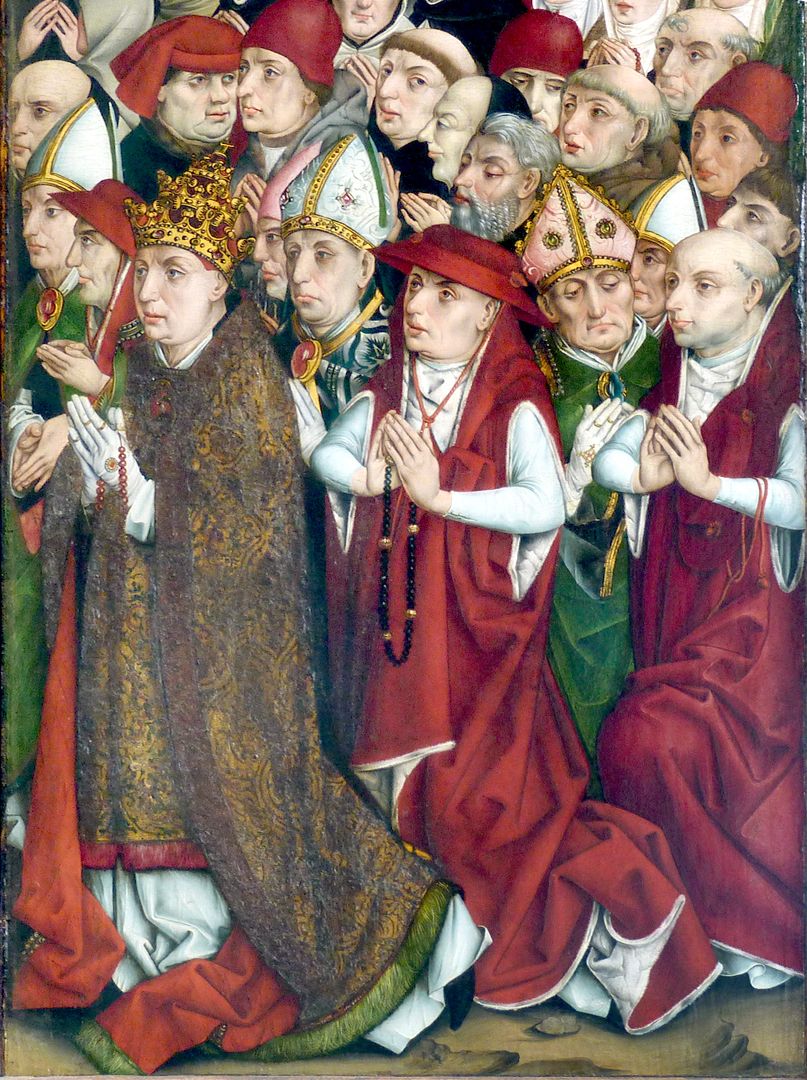
Ranking Table and Annunciation Angel
from 1488 to 1489
Inside, lower half with high clergy
On the inside, representatives of the clergy, facing left in worship, in front of a landscape. Annunciation angel on the outside. Remains of an altar from the former Dominican church with a carved image of the Virgin Mary in a rosary (this one in the Germanic National Museum), in front of which the secular and clerical classes knelt on the painted wings.(...) Günther P. Fehring and Anton Ress, Bavarian art monuments, the city of Nuremberg, Short inventory 1977 The rosary tablet was completed in 1489 after a year of work. For the dating see Gerhard Weilandt: The Prince at Prayer, in: Lucas Cranach 1553/2003, Leipzig 2007, p. 62. ______________________________________
Landscape on the inside of Dürer? He was Wolgemut's apprentice at the time the altar was made. see Thomas Schauerte: Dürer. The distant genius. A biography, Stuttgart 2012, p. 35. For the castle in the background of the Annunciation Angel, however, a template was used that was also used for the woodcut for “macedonia” in the Schedel World Chronicle of 1493 (page 273) made in the Wolgemut workshop. The castle (siege of Ulm Fortress) can already be seen in a simplified form and reversed in Thomas Lirer's Swabian Chronicle, printed by Konrad Dinckmut in Ulm in 1486; the original is attributed to the “Master of Ulm Terence”.
photo 2019, Theo Noll