Zwickau high altarpiece
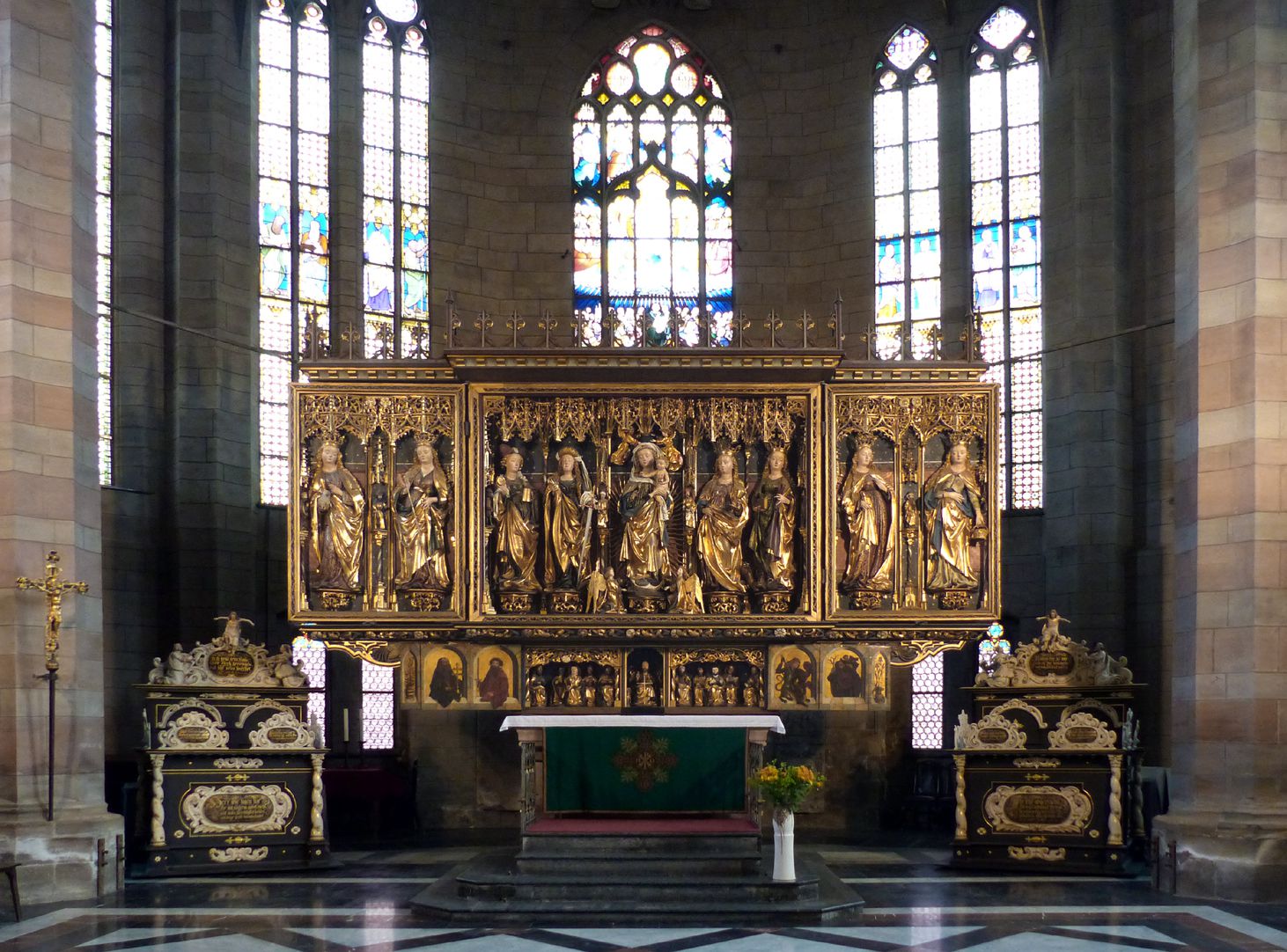
Zwickau high altarpiece
1479
Choir with high altar retable
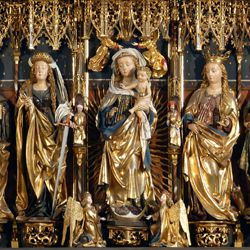
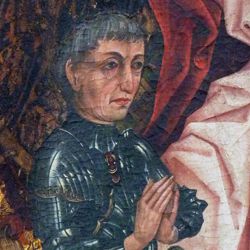
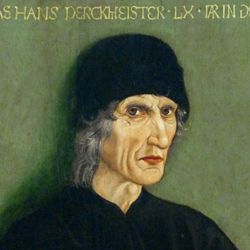
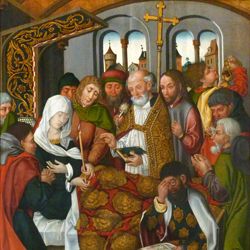
Doubly convertible reredos, proven to have been made in Nuremberg, built in 1479 and paid to Michael Wolgemut with fourteen hundred Rhenish guilders. The authorship of the carving that defines the reredos is unknown. The painted components show qualitative differences (the hands of Wolgemut and Pleydenwurff and those of the employees) and are overall probably less valuable than the sculptural part. The preference given to painting over carving in art historiography is certainly only due to Wolgemut's fame. The actual appreciation should be exactly the opposite. Dr. Pablo de la Riestra see also Peter's Altar in Nuremberg: Here we should point out stylistic parallels between the two works. The sculptures come from the same workshop, as noted by Stefan Roller, see Stefan Roller: Nuremberg Sculpture of the Late Gothic: Contributions to the Sculpture of the Imperial City in the Second Half of the 15th Century, Berlin 1999, p. 149.
photo 2015, Theo Noll
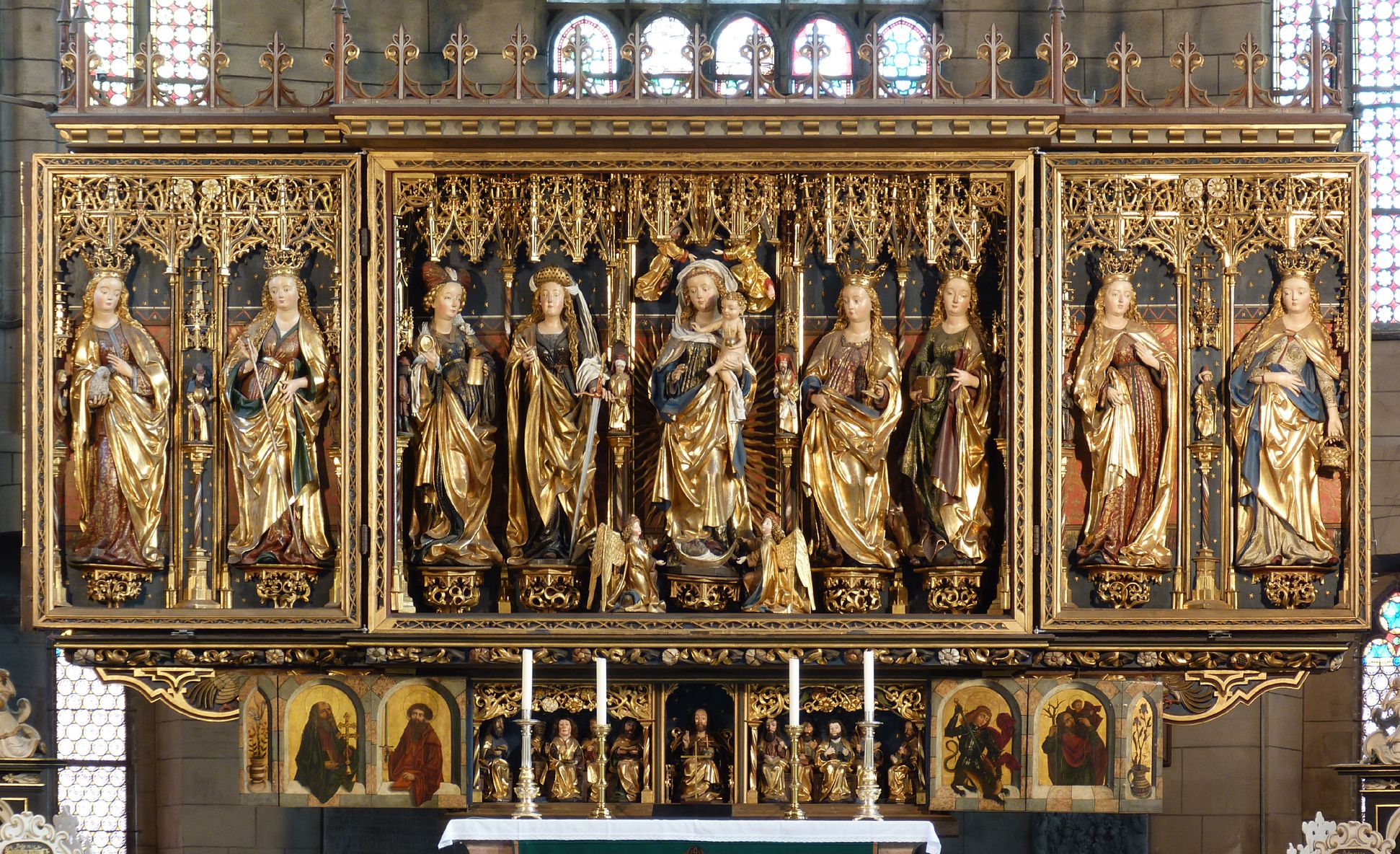
Zwickau high altarpiece
1479
High altar retable (holiday view)
Doubly convertible reredos, proven to have been made in Nuremberg, built in 1479 and paid to Michael Wolgemut with fourteen hundred Rhenish guilders. The authorship of the carving that defines the reredos is unknown. The painted components show qualitative differences (the hands of Wolgemut and Pleydenwurff and those of the employees) and are overall probably less valuable than the sculptural part. The preference given to painting over carving in art historiography is certainly only due to Wolgemut's fame. The actual appreciation should be exactly the opposite. Dr. Pablo de la Riestra see also Peter's Altar in Nuremberg: Here we should point out stylistic parallels between the two works. The sculptures come from the same workshop, as noted by Stefan Roller, see Stefan Roller: Nuremberg Sculpture of the Late Gothic: Contributions to the Sculpture of the Imperial City in the Second Half of the 15th Century, Berlin 1999, p. 149.
photo 2015, Theo Noll
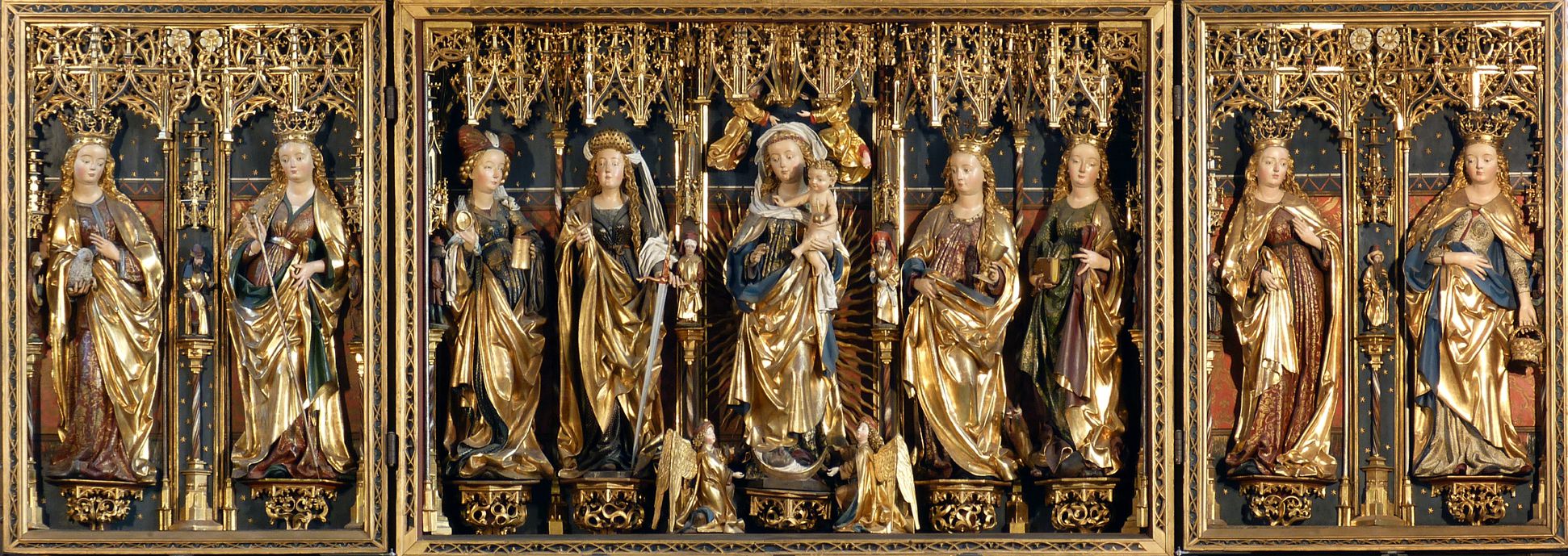
Zwickau high altarpiece
1479
High altar retable without predella (shrine and wing)
photo 2015, Theo Noll
Doubly convertible reredos, proven to have been made in Nuremberg, built in 1479 and paid to Michael Wolgemut with fourteen hundred Rhenish guilders. The authorship of the carving that defines the reredos is unknown. The painted components show qualitative differences (the hands of Wolgemut and Pleydenwurff and those of the employees) and are overall probably less valuable than the sculptural part. The preference given to painting over carving in art historiography is certainly only due to Wolgemut's fame. The actual appreciation should be exactly the opposite. Dr. Pablo de la Riestra see also Peter's Altar in Nuremberg: Here we should point out stylistic parallels between the two works. The sculptures come from the same workshop, as noted by Stefan Roller, see Stefan Roller: Nuremberg Sculpture of the Late Gothic: Contributions to the Sculpture of the Imperial City in the Second Half of the 15th Century, Berlin 1999, p. 149.
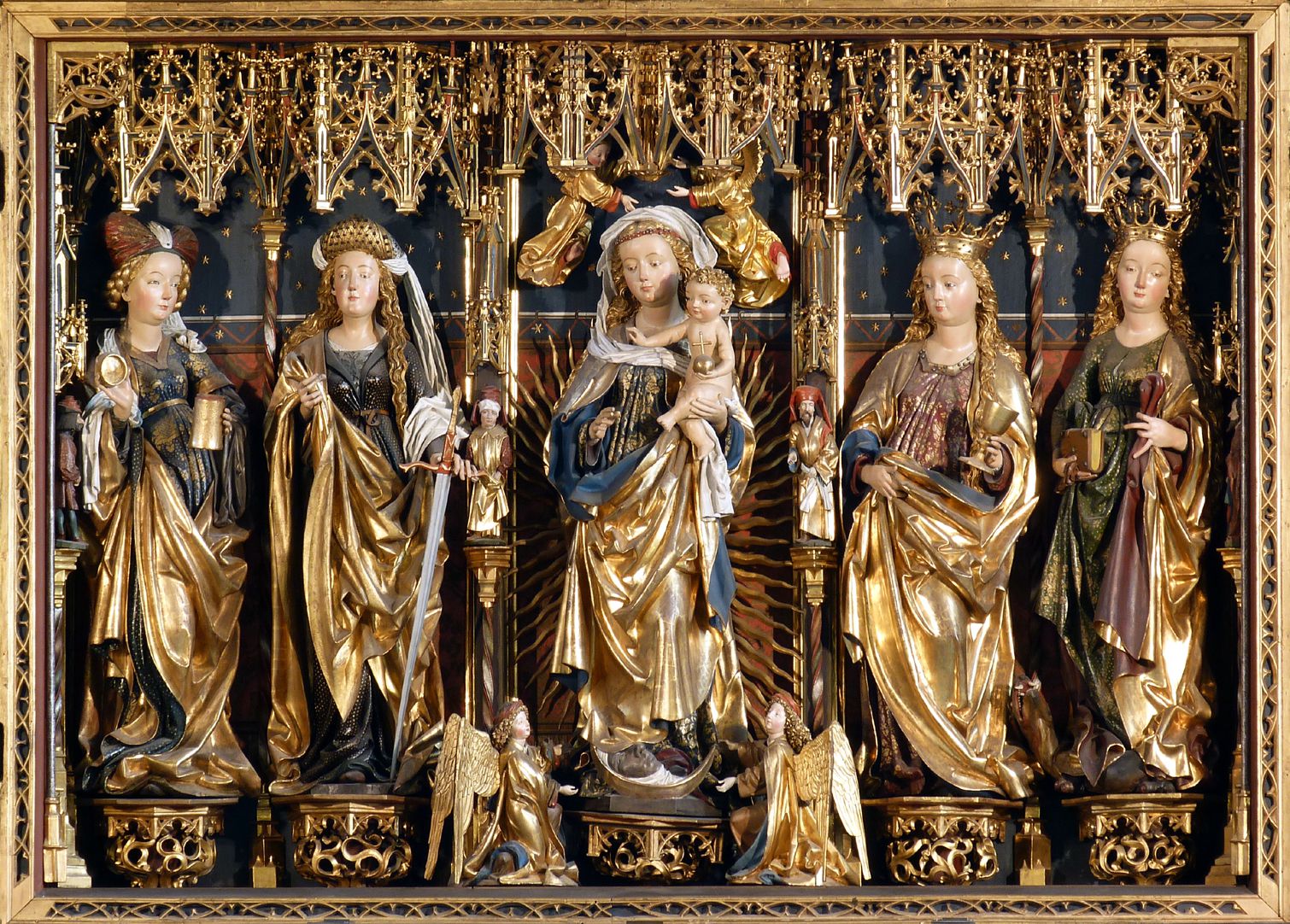
Zwickau high altarpiece
1479
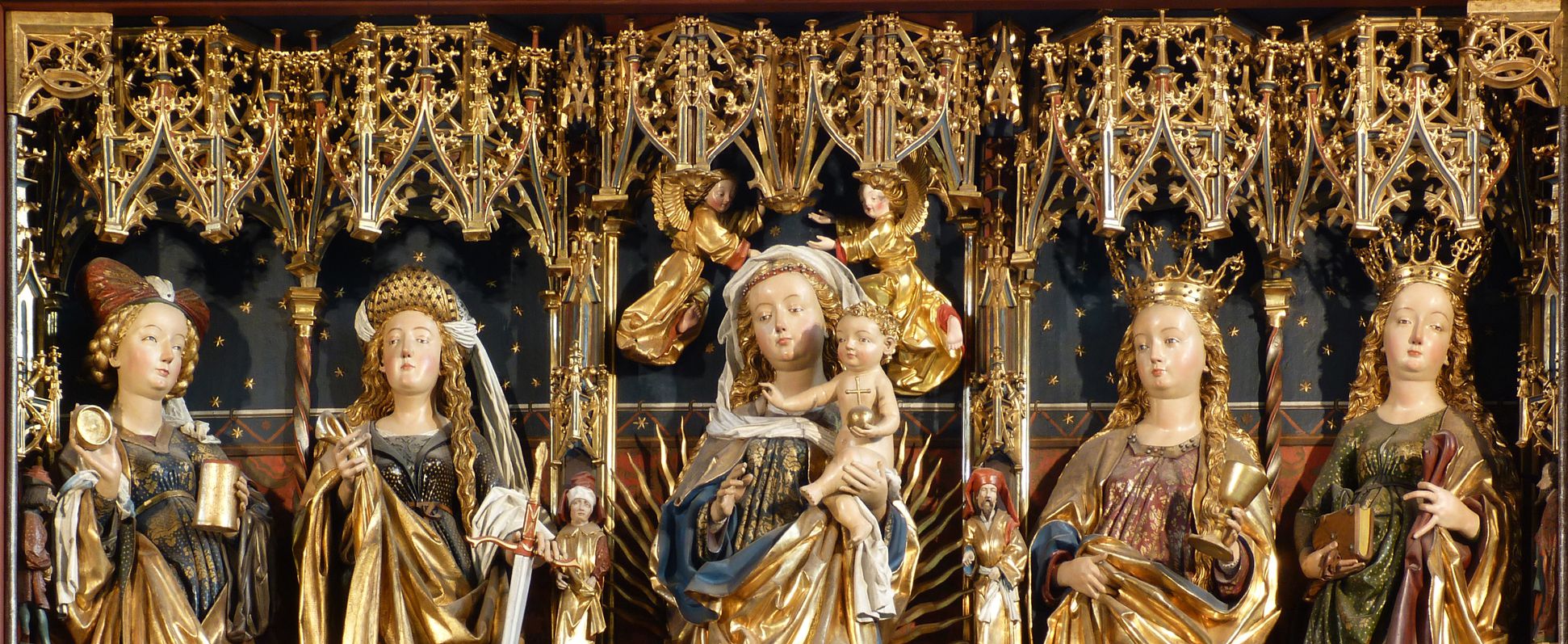
shrine, from l. after r. : Mary Magdalene, Katharina, Mary with the baby Jesus, Barbara and Margaret - minor prophets in between?
Doubly convertible reredos, proven to have been made in Nuremberg, built in 1479 and paid to Michael Wolgemut with fourteen hundred Rhenish guilders. The authorship of the carving that defines the reredos is unknown. The painted components show qualitative differences (the hands of Wolgemut and Pleydenwurff and those of the employees) and are overall probably less valuable than the sculptural part. The preference given to painting over carving in art historiography is certainly only due to Wolgemut's fame. The actual appreciation should be exactly the opposite. Dr. Pablo de la Riestra see also Peter's Altar in Nuremberg: Here we should point out stylistic parallels between the two works. The sculptures come from the same workshop, as noted by Stefan Roller, see Stefan Roller: Nuremberg Sculpture of the Late Gothic: Contributions to the Sculpture of the Imperial City in the Second Half of the 15th Century, Berlin 1999, p. 149.
photo 2015, Theo Noll
Zwickau high altarpiece
1479
Shrine, upper half
photo 2015, Theo Noll
Doubly convertible reredos, proven to have been made in Nuremberg, built in 1479 and paid to Michael Wolgemut with fourteen hundred Rhenish guilders. The authorship of the carving that defines the reredos is unknown. The painted components show qualitative differences (the hands of Wolgemut and Pleydenwurff and those of the employees) and are overall probably less valuable than the sculptural part. The preference given to painting over carving in art historiography is certainly only due to Wolgemut's fame. The actual appreciation should be exactly the opposite. Dr. Pablo de la Riestra see also Peter's Altar in Nuremberg: Here we should point out stylistic parallels between the two works. The sculptures come from the same workshop, as noted by Stefan Roller, see Stefan Roller: Nuremberg Sculpture of the Late Gothic: Contributions to the Sculpture of the Imperial City in the Second Half of the 15th Century, Berlin 1999, p. 149.
Zwickau high altarpiece
1479
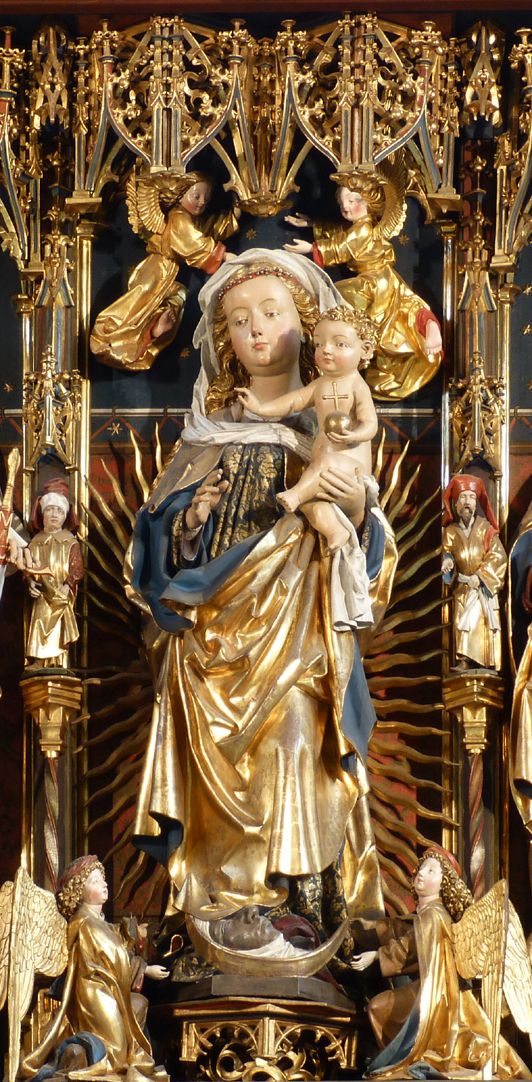
Schrein, Maria mit dem Jesuskind und vier Engeln, die oberen Kronenhalter, die unteren Präsentationsengel
Doubly convertible reredos, proven to have been made in Nuremberg, built in 1479 and paid to Michael Wolgemut with fourteen hundred Rhenish guilders. The authorship of the carving that defines the reredos is unknown. The painted components show qualitative differences (the hands of Wolgemut and Pleydenwurff and those of the employees) and are overall probably less valuable than the sculptural part. The preference given to painting over carving in art historiography is certainly only due to Wolgemut's fame. The actual appreciation should be exactly the opposite. Dr. Pablo de la Riestra see also Peter's Altar in Nuremberg: Here we should point out stylistic parallels between the two works. The sculptures come from the same workshop, as noted by Stefan Roller, see Stefan Roller: Nuremberg Sculpture of the Late Gothic: Contributions to the Sculpture of the Imperial City in the Second Half of the 15th Century, Berlin 1999, p. 149.
photo 2015, Theo Noll
Zwickau high altarpiece
1479
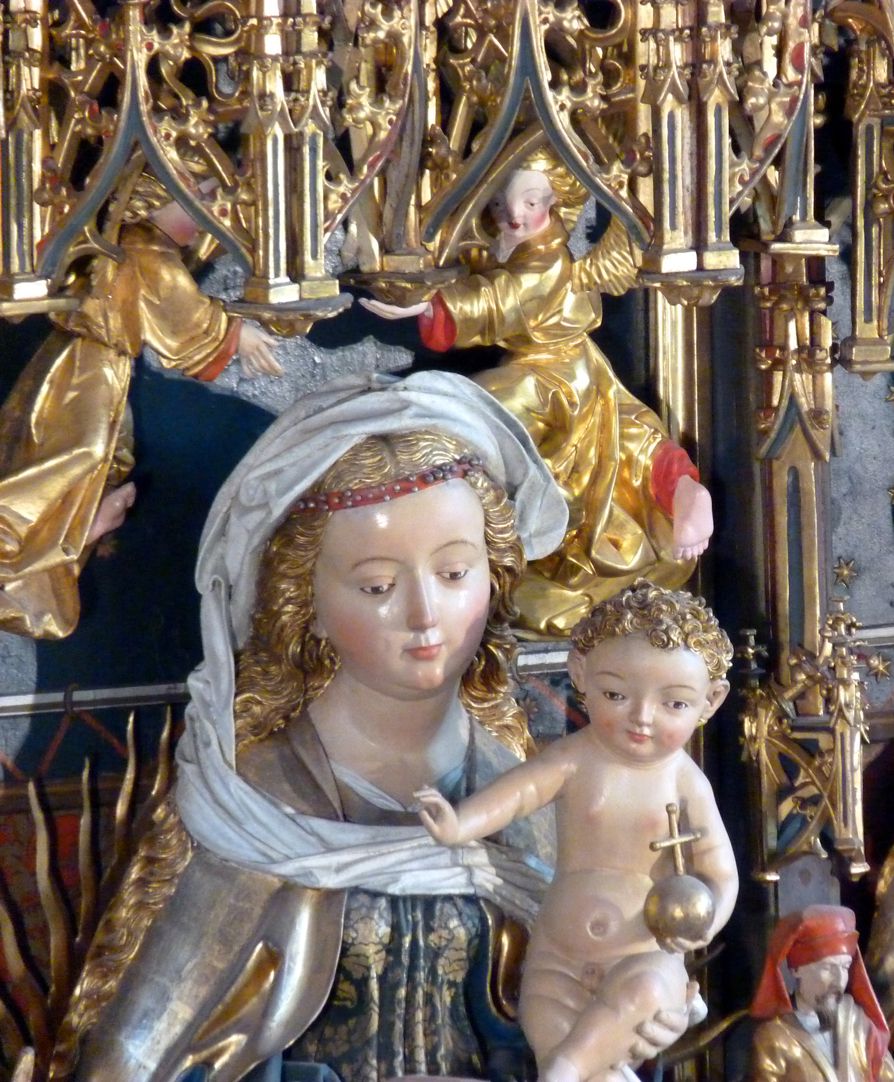
Schrein, Maria mit Jesuskind, Detail
Doubly convertible reredos, proven to have been made in Nuremberg, built in 1479 and paid to Michael Wolgemut with fourteen hundred Rhenish guilders. The authorship of the carving that defines the reredos is unknown. The painted components show qualitative differences (the hands of Wolgemut and Pleydenwurff and those of the employees) and are overall probably less valuable than the sculptural part. The preference given to painting over carving in art historiography is certainly only due to Wolgemut's fame. The actual appreciation should be exactly the opposite. Dr. Pablo de la Riestra see also Peter's Altar in Nuremberg: Here we should point out stylistic parallels between the two works. The sculptures come from the same workshop, as noted by Stefan Roller, see Stefan Roller: Nuremberg Sculpture of the Late Gothic: Contributions to the Sculpture of the Imperial City in the Second Half of the 15th Century, Berlin 1999, p. 149.
photo 2015, Pablo de la Riestra
Zwickau high altarpiece
1479
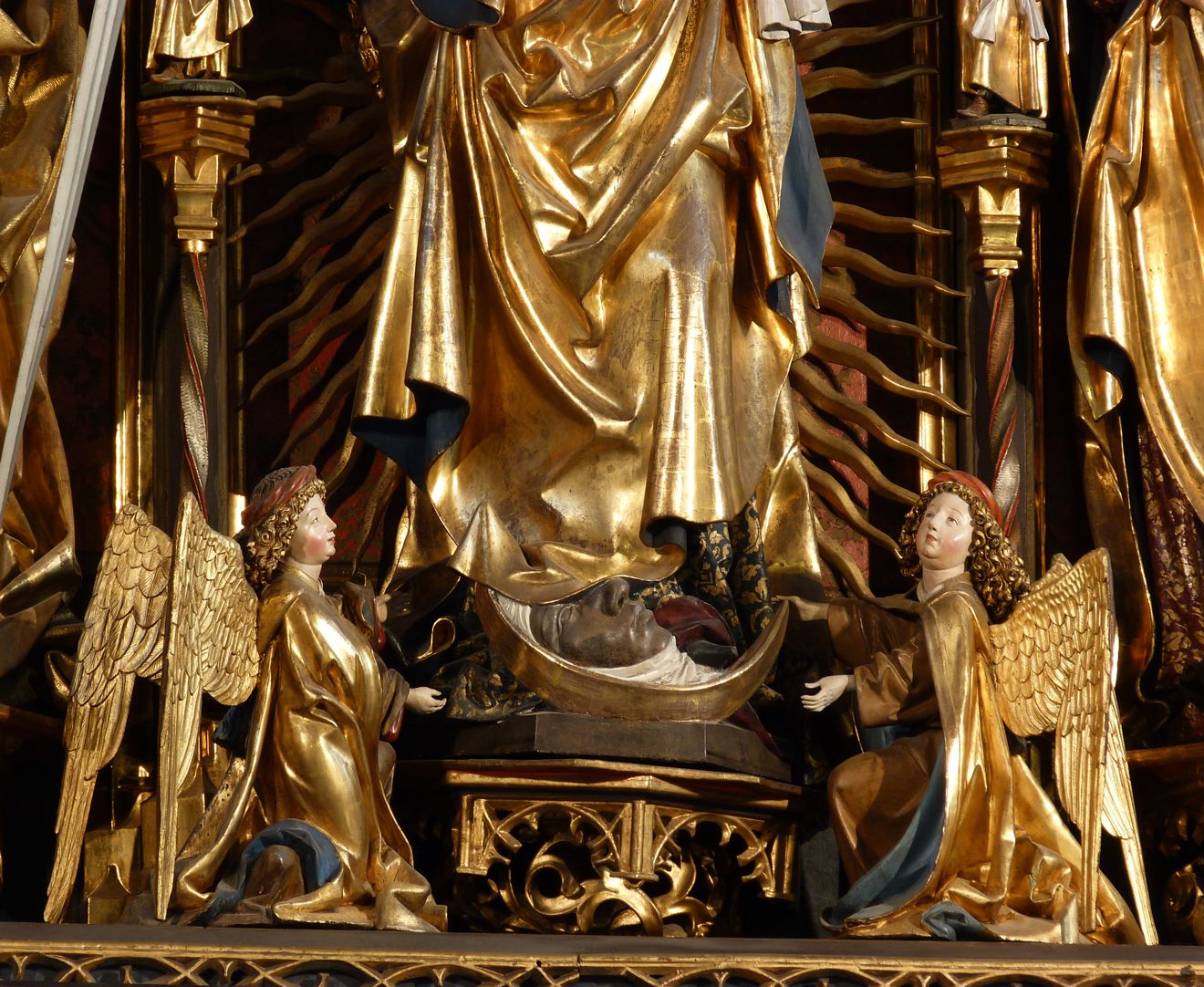
Schrein, Marienkörper auf der Mondsichel mit Präsentationsengeln
Doubly convertible reredos, proven to have been made in Nuremberg, built in 1479 and paid to Michael Wolgemut with fourteen hundred Rhenish guilders. The authorship of the carving that defines the reredos is unknown. The painted components show qualitative differences (the hands of Wolgemut and Pleydenwurff and those of the employees) and are overall probably less valuable than the sculptural part. The preference given to painting over carving in art historiography is certainly only due to Wolgemut's fame. The actual appreciation should be exactly the opposite. Dr. Pablo de la Riestra see also Peter's Altar in Nuremberg: Here we should point out stylistic parallels between the two works. The sculptures come from the same workshop, as noted by Stefan Roller, see Stefan Roller: Nuremberg Sculpture of the Late Gothic: Contributions to the Sculpture of the Imperial City in the Second Half of the 15th Century, Berlin 1999, p. 149.
photo 2015, Theo Noll
Zwickau high altarpiece
1479
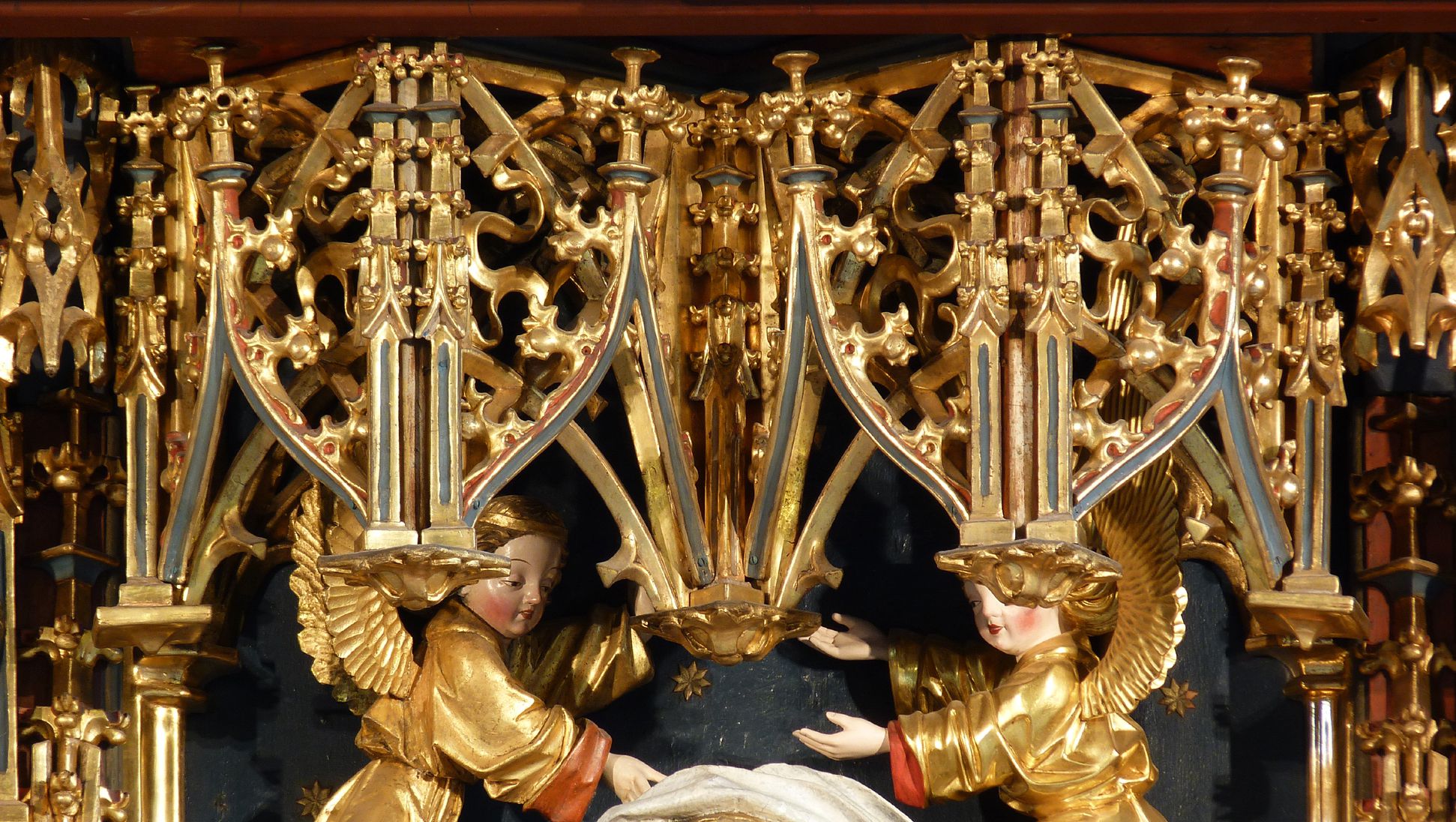
Schrein, Baldachine über der Maria
photo 2015, Theo Noll
Doubly convertible reredos, proven to have been made in Nuremberg, built in 1479 and paid to Michael Wolgemut with fourteen hundred Rhenish guilders. The authorship of the carving that defines the reredos is unknown. The painted components show qualitative differences (the hands of Wolgemut and Pleydenwurff and those of the employees) and are overall probably less valuable than the sculptural part. The preference given to painting over carving in art historiography is certainly only due to Wolgemut's fame. The actual appreciation should be exactly the opposite. Dr. Pablo de la Riestra see also Peter's Altar in Nuremberg: Here we should point out stylistic parallels between the two works. The sculptures come from the same workshop, as noted by Stefan Roller, see Stefan Roller: Nuremberg Sculpture of the Late Gothic: Contributions to the Sculpture of the Imperial City in the Second Half of the 15th Century, Berlin 1999, p. 149.
Zwickau high altarpiece
1479
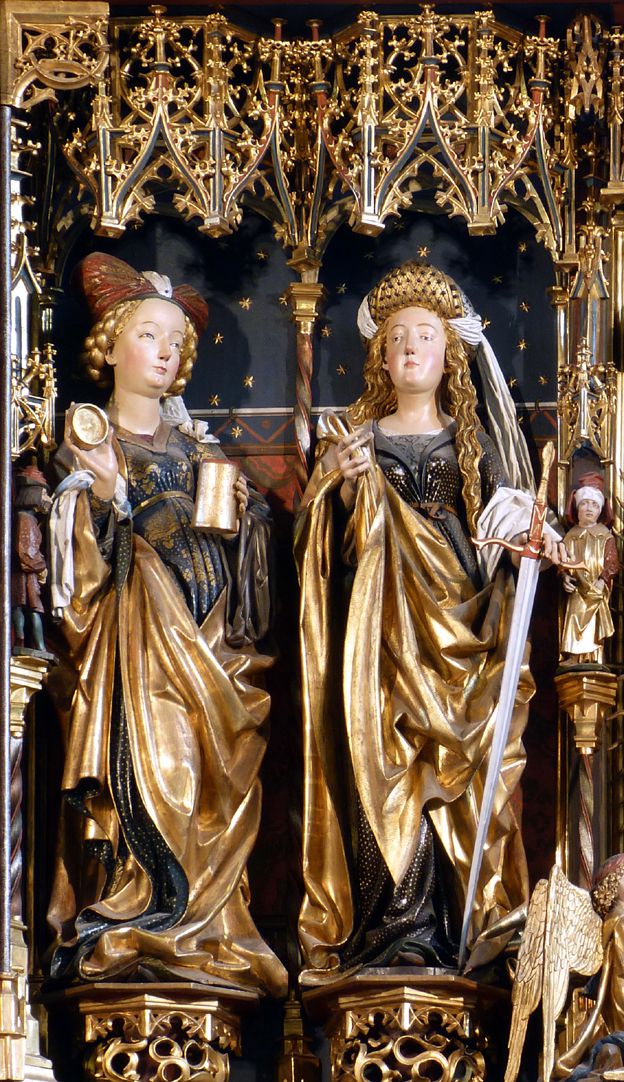
Schrein, Magdalena und Katharina
Doubly convertible reredos, proven to have been made in Nuremberg, built in 1479 and paid to Michael Wolgemut with fourteen hundred Rhenish guilders. The authorship of the carving that defines the reredos is unknown. The painted components show qualitative differences (the hands of Wolgemut and Pleydenwurff and those of the employees) and are overall probably less valuable than the sculptural part. The preference given to painting over carving in art historiography is certainly only due to Wolgemut's fame. The actual appreciation should be exactly the opposite. Dr. Pablo de la Riestra see also Peter's Altar in Nuremberg: Here we should point out stylistic parallels between the two works. The sculptures come from the same workshop, as noted by Stefan Roller, see Stefan Roller: Nuremberg Sculpture of the Late Gothic: Contributions to the Sculpture of the Imperial City in the Second Half of the 15th Century, Berlin 1999, p. 149.
photo 2015, Theo Noll
Zwickau high altarpiece
1479
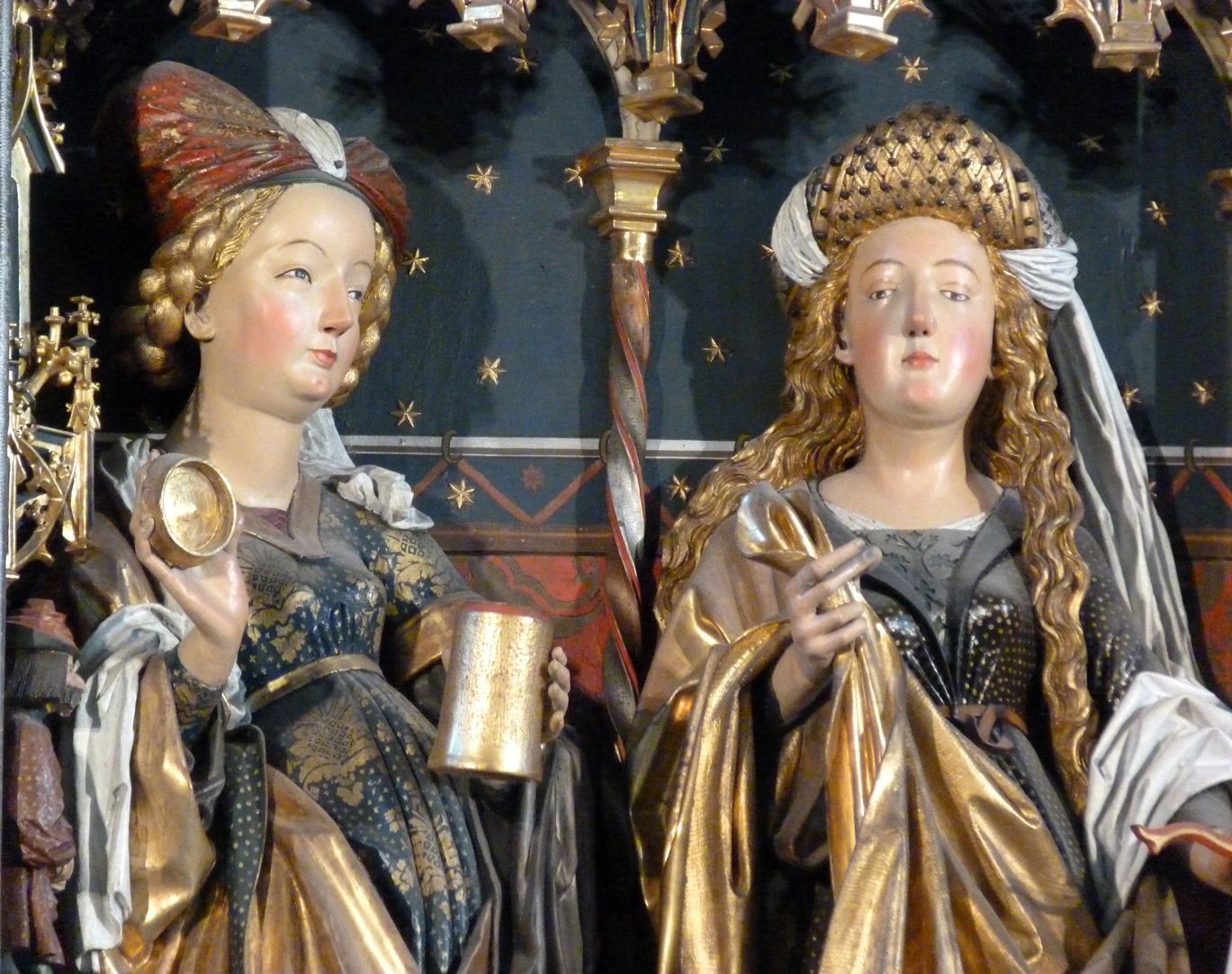
Schrein, Magdalena und Katharina, Detail
Doubly convertible reredos, proven to have been made in Nuremberg, built in 1479 and paid to Michael Wolgemut with fourteen hundred Rhenish guilders. The authorship of the carving that defines the reredos is unknown. The painted components show qualitative differences (the hands of Wolgemut and Pleydenwurff and those of the employees) and are overall probably less valuable than the sculptural part. The preference given to painting over carving in art historiography is certainly only due to Wolgemut's fame. The actual appreciation should be exactly the opposite. Dr. Pablo de la Riestra see also Peter's Altar in Nuremberg: Here we should point out stylistic parallels between the two works. The sculptures come from the same workshop, as noted by Stefan Roller, see Stefan Roller: Nuremberg Sculpture of the Late Gothic: Contributions to the Sculpture of the Imperial City in the Second Half of the 15th Century, Berlin 1999, p. 149.
photo 2015, Theo Noll
Zwickau high altarpiece
1479
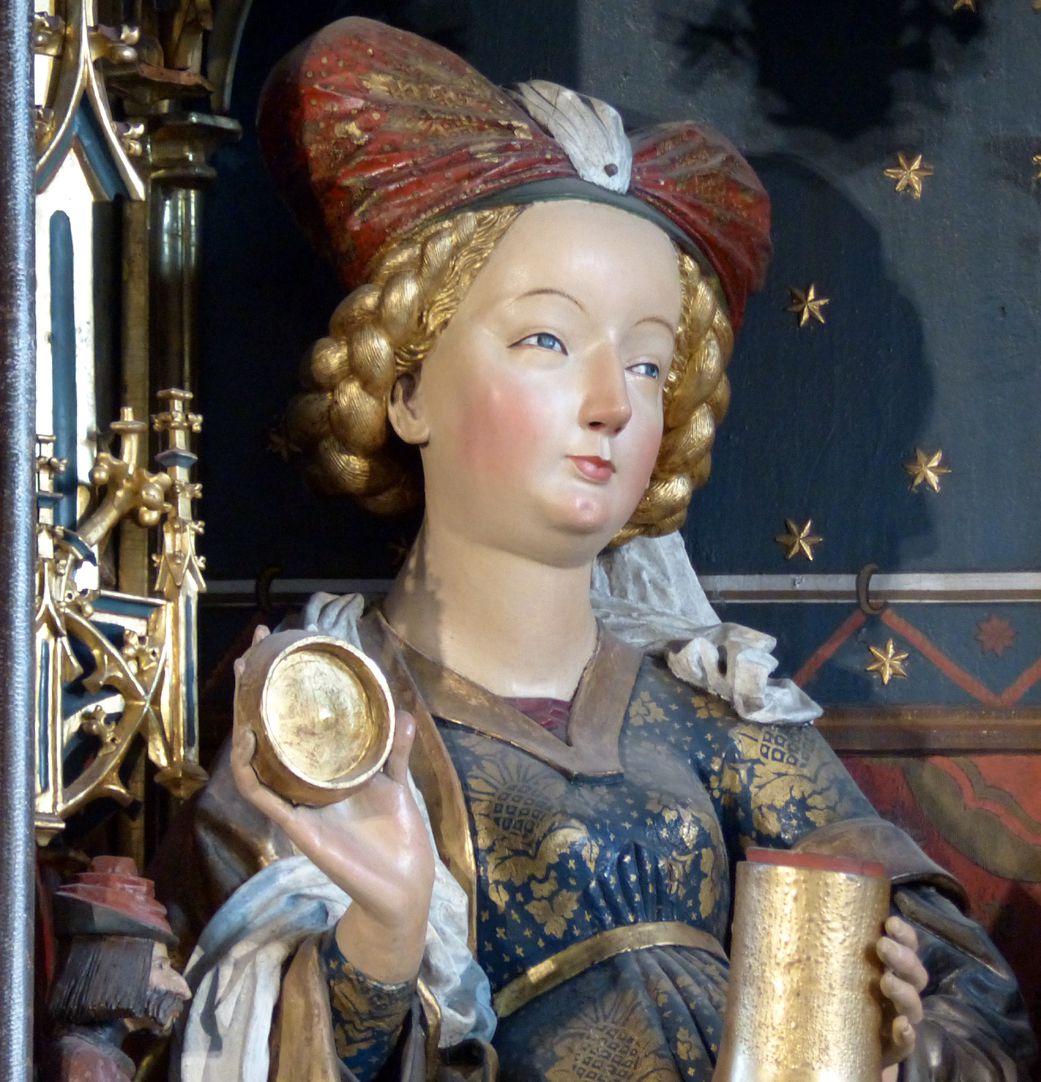
Schrein, Magdalena mit dem Salbgefäß
Doubly convertible reredos, proven to have been made in Nuremberg, built in 1479 and paid to Michael Wolgemut with fourteen hundred Rhenish guilders. The authorship of the carving that defines the reredos is unknown. The painted components show qualitative differences (the hands of Wolgemut and Pleydenwurff and those of the employees) and are overall probably less valuable than the sculptural part. The preference given to painting over carving in art historiography is certainly only due to Wolgemut's fame. The actual appreciation should be exactly the opposite. Dr. Pablo de la Riestra see also Peter's Altar in Nuremberg: Here we should point out stylistic parallels between the two works. The sculptures come from the same workshop, as noted by Stefan Roller, see Stefan Roller: Nuremberg Sculpture of the Late Gothic: Contributions to the Sculpture of the Imperial City in the Second Half of the 15th Century, Berlin 1999, p. 149.
photo 2015, Theo Noll
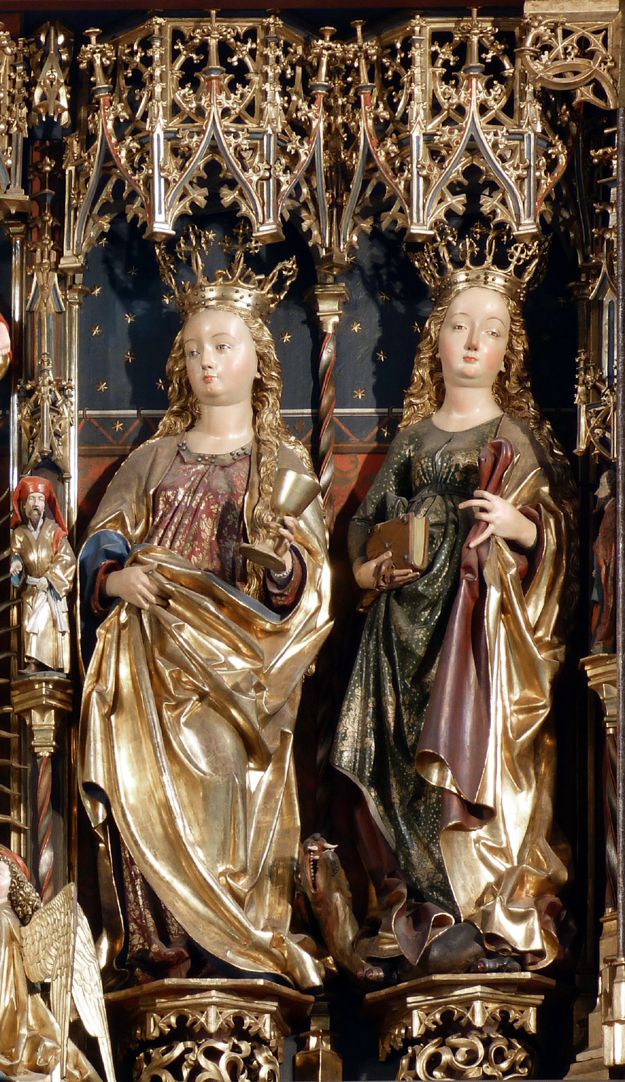
Zwickau high altarpiece
1479
Schrein, Barbara und Margarethe
Doubly convertible reredos, proven to have been made in Nuremberg, built in 1479 and paid to Michael Wolgemut with fourteen hundred Rhenish guilders. The authorship of the carving that defines the reredos is unknown. The painted components show qualitative differences (the hands of Wolgemut and Pleydenwurff and those of the employees) and are overall probably less valuable than the sculptural part. The preference given to painting over carving in art historiography is certainly only due to Wolgemut's fame. The actual appreciation should be exactly the opposite. Dr. Pablo de la Riestra see also Peter's Altar in Nuremberg: Here we should point out stylistic parallels between the two works. The sculptures come from the same workshop, as noted by Stefan Roller, see Stefan Roller: Nuremberg Sculpture of the Late Gothic: Contributions to the Sculpture of the Imperial City in the Second Half of the 15th Century, Berlin 1999, p. 149.
photo 2015, Theo Noll
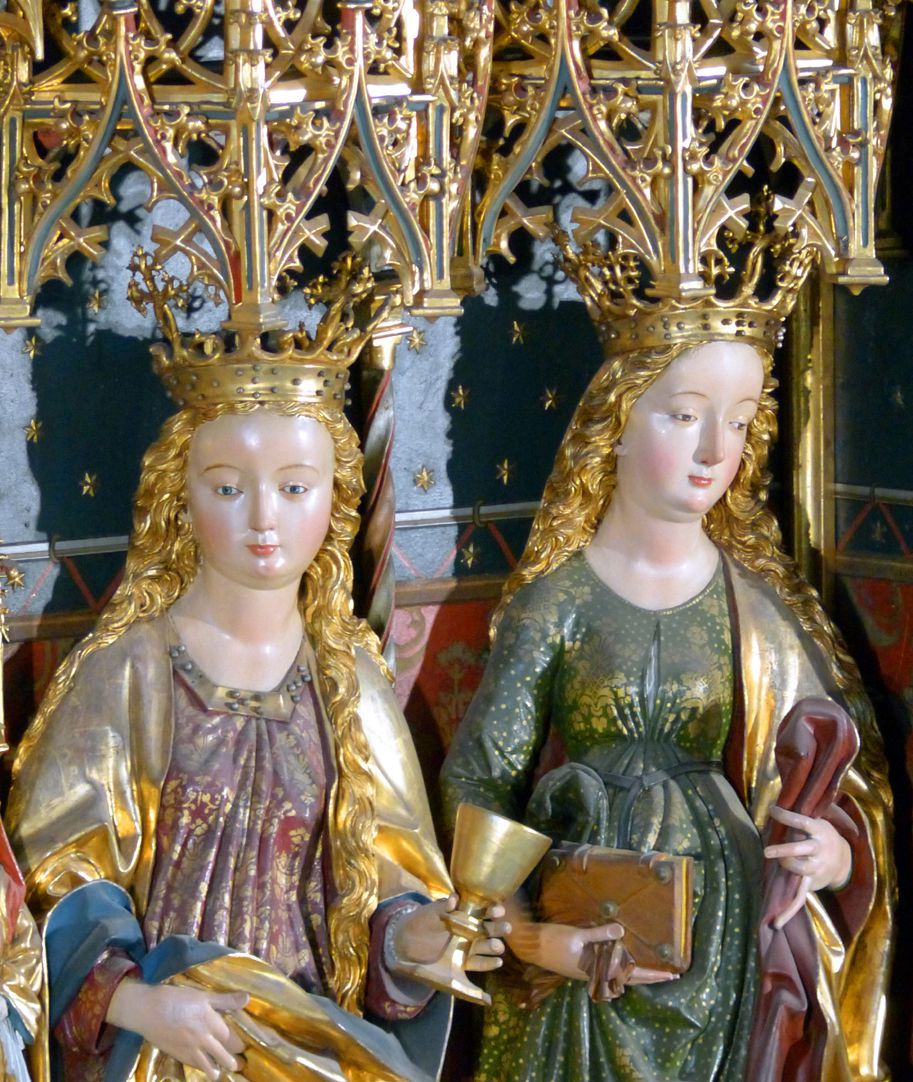
Zwickau high altarpiece
1479
Schrein, Barbara mit dem Kelch und Margarethe mit dem Buch
Doubly convertible reredos, proven to have been made in Nuremberg, built in 1479 and paid to Michael Wolgemut with fourteen hundred Rhenish guilders. The authorship of the carving that defines the reredos is unknown. The painted components show qualitative differences (the hands of Wolgemut and Pleydenwurff and those of the employees) and are overall probably less valuable than the sculptural part. The preference given to painting over carving in art historiography is certainly only due to Wolgemut's fame. The actual appreciation should be exactly the opposite. Dr. Pablo de la Riestra see also Peter's Altar in Nuremberg: Here we should point out stylistic parallels between the two works. The sculptures come from the same workshop, as noted by Stefan Roller, see Stefan Roller: Nuremberg Sculpture of the Late Gothic: Contributions to the Sculpture of the Imperial City in the Second Half of the 15th Century, Berlin 1999, p. 149.
photo 2015, Theo Noll
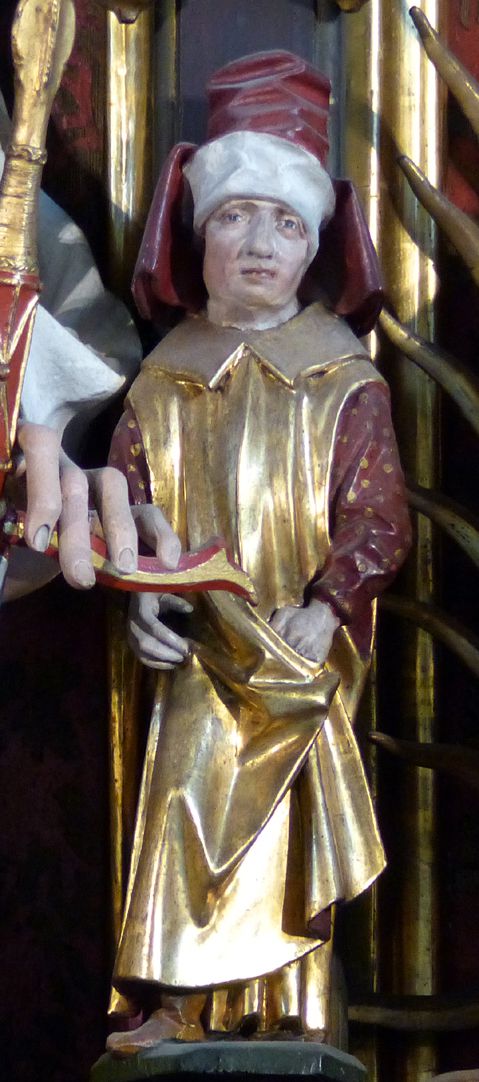
Zwickau high altarpiece
1479
Schrein, Prophet ? (rechts von Maria)
Doubly convertible reredos, proven to have been made in Nuremberg, built in 1479 and paid to Michael Wolgemut with fourteen hundred Rhenish guilders. The authorship of the carving that defines the reredos is unknown. The painted components show qualitative differences (the hands of Wolgemut and Pleydenwurff and those of the employees) and are overall probably less valuable than the sculptural part. The preference given to painting over carving in art historiography is certainly only due to Wolgemut's fame. The actual appreciation should be exactly the opposite. Dr. Pablo de la Riestra see also Peter's Altar in Nuremberg: Here we should point out stylistic parallels between the two works. The sculptures come from the same workshop, as noted by Stefan Roller, see Stefan Roller: Nuremberg Sculpture of the Late Gothic: Contributions to the Sculpture of the Imperial City in the Second Half of the 15th Century, Berlin 1999, p. 149.
photo 2015, Pablo de la Riestra
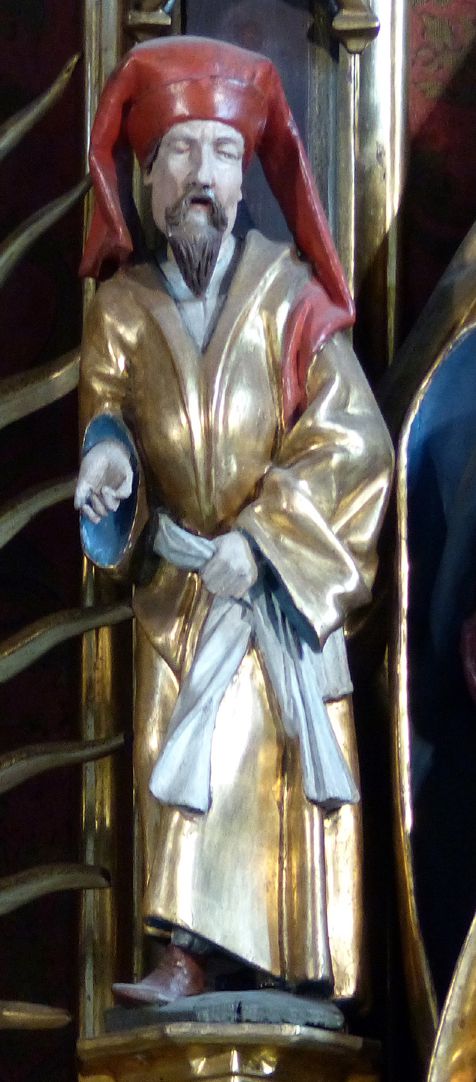
Zwickau high altarpiece
1479
Schrein, Prophet ? (links von Maria)
Doubly convertible reredos, proven to have been made in Nuremberg, built in 1479 and paid to Michael Wolgemut with fourteen hundred Rhenish guilders. The authorship of the carving that defines the reredos is unknown. The painted components show qualitative differences (the hands of Wolgemut and Pleydenwurff and those of the employees) and are overall probably less valuable than the sculptural part. The preference given to painting over carving in art historiography is certainly only due to Wolgemut's fame. The actual appreciation should be exactly the opposite. Dr. Pablo de la Riestra see also Peter's Altar in Nuremberg: Here we should point out stylistic parallels between the two works. The sculptures come from the same workshop, as noted by Stefan Roller, see Stefan Roller: Nuremberg Sculpture of the Late Gothic: Contributions to the Sculpture of the Imperial City in the Second Half of the 15th Century, Berlin 1999, p. 149.
photo 2015, Pablo de la Riestra
Zwickau high altarpiece
1479
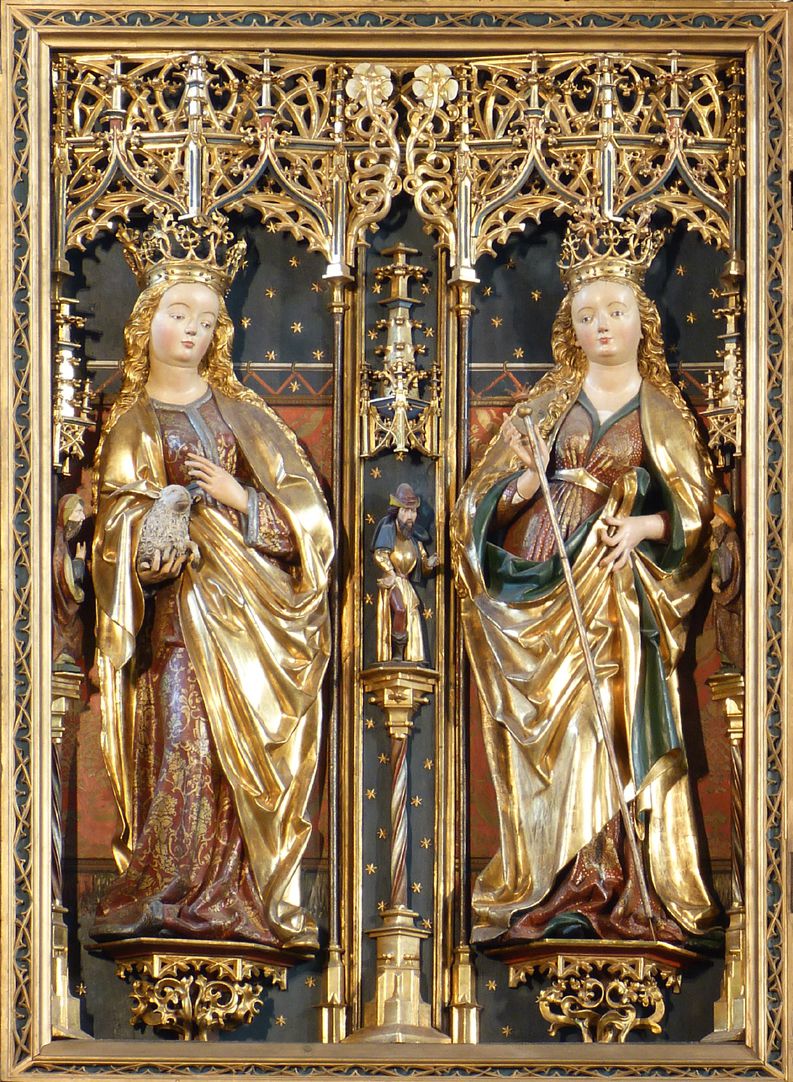
linker Flügel mit Agnes und unbekannter Heiligen
Doubly convertible reredos, proven to have been made in Nuremberg, built in 1479 and paid to Michael Wolgemut with fourteen hundred Rhenish guilders. The authorship of the carving that defines the reredos is unknown. The painted components show qualitative differences (the hands of Wolgemut and Pleydenwurff and those of the employees) and are overall probably less valuable than the sculptural part. The preference given to painting over carving in art historiography is certainly only due to Wolgemut's fame. The actual appreciation should be exactly the opposite. Dr. Pablo de la Riestra see also Peter's Altar in Nuremberg: Here we should point out stylistic parallels between the two works. The sculptures come from the same workshop, as noted by Stefan Roller, see Stefan Roller: Nuremberg Sculpture of the Late Gothic: Contributions to the Sculpture of the Imperial City in the Second Half of the 15th Century, Berlin 1999, p. 149.
photo 2015, Theo Noll
Zwickau high altarpiece
1479
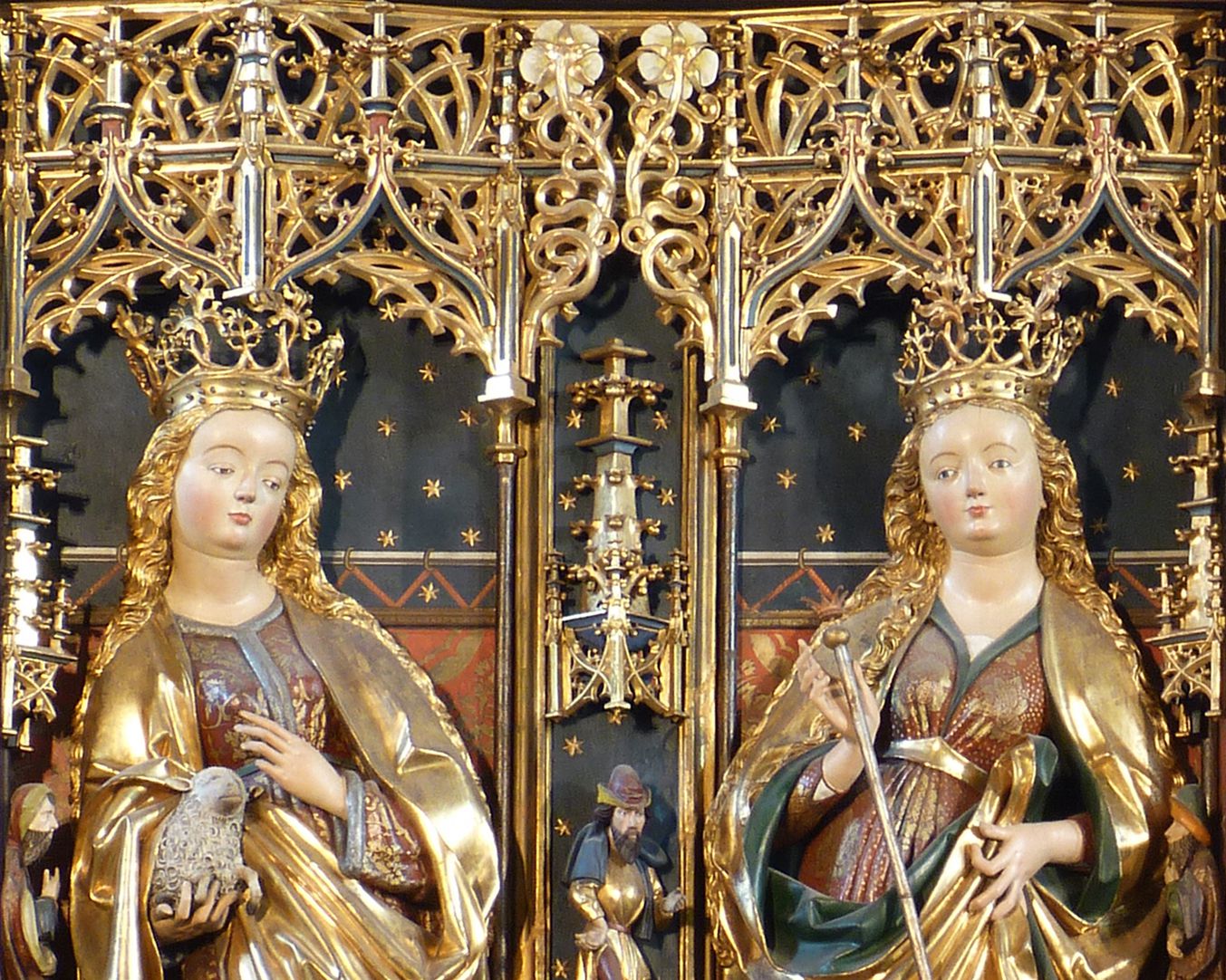
linker Flügel, Agnes mit dem Lamm und rechts Attribut unbekannt
Doubly convertible reredos, proven to have been made in Nuremberg, built in 1479 and paid to Michael Wolgemut with fourteen hundred Rhenish guilders. The authorship of the carving that defines the reredos is unknown. The painted components show qualitative differences (the hands of Wolgemut and Pleydenwurff and those of the employees) and are overall probably less valuable than the sculptural part. The preference given to painting over carving in art historiography is certainly only due to Wolgemut's fame. The actual appreciation should be exactly the opposite. Dr. Pablo de la Riestra see also Peter's Altar in Nuremberg: Here we should point out stylistic parallels between the two works. The sculptures come from the same workshop, as noted by Stefan Roller, see Stefan Roller: Nuremberg Sculpture of the Late Gothic: Contributions to the Sculpture of the Imperial City in the Second Half of the 15th Century, Berlin 1999, p. 149.
photo 2015, Theo Noll
Zwickau high altarpiece
1479
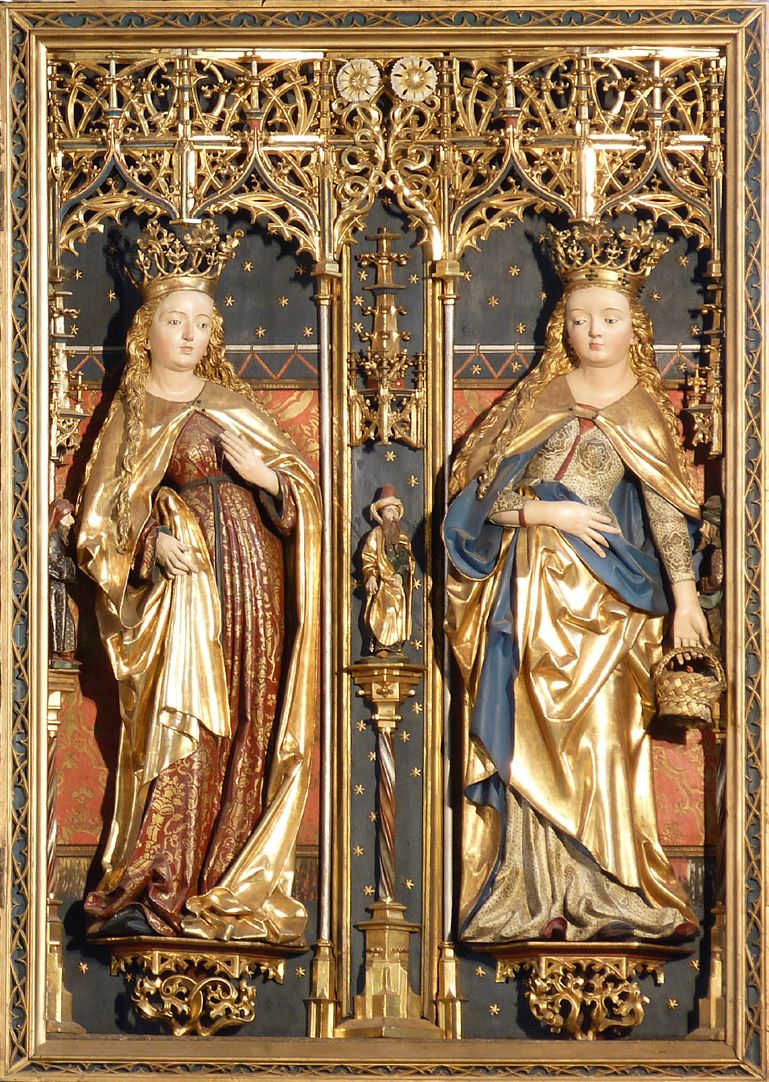
rechter Flügel, Heilige ohne Attribut und Heilige Dorothea mit dem Rosenkörbchen
Doubly convertible reredos, proven to have been made in Nuremberg, built in 1479 and paid to Michael Wolgemut with fourteen hundred Rhenish guilders. The authorship of the carving that defines the reredos is unknown. The painted components show qualitative differences (the hands of Wolgemut and Pleydenwurff and those of the employees) and are overall probably less valuable than the sculptural part. The preference given to painting over carving in art historiography is certainly only due to Wolgemut's fame. The actual appreciation should be exactly the opposite. Dr. Pablo de la Riestra see also Peter's Altar in Nuremberg: Here we should point out stylistic parallels between the two works. The sculptures come from the same workshop, as noted by Stefan Roller, see Stefan Roller: Nuremberg Sculpture of the Late Gothic: Contributions to the Sculpture of the Imperial City in the Second Half of the 15th Century, Berlin 1999, p. 149.
photo 2015, Theo Noll
Zwickau high altarpiece
1479
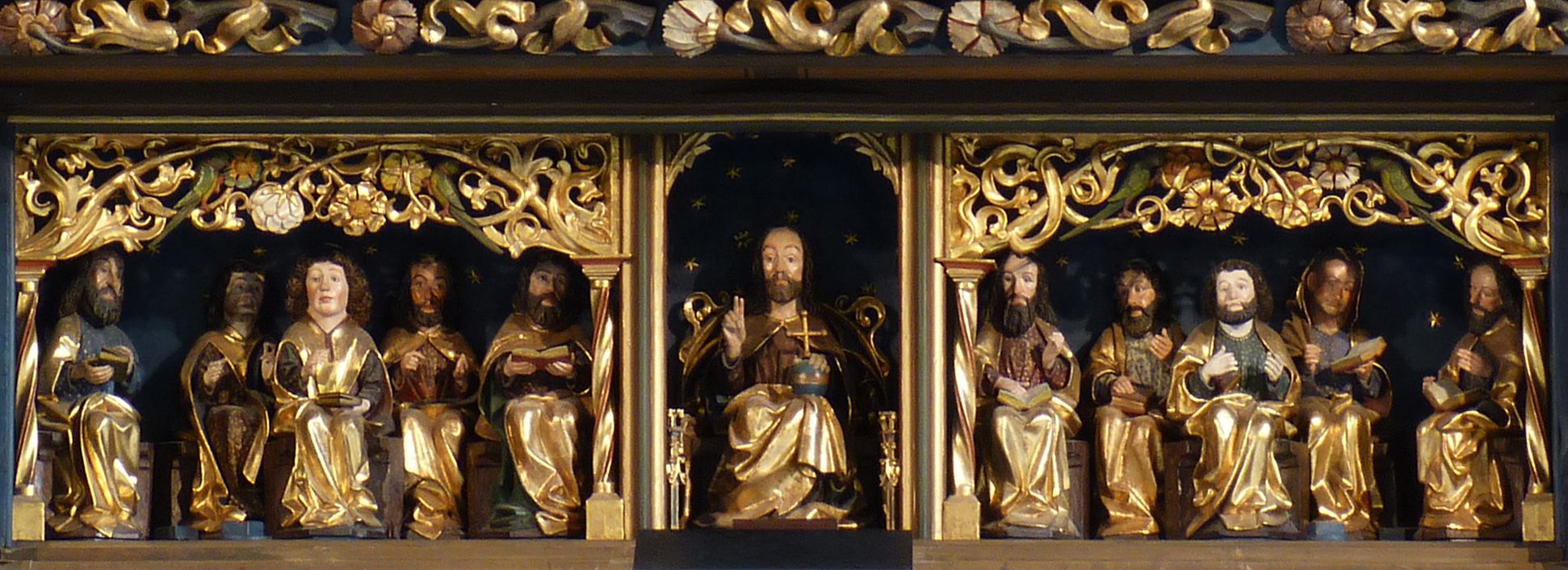
Predella, Schnitzwerk, ganz
photo 2015, Pablo de la Riestra
Doubly convertible reredos, proven to have been made in Nuremberg, built in 1479 and paid to Michael Wolgemut with fourteen hundred Rhenish guilders. The authorship of the carving that defines the reredos is unknown. The painted components show qualitative differences (the hands of Wolgemut and Pleydenwurff and those of the employees) and are overall probably less valuable than the sculptural part. The preference given to painting over carving in art historiography is certainly only due to Wolgemut's fame. The actual appreciation should be exactly the opposite. Dr. Pablo de la Riestra see also Peter's Altar in Nuremberg: Here we should point out stylistic parallels between the two works. The sculptures come from the same workshop, as noted by Stefan Roller, see Stefan Roller: Nuremberg Sculpture of the Late Gothic: Contributions to the Sculpture of the Imperial City in the Second Half of the 15th Century, Berlin 1999, p. 149.
Zwickau high altarpiece
1479
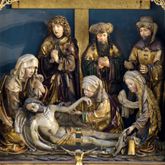
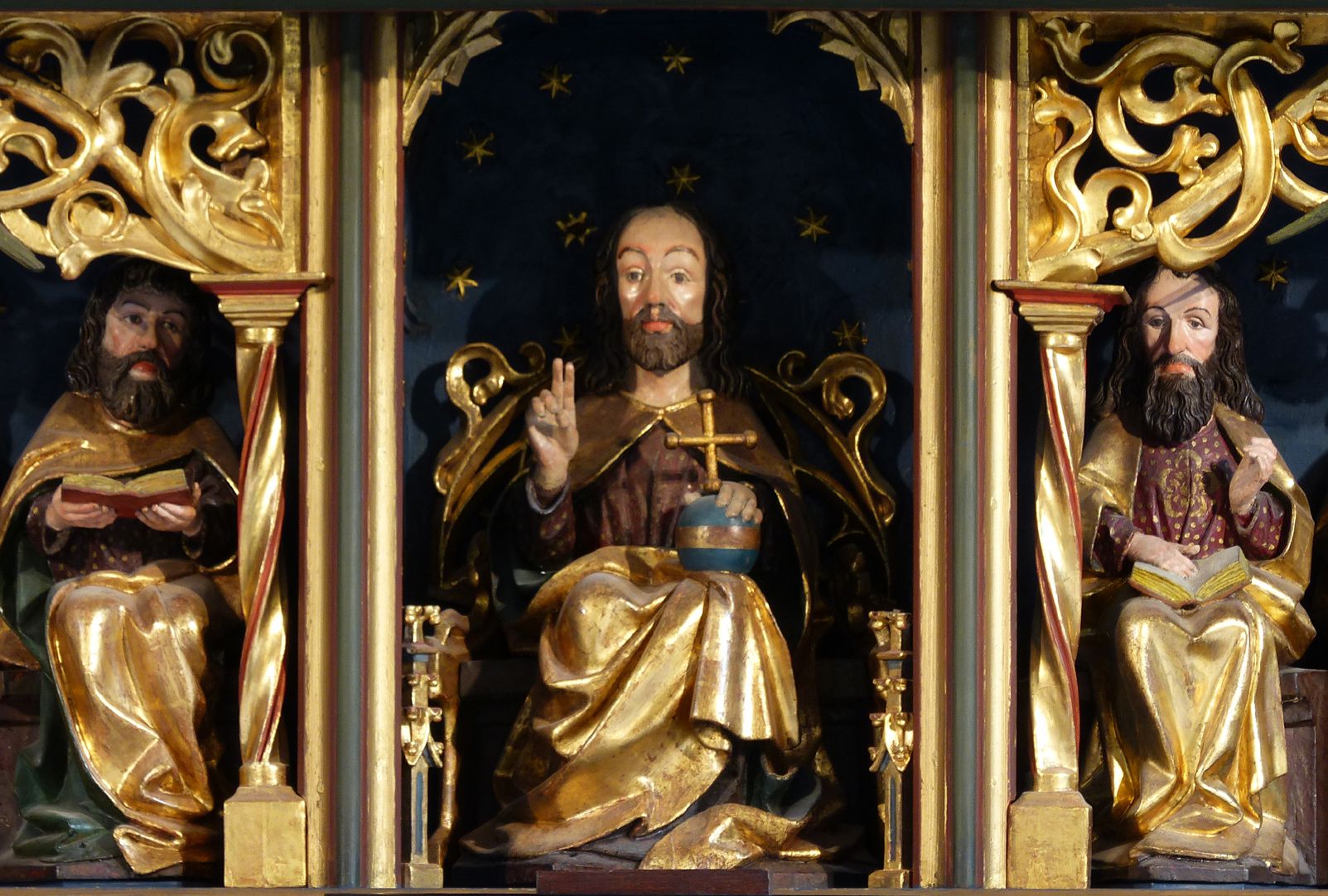
Predella, Schnitzwerk, Mittelteil mit Christus
Doubly convertible reredos, proven to have been made in Nuremberg, built in 1479 and paid to Michael Wolgemut with fourteen hundred Rhenish guilders. The authorship of the carving that defines the reredos is unknown. The painted components show qualitative differences (the hands of Wolgemut and Pleydenwurff and those of the employees) and are overall probably less valuable than the sculptural part. The preference given to painting over carving in art historiography is certainly only due to Wolgemut's fame. The actual appreciation should be exactly the opposite. Dr. Pablo de la Riestra see also Peter's Altar in Nuremberg: Here we should point out stylistic parallels between the two works. The sculptures come from the same workshop, as noted by Stefan Roller, see Stefan Roller: Nuremberg Sculpture of the Late Gothic: Contributions to the Sculpture of the Imperial City in the Second Half of the 15th Century, Berlin 1999, p. 149.
photo 2015, Pablo de la Riestra
Zwickau high altarpiece
1479
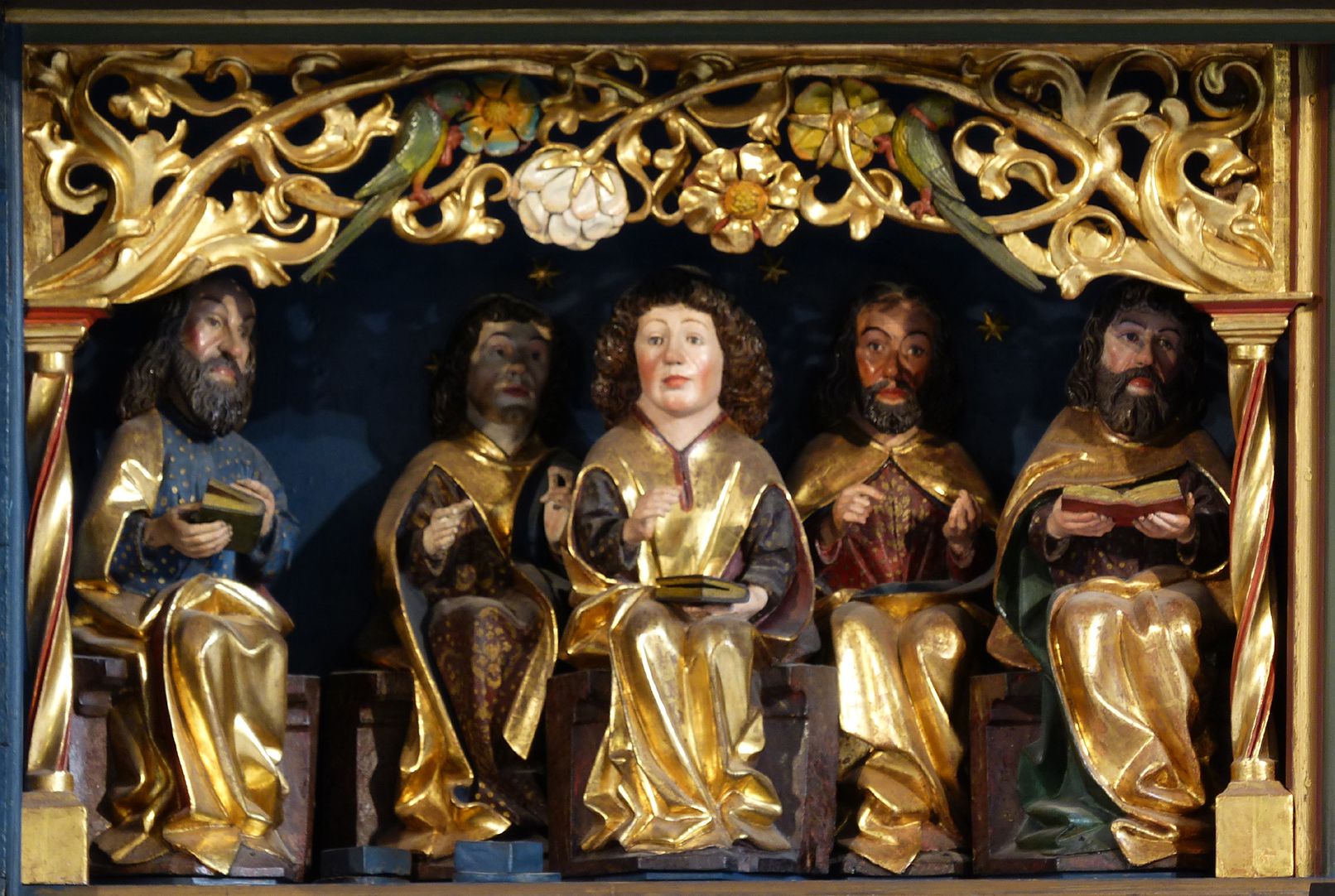
Predella, Schnitzwerk, linkes Apostolat
Doubly convertible reredos, proven to have been made in Nuremberg, built in 1479 and paid to Michael Wolgemut with fourteen hundred Rhenish guilders. The authorship of the carving that defines the reredos is unknown. The painted components show qualitative differences (the hands of Wolgemut and Pleydenwurff and those of the employees) and are overall probably less valuable than the sculptural part. The preference given to painting over carving in art historiography is certainly only due to Wolgemut's fame. The actual appreciation should be exactly the opposite. Dr. Pablo de la Riestra see also Peter's Altar in Nuremberg: Here we should point out stylistic parallels between the two works. The sculptures come from the same workshop, as noted by Stefan Roller, see Stefan Roller: Nuremberg Sculpture of the Late Gothic: Contributions to the Sculpture of the Imperial City in the Second Half of the 15th Century, Berlin 1999, p. 149.
photo 2015, Pablo de la Riestra
Zwickau high altarpiece
1479
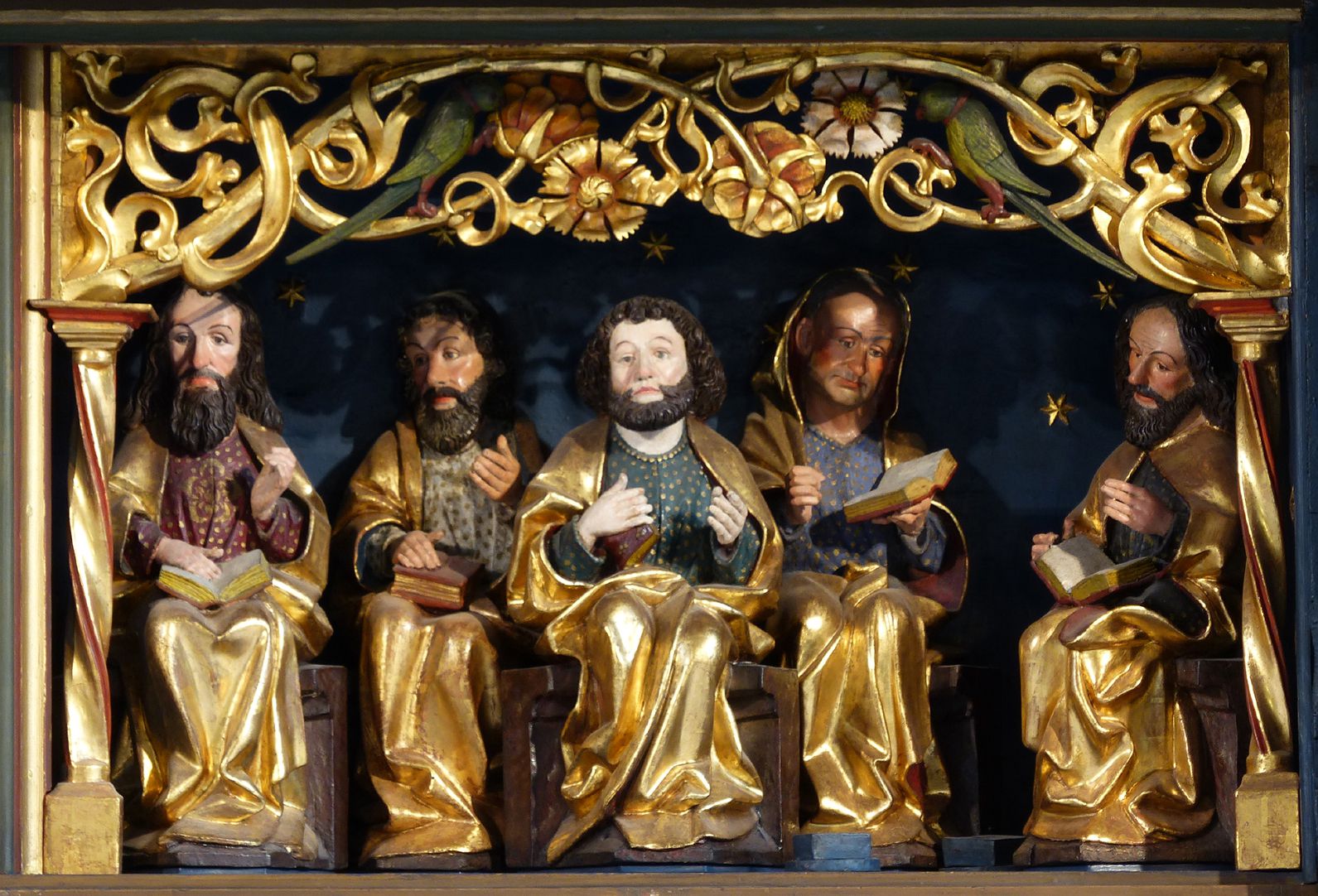
Predella, Schnitzwerk, rechtes Apostolat
Doubly convertible reredos, proven to have been made in Nuremberg, built in 1479 and paid to Michael Wolgemut with fourteen hundred Rhenish guilders. The authorship of the carving that defines the reredos is unknown. The painted components show qualitative differences (the hands of Wolgemut and Pleydenwurff and those of the employees) and are overall probably less valuable than the sculptural part. The preference given to painting over carving in art historiography is certainly only due to Wolgemut's fame. The actual appreciation should be exactly the opposite. Dr. Pablo de la Riestra see also Peter's Altar in Nuremberg: Here we should point out stylistic parallels between the two works. The sculptures come from the same workshop, as noted by Stefan Roller, see Stefan Roller: Nuremberg Sculpture of the Late Gothic: Contributions to the Sculpture of the Imperial City in the Second Half of the 15th Century, Berlin 1999, p. 149.
photo 2015, Pablo de la Riestra
Zwickau high altarpiece
1479
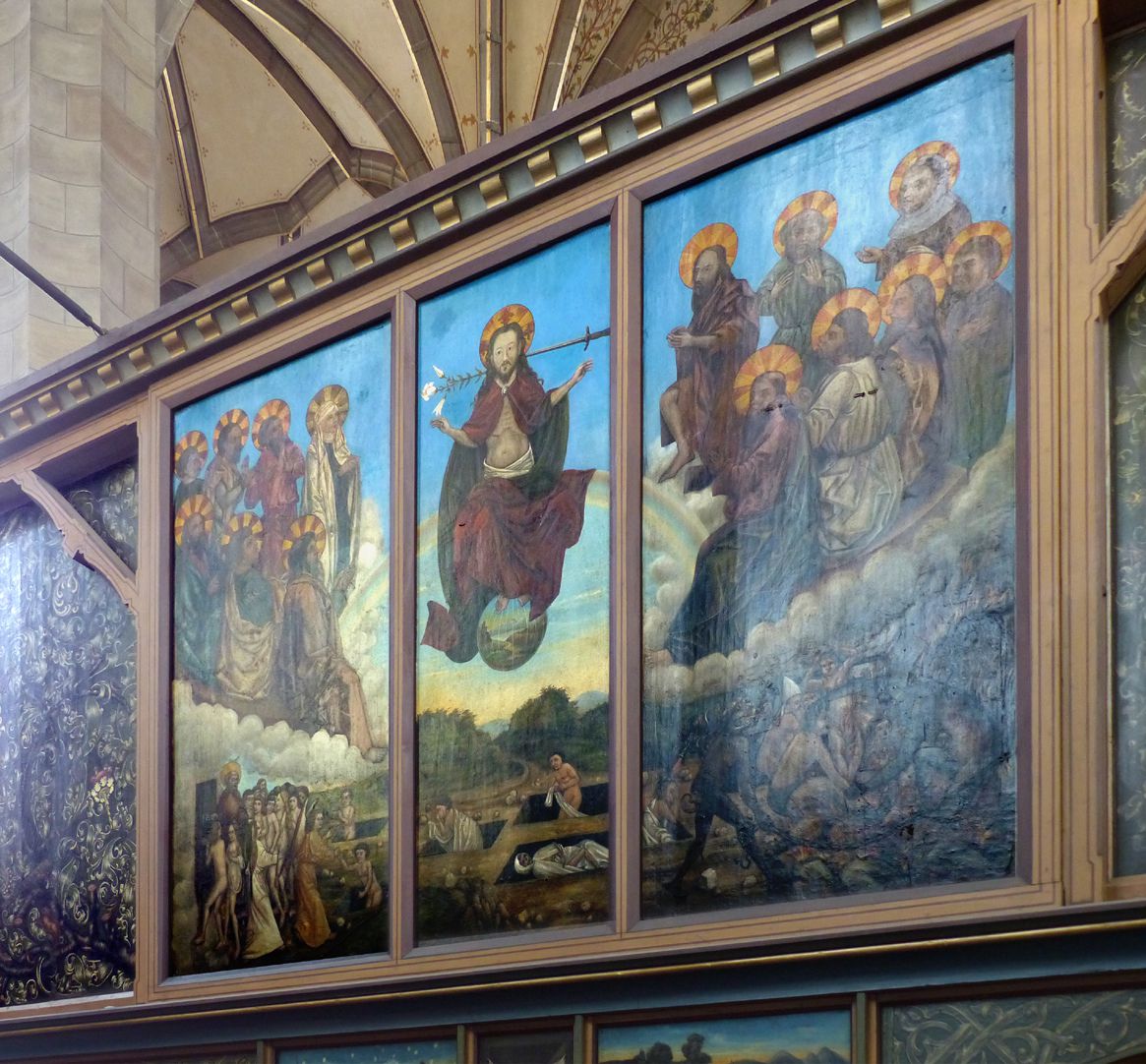
Schrein, Rückseite
Doubly convertible reredos, proven to have been made in Nuremberg, built in 1479 and paid to Michael Wolgemut with fourteen hundred Rhenish guilders. The authorship of the carving that defines the reredos is unknown. The painted components show qualitative differences (the hands of Wolgemut and Pleydenwurff and those of the employees) and are overall probably less valuable than the sculptural part. The preference given to painting over carving in art historiography is certainly only due to Wolgemut's fame. The actual appreciation should be exactly the opposite. Dr. Pablo de la Riestra see also Peter's Altar in Nuremberg: Here we should point out stylistic parallels between the two works. The sculptures come from the same workshop, as noted by Stefan Roller, see Stefan Roller: Nuremberg Sculpture of the Late Gothic: Contributions to the Sculpture of the Imperial City in the Second Half of the 15th Century, Berlin 1999, p. 149.
photo 2015, Pablo de la Riestra
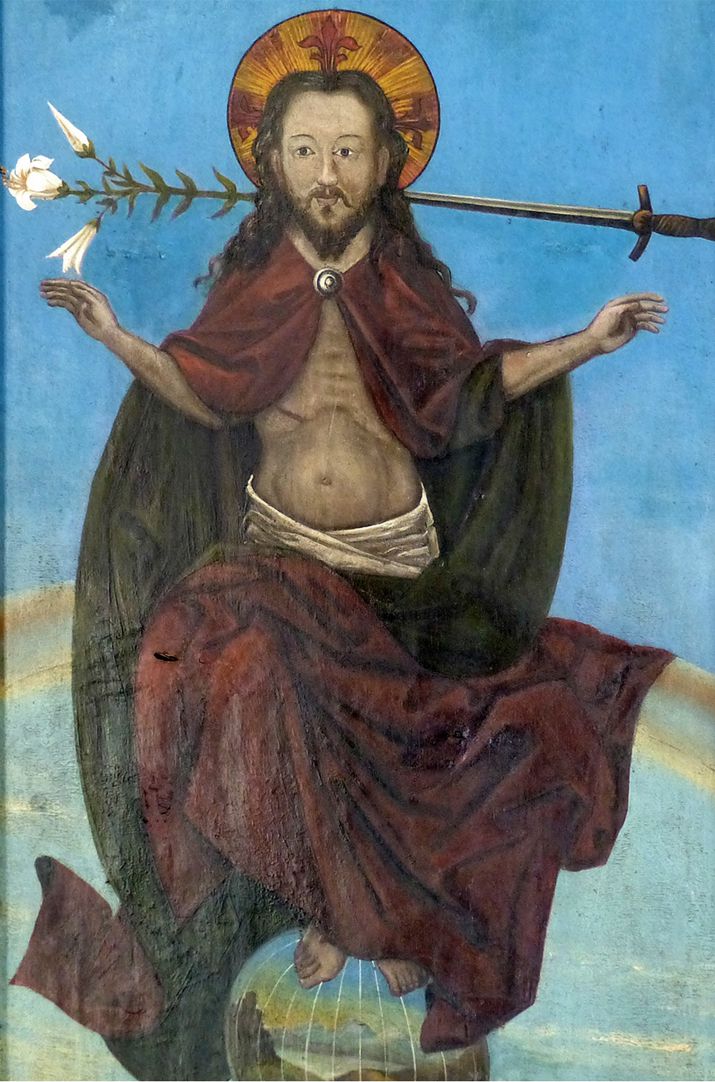
Zwickau high altarpiece
1479
Schrein , Rückseite, Christus als Richter auf dem Regenbogen
Doubly convertible reredos, proven to have been made in Nuremberg, built in 1479 and paid to Michael Wolgemut with fourteen hundred Rhenish guilders. The authorship of the carving that defines the reredos is unknown. The painted components show qualitative differences (the hands of Wolgemut and Pleydenwurff and those of the employees) and are overall probably less valuable than the sculptural part. The preference given to painting over carving in art historiography is certainly only due to Wolgemut's fame. The actual appreciation should be exactly the opposite. Dr. Pablo de la Riestra see also Peter's Altar in Nuremberg: Here we should point out stylistic parallels between the two works. The sculptures come from the same workshop, as noted by Stefan Roller, see Stefan Roller: Nuremberg Sculpture of the Late Gothic: Contributions to the Sculpture of the Imperial City in the Second Half of the 15th Century, Berlin 1999, p. 149.
photo 2015, Pablo de la Riestra
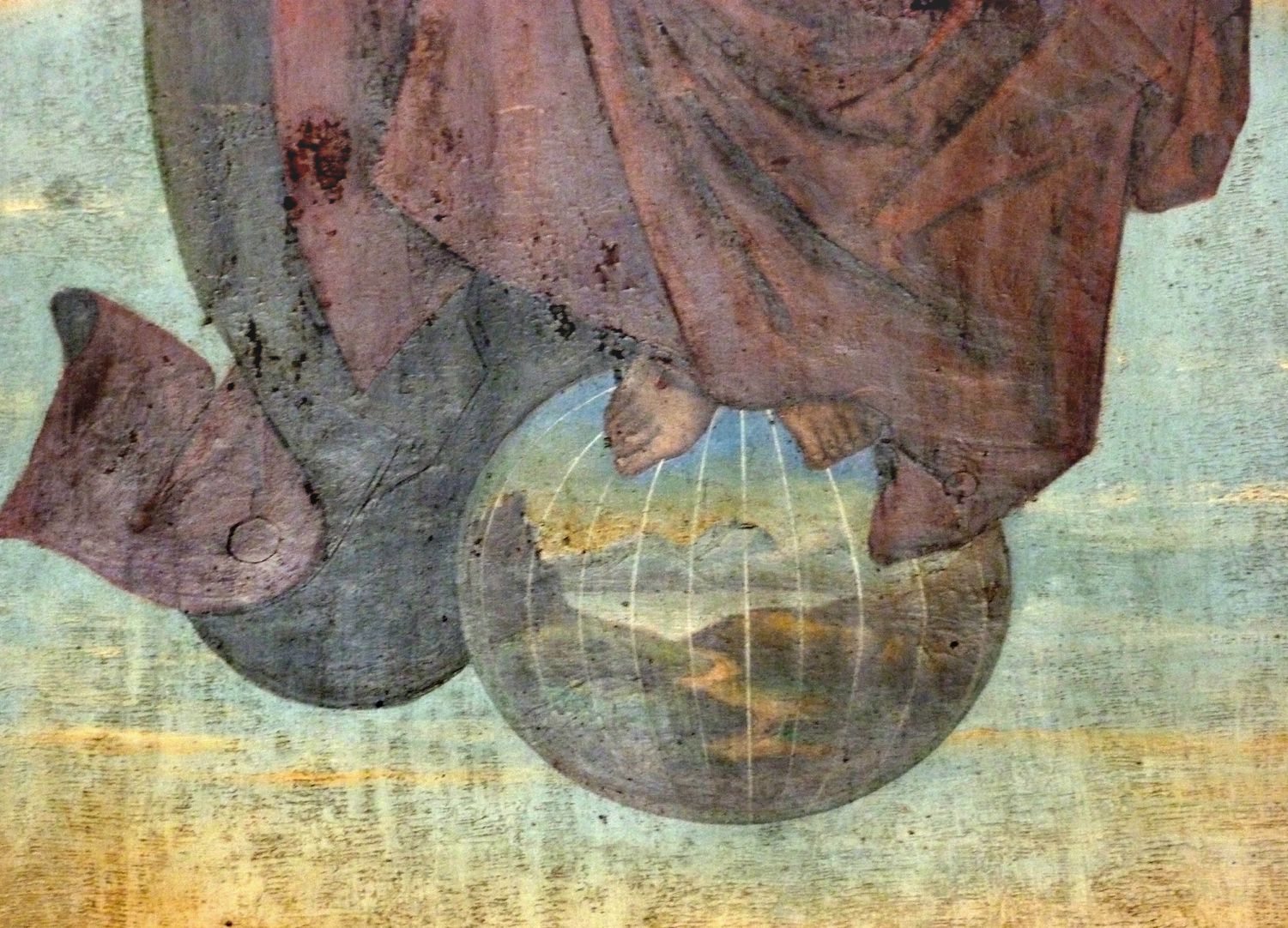
Zwickau high altarpiece
1479
Schrein, Rückseite, Christus als Richter auf dem Regenbogen, Detail mit Weltkugel
Doubly convertible reredos, proven to have been made in Nuremberg, built in 1479 and paid to Michael Wolgemut with fourteen hundred Rhenish guilders. The authorship of the carving that defines the reredos is unknown. The painted components show qualitative differences (the hands of Wolgemut and Pleydenwurff and those of the employees) and are overall probably less valuable than the sculptural part. The preference given to painting over carving in art historiography is certainly only due to Wolgemut's fame. The actual appreciation should be exactly the opposite. Dr. Pablo de la Riestra see also Peter's Altar in Nuremberg: Here we should point out stylistic parallels between the two works. The sculptures come from the same workshop, as noted by Stefan Roller, see Stefan Roller: Nuremberg Sculpture of the Late Gothic: Contributions to the Sculpture of the Imperial City in the Second Half of the 15th Century, Berlin 1999, p. 149.
photo 2015, Theo Noll
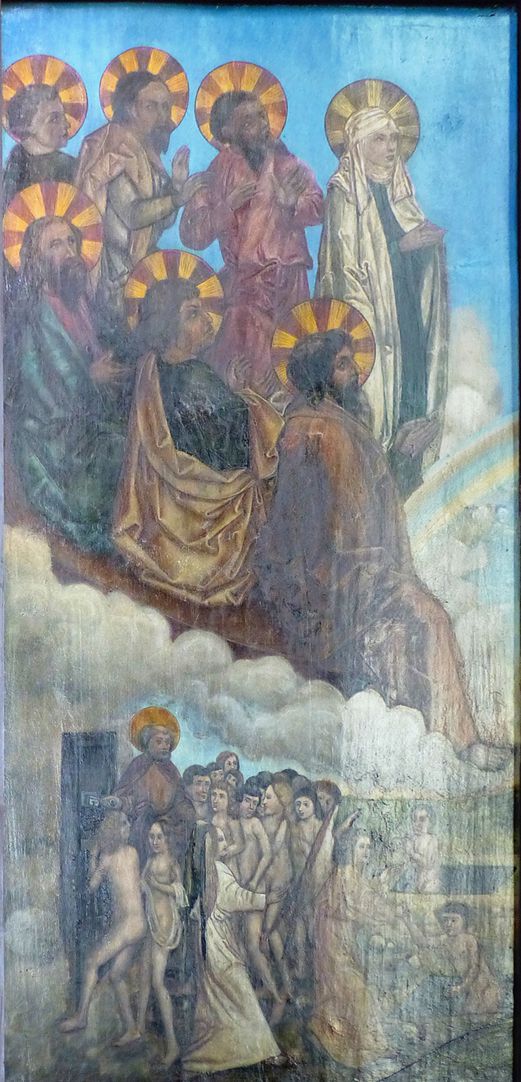
Zwickau high altarpiece
1479
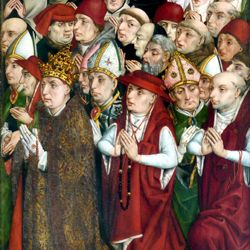
Schrein , Rückseite, linke Tafel: Die Auserwählten
Doubly convertible reredos, proven to have been made in Nuremberg, built in 1479 and paid to Michael Wolgemut with fourteen hundred Rhenish guilders. The authorship of the carving that defines the reredos is unknown. The painted components show qualitative differences (the hands of Wolgemut and Pleydenwurff and those of the employees) and are overall probably less valuable than the sculptural part. The preference given to painting over carving in art historiography is certainly only due to Wolgemut's fame. The actual appreciation should be exactly the opposite. Dr. Pablo de la Riestra see also Peter's Altar in Nuremberg: Here we should point out stylistic parallels between the two works. The sculptures come from the same workshop, as noted by Stefan Roller, see Stefan Roller: Nuremberg Sculpture of the Late Gothic: Contributions to the Sculpture of the Imperial City in the Second Half of the 15th Century, Berlin 1999, p. 149.
photo 2015, Pablo de la Riestra
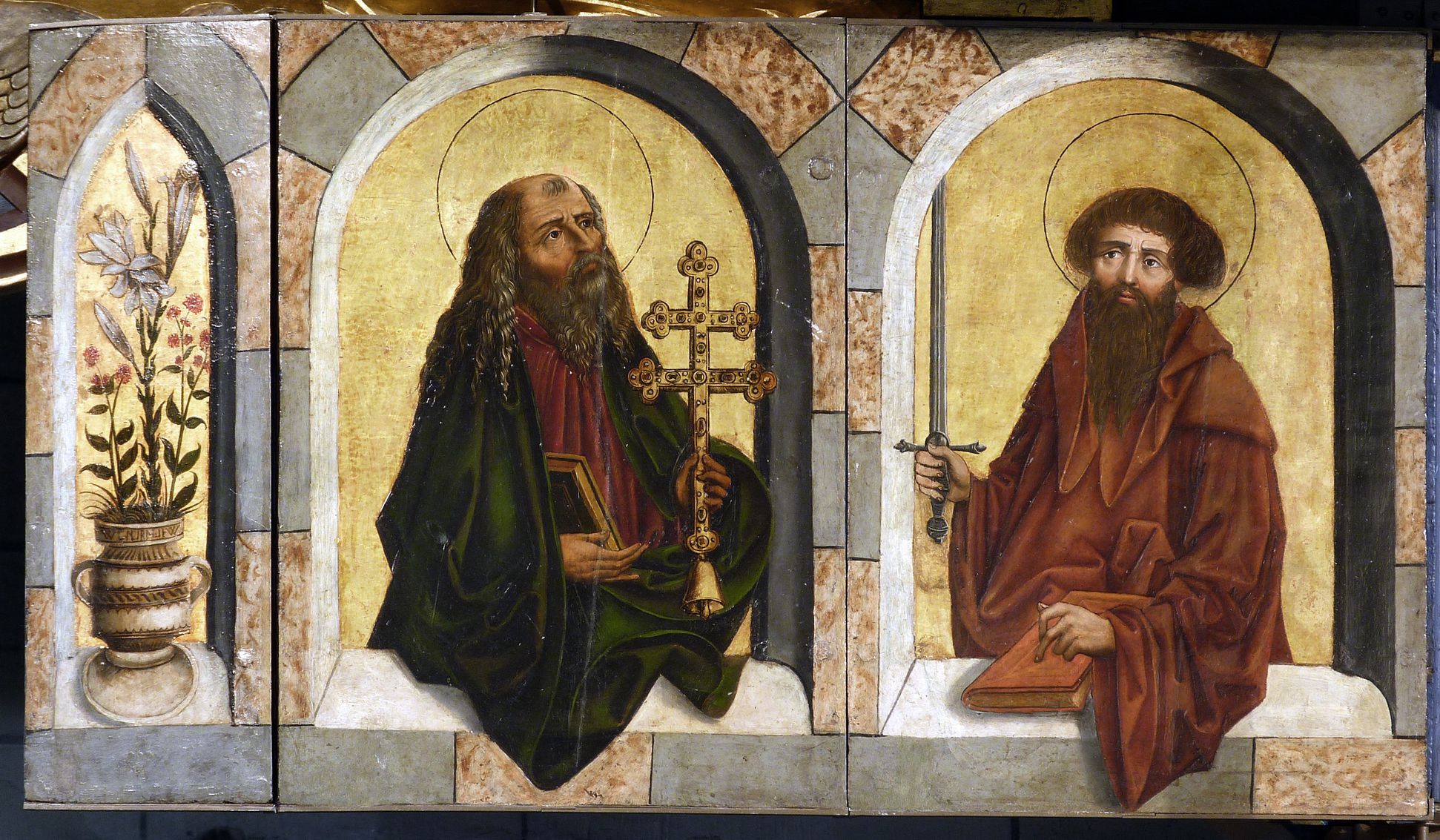
Zwickau high altarpiece
1479
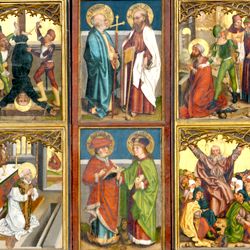
Predella, aufgeklappter linker Flügel mit Antonius und Paulus
photo 2015, Theo Noll
Doubly convertible reredos, proven to have been made in Nuremberg, built in 1479 and paid to Michael Wolgemut with fourteen hundred Rhenish guilders. The authorship of the carving that defines the reredos is unknown. The painted components show qualitative differences (the hands of Wolgemut and Pleydenwurff and those of the employees) and are overall probably less valuable than the sculptural part. The preference given to painting over carving in art historiography is certainly only due to Wolgemut's fame. The actual appreciation should be exactly the opposite. Dr. Pablo de la Riestra see also Peter's Altar in Nuremberg: Here we should point out stylistic parallels between the two works. The sculptures come from the same workshop, as noted by Stefan Roller, see Stefan Roller: Nuremberg Sculpture of the Late Gothic: Contributions to the Sculpture of the Imperial City in the Second Half of the 15th Century, Berlin 1999, p. 149.
Zwickau high altarpiece
1479
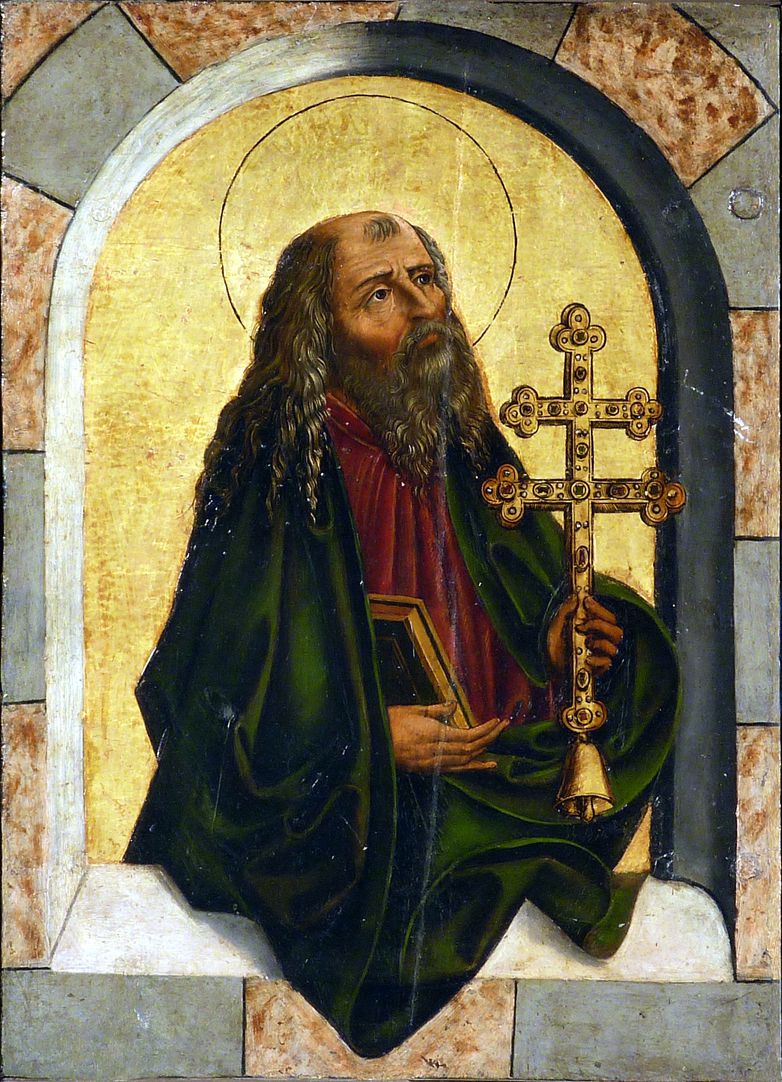
Predella, aufgeklappter linker Flügel, Antonius
Doubly convertible reredos, proven to have been made in Nuremberg, built in 1479 and paid to Michael Wolgemut with fourteen hundred Rhenish guilders. The authorship of the carving that defines the reredos is unknown. The painted components show qualitative differences (the hands of Wolgemut and Pleydenwurff and those of the employees) and are overall probably less valuable than the sculptural part. The preference given to painting over carving in art historiography is certainly only due to Wolgemut's fame. The actual appreciation should be exactly the opposite. Dr. Pablo de la Riestra see also Peter's Altar in Nuremberg: Here we should point out stylistic parallels between the two works. The sculptures come from the same workshop, as noted by Stefan Roller, see Stefan Roller: Nuremberg Sculpture of the Late Gothic: Contributions to the Sculpture of the Imperial City in the Second Half of the 15th Century, Berlin 1999, p. 149.
photo 2015, Theo Noll
Zwickau high altarpiece
1479
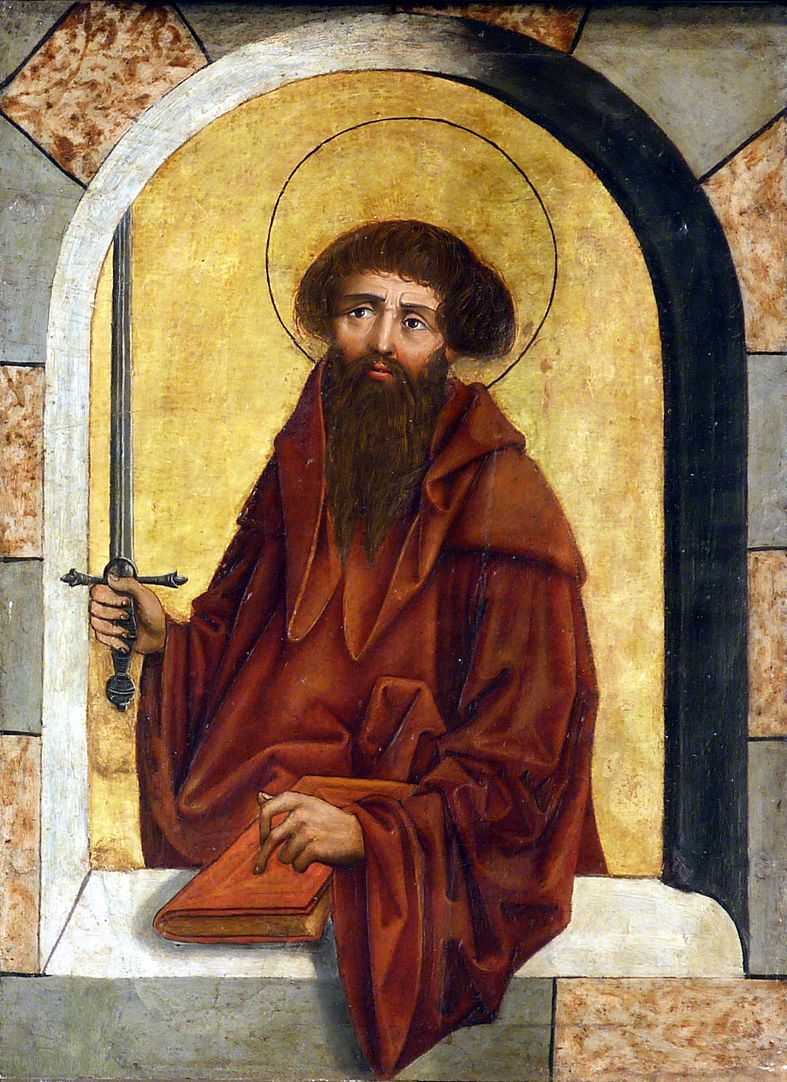
Predella, aufgeklappter linker Flügel, Paulus
Doubly convertible reredos, proven to have been made in Nuremberg, built in 1479 and paid to Michael Wolgemut with fourteen hundred Rhenish guilders. The authorship of the carving that defines the reredos is unknown. The painted components show qualitative differences (the hands of Wolgemut and Pleydenwurff and those of the employees) and are overall probably less valuable than the sculptural part. The preference given to painting over carving in art historiography is certainly only due to Wolgemut's fame. The actual appreciation should be exactly the opposite. Dr. Pablo de la Riestra see also Peter's Altar in Nuremberg: Here we should point out stylistic parallels between the two works. The sculptures come from the same workshop, as noted by Stefan Roller, see Stefan Roller: Nuremberg Sculpture of the Late Gothic: Contributions to the Sculpture of the Imperial City in the Second Half of the 15th Century, Berlin 1999, p. 149.
photo 2015, Theo Noll
Zwickau high altarpiece
1479
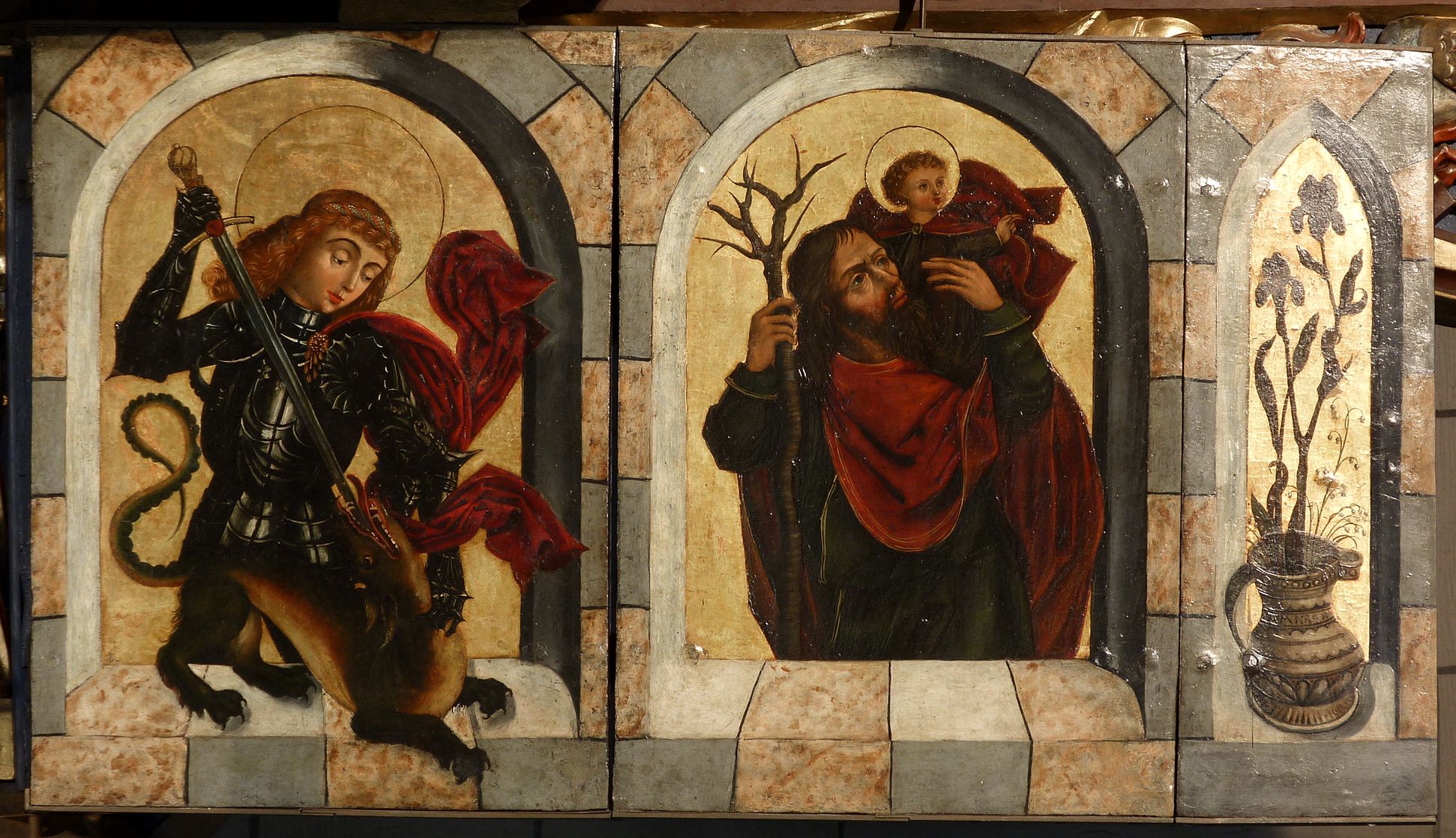
Predella, aufgeklappter rechter Flügel, mit Georg und Christophorus
photo 2015, Theo Noll
Doubly convertible reredos, proven to have been made in Nuremberg, built in 1479 and paid to Michael Wolgemut with fourteen hundred Rhenish guilders. The authorship of the carving that defines the reredos is unknown. The painted components show qualitative differences (the hands of Wolgemut and Pleydenwurff and those of the employees) and are overall probably less valuable than the sculptural part. The preference given to painting over carving in art historiography is certainly only due to Wolgemut's fame. The actual appreciation should be exactly the opposite. Dr. Pablo de la Riestra see also Peter's Altar in Nuremberg: Here we should point out stylistic parallels between the two works. The sculptures come from the same workshop, as noted by Stefan Roller, see Stefan Roller: Nuremberg Sculpture of the Late Gothic: Contributions to the Sculpture of the Imperial City in the Second Half of the 15th Century, Berlin 1999, p. 149.
Zwickau high altarpiece
1479
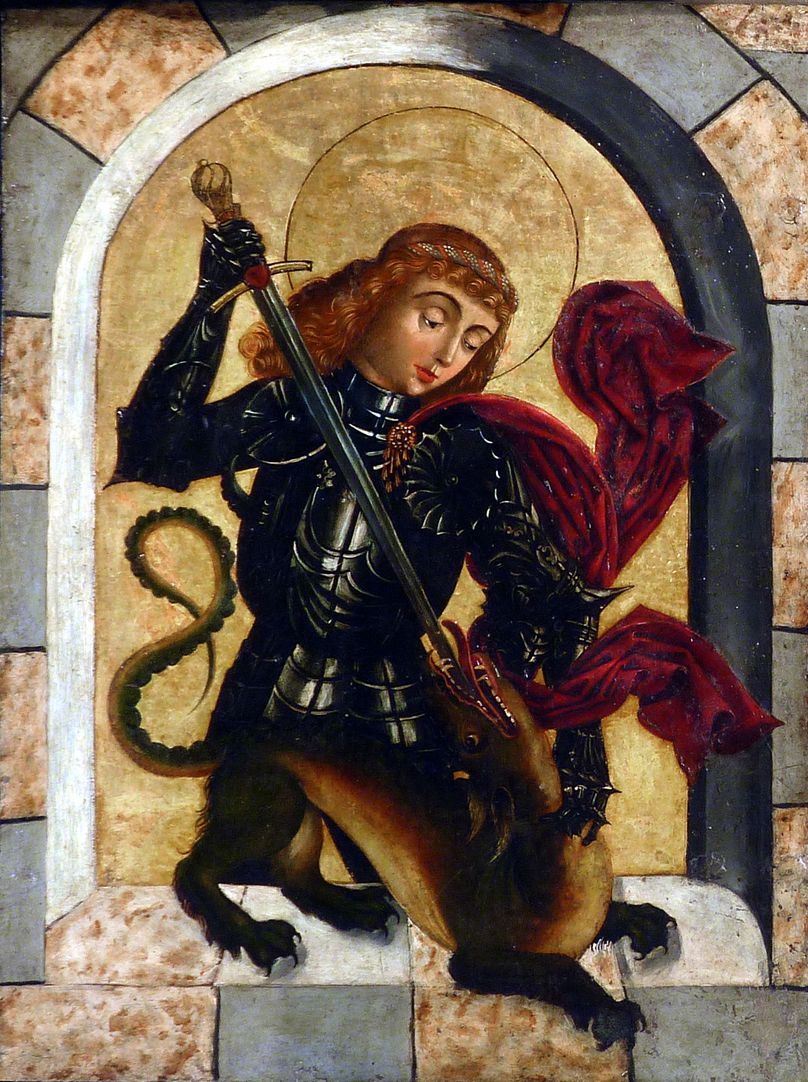
Predella, aufgeklappter rechter Flügel, Georg mit dem Drachen
Doubly convertible reredos, proven to have been made in Nuremberg, built in 1479 and paid to Michael Wolgemut with fourteen hundred Rhenish guilders. The authorship of the carving that defines the reredos is unknown. The painted components show qualitative differences (the hands of Wolgemut and Pleydenwurff and those of the employees) and are overall probably less valuable than the sculptural part. The preference given to painting over carving in art historiography is certainly only due to Wolgemut's fame. The actual appreciation should be exactly the opposite. Dr. Pablo de la Riestra see also Peter's Altar in Nuremberg: Here we should point out stylistic parallels between the two works. The sculptures come from the same workshop, as noted by Stefan Roller, see Stefan Roller: Nuremberg Sculpture of the Late Gothic: Contributions to the Sculpture of the Imperial City in the Second Half of the 15th Century, Berlin 1999, p. 149.
photo 2015, Theo Noll
Zwickau high altarpiece
1479
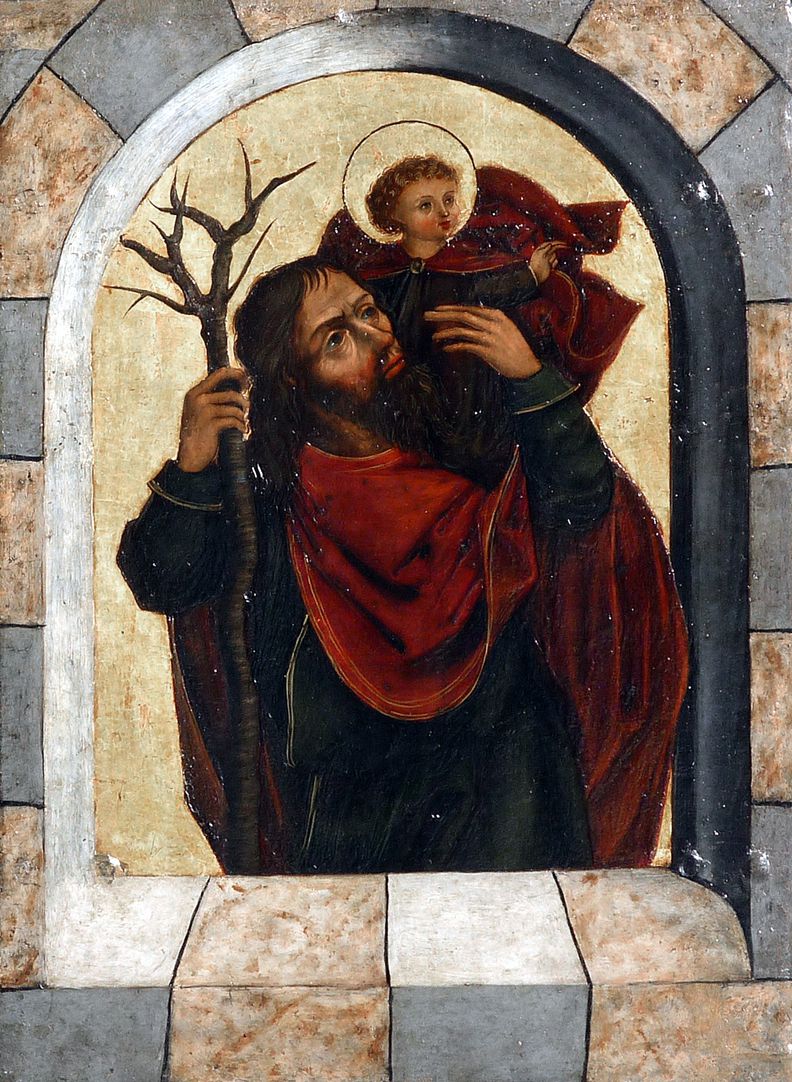
Predella, aufgeklappter rechter Flügel, Christophorus mit Jesukind
Doubly convertible reredos, proven to have been made in Nuremberg, built in 1479 and paid to Michael Wolgemut with fourteen hundred Rhenish guilders. The authorship of the carving that defines the reredos is unknown. The painted components show qualitative differences (the hands of Wolgemut and Pleydenwurff and those of the employees) and are overall probably less valuable than the sculptural part. The preference given to painting over carving in art historiography is certainly only due to Wolgemut's fame. The actual appreciation should be exactly the opposite. Dr. Pablo de la Riestra see also Peter's Altar in Nuremberg: Here we should point out stylistic parallels between the two works. The sculptures come from the same workshop, as noted by Stefan Roller, see Stefan Roller: Nuremberg Sculpture of the Late Gothic: Contributions to the Sculpture of the Imperial City in the Second Half of the 15th Century, Berlin 1999, p. 149.
photo 2015, Theo Noll
Zwickau high altarpiece
1479
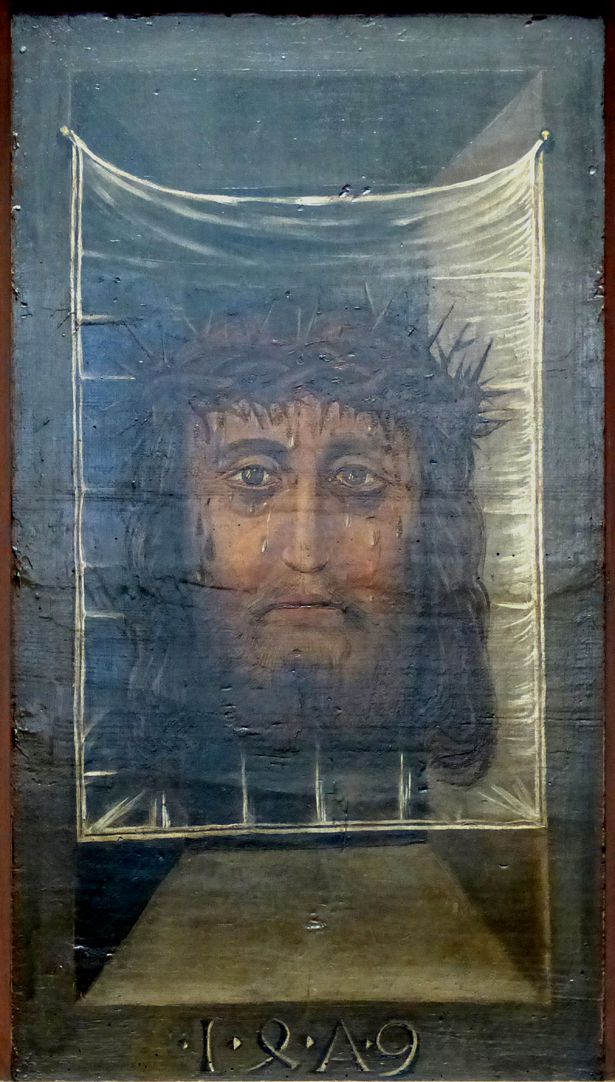
Predella, Rückseite, Mittelteil: Schweißtuch der Veronika, mit Jahresangabe 1479
Doubly convertible reredos, proven to have been made in Nuremberg, built in 1479 and paid to Michael Wolgemut with fourteen hundred Rhenish guilders. The authorship of the carving that defines the reredos is unknown. The painted components show qualitative differences (the hands of Wolgemut and Pleydenwurff and those of the employees) and are overall probably less valuable than the sculptural part. The preference given to painting over carving in art historiography is certainly only due to Wolgemut's fame. The actual appreciation should be exactly the opposite. Dr. Pablo de la Riestra see also Peter's Altar in Nuremberg: Here we should point out stylistic parallels between the two works. The sculptures come from the same workshop, as noted by Stefan Roller, see Stefan Roller: Nuremberg Sculpture of the Late Gothic: Contributions to the Sculpture of the Imperial City in the Second Half of the 15th Century, Berlin 1999, p. 149.
photo 2015, Pablo de la Riestra
Zwickau high altarpiece
1479
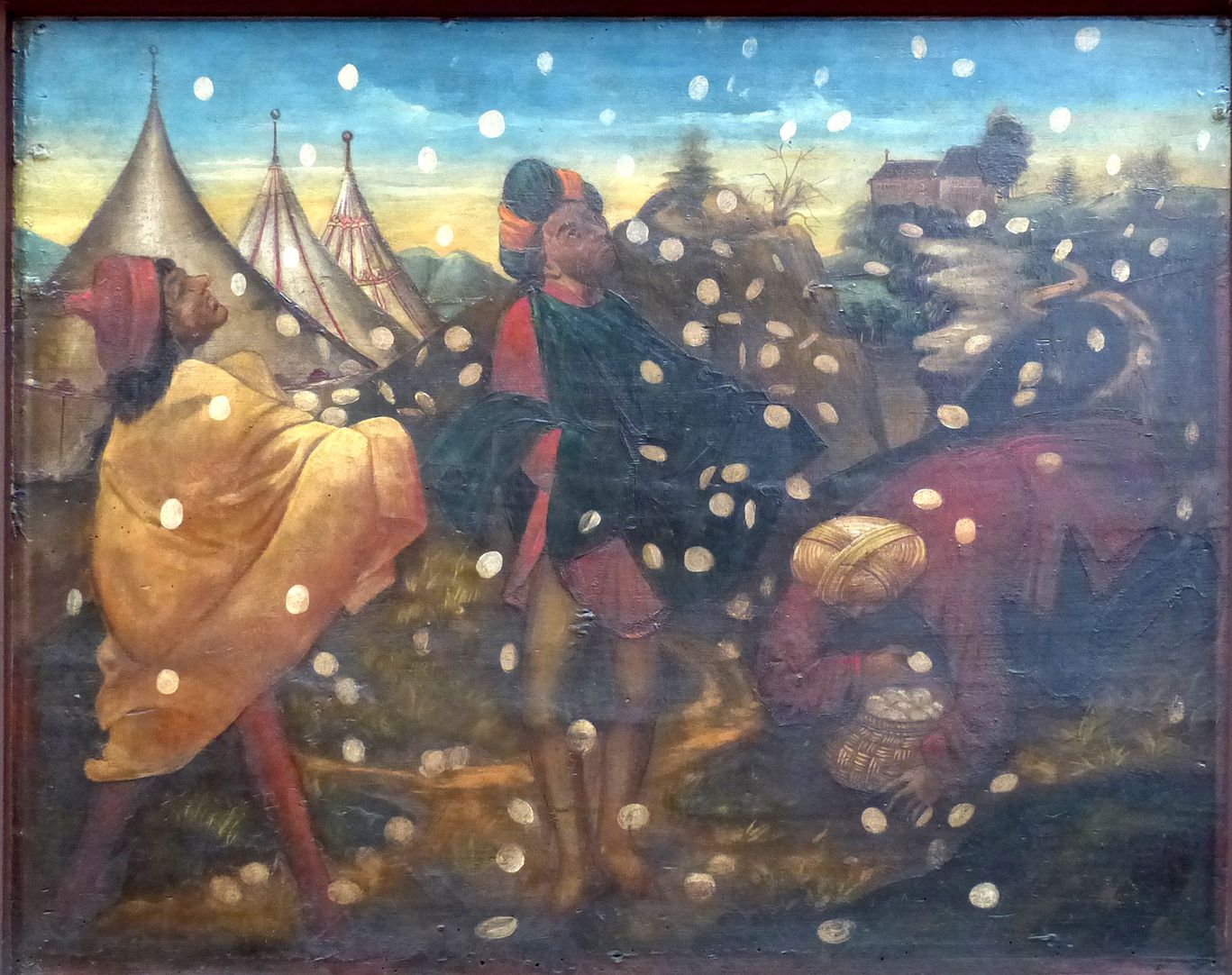
Predella, Rückseite, linke Tafel: Mannaregen
Doubly convertible reredos, proven to have been made in Nuremberg, built in 1479 and paid to Michael Wolgemut with fourteen hundred Rhenish guilders. The authorship of the carving that defines the reredos is unknown. The painted components show qualitative differences (the hands of Wolgemut and Pleydenwurff and those of the employees) and are overall probably less valuable than the sculptural part. The preference given to painting over carving in art historiography is certainly only due to Wolgemut's fame. The actual appreciation should be exactly the opposite. Dr. Pablo de la Riestra see also Peter's Altar in Nuremberg: Here we should point out stylistic parallels between the two works. The sculptures come from the same workshop, as noted by Stefan Roller, see Stefan Roller: Nuremberg Sculpture of the Late Gothic: Contributions to the Sculpture of the Imperial City in the Second Half of the 15th Century, Berlin 1999, p. 149.
photo 2015, Pablo de la Riestra
Zwickau high altarpiece
1479
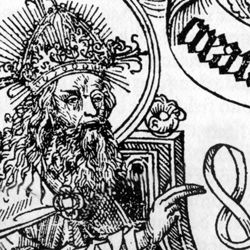
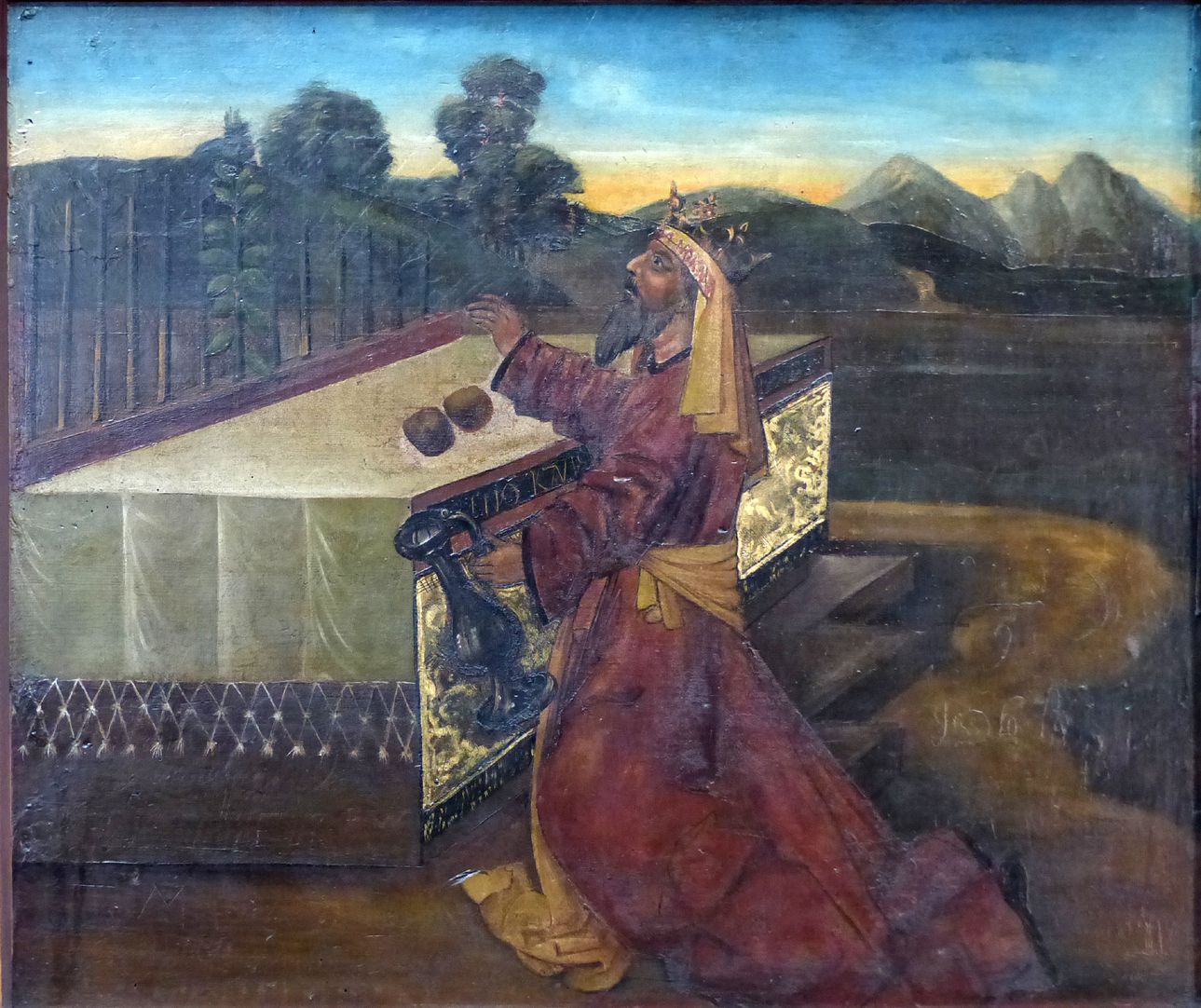
Predella, Rückseite, rechte Tafel: Hoher Priester Melchisedek
Doubly convertible reredos, proven to have been made in Nuremberg, built in 1479 and paid to Michael Wolgemut with fourteen hundred Rhenish guilders. The authorship of the carving that defines the reredos is unknown. The painted components show qualitative differences (the hands of Wolgemut and Pleydenwurff and those of the employees) and are overall probably less valuable than the sculptural part. The preference given to painting over carving in art historiography is certainly only due to Wolgemut's fame. The actual appreciation should be exactly the opposite. Dr. Pablo de la Riestra see also Peter's Altar in Nuremberg: Here we should point out stylistic parallels between the two works. The sculptures come from the same workshop, as noted by Stefan Roller, see Stefan Roller: Nuremberg Sculpture of the Late Gothic: Contributions to the Sculpture of the Imperial City in the Second Half of the 15th Century, Berlin 1999, p. 149.
photo 2015, Pablo de la Riestra