Epitaph for the Royal Chef de Cuisine Michael Raffael (Rafaeli) from Gorizia
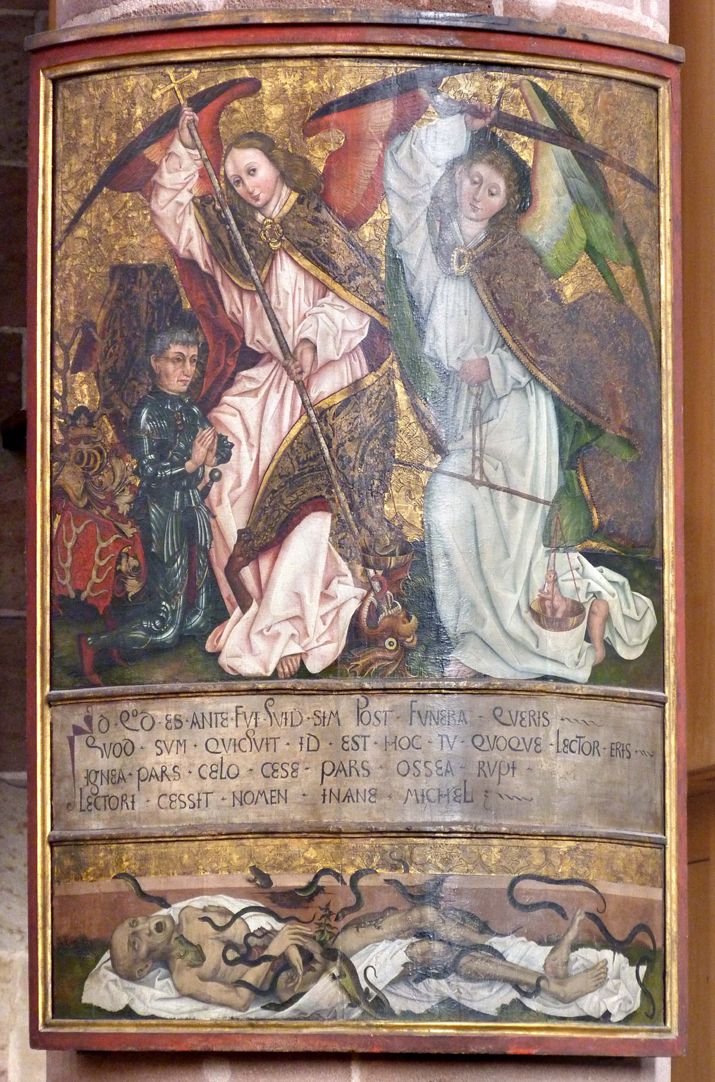
Epitaph for the Royal Chef de Cuisine Michael Raffael (Rafaeli) from Gorizia
around 1489
Total view
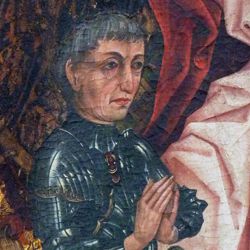
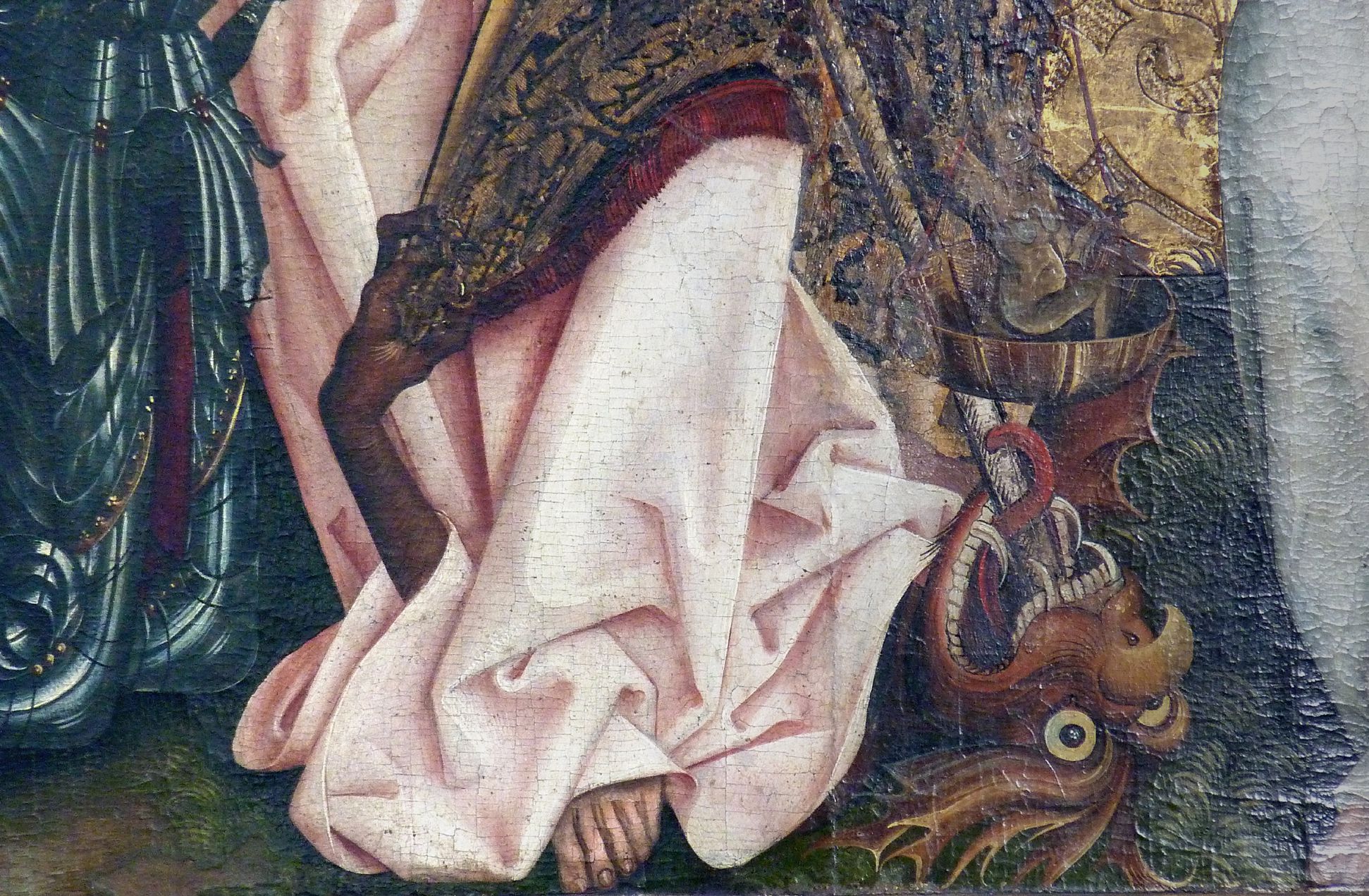
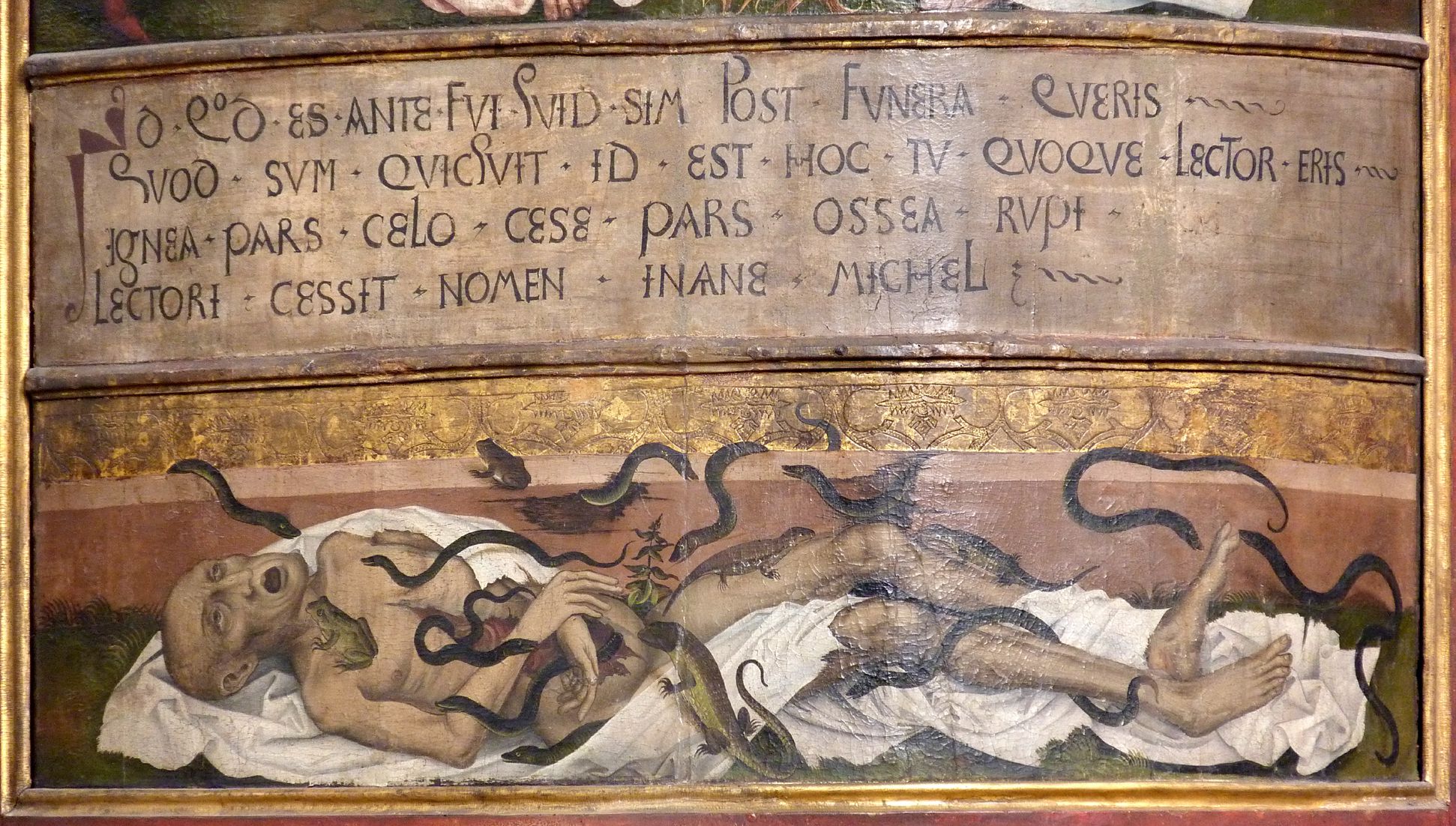
Michael Raphael kneels in his armor in a prayer position before the Archangel Michael. This is shown twice side by side in the picture as a dragon slayer and as a weigher of souls. Below the inscription you can see the corpse eaten by reptiles. Michael Raffael, King Maximilian's master chef, came to Nuremberg with him, but stayed behind in the city when Maximilian left on September 4, 1489, obviously because he was already ill. He died on September 16th. and was buried in the Preacherklosterkirche. In the Sebalder knell book he was named "Michel Raffael, the Roman king kuchenmstr." designated. On September 28, 1489, the Nuremberg Council wrote to Count Palatine Leonhard of Carinthia, Count of Gorizia and Tyrol, who had inquired about the legacy of the master chef at the instigation of Peter Raffael, that Michael Raffael had drawn up a will and that the king's doctor and Jörg would be its executor von Thurn used. They took the legacy and dealt with it in accordance with the legacy. Peter Raffael received a letter to the same effect. At the instigation of Peter Raffael, Count Palatine Leonhard went to Frankfurt about a chest containing items that the master chef had left with the doctor Johann von Cube as a pledge because of unpaid treatment costs. In a letter from the Frankfurt Council to Leonhard dated July 15, 1490, which was not sent, the two executors of Michael Raffael's will, King Jorge's doctor, who was with Dr. Georg Kirchmair can be identified, and Jorge von dem Toren is mentioned. Peter Raffael should turn to the latter because he had forbidden Johann von Cube from handing over the chest. Cube wanted to give the chest away as soon as the medical expenses were paid. Peter Raffael (Rafaeli), who comes from a noble family, appears on December 6, 1471 as a citizen in Gorizia (Italian: Gorizia) and as a feudal bearer in a lapel to Leonhard, Count Palatine of Carinthia. He also represented his brother Michael, who can be identified with the master chef. He was a scribe and secretary in the service of Count Palatine Leonhard and was his confidant, who sent him to Venice for negotiations in 1481 and appointed him as administrator in Gorizia in 1494/95. His will, written on October 9, 1506, is in the Tyrolean State Archives of Innsbruck. The inscription on the epitaph reads in German translation according to Schnelbögl, p. 417: I once was what you are; What will I be afterwards, you ask? Whatever I am now, you, reader, will still be. What is soul in me belongs to heaven, what is physical belongs to stone, The reader was left with the empty name: Michel The commemorative inscription of the epitaph, which has been handed down through the description of the Nuremberg Dominican Church written by Johann Jacob Schwarz in 1737, identifies the deceased as Michael Raffael, King Maximilian's master chef who died on September 16, 1489. On the tombstone for Michael Raffael in the preacher monastery church, which no longer exists today, there were the following lines, which were handed down by Jacob Schwarz: Mors Mortis Morti Mortem si Morte dedisset, Hic foret in terris au integer astra petisset. Sed quia dissolvi fuerat sic iuncta necesse, Ossa tenet saxum, proprie [correct: proprio] mens gaudet inesse.
Translation from Schnelbögl, p. 419: Had the death of death given death to death by death, So he would still be on earth or he would have continued to strive for the stars unscathed. But because it was necessary that the connected parts (namely body and soul) dissolve in this way, If the stone holds the body, the spirit lives happily in its home. The two Latin texts, which, according to Schnelbögl, “do credit to a schoolmaster of Latin,” were actually taken from the inscriptions on the grave monument of the judge, notary and poet Lovato Lovati (1241–1309) in Padua, which he himself had written. he executors could have chosen the lines together.
Georgius Kirchmair de Manheim studied in Leipzig in 1466 and later in Bologna. On November 26, 1471 he received his doctorate in Ferrara and was called “Georgius Kirchmair de Manhaim”. He was both a lawyer and a doctor and was first in the service of Archduke Sigismund of Tyrol as personal physician and, since 1485, of King Maximilian. He raised him to the nobility in 1490 and improved his coat of arms because he had shown special commitment and courage in the conquest of Stuhlweißenburg (Hungarian: Székesfehérvár). Kirchmair was also personal physician to Duke George the Rich of Bavaria-Landshut since 1486 and was present when the duke lay dying in Ingolstadt in 1503. Jörg von Thurn, who is identical to the nobleman Giorgio della Torre (around 1450-1512) from Gorizia, acquired an academic degree as a lawyer and spoke several languages. He entered King Maximilian's court service, accompanied him to Flanders and earned his trust. Maximilian sent him on embassy trips to Naples to Ferdinand of Aragon, to Rome and to Sweden. In 1490 and 1491/92 della Torre, who is called Delator in Russian sources, made diplomatic trips to Moscow to Grand Duke Ivan III; On March 22, 1491 he arrived with a Russian embassy in Nuremberg, where a Reichstag was taking place. Lit.: Fritz Schnelbögl: A memorial image of the royal master chef Michael Raphael 1489, in: Yearbook for Franconian regional research 19 (1959), pp. 417-419; Michael Wolgemut. More than Dürer's teacher, exh. Cat. Museums of the City of Nuremberg 2020, Cat. No. 40 (Sarah Fetzer).
Location: Nuremberg, Our Lady´s Church (Frauenkirche), right east pillar of the nave
Realization: Wolgemut, Michael
photo 2015, Theo Noll
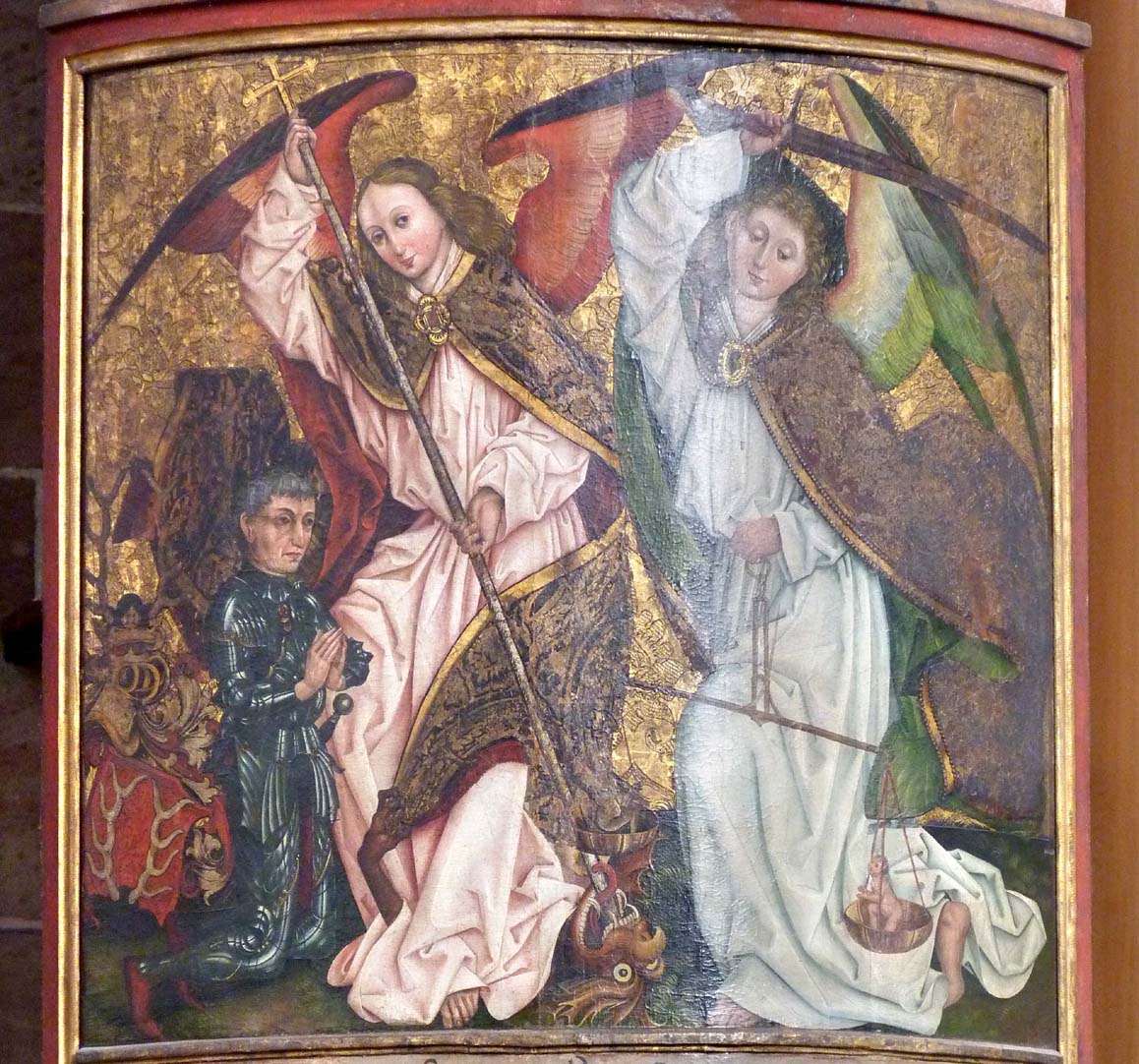
Epitaph for the Royal Chef de Cuisine Michael Raffael (Rafaeli) from Gorizia
around 1489
Upper half of the Epitaph
Michael Raphael kneels in his armor in a prayer position before the Archangel Michael. This is shown twice side by side in the picture as a dragon slayer and as a weigher of souls. Below the inscription you can see the corpse eaten by reptiles. Michael Raffael, King Maximilian's master chef, came to Nuremberg with him, but stayed behind in the city when Maximilian left on September 4, 1489, obviously because he was already ill. He died on September 16th. and was buried in the Preacherklosterkirche. In the Sebalder knell book he was named "Michel Raffael, the Roman king kuchenmstr." designated. On September 28, 1489, the Nuremberg Council wrote to Count Palatine Leonhard of Carinthia, Count of Gorizia and Tyrol, who had inquired about the legacy of the master chef at the instigation of Peter Raffael, that Michael Raffael had drawn up a will and that the king's doctor and Jörg would be its executor von Thurn used. They took the legacy and dealt with it in accordance with the legacy. Peter Raffael received a letter to the same effect. At the instigation of Peter Raffael, Count Palatine Leonhard went to Frankfurt about a chest containing items that the master chef had left with the doctor Johann von Cube as a pledge because of unpaid treatment costs. In a letter from the Frankfurt Council to Leonhard dated July 15, 1490, which was not sent, the two executors of Michael Raffael's will, King Jorge's doctor, who was with Dr. Georg Kirchmair can be identified, and Jorge von dem Toren is mentioned. Peter Raffael should turn to the latter because he had forbidden Johann von Cube from handing over the chest. Cube wanted to give the chest away as soon as the medical expenses were paid. Peter Raffael (Rafaeli), who comes from a noble family, appears on December 6, 1471 as a citizen in Gorizia (Italian: Gorizia) and as a feudal bearer in a lapel to Leonhard, Count Palatine of Carinthia. He also represented his brother Michael, who can be identified with the master chef. He was a scribe and secretary in the service of Count Palatine Leonhard and was his confidant, who sent him to Venice for negotiations in 1481 and appointed him as administrator in Gorizia in 1494/95. His will, written on October 9, 1506, is in the Tyrolean State Archives of Innsbruck. The inscription on the epitaph reads in German translation according to Schnelbögl, p. 417: I once was what you are; What will I be afterwards, you ask? Whatever I am now, you, reader, will still be. What is soul in me belongs to heaven, what is physical belongs to stone, The reader was left with the empty name: Michel The commemorative inscription of the epitaph, which has been handed down through the description of the Nuremberg Dominican Church written by Johann Jacob Schwarz in 1737, identifies the deceased as Michael Raffael, King Maximilian's master chef who died on September 16, 1489. On the tombstone for Michael Raffael in the preacher monastery church, which no longer exists today, there were the following lines, which were handed down by Jacob Schwarz: Mors Mortis Morti Mortem si Morte dedisset, Hic foret in terris au integer astra petisset. Sed quia dissolvi fuerat sic iuncta necesse, Ossa tenet saxum, proprie [correct: proprio] mens gaudet inesse.
Translation from Schnelbögl, p. 419: Had the death of death given death to death by death, So he would still be on earth or he would have continued to strive for the stars unscathed. But because it was necessary that the connected parts (namely body and soul) dissolve in this way, If the stone holds the body, the spirit lives happily in its home. The two Latin texts, which, according to Schnelbögl, “do credit to a schoolmaster of Latin,” were actually taken from the inscriptions on the grave monument of the judge, notary and poet Lovato Lovati (1241–1309) in Padua, which he himself had written. he executors could have chosen the lines together.
Georgius Kirchmair de Manheim studied in Leipzig in 1466 and later in Bologna. On November 26, 1471 he received his doctorate in Ferrara and was called “Georgius Kirchmair de Manhaim”. He was both a lawyer and a doctor and was first in the service of Archduke Sigismund of Tyrol as personal physician and, since 1485, of King Maximilian. He raised him to the nobility in 1490 and improved his coat of arms because he had shown special commitment and courage in the conquest of Stuhlweißenburg (Hungarian: Székesfehérvár). Kirchmair was also personal physician to Duke George the Rich of Bavaria-Landshut since 1486 and was present when the duke lay dying in Ingolstadt in 1503. Jörg von Thurn, who is identical to the nobleman Giorgio della Torre (around 1450-1512) from Gorizia, acquired an academic degree as a lawyer and spoke several languages. He entered King Maximilian's court service, accompanied him to Flanders and earned his trust. Maximilian sent him on embassy trips to Naples to Ferdinand of Aragon, to Rome and to Sweden. In 1490 and 1491/92 della Torre, who is called Delator in Russian sources, made diplomatic trips to Moscow to Grand Duke Ivan III; On March 22, 1491 he arrived with a Russian embassy in Nuremberg, where a Reichstag was taking place. Lit.: Fritz Schnelbögl: A memorial image of the royal master chef Michael Raphael 1489, in: Yearbook for Franconian regional research 19 (1959), pp. 417-419; Michael Wolgemut. More than Dürer's teacher, exh. Cat. Museums of the City of Nuremberg 2020, Cat. No. 40 (Sarah Fetzer).
Location: Nuremberg, Our Lady´s Church (Frauenkirche), right east pillar of the nave
Realization: Wolgemut, Michael
photo 2015, Theo Noll
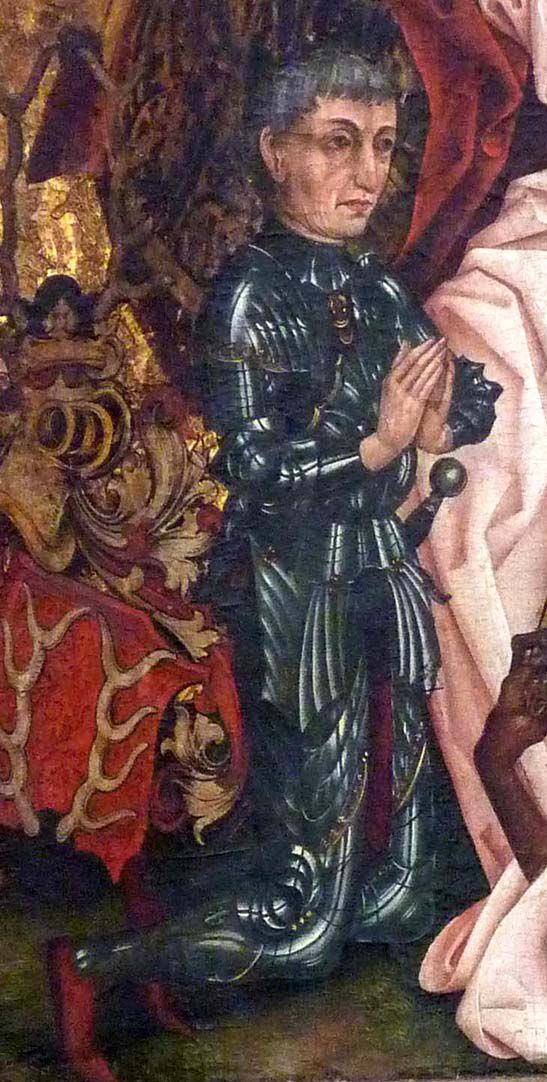
Epitaph for the Royal Chef de Cuisine Michael Raffael (Rafaeli) from Gorizia
around 1489
Figure of Michael Raffael
Michael Raphael kneels in his armor in a prayer position before the Archangel Michael. This is shown twice side by side in the picture as a dragon slayer and as a weigher of souls. Below the inscription you can see the corpse eaten by reptiles. Michael Raffael, King Maximilian's master chef, came to Nuremberg with him, but stayed behind in the city when Maximilian left on September 4, 1489, obviously because he was already ill. He died on September 16th. and was buried in the Preacherklosterkirche. In the Sebalder knell book he was named "Michel Raffael, the Roman king kuchenmstr." designated. On September 28, 1489, the Nuremberg Council wrote to Count Palatine Leonhard of Carinthia, Count of Gorizia and Tyrol, who had inquired about the legacy of the master chef at the instigation of Peter Raffael, that Michael Raffael had drawn up a will and that the king's doctor and Jörg would be its executor von Thurn used. They took the legacy and dealt with it in accordance with the legacy. Peter Raffael received a letter to the same effect. At the instigation of Peter Raffael, Count Palatine Leonhard went to Frankfurt about a chest containing items that the master chef had left with the doctor Johann von Cube as a pledge because of unpaid treatment costs. In a letter from the Frankfurt Council to Leonhard dated July 15, 1490, which was not sent, the two executors of Michael Raffael's will, King Jorge's doctor, who was with Dr. Georg Kirchmair can be identified, and Jorge von dem Toren is mentioned. Peter Raffael should turn to the latter because he had forbidden Johann von Cube from handing over the chest. Cube wanted to give the chest away as soon as the medical expenses were paid. Peter Raffael (Rafaeli), who comes from a noble family, appears on December 6, 1471 as a citizen in Gorizia (Italian: Gorizia) and as a feudal bearer in a lapel to Leonhard, Count Palatine of Carinthia. He also represented his brother Michael, who can be identified with the master chef. He was a scribe and secretary in the service of Count Palatine Leonhard and was his confidant, who sent him to Venice for negotiations in 1481 and appointed him as administrator in Gorizia in 1494/95. His will, written on October 9, 1506, is in the Tyrolean State Archives of Innsbruck. The inscription on the epitaph reads in German translation according to Schnelbögl, p. 417: I once was what you are; What will I be afterwards, you ask? Whatever I am now, you, reader, will still be. What is soul in me belongs to heaven, what is physical belongs to stone, The reader was left with the empty name: Michel The commemorative inscription of the epitaph, which has been handed down through the description of the Nuremberg Dominican Church written by Johann Jacob Schwarz in 1737, identifies the deceased as Michael Raffael, King Maximilian's master chef who died on September 16, 1489. On the tombstone for Michael Raffael in the preacher monastery church, which no longer exists today, there were the following lines, which were handed down by Jacob Schwarz: Mors Mortis Morti Mortem si Morte dedisset, Hic foret in terris au integer astra petisset. Sed quia dissolvi fuerat sic iuncta necesse, Ossa tenet saxum, proprie [correct: proprio] mens gaudet inesse.
Translation from Schnelbögl, p. 419: Had the death of death given death to death by death, So he would still be on earth or he would have continued to strive for the stars unscathed. But because it was necessary that the connected parts (namely body and soul) dissolve in this way, If the stone holds the body, the spirit lives happily in its home. The two Latin texts, which, according to Schnelbögl, “do credit to a schoolmaster of Latin,” were actually taken from the inscriptions on the grave monument of the judge, notary and poet Lovato Lovati (1241–1309) in Padua, which he himself had written. he executors could have chosen the lines together.
Georgius Kirchmair de Manheim studied in Leipzig in 1466 and later in Bologna. On November 26, 1471 he received his doctorate in Ferrara and was called “Georgius Kirchmair de Manhaim”. He was both a lawyer and a doctor and was first in the service of Archduke Sigismund of Tyrol as personal physician and, since 1485, of King Maximilian. He raised him to the nobility in 1490 and improved his coat of arms because he had shown special commitment and courage in the conquest of Stuhlweißenburg (Hungarian: Székesfehérvár). Kirchmair was also personal physician to Duke George the Rich of Bavaria-Landshut since 1486 and was present when the duke lay dying in Ingolstadt in 1503. Jörg von Thurn, who is identical to the nobleman Giorgio della Torre (around 1450-1512) from Gorizia, acquired an academic degree as a lawyer and spoke several languages. He entered King Maximilian's court service, accompanied him to Flanders and earned his trust. Maximilian sent him on embassy trips to Naples to Ferdinand of Aragon, to Rome and to Sweden. In 1490 and 1491/92 della Torre, who is called Delator in Russian sources, made diplomatic trips to Moscow to Grand Duke Ivan III; On March 22, 1491 he arrived with a Russian embassy in Nuremberg, where a Reichstag was taking place. Lit.: Fritz Schnelbögl: A memorial image of the royal master chef Michael Raphael 1489, in: Yearbook for Franconian regional research 19 (1959), pp. 417-419; Michael Wolgemut. More than Dürer's teacher, exh. Cat. Museums of the City of Nuremberg 2020, Cat. No. 40 (Sarah Fetzer).
Location: Nuremberg, Our Lady´s Church (Frauenkirche), right east pillar of the nave
Realization: Wolgemut, Michael
photo 2015, Theo Noll
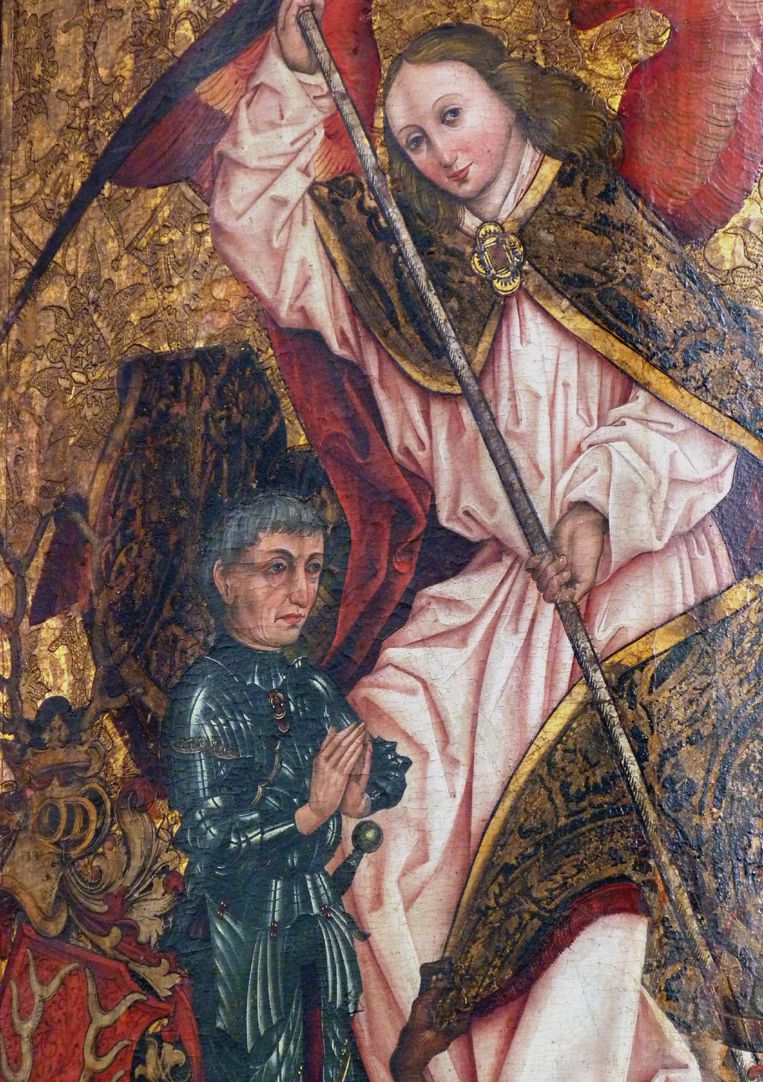
Epitaph for the Royal Chef de Cuisine Michael Raffael (Rafaeli) from Gorizia
around 1489
Archangel Michael and Michael Raffael, detail
Michael Raphael kneels in his armor in a prayer position before the Archangel Michael. This is shown twice side by side in the picture as a dragon slayer and as a weigher of souls. Below the inscription you can see the corpse eaten by reptiles. Michael Raffael, King Maximilian's master chef, came to Nuremberg with him, but stayed behind in the city when Maximilian left on September 4, 1489, obviously because he was already ill. He died on September 16th. and was buried in the Preacherklosterkirche. In the Sebalder knell book he was named "Michel Raffael, the Roman king kuchenmstr." designated. On September 28, 1489, the Nuremberg Council wrote to Count Palatine Leonhard of Carinthia, Count of Gorizia and Tyrol, who had inquired about the legacy of the master chef at the instigation of Peter Raffael, that Michael Raffael had drawn up a will and that the king's doctor and Jörg would be its executor von Thurn used. They took the legacy and dealt with it in accordance with the legacy. Peter Raffael received a letter to the same effect. At the instigation of Peter Raffael, Count Palatine Leonhard went to Frankfurt about a chest containing items that the master chef had left with the doctor Johann von Cube as a pledge because of unpaid treatment costs. In a letter from the Frankfurt Council to Leonhard dated July 15, 1490, which was not sent, the two executors of Michael Raffael's will, King Jorge's doctor, who was with Dr. Georg Kirchmair can be identified, and Jorge von dem Toren is mentioned. Peter Raffael should turn to the latter because he had forbidden Johann von Cube from handing over the chest. Cube wanted to give the chest away as soon as the medical expenses were paid. Peter Raffael (Rafaeli), who comes from a noble family, appears on December 6, 1471 as a citizen in Gorizia (Italian: Gorizia) and as a feudal bearer in a lapel to Leonhard, Count Palatine of Carinthia. He also represented his brother Michael, who can be identified with the master chef. He was a scribe and secretary in the service of Count Palatine Leonhard and was his confidant, who sent him to Venice for negotiations in 1481 and appointed him as administrator in Gorizia in 1494/95. His will, written on October 9, 1506, is in the Tyrolean State Archives of Innsbruck. The inscription on the epitaph reads in German translation according to Schnelbögl, p. 417: I once was what you are; What will I be afterwards, you ask? Whatever I am now, you, reader, will still be. What is soul in me belongs to heaven, what is physical belongs to stone, The reader was left with the empty name: Michel The commemorative inscription of the epitaph, which has been handed down through the description of the Nuremberg Dominican Church written by Johann Jacob Schwarz in 1737, identifies the deceased as Michael Raffael, King Maximilian's master chef who died on September 16, 1489. On the tombstone for Michael Raffael in the preacher monastery church, which no longer exists today, there were the following lines, which were handed down by Jacob Schwarz: Mors Mortis Morti Mortem si Morte dedisset, Hic foret in terris au integer astra petisset. Sed quia dissolvi fuerat sic iuncta necesse, Ossa tenet saxum, proprie [correct: proprio] mens gaudet inesse.
Translation from Schnelbögl, p. 419: Had the death of death given death to death by death, So he would still be on earth or he would have continued to strive for the stars unscathed. But because it was necessary that the connected parts (namely body and soul) dissolve in this way, If the stone holds the body, the spirit lives happily in its home. The two Latin texts, which, according to Schnelbögl, “do credit to a schoolmaster of Latin,” were actually taken from the inscriptions on the grave monument of the judge, notary and poet Lovato Lovati (1241–1309) in Padua, which he himself had written. he executors could have chosen the lines together.
Georgius Kirchmair de Manheim studied in Leipzig in 1466 and later in Bologna. On November 26, 1471 he received his doctorate in Ferrara and was called “Georgius Kirchmair de Manhaim”. He was both a lawyer and a doctor and was first in the service of Archduke Sigismund of Tyrol as personal physician and, since 1485, of King Maximilian. He raised him to the nobility in 1490 and improved his coat of arms because he had shown special commitment and courage in the conquest of Stuhlweißenburg (Hungarian: Székesfehérvár). Kirchmair was also personal physician to Duke George the Rich of Bavaria-Landshut since 1486 and was present when the duke lay dying in Ingolstadt in 1503. Jörg von Thurn, who is identical to the nobleman Giorgio della Torre (around 1450-1512) from Gorizia, acquired an academic degree as a lawyer and spoke several languages. He entered King Maximilian's court service, accompanied him to Flanders and earned his trust. Maximilian sent him on embassy trips to Naples to Ferdinand of Aragon, to Rome and to Sweden. In 1490 and 1491/92 della Torre, who is called Delator in Russian sources, made diplomatic trips to Moscow to Grand Duke Ivan III; On March 22, 1491 he arrived with a Russian embassy in Nuremberg, where a Reichstag was taking place. Lit.: Fritz Schnelbögl: A memorial image of the royal master chef Michael Raphael 1489, in: Yearbook for Franconian regional research 19 (1959), pp. 417-419; Michael Wolgemut. More than Dürer's teacher, exh. Cat. Museums of the City of Nuremberg 2020, Cat. No. 40 (Sarah Fetzer).
Location: Nuremberg, Our Lady´s Church (Frauenkirche), right east pillar of the nave
Realization: Wolgemut, Michael
photo 2015, Theo Noll
Epitaph for the Royal Chef de Cuisine Michael Raffael (Rafaeli) from Gorizia
around 1489
Detail with dragon, weighing scales and little devil
photo 2015, Theo Noll
Michael Raphael kneels in his armor in a prayer position before the Archangel Michael. This is shown twice side by side in the picture as a dragon slayer and as a weigher of souls. Below the inscription you can see the corpse eaten by reptiles. Michael Raffael, King Maximilian's master chef, came to Nuremberg with him, but stayed behind in the city when Maximilian left on September 4, 1489, obviously because he was already ill. He died on September 16th. and was buried in the Preacherklosterkirche. In the Sebalder knell book he was named "Michel Raffael, the Roman king kuchenmstr." designated. On September 28, 1489, the Nuremberg Council wrote to Count Palatine Leonhard of Carinthia, Count of Gorizia and Tyrol, who had inquired about the legacy of the master chef at the instigation of Peter Raffael, that Michael Raffael had drawn up a will and that the king's doctor and Jörg would be its executor von Thurn used. They took the legacy and dealt with it in accordance with the legacy. Peter Raffael received a letter to the same effect. At the instigation of Peter Raffael, Count Palatine Leonhard went to Frankfurt about a chest containing items that the master chef had left with the doctor Johann von Cube as a pledge because of unpaid treatment costs. In a letter from the Frankfurt Council to Leonhard dated July 15, 1490, which was not sent, the two executors of Michael Raffael's will, King Jorge's doctor, who was with Dr. Georg Kirchmair can be identified, and Jorge von dem Toren is mentioned. Peter Raffael should turn to the latter because he had forbidden Johann von Cube from handing over the chest. Cube wanted to give the chest away as soon as the medical expenses were paid. Peter Raffael (Rafaeli), who comes from a noble family, appears on December 6, 1471 as a citizen in Gorizia (Italian: Gorizia) and as a feudal bearer in a lapel to Leonhard, Count Palatine of Carinthia. He also represented his brother Michael, who can be identified with the master chef. He was a scribe and secretary in the service of Count Palatine Leonhard and was his confidant, who sent him to Venice for negotiations in 1481 and appointed him as administrator in Gorizia in 1494/95. His will, written on October 9, 1506, is in the Tyrolean State Archives of Innsbruck. The inscription on the epitaph reads in German translation according to Schnelbögl, p. 417: I once was what you are; What will I be afterwards, you ask? Whatever I am now, you, reader, will still be. What is soul in me belongs to heaven, what is physical belongs to stone, The reader was left with the empty name: Michel The commemorative inscription of the epitaph, which has been handed down through the description of the Nuremberg Dominican Church written by Johann Jacob Schwarz in 1737, identifies the deceased as Michael Raffael, King Maximilian's master chef who died on September 16, 1489. On the tombstone for Michael Raffael in the preacher monastery church, which no longer exists today, there were the following lines, which were handed down by Jacob Schwarz: Mors Mortis Morti Mortem si Morte dedisset, Hic foret in terris au integer astra petisset. Sed quia dissolvi fuerat sic iuncta necesse, Ossa tenet saxum, proprie [correct: proprio] mens gaudet inesse.
Translation from Schnelbögl, p. 419: Had the death of death given death to death by death, So he would still be on earth or he would have continued to strive for the stars unscathed. But because it was necessary that the connected parts (namely body and soul) dissolve in this way, If the stone holds the body, the spirit lives happily in its home. The two Latin texts, which, according to Schnelbögl, “do credit to a schoolmaster of Latin,” were actually taken from the inscriptions on the grave monument of the judge, notary and poet Lovato Lovati (1241–1309) in Padua, which he himself had written. he executors could have chosen the lines together.
Georgius Kirchmair de Manheim studied in Leipzig in 1466 and later in Bologna. On November 26, 1471 he received his doctorate in Ferrara and was called “Georgius Kirchmair de Manhaim”. He was both a lawyer and a doctor and was first in the service of Archduke Sigismund of Tyrol as personal physician and, since 1485, of King Maximilian. He raised him to the nobility in 1490 and improved his coat of arms because he had shown special commitment and courage in the conquest of Stuhlweißenburg (Hungarian: Székesfehérvár). Kirchmair was also personal physician to Duke George the Rich of Bavaria-Landshut since 1486 and was present when the duke lay dying in Ingolstadt in 1503. Jörg von Thurn, who is identical to the nobleman Giorgio della Torre (around 1450-1512) from Gorizia, acquired an academic degree as a lawyer and spoke several languages. He entered King Maximilian's court service, accompanied him to Flanders and earned his trust. Maximilian sent him on embassy trips to Naples to Ferdinand of Aragon, to Rome and to Sweden. In 1490 and 1491/92 della Torre, who is called Delator in Russian sources, made diplomatic trips to Moscow to Grand Duke Ivan III; On March 22, 1491 he arrived with a Russian embassy in Nuremberg, where a Reichstag was taking place. Lit.: Fritz Schnelbögl: A memorial image of the royal master chef Michael Raphael 1489, in: Yearbook for Franconian regional research 19 (1959), pp. 417-419; Michael Wolgemut. More than Dürer's teacher, exh. Cat. Museums of the City of Nuremberg 2020, Cat. No. 40 (Sarah Fetzer).
Location: Nuremberg, Our Lady´s Church (Frauenkirche), right east pillar of the nave
Realization: Wolgemut, Michael
Epitaph for the Royal Chef de Cuisine Michael Raffael (Rafaeli) from Gorizia
around 1489
Inscription and dead body being eaten by worms
photo 2015, Theo Noll
Michael Raphael kneels in his armor in a prayer position before the Archangel Michael. This is shown twice side by side in the picture as a dragon slayer and as a weigher of souls. Below the inscription you can see the corpse eaten by reptiles. Michael Raffael, King Maximilian's master chef, came to Nuremberg with him, but stayed behind in the city when Maximilian left on September 4, 1489, obviously because he was already ill. He died on September 16th. and was buried in the Preacherklosterkirche. In the Sebalder knell book he was named "Michel Raffael, the Roman king kuchenmstr." designated. On September 28, 1489, the Nuremberg Council wrote to Count Palatine Leonhard of Carinthia, Count of Gorizia and Tyrol, who had inquired about the legacy of the master chef at the instigation of Peter Raffael, that Michael Raffael had drawn up a will and that the king's doctor and Jörg would be its executor von Thurn used. They took the legacy and dealt with it in accordance with the legacy. Peter Raffael received a letter to the same effect. At the instigation of Peter Raffael, Count Palatine Leonhard went to Frankfurt about a chest containing items that the master chef had left with the doctor Johann von Cube as a pledge because of unpaid treatment costs. In a letter from the Frankfurt Council to Leonhard dated July 15, 1490, which was not sent, the two executors of Michael Raffael's will, King Jorge's doctor, who was with Dr. Georg Kirchmair can be identified, and Jorge von dem Toren is mentioned. Peter Raffael should turn to the latter because he had forbidden Johann von Cube from handing over the chest. Cube wanted to give the chest away as soon as the medical expenses were paid. Peter Raffael (Rafaeli), who comes from a noble family, appears on December 6, 1471 as a citizen in Gorizia (Italian: Gorizia) and as a feudal bearer in a lapel to Leonhard, Count Palatine of Carinthia. He also represented his brother Michael, who can be identified with the master chef. He was a scribe and secretary in the service of Count Palatine Leonhard and was his confidant, who sent him to Venice for negotiations in 1481 and appointed him as administrator in Gorizia in 1494/95. His will, written on October 9, 1506, is in the Tyrolean State Archives of Innsbruck. The inscription on the epitaph reads in German translation according to Schnelbögl, p. 417: I once was what you are; What will I be afterwards, you ask? Whatever I am now, you, reader, will still be. What is soul in me belongs to heaven, what is physical belongs to stone, The reader was left with the empty name: Michel The commemorative inscription of the epitaph, which has been handed down through the description of the Nuremberg Dominican Church written by Johann Jacob Schwarz in 1737, identifies the deceased as Michael Raffael, King Maximilian's master chef who died on September 16, 1489. On the tombstone for Michael Raffael in the preacher monastery church, which no longer exists today, there were the following lines, which were handed down by Jacob Schwarz: Mors Mortis Morti Mortem si Morte dedisset, Hic foret in terris au integer astra petisset. Sed quia dissolvi fuerat sic iuncta necesse, Ossa tenet saxum, proprie [correct: proprio] mens gaudet inesse.
Translation from Schnelbögl, p. 419: Had the death of death given death to death by death, So he would still be on earth or he would have continued to strive for the stars unscathed. But because it was necessary that the connected parts (namely body and soul) dissolve in this way, If the stone holds the body, the spirit lives happily in its home. The two Latin texts, which, according to Schnelbögl, “do credit to a schoolmaster of Latin,” were actually taken from the inscriptions on the grave monument of the judge, notary and poet Lovato Lovati (1241–1309) in Padua, which he himself had written. he executors could have chosen the lines together.
Georgius Kirchmair de Manheim studied in Leipzig in 1466 and later in Bologna. On November 26, 1471 he received his doctorate in Ferrara and was called “Georgius Kirchmair de Manhaim”. He was both a lawyer and a doctor and was first in the service of Archduke Sigismund of Tyrol as personal physician and, since 1485, of King Maximilian. He raised him to the nobility in 1490 and improved his coat of arms because he had shown special commitment and courage in the conquest of Stuhlweißenburg (Hungarian: Székesfehérvár). Kirchmair was also personal physician to Duke George the Rich of Bavaria-Landshut since 1486 and was present when the duke lay dying in Ingolstadt in 1503. Jörg von Thurn, who is identical to the nobleman Giorgio della Torre (around 1450-1512) from Gorizia, acquired an academic degree as a lawyer and spoke several languages. He entered King Maximilian's court service, accompanied him to Flanders and earned his trust. Maximilian sent him on embassy trips to Naples to Ferdinand of Aragon, to Rome and to Sweden. In 1490 and 1491/92 della Torre, who is called Delator in Russian sources, made diplomatic trips to Moscow to Grand Duke Ivan III; On March 22, 1491 he arrived with a Russian embassy in Nuremberg, where a Reichstag was taking place. Lit.: Fritz Schnelbögl: A memorial image of the royal master chef Michael Raphael 1489, in: Yearbook for Franconian regional research 19 (1959), pp. 417-419; Michael Wolgemut. More than Dürer's teacher, exh. Cat. Museums of the City of Nuremberg 2020, Cat. No. 40 (Sarah Fetzer).
Location: Nuremberg, Our Lady´s Church (Frauenkirche), right east pillar of the nave
Realization: Wolgemut, Michael