• A project of the Förderverein Kulturhistorisches Museum Nürnberg e.V. A project of the FKHM Nürnberg e.V.
  • About us
  • Feedback
  • Deutsche Version
Search Virtual museum
Nuremberg Art
  • Artists
  • Works of art
  • Topics
  • New
  • About us
  • Feedback

High Altar (Schwabach)
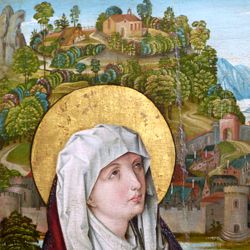
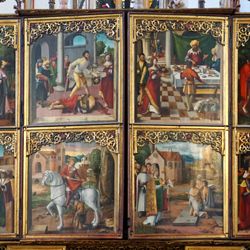
High Altar (Schwabach) Predella with wings, painting from the workshop of Wolgemut

High Altar (Schwabach)

1503 1506

Predella with wings, painting from the workshop of Wolgemut


1.383 / 5.000The altar was probably commissioned in 1503. After the master was branded on December 4 of that year, the workshop dissolved. The figures are therefore not the work of a workshop, but "the work of a sculptor, evidently a master and not a journeyman, who directly presupposes the stylistic development of Veit Stoss around 1500..." Alfred Schädler, 1981. "The extraordinarily high-quality sculptures in the shrine indicate that they were at least partially executed by the leading Nuremberg woodcarver of the time, Veit Stoss. The remaining sculptures are evidently products of his workshop." "According to Oellermann, an older painter sketched all the paintings on the outer pair of wings and began their execution with the Sermon of St. John. A younger painter then painted these panels differently and completed the scenes with the sermon, partially overpainting and making corrections. The inner wings, on which the reliefs are fixed, were signed and painted by the younger painter alone. In the predella, a third artist was at work, although the underdrawing still bore similarities to that of the older painter." (Oellermann 1983, pp. 142–155.)

Matthias Weniger in Michael Wolgemut / More than Dürer's Teacher, 2019

see also: Schwabach High Altar / First Transfiguration see also: Schwabach High Altar / Second Transfiguration

Location: Schwabach, Parish Church St. Martin´s

Design: Wolgemut, Werkstatt, Stoss, Veit

Realization: Wolgemut, Werkstatt

photo 2017, Theo Noll
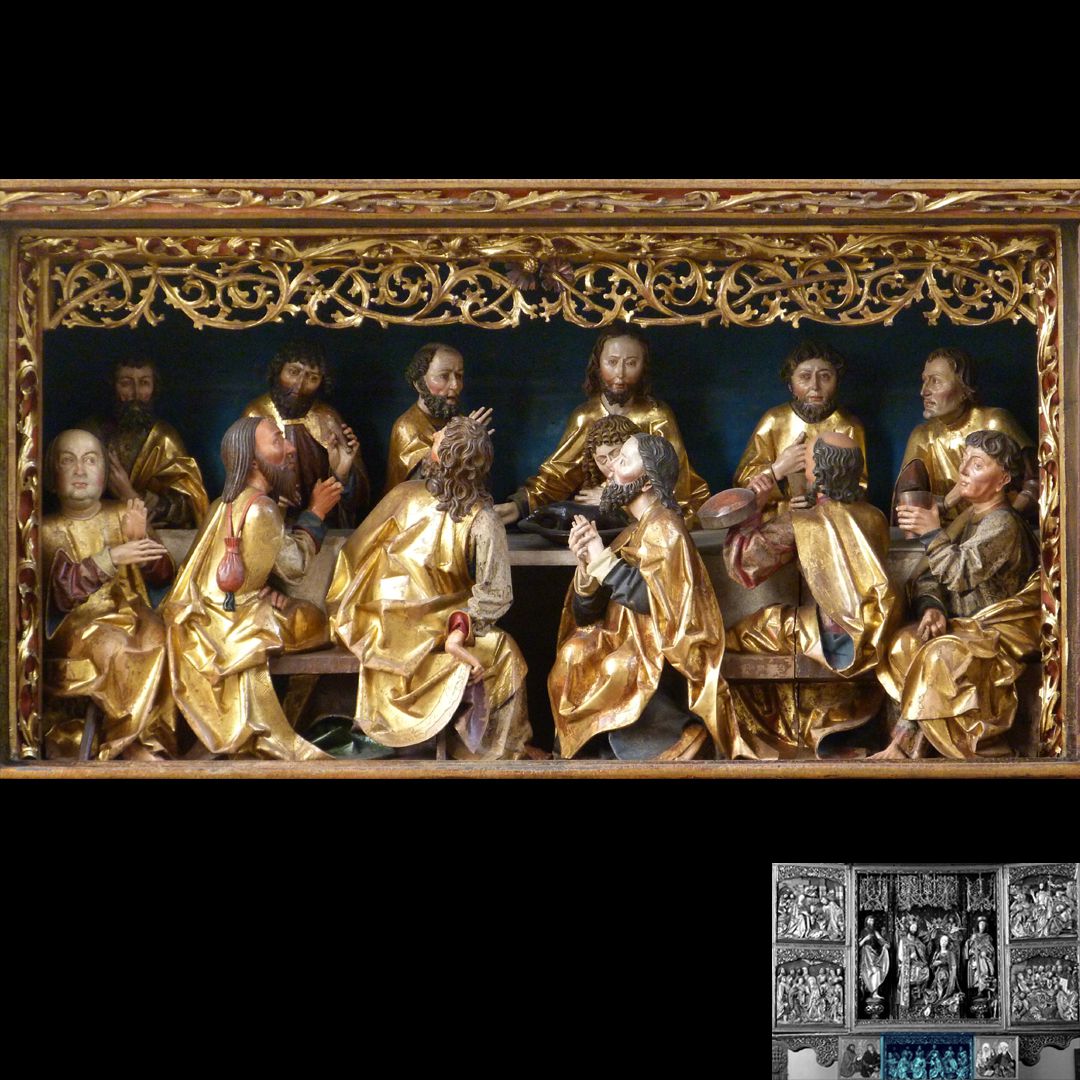
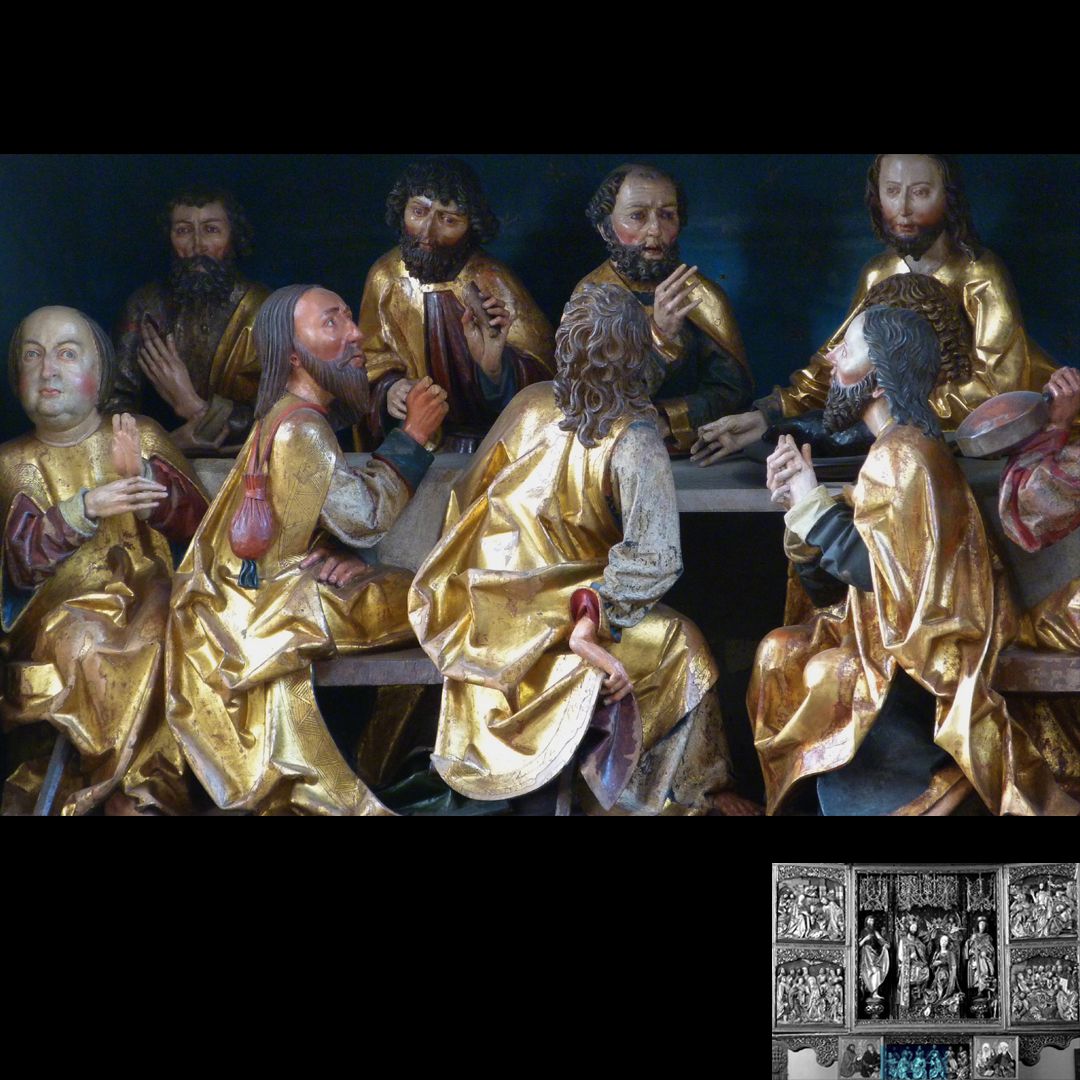
High Altar (Schwabach) Predella, Last Supper

High Altar (Schwabach)

1503 1506

Predella, Last Supper


1.383 / 5.000The altar was probably commissioned in 1503. After the master was branded on December 4 of that year, the workshop dissolved. The figures are therefore not the work of a workshop, but "the work of a sculptor, evidently a master and not a journeyman, who directly presupposes the stylistic development of Veit Stoss around 1500..." Alfred Schädler, 1981. "The extraordinarily high-quality sculptures in the shrine indicate that they were at least partially executed by the leading Nuremberg woodcarver of the time, Veit Stoss. The remaining sculptures are evidently products of his workshop." "According to Oellermann, an older painter sketched all the paintings on the outer pair of wings and began their execution with the Sermon of St. John. A younger painter then painted these panels differently and completed the scenes with the sermon, partially overpainting and making corrections. The inner wings, on which the reliefs are fixed, were signed and painted by the younger painter alone. In the predella, a third artist was at work, although the underdrawing still bore similarities to that of the older painter." (Oellermann 1983, pp. 142–155.)

Matthias Weniger in Michael Wolgemut / More than Dürer's Teacher, 2019

see also: Schwabach High Altar / First Transfiguration see also: Schwabach High Altar / Second Transfiguration

Location: Schwabach, Parish Church St. Martin´s

Design: Wolgemut, Werkstatt, Stoss, Veit

Realization: Wolgemut, Werkstatt

photo 2017, Theo Noll
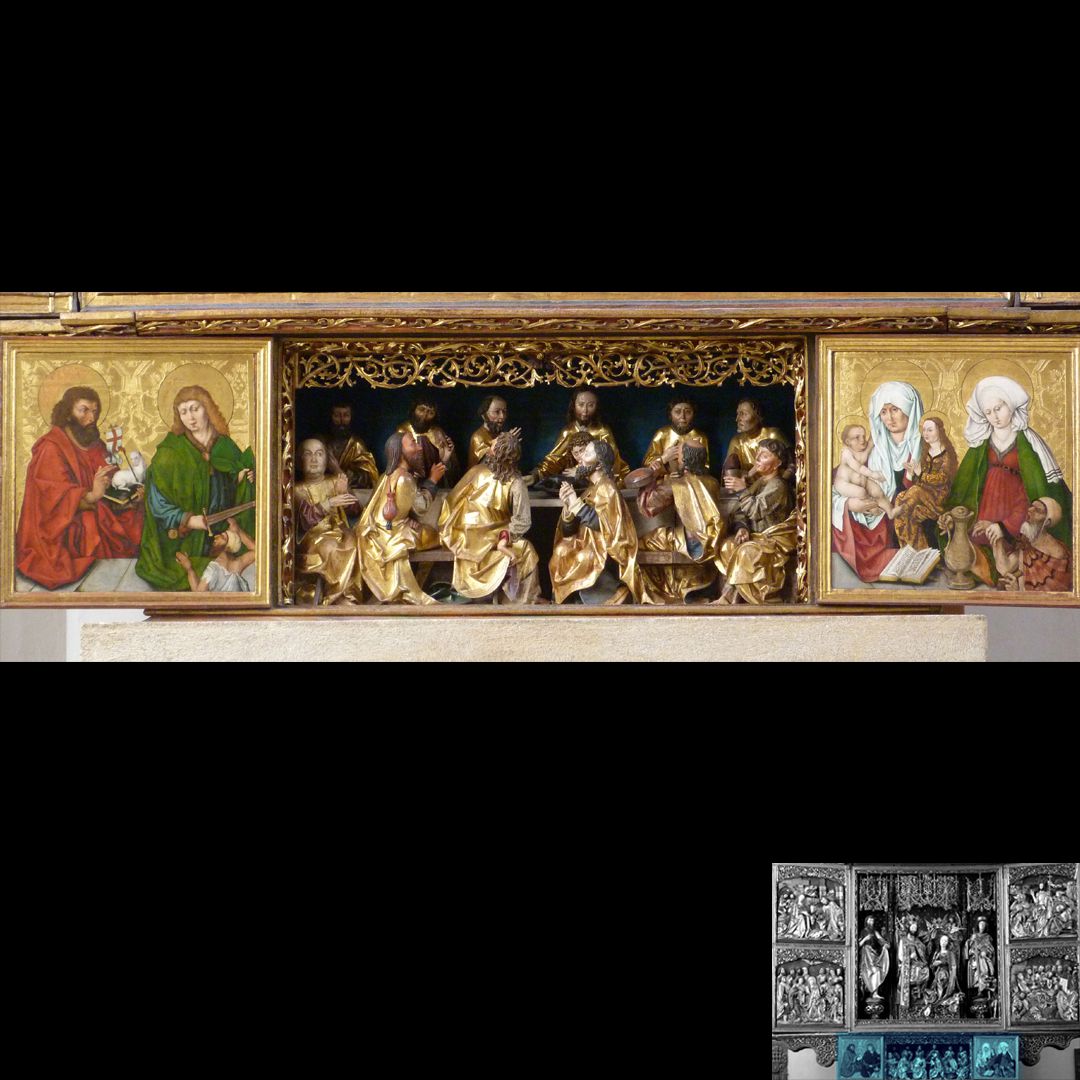
High Altar (Schwabach) Predella, Last Supper with Apostles on the left

High Altar (Schwabach)

1503 1506

Predella, Last Supper with Apostles on the left


1.383 / 5.000The altar was probably commissioned in 1503. After the master was branded on December 4 of that year, the workshop dissolved. The figures are therefore not the work of a workshop, but "the work of a sculptor, evidently a master and not a journeyman, who directly presupposes the stylistic development of Veit Stoss around 1500..." Alfred Schädler, 1981. "The extraordinarily high-quality sculptures in the shrine indicate that they were at least partially executed by the leading Nuremberg woodcarver of the time, Veit Stoss. The remaining sculptures are evidently products of his workshop." "According to Oellermann, an older painter sketched all the paintings on the outer pair of wings and began their execution with the Sermon of St. John. A younger painter then painted these panels differently and completed the scenes with the sermon, partially overpainting and making corrections. The inner wings, on which the reliefs are fixed, were signed and painted by the younger painter alone. In the predella, a third artist was at work, although the underdrawing still bore similarities to that of the older painter." (Oellermann 1983, pp. 142–155.)

Matthias Weniger in Michael Wolgemut / More than Dürer's Teacher, 2019

see also: Schwabach High Altar / First Transfiguration see also: Schwabach High Altar / Second Transfiguration

Location: Schwabach, Parish Church St. Martin´s

Design: Wolgemut, Werkstatt, Stoss, Veit

Realization: Wolgemut, Werkstatt

photo 2017, Theo Noll
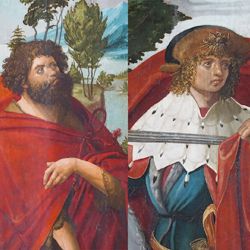
High Altar (Schwabach) Left Predella wing with John Baptist and St. Martin of Tours from the workshop of Wolgemut

High Altar (Schwabach)

1503 1506

Left Predella wing with John Baptist and St. Martin of Tours from the workshop of Wolgemut


1.383 / 5.000The altar was probably commissioned in 1503. After the master was branded on December 4 of that year, the workshop dissolved. The figures are therefore not the work of a workshop, but "the work of a sculptor, evidently a master and not a journeyman, who directly presupposes the stylistic development of Veit Stoss around 1500..." Alfred Schädler, 1981. "The extraordinarily high-quality sculptures in the shrine indicate that they were at least partially executed by the leading Nuremberg woodcarver of the time, Veit Stoss. The remaining sculptures are evidently products of his workshop." "According to Oellermann, an older painter sketched all the paintings on the outer pair of wings and began their execution with the Sermon of St. John. A younger painter then painted these panels differently and completed the scenes with the sermon, partially overpainting and making corrections. The inner wings, on which the reliefs are fixed, were signed and painted by the younger painter alone. In the predella, a third artist was at work, although the underdrawing still bore similarities to that of the older painter." (Oellermann 1983, pp. 142–155.)

Matthias Weniger in Michael Wolgemut / More than Dürer's Teacher, 2019

see also: Schwabach High Altar / First Transfiguration see also: Schwabach High Altar / Second Transfiguration

Location: Schwabach, Parish Church St. Martin´s

Design: Wolgemut, Werkstatt, Stoss, Veit

Realization: Wolgemut, Werkstatt

photo 2017, Theo Noll
High Altar (Schwabach) Right predella wing, St. Anne with the Virgin and Child, St. Elisabeth of Thuringia from the workshop of Wolgemut

High Altar (Schwabach)

1503 1506

Right predella wing, St. Anne with the Virgin and Child, St. Elisabeth of Thuringia from the workshop of Wolgemut


1.383 / 5.000The altar was probably commissioned in 1503. After the master was branded on December 4 of that year, the workshop dissolved. The figures are therefore not the work of a workshop, but "the work of a sculptor, evidently a master and not a journeyman, who directly presupposes the stylistic development of Veit Stoss around 1500..." Alfred Schädler, 1981. "The extraordinarily high-quality sculptures in the shrine indicate that they were at least partially executed by the leading Nuremberg woodcarver of the time, Veit Stoss. The remaining sculptures are evidently products of his workshop." "According to Oellermann, an older painter sketched all the paintings on the outer pair of wings and began their execution with the Sermon of St. John. A younger painter then painted these panels differently and completed the scenes with the sermon, partially overpainting and making corrections. The inner wings, on which the reliefs are fixed, were signed and painted by the younger painter alone. In the predella, a third artist was at work, although the underdrawing still bore similarities to that of the older painter." (Oellermann 1983, pp. 142–155.)

Matthias Weniger in Michael Wolgemut / More than Dürer's Teacher, 2019

see also: Schwabach High Altar / First Transfiguration see also: Schwabach High Altar / Second Transfiguration

Location: Schwabach, Parish Church St. Martin´s

Design: Wolgemut, Werkstatt, Stoss, Veit

Realization: Wolgemut, Werkstatt

photo 2017, Theo Noll
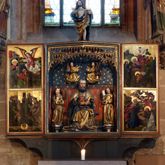
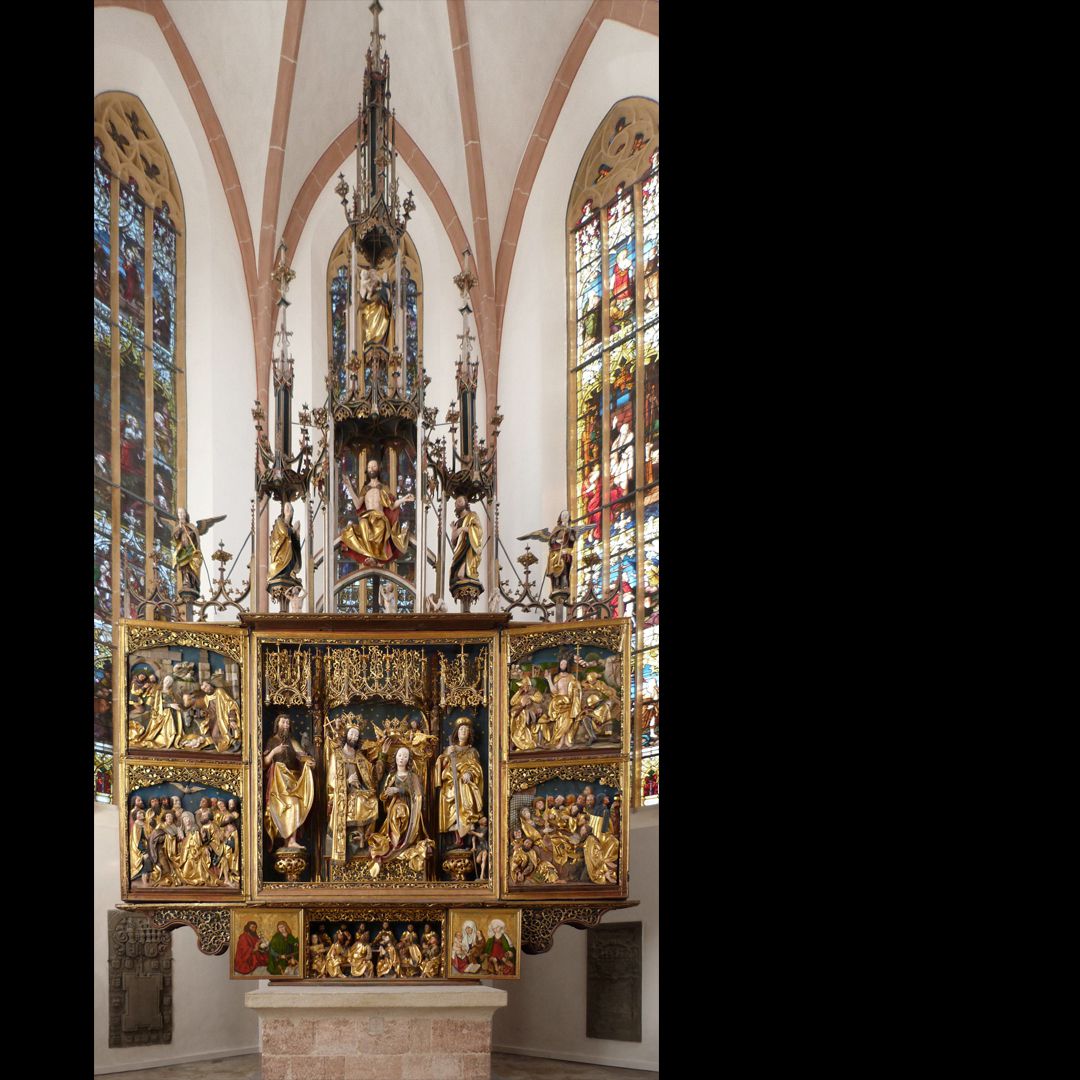
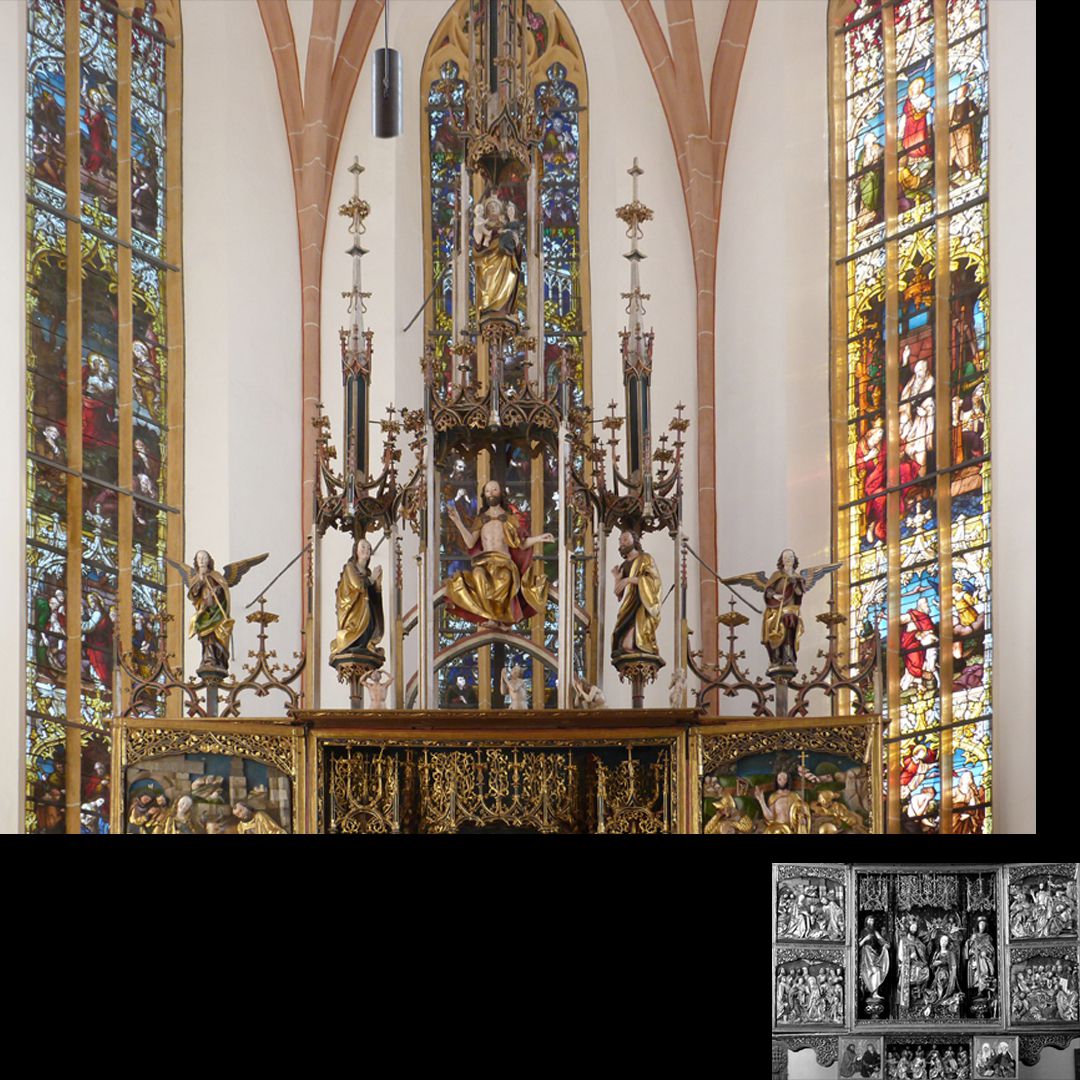
High Altar (Schwabach) Total view of the 15 m high altar

High Altar (Schwabach)

1503 1506

Total view of the 15 m high altar


1.383 / 5.000The altar was probably commissioned in 1503. After the master was branded on December 4 of that year, the workshop dissolved. The figures are therefore not the work of a workshop, but "the work of a sculptor, evidently a master and not a journeyman, who directly presupposes the stylistic development of Veit Stoss around 1500..." Alfred Schädler, 1981. "The extraordinarily high-quality sculptures in the shrine indicate that they were at least partially executed by the leading Nuremberg woodcarver of the time, Veit Stoss. The remaining sculptures are evidently products of his workshop." "According to Oellermann, an older painter sketched all the paintings on the outer pair of wings and began their execution with the Sermon of St. John. A younger painter then painted these panels differently and completed the scenes with the sermon, partially overpainting and making corrections. The inner wings, on which the reliefs are fixed, were signed and painted by the younger painter alone. In the predella, a third artist was at work, although the underdrawing still bore similarities to that of the older painter." (Oellermann 1983, pp. 142–155.)

Matthias Weniger in Michael Wolgemut / More than Dürer's Teacher, 2019

see also: Schwabach High Altar / First Transfiguration see also: Schwabach High Altar / Second Transfiguration

Location: Schwabach, Parish Church St. Martin´s

Design: Wolgemut, Werkstatt, Stoss, Veit

Realization: Wolgemut, Werkstatt

photo 2017, Theo Noll
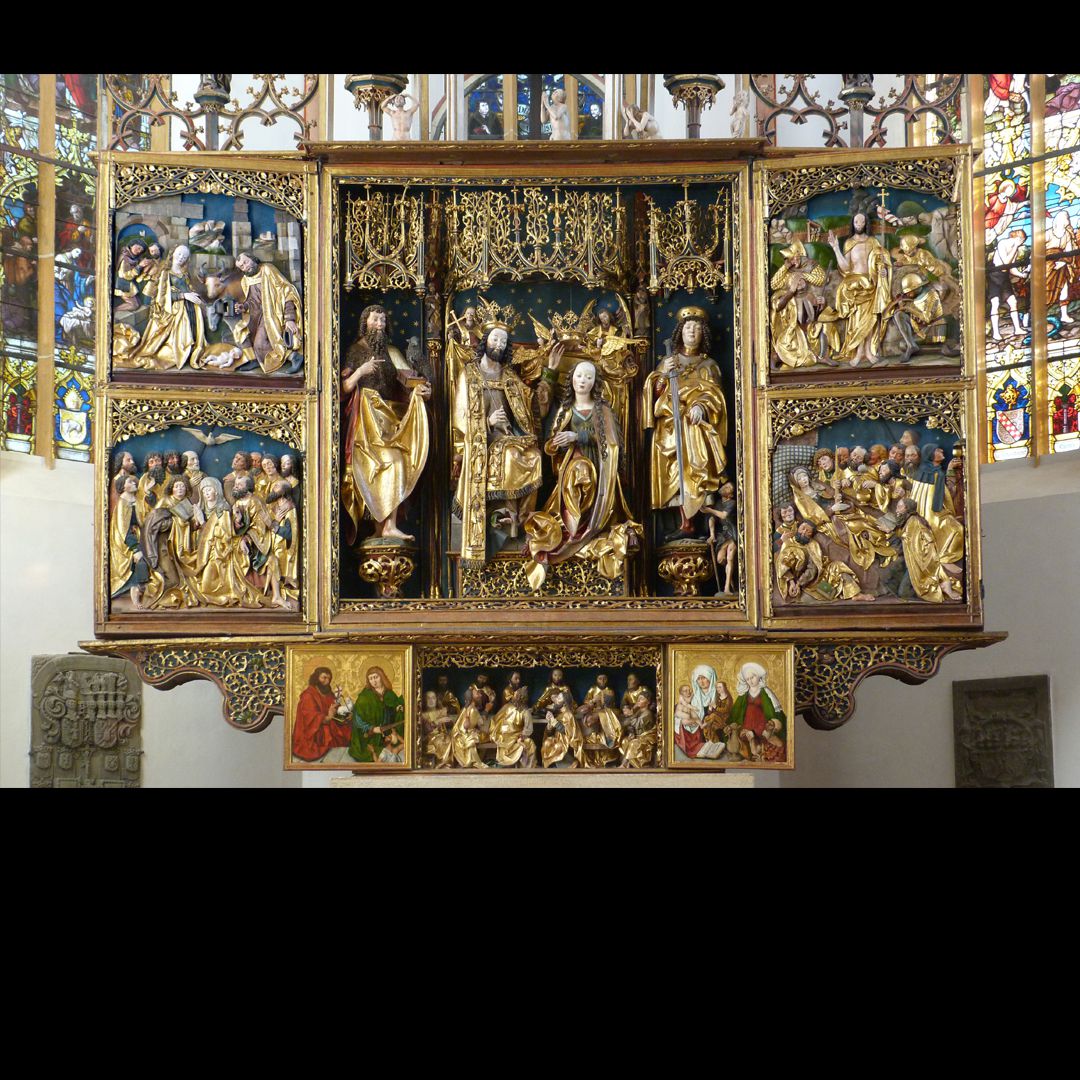
High Altar (Schwabach) Main part with predella, shrine and wings

High Altar (Schwabach)

1503 1506

Main part with predella, shrine and wings


1.383 / 5.000The altar was probably commissioned in 1503. After the master was branded on December 4 of that year, the workshop dissolved. The figures are therefore not the work of a workshop, but "the work of a sculptor, evidently a master and not a journeyman, who directly presupposes the stylistic development of Veit Stoss around 1500..." Alfred Schädler, 1981. "The extraordinarily high-quality sculptures in the shrine indicate that they were at least partially executed by the leading Nuremberg woodcarver of the time, Veit Stoss. The remaining sculptures are evidently products of his workshop." "According to Oellermann, an older painter sketched all the paintings on the outer pair of wings and began their execution with the Sermon of St. John. A younger painter then painted these panels differently and completed the scenes with the sermon, partially overpainting and making corrections. The inner wings, on which the reliefs are fixed, were signed and painted by the younger painter alone. In the predella, a third artist was at work, although the underdrawing still bore similarities to that of the older painter." (Oellermann 1983, pp. 142–155.)

Matthias Weniger in Michael Wolgemut / More than Dürer's Teacher, 2019

see also: Schwabach High Altar / First Transfiguration see also: Schwabach High Altar / Second Transfiguration

Location: Schwabach, Parish Church St. Martin´s

Design: Wolgemut, Werkstatt, Stoss, Veit

Realization: Wolgemut, Werkstatt

photo 2017, Theo Noll
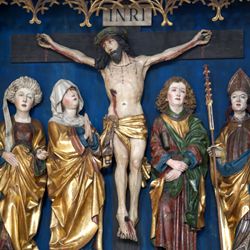
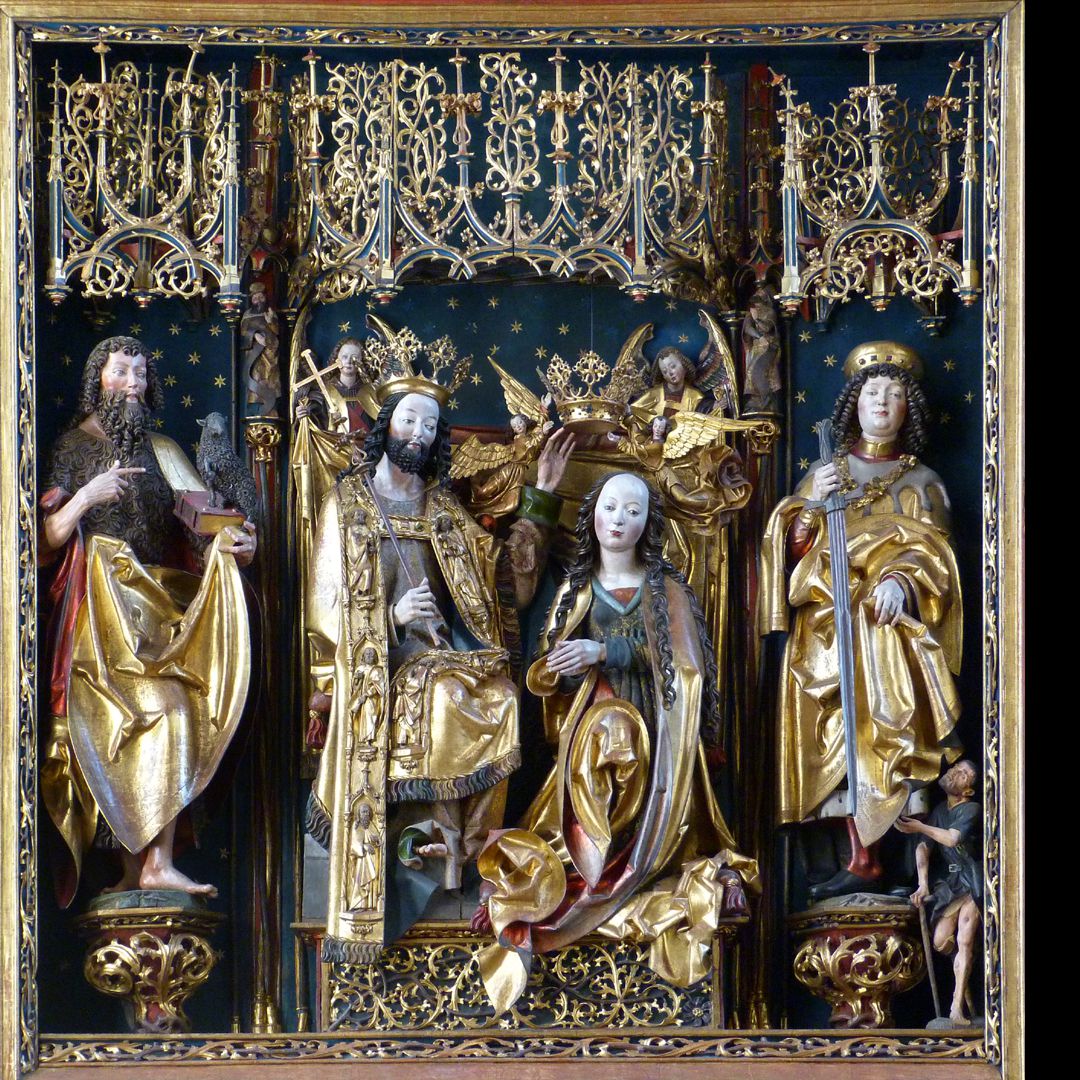
High Altar (Schwabach) Central shrine

High Altar (Schwabach)

1503 1506

Central shrine


1.383 / 5.000The altar was probably commissioned in 1503. After the master was branded on December 4 of that year, the workshop dissolved. The figures are therefore not the work of a workshop, but "the work of a sculptor, evidently a master and not a journeyman, who directly presupposes the stylistic development of Veit Stoss around 1500..." Alfred Schädler, 1981. "The extraordinarily high-quality sculptures in the shrine indicate that they were at least partially executed by the leading Nuremberg woodcarver of the time, Veit Stoss. The remaining sculptures are evidently products of his workshop." "According to Oellermann, an older painter sketched all the paintings on the outer pair of wings and began their execution with the Sermon of St. John. A younger painter then painted these panels differently and completed the scenes with the sermon, partially overpainting and making corrections. The inner wings, on which the reliefs are fixed, were signed and painted by the younger painter alone. In the predella, a third artist was at work, although the underdrawing still bore similarities to that of the older painter." (Oellermann 1983, pp. 142–155.)

Matthias Weniger in Michael Wolgemut / More than Dürer's Teacher, 2019

see also: Schwabach High Altar / First Transfiguration see also: Schwabach High Altar / Second Transfiguration

Location: Schwabach, Parish Church St. Martin´s

Design: Wolgemut, Werkstatt, Stoss, Veit

Realization: Wolgemut, Werkstatt

photo 2017, Theo Noll
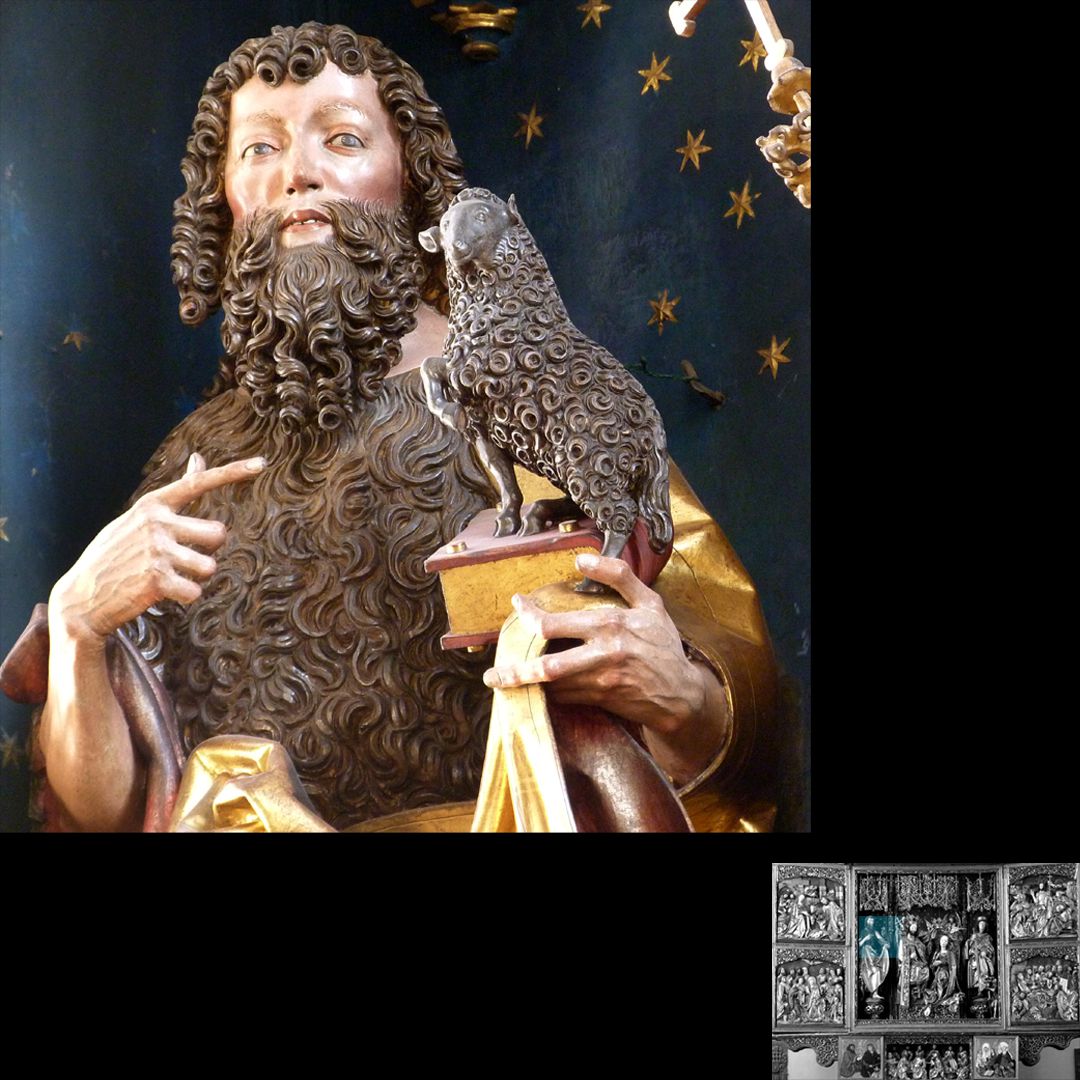
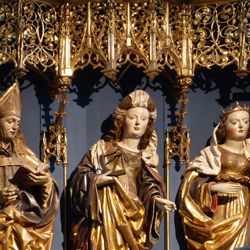
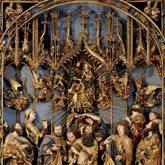
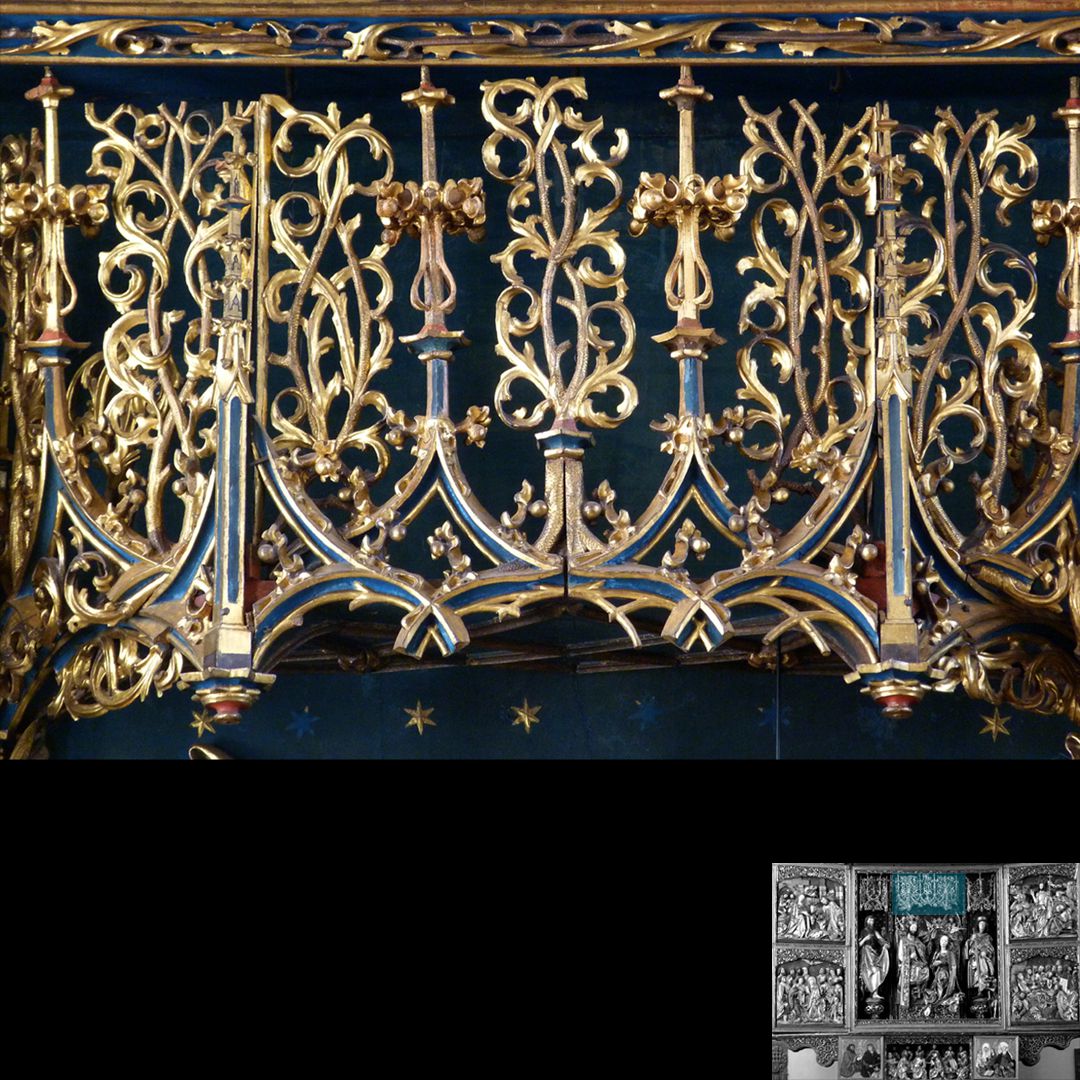
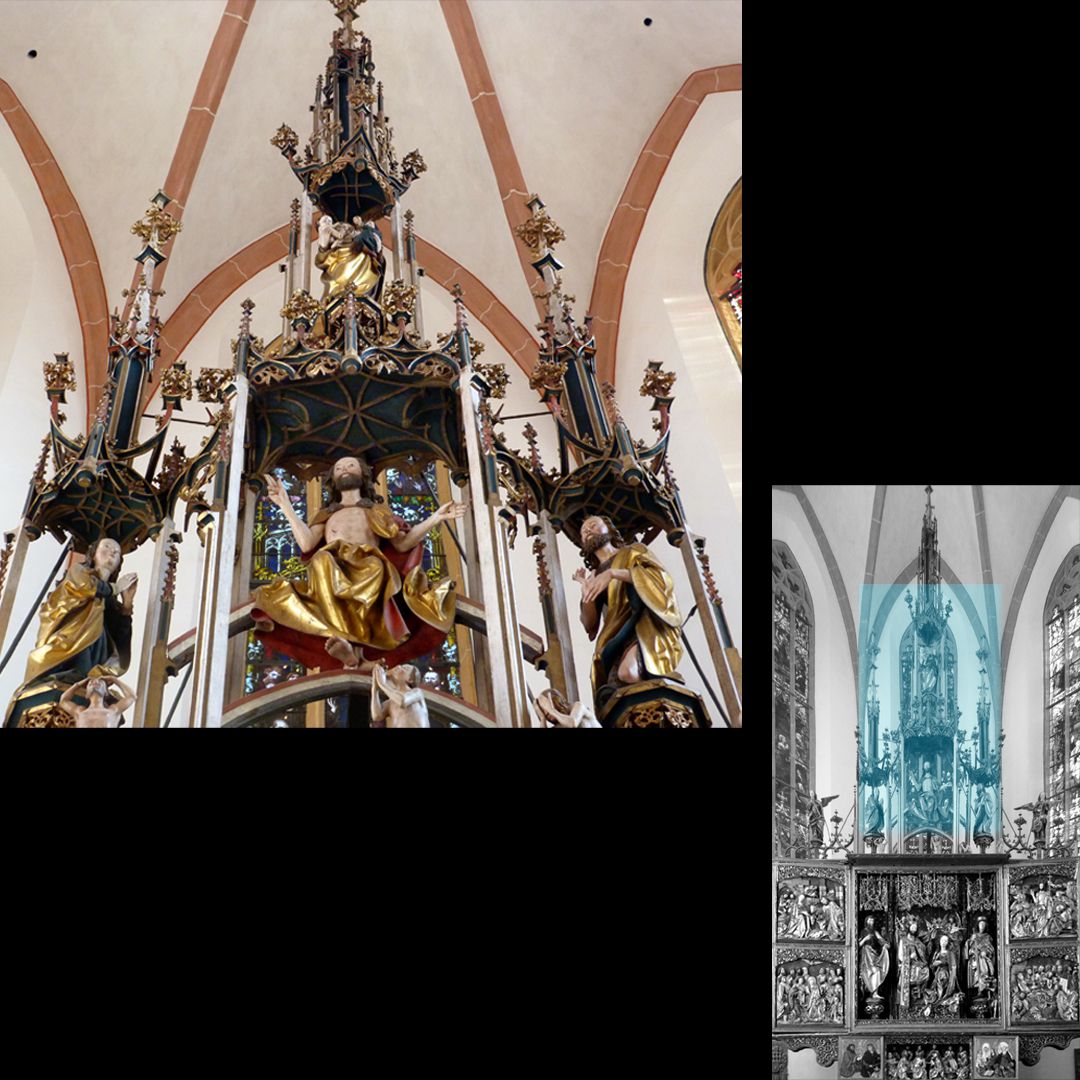
High Altar (Schwabach) Central Canopy of the shrine

High Altar (Schwabach)

1503 1506

Central Canopy of the shrine


1.383 / 5.000The altar was probably commissioned in 1503. After the master was branded on December 4 of that year, the workshop dissolved. The figures are therefore not the work of a workshop, but "the work of a sculptor, evidently a master and not a journeyman, who directly presupposes the stylistic development of Veit Stoss around 1500..." Alfred Schädler, 1981. "The extraordinarily high-quality sculptures in the shrine indicate that they were at least partially executed by the leading Nuremberg woodcarver of the time, Veit Stoss. The remaining sculptures are evidently products of his workshop." "According to Oellermann, an older painter sketched all the paintings on the outer pair of wings and began their execution with the Sermon of St. John. A younger painter then painted these panels differently and completed the scenes with the sermon, partially overpainting and making corrections. The inner wings, on which the reliefs are fixed, were signed and painted by the younger painter alone. In the predella, a third artist was at work, although the underdrawing still bore similarities to that of the older painter." (Oellermann 1983, pp. 142–155.)

Matthias Weniger in Michael Wolgemut / More than Dürer's Teacher, 2019

see also: Schwabach High Altar / First Transfiguration see also: Schwabach High Altar / Second Transfiguration

Location: Schwabach, Parish Church St. Martin´s

Design: Wolgemut, Werkstatt, Stoss, Veit

Realization: Wolgemut, Werkstatt

photo 2017, Theo Noll
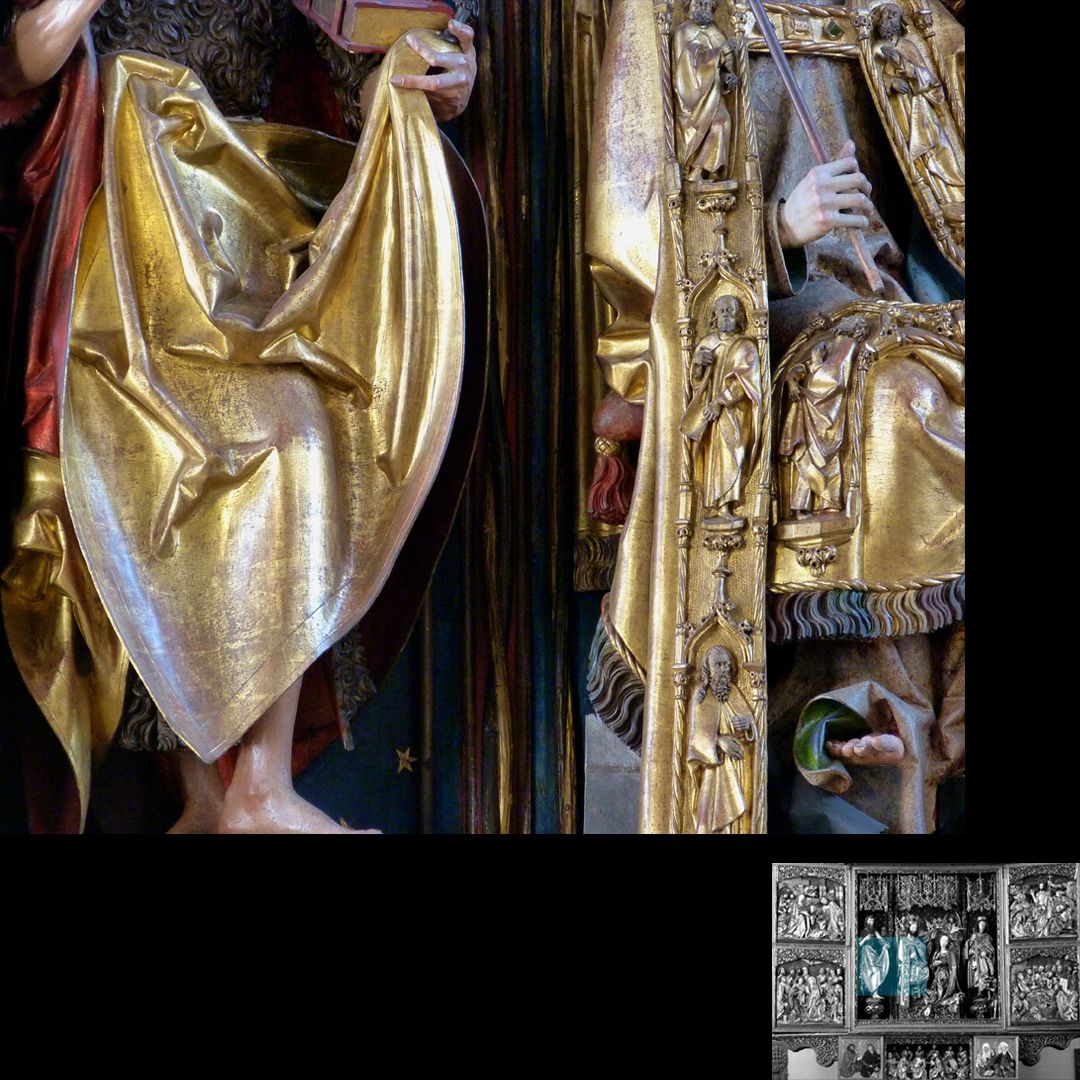
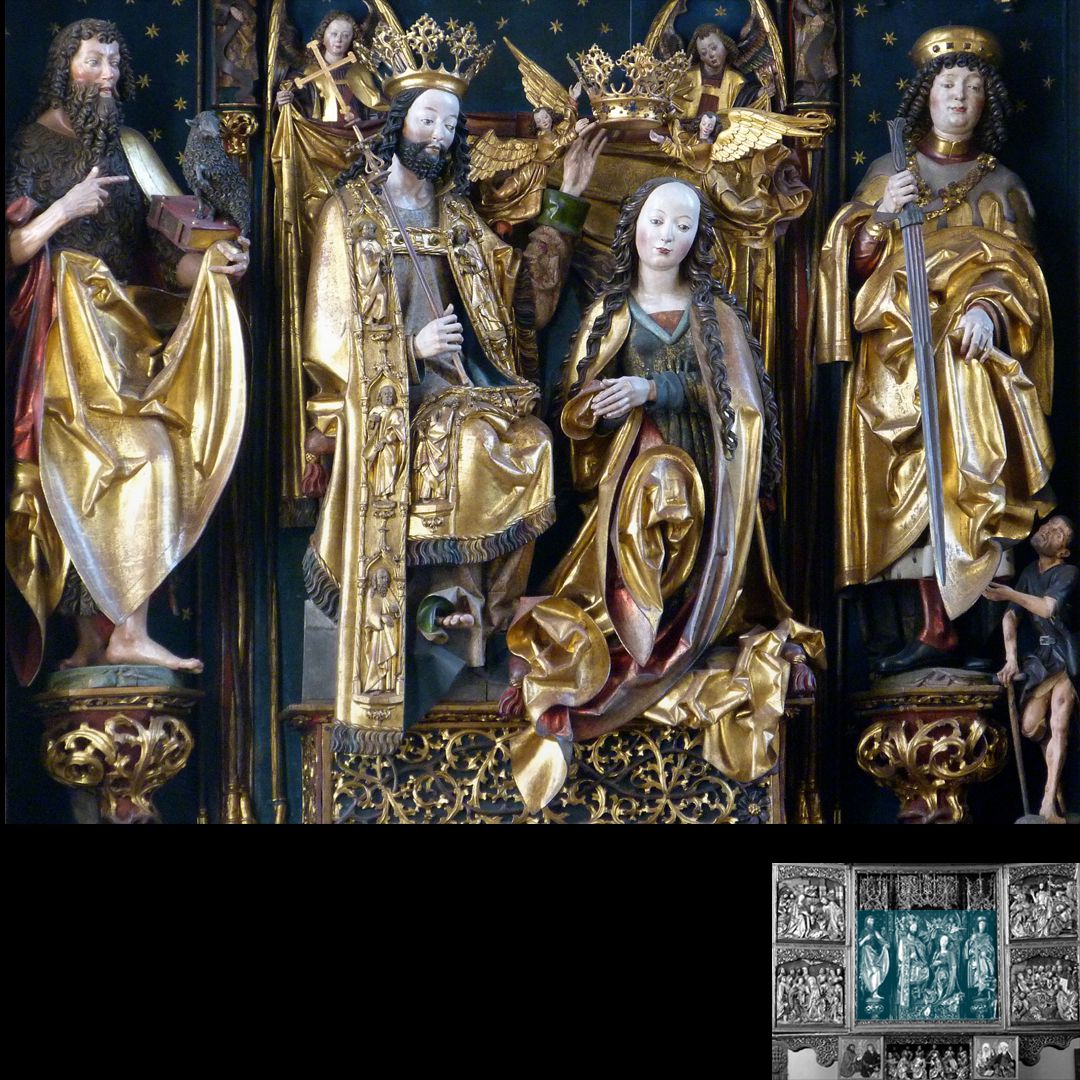
High Altar (Schwabach) Main figures

High Altar (Schwabach)

1503 1506

Main figures


1.383 / 5.000The altar was probably commissioned in 1503. After the master was branded on December 4 of that year, the workshop dissolved. The figures are therefore not the work of a workshop, but "the work of a sculptor, evidently a master and not a journeyman, who directly presupposes the stylistic development of Veit Stoss around 1500..." Alfred Schädler, 1981. "The extraordinarily high-quality sculptures in the shrine indicate that they were at least partially executed by the leading Nuremberg woodcarver of the time, Veit Stoss. The remaining sculptures are evidently products of his workshop." "According to Oellermann, an older painter sketched all the paintings on the outer pair of wings and began their execution with the Sermon of St. John. A younger painter then painted these panels differently and completed the scenes with the sermon, partially overpainting and making corrections. The inner wings, on which the reliefs are fixed, were signed and painted by the younger painter alone. In the predella, a third artist was at work, although the underdrawing still bore similarities to that of the older painter." (Oellermann 1983, pp. 142–155.)

Matthias Weniger in Michael Wolgemut / More than Dürer's Teacher, 2019

see also: Schwabach High Altar / First Transfiguration see also: Schwabach High Altar / Second Transfiguration

Location: Schwabach, Parish Church St. Martin´s

Design: Wolgemut, Werkstatt, Stoss, Veit

Realization: Wolgemut, Werkstatt

photo 2017, Theo Noll
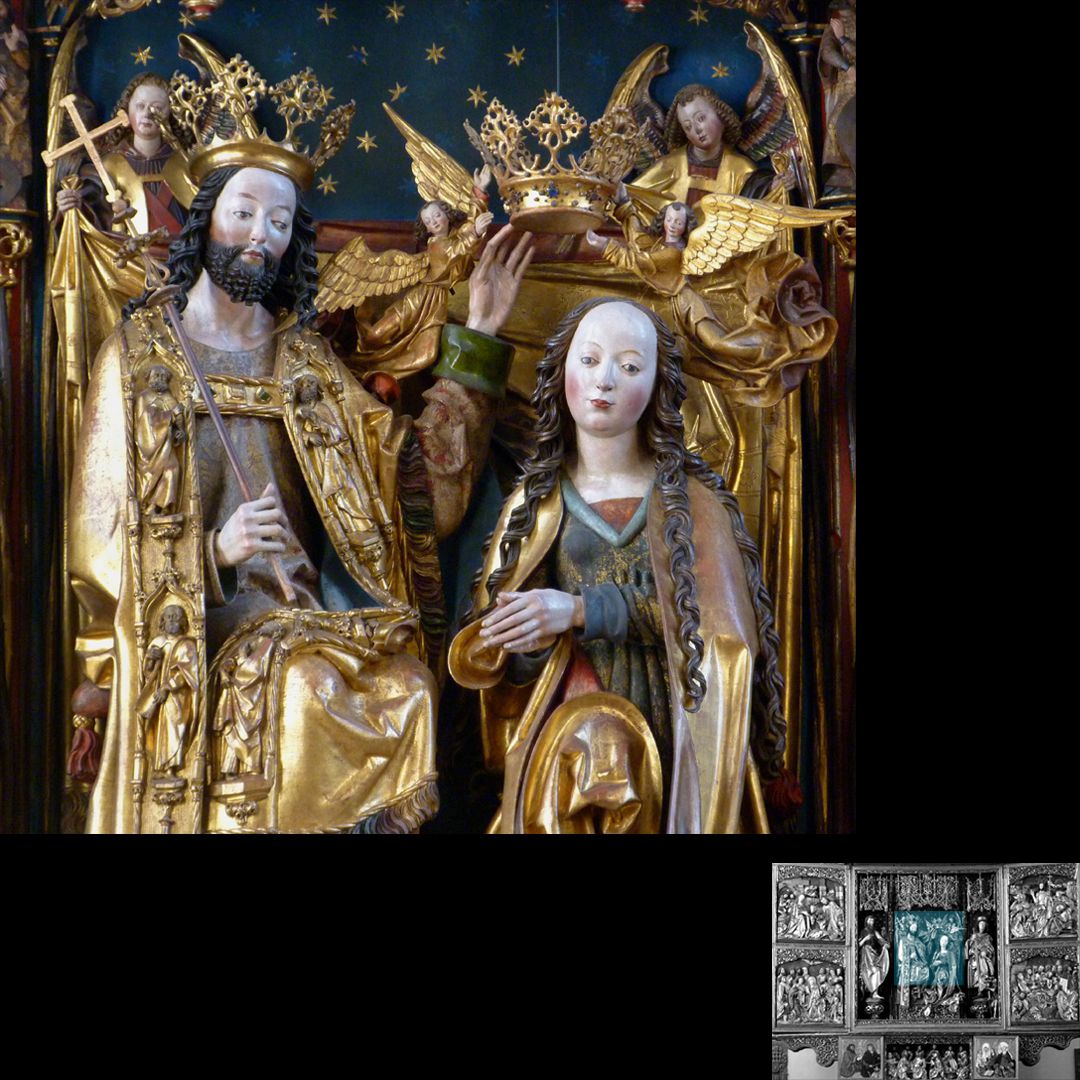
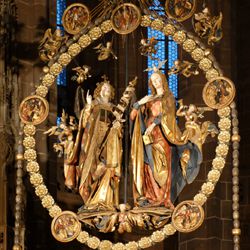
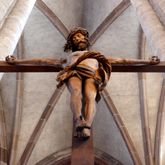
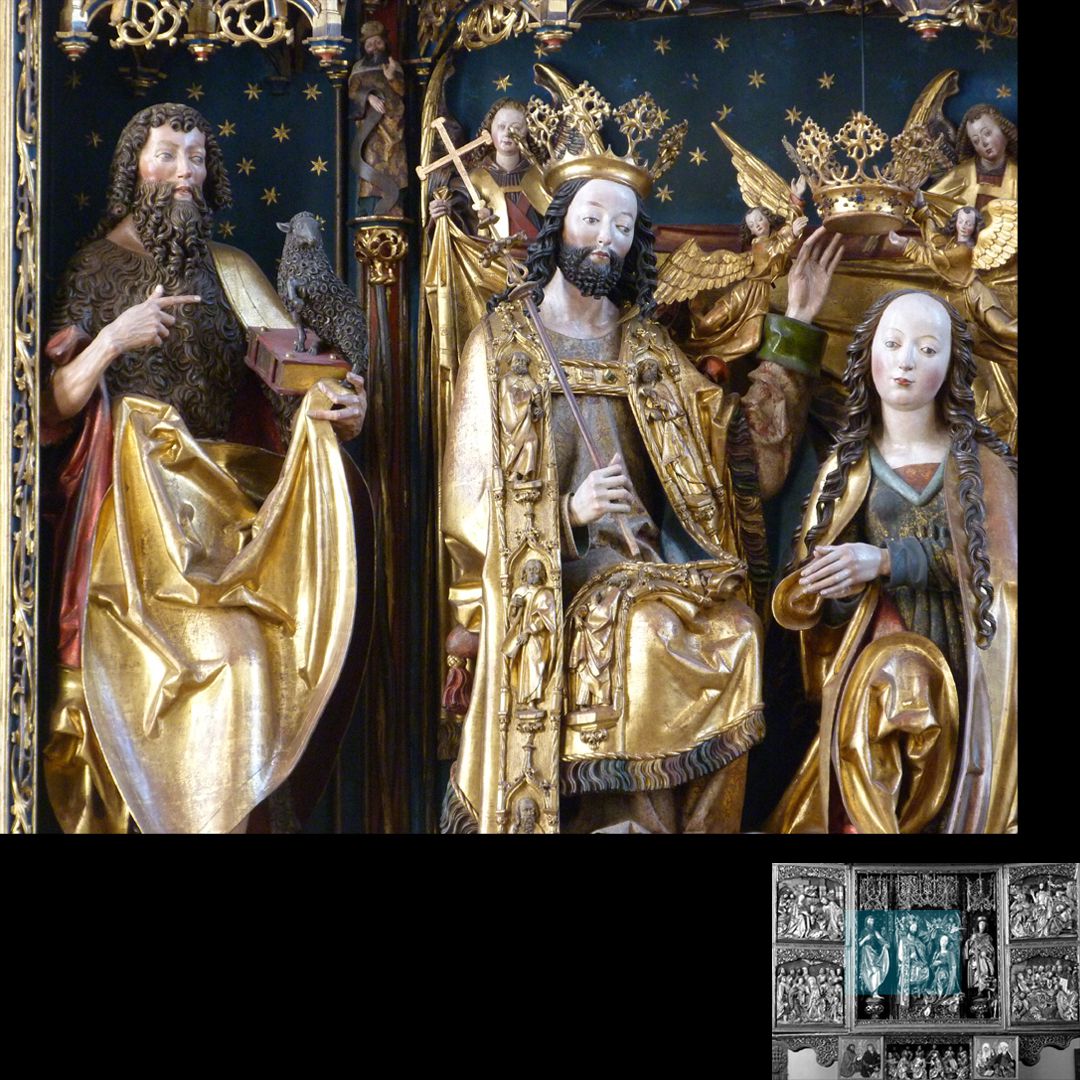
High Altar (Schwabach) John Baptist, Christ and Mary

High Altar (Schwabach)

1503 1506

John Baptist, Christ and Mary


1.383 / 5.000The altar was probably commissioned in 1503. After the master was branded on December 4 of that year, the workshop dissolved. The figures are therefore not the work of a workshop, but "the work of a sculptor, evidently a master and not a journeyman, who directly presupposes the stylistic development of Veit Stoss around 1500..." Alfred Schädler, 1981. "The extraordinarily high-quality sculptures in the shrine indicate that they were at least partially executed by the leading Nuremberg woodcarver of the time, Veit Stoss. The remaining sculptures are evidently products of his workshop." "According to Oellermann, an older painter sketched all the paintings on the outer pair of wings and began their execution with the Sermon of St. John. A younger painter then painted these panels differently and completed the scenes with the sermon, partially overpainting and making corrections. The inner wings, on which the reliefs are fixed, were signed and painted by the younger painter alone. In the predella, a third artist was at work, although the underdrawing still bore similarities to that of the older painter." (Oellermann 1983, pp. 142–155.)

Matthias Weniger in Michael Wolgemut / More than Dürer's Teacher, 2019

see also: Schwabach High Altar / First Transfiguration see also: Schwabach High Altar / Second Transfiguration

Location: Schwabach, Parish Church St. Martin´s

Design: Wolgemut, Werkstatt, Stoss, Veit

Realization: Wolgemut, Werkstatt

photo 2017, Theo Noll
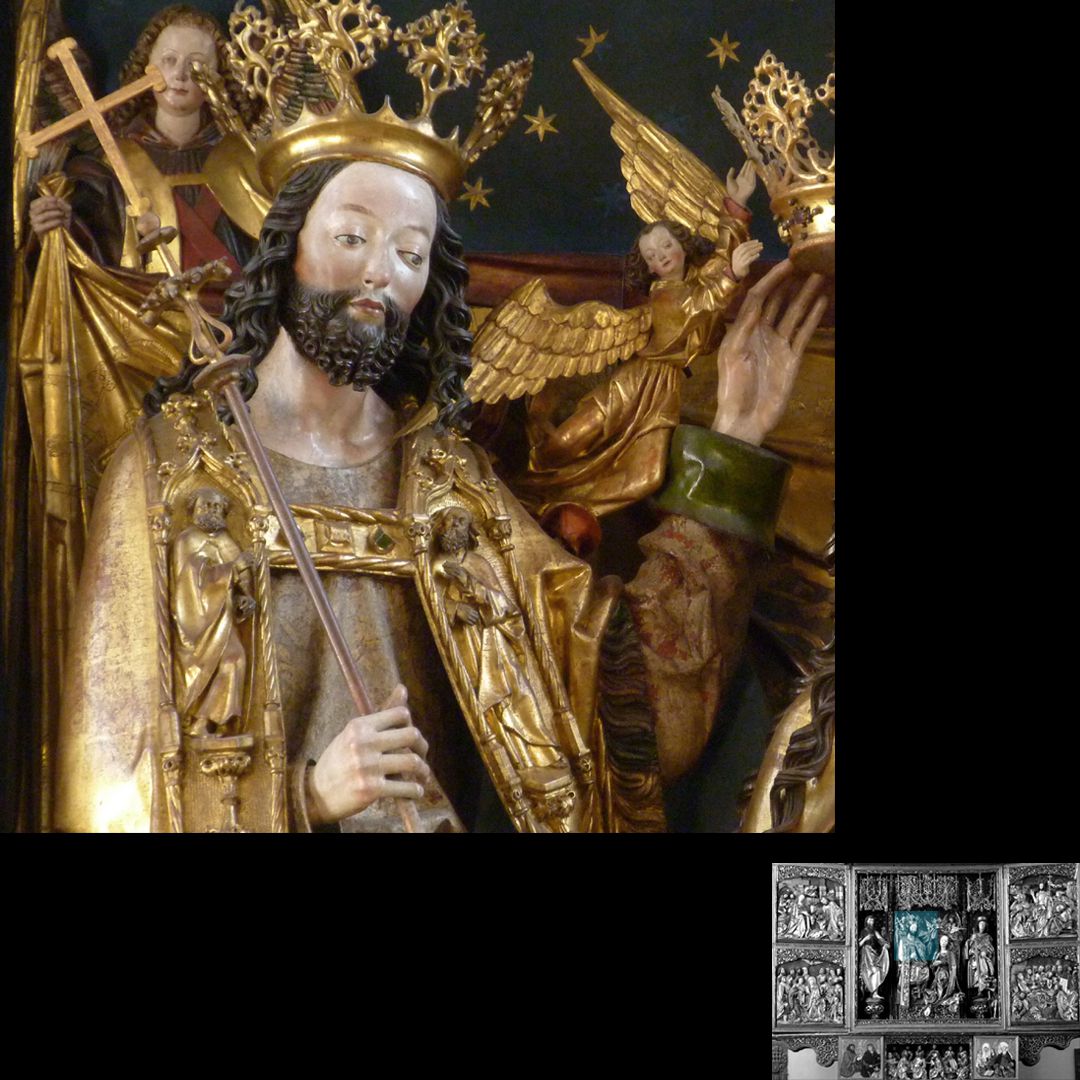
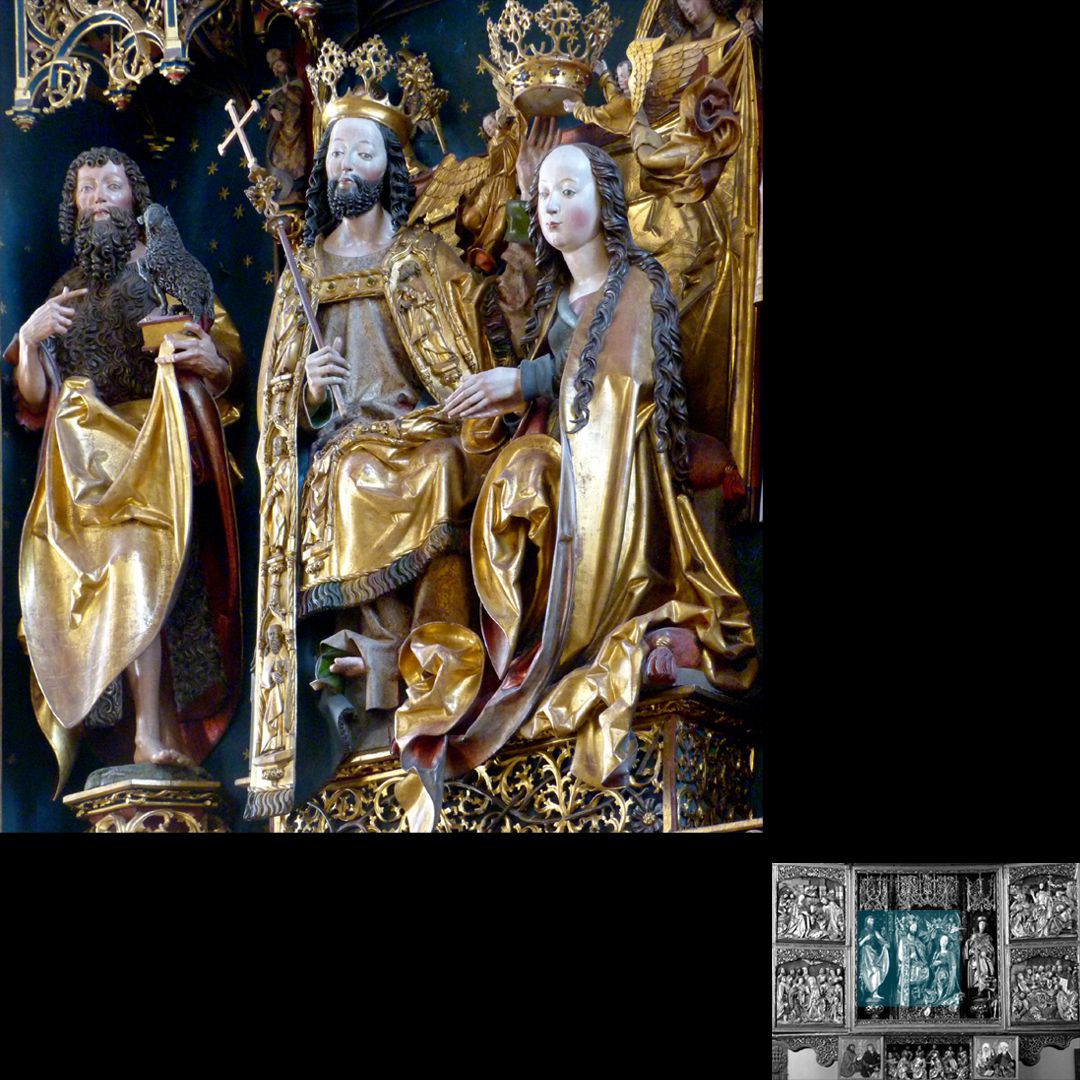
High Altar (Schwabach) John Baptist, Christ and Mary, lateral view

High Altar (Schwabach)

1503 1506

John Baptist, Christ and Mary, lateral view


1.383 / 5.000The altar was probably commissioned in 1503. After the master was branded on December 4 of that year, the workshop dissolved. The figures are therefore not the work of a workshop, but "the work of a sculptor, evidently a master and not a journeyman, who directly presupposes the stylistic development of Veit Stoss around 1500..." Alfred Schädler, 1981. "The extraordinarily high-quality sculptures in the shrine indicate that they were at least partially executed by the leading Nuremberg woodcarver of the time, Veit Stoss. The remaining sculptures are evidently products of his workshop." "According to Oellermann, an older painter sketched all the paintings on the outer pair of wings and began their execution with the Sermon of St. John. A younger painter then painted these panels differently and completed the scenes with the sermon, partially overpainting and making corrections. The inner wings, on which the reliefs are fixed, were signed and painted by the younger painter alone. In the predella, a third artist was at work, although the underdrawing still bore similarities to that of the older painter." (Oellermann 1983, pp. 142–155.)

Matthias Weniger in Michael Wolgemut / More than Dürer's Teacher, 2019

see also: Schwabach High Altar / First Transfiguration see also: Schwabach High Altar / Second Transfiguration

Location: Schwabach, Parish Church St. Martin´s

Design: Wolgemut, Werkstatt, Stoss, Veit

Realization: Wolgemut, Werkstatt

photo 2017, Theo Noll
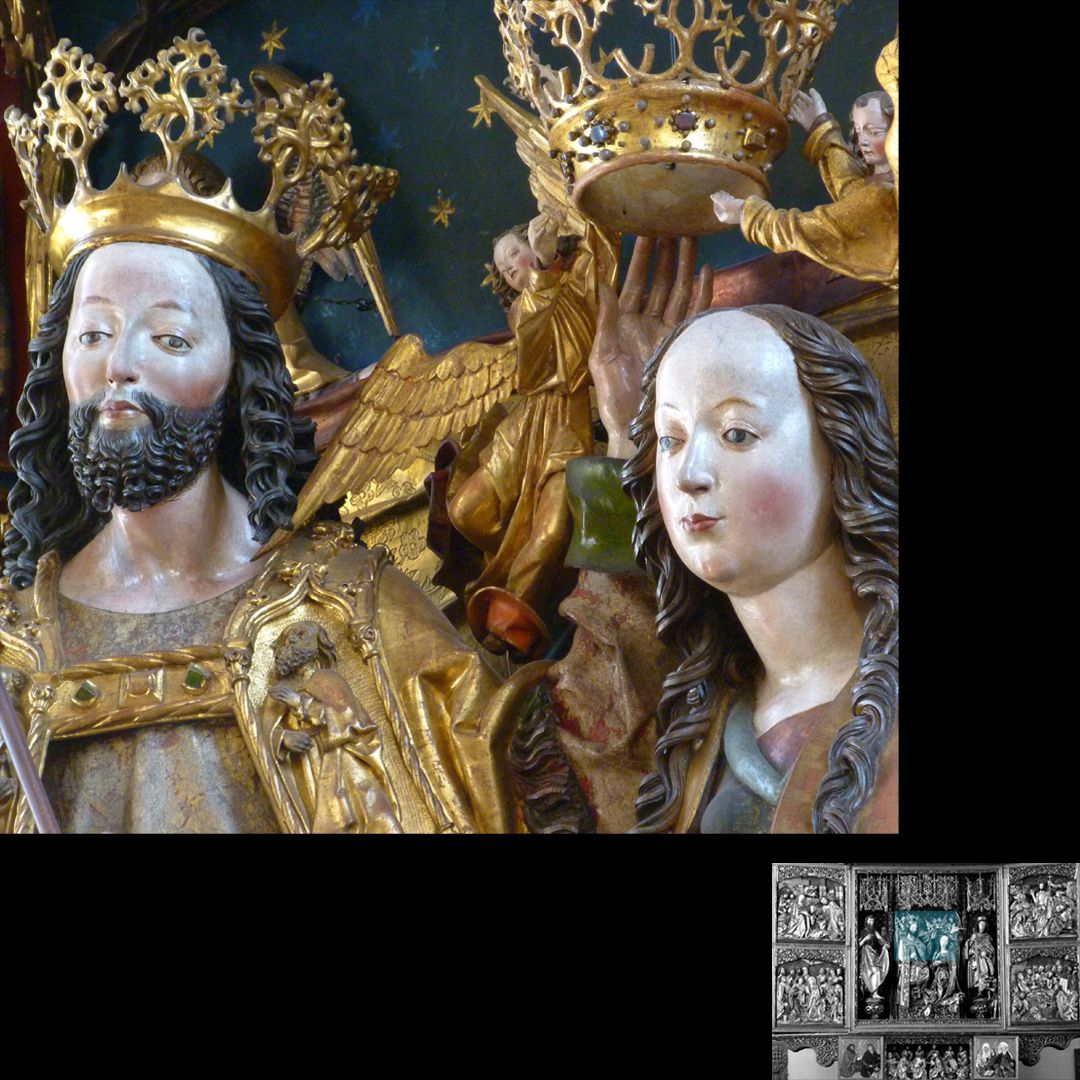
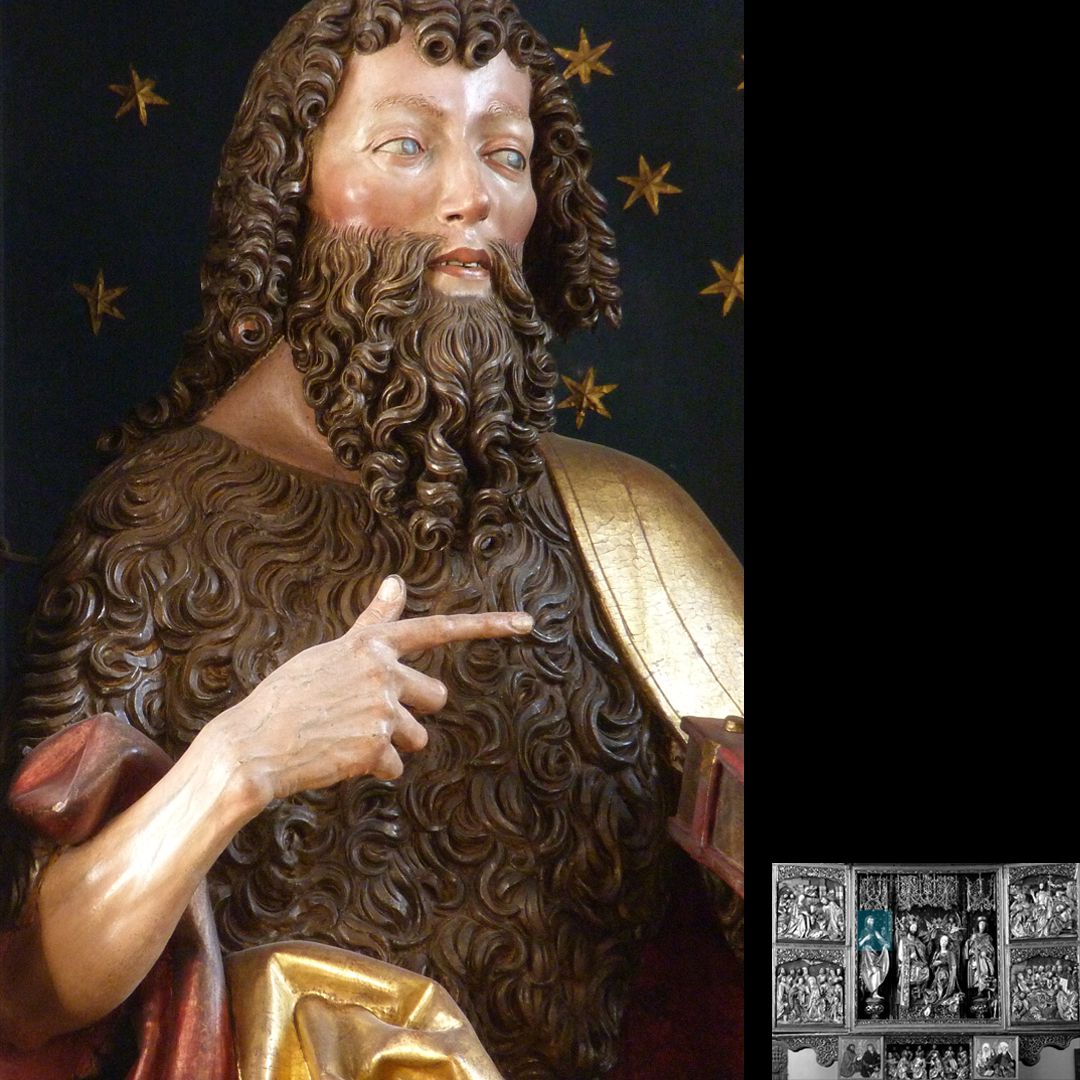
High Altar (Schwabach) John Baptist, detail

High Altar (Schwabach)

1503 1506

John Baptist, detail


1.383 / 5.000The altar was probably commissioned in 1503. After the master was branded on December 4 of that year, the workshop dissolved. The figures are therefore not the work of a workshop, but "the work of a sculptor, evidently a master and not a journeyman, who directly presupposes the stylistic development of Veit Stoss around 1500..." Alfred Schädler, 1981. "The extraordinarily high-quality sculptures in the shrine indicate that they were at least partially executed by the leading Nuremberg woodcarver of the time, Veit Stoss. The remaining sculptures are evidently products of his workshop." "According to Oellermann, an older painter sketched all the paintings on the outer pair of wings and began their execution with the Sermon of St. John. A younger painter then painted these panels differently and completed the scenes with the sermon, partially overpainting and making corrections. The inner wings, on which the reliefs are fixed, were signed and painted by the younger painter alone. In the predella, a third artist was at work, although the underdrawing still bore similarities to that of the older painter." (Oellermann 1983, pp. 142–155.)

Matthias Weniger in Michael Wolgemut / More than Dürer's Teacher, 2019

see also: Schwabach High Altar / First Transfiguration see also: Schwabach High Altar / Second Transfiguration

Location: Schwabach, Parish Church St. Martin´s

Design: Wolgemut, Werkstatt, Stoss, Veit

Realization: Wolgemut, Werkstatt

photo 2017, Theo Noll
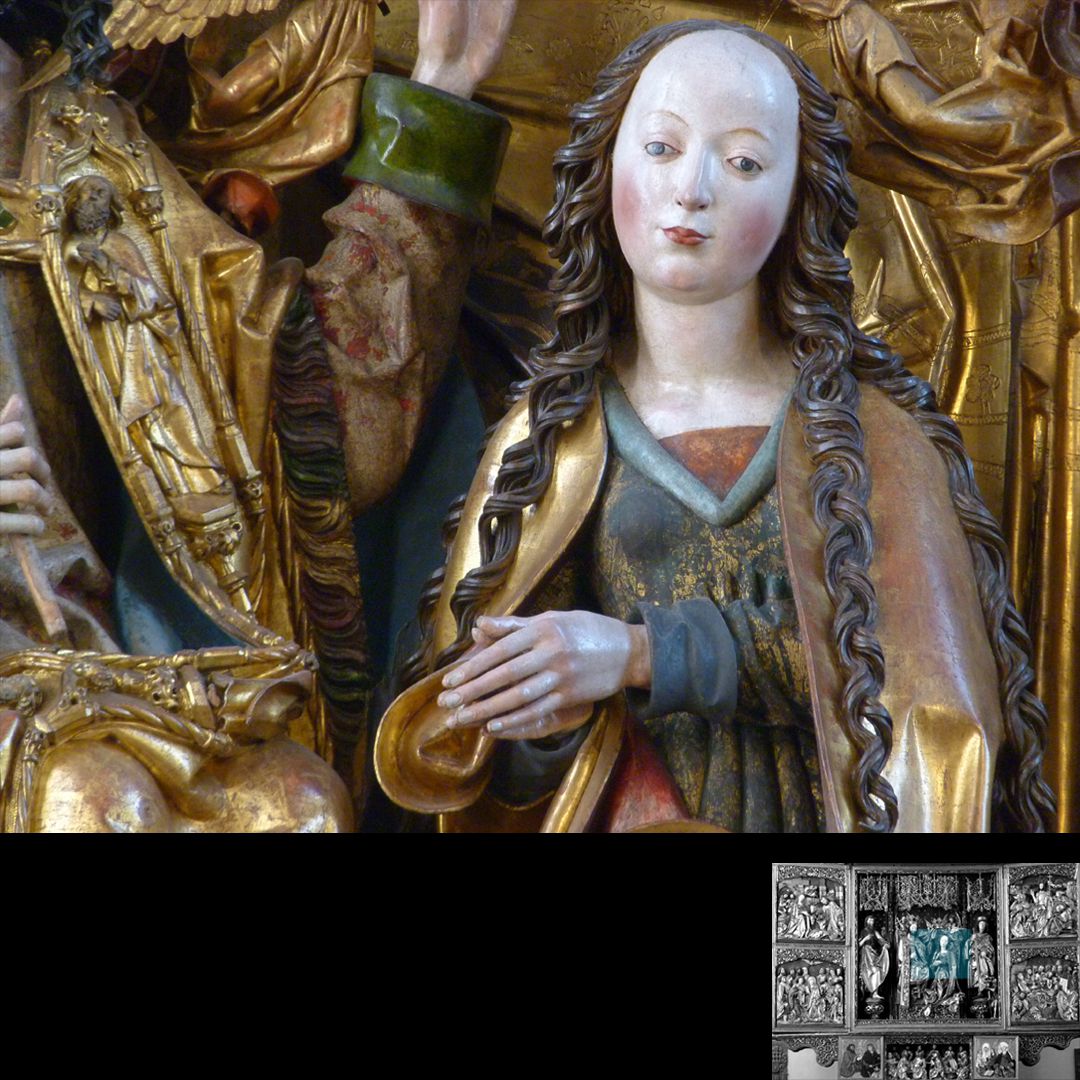
High Altar (Schwabach) John Baptist, gospel and lamb

High Altar (Schwabach)

1503 1506

John Baptist, gospel and lamb


1.383 / 5.000The altar was probably commissioned in 1503. After the master was branded on December 4 of that year, the workshop dissolved. The figures are therefore not the work of a workshop, but "the work of a sculptor, evidently a master and not a journeyman, who directly presupposes the stylistic development of Veit Stoss around 1500..." Alfred Schädler, 1981. "The extraordinarily high-quality sculptures in the shrine indicate that they were at least partially executed by the leading Nuremberg woodcarver of the time, Veit Stoss. The remaining sculptures are evidently products of his workshop." "According to Oellermann, an older painter sketched all the paintings on the outer pair of wings and began their execution with the Sermon of St. John. A younger painter then painted these panels differently and completed the scenes with the sermon, partially overpainting and making corrections. The inner wings, on which the reliefs are fixed, were signed and painted by the younger painter alone. In the predella, a third artist was at work, although the underdrawing still bore similarities to that of the older painter." (Oellermann 1983, pp. 142–155.)

Matthias Weniger in Michael Wolgemut / More than Dürer's Teacher, 2019

see also: Schwabach High Altar / First Transfiguration see also: Schwabach High Altar / Second Transfiguration

Location: Schwabach, Parish Church St. Martin´s

Design: Wolgemut, Werkstatt, Stoss, Veit

Realization: Wolgemut, Werkstatt

photo 2017, Theo Noll
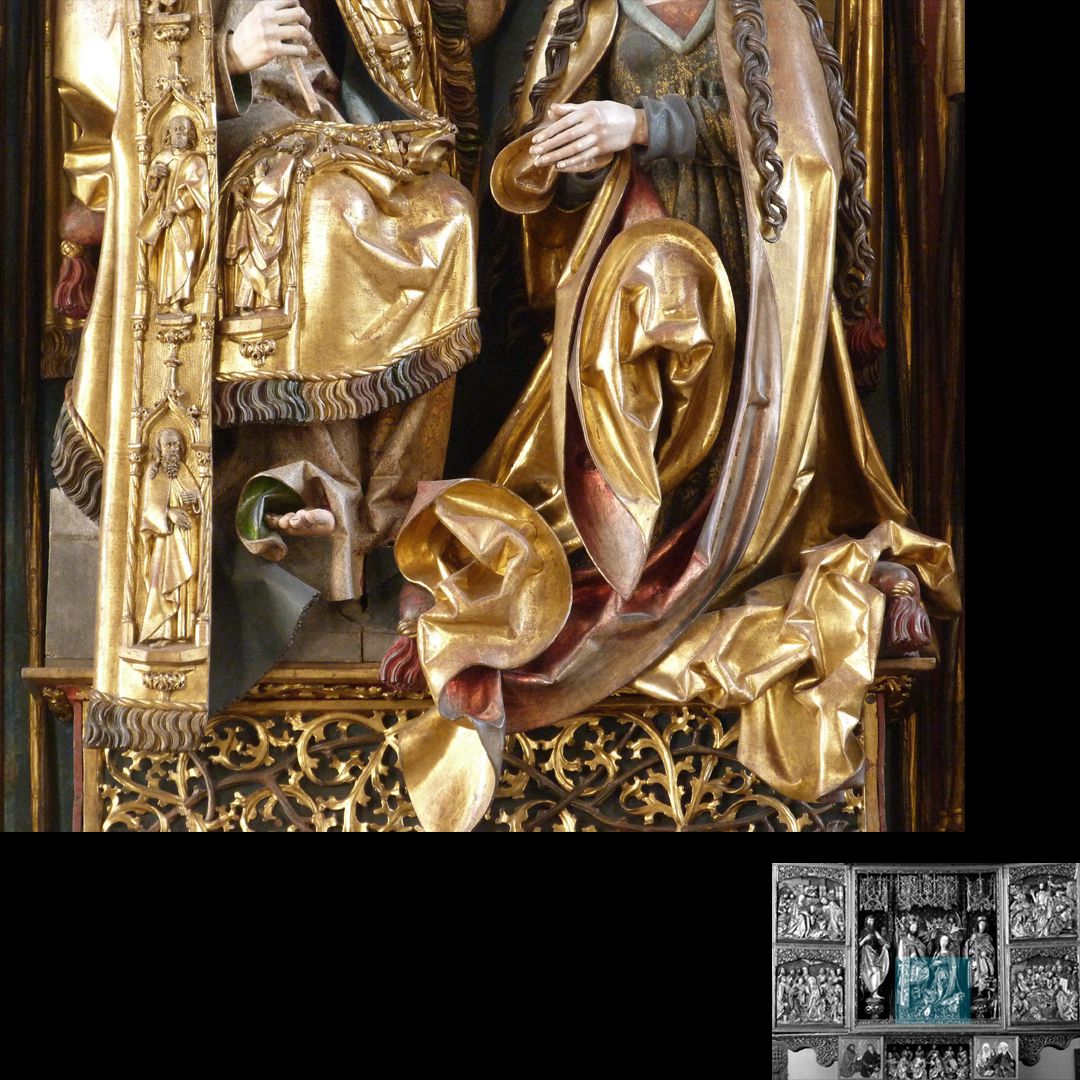
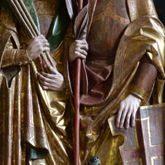
High Altar (Schwabach) Detail of the drapery and trimming of the cloak of Christ

High Altar (Schwabach)

1503 1506

Detail of the drapery and trimming of the cloak of Christ


1.383 / 5.000The altar was probably commissioned in 1503. After the master was branded on December 4 of that year, the workshop dissolved. The figures are therefore not the work of a workshop, but "the work of a sculptor, evidently a master and not a journeyman, who directly presupposes the stylistic development of Veit Stoss around 1500..." Alfred Schädler, 1981. "The extraordinarily high-quality sculptures in the shrine indicate that they were at least partially executed by the leading Nuremberg woodcarver of the time, Veit Stoss. The remaining sculptures are evidently products of his workshop." "According to Oellermann, an older painter sketched all the paintings on the outer pair of wings and began their execution with the Sermon of St. John. A younger painter then painted these panels differently and completed the scenes with the sermon, partially overpainting and making corrections. The inner wings, on which the reliefs are fixed, were signed and painted by the younger painter alone. In the predella, a third artist was at work, although the underdrawing still bore similarities to that of the older painter." (Oellermann 1983, pp. 142–155.)

Matthias Weniger in Michael Wolgemut / More than Dürer's Teacher, 2019

see also: Schwabach High Altar / First Transfiguration see also: Schwabach High Altar / Second Transfiguration

Location: Schwabach, Parish Church St. Martin´s

Design: Wolgemut, Werkstatt, Stoss, Veit

Realization: Wolgemut, Werkstatt

photo 2017, Theo Noll
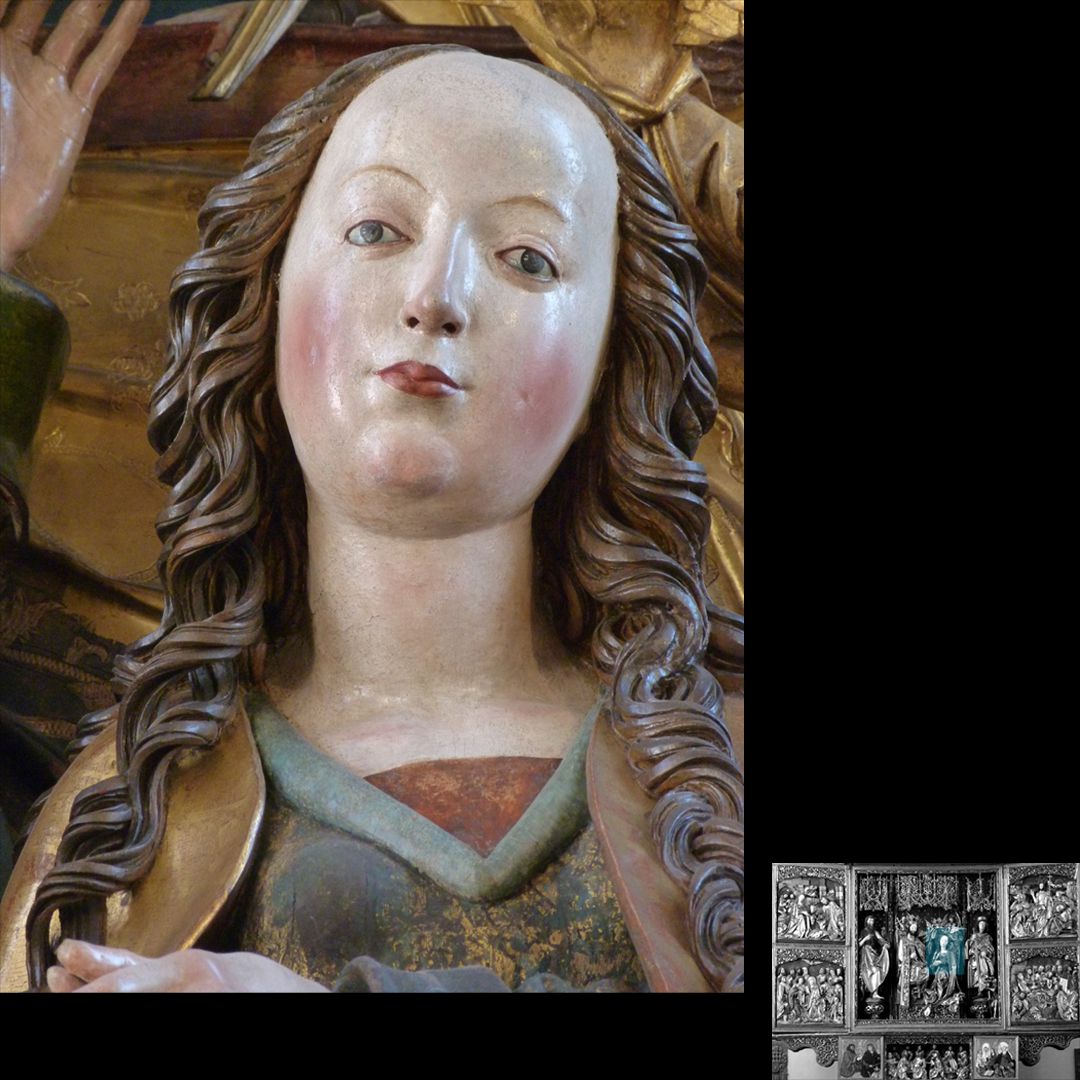
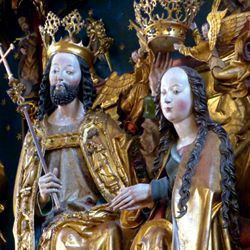
High Altar (Schwabach) Detail of the coronation of Mary

High Altar (Schwabach)

1503 1506

Detail of the coronation of Mary


1.383 / 5.000The altar was probably commissioned in 1503. After the master was branded on December 4 of that year, the workshop dissolved. The figures are therefore not the work of a workshop, but "the work of a sculptor, evidently a master and not a journeyman, who directly presupposes the stylistic development of Veit Stoss around 1500..." Alfred Schädler, 1981. "The extraordinarily high-quality sculptures in the shrine indicate that they were at least partially executed by the leading Nuremberg woodcarver of the time, Veit Stoss. The remaining sculptures are evidently products of his workshop." "According to Oellermann, an older painter sketched all the paintings on the outer pair of wings and began their execution with the Sermon of St. John. A younger painter then painted these panels differently and completed the scenes with the sermon, partially overpainting and making corrections. The inner wings, on which the reliefs are fixed, were signed and painted by the younger painter alone. In the predella, a third artist was at work, although the underdrawing still bore similarities to that of the older painter." (Oellermann 1983, pp. 142–155.)

Matthias Weniger in Michael Wolgemut / More than Dürer's Teacher, 2019

see also: Schwabach High Altar / First Transfiguration see also: Schwabach High Altar / Second Transfiguration

Location: Schwabach, Parish Church St. Martin´s

Design: Wolgemut, Werkstatt, Stoss, Veit

Realization: Wolgemut, Werkstatt

photo 2017, Theo Noll
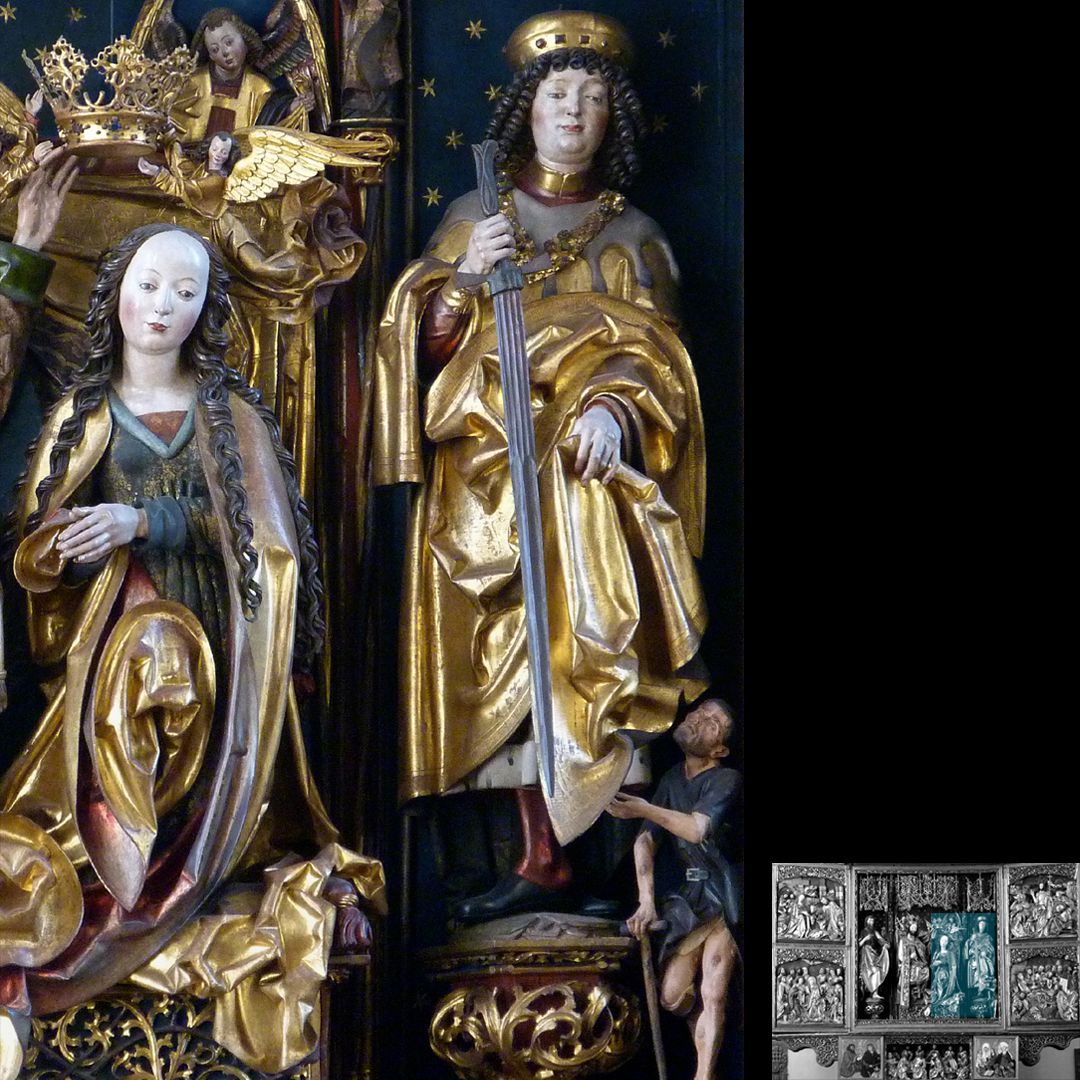
High Altar (Schwabach) Upper body of Christ crowning Mary

High Altar (Schwabach)

1503 1506

Upper body of Christ crowning Mary


1.383 / 5.000The altar was probably commissioned in 1503. After the master was branded on December 4 of that year, the workshop dissolved. The figures are therefore not the work of a workshop, but "the work of a sculptor, evidently a master and not a journeyman, who directly presupposes the stylistic development of Veit Stoss around 1500..." Alfred Schädler, 1981. "The extraordinarily high-quality sculptures in the shrine indicate that they were at least partially executed by the leading Nuremberg woodcarver of the time, Veit Stoss. The remaining sculptures are evidently products of his workshop." "According to Oellermann, an older painter sketched all the paintings on the outer pair of wings and began their execution with the Sermon of St. John. A younger painter then painted these panels differently and completed the scenes with the sermon, partially overpainting and making corrections. The inner wings, on which the reliefs are fixed, were signed and painted by the younger painter alone. In the predella, a third artist was at work, although the underdrawing still bore similarities to that of the older painter." (Oellermann 1983, pp. 142–155.)

Matthias Weniger in Michael Wolgemut / More than Dürer's Teacher, 2019

see also: Schwabach High Altar / First Transfiguration see also: Schwabach High Altar / Second Transfiguration

Location: Schwabach, Parish Church St. Martin´s

Design: Wolgemut, Werkstatt, Stoss, Veit

Realization: Wolgemut, Werkstatt

photo 2017, Theo Noll
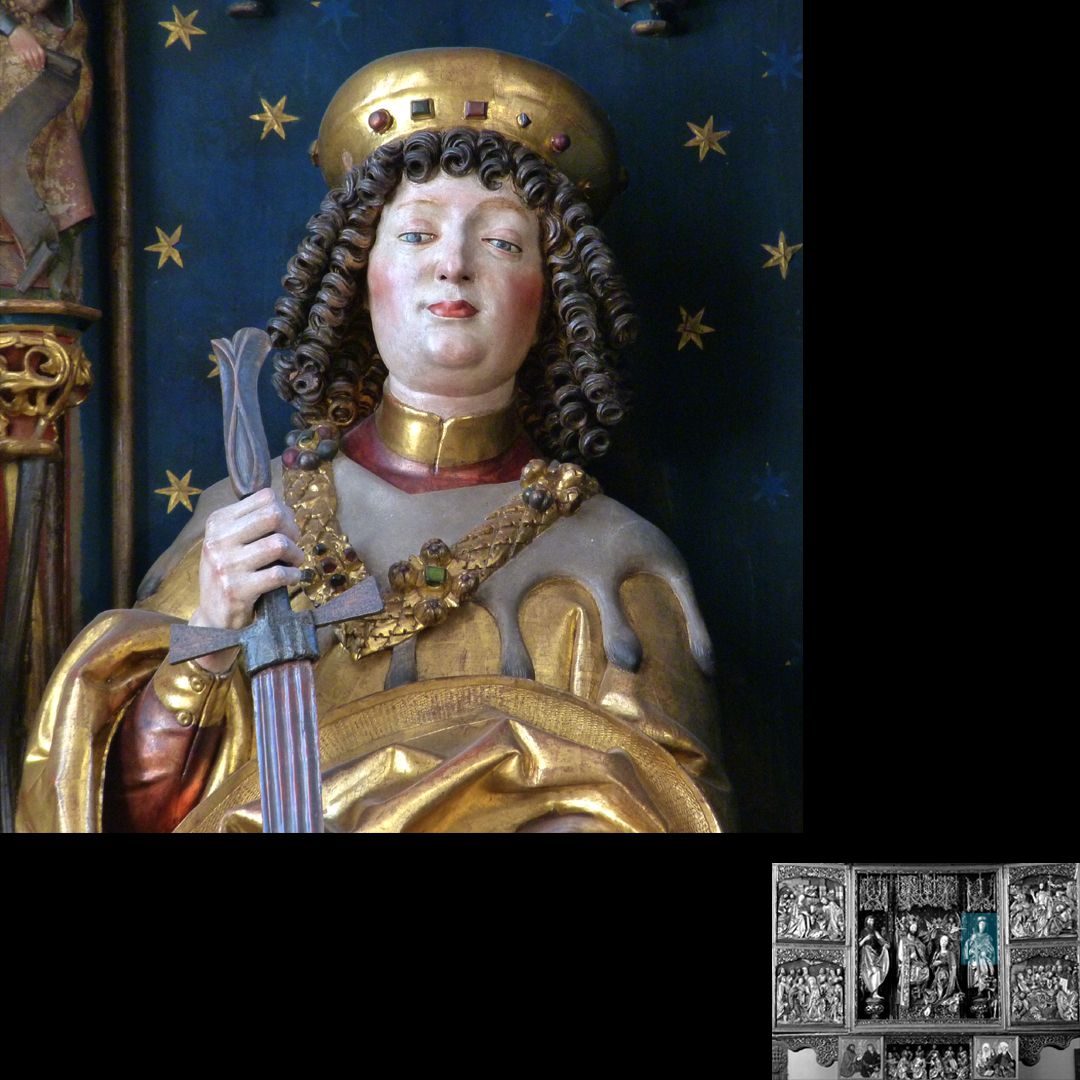
High Altar (Schwabach) Heads of Christ and Mary

High Altar (Schwabach)

1503 1506

Heads of Christ and Mary


1.383 / 5.000The altar was probably commissioned in 1503. After the master was branded on December 4 of that year, the workshop dissolved. The figures are therefore not the work of a workshop, but "the work of a sculptor, evidently a master and not a journeyman, who directly presupposes the stylistic development of Veit Stoss around 1500..." Alfred Schädler, 1981. "The extraordinarily high-quality sculptures in the shrine indicate that they were at least partially executed by the leading Nuremberg woodcarver of the time, Veit Stoss. The remaining sculptures are evidently products of his workshop." "According to Oellermann, an older painter sketched all the paintings on the outer pair of wings and began their execution with the Sermon of St. John. A younger painter then painted these panels differently and completed the scenes with the sermon, partially overpainting and making corrections. The inner wings, on which the reliefs are fixed, were signed and painted by the younger painter alone. In the predella, a third artist was at work, although the underdrawing still bore similarities to that of the older painter." (Oellermann 1983, pp. 142–155.)

Matthias Weniger in Michael Wolgemut / More than Dürer's Teacher, 2019

see also: Schwabach High Altar / First Transfiguration see also: Schwabach High Altar / Second Transfiguration

Location: Schwabach, Parish Church St. Martin´s

Design: Wolgemut, Werkstatt, Stoss, Veit

Realization: Wolgemut, Werkstatt

photo 2017, Theo Noll
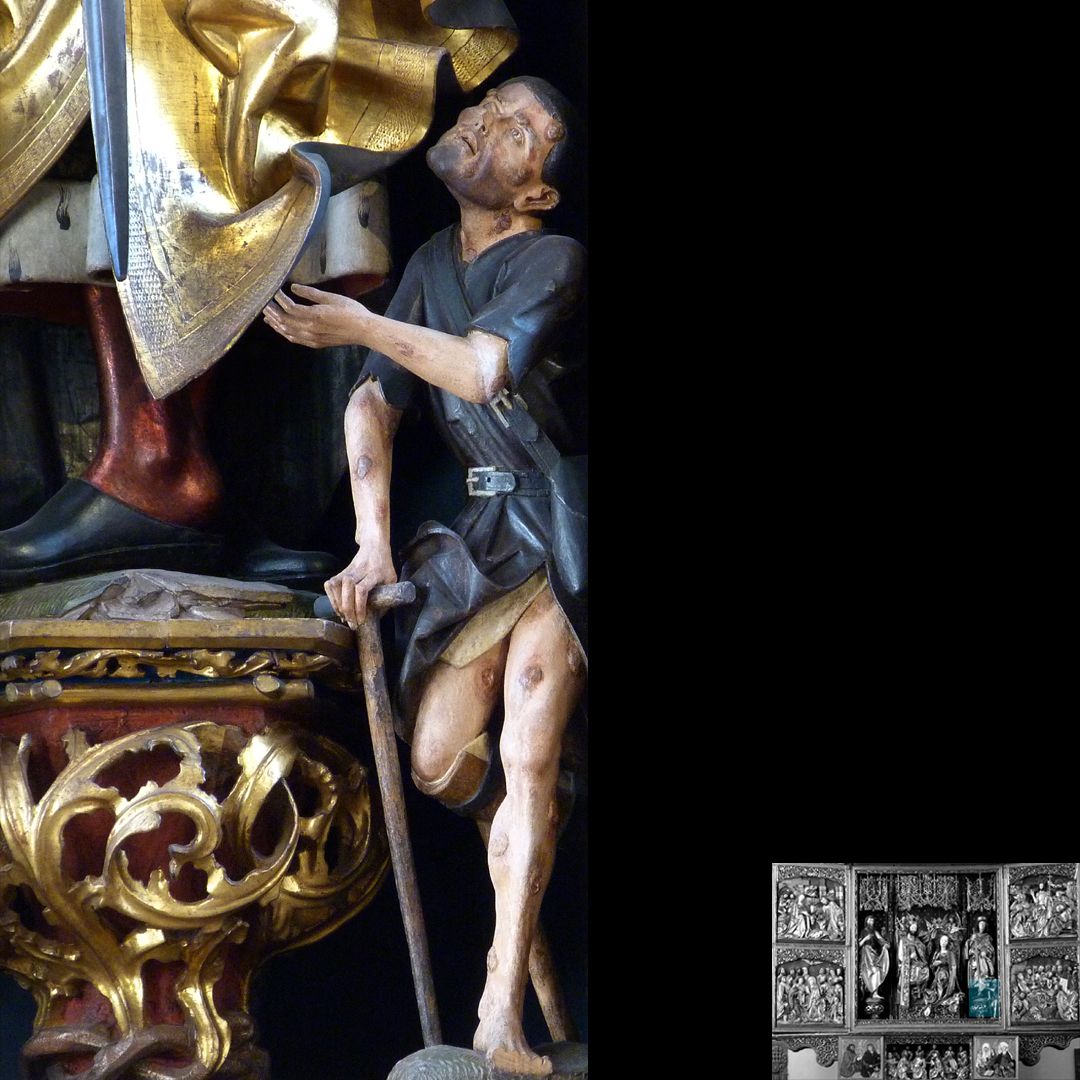
High Altar (Schwabach) Detail of Mary

High Altar (Schwabach)

1503 1506

Detail of Mary


1.383 / 5.000The altar was probably commissioned in 1503. After the master was branded on December 4 of that year, the workshop dissolved. The figures are therefore not the work of a workshop, but "the work of a sculptor, evidently a master and not a journeyman, who directly presupposes the stylistic development of Veit Stoss around 1500..." Alfred Schädler, 1981. "The extraordinarily high-quality sculptures in the shrine indicate that they were at least partially executed by the leading Nuremberg woodcarver of the time, Veit Stoss. The remaining sculptures are evidently products of his workshop." "According to Oellermann, an older painter sketched all the paintings on the outer pair of wings and began their execution with the Sermon of St. John. A younger painter then painted these panels differently and completed the scenes with the sermon, partially overpainting and making corrections. The inner wings, on which the reliefs are fixed, were signed and painted by the younger painter alone. In the predella, a third artist was at work, although the underdrawing still bore similarities to that of the older painter." (Oellermann 1983, pp. 142–155.)

Matthias Weniger in Michael Wolgemut / More than Dürer's Teacher, 2019

see also: Schwabach High Altar / First Transfiguration see also: Schwabach High Altar / Second Transfiguration

Location: Schwabach, Parish Church St. Martin´s

Design: Wolgemut, Werkstatt, Stoss, Veit

Realization: Wolgemut, Werkstatt

photo 2017, Theo Noll
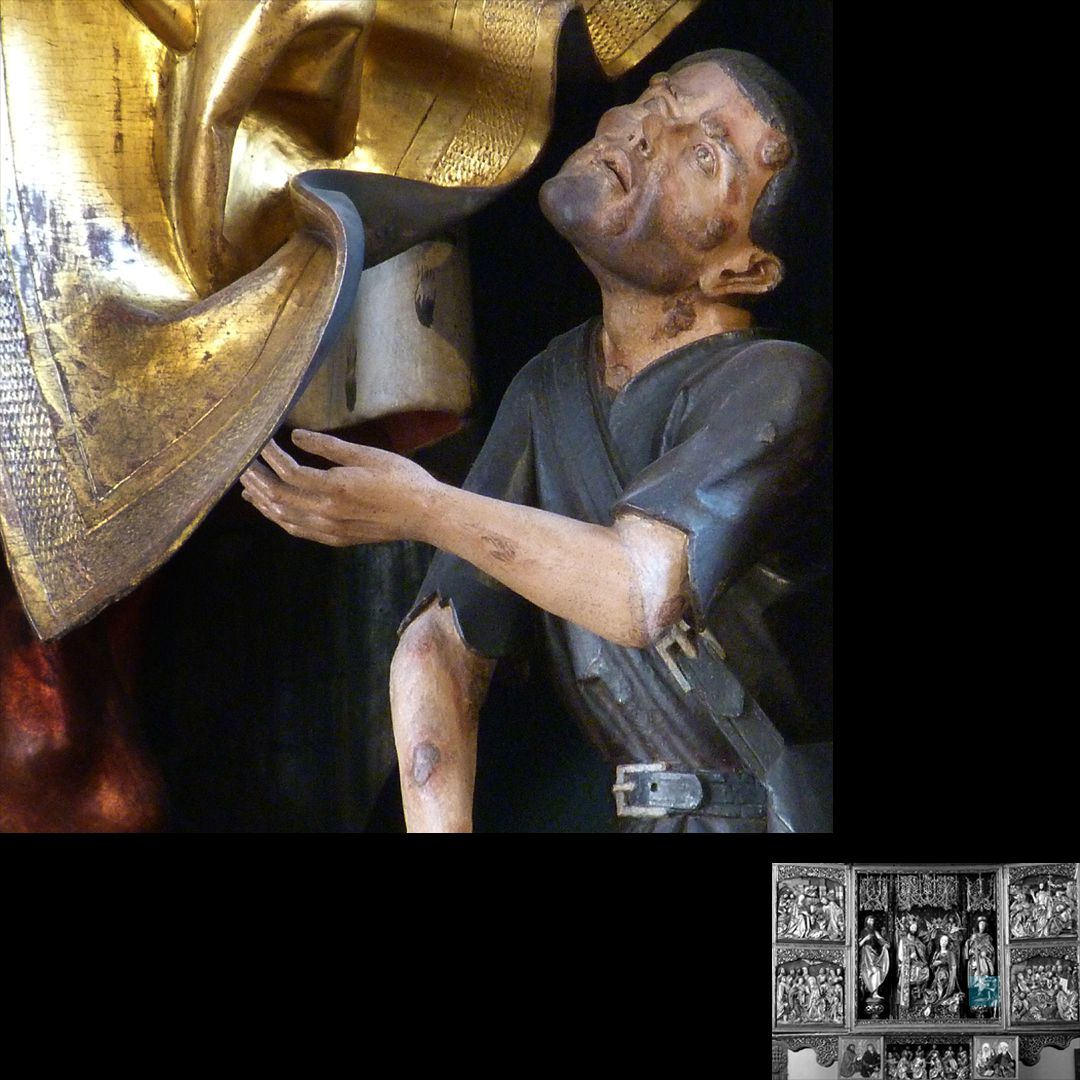
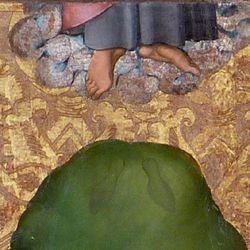
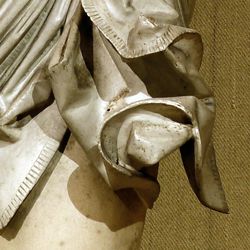
High Altar (Schwabach) Detail of Christ´s clothes and ear-shaped fold of the cloak of Mary

High Altar (Schwabach)

1503 1506

Detail of Christ´s clothes and ear-shaped fold of the cloak of Mary


1.383 / 5.000The altar was probably commissioned in 1503. After the master was branded on December 4 of that year, the workshop dissolved. The figures are therefore not the work of a workshop, but "the work of a sculptor, evidently a master and not a journeyman, who directly presupposes the stylistic development of Veit Stoss around 1500..." Alfred Schädler, 1981. "The extraordinarily high-quality sculptures in the shrine indicate that they were at least partially executed by the leading Nuremberg woodcarver of the time, Veit Stoss. The remaining sculptures are evidently products of his workshop." "According to Oellermann, an older painter sketched all the paintings on the outer pair of wings and began their execution with the Sermon of St. John. A younger painter then painted these panels differently and completed the scenes with the sermon, partially overpainting and making corrections. The inner wings, on which the reliefs are fixed, were signed and painted by the younger painter alone. In the predella, a third artist was at work, although the underdrawing still bore similarities to that of the older painter." (Oellermann 1983, pp. 142–155.)

Matthias Weniger in Michael Wolgemut / More than Dürer's Teacher, 2019

see also: Schwabach High Altar / First Transfiguration see also: Schwabach High Altar / Second Transfiguration

Location: Schwabach, Parish Church St. Martin´s

Design: Wolgemut, Werkstatt, Stoss, Veit

Realization: Wolgemut, Werkstatt

photo 2017, Theo Noll
High Altar (Schwabach) Head of Mary

High Altar (Schwabach)

1503 1506

Head of Mary


1.383 / 5.000The altar was probably commissioned in 1503. After the master was branded on December 4 of that year, the workshop dissolved. The figures are therefore not the work of a workshop, but "the work of a sculptor, evidently a master and not a journeyman, who directly presupposes the stylistic development of Veit Stoss around 1500..." Alfred Schädler, 1981. "The extraordinarily high-quality sculptures in the shrine indicate that they were at least partially executed by the leading Nuremberg woodcarver of the time, Veit Stoss. The remaining sculptures are evidently products of his workshop." "According to Oellermann, an older painter sketched all the paintings on the outer pair of wings and began their execution with the Sermon of St. John. A younger painter then painted these panels differently and completed the scenes with the sermon, partially overpainting and making corrections. The inner wings, on which the reliefs are fixed, were signed and painted by the younger painter alone. In the predella, a third artist was at work, although the underdrawing still bore similarities to that of the older painter." (Oellermann 1983, pp. 142–155.)

Matthias Weniger in Michael Wolgemut / More than Dürer's Teacher, 2019

see also: Schwabach High Altar / First Transfiguration see also: Schwabach High Altar / Second Transfiguration

Location: Schwabach, Parish Church St. Martin´s

Design: Wolgemut, Werkstatt, Stoss, Veit

Realization: Wolgemut, Werkstatt

photo 2017, Theo Noll
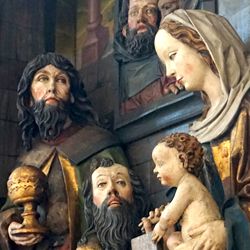
High Altar (Schwabach) Mary with St. Martin

High Altar (Schwabach)

1503 1506

Mary with St. Martin


1.383 / 5.000The altar was probably commissioned in 1503. After the master was branded on December 4 of that year, the workshop dissolved. The figures are therefore not the work of a workshop, but "the work of a sculptor, evidently a master and not a journeyman, who directly presupposes the stylistic development of Veit Stoss around 1500..." Alfred Schädler, 1981. "The extraordinarily high-quality sculptures in the shrine indicate that they were at least partially executed by the leading Nuremberg woodcarver of the time, Veit Stoss. The remaining sculptures are evidently products of his workshop." "According to Oellermann, an older painter sketched all the paintings on the outer pair of wings and began their execution with the Sermon of St. John. A younger painter then painted these panels differently and completed the scenes with the sermon, partially overpainting and making corrections. The inner wings, on which the reliefs are fixed, were signed and painted by the younger painter alone. In the predella, a third artist was at work, although the underdrawing still bore similarities to that of the older painter." (Oellermann 1983, pp. 142–155.)

Matthias Weniger in Michael Wolgemut / More than Dürer's Teacher, 2019

see also: Schwabach High Altar / First Transfiguration see also: Schwabach High Altar / Second Transfiguration

Location: Schwabach, Parish Church St. Martin´s

Design: Wolgemut, Werkstatt, Stoss, Veit

Realization: Wolgemut, Werkstatt

photo 2017, Theo Noll
High Altar (Schwabach) Bust of St. Martin

High Altar (Schwabach)

1503 1506

Bust of St. Martin


1.383 / 5.000The altar was probably commissioned in 1503. After the master was branded on December 4 of that year, the workshop dissolved. The figures are therefore not the work of a workshop, but "the work of a sculptor, evidently a master and not a journeyman, who directly presupposes the stylistic development of Veit Stoss around 1500..." Alfred Schädler, 1981. "The extraordinarily high-quality sculptures in the shrine indicate that they were at least partially executed by the leading Nuremberg woodcarver of the time, Veit Stoss. The remaining sculptures are evidently products of his workshop." "According to Oellermann, an older painter sketched all the paintings on the outer pair of wings and began their execution with the Sermon of St. John. A younger painter then painted these panels differently and completed the scenes with the sermon, partially overpainting and making corrections. The inner wings, on which the reliefs are fixed, were signed and painted by the younger painter alone. In the predella, a third artist was at work, although the underdrawing still bore similarities to that of the older painter." (Oellermann 1983, pp. 142–155.)

Matthias Weniger in Michael Wolgemut / More than Dürer's Teacher, 2019

see also: Schwabach High Altar / First Transfiguration see also: Schwabach High Altar / Second Transfiguration

Location: Schwabach, Parish Church St. Martin´s

Design: Wolgemut, Werkstatt, Stoss, Veit

Realization: Wolgemut, Werkstatt

photo 2017, Theo Noll
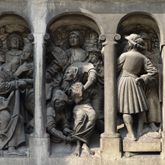
High Altar (Schwabach) Beggar

High Altar (Schwabach)

1503 1506

Beggar


1.383 / 5.000The altar was probably commissioned in 1503. After the master was branded on December 4 of that year, the workshop dissolved. The figures are therefore not the work of a workshop, but "the work of a sculptor, evidently a master and not a journeyman, who directly presupposes the stylistic development of Veit Stoss around 1500..." Alfred Schädler, 1981. "The extraordinarily high-quality sculptures in the shrine indicate that they were at least partially executed by the leading Nuremberg woodcarver of the time, Veit Stoss. The remaining sculptures are evidently products of his workshop." "According to Oellermann, an older painter sketched all the paintings on the outer pair of wings and began their execution with the Sermon of St. John. A younger painter then painted these panels differently and completed the scenes with the sermon, partially overpainting and making corrections. The inner wings, on which the reliefs are fixed, were signed and painted by the younger painter alone. In the predella, a third artist was at work, although the underdrawing still bore similarities to that of the older painter." (Oellermann 1983, pp. 142–155.)

Matthias Weniger in Michael Wolgemut / More than Dürer's Teacher, 2019

see also: Schwabach High Altar / First Transfiguration see also: Schwabach High Altar / Second Transfiguration

Location: Schwabach, Parish Church St. Martin´s

Design: Wolgemut, Werkstatt, Stoss, Veit

Realization: Wolgemut, Werkstatt

photo 2017, Theo Noll
High Altar (Schwabach) Beggar, detail

High Altar (Schwabach)

1503 1506

Beggar, detail


1.383 / 5.000The altar was probably commissioned in 1503. After the master was branded on December 4 of that year, the workshop dissolved. The figures are therefore not the work of a workshop, but "the work of a sculptor, evidently a master and not a journeyman, who directly presupposes the stylistic development of Veit Stoss around 1500..." Alfred Schädler, 1981. "The extraordinarily high-quality sculptures in the shrine indicate that they were at least partially executed by the leading Nuremberg woodcarver of the time, Veit Stoss. The remaining sculptures are evidently products of his workshop." "According to Oellermann, an older painter sketched all the paintings on the outer pair of wings and began their execution with the Sermon of St. John. A younger painter then painted these panels differently and completed the scenes with the sermon, partially overpainting and making corrections. The inner wings, on which the reliefs are fixed, were signed and painted by the younger painter alone. In the predella, a third artist was at work, although the underdrawing still bore similarities to that of the older painter." (Oellermann 1983, pp. 142–155.)

Matthias Weniger in Michael Wolgemut / More than Dürer's Teacher, 2019

see also: Schwabach High Altar / First Transfiguration see also: Schwabach High Altar / Second Transfiguration

Location: Schwabach, Parish Church St. Martin´s

Design: Wolgemut, Werkstatt, Stoss, Veit

Realization: Wolgemut, Werkstatt

photo 2017, Theo Noll
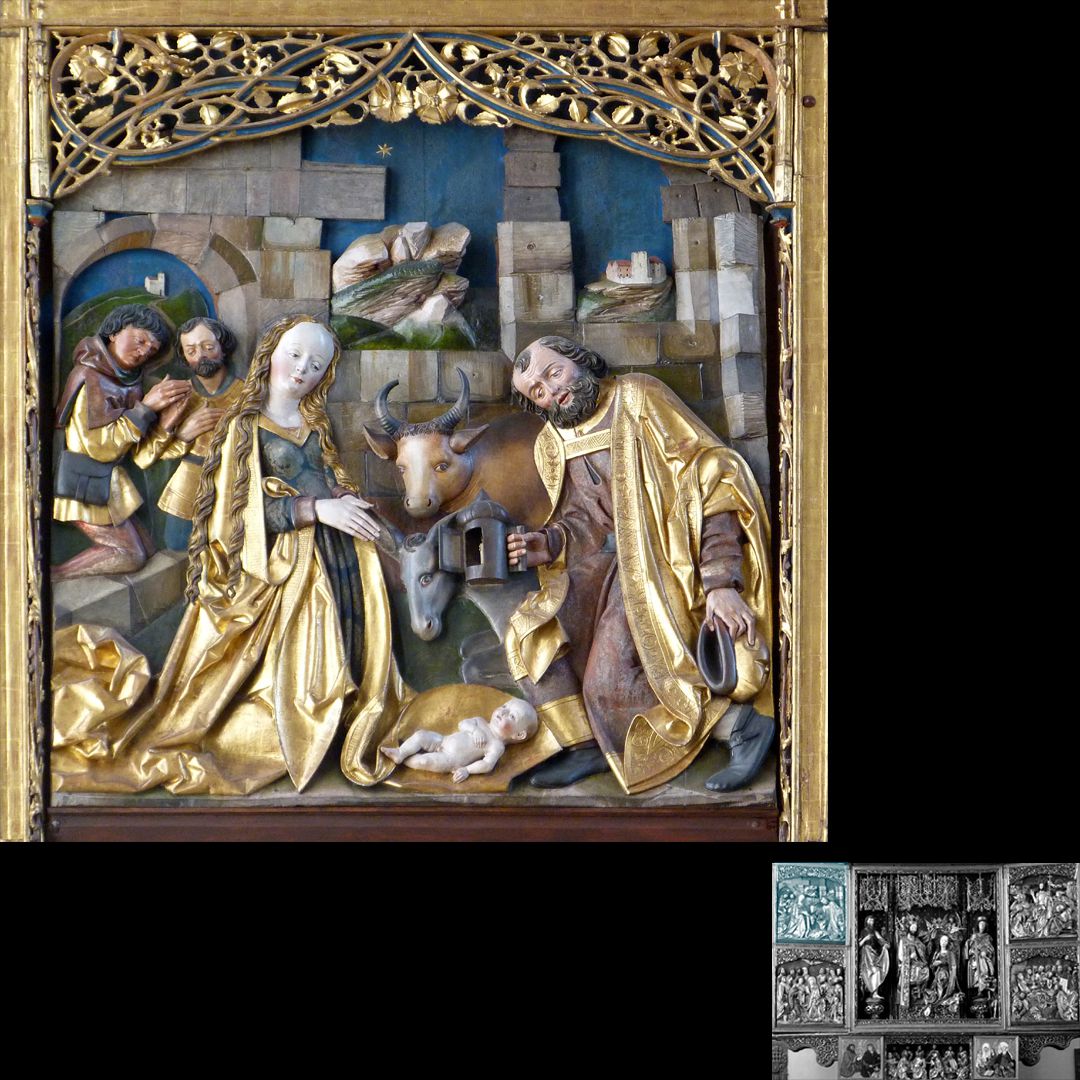
High Altar (Schwabach) Left wing: top, Christ´s birth

High Altar (Schwabach)

1503 1506

Left wing: top, Christ´s birth


1.383 / 5.000The altar was probably commissioned in 1503. After the master was branded on December 4 of that year, the workshop dissolved. The figures are therefore not the work of a workshop, but "the work of a sculptor, evidently a master and not a journeyman, who directly presupposes the stylistic development of Veit Stoss around 1500..." Alfred Schädler, 1981. "The extraordinarily high-quality sculptures in the shrine indicate that they were at least partially executed by the leading Nuremberg woodcarver of the time, Veit Stoss. The remaining sculptures are evidently products of his workshop." "According to Oellermann, an older painter sketched all the paintings on the outer pair of wings and began their execution with the Sermon of St. John. A younger painter then painted these panels differently and completed the scenes with the sermon, partially overpainting and making corrections. The inner wings, on which the reliefs are fixed, were signed and painted by the younger painter alone. In the predella, a third artist was at work, although the underdrawing still bore similarities to that of the older painter." (Oellermann 1983, pp. 142–155.)

Matthias Weniger in Michael Wolgemut / More than Dürer's Teacher, 2019

see also: Schwabach High Altar / First Transfiguration see also: Schwabach High Altar / Second Transfiguration

Location: Schwabach, Parish Church St. Martin´s

Design: Wolgemut, Werkstatt, Stoss, Veit

Realization: Wolgemut, Werkstatt

photo 2017, Theo Noll
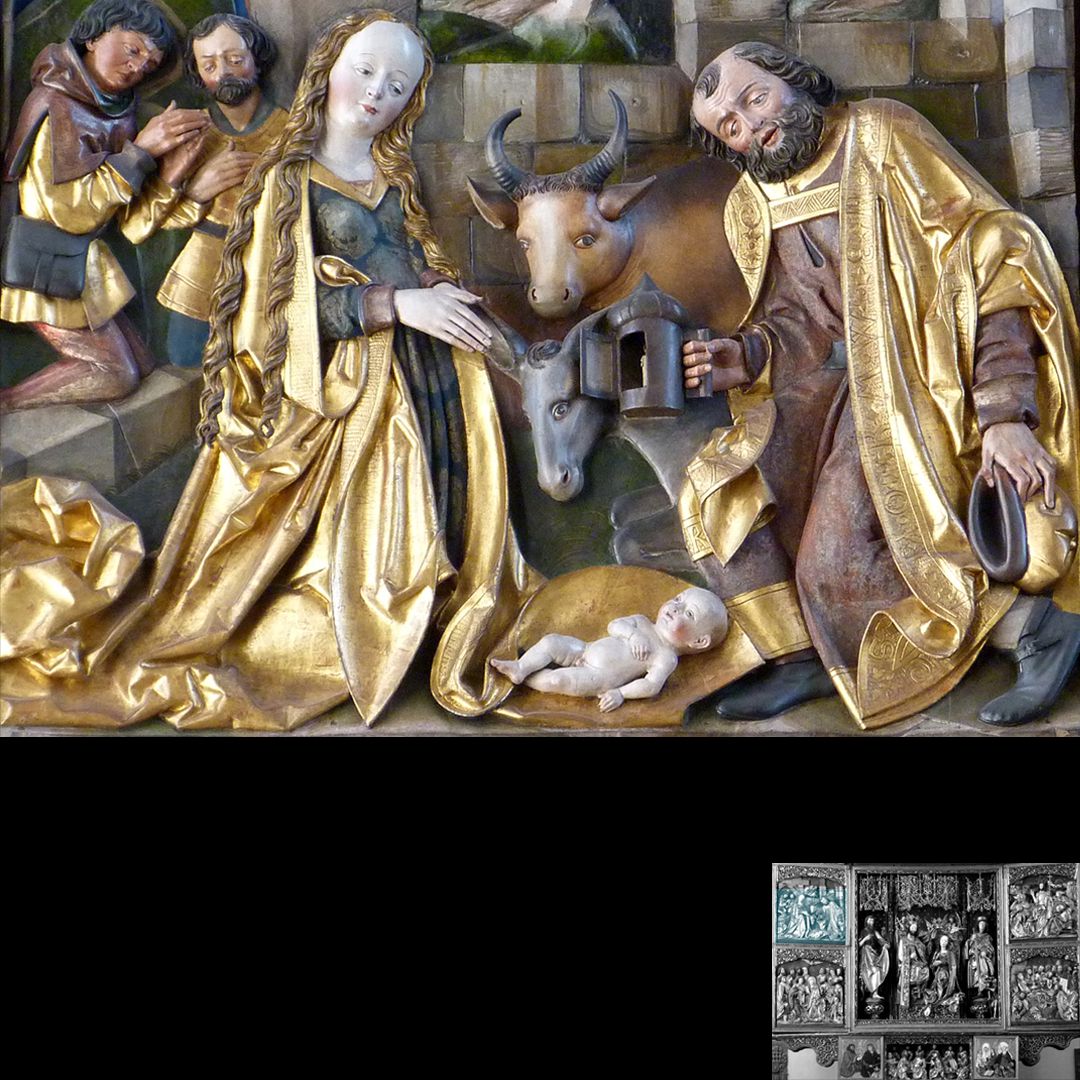
High Altar (Schwabach) Left wing: top, Christ´s birth, detail

High Altar (Schwabach)

1503 1506

Left wing: top, Christ´s birth, detail


1.383 / 5.000The altar was probably commissioned in 1503. After the master was branded on December 4 of that year, the workshop dissolved. The figures are therefore not the work of a workshop, but "the work of a sculptor, evidently a master and not a journeyman, who directly presupposes the stylistic development of Veit Stoss around 1500..." Alfred Schädler, 1981. "The extraordinarily high-quality sculptures in the shrine indicate that they were at least partially executed by the leading Nuremberg woodcarver of the time, Veit Stoss. The remaining sculptures are evidently products of his workshop." "According to Oellermann, an older painter sketched all the paintings on the outer pair of wings and began their execution with the Sermon of St. John. A younger painter then painted these panels differently and completed the scenes with the sermon, partially overpainting and making corrections. The inner wings, on which the reliefs are fixed, were signed and painted by the younger painter alone. In the predella, a third artist was at work, although the underdrawing still bore similarities to that of the older painter." (Oellermann 1983, pp. 142–155.)

Matthias Weniger in Michael Wolgemut / More than Dürer's Teacher, 2019

see also: Schwabach High Altar / First Transfiguration see also: Schwabach High Altar / Second Transfiguration

Location: Schwabach, Parish Church St. Martin´s

Design: Wolgemut, Werkstatt, Stoss, Veit

Realization: Wolgemut, Werkstatt

photo 2017, Theo Noll
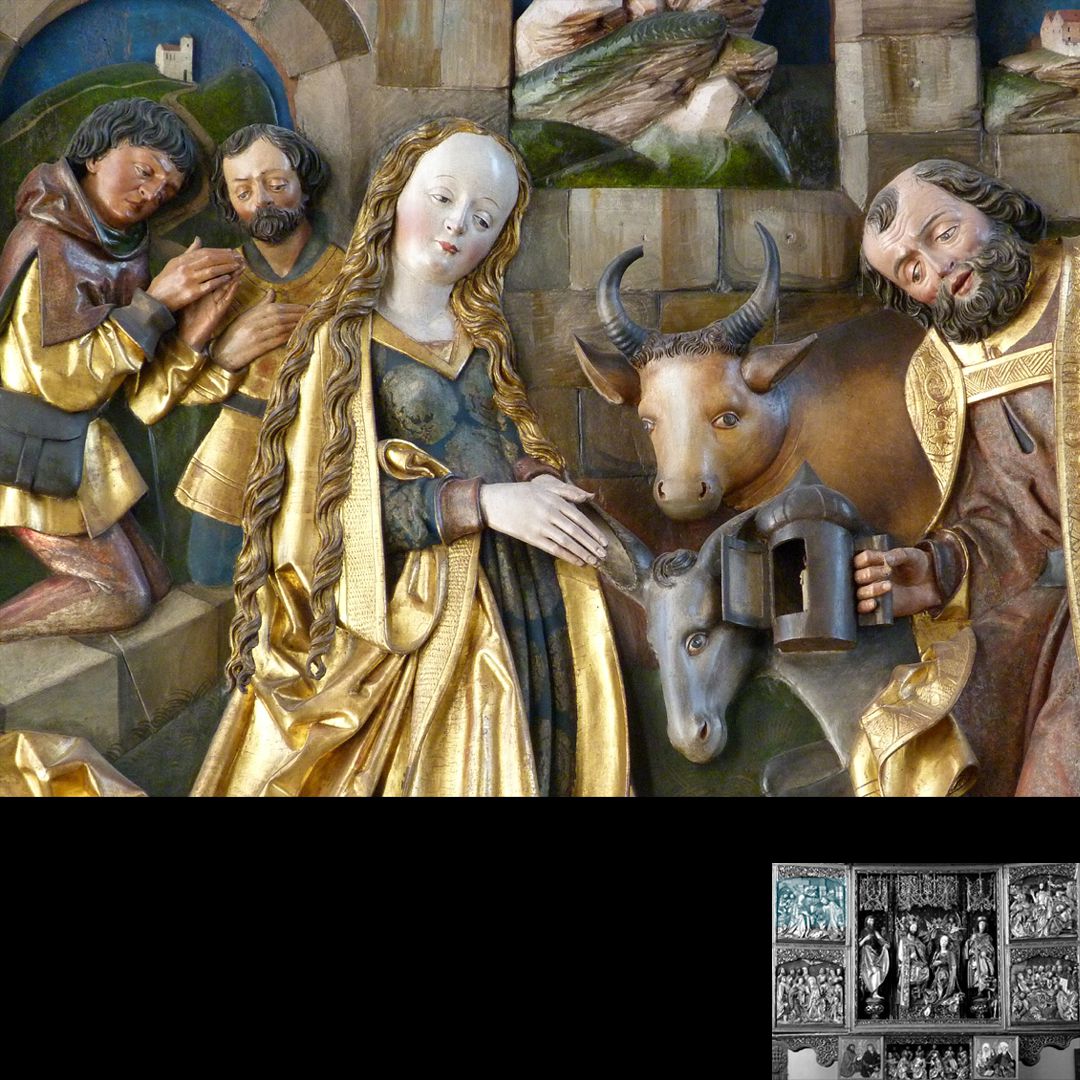
High Altar (Schwabach) Left wing: top, Christ´s birth, detail

High Altar (Schwabach)

1503 1506

Left wing: top, Christ´s birth, detail


1.383 / 5.000The altar was probably commissioned in 1503. After the master was branded on December 4 of that year, the workshop dissolved. The figures are therefore not the work of a workshop, but "the work of a sculptor, evidently a master and not a journeyman, who directly presupposes the stylistic development of Veit Stoss around 1500..." Alfred Schädler, 1981. "The extraordinarily high-quality sculptures in the shrine indicate that they were at least partially executed by the leading Nuremberg woodcarver of the time, Veit Stoss. The remaining sculptures are evidently products of his workshop." "According to Oellermann, an older painter sketched all the paintings on the outer pair of wings and began their execution with the Sermon of St. John. A younger painter then painted these panels differently and completed the scenes with the sermon, partially overpainting and making corrections. The inner wings, on which the reliefs are fixed, were signed and painted by the younger painter alone. In the predella, a third artist was at work, although the underdrawing still bore similarities to that of the older painter." (Oellermann 1983, pp. 142–155.)

Matthias Weniger in Michael Wolgemut / More than Dürer's Teacher, 2019

see also: Schwabach High Altar / First Transfiguration see also: Schwabach High Altar / Second Transfiguration

Location: Schwabach, Parish Church St. Martin´s

Design: Wolgemut, Werkstatt, Stoss, Veit

Realization: Wolgemut, Werkstatt

photo 2017, Theo Noll
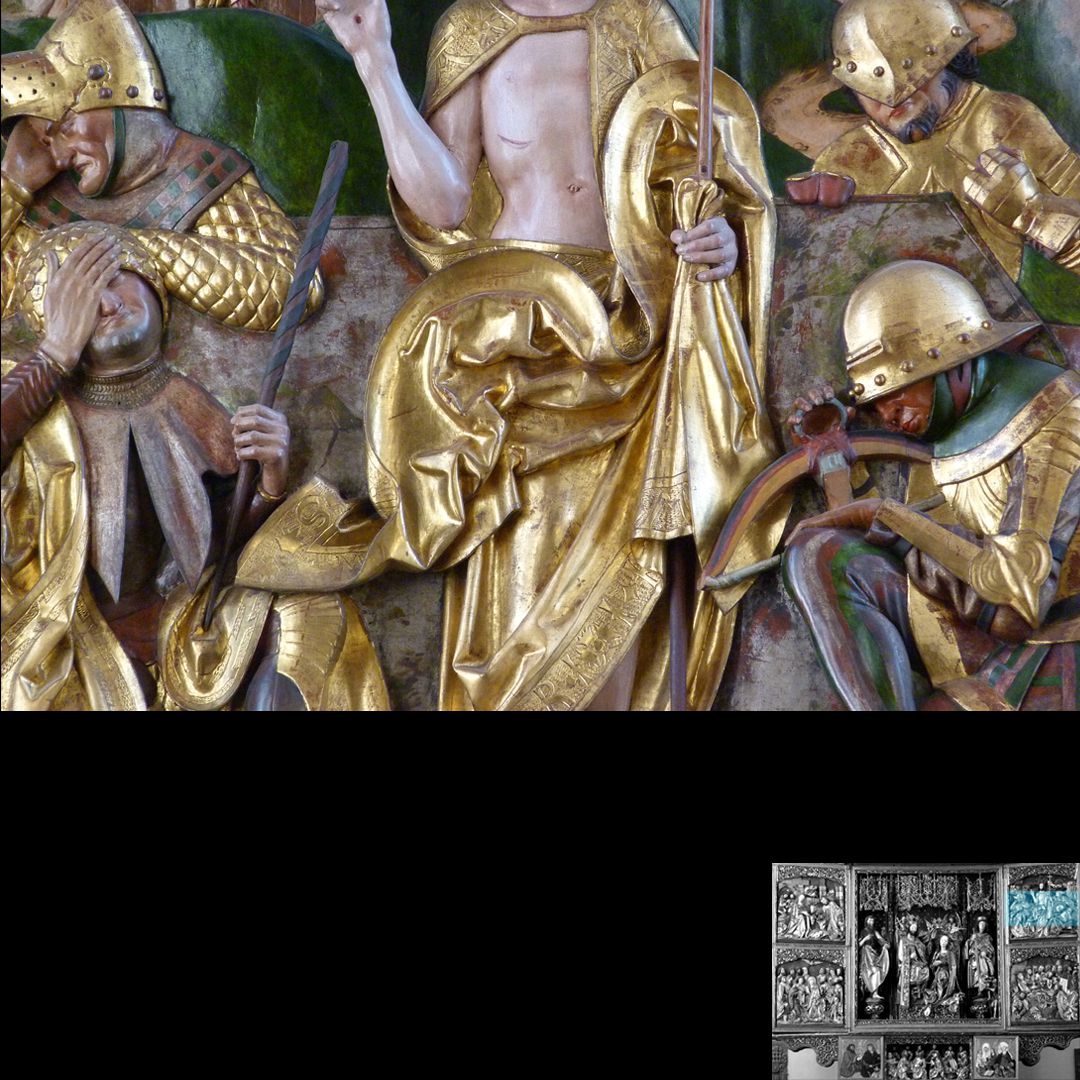
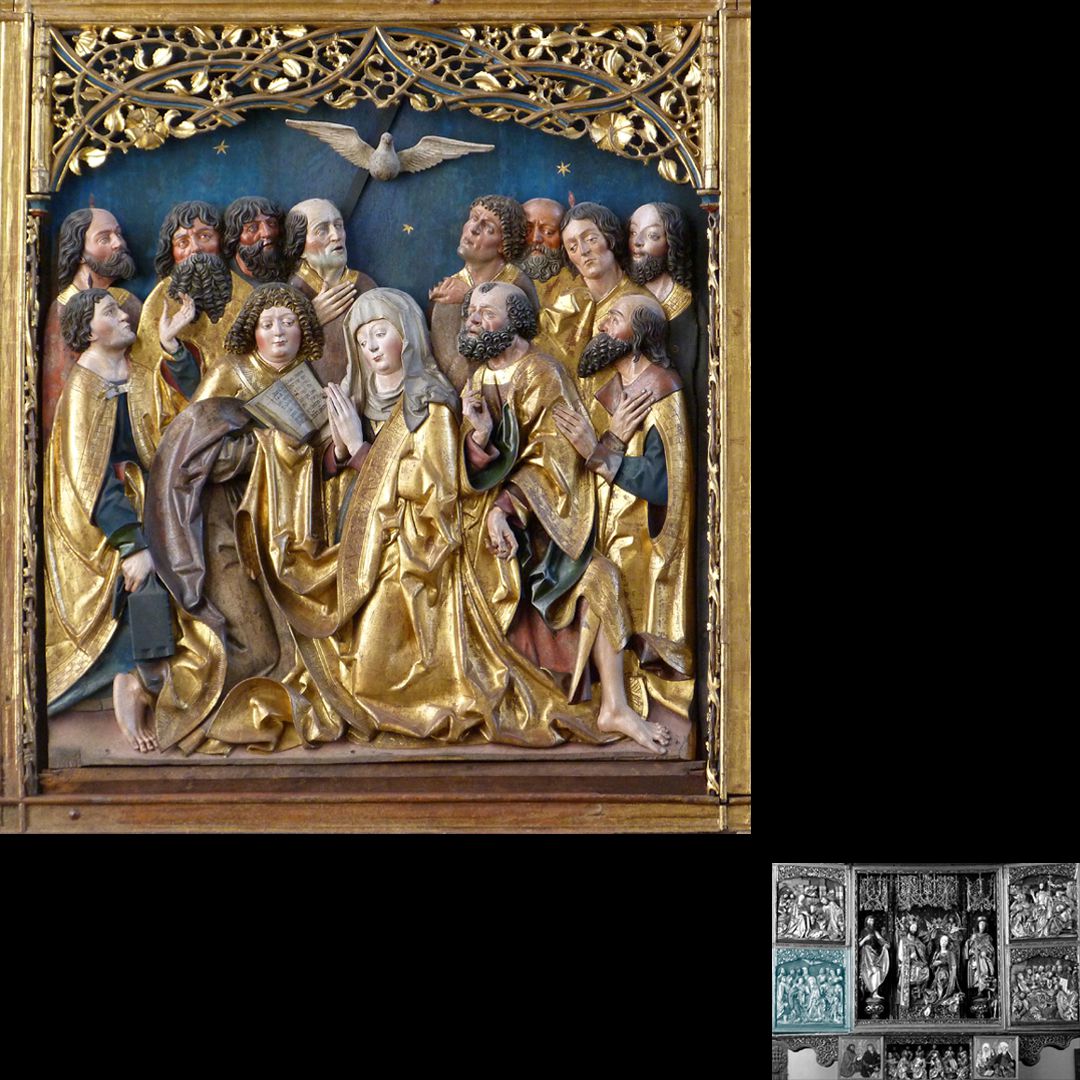
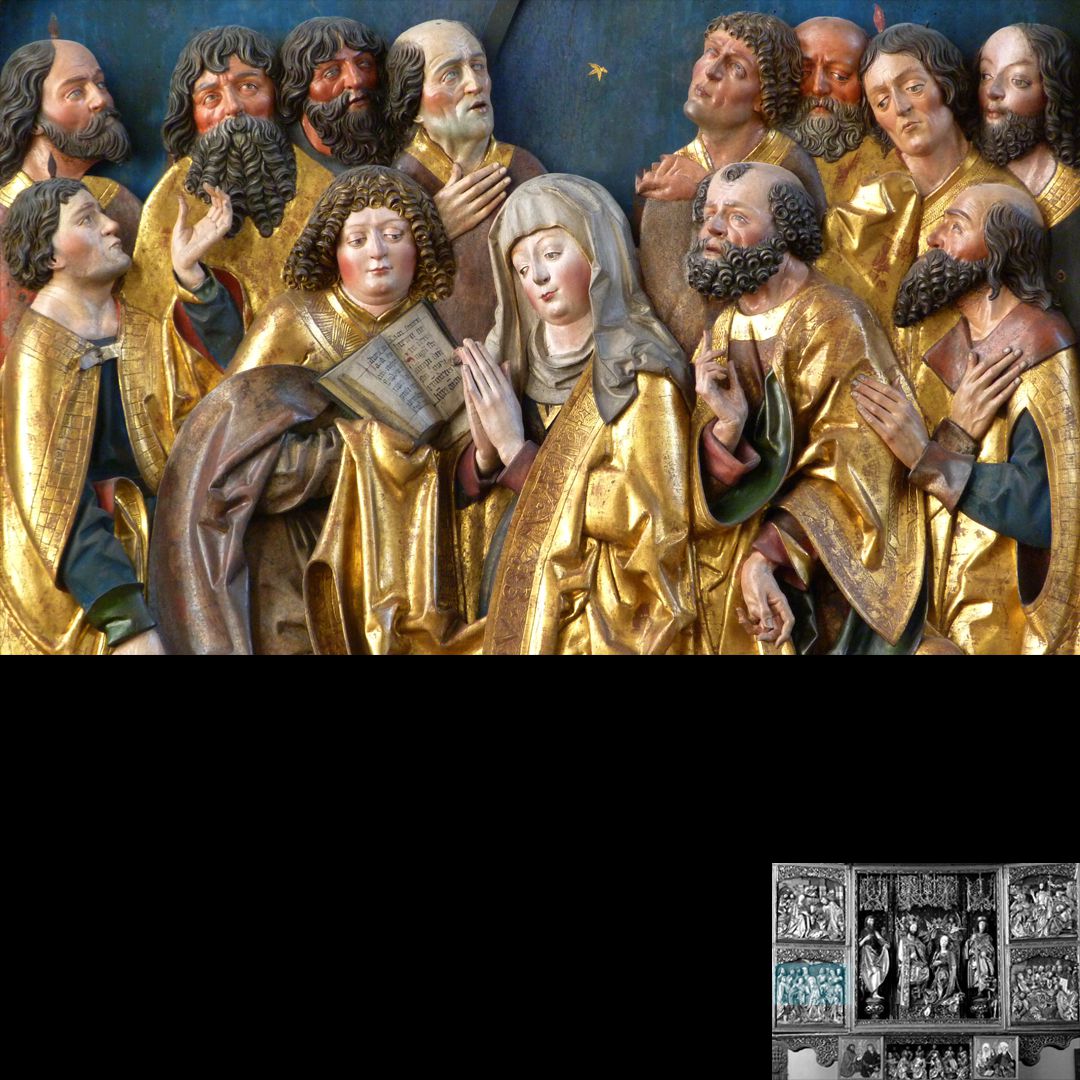
High Altar (Schwabach) Left wing, bottom, Pentecostal miracle

High Altar (Schwabach)

1503 1506

Left wing, bottom, Pentecostal miracle


1.383 / 5.000The altar was probably commissioned in 1503. After the master was branded on December 4 of that year, the workshop dissolved. The figures are therefore not the work of a workshop, but "the work of a sculptor, evidently a master and not a journeyman, who directly presupposes the stylistic development of Veit Stoss around 1500..." Alfred Schädler, 1981. "The extraordinarily high-quality sculptures in the shrine indicate that they were at least partially executed by the leading Nuremberg woodcarver of the time, Veit Stoss. The remaining sculptures are evidently products of his workshop." "According to Oellermann, an older painter sketched all the paintings on the outer pair of wings and began their execution with the Sermon of St. John. A younger painter then painted these panels differently and completed the scenes with the sermon, partially overpainting and making corrections. The inner wings, on which the reliefs are fixed, were signed and painted by the younger painter alone. In the predella, a third artist was at work, although the underdrawing still bore similarities to that of the older painter." (Oellermann 1983, pp. 142–155.)

Matthias Weniger in Michael Wolgemut / More than Dürer's Teacher, 2019

see also: Schwabach High Altar / First Transfiguration see also: Schwabach High Altar / Second Transfiguration

Location: Schwabach, Parish Church St. Martin´s

Design: Wolgemut, Werkstatt, Stoss, Veit

Realization: Wolgemut, Werkstatt

photo 2017, Theo Noll
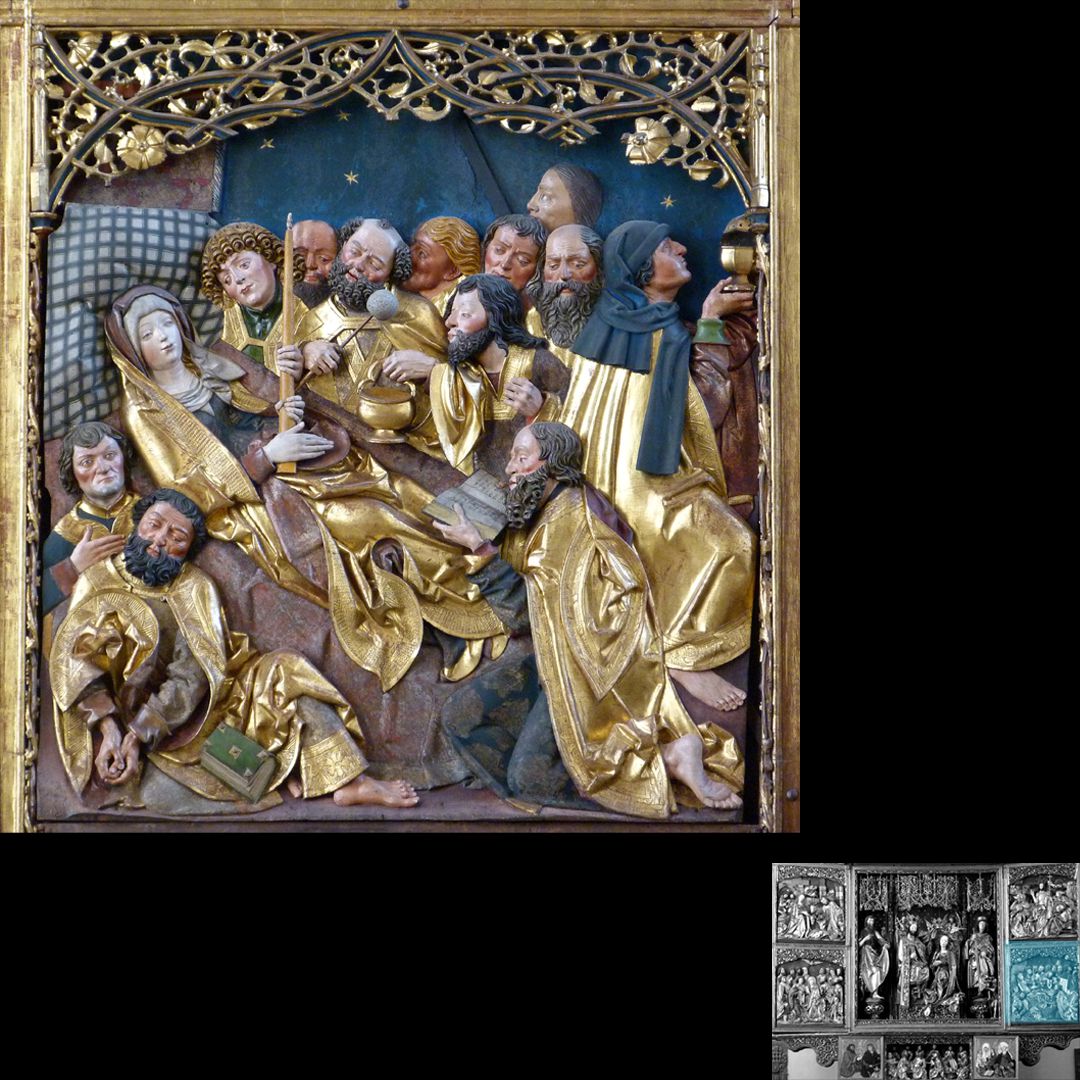
High Altar (Schwabach) Left wing, bottom, Pentecostal miracle, detail

High Altar (Schwabach)

1503 1506

Left wing, bottom, Pentecostal miracle, detail


1.383 / 5.000The altar was probably commissioned in 1503. After the master was branded on December 4 of that year, the workshop dissolved. The figures are therefore not the work of a workshop, but "the work of a sculptor, evidently a master and not a journeyman, who directly presupposes the stylistic development of Veit Stoss around 1500..." Alfred Schädler, 1981. "The extraordinarily high-quality sculptures in the shrine indicate that they were at least partially executed by the leading Nuremberg woodcarver of the time, Veit Stoss. The remaining sculptures are evidently products of his workshop." "According to Oellermann, an older painter sketched all the paintings on the outer pair of wings and began their execution with the Sermon of St. John. A younger painter then painted these panels differently and completed the scenes with the sermon, partially overpainting and making corrections. The inner wings, on which the reliefs are fixed, were signed and painted by the younger painter alone. In the predella, a third artist was at work, although the underdrawing still bore similarities to that of the older painter." (Oellermann 1983, pp. 142–155.)

Matthias Weniger in Michael Wolgemut / More than Dürer's Teacher, 2019

see also: Schwabach High Altar / First Transfiguration see also: Schwabach High Altar / Second Transfiguration

Location: Schwabach, Parish Church St. Martin´s

Design: Wolgemut, Werkstatt, Stoss, Veit

Realization: Wolgemut, Werkstatt

photo 2017, Theo Noll
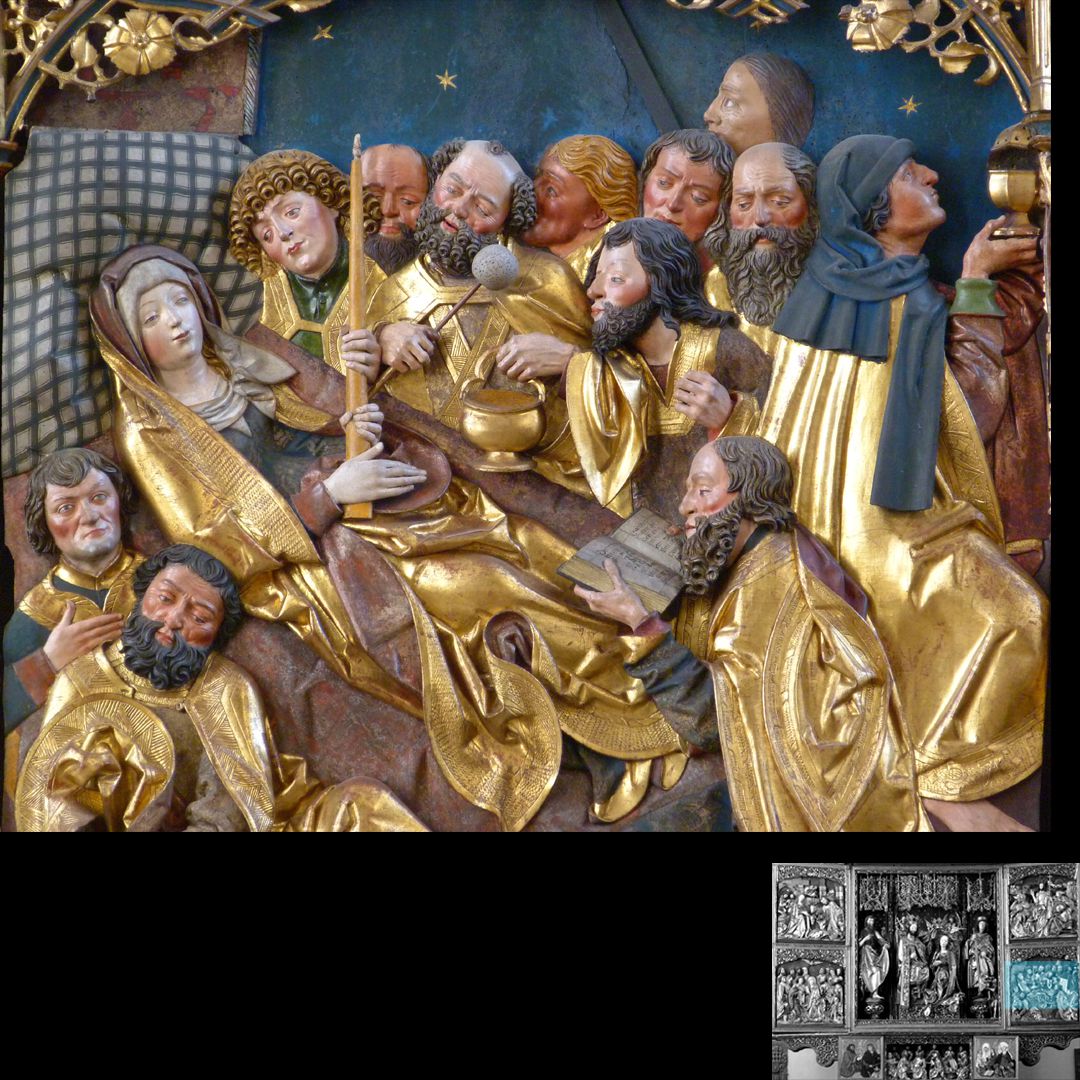
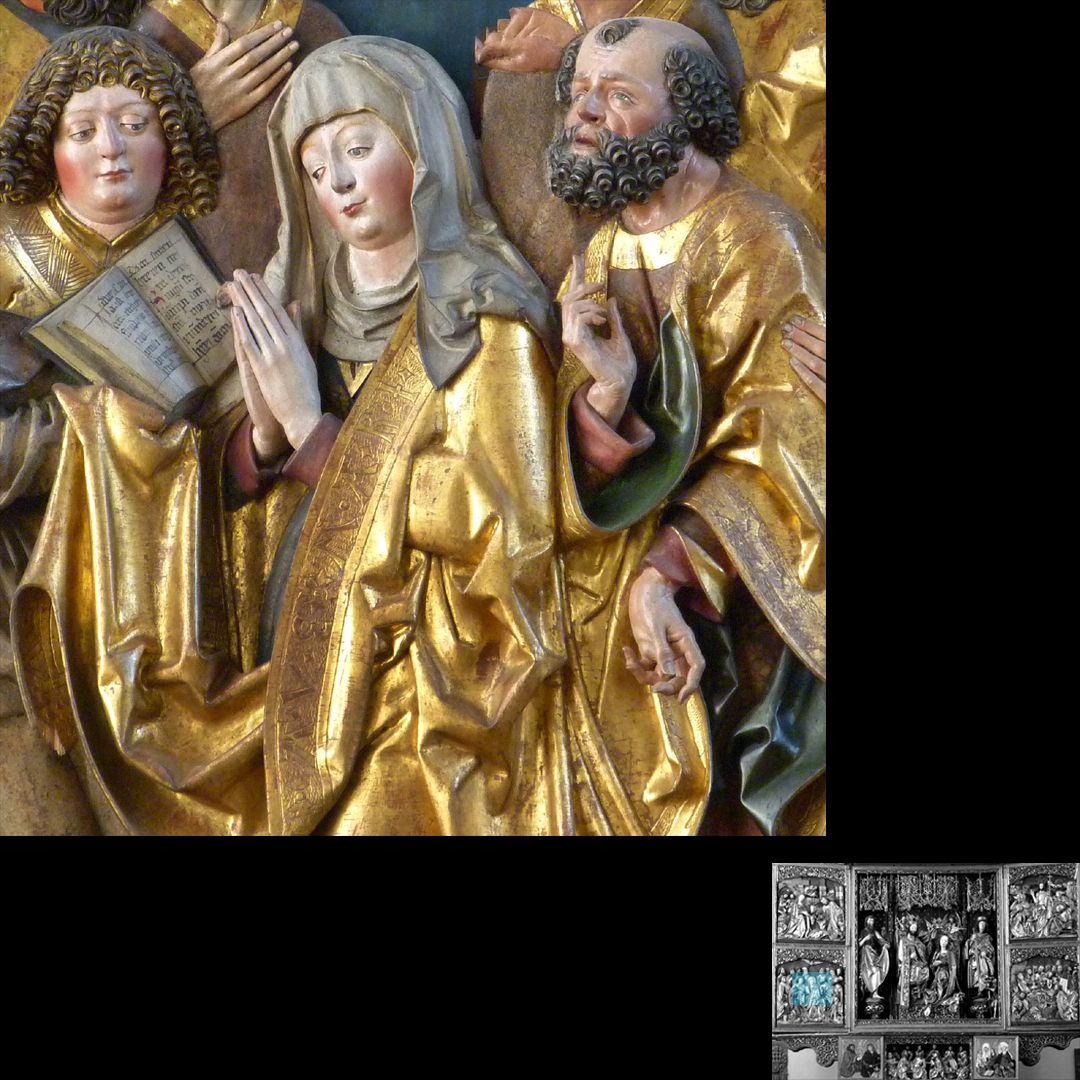
High Altar (Schwabach) Left wing, bottom, Pentecostal miracle, Mary between John and Peter

High Altar (Schwabach)

1503 1506

Left wing, bottom, Pentecostal miracle, Mary between John and Peter


1.383 / 5.000The altar was probably commissioned in 1503. After the master was branded on December 4 of that year, the workshop dissolved. The figures are therefore not the work of a workshop, but "the work of a sculptor, evidently a master and not a journeyman, who directly presupposes the stylistic development of Veit Stoss around 1500..." Alfred Schädler, 1981. "The extraordinarily high-quality sculptures in the shrine indicate that they were at least partially executed by the leading Nuremberg woodcarver of the time, Veit Stoss. The remaining sculptures are evidently products of his workshop." "According to Oellermann, an older painter sketched all the paintings on the outer pair of wings and began their execution with the Sermon of St. John. A younger painter then painted these panels differently and completed the scenes with the sermon, partially overpainting and making corrections. The inner wings, on which the reliefs are fixed, were signed and painted by the younger painter alone. In the predella, a third artist was at work, although the underdrawing still bore similarities to that of the older painter." (Oellermann 1983, pp. 142–155.)

Matthias Weniger in Michael Wolgemut / More than Dürer's Teacher, 2019

see also: Schwabach High Altar / First Transfiguration see also: Schwabach High Altar / Second Transfiguration

Location: Schwabach, Parish Church St. Martin´s

Design: Wolgemut, Werkstatt, Stoss, Veit

Realization: Wolgemut, Werkstatt

photo 2017, Theo Noll
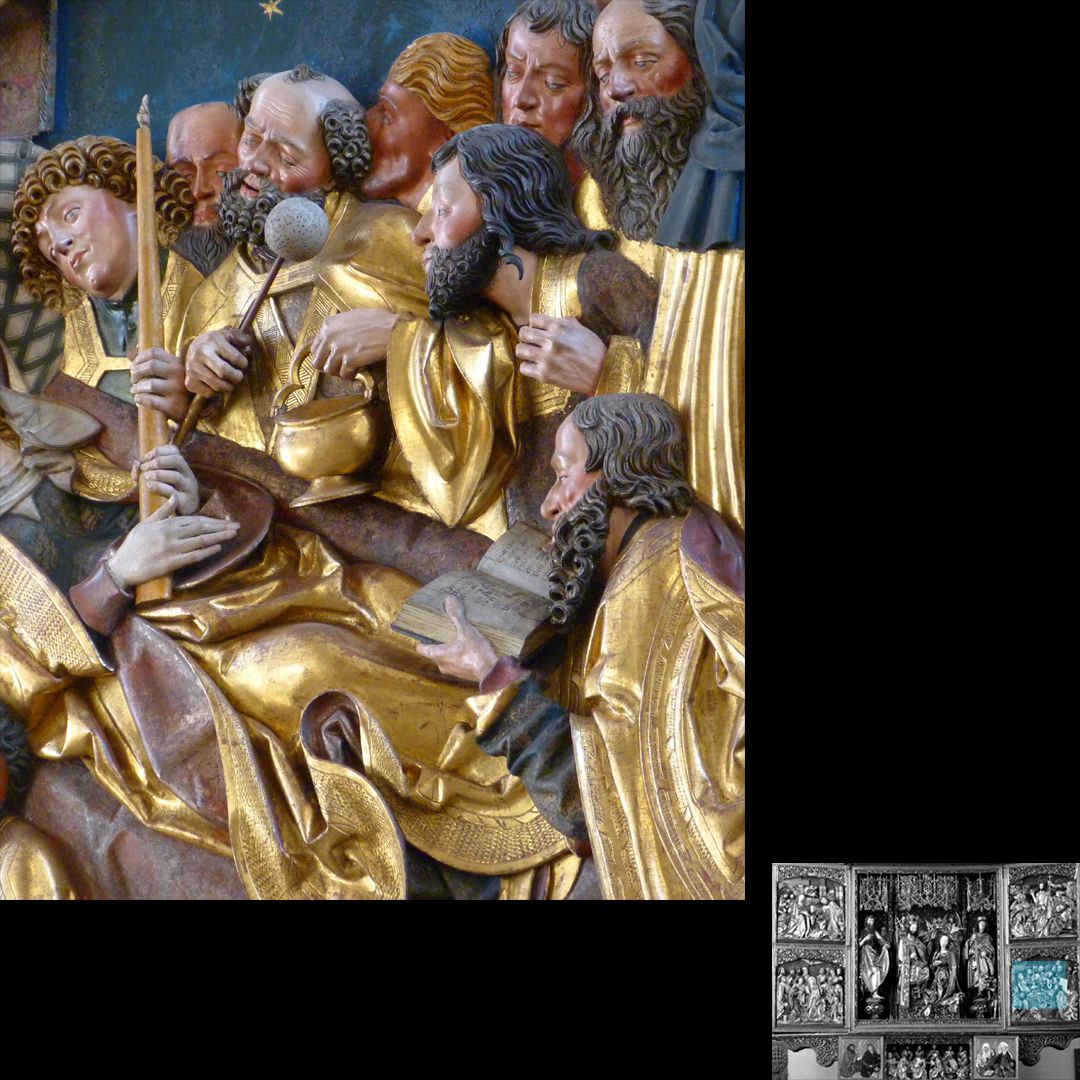
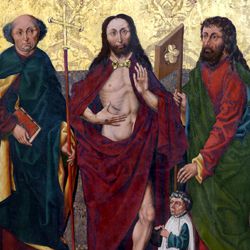
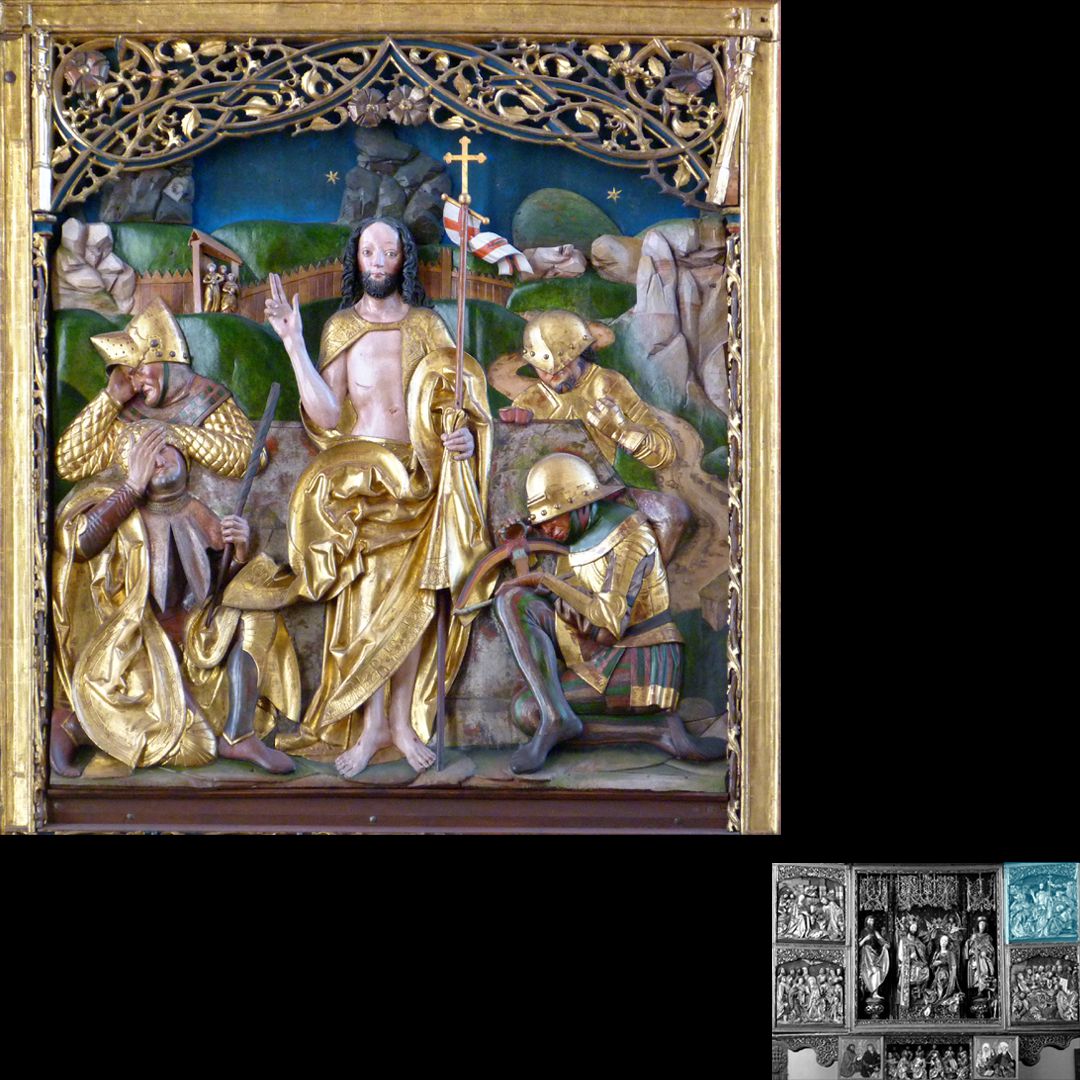
High Altar (Schwabach) Right wing, top, resurrection

High Altar (Schwabach)

1503 1506

Right wing, top, resurrection


1.383 / 5.000The altar was probably commissioned in 1503. After the master was branded on December 4 of that year, the workshop dissolved. The figures are therefore not the work of a workshop, but "the work of a sculptor, evidently a master and not a journeyman, who directly presupposes the stylistic development of Veit Stoss around 1500..." Alfred Schädler, 1981. "The extraordinarily high-quality sculptures in the shrine indicate that they were at least partially executed by the leading Nuremberg woodcarver of the time, Veit Stoss. The remaining sculptures are evidently products of his workshop." "According to Oellermann, an older painter sketched all the paintings on the outer pair of wings and began their execution with the Sermon of St. John. A younger painter then painted these panels differently and completed the scenes with the sermon, partially overpainting and making corrections. The inner wings, on which the reliefs are fixed, were signed and painted by the younger painter alone. In the predella, a third artist was at work, although the underdrawing still bore similarities to that of the older painter." (Oellermann 1983, pp. 142–155.)

Matthias Weniger in Michael Wolgemut / More than Dürer's Teacher, 2019

see also: Schwabach High Altar / First Transfiguration see also: Schwabach High Altar / Second Transfiguration

Location: Schwabach, Parish Church St. Martin´s

Design: Wolgemut, Werkstatt, Stoss, Veit

Realization: Wolgemut, Werkstatt

photo 2017, Theo Noll
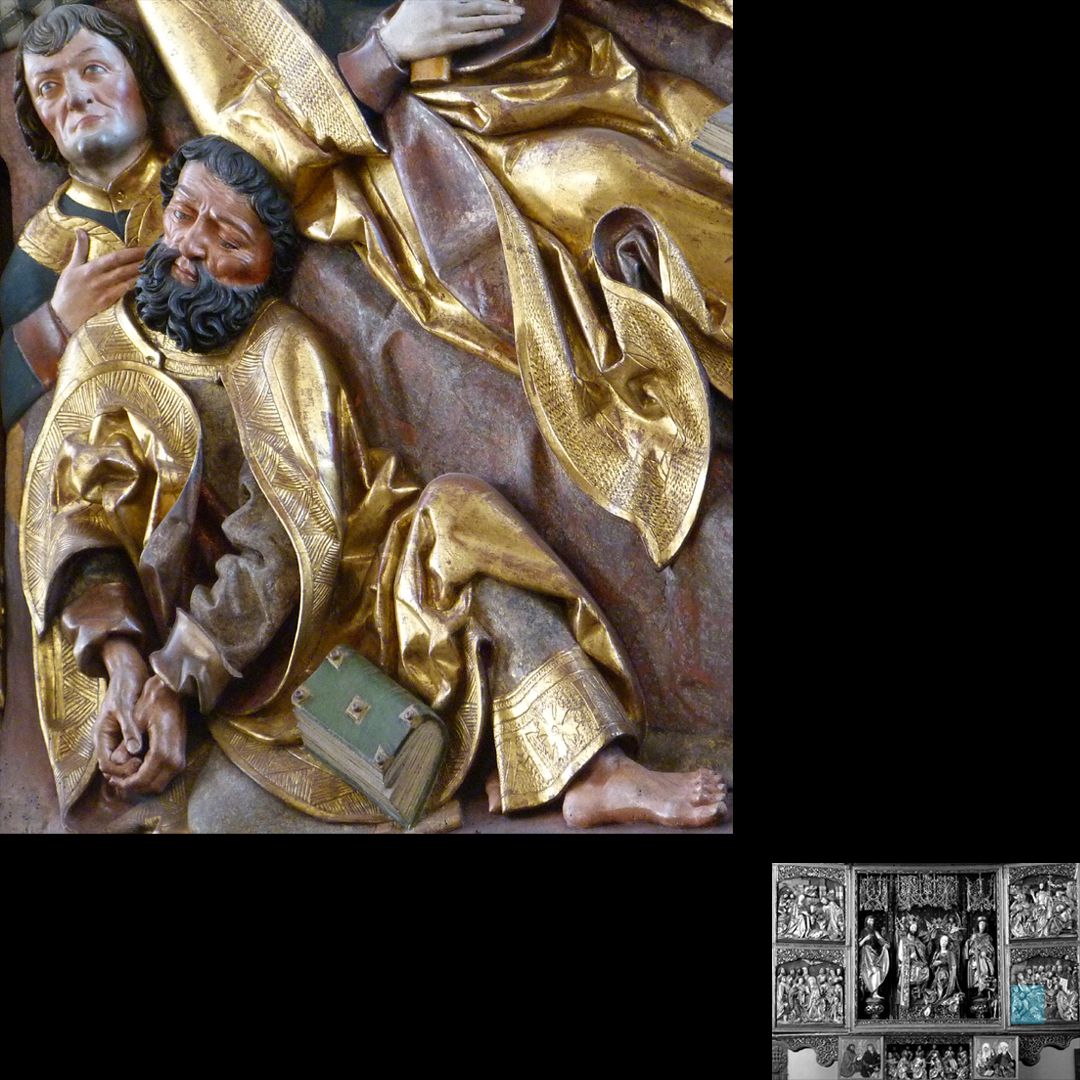
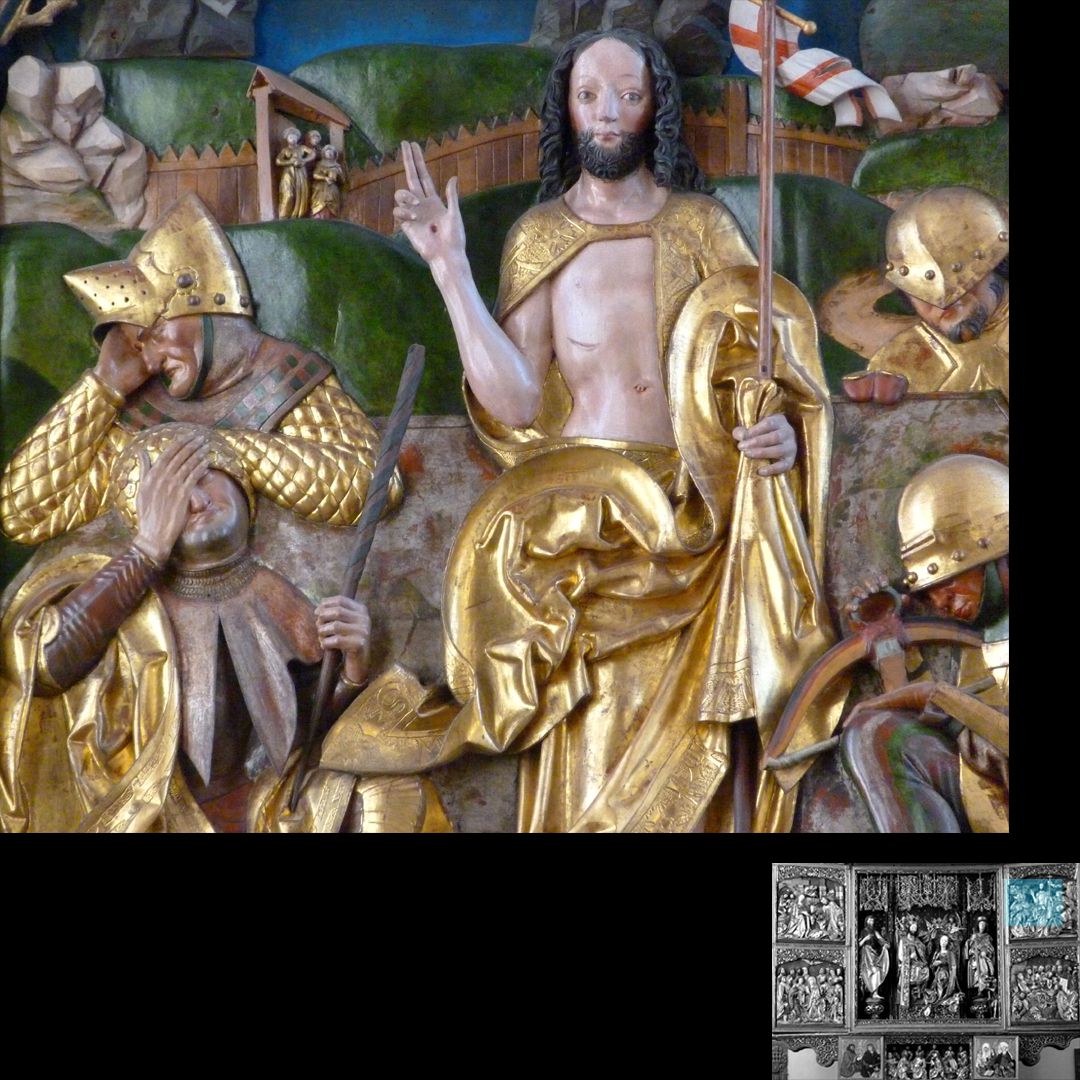
High Altar (Schwabach) Right wing, top, resurrection, detail

High Altar (Schwabach)

1503 1506

Right wing, top, resurrection, detail


1.383 / 5.000The altar was probably commissioned in 1503. After the master was branded on December 4 of that year, the workshop dissolved. The figures are therefore not the work of a workshop, but "the work of a sculptor, evidently a master and not a journeyman, who directly presupposes the stylistic development of Veit Stoss around 1500..." Alfred Schädler, 1981. "The extraordinarily high-quality sculptures in the shrine indicate that they were at least partially executed by the leading Nuremberg woodcarver of the time, Veit Stoss. The remaining sculptures are evidently products of his workshop." "According to Oellermann, an older painter sketched all the paintings on the outer pair of wings and began their execution with the Sermon of St. John. A younger painter then painted these panels differently and completed the scenes with the sermon, partially overpainting and making corrections. The inner wings, on which the reliefs are fixed, were signed and painted by the younger painter alone. In the predella, a third artist was at work, although the underdrawing still bore similarities to that of the older painter." (Oellermann 1983, pp. 142–155.)

Matthias Weniger in Michael Wolgemut / More than Dürer's Teacher, 2019

see also: Schwabach High Altar / First Transfiguration see also: Schwabach High Altar / Second Transfiguration

Location: Schwabach, Parish Church St. Martin´s

Design: Wolgemut, Werkstatt, Stoss, Veit

Realization: Wolgemut, Werkstatt

photo 2017, Theo Noll
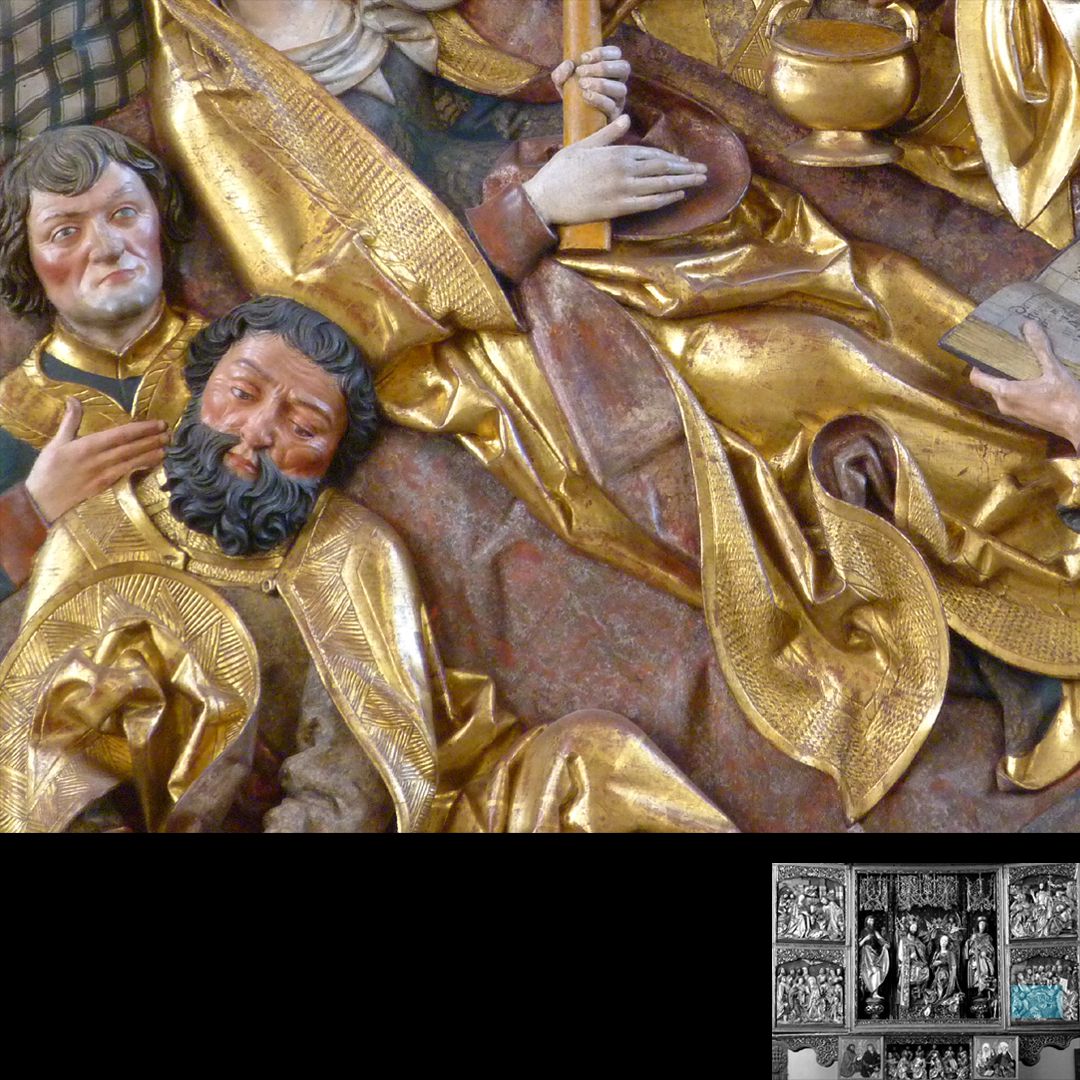
High Altar (Schwabach) Right wing, top, resurrection, drapery

High Altar (Schwabach)

1503 1506

Right wing, top, resurrection, drapery


1.383 / 5.000The altar was probably commissioned in 1503. After the master was branded on December 4 of that year, the workshop dissolved. The figures are therefore not the work of a workshop, but "the work of a sculptor, evidently a master and not a journeyman, who directly presupposes the stylistic development of Veit Stoss around 1500..." Alfred Schädler, 1981. "The extraordinarily high-quality sculptures in the shrine indicate that they were at least partially executed by the leading Nuremberg woodcarver of the time, Veit Stoss. The remaining sculptures are evidently products of his workshop." "According to Oellermann, an older painter sketched all the paintings on the outer pair of wings and began their execution with the Sermon of St. John. A younger painter then painted these panels differently and completed the scenes with the sermon, partially overpainting and making corrections. The inner wings, on which the reliefs are fixed, were signed and painted by the younger painter alone. In the predella, a third artist was at work, although the underdrawing still bore similarities to that of the older painter." (Oellermann 1983, pp. 142–155.)

Matthias Weniger in Michael Wolgemut / More than Dürer's Teacher, 2019

see also: Schwabach High Altar / First Transfiguration see also: Schwabach High Altar / Second Transfiguration

Location: Schwabach, Parish Church St. Martin´s

Design: Wolgemut, Werkstatt, Stoss, Veit

Realization: Wolgemut, Werkstatt

photo 2017, Theo Noll
High Altar (Schwabach) Right wing, bottom, dormition of Mary

High Altar (Schwabach)

1503 1506

Right wing, bottom, dormition of Mary


1.383 / 5.000The altar was probably commissioned in 1503. After the master was branded on December 4 of that year, the workshop dissolved. The figures are therefore not the work of a workshop, but "the work of a sculptor, evidently a master and not a journeyman, who directly presupposes the stylistic development of Veit Stoss around 1500..." Alfred Schädler, 1981. "The extraordinarily high-quality sculptures in the shrine indicate that they were at least partially executed by the leading Nuremberg woodcarver of the time, Veit Stoss. The remaining sculptures are evidently products of his workshop." "According to Oellermann, an older painter sketched all the paintings on the outer pair of wings and began their execution with the Sermon of St. John. A younger painter then painted these panels differently and completed the scenes with the sermon, partially overpainting and making corrections. The inner wings, on which the reliefs are fixed, were signed and painted by the younger painter alone. In the predella, a third artist was at work, although the underdrawing still bore similarities to that of the older painter." (Oellermann 1983, pp. 142–155.)

Matthias Weniger in Michael Wolgemut / More than Dürer's Teacher, 2019

see also: Schwabach High Altar / First Transfiguration see also: Schwabach High Altar / Second Transfiguration

Location: Schwabach, Parish Church St. Martin´s

Design: Wolgemut, Werkstatt, Stoss, Veit

Realization: Wolgemut, Werkstatt

photo 2017, Theo Noll
High Altar (Schwabach) Right wing, bottom, dormition of Mary, detail

High Altar (Schwabach)

1503 1506

Right wing, bottom, dormition of Mary, detail


1.383 / 5.000The altar was probably commissioned in 1503. After the master was branded on December 4 of that year, the workshop dissolved. The figures are therefore not the work of a workshop, but "the work of a sculptor, evidently a master and not a journeyman, who directly presupposes the stylistic development of Veit Stoss around 1500..." Alfred Schädler, 1981. "The extraordinarily high-quality sculptures in the shrine indicate that they were at least partially executed by the leading Nuremberg woodcarver of the time, Veit Stoss. The remaining sculptures are evidently products of his workshop." "According to Oellermann, an older painter sketched all the paintings on the outer pair of wings and began their execution with the Sermon of St. John. A younger painter then painted these panels differently and completed the scenes with the sermon, partially overpainting and making corrections. The inner wings, on which the reliefs are fixed, were signed and painted by the younger painter alone. In the predella, a third artist was at work, although the underdrawing still bore similarities to that of the older painter." (Oellermann 1983, pp. 142–155.)

Matthias Weniger in Michael Wolgemut / More than Dürer's Teacher, 2019

see also: Schwabach High Altar / First Transfiguration see also: Schwabach High Altar / Second Transfiguration

Location: Schwabach, Parish Church St. Martin´s

Design: Wolgemut, Werkstatt, Stoss, Veit

Realization: Wolgemut, Werkstatt

photo 2017, Theo Noll
High Altar (Schwabach) Right wing, bottom, dormition of Mary, detail, diagonal view

High Altar (Schwabach)

1503 1506

Right wing, bottom, dormition of Mary, detail, diagonal view


1.383 / 5.000The altar was probably commissioned in 1503. After the master was branded on December 4 of that year, the workshop dissolved. The figures are therefore not the work of a workshop, but "the work of a sculptor, evidently a master and not a journeyman, who directly presupposes the stylistic development of Veit Stoss around 1500..." Alfred Schädler, 1981. "The extraordinarily high-quality sculptures in the shrine indicate that they were at least partially executed by the leading Nuremberg woodcarver of the time, Veit Stoss. The remaining sculptures are evidently products of his workshop." "According to Oellermann, an older painter sketched all the paintings on the outer pair of wings and began their execution with the Sermon of St. John. A younger painter then painted these panels differently and completed the scenes with the sermon, partially overpainting and making corrections. The inner wings, on which the reliefs are fixed, were signed and painted by the younger painter alone. In the predella, a third artist was at work, although the underdrawing still bore similarities to that of the older painter." (Oellermann 1983, pp. 142–155.)

Matthias Weniger in Michael Wolgemut / More than Dürer's Teacher, 2019

see also: Schwabach High Altar / First Transfiguration see also: Schwabach High Altar / Second Transfiguration

Location: Schwabach, Parish Church St. Martin´s

Design: Wolgemut, Werkstatt, Stoss, Veit

Realization: Wolgemut, Werkstatt

photo 2017, Theo Noll
High Altar (Schwabach) Right wing, bottom, dormition of Mary, detail, diagonal view

High Altar (Schwabach)

1503 1506

Right wing, bottom, dormition of Mary, detail, diagonal view


1.383 / 5.000The altar was probably commissioned in 1503. After the master was branded on December 4 of that year, the workshop dissolved. The figures are therefore not the work of a workshop, but "the work of a sculptor, evidently a master and not a journeyman, who directly presupposes the stylistic development of Veit Stoss around 1500..." Alfred Schädler, 1981. "The extraordinarily high-quality sculptures in the shrine indicate that they were at least partially executed by the leading Nuremberg woodcarver of the time, Veit Stoss. The remaining sculptures are evidently products of his workshop." "According to Oellermann, an older painter sketched all the paintings on the outer pair of wings and began their execution with the Sermon of St. John. A younger painter then painted these panels differently and completed the scenes with the sermon, partially overpainting and making corrections. The inner wings, on which the reliefs are fixed, were signed and painted by the younger painter alone. In the predella, a third artist was at work, although the underdrawing still bore similarities to that of the older painter." (Oellermann 1983, pp. 142–155.)

Matthias Weniger in Michael Wolgemut / More than Dürer's Teacher, 2019

see also: Schwabach High Altar / First Transfiguration see also: Schwabach High Altar / Second Transfiguration

Location: Schwabach, Parish Church St. Martin´s

Design: Wolgemut, Werkstatt, Stoss, Veit

Realization: Wolgemut, Werkstatt

photo 2017, Theo Noll
High Altar (Schwabach) Right wing, bottom, dormition of Mary, detail with drapery

High Altar (Schwabach)

1503 1506

Right wing, bottom, dormition of Mary, detail with drapery


1.383 / 5.000The altar was probably commissioned in 1503. After the master was branded on December 4 of that year, the workshop dissolved. The figures are therefore not the work of a workshop, but "the work of a sculptor, evidently a master and not a journeyman, who directly presupposes the stylistic development of Veit Stoss around 1500..." Alfred Schädler, 1981. "The extraordinarily high-quality sculptures in the shrine indicate that they were at least partially executed by the leading Nuremberg woodcarver of the time, Veit Stoss. The remaining sculptures are evidently products of his workshop." "According to Oellermann, an older painter sketched all the paintings on the outer pair of wings and began their execution with the Sermon of St. John. A younger painter then painted these panels differently and completed the scenes with the sermon, partially overpainting and making corrections. The inner wings, on which the reliefs are fixed, were signed and painted by the younger painter alone. In the predella, a third artist was at work, although the underdrawing still bore similarities to that of the older painter." (Oellermann 1983, pp. 142–155.)

Matthias Weniger in Michael Wolgemut / More than Dürer's Teacher, 2019

see also: Schwabach High Altar / First Transfiguration see also: Schwabach High Altar / Second Transfiguration

Location: Schwabach, Parish Church St. Martin´s

Design: Wolgemut, Werkstatt, Stoss, Veit

Realization: Wolgemut, Werkstatt

photo 2017, Theo Noll
High Altar (Schwabach) Pinnacle decoration

High Altar (Schwabach)

1503 1506

Pinnacle decoration


1.383 / 5.000The altar was probably commissioned in 1503. After the master was branded on December 4 of that year, the workshop dissolved. The figures are therefore not the work of a workshop, but "the work of a sculptor, evidently a master and not a journeyman, who directly presupposes the stylistic development of Veit Stoss around 1500..." Alfred Schädler, 1981. "The extraordinarily high-quality sculptures in the shrine indicate that they were at least partially executed by the leading Nuremberg woodcarver of the time, Veit Stoss. The remaining sculptures are evidently products of his workshop." "According to Oellermann, an older painter sketched all the paintings on the outer pair of wings and began their execution with the Sermon of St. John. A younger painter then painted these panels differently and completed the scenes with the sermon, partially overpainting and making corrections. The inner wings, on which the reliefs are fixed, were signed and painted by the younger painter alone. In the predella, a third artist was at work, although the underdrawing still bore similarities to that of the older painter." (Oellermann 1983, pp. 142–155.)

Matthias Weniger in Michael Wolgemut / More than Dürer's Teacher, 2019

see also: Schwabach High Altar / First Transfiguration see also: Schwabach High Altar / Second Transfiguration

Location: Schwabach, Parish Church St. Martin´s

Design: Wolgemut, Werkstatt, Stoss, Veit

Realization: Wolgemut, Werkstatt

photo 2017, Theo Noll
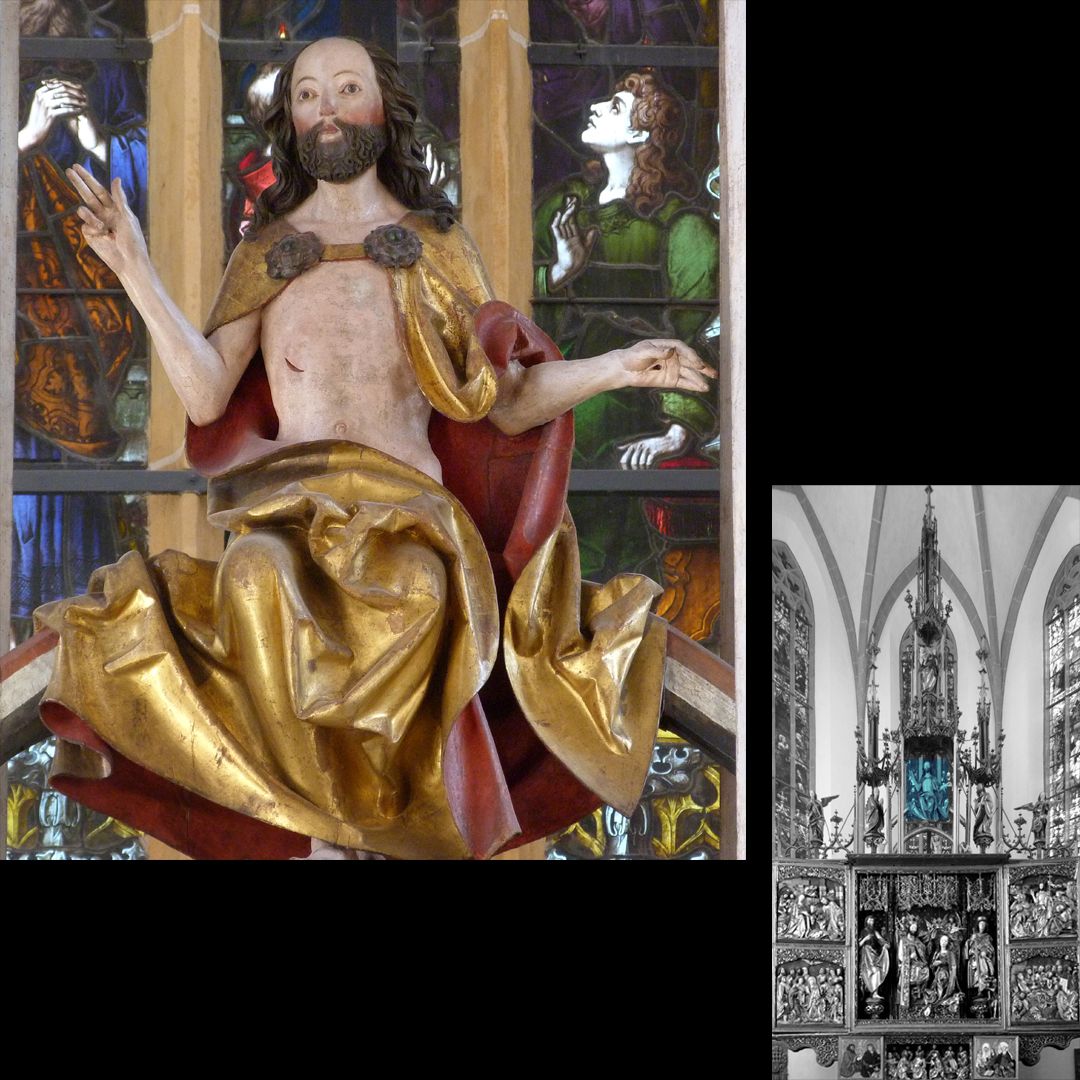
High Altar (Schwabach) Pinnacle decoration, from below

High Altar (Schwabach)

1503 1506

Pinnacle decoration, from below


1.383 / 5.000The altar was probably commissioned in 1503. After the master was branded on December 4 of that year, the workshop dissolved. The figures are therefore not the work of a workshop, but "the work of a sculptor, evidently a master and not a journeyman, who directly presupposes the stylistic development of Veit Stoss around 1500..." Alfred Schädler, 1981. "The extraordinarily high-quality sculptures in the shrine indicate that they were at least partially executed by the leading Nuremberg woodcarver of the time, Veit Stoss. The remaining sculptures are evidently products of his workshop." "According to Oellermann, an older painter sketched all the paintings on the outer pair of wings and began their execution with the Sermon of St. John. A younger painter then painted these panels differently and completed the scenes with the sermon, partially overpainting and making corrections. The inner wings, on which the reliefs are fixed, were signed and painted by the younger painter alone. In the predella, a third artist was at work, although the underdrawing still bore similarities to that of the older painter." (Oellermann 1983, pp. 142–155.)

Matthias Weniger in Michael Wolgemut / More than Dürer's Teacher, 2019

see also: Schwabach High Altar / First Transfiguration see also: Schwabach High Altar / Second Transfiguration

Location: Schwabach, Parish Church St. Martin´s

Design: Wolgemut, Werkstatt, Stoss, Veit

Realization: Wolgemut, Werkstatt

photo 2017, Theo Noll
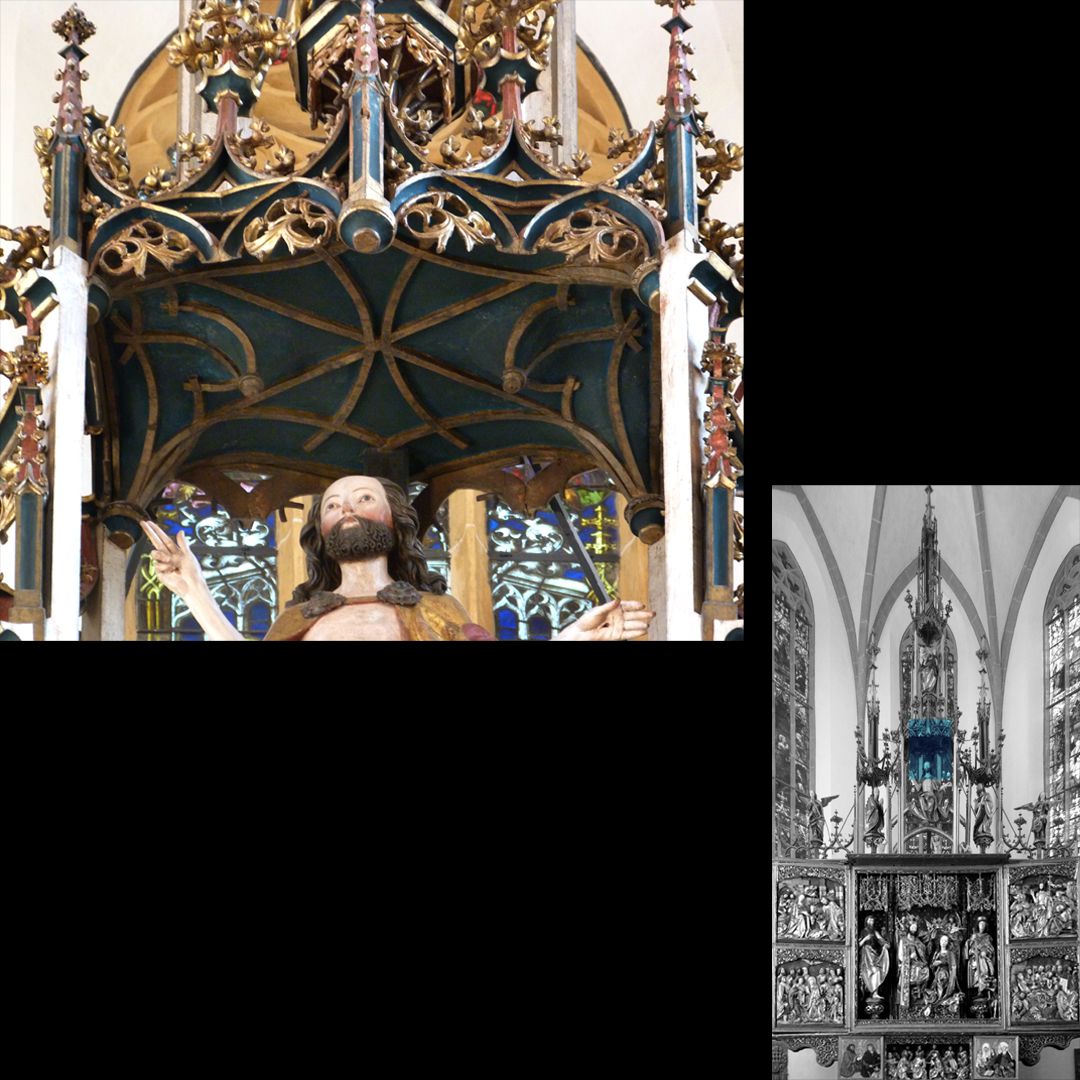
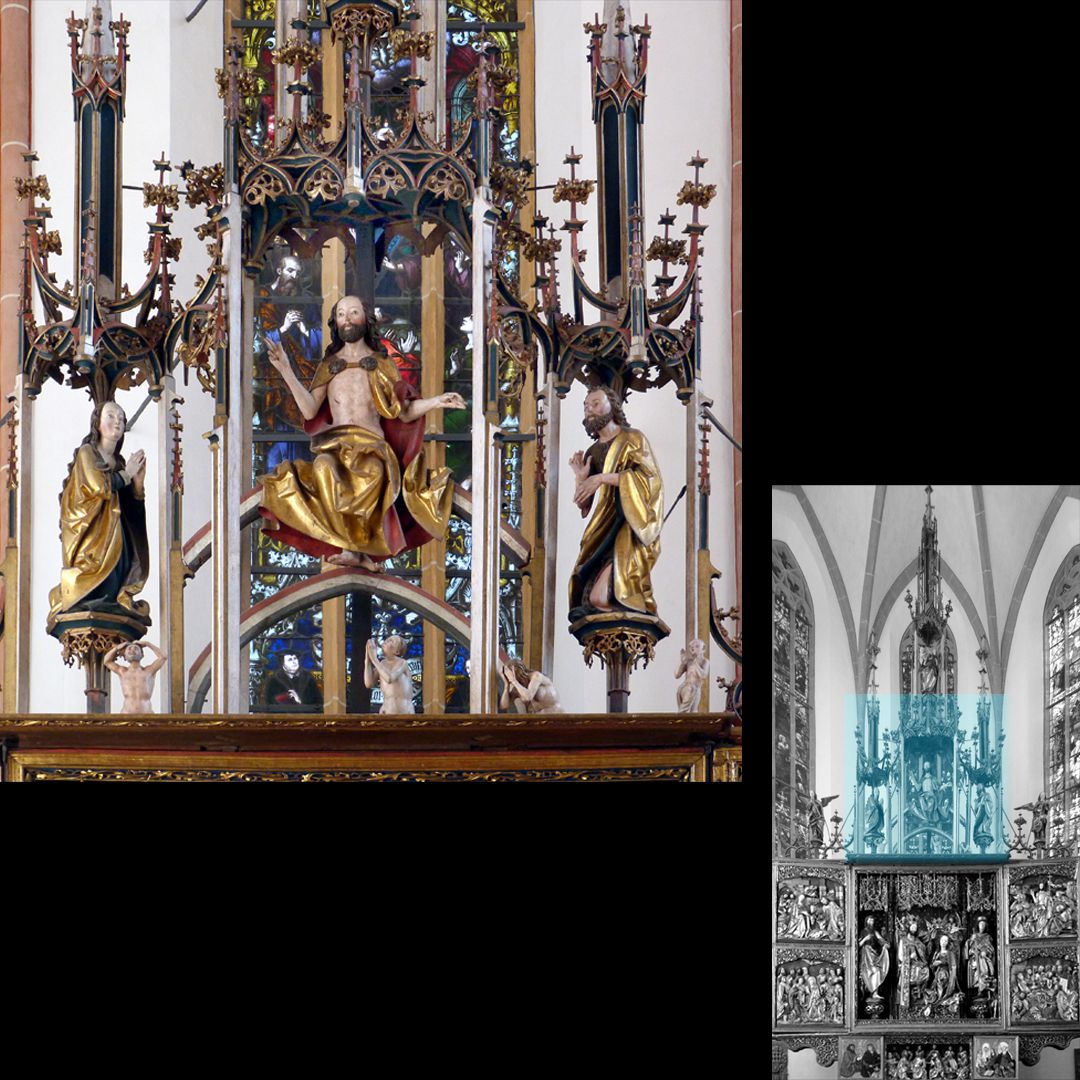
High Altar (Schwabach) Pinnacle decoration with Judge of the world and assistants

High Altar (Schwabach)

1503 1506

Pinnacle decoration with Judge of the world and assistants


1.383 / 5.000The altar was probably commissioned in 1503. After the master was branded on December 4 of that year, the workshop dissolved. The figures are therefore not the work of a workshop, but "the work of a sculptor, evidently a master and not a journeyman, who directly presupposes the stylistic development of Veit Stoss around 1500..." Alfred Schädler, 1981. "The extraordinarily high-quality sculptures in the shrine indicate that they were at least partially executed by the leading Nuremberg woodcarver of the time, Veit Stoss. The remaining sculptures are evidently products of his workshop." "According to Oellermann, an older painter sketched all the paintings on the outer pair of wings and began their execution with the Sermon of St. John. A younger painter then painted these panels differently and completed the scenes with the sermon, partially overpainting and making corrections. The inner wings, on which the reliefs are fixed, were signed and painted by the younger painter alone. In the predella, a third artist was at work, although the underdrawing still bore similarities to that of the older painter." (Oellermann 1983, pp. 142–155.)

Matthias Weniger in Michael Wolgemut / More than Dürer's Teacher, 2019

see also: Schwabach High Altar / First Transfiguration see also: Schwabach High Altar / Second Transfiguration

Location: Schwabach, Parish Church St. Martin´s

Design: Wolgemut, Werkstatt, Stoss, Veit

Realization: Wolgemut, Werkstatt

photo 2017, Theo Noll
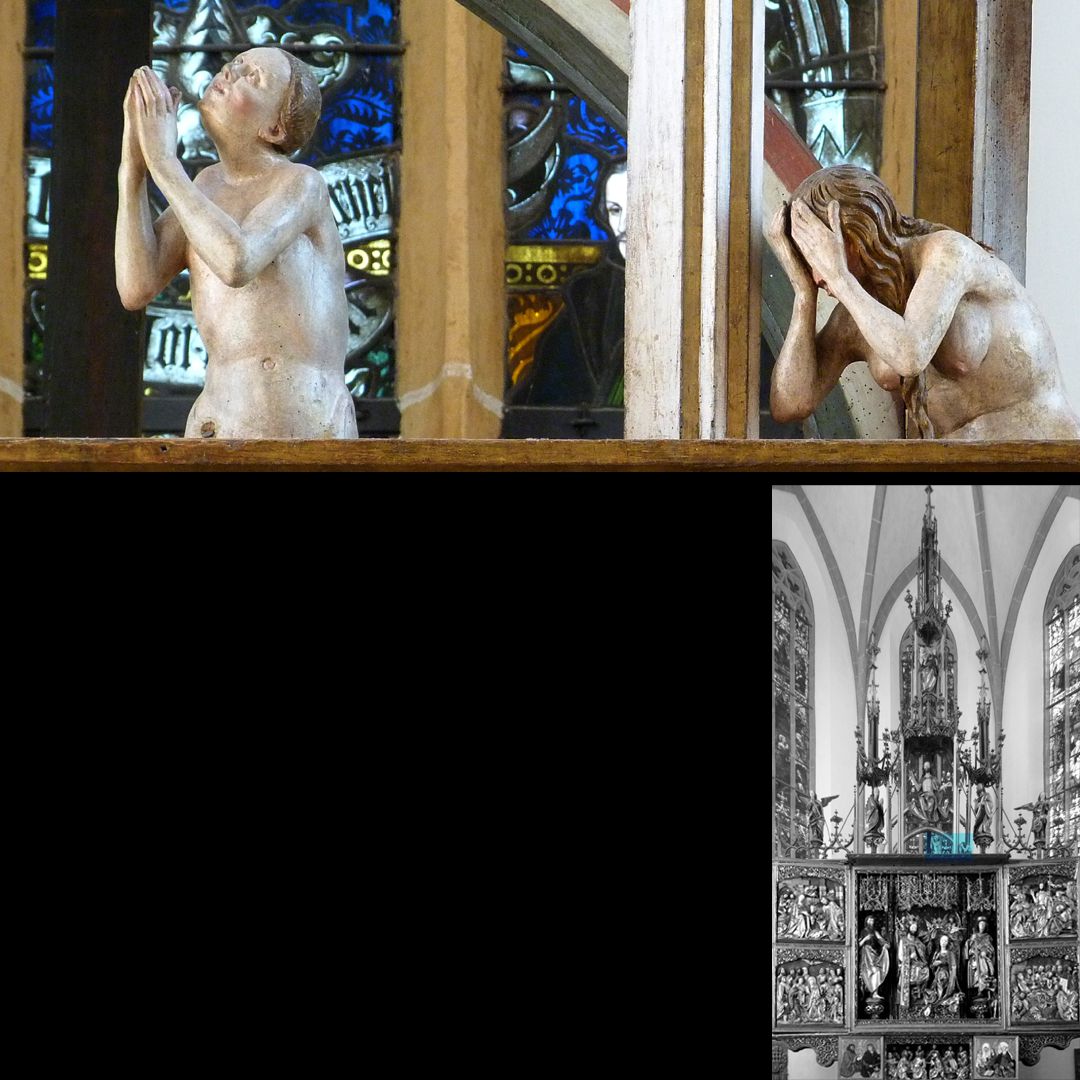
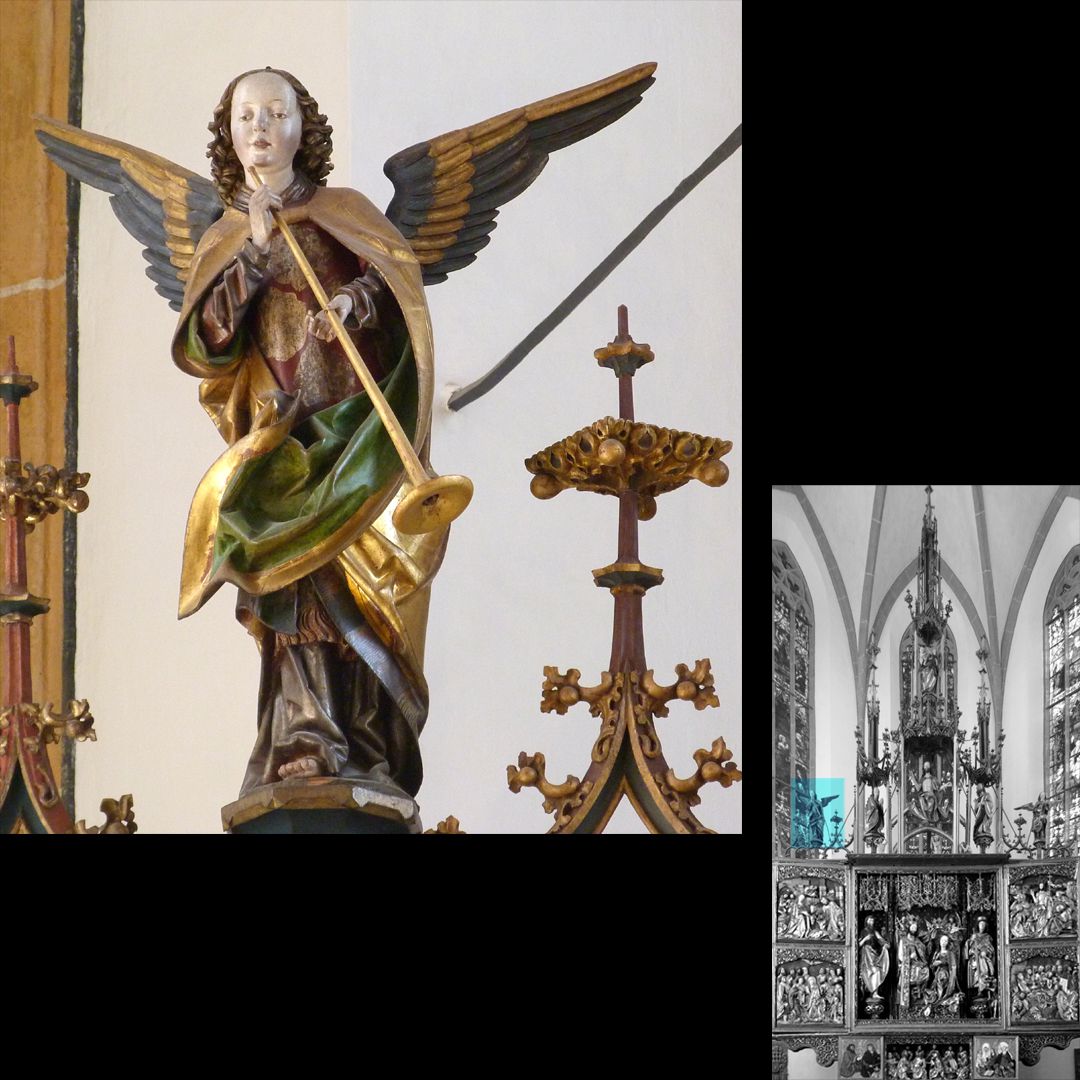
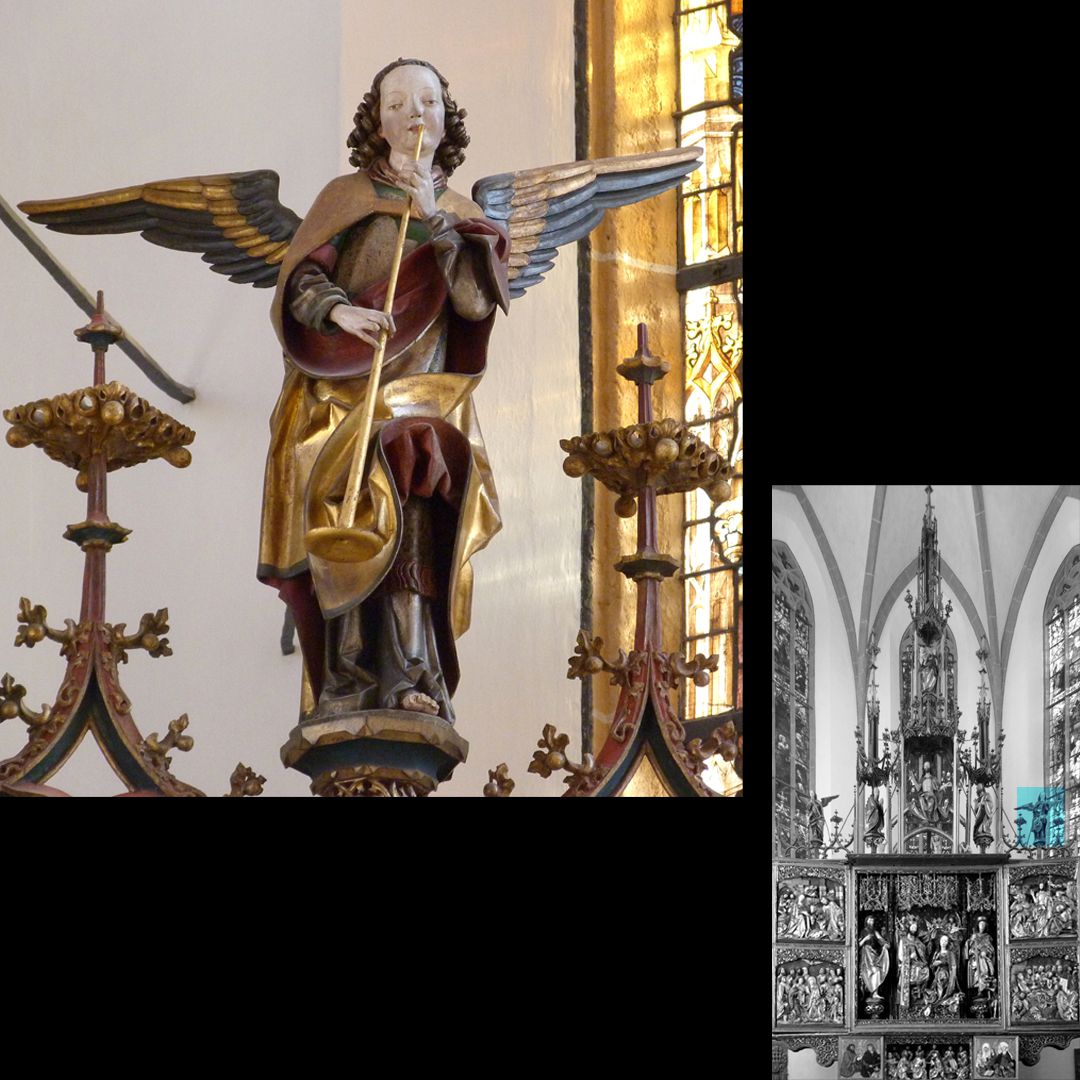
High Altar (Schwabach) Pinnacle decoration with trumpet angel

High Altar (Schwabach)

1503 1506

Pinnacle decoration with trumpet angel


1.383 / 5.000The altar was probably commissioned in 1503. After the master was branded on December 4 of that year, the workshop dissolved. The figures are therefore not the work of a workshop, but "the work of a sculptor, evidently a master and not a journeyman, who directly presupposes the stylistic development of Veit Stoss around 1500..." Alfred Schädler, 1981. "The extraordinarily high-quality sculptures in the shrine indicate that they were at least partially executed by the leading Nuremberg woodcarver of the time, Veit Stoss. The remaining sculptures are evidently products of his workshop." "According to Oellermann, an older painter sketched all the paintings on the outer pair of wings and began their execution with the Sermon of St. John. A younger painter then painted these panels differently and completed the scenes with the sermon, partially overpainting and making corrections. The inner wings, on which the reliefs are fixed, were signed and painted by the younger painter alone. In the predella, a third artist was at work, although the underdrawing still bore similarities to that of the older painter." (Oellermann 1983, pp. 142–155.)

Matthias Weniger in Michael Wolgemut / More than Dürer's Teacher, 2019

see also: Schwabach High Altar / First Transfiguration see also: Schwabach High Altar / Second Transfiguration

Location: Schwabach, Parish Church St. Martin´s

Design: Wolgemut, Werkstatt, Stoss, Veit

Realization: Wolgemut, Werkstatt

photo 2017, Theo Noll
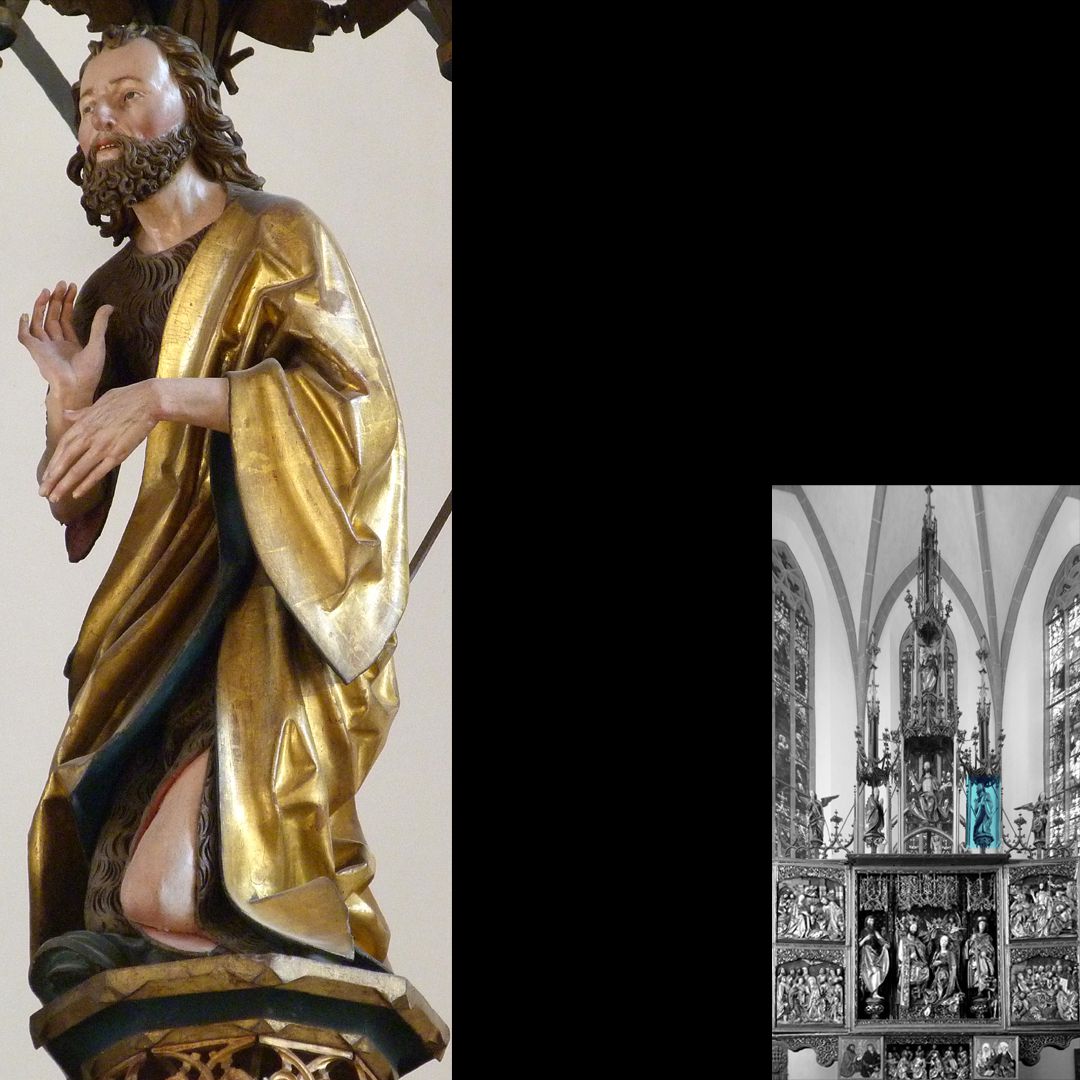
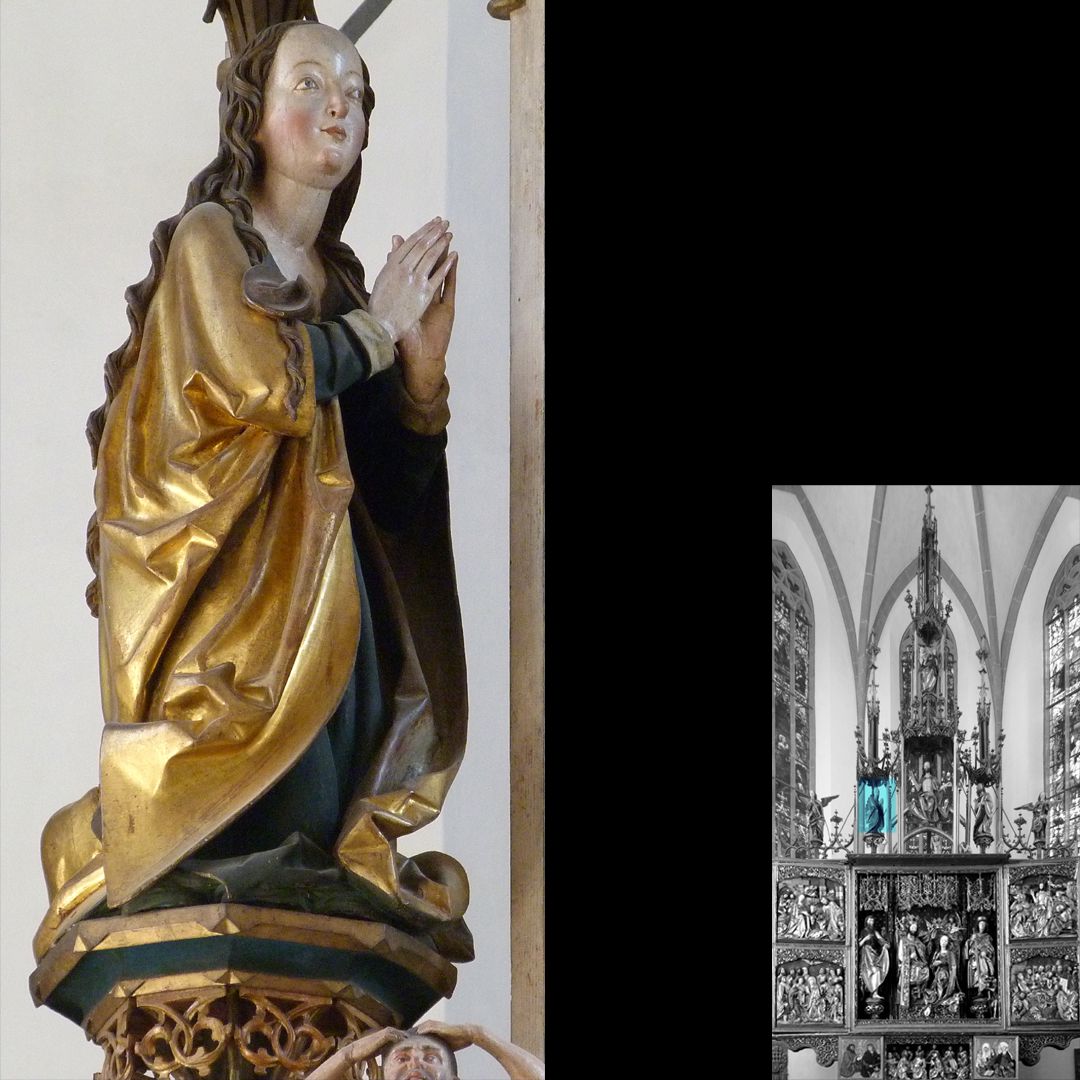
High Altar (Schwabach) Gesprenge, Maria

High Altar (Schwabach)

1503 1506

Gesprenge, Maria


1.383 / 5.000The altar was probably commissioned in 1503. After the master was branded on December 4 of that year, the workshop dissolved. The figures are therefore not the work of a workshop, but "the work of a sculptor, evidently a master and not a journeyman, who directly presupposes the stylistic development of Veit Stoss around 1500..." Alfred Schädler, 1981. "The extraordinarily high-quality sculptures in the shrine indicate that they were at least partially executed by the leading Nuremberg woodcarver of the time, Veit Stoss. The remaining sculptures are evidently products of his workshop." "According to Oellermann, an older painter sketched all the paintings on the outer pair of wings and began their execution with the Sermon of St. John. A younger painter then painted these panels differently and completed the scenes with the sermon, partially overpainting and making corrections. The inner wings, on which the reliefs are fixed, were signed and painted by the younger painter alone. In the predella, a third artist was at work, although the underdrawing still bore similarities to that of the older painter." (Oellermann 1983, pp. 142–155.)

Matthias Weniger in Michael Wolgemut / More than Dürer's Teacher, 2019

see also: Schwabach High Altar / First Transfiguration see also: Schwabach High Altar / Second Transfiguration

Location: Schwabach, Parish Church St. Martin´s

Design: Wolgemut, Werkstatt, Stoss, Veit

Realization: Wolgemut, Werkstatt

photo 2017, Theo Noll
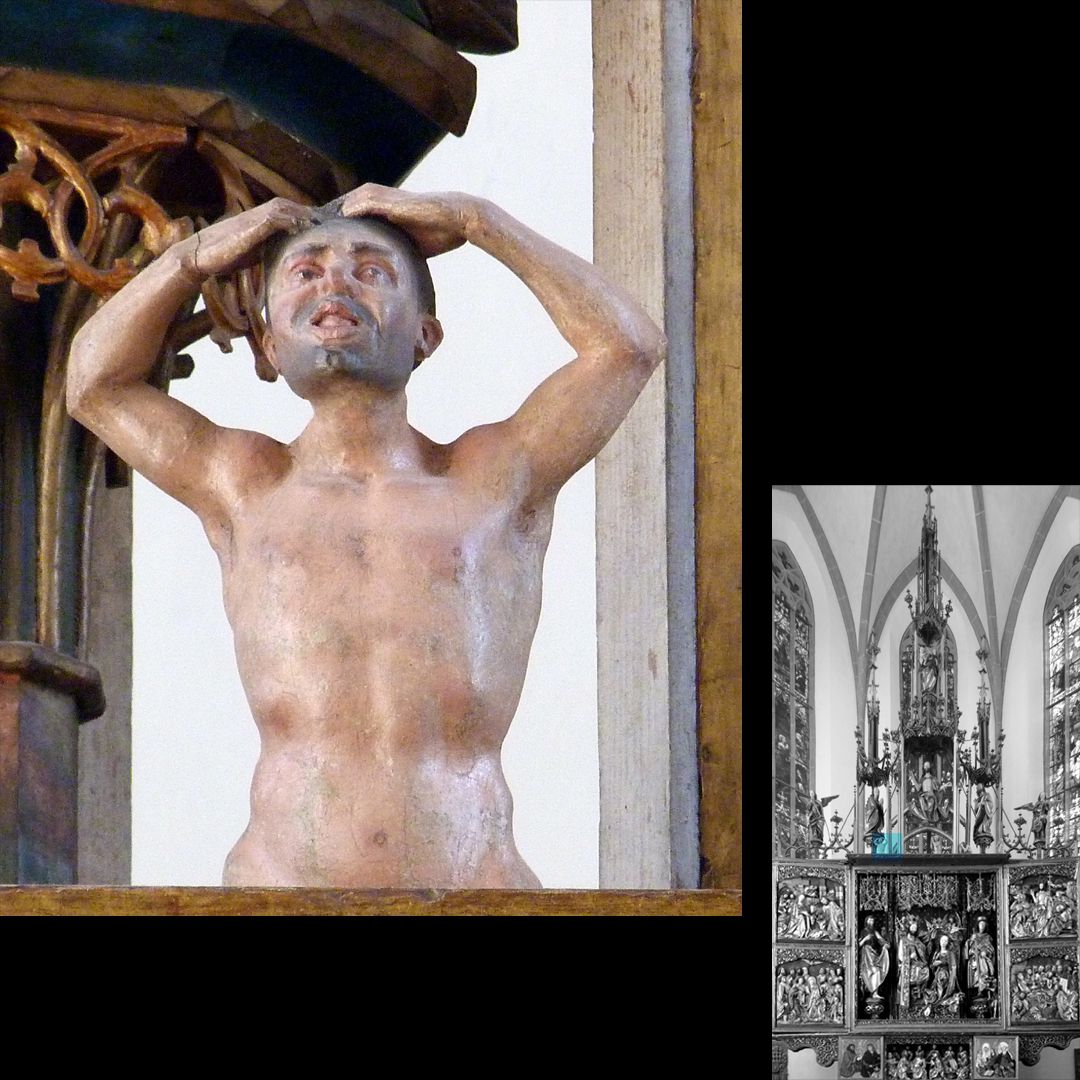
High Altar (Schwabach) Pinnacle decoration, condemned man on the day of doom

High Altar (Schwabach)

1503 1506

Pinnacle decoration, condemned man on the day of doom


1.383 / 5.000The altar was probably commissioned in 1503. After the master was branded on December 4 of that year, the workshop dissolved. The figures are therefore not the work of a workshop, but "the work of a sculptor, evidently a master and not a journeyman, who directly presupposes the stylistic development of Veit Stoss around 1500..." Alfred Schädler, 1981. "The extraordinarily high-quality sculptures in the shrine indicate that they were at least partially executed by the leading Nuremberg woodcarver of the time, Veit Stoss. The remaining sculptures are evidently products of his workshop." "According to Oellermann, an older painter sketched all the paintings on the outer pair of wings and began their execution with the Sermon of St. John. A younger painter then painted these panels differently and completed the scenes with the sermon, partially overpainting and making corrections. The inner wings, on which the reliefs are fixed, were signed and painted by the younger painter alone. In the predella, a third artist was at work, although the underdrawing still bore similarities to that of the older painter." (Oellermann 1983, pp. 142–155.)

Matthias Weniger in Michael Wolgemut / More than Dürer's Teacher, 2019

see also: Schwabach High Altar / First Transfiguration see also: Schwabach High Altar / Second Transfiguration

Location: Schwabach, Parish Church St. Martin´s

Design: Wolgemut, Werkstatt, Stoss, Veit

Realization: Wolgemut, Werkstatt

photo 2017, Theo Noll
High Altar (Schwabach) Pinnacle decoration, judge of the world

High Altar (Schwabach)

1503 1506

Pinnacle decoration, judge of the world


1.383 / 5.000The altar was probably commissioned in 1503. After the master was branded on December 4 of that year, the workshop dissolved. The figures are therefore not the work of a workshop, but "the work of a sculptor, evidently a master and not a journeyman, who directly presupposes the stylistic development of Veit Stoss around 1500..." Alfred Schädler, 1981. "The extraordinarily high-quality sculptures in the shrine indicate that they were at least partially executed by the leading Nuremberg woodcarver of the time, Veit Stoss. The remaining sculptures are evidently products of his workshop." "According to Oellermann, an older painter sketched all the paintings on the outer pair of wings and began their execution with the Sermon of St. John. A younger painter then painted these panels differently and completed the scenes with the sermon, partially overpainting and making corrections. The inner wings, on which the reliefs are fixed, were signed and painted by the younger painter alone. In the predella, a third artist was at work, although the underdrawing still bore similarities to that of the older painter." (Oellermann 1983, pp. 142–155.)

Matthias Weniger in Michael Wolgemut / More than Dürer's Teacher, 2019

see also: Schwabach High Altar / First Transfiguration see also: Schwabach High Altar / Second Transfiguration

Location: Schwabach, Parish Church St. Martin´s

Design: Wolgemut, Werkstatt, Stoss, Veit

Realization: Wolgemut, Werkstatt

photo 2017, Theo Noll
High Altar (Schwabach) Pinnacle decoration, vaulted canopy

High Altar (Schwabach)

1503 1506

Pinnacle decoration, vaulted canopy


1.383 / 5.000The altar was probably commissioned in 1503. After the master was branded on December 4 of that year, the workshop dissolved. The figures are therefore not the work of a workshop, but "the work of a sculptor, evidently a master and not a journeyman, who directly presupposes the stylistic development of Veit Stoss around 1500..." Alfred Schädler, 1981. "The extraordinarily high-quality sculptures in the shrine indicate that they were at least partially executed by the leading Nuremberg woodcarver of the time, Veit Stoss. The remaining sculptures are evidently products of his workshop." "According to Oellermann, an older painter sketched all the paintings on the outer pair of wings and began their execution with the Sermon of St. John. A younger painter then painted these panels differently and completed the scenes with the sermon, partially overpainting and making corrections. The inner wings, on which the reliefs are fixed, were signed and painted by the younger painter alone. In the predella, a third artist was at work, although the underdrawing still bore similarities to that of the older painter." (Oellermann 1983, pp. 142–155.)

Matthias Weniger in Michael Wolgemut / More than Dürer's Teacher, 2019

see also: Schwabach High Altar / First Transfiguration see also: Schwabach High Altar / Second Transfiguration

Location: Schwabach, Parish Church St. Martin´s

Design: Wolgemut, Werkstatt, Stoss, Veit

Realization: Wolgemut, Werkstatt

photo 2017, Theo Noll
High Altar (Schwabach) Pinnacle decoration, blessed man and desperate man on the day of doom

High Altar (Schwabach)

1503 1506

Pinnacle decoration, blessed man and desperate man on the day of doom


1.383 / 5.000The altar was probably commissioned in 1503. After the master was branded on December 4 of that year, the workshop dissolved. The figures are therefore not the work of a workshop, but "the work of a sculptor, evidently a master and not a journeyman, who directly presupposes the stylistic development of Veit Stoss around 1500..." Alfred Schädler, 1981. "The extraordinarily high-quality sculptures in the shrine indicate that they were at least partially executed by the leading Nuremberg woodcarver of the time, Veit Stoss. The remaining sculptures are evidently products of his workshop." "According to Oellermann, an older painter sketched all the paintings on the outer pair of wings and began their execution with the Sermon of St. John. A younger painter then painted these panels differently and completed the scenes with the sermon, partially overpainting and making corrections. The inner wings, on which the reliefs are fixed, were signed and painted by the younger painter alone. In the predella, a third artist was at work, although the underdrawing still bore similarities to that of the older painter." (Oellermann 1983, pp. 142–155.)

Matthias Weniger in Michael Wolgemut / More than Dürer's Teacher, 2019

see also: Schwabach High Altar / First Transfiguration see also: Schwabach High Altar / Second Transfiguration

Location: Schwabach, Parish Church St. Martin´s

Design: Wolgemut, Werkstatt, Stoss, Veit

Realization: Wolgemut, Werkstatt

photo 2017, Theo Noll
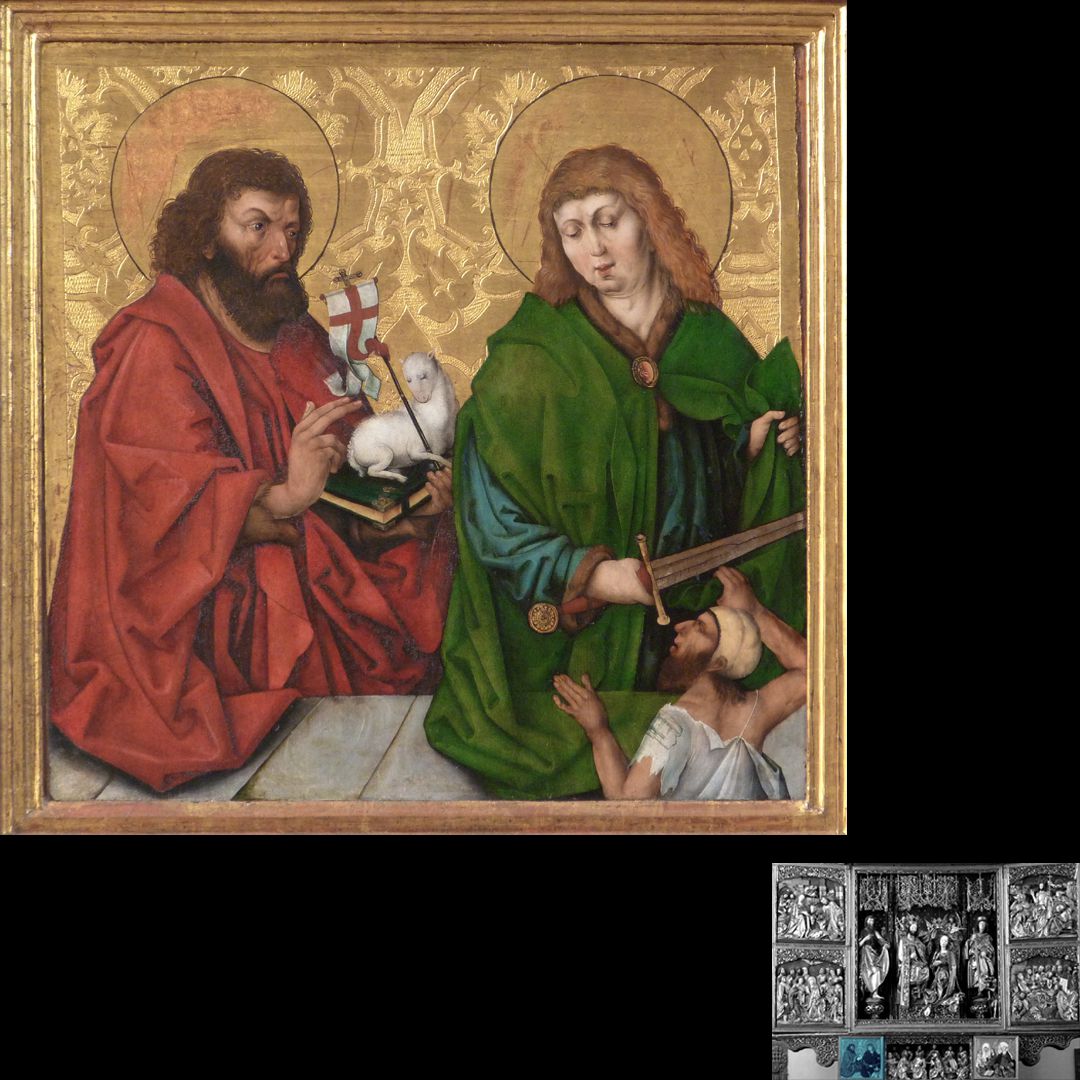
High Altar (Schwabach) Pinnacle decoration, John Baptist

High Altar (Schwabach)

1503 1506

Pinnacle decoration, John Baptist


1.383 / 5.000The altar was probably commissioned in 1503. After the master was branded on December 4 of that year, the workshop dissolved. The figures are therefore not the work of a workshop, but "the work of a sculptor, evidently a master and not a journeyman, who directly presupposes the stylistic development of Veit Stoss around 1500..." Alfred Schädler, 1981. "The extraordinarily high-quality sculptures in the shrine indicate that they were at least partially executed by the leading Nuremberg woodcarver of the time, Veit Stoss. The remaining sculptures are evidently products of his workshop." "According to Oellermann, an older painter sketched all the paintings on the outer pair of wings and began their execution with the Sermon of St. John. A younger painter then painted these panels differently and completed the scenes with the sermon, partially overpainting and making corrections. The inner wings, on which the reliefs are fixed, were signed and painted by the younger painter alone. In the predella, a third artist was at work, although the underdrawing still bore similarities to that of the older painter." (Oellermann 1983, pp. 142–155.)

Matthias Weniger in Michael Wolgemut / More than Dürer's Teacher, 2019

see also: Schwabach High Altar / First Transfiguration see also: Schwabach High Altar / Second Transfiguration

Location: Schwabach, Parish Church St. Martin´s

Design: Wolgemut, Werkstatt, Stoss, Veit

Realization: Wolgemut, Werkstatt

photo 2017, Theo Noll
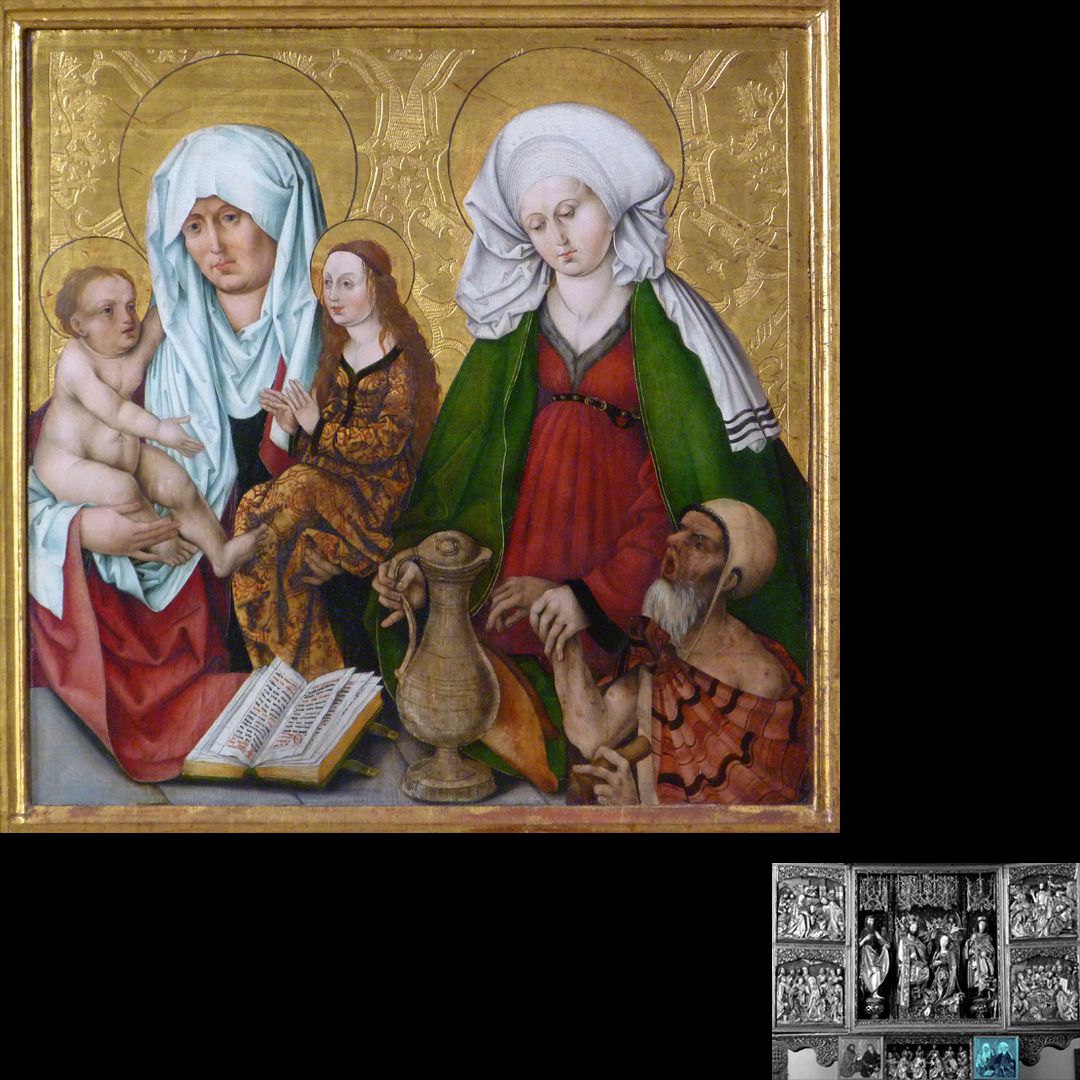
High Altar (Schwabach) Pinnacle decoration, right trumpet angel on the day of doom

High Altar (Schwabach)

1503 1506

Pinnacle decoration, right trumpet angel on the day of doom


1.383 / 5.000The altar was probably commissioned in 1503. After the master was branded on December 4 of that year, the workshop dissolved. The figures are therefore not the work of a workshop, but "the work of a sculptor, evidently a master and not a journeyman, who directly presupposes the stylistic development of Veit Stoss around 1500..." Alfred Schädler, 1981. "The extraordinarily high-quality sculptures in the shrine indicate that they were at least partially executed by the leading Nuremberg woodcarver of the time, Veit Stoss. The remaining sculptures are evidently products of his workshop." "According to Oellermann, an older painter sketched all the paintings on the outer pair of wings and began their execution with the Sermon of St. John. A younger painter then painted these panels differently and completed the scenes with the sermon, partially overpainting and making corrections. The inner wings, on which the reliefs are fixed, were signed and painted by the younger painter alone. In the predella, a third artist was at work, although the underdrawing still bore similarities to that of the older painter." (Oellermann 1983, pp. 142–155.)

Matthias Weniger in Michael Wolgemut / More than Dürer's Teacher, 2019

see also: Schwabach High Altar / First Transfiguration see also: Schwabach High Altar / Second Transfiguration

Location: Schwabach, Parish Church St. Martin´s

Design: Wolgemut, Werkstatt, Stoss, Veit

Realization: Wolgemut, Werkstatt

photo 2017, Theo Noll
Werkstatt
Wolgemut

Further works

Imperial window
Imperial window
Peter´s Altar
Peter´s Altar
Ascension of Christ
Ascension of Christ
Man of Sorrows between Saints Philip and James Minor
Panels of the Harsdörffer altar
Peringsdörffer Retable
St Catherine's reredos of Levinus Memminger
Crucifixion of Christ
Cross altar
Cross altar
Epitaph for Hans and Kunigunde Lehenmaier
Epiphany altar
Epiphany altar
High Altar (Schwabach)
High altar / Schwabach / first conversion
High Altar / Schwabach / Second Conversion
Altar in Beerbach
Altar in Beerbach

Veit
Stoss

Further works

Epitaph of Veit Stoss and his heirs
Master mark of Veit Stoss
Archangel Michael
Archangel Michael
Altar of Mary
Altar of Mary
Madonna with a pomegranate
Altar of Mary (Salzburg)
Volckamer Memorial Foundation, relief plates
Volckamer Memorial Foundation, Man of Sorrows
Volckamer Memorial Foundation, Mother of Sorrows
Crucifixus
Crucifixus
High Altar (Schwabach)
St. Anne with the Virgin and Child
St. Anne with the Virgin and Child, Vienna
Assistant figure
Assistant figure
Assistant figures
Assistant figures
St. Andrew
St. Andrew
Crucifixus
Crucifixus
St. Rochus
St. Rochus
Angelic Salutation
Angelic Salutation
Crucifixus
Crucifixus
Crucifixus
Crucifixus
Resurrection of Lazarus
St. Stephanus
St. Stephanus
St. Laurentius
St. Laurentius
Mary, Christ, John
Mary, Christ, John
Child Christ
Child Christ
Main Altar by Paul of Leutschau
Starck's crucifix
Starck's crucifix

Menu

  • New
  • Search
  • Artists
  • Works of art
  • About us
  • Deutsche Version
  • Instagram

A project of the Förderverein Kulturhistorisches Museum Nürnberg e.V. (Association for the Promotion of the Museum of Cultural History Nuremberg - registered association)

The Förderverein Kulturhistorisches Museum Nürnberg e.V. supports the establishment of a museum of cultural history in Nuremberg. In anticipation of this it presents selected works of Nuremberg art in digital form. The Association will be happy to welcome new members. You will find a declaration of membership on our website.
Support us Feedback

Logo

© Protected under German copyright laws

  • Imprint
  • Privacy policy

Feedback

Please let us know your opinion about our website, the museum, our idea or any other evaluation. We shall be please about any comments and suggestions..