So-called "door court"
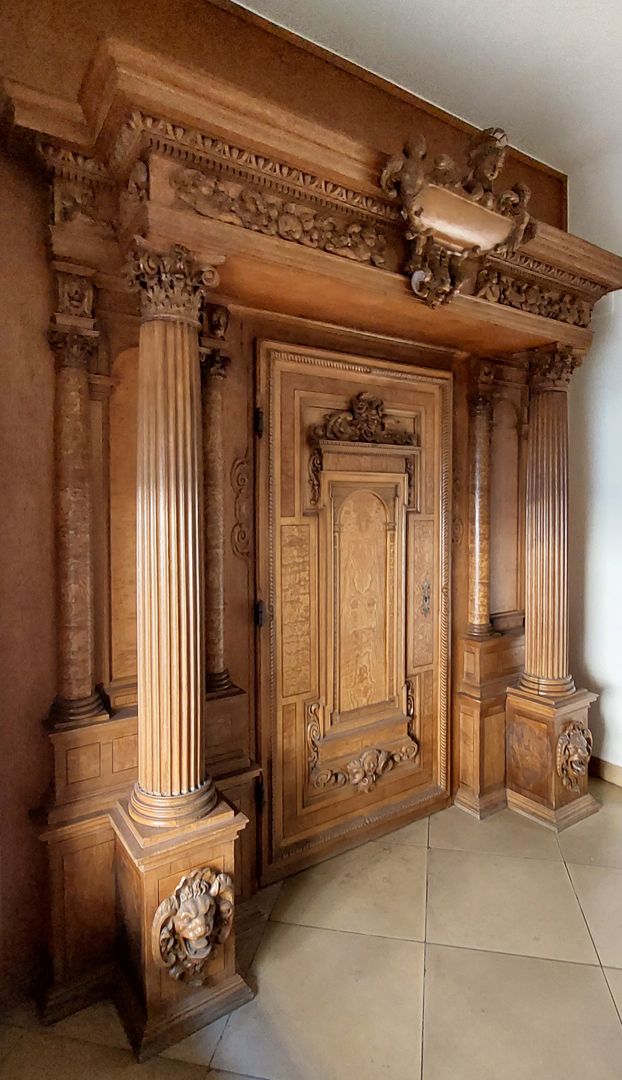
So-called "door court"
1622
Oblique general view
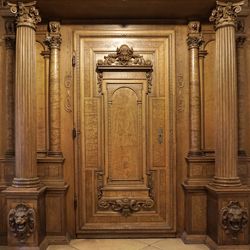
In 1622, he worked together with the sculptor Hans Abbeck on a wooden portal, the so-called "Türgericht", which was originally located in the "Regimentsstube", later the wedding room; the council paid 300 fl. for it as well as 3 fl. and a thaler for the varnishing.
Today, the portal, which was removed during the war, is no longer installed in its original position as a false door.
Note the architectural structure: A fully developed Corinthian column stands on cranked pedestals, flanked by half-columns - supporting the entablature (architrave and frieze).
photo 2022, Pablo de la Riestra
So-called "door court"
1622
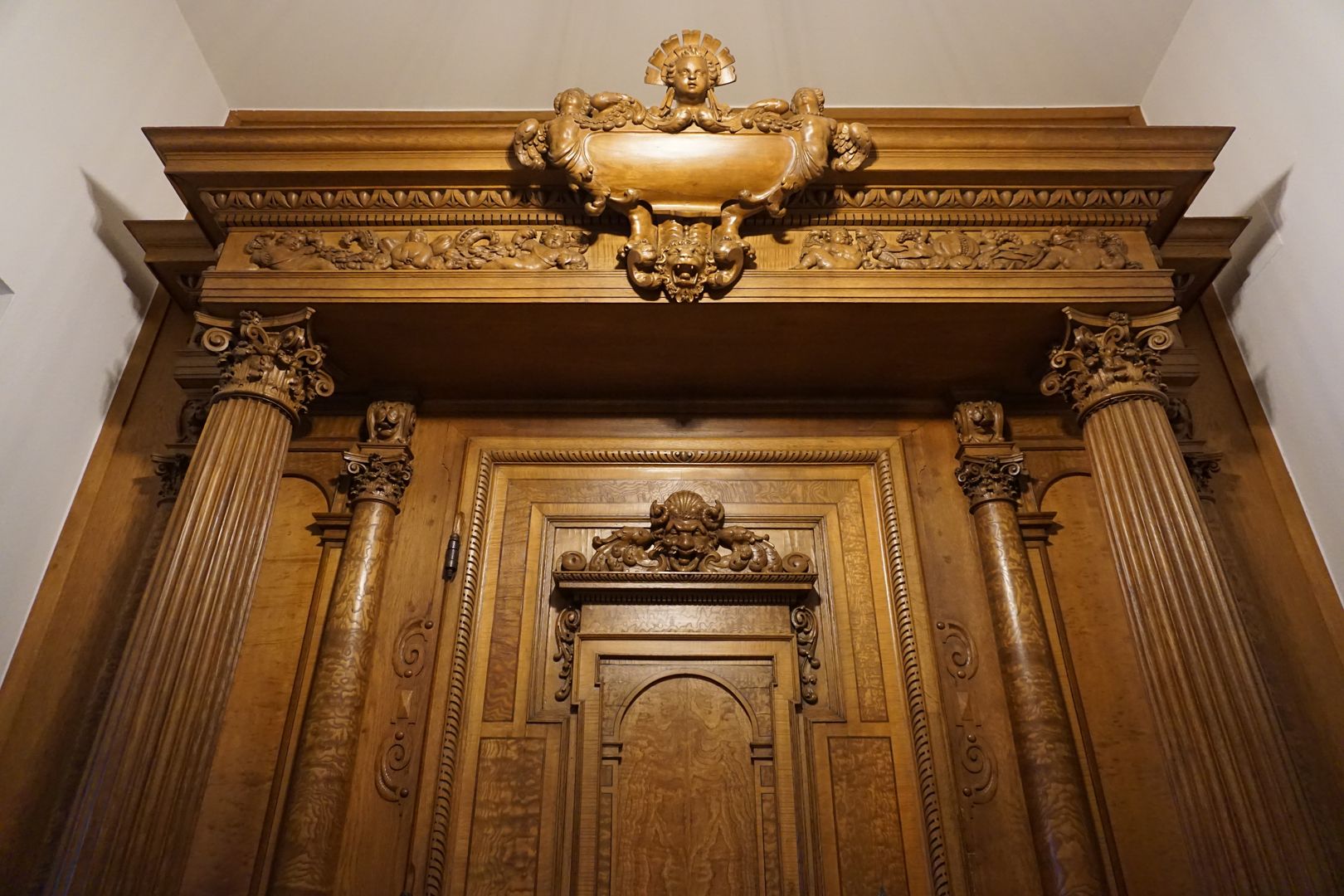
frog's-eye view of the portal
In 1622, he worked together with the sculptor Hans Abbeck on a wooden portal, the so-called "Türgericht", which was originally located in the "Regimentsstube", later the wedding room; the council paid 300 fl. for it as well as 3 fl. and a thaler for the varnishing.
Today, the portal, which was removed during the war, is no longer installed in its original position as a false door.
Note the architectural structure: A fully developed Corinthian column stands on cranked pedestals, flanked by half-columns - supporting the entablature (architrave and frieze).
photo 2022, Theo Noll
So-called "door court"
1622
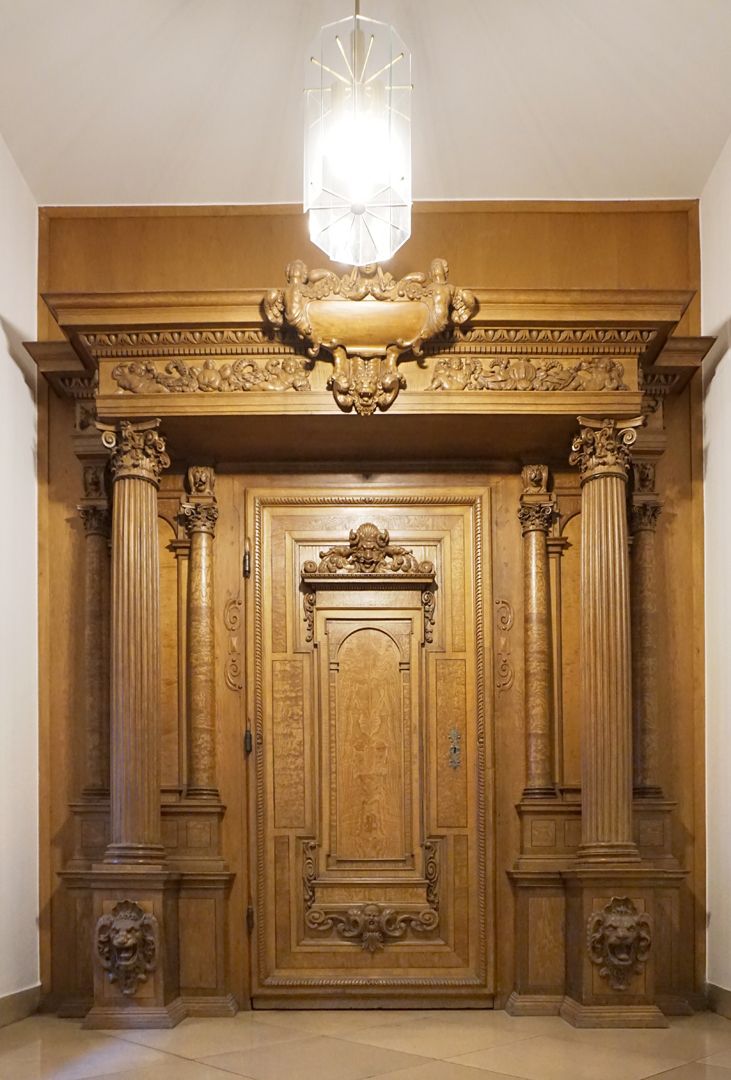
General view, frontal
In 1622, he worked together with the sculptor Hans Abbeck on a wooden portal, the so-called "Türgericht", which was originally located in the "Regimentsstube", later the wedding room; the council paid 300 fl. for it as well as 3 fl. and a thaler for the varnishing.
Today, the portal, which was removed during the war, is no longer installed in its original position as a false door.
Note the architectural structure: A fully developed Corinthian column stands on cranked pedestals, flanked by half-columns - supporting the entablature (architrave and frieze).
photo 2022, Theo Noll
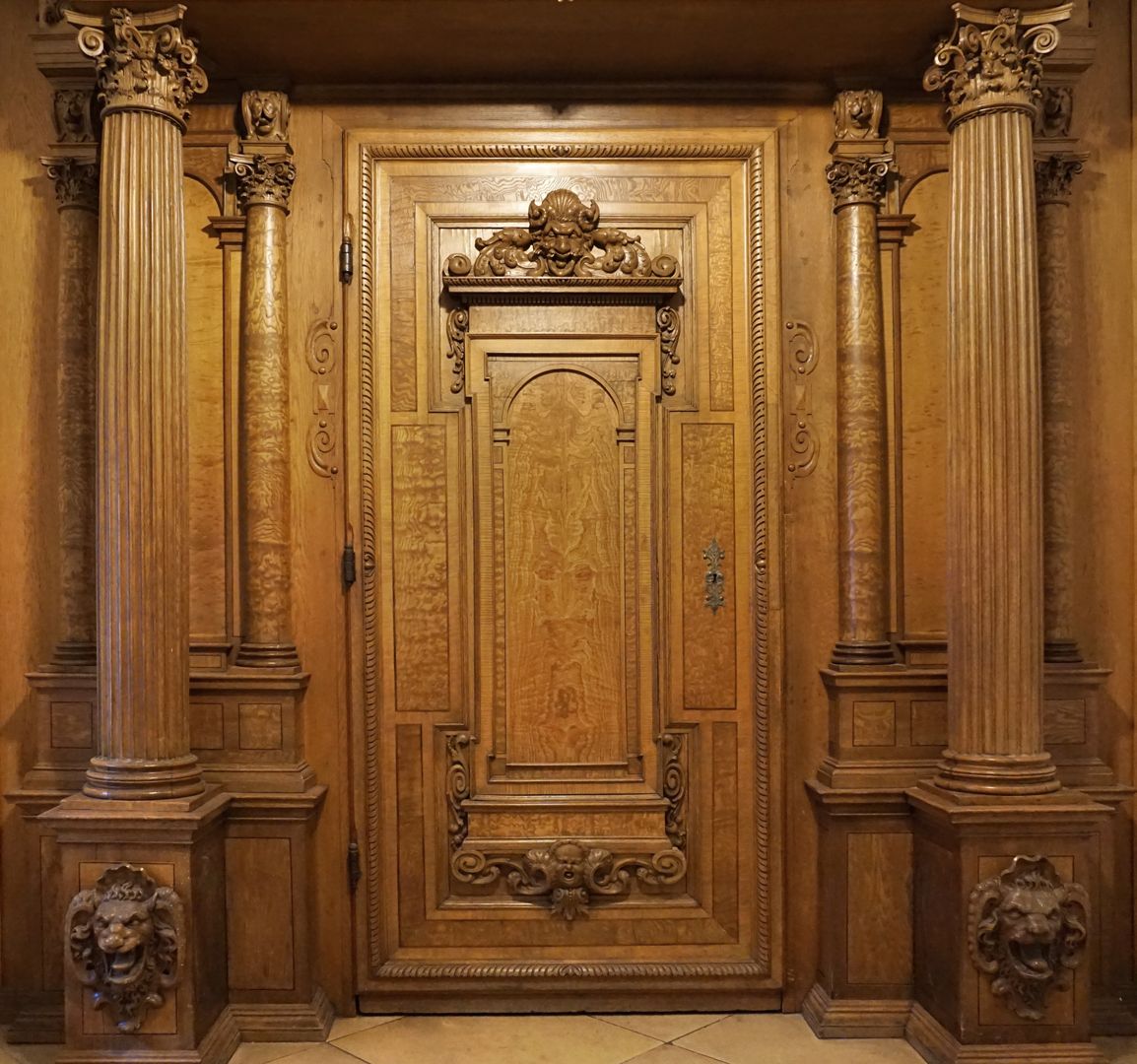
So-called "door court"
1622
Front view with door
In 1622, he worked together with the sculptor Hans Abbeck on a wooden portal, the so-called "Türgericht", which was originally located in the "Regimentsstube", later the wedding room; the council paid 300 fl. for it as well as 3 fl. and a thaler for the varnishing.
Today, the portal, which was removed during the war, is no longer installed in its original position as a false door.
Note the architectural structure: A fully developed Corinthian column stands on cranked pedestals, flanked by half-columns - supporting the entablature (architrave and frieze).
photo 2022, Theo Noll
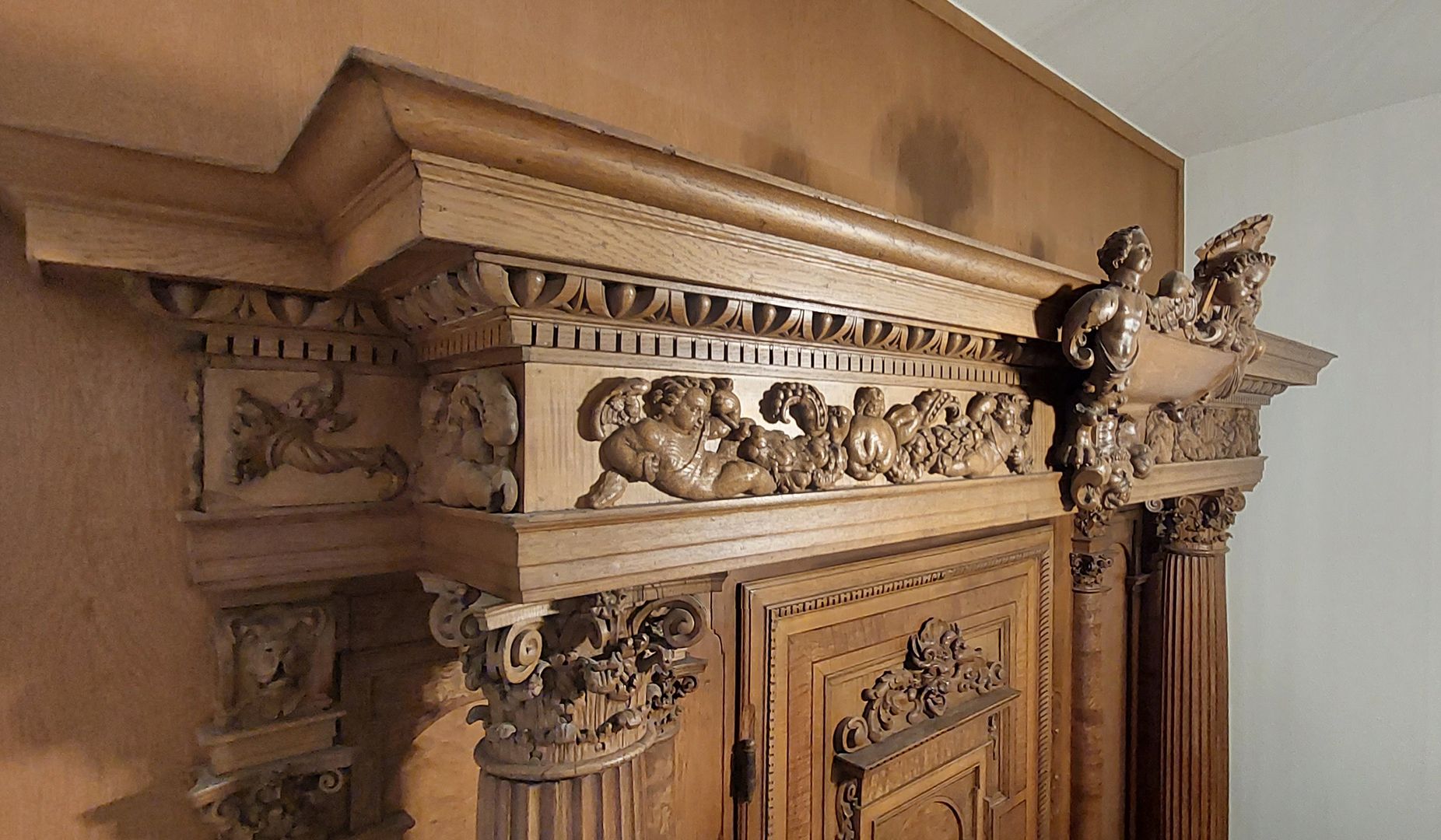
So-called "door court"
1622
Entablature in oblique view: On the frieze from left to right: cornucopia, naked putti with garlands and front pomegranate, cartouche in the cent
In 1622, he worked together with the sculptor Hans Abbeck on a wooden portal, the so-called "Türgericht", which was originally located in the "Regimentsstube", later the wedding room; the council paid 300 fl. for it as well as 3 fl. and a thaler for the varnishing.
Today, the portal, which was removed during the war, is no longer installed in its original position as a false door.
Note the architectural structure: A fully developed Corinthian column stands on cranked pedestals, flanked by half-columns - supporting the entablature (architrave and frieze).
photo 2022, Pablo de la Riestra
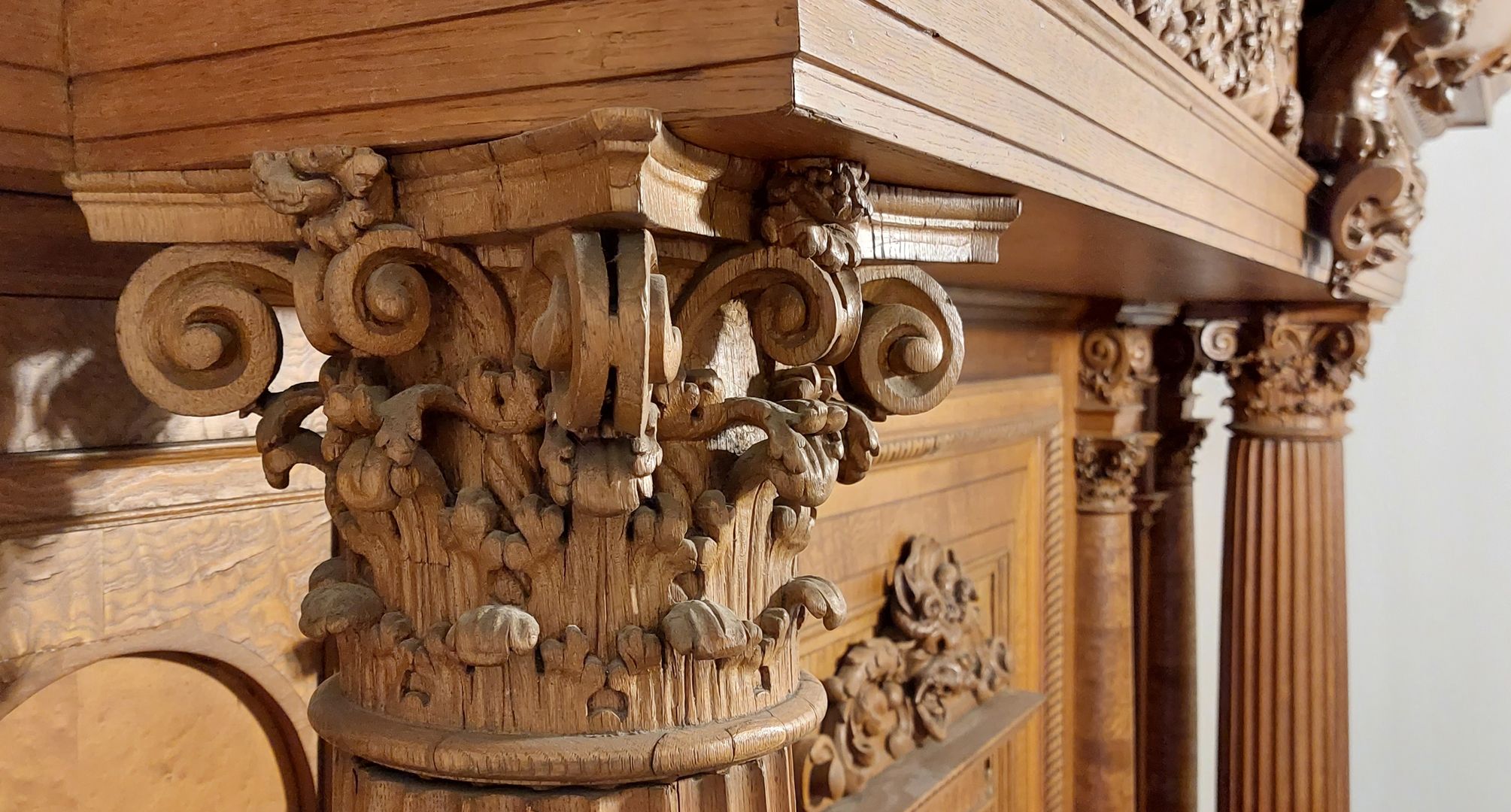
So-called "door court"
1622
Corinthian capital
In 1622, he worked together with the sculptor Hans Abbeck on a wooden portal, the so-called "Türgericht", which was originally located in the "Regimentsstube", later the wedding room; the council paid 300 fl. for it as well as 3 fl. and a thaler for the varnishing.
Today, the portal, which was removed during the war, is no longer installed in its original position as a false door.
Note the architectural structure: A fully developed Corinthian column stands on cranked pedestals, flanked by half-columns - supporting the entablature (architrave and frieze).
photo 2022, Pablo de la Riestra
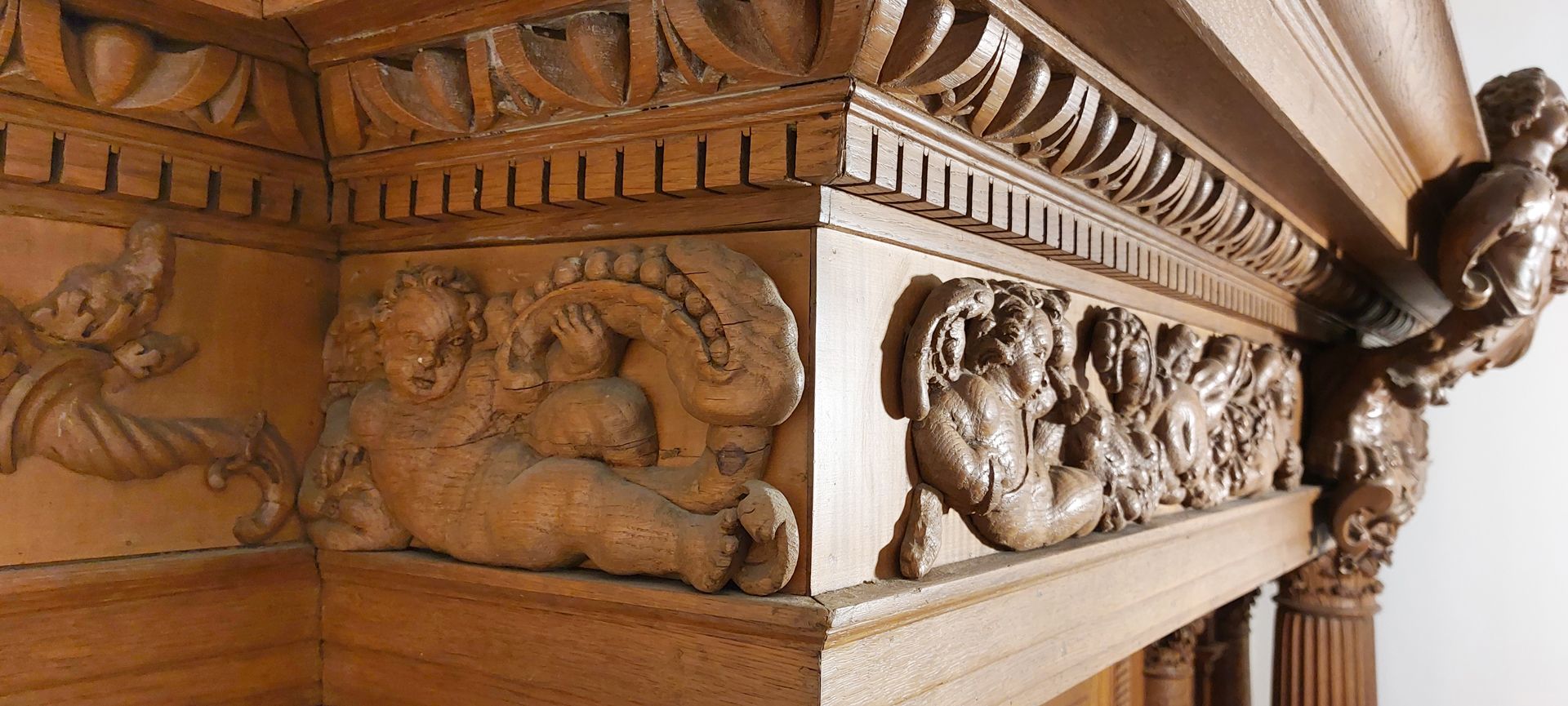
So-called "door court"
1622
Reclining putto
In 1622, he worked together with the sculptor Hans Abbeck on a wooden portal, the so-called "Türgericht", which was originally located in the "Regimentsstube", later the wedding room; the council paid 300 fl. for it as well as 3 fl. and a thaler for the varnishing.
Today, the portal, which was removed during the war, is no longer installed in its original position as a false door.
Note the architectural structure: A fully developed Corinthian column stands on cranked pedestals, flanked by half-columns - supporting the entablature (architrave and frieze).
photo 2022, Pablo de la Riestra
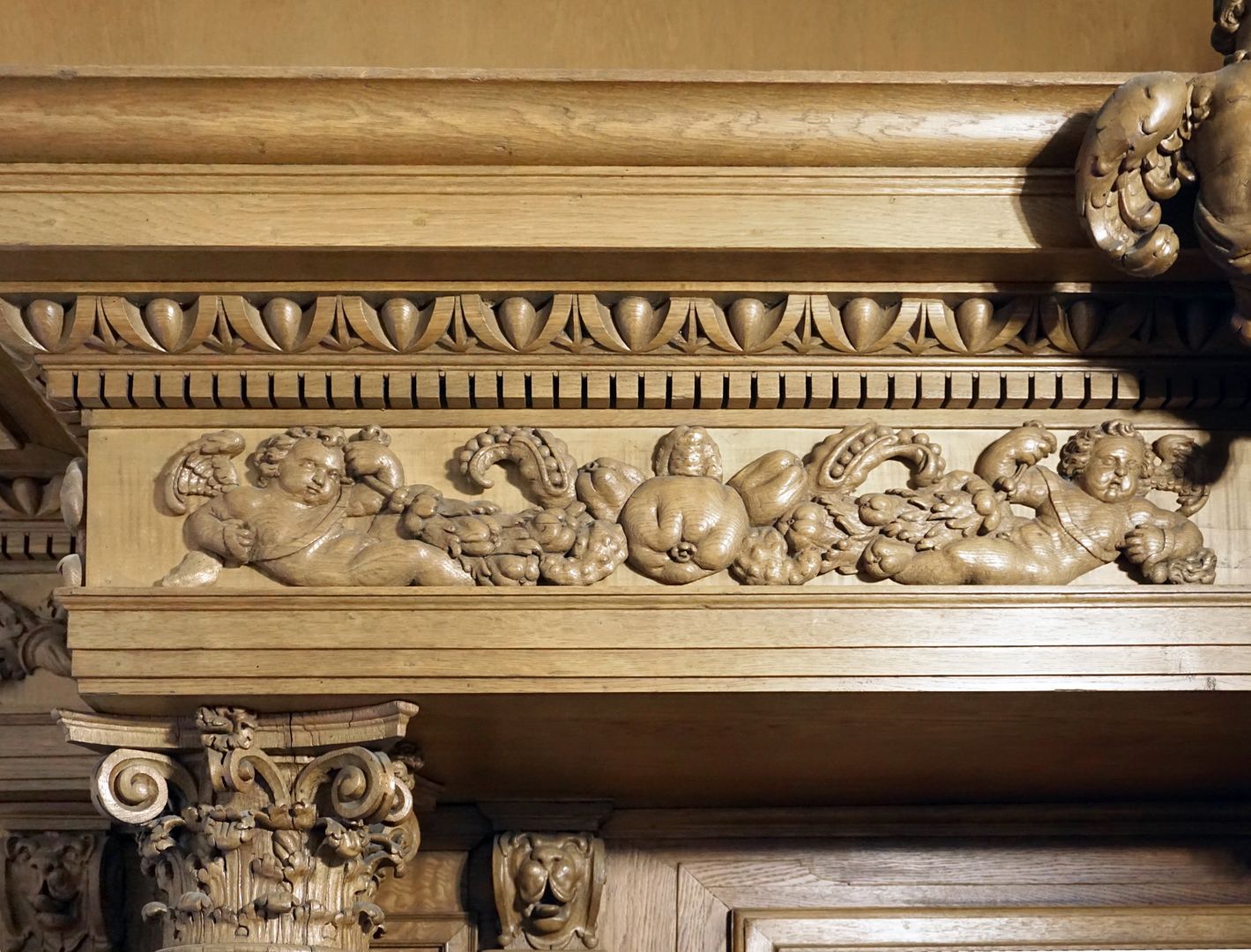
So-called "door court"
1622
left half of the frieze
In 1622, he worked together with the sculptor Hans Abbeck on a wooden portal, the so-called "Türgericht", which was originally located in the "Regimentsstube", later the wedding room; the council paid 300 fl. for it as well as 3 fl. and a thaler for the varnishing.
Today, the portal, which was removed during the war, is no longer installed in its original position as a false door.
Note the architectural structure: A fully developed Corinthian column stands on cranked pedestals, flanked by half-columns - supporting the entablature (architrave and frieze).
photo 2022, Theo Noll
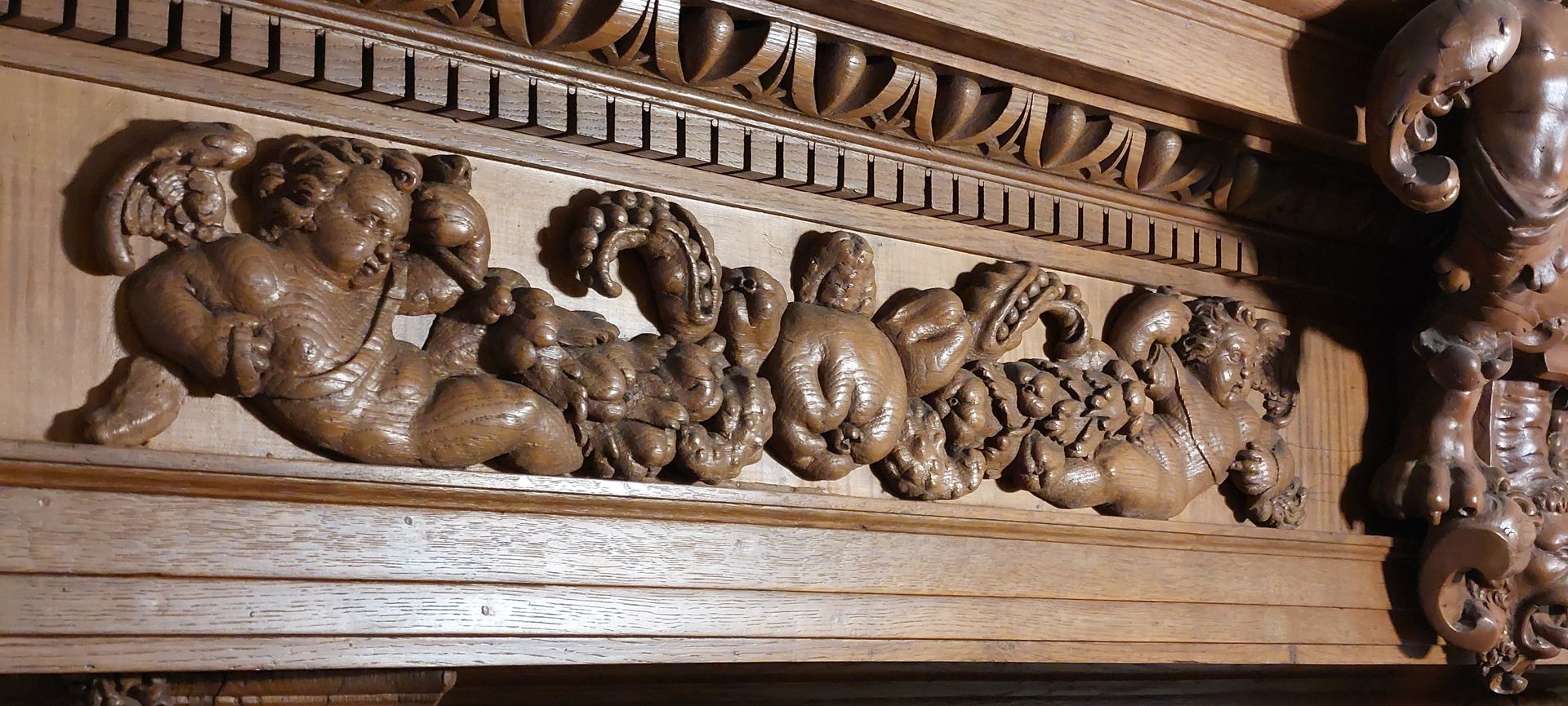
So-called "door court"
1622
left half of the frieze in oblique view
photo 2022, Pablo de la Riestra
In 1622, he worked together with the sculptor Hans Abbeck on a wooden portal, the so-called "Türgericht", which was originally located in the "Regimentsstube", later the wedding room; the council paid 300 fl. for it as well as 3 fl. and a thaler for the varnishing.
Today, the portal, which was removed during the war, is no longer installed in its original position as a false door.
Note the architectural structure: A fully developed Corinthian column stands on cranked pedestals, flanked by half-columns - supporting the entablature (architrave and frieze).
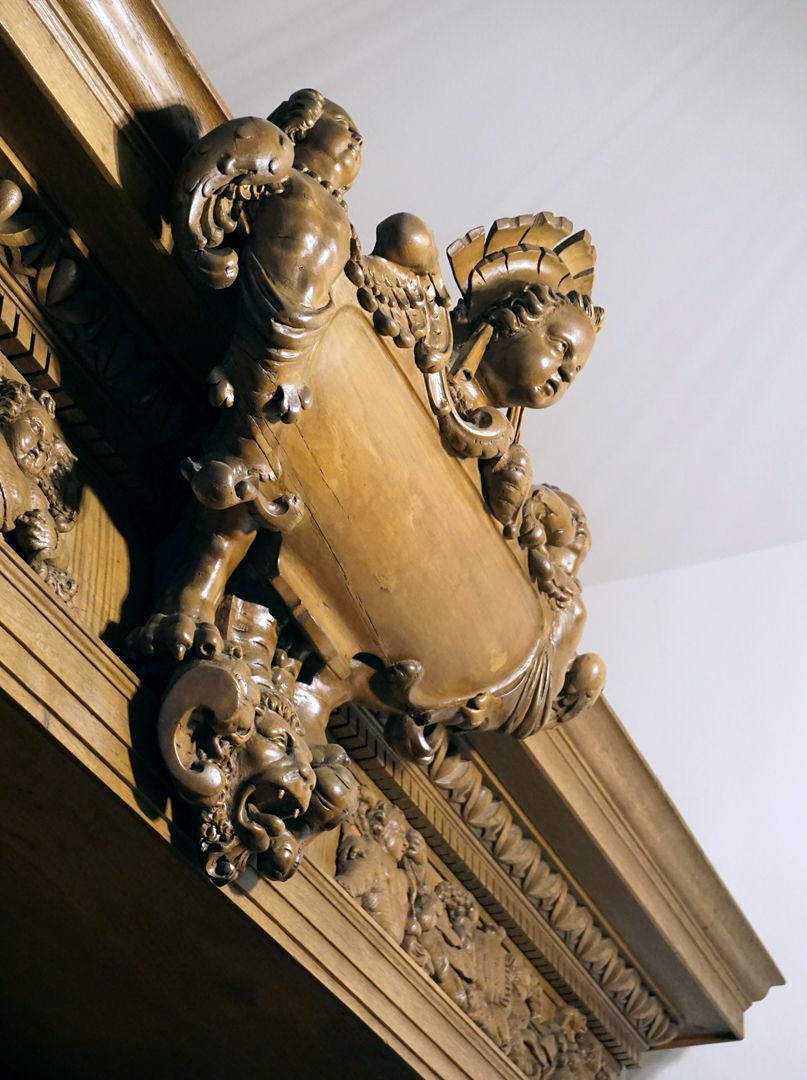
So-called "door court"
1622
cartouche in the oblique view
In 1622, he worked together with the sculptor Hans Abbeck on a wooden portal, the so-called "Türgericht", which was originally located in the "Regimentsstube", later the wedding room; the council paid 300 fl. for it as well as 3 fl. and a thaler for the varnishing.
Today, the portal, which was removed during the war, is no longer installed in its original position as a false door.
Note the architectural structure: A fully developed Corinthian column stands on cranked pedestals, flanked by half-columns - supporting the entablature (architrave and frieze).
photo 2022, Theo Noll
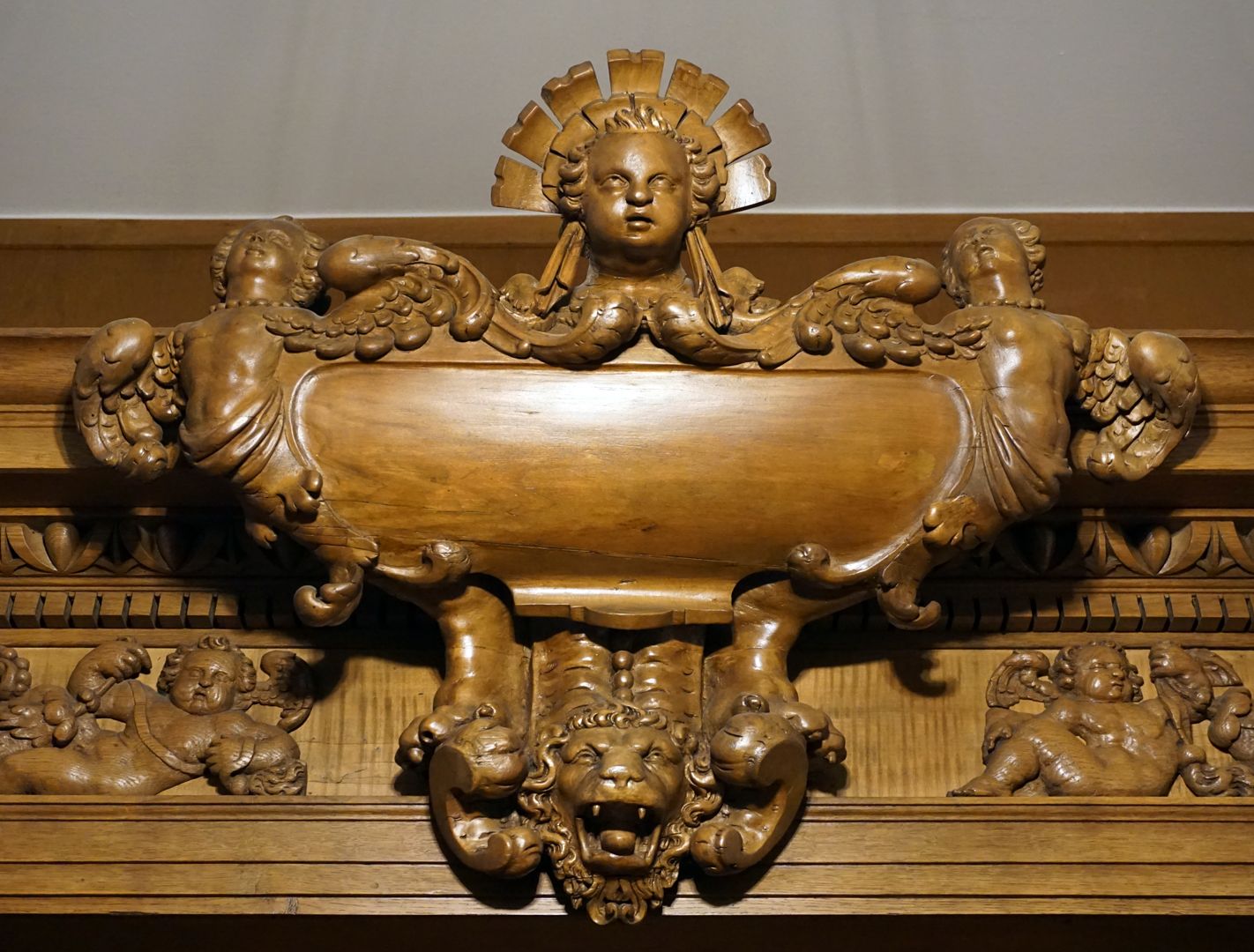
So-called "door court"
1622
cartouche, frontal view
In 1622, he worked together with the sculptor Hans Abbeck on a wooden portal, the so-called "Türgericht", which was originally located in the "Regimentsstube", later the wedding room; the council paid 300 fl. for it as well as 3 fl. and a thaler for the varnishing.
Today, the portal, which was removed during the war, is no longer installed in its original position as a false door.
Note the architectural structure: A fully developed Corinthian column stands on cranked pedestals, flanked by half-columns - supporting the entablature (architrave and frieze).
photo 2022, Theo Noll
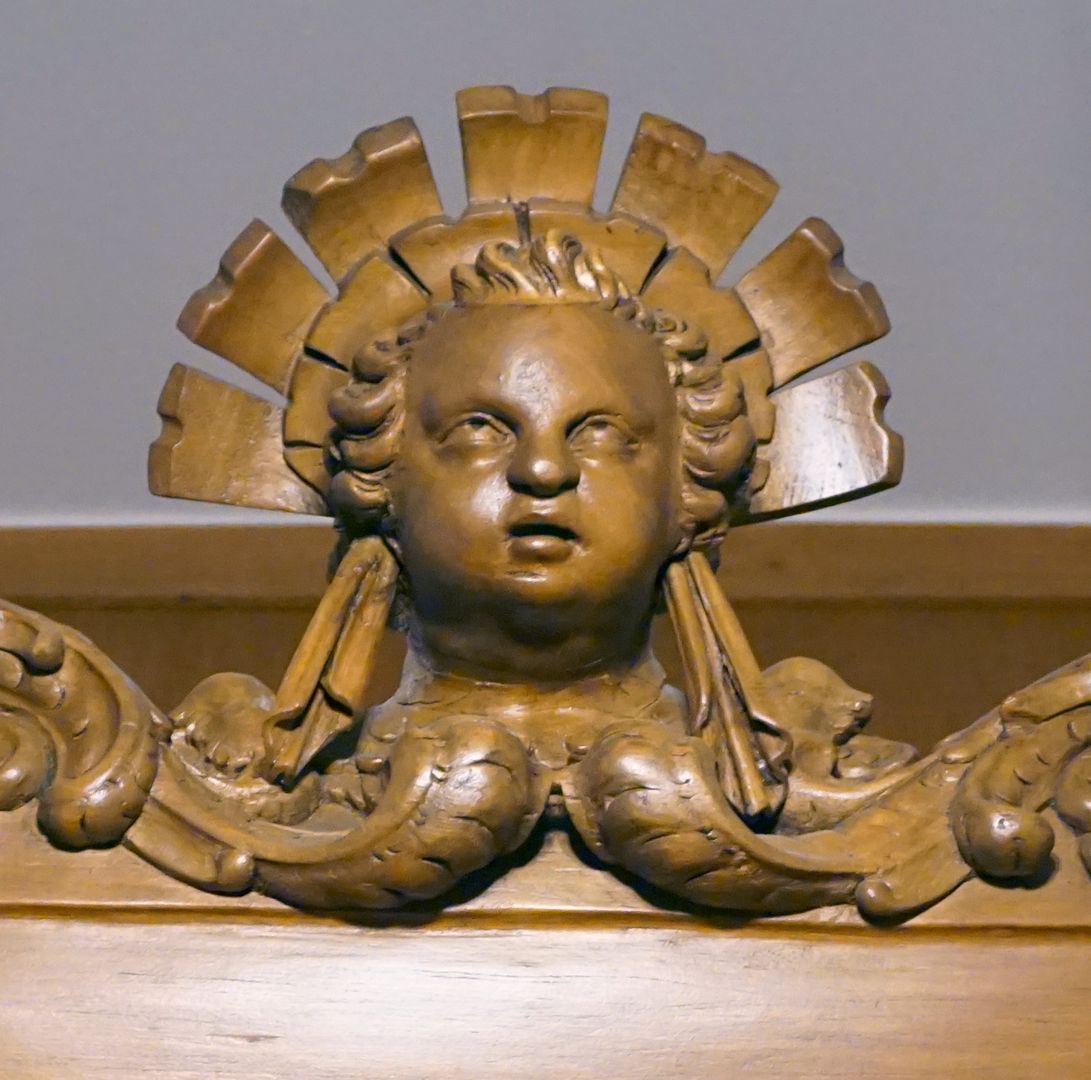
So-called "door court"
1622
Cartouche, frontal, palmette face
In 1622, he worked together with the sculptor Hans Abbeck on a wooden portal, the so-called "Türgericht", which was originally located in the "Regimentsstube", later the wedding room; the council paid 300 fl. for it as well as 3 fl. and a thaler for the varnishing.
Today, the portal, which was removed during the war, is no longer installed in its original position as a false door.
Note the architectural structure: A fully developed Corinthian column stands on cranked pedestals, flanked by half-columns - supporting the entablature (architrave and frieze).
photo 2022, Theo Noll
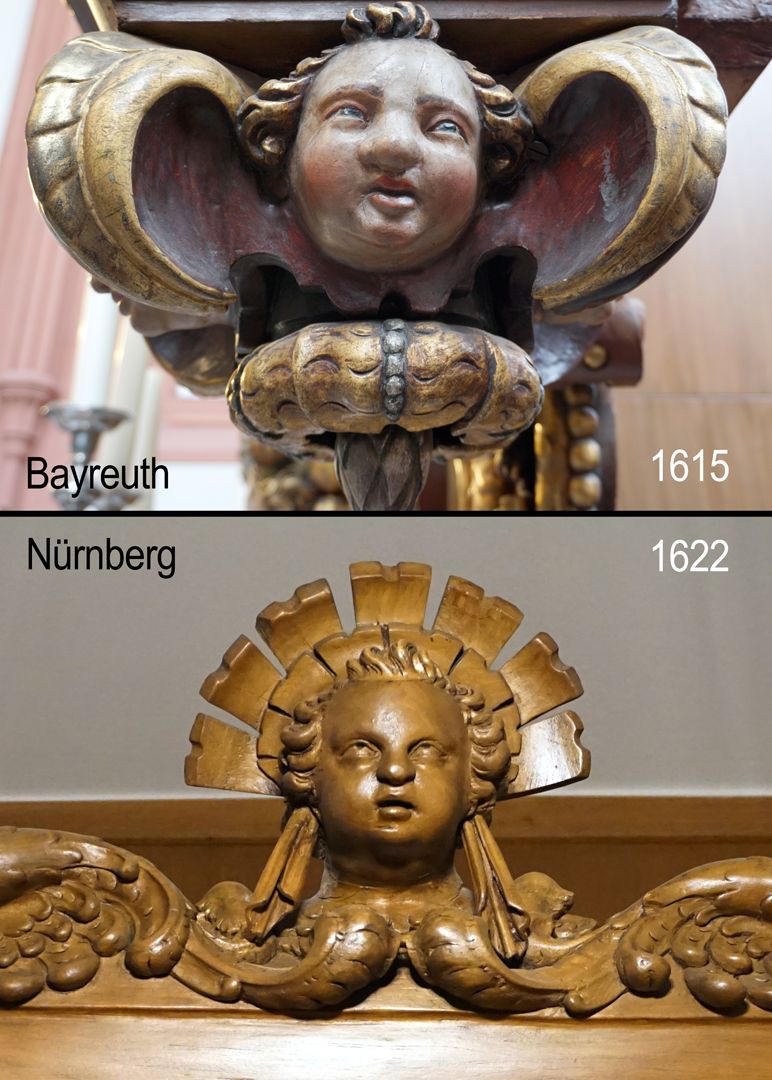
So-called "door court"
1622
Putti heads heads in picture comparison
In 1622, he worked together with the sculptor Hans Abbeck on a wooden portal, the so-called "Türgericht", which was originally located in the "Regimentsstube", later the wedding room; the council paid 300 fl. for it as well as 3 fl. and a thaler for the varnishing.
Today, the portal, which was removed during the war, is no longer installed in its original position as a false door.
Note the architectural structure: A fully developed Corinthian column stands on cranked pedestals, flanked by half-columns - supporting the entablature (architrave and frieze).
Location: City Church in Bayreuth and Wolff's Town Hall in Nuremberg
Design: Dümpel, Veit
Realization: Dümpel, Veit
Material: Wood
photo 2022, Theo Noll
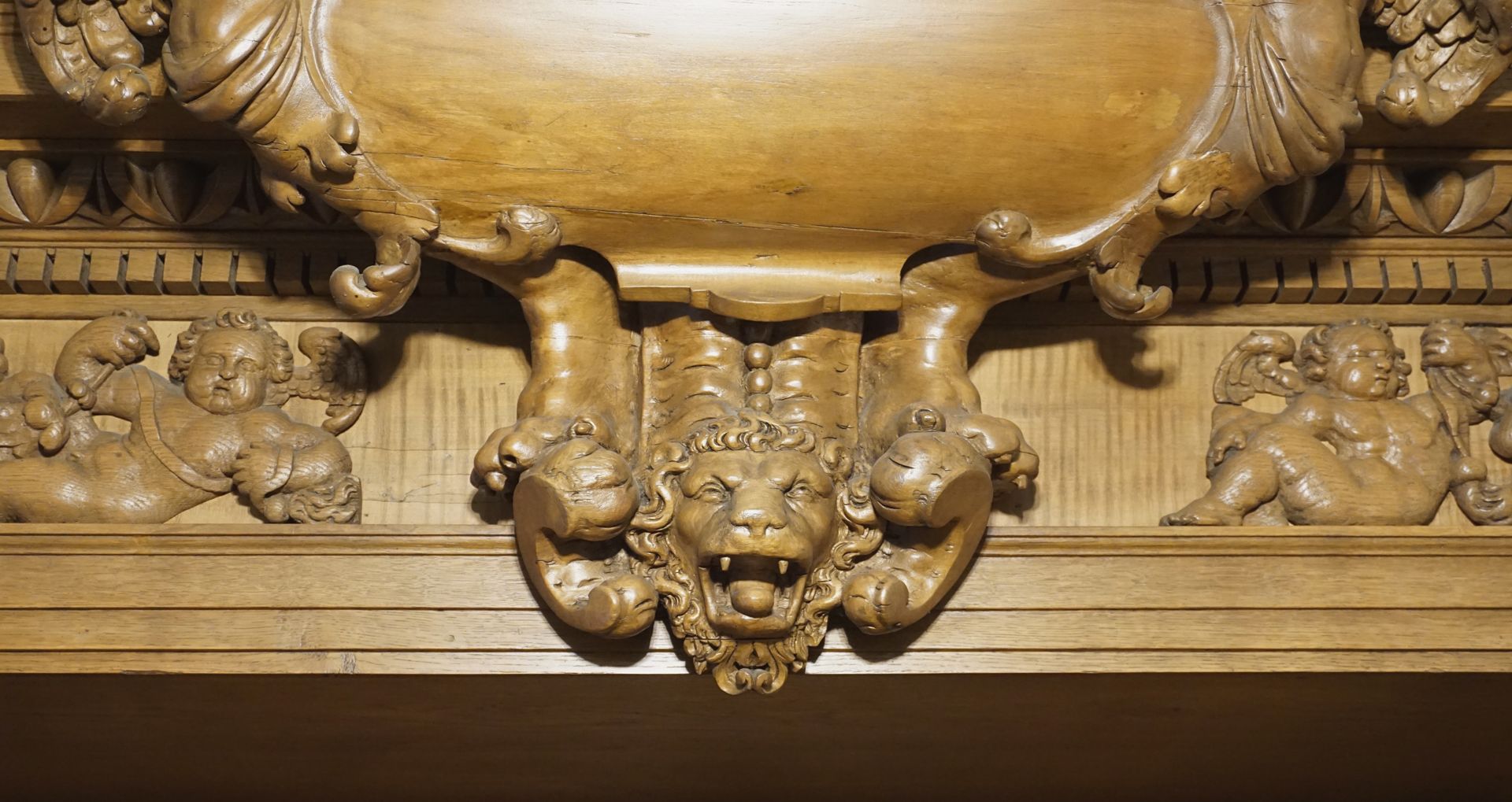
So-called "door court"
1622
Cartouche, frontal, lower end with lion's mask
In 1622, he worked together with the sculptor Hans Abbeck on a wooden portal, the so-called "Türgericht", which was originally located in the "Regimentsstube", later the wedding room; the council paid 300 fl. for it as well as 3 fl. and a thaler for the varnishing.
Today, the portal, which was removed during the war, is no longer installed in its original position as a false door.
Note the architectural structure: A fully developed Corinthian column stands on cranked pedestals, flanked by half-columns - supporting the entablature (architrave and frieze).
photo 2022, Theo Noll
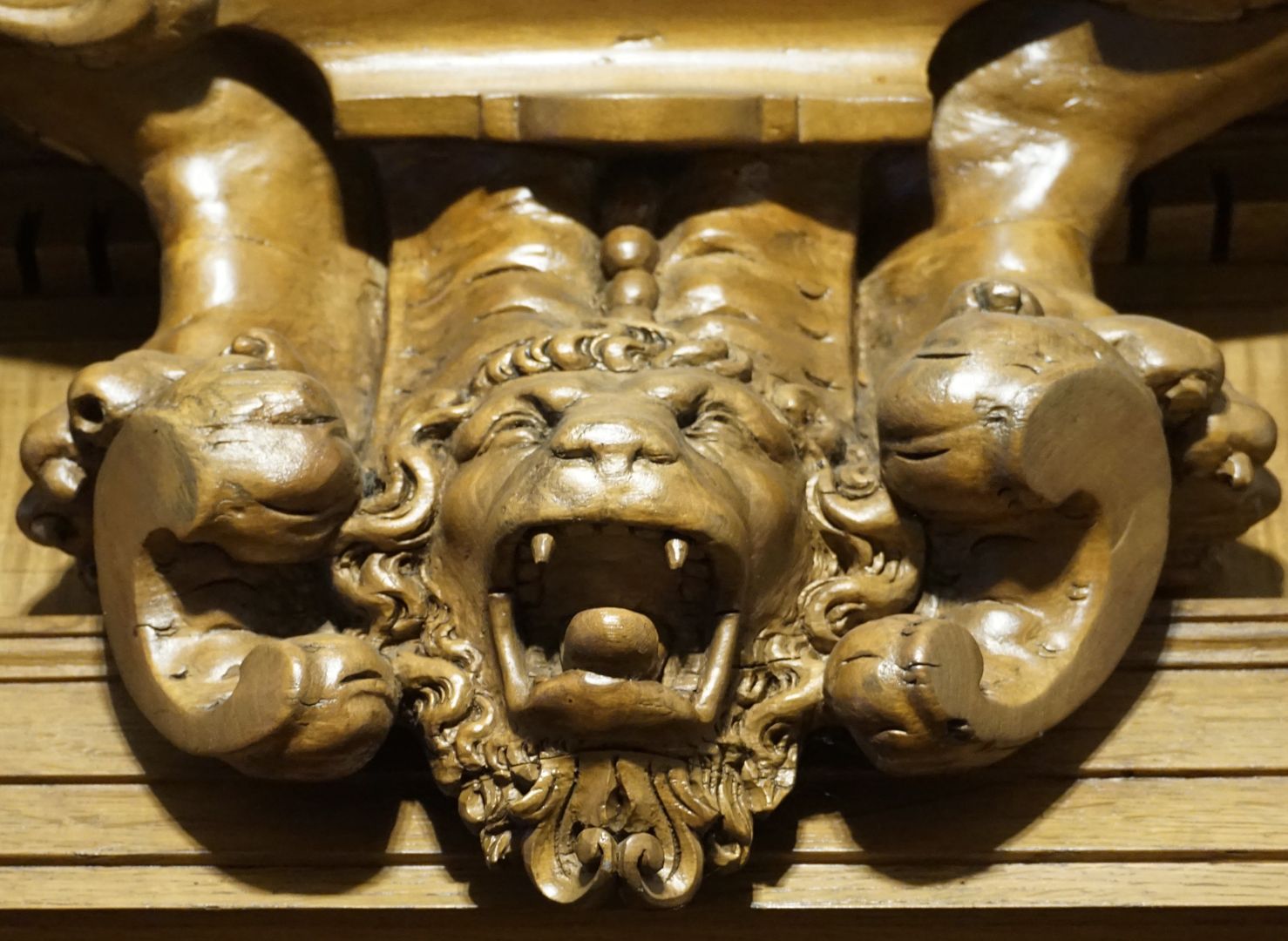
So-called "door court"
1622
Cartouche, frontal, lower end with lion mask
In 1622, he worked together with the sculptor Hans Abbeck on a wooden portal, the so-called "Türgericht", which was originally located in the "Regimentsstube", later the wedding room; the council paid 300 fl. for it as well as 3 fl. and a thaler for the varnishing.
Today, the portal, which was removed during the war, is no longer installed in its original position as a false door.
Note the architectural structure: A fully developed Corinthian column stands on cranked pedestals, flanked by half-columns - supporting the entablature (architrave and frieze).
photo 2022, Theo Noll
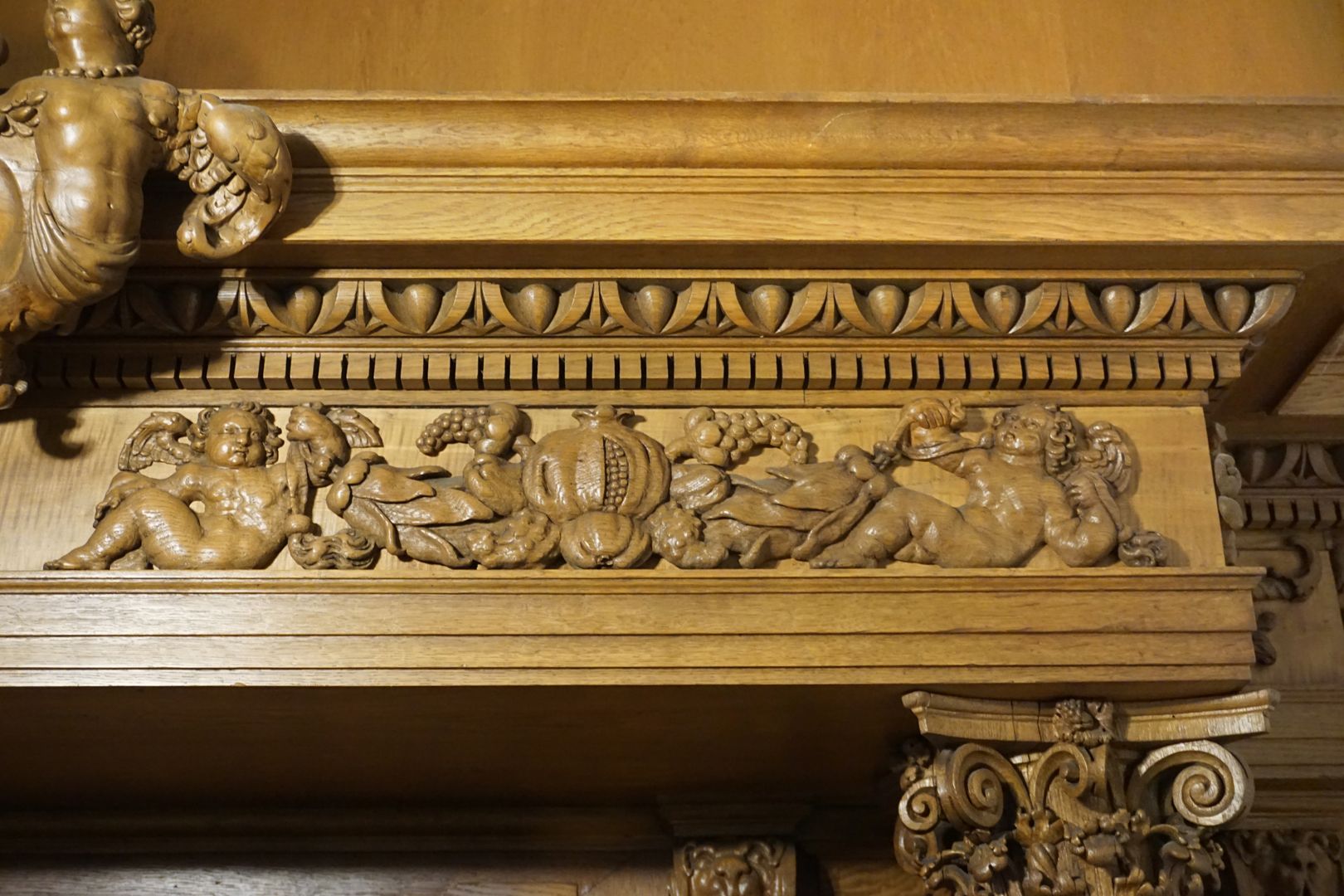
So-called "door court"
1622
Right half of entablature
In 1622, he worked together with the sculptor Hans Abbeck on a wooden portal, the so-called "Türgericht", which was originally located in the "Regimentsstube", later the wedding room; the council paid 300 fl. for it as well as 3 fl. and a thaler for the varnishing.
Today, the portal, which was removed during the war, is no longer installed in its original position as a false door.
Note the architectural structure: A fully developed Corinthian column stands on cranked pedestals, flanked by half-columns - supporting the entablature (architrave and frieze).
photo 2022, Theo Noll
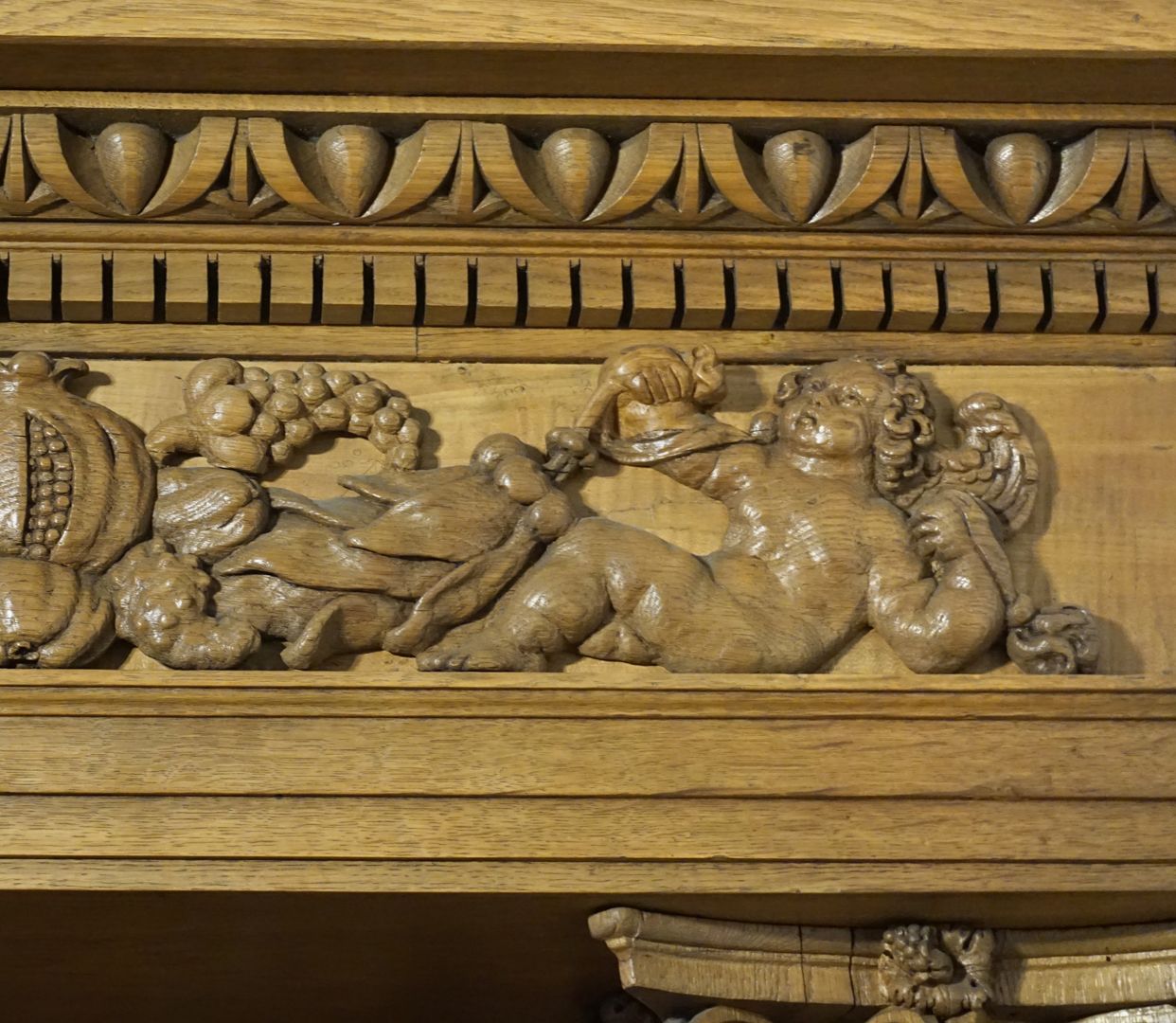
So-called "door court"
1622
Right half of entablature, detail with putto and open pomegranate
In 1622, he worked together with the sculptor Hans Abbeck on a wooden portal, the so-called "Türgericht", which was originally located in the "Regimentsstube", later the wedding room; the council paid 300 fl. for it as well as 3 fl. and a thaler for the varnishing.
Today, the portal, which was removed during the war, is no longer installed in its original position as a false door.
Note the architectural structure: A fully developed Corinthian column stands on cranked pedestals, flanked by half-columns - supporting the entablature (architrave and frieze).
photo 2022, Theo Noll
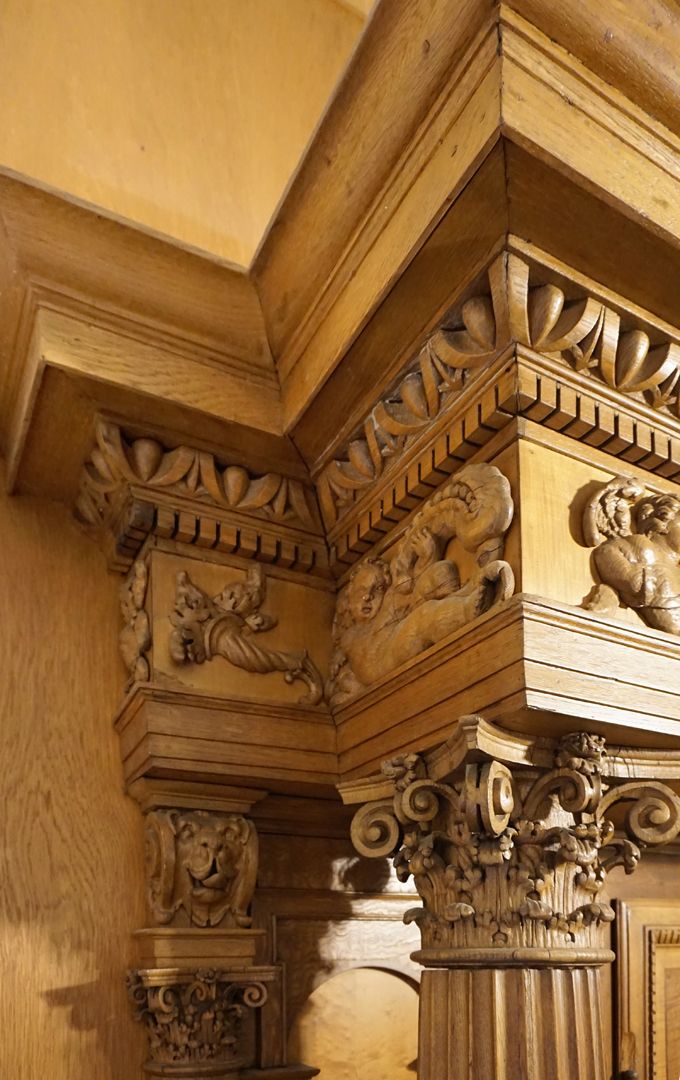
So-called "door court"
1622
left cranked beams
In 1622, he worked together with the sculptor Hans Abbeck on a wooden portal, the so-called "Türgericht", which was originally located in the "Regimentsstube", later the wedding room; the council paid 300 fl. for it as well as 3 fl. and a thaler for the varnishing.
Today, the portal, which was removed during the war, is no longer installed in its original position as a false door.
Note the architectural structure: A fully developed Corinthian column stands on cranked pedestals, flanked by half-columns - supporting the entablature (architrave and frieze).
photo 2022, Theo Noll
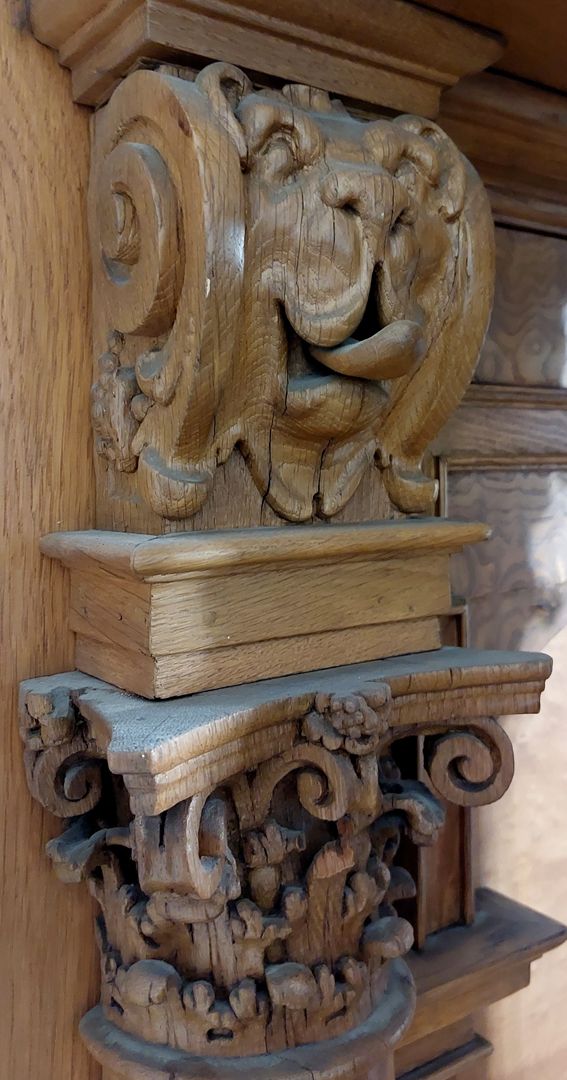
So-called "door court"
1622
lion's head console above the Corinthian capital
In 1622, he worked together with the sculptor Hans Abbeck on a wooden portal, the so-called "Türgericht", which was originally located in the "Regimentsstube", later the wedding room; the council paid 300 fl. for it as well as 3 fl. and a thaler for the varnishing.
Today, the portal, which was removed during the war, is no longer installed in its original position as a false door.
Note the architectural structure: A fully developed Corinthian column stands on cranked pedestals, flanked by half-columns - supporting the entablature (architrave and frieze).
photo 2022, Theo Noll
So-called "door court"
1622
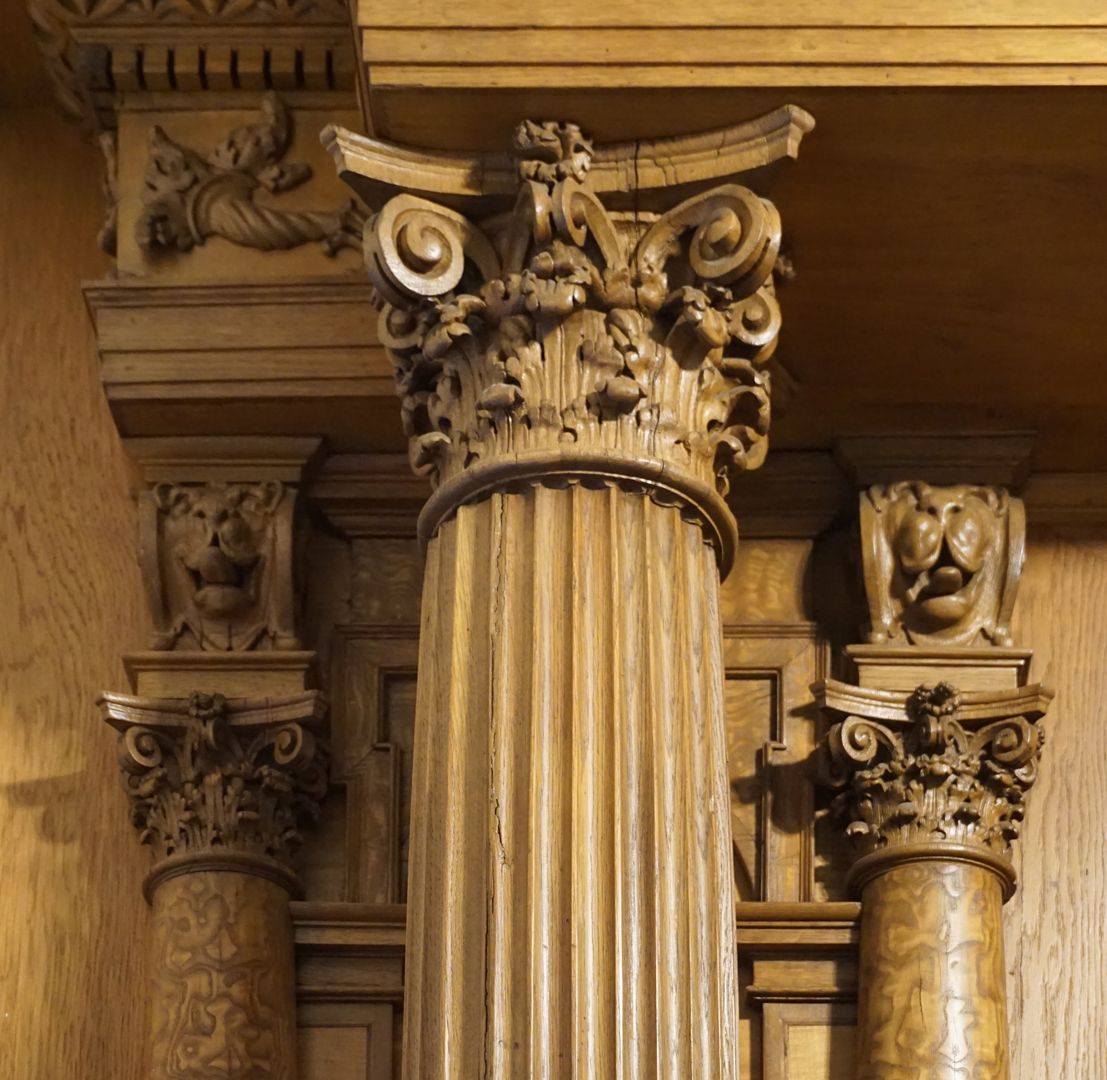
capital ensemble
In 1622, he worked together with the sculptor Hans Abbeck on a wooden portal, the so-called "Türgericht", which was originally located in the "Regimentsstube", later the wedding room; the council paid 300 fl. for it as well as 3 fl. and a thaler for the varnishing.
Today, the portal, which was removed during the war, is no longer installed in its original position as a false door.
Note the architectural structure: A fully developed Corinthian column stands on cranked pedestals, flanked by half-columns - supporting the entablature (architrave and frieze).
photo 2022, Theo Noll
So-called "door court"
1622
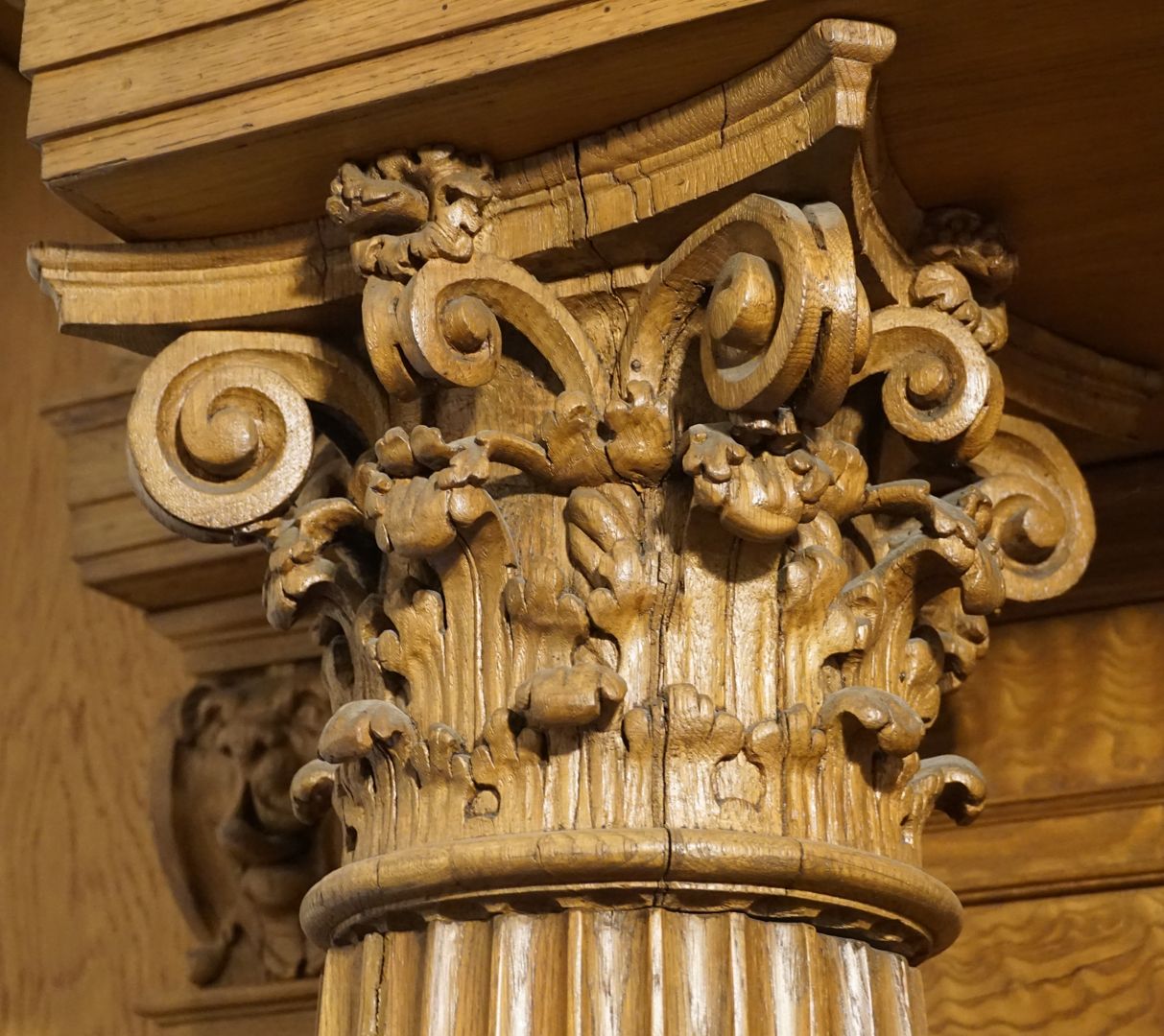
-Corinthian capital
In 1622, he worked together with the sculptor Hans Abbeck on a wooden portal, the so-called "Türgericht", which was originally located in the "Regimentsstube", later the wedding room; the council paid 300 fl. for it as well as 3 fl. and a thaler for the varnishing.
Today, the portal, which was removed during the war, is no longer installed in its original position as a false door.
Note the architectural structure: A fully developed Corinthian column stands on cranked pedestals, flanked by half-columns - supporting the entablature (architrave and frieze).
photo 2022, Theo Noll
So-called "door court"
1622
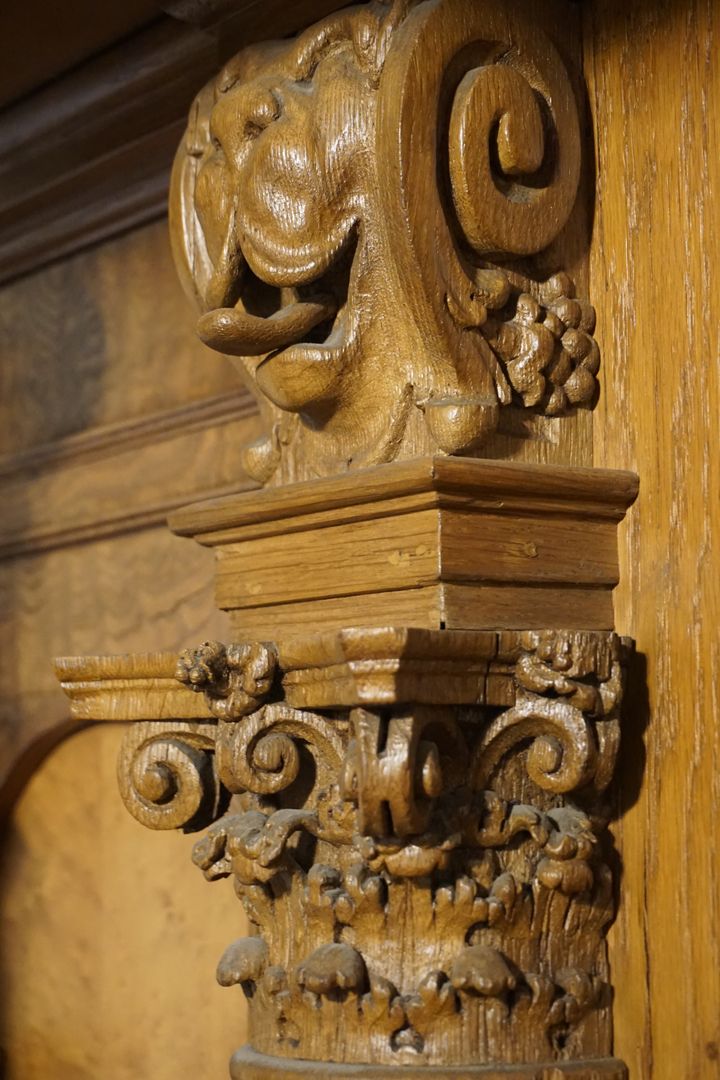
lion's head console above the corin capital
In 1622, he worked together with the sculptor Hans Abbeck on a wooden portal, the so-called "Türgericht", which was originally located in the "Regimentsstube", later the wedding room; the council paid 300 fl. for it as well as 3 fl. and a thaler for the varnishing.
Today, the portal, which was removed during the war, is no longer installed in its original position as a false door.
Note the architectural structure: A fully developed Corinthian column stands on cranked pedestals, flanked by half-columns - supporting the entablature (architrave and frieze).
photo 2022, Theo Noll
So-called "door court"
1622
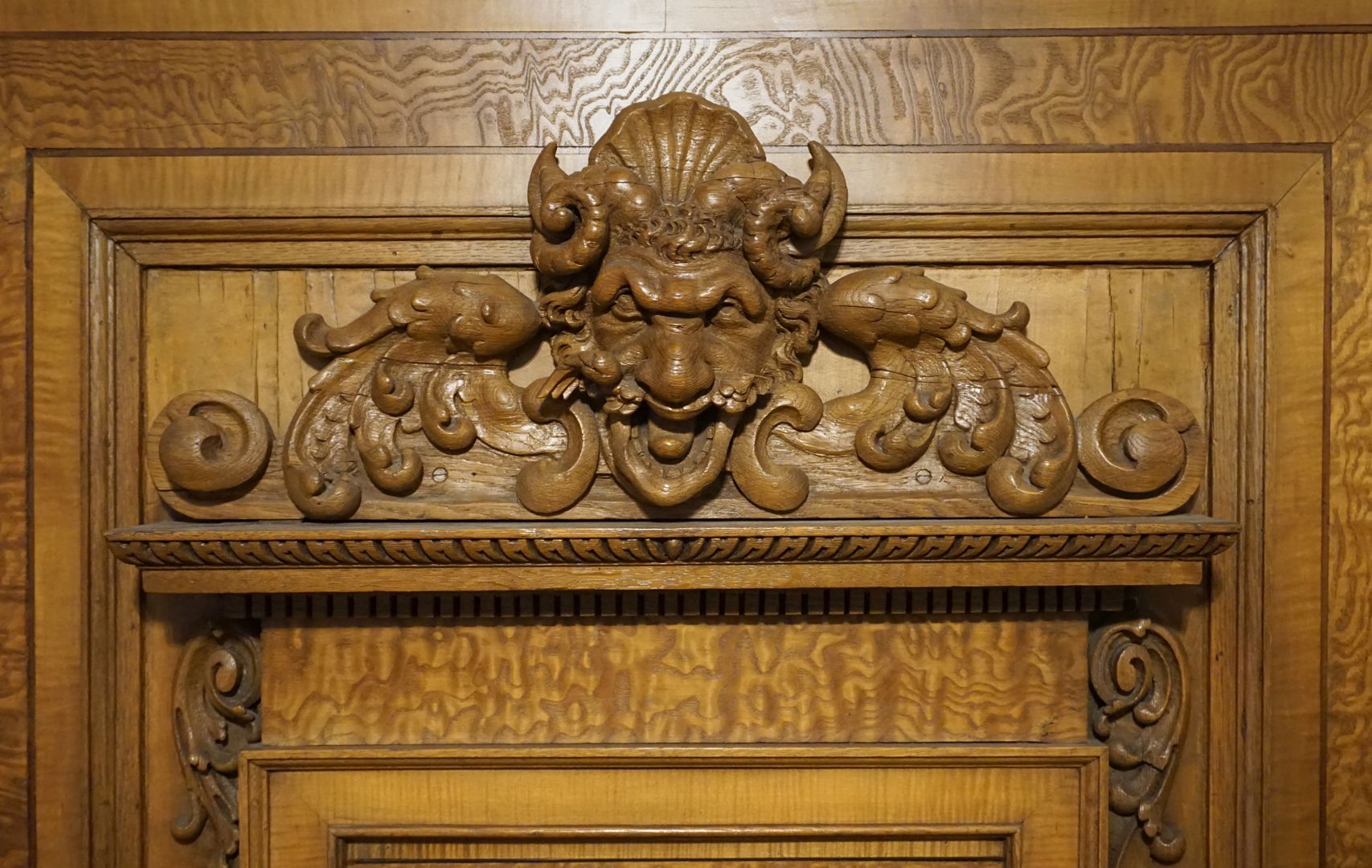
Crowning of the door center panel
In 1622, he worked together with the sculptor Hans Abbeck on a wooden portal, the so-called "Türgericht", which was originally located in the "Regimentsstube", later the wedding room; the council paid 300 fl. for it as well as 3 fl. and a thaler for the varnishing.
Today, the portal, which was removed during the war, is no longer installed in its original position as a false door.
Note the architectural structure: A fully developed Corinthian column stands on cranked pedestals, flanked by half-columns - supporting the entablature (architrave and frieze).
photo 2022, Theo Noll
So-called "door court"
1622
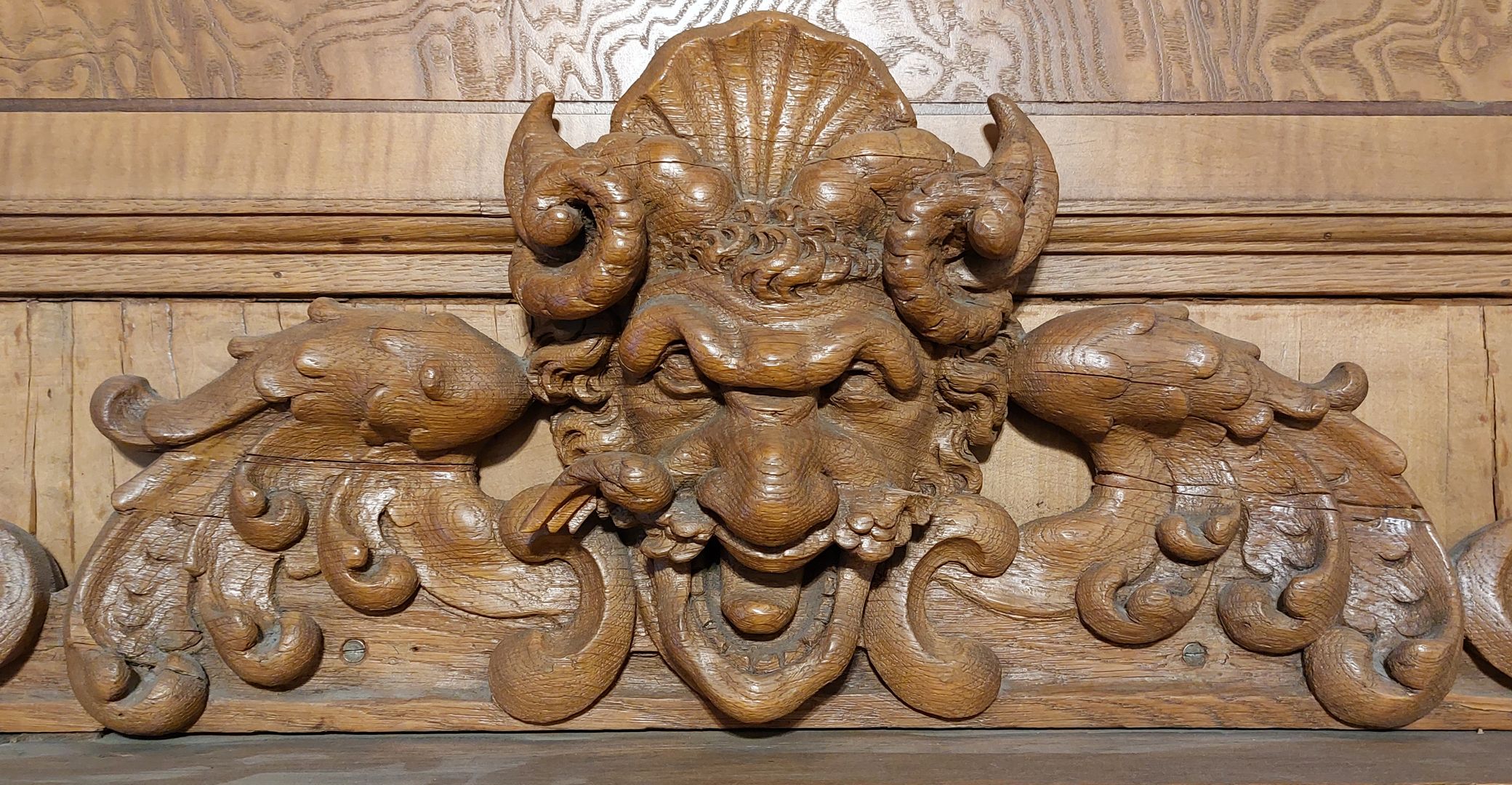
Crowning of the door center panel, winged mask of a mythical creature
In 1622, he worked together with the sculptor Hans Abbeck on a wooden portal, the so-called "Türgericht", which was originally located in the "Regimentsstube", later the wedding room; the council paid 300 fl. for it as well as 3 fl. and a thaler for the varnishing.
Today, the portal, which was removed during the war, is no longer installed in its original position as a false door.
Note the architectural structure: A fully developed Corinthian column stands on cranked pedestals, flanked by half-columns - supporting the entablature (architrave and frieze).
photo 2022, Pablo de la Riestra
So-called "door court"
1622
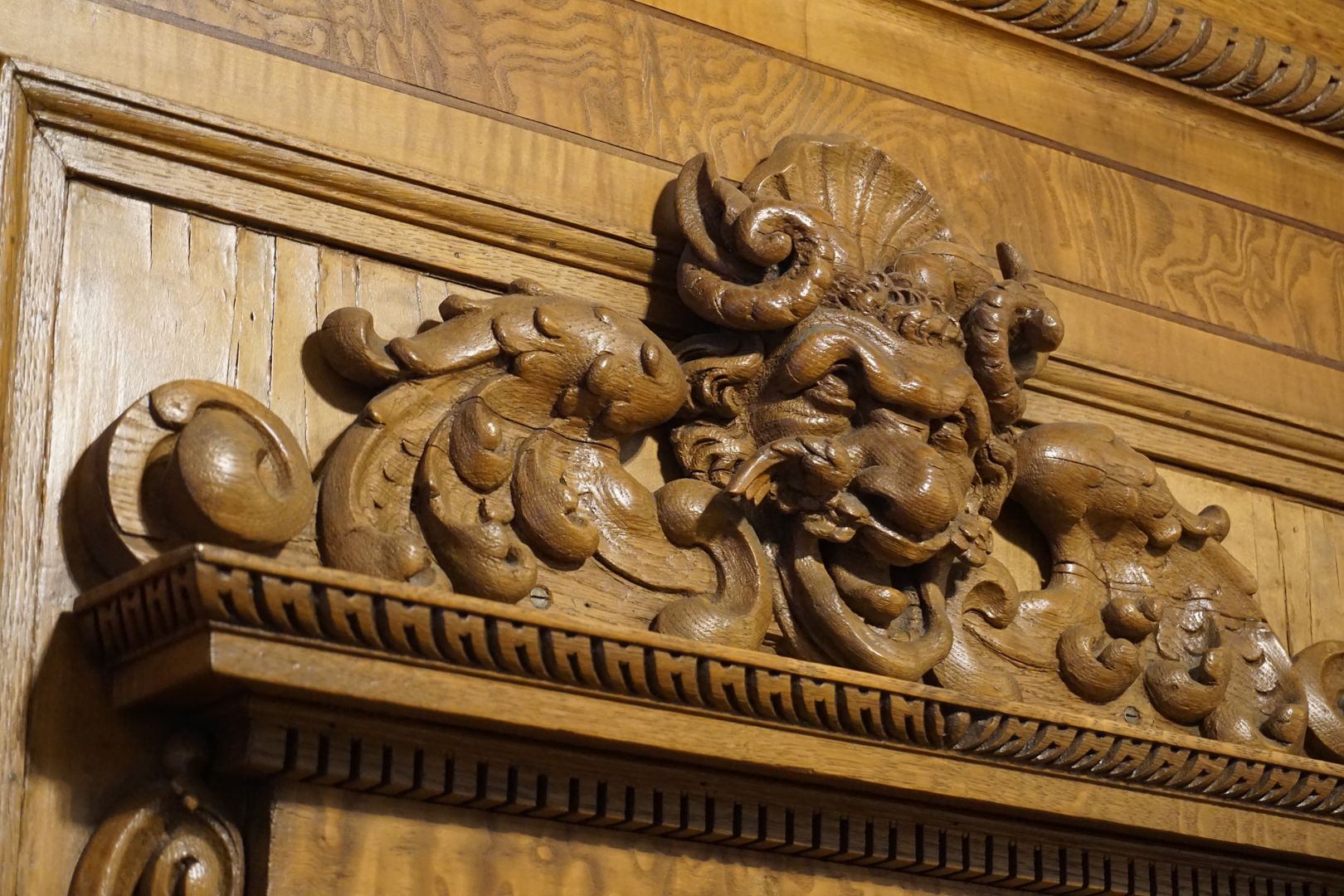
Crowning of the door center panel, winged mask of a mythical creature, oblique view
In 1622, he worked together with the sculptor Hans Abbeck on a wooden portal, the so-called "Türgericht", which was originally located in the "Regimentsstube", later the wedding room; the council paid 300 fl. for it as well as 3 fl. and a thaler for the varnishing.
Today, the portal, which was removed during the war, is no longer installed in its original position as a false door.
Note the architectural structure: A fully developed Corinthian column stands on cranked pedestals, flanked by half-columns - supporting the entablature (architrave and frieze).
photo 2022, Theo Noll
So-called "door court"
1622
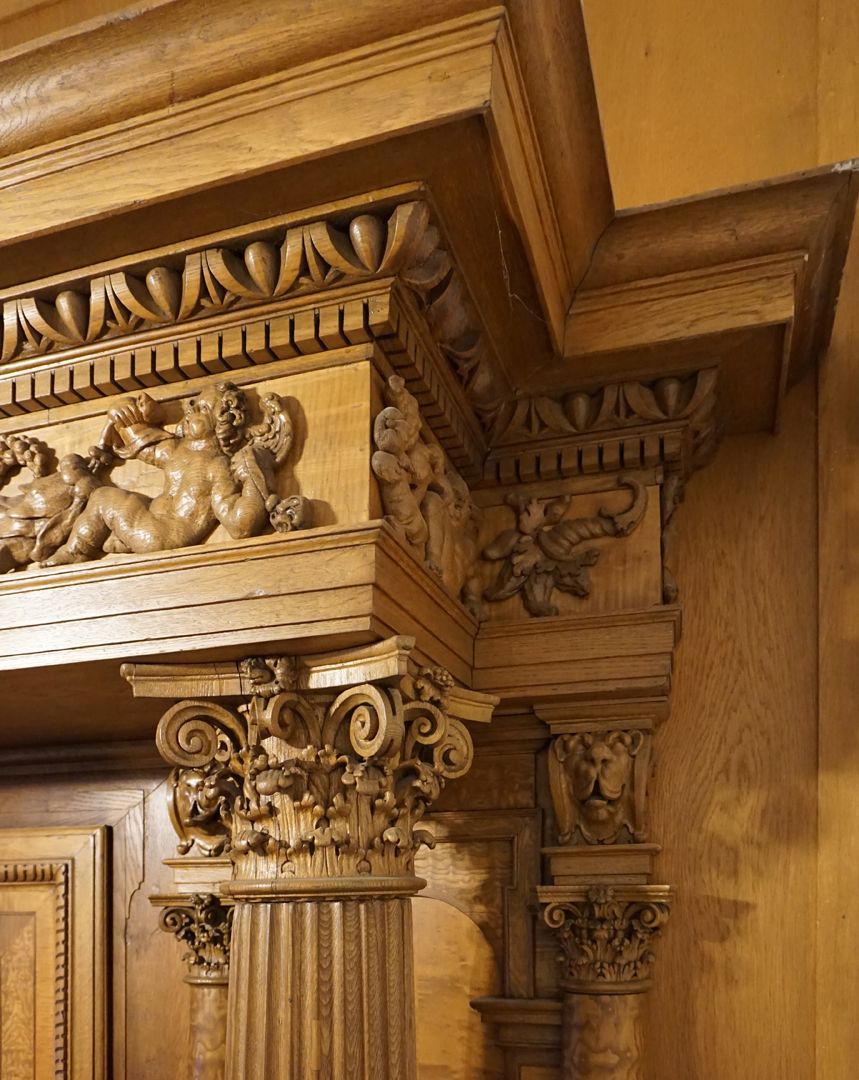
Right entablature
In 1622, he worked together with the sculptor Hans Abbeck on a wooden portal, the so-called "Türgericht", which was originally located in the "Regimentsstube", later the wedding room; the council paid 300 fl. for it as well as 3 fl. and a thaler for the varnishing.
Today, the portal, which was removed during the war, is no longer installed in its original position as a false door.
Note the architectural structure: A fully developed Corinthian column stands on cranked pedestals, flanked by half-columns - supporting the entablature (architrave and frieze).
photo 2022, Theo Noll
So-called "door court"
1622
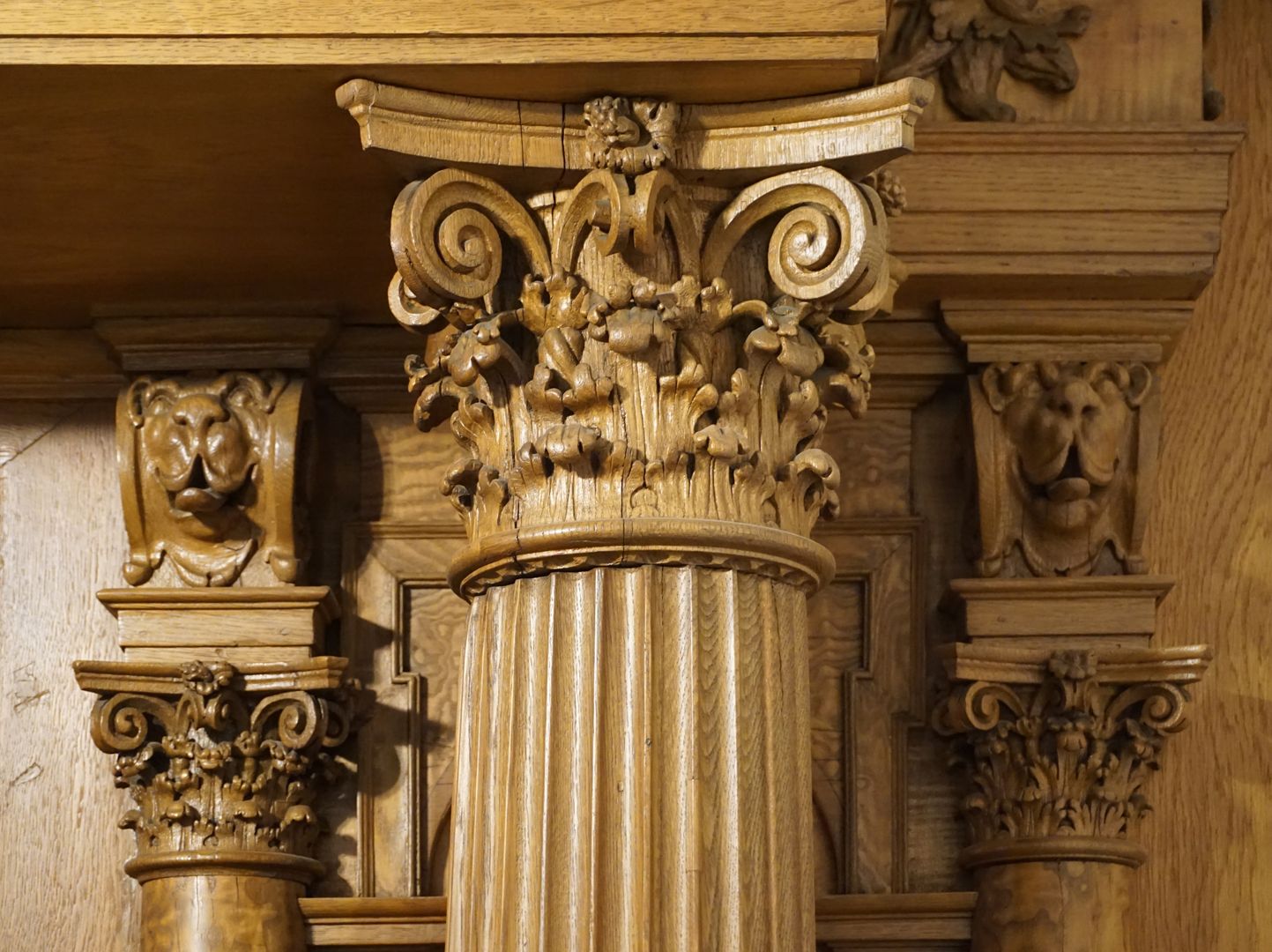
Capital ensemble
In 1622, he worked together with the sculptor Hans Abbeck on a wooden portal, the so-called "Türgericht", which was originally located in the "Regimentsstube", later the wedding room; the council paid 300 fl. for it as well as 3 fl. and a thaler for the varnishing.
Today, the portal, which was removed during the war, is no longer installed in its original position as a false door.
Note the architectural structure: A fully developed Corinthian column stands on cranked pedestals, flanked by half-columns - supporting the entablature (architrave and frieze).
photo 2022, Theo Noll
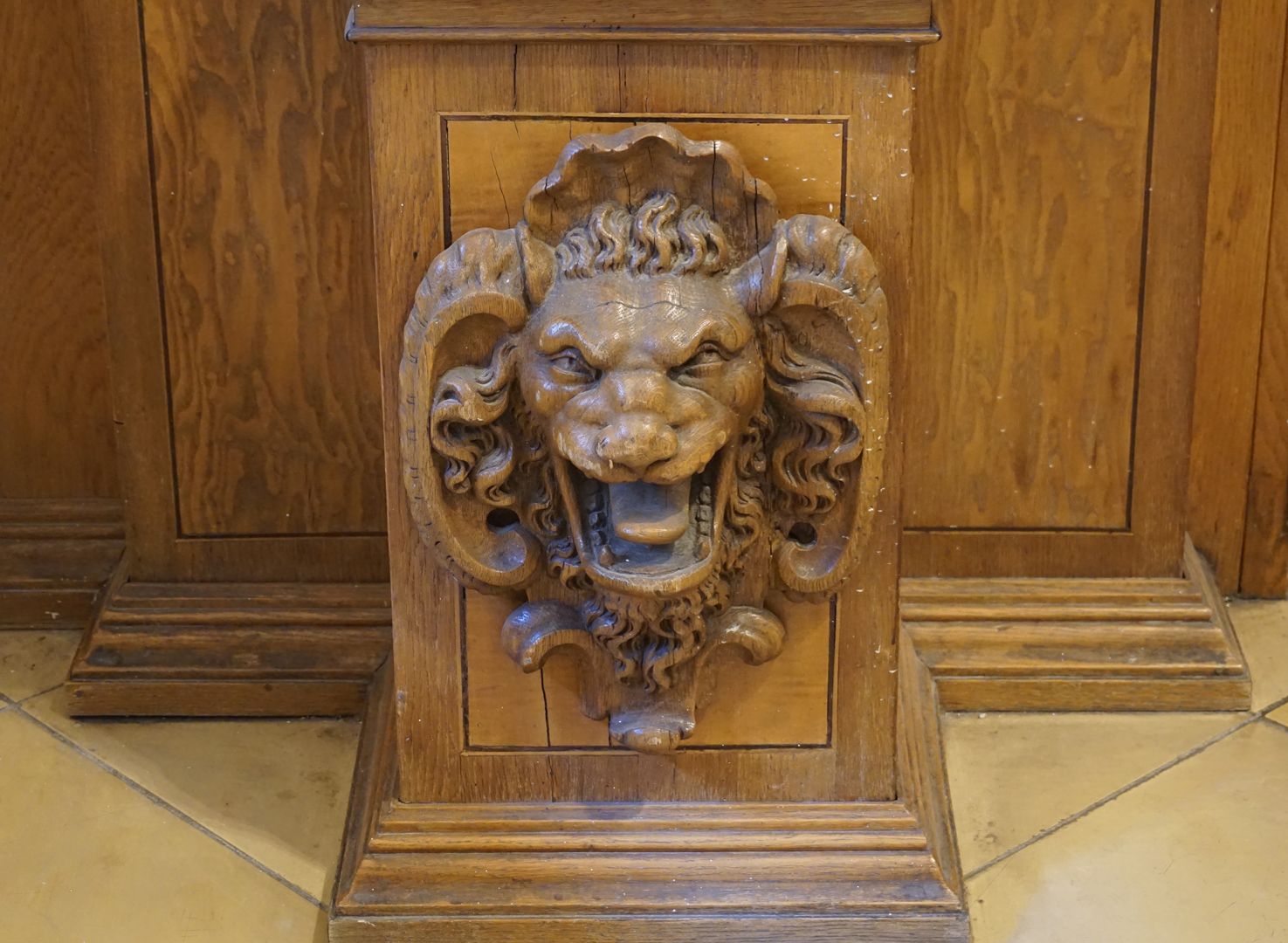
So-called "door court"
1622
Lion mask in front of the left pediment
In 1622, he worked together with the sculptor Hans Abbeck on a wooden portal, the so-called "Türgericht", which was originally located in the "Regimentsstube", later the wedding room; the council paid 300 fl. for it as well as 3 fl. and a thaler for the varnishing.
Today, the portal, which was removed during the war, is no longer installed in its original position as a false door.
Note the architectural structure: A fully developed Corinthian column stands on cranked pedestals, flanked by half-columns - supporting the entablature (architrave and frieze).
photo 2022, Theo Noll
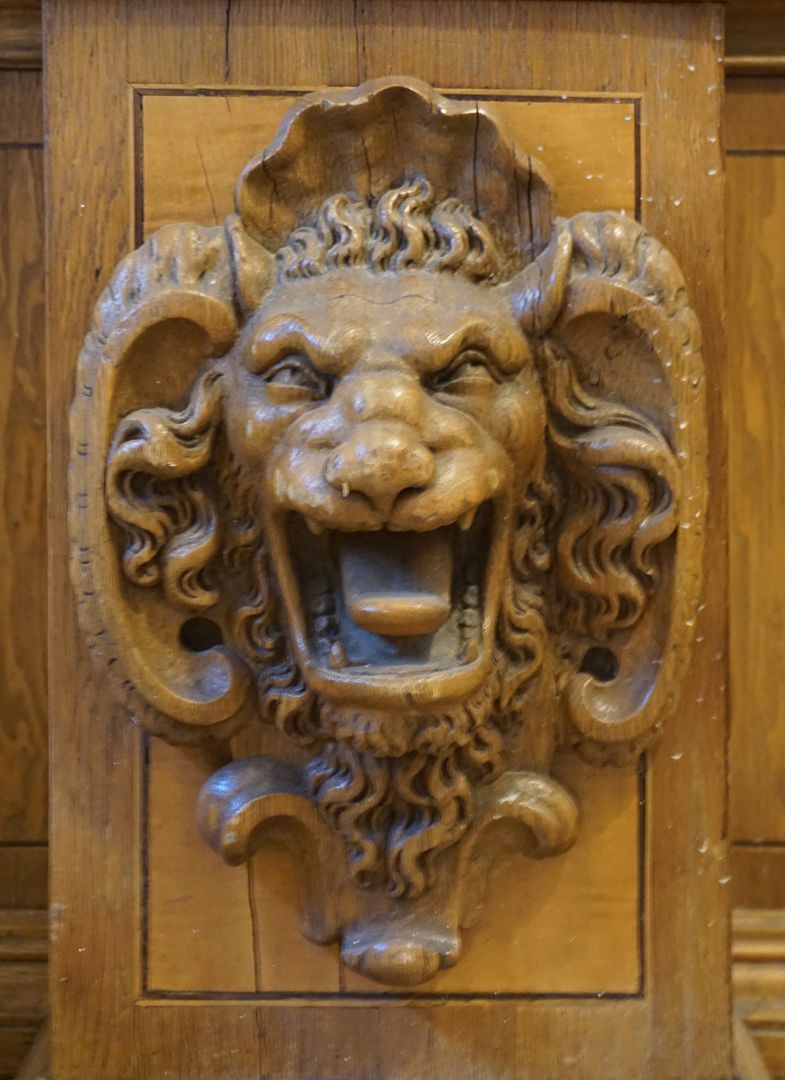
So-called "door court"
1622
Lion mask in front of the left pediment
In 1622, he worked together with the sculptor Hans Abbeck on a wooden portal, the so-called "Türgericht", which was originally located in the "Regimentsstube", later the wedding room; the council paid 300 fl. for it as well as 3 fl. and a thaler for the varnishing.
Today, the portal, which was removed during the war, is no longer installed in its original position as a false door.
Note the architectural structure: A fully developed Corinthian column stands on cranked pedestals, flanked by half-columns - supporting the entablature (architrave and frieze).
photo 2022, Theo Noll
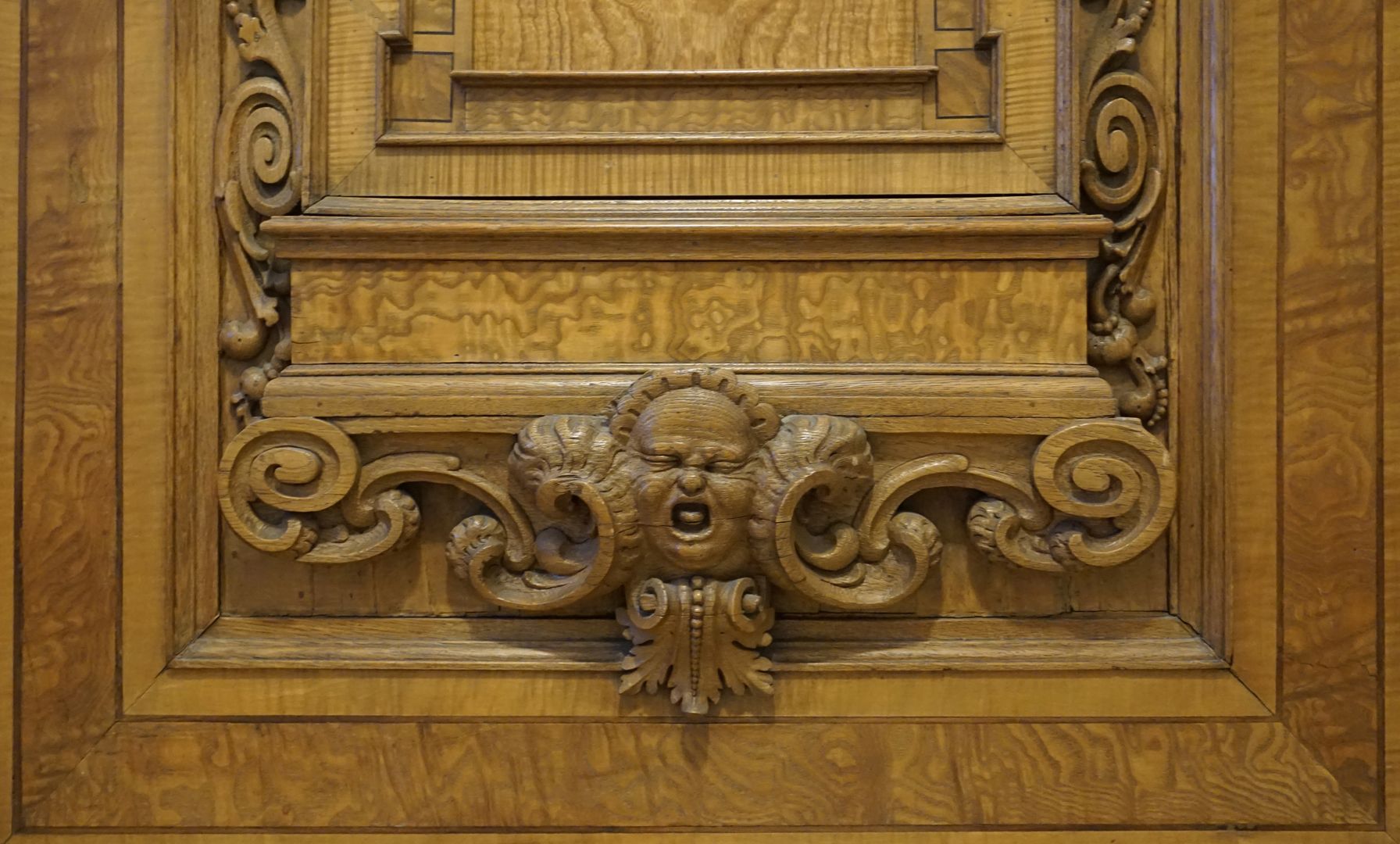
So-called "door court"
1622
Lower end of the door centerpiece with crying-screaming mask
In 1622, he worked together with the sculptor Hans Abbeck on a wooden portal, the so-called "Türgericht", which was originally located in the "Regimentsstube", later the wedding room; the council paid 300 fl. for it as well as 3 fl. and a thaler for the varnishing.
Today, the portal, which was removed during the war, is no longer installed in its original position as a false door.
Note the architectural structure: A fully developed Corinthian column stands on cranked pedestals, flanked by half-columns - supporting the entablature (architrave and frieze).
photo 2022, Theo Noll
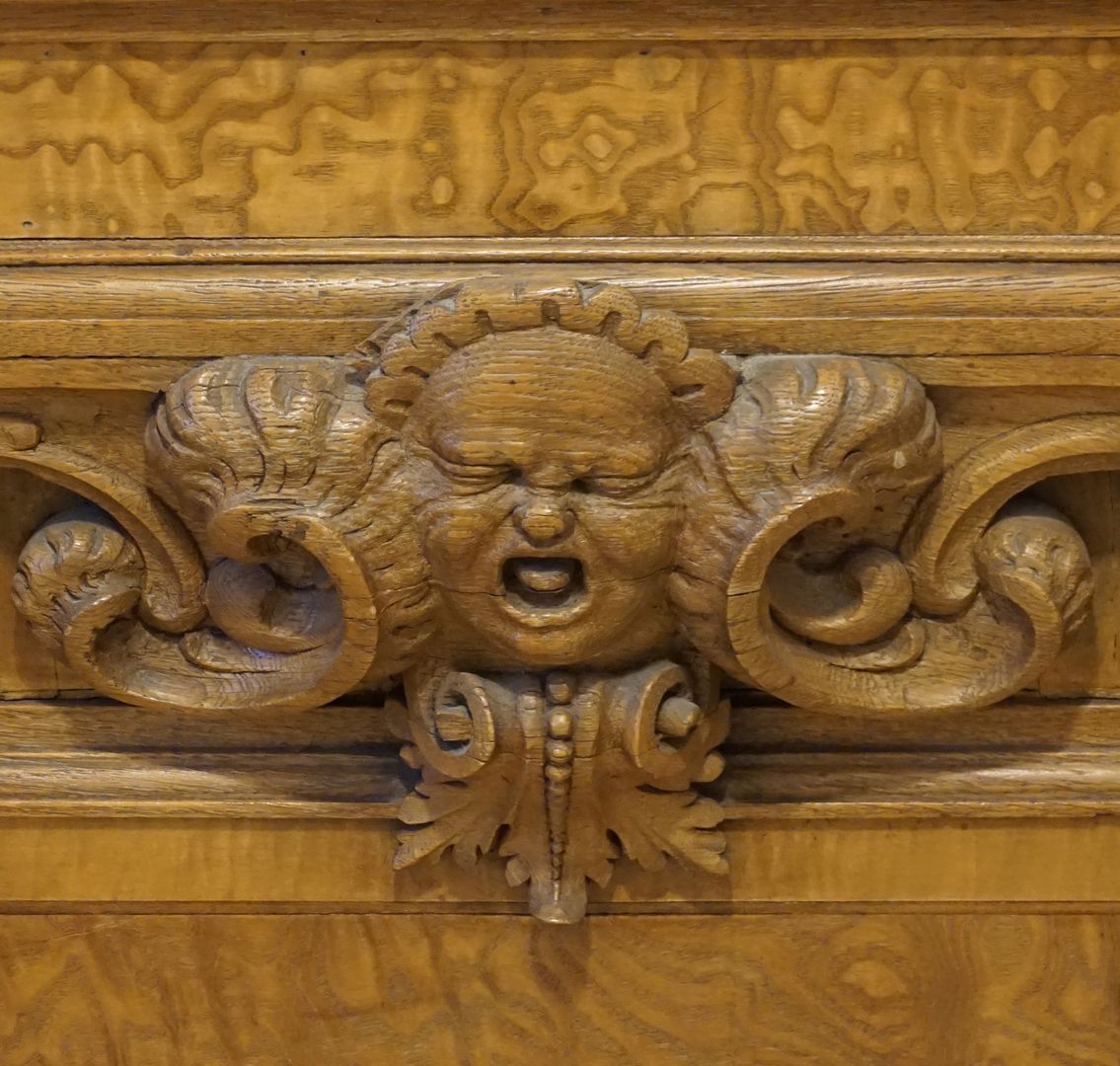
So-called "door court"
1622
crying-screaming mask
In 1622, he worked together with the sculptor Hans Abbeck on a wooden portal, the so-called "Türgericht", which was originally located in the "Regimentsstube", later the wedding room; the council paid 300 fl. for it as well as 3 fl. and a thaler for the varnishing.
Today, the portal, which was removed during the war, is no longer installed in its original position as a false door.
Note the architectural structure: A fully developed Corinthian column stands on cranked pedestals, flanked by half-columns - supporting the entablature (architrave and frieze).
photo 2022, Theo Noll
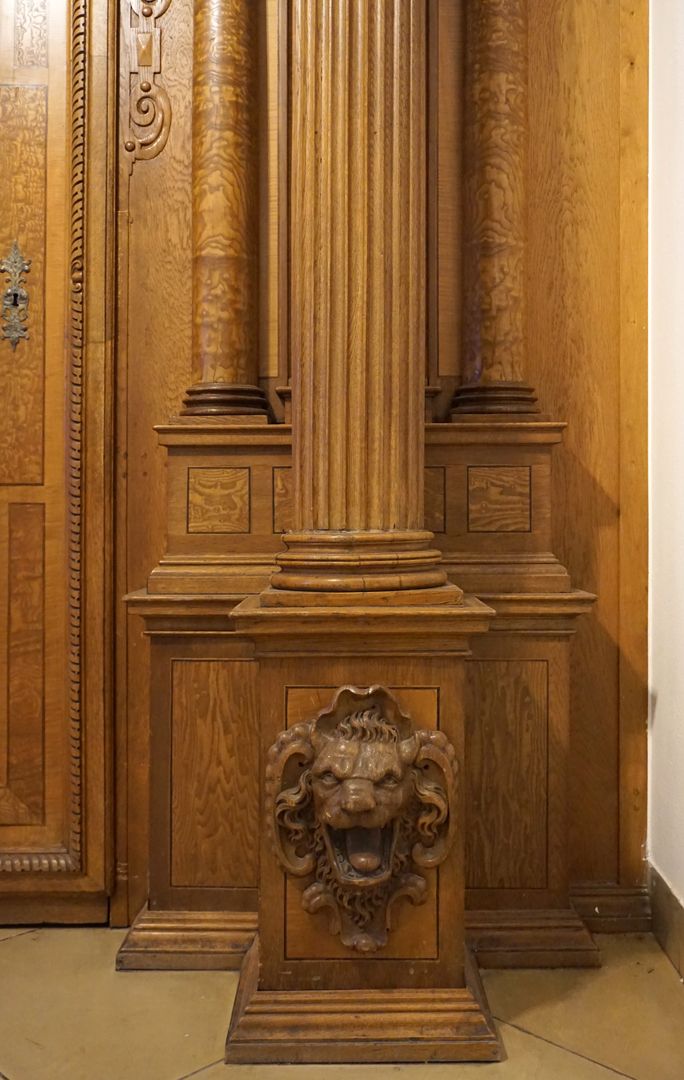
So-called "door court"
1622
Lion mask in front of the right pedestal (side masks removed)
In 1622, he worked together with the sculptor Hans Abbeck on a wooden portal, the so-called "Türgericht", which was originally located in the "Regimentsstube", later the wedding room; the council paid 300 fl. for it as well as 3 fl. and a thaler for the varnishing.
Today, the portal, which was removed during the war, is no longer installed in its original position as a false door.
Note the architectural structure: A fully developed Corinthian column stands on cranked pedestals, flanked by half-columns - supporting the entablature (architrave and frieze).
photo 2022, Theo Noll
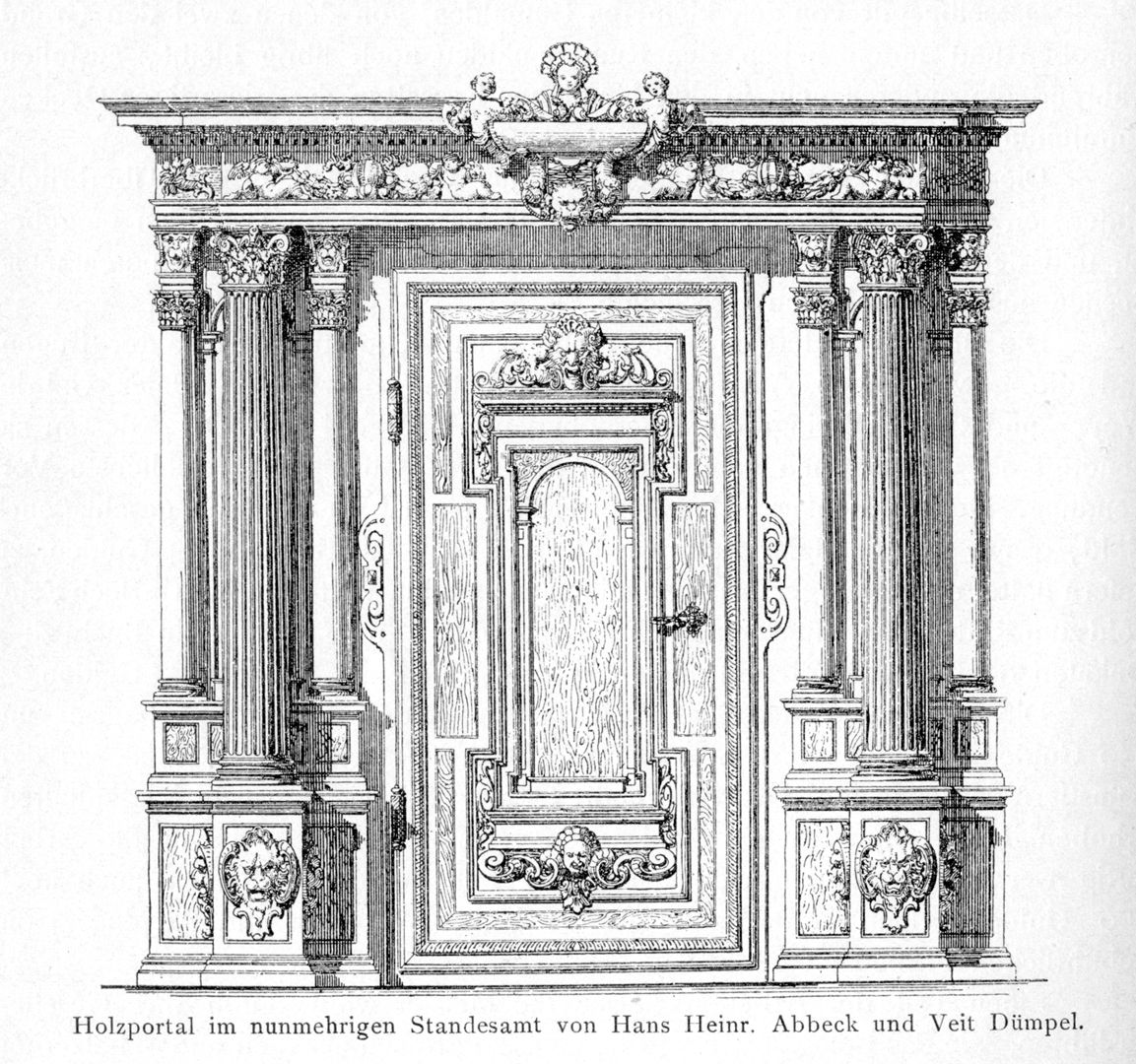
So-called "door court"
1622
illustration after old originals, etc. by Heinrich Wallraff in: Ernst Mummenhof, Das Rathaus in Nürnberg, Nuremberg 1891, p. 146)
In 1622, he worked together with the sculptor Hans Abbeck on a wooden portal, the so-called "Türgericht", which was originally located in the "Regimentsstube", later the wedding room; the council paid 300 fl. for it as well as 3 fl. and a thaler for the varnishing.
Today, the portal, which was removed during the war, is no longer installed in its original position as a false door.
Note the architectural structure: A fully developed Corinthian column stands on cranked pedestals, flanked by half-columns - supporting the entablature (architrave and frieze).
scan 2022, Theo Noll
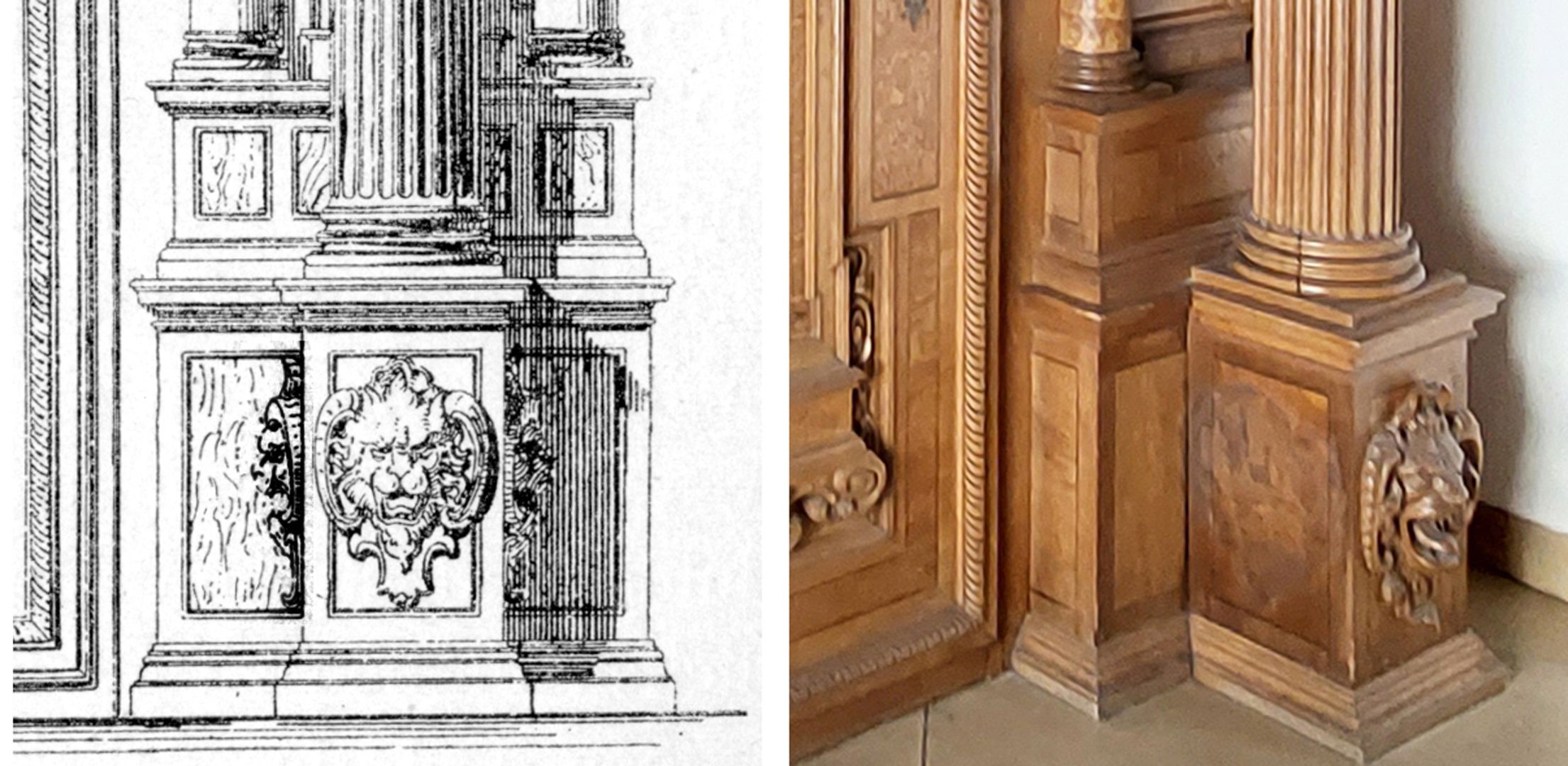
So-called "door court"
1622
right pediment
In 1622, he worked together with the sculptor Hans Abbeck on a wooden portal, the so-called "Türgericht", which was originally located in the "Regimentsstube", later the wedding room; the council paid 300 fl. for it as well as 3 fl. and a thaler for the varnishing.
Today, the portal, which was removed during the war, is no longer installed in its original position as a false door.
Note the architectural structure: A fully developed Corinthian column stands on cranked pedestals, flanked by half-columns - supporting the entablature (architrave and frieze).
photo 2022, Pablo de la Riestra, Theo Noll
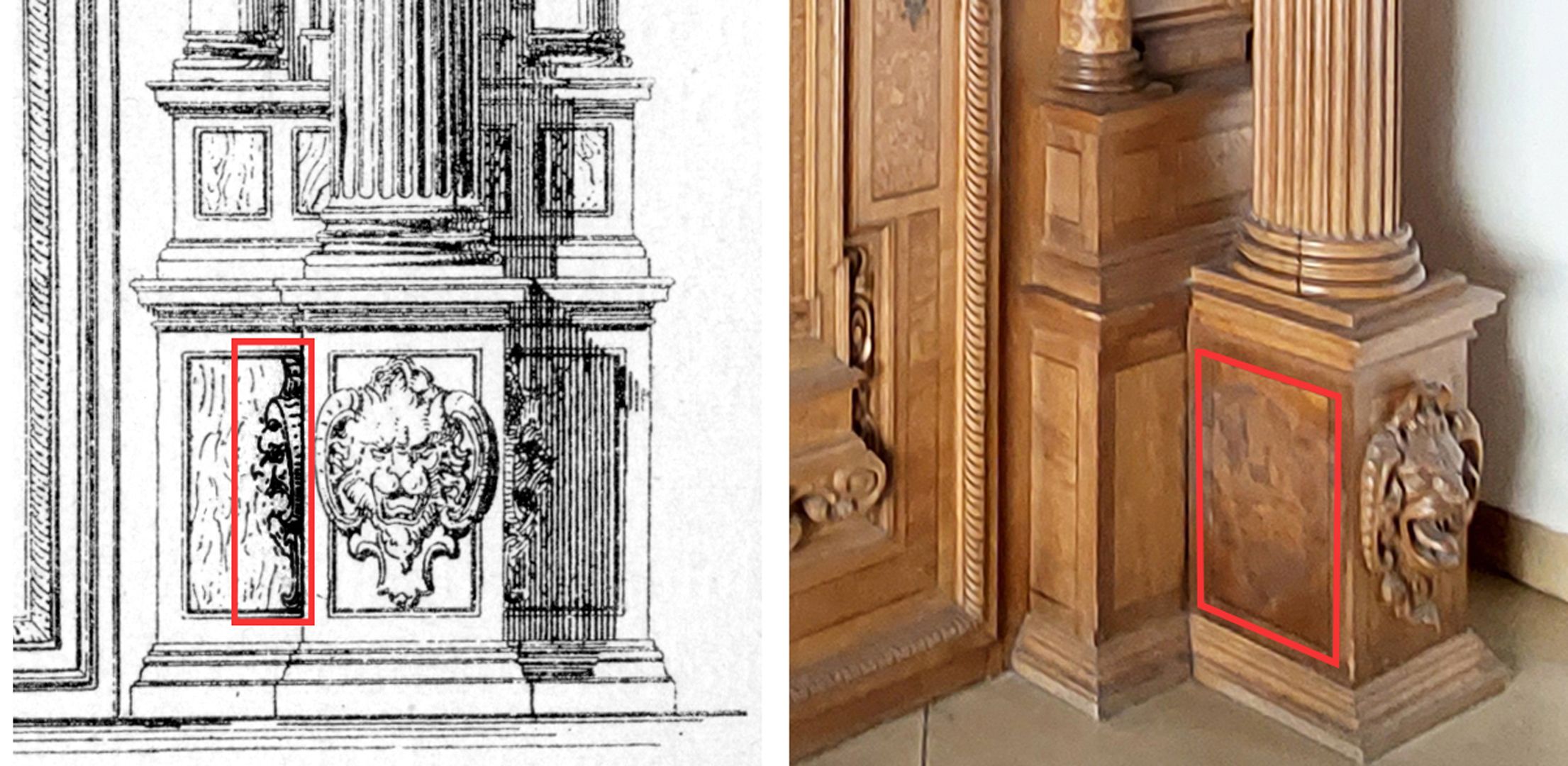
So-called "door court"
1622
Right pedestal, marking of the removed mask
In 1622, he worked together with the sculptor Hans Abbeck on a wooden portal, the so-called "Türgericht", which was originally located in the "Regimentsstube", later the wedding room; the council paid 300 fl. for it as well as 3 fl. and a thaler for the varnishing.
Today, the portal, which was removed during the war, is no longer installed in its original position as a false door.
Note the architectural structure: A fully developed Corinthian column stands on cranked pedestals, flanked by half-columns - supporting the entablature (architrave and frieze).
photo 2022, Pablo de la Riestra, Theo Noll
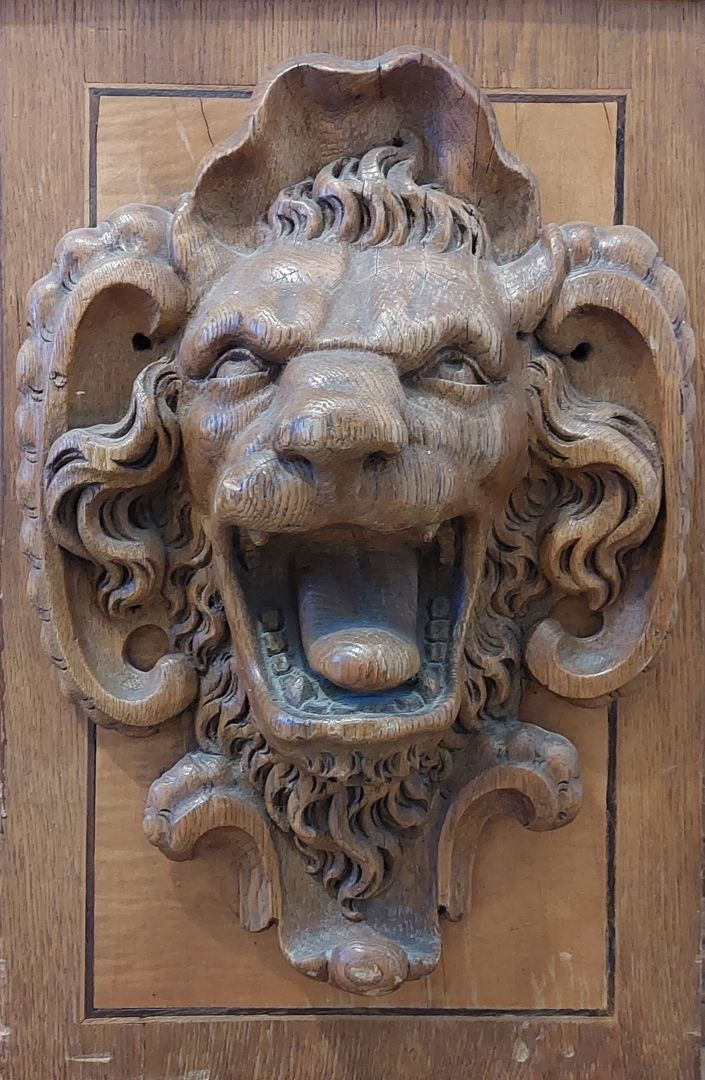
So-called "door court"
1622
Lion mask in front of the right pedestal
In 1622, he worked together with the sculptor Hans Abbeck on a wooden portal, the so-called "Türgericht", which was originally located in the "Regimentsstube", later the wedding room; the council paid 300 fl. for it as well as 3 fl. and a thaler for the varnishing.
Today, the portal, which was removed during the war, is no longer installed in its original position as a false door.
Note the architectural structure: A fully developed Corinthian column stands on cranked pedestals, flanked by half-columns - supporting the entablature (architrave and frieze).
photo 2022, Pablo de la Riestra