House chapel formerly in the Adlerstraße 9
House chapel formerly in the Adlerstraße 9
1849
. see also: Wartburg Chörlein
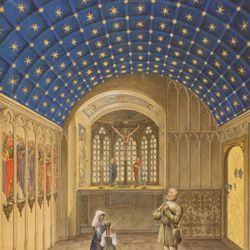
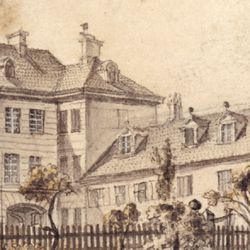
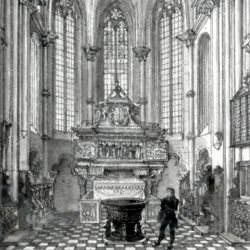
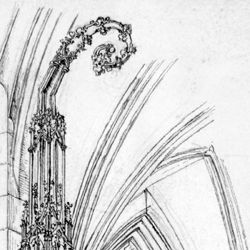
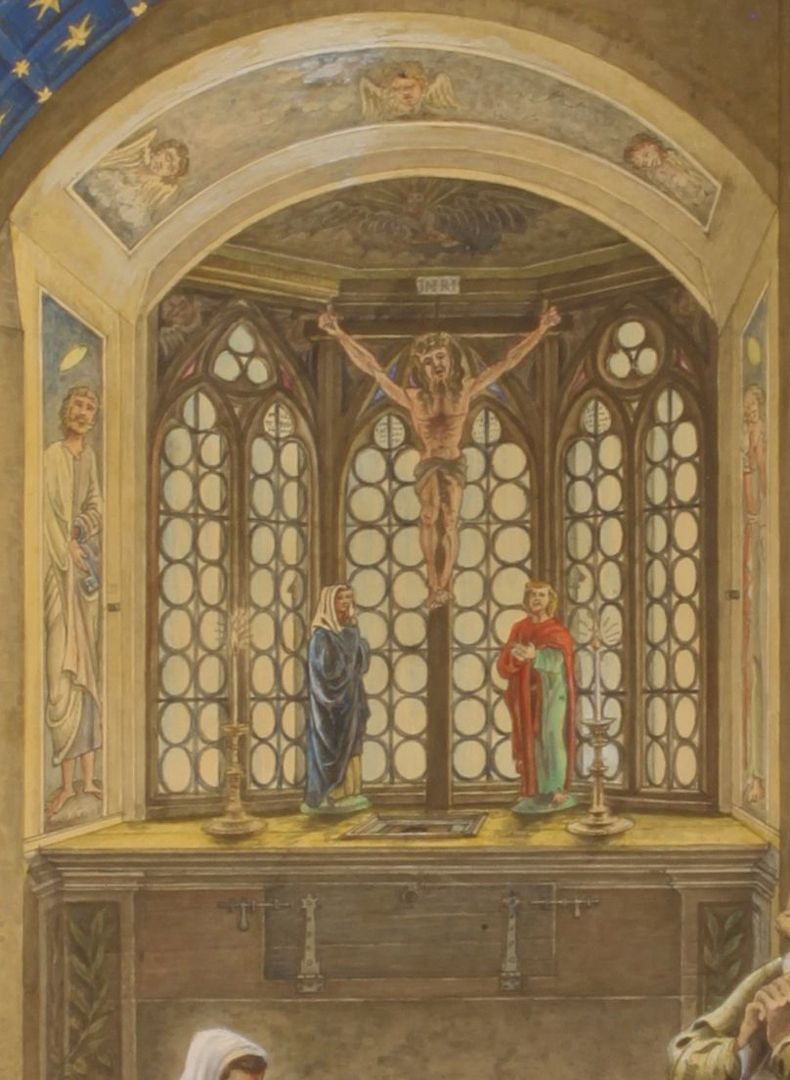
House chapel at Adlerstraße 9/corner of Hörmannsgasse (pre-war numbering); the medieval address was called am Rossmarkt (or at the old Rossmarkt).
In the 16th century, the property to which the chapel belonged came into the possession of the Harsdörffer family and was considered a distinguished address. When the arrival of Emperor Rudolf II was expected in Nuremberg in 1580, Lazarus I. Harsdörffer was supposed to accommodate the Elector of Trier in his house at the Rossmarkt. When the Spanish envoy Balthasar de Zuñiga stayed in Hans Christoph Harsdörffer's house at the old Rossmarkt during the Electoral Collegial Day in Nuremberg, Gregorius N., purchaser of the Viennese Cardinal Bishop Melchior Khlesel, was married to Apollonia, a former maid of the garment tailor Heinrich am Milchmarkt, in the chapel on 10/20 November 1611. The bishop's court servants and other Catholics heard daily mass in the chapel during this time. On the occasion of Duke Maximilian of Bavaria's admission to the Electoral College, which took place in Nuremberg in 1624, he also stayed with Hans Christoph Harsdörffer.
When Christoph Wilder drew the chapel, the house was occupied by the vinegar manufacturer Andreas Volck and his many-headed family, who bought it in 1862. In 1872 the house was demolished by the following owner and replaced by a new building. Today the property belongs to the Karstadt department store complex.
Location: Art Collections of the City of Nuremberg, Gr.A.3793
Design: Wilder, Georg Christoph
Realization: Wilder, Georg Christoph
Material: Watercolor
photo
House chapel formerly in the Adlerstraße 9
1849
. see also: Wartburg Chörlein
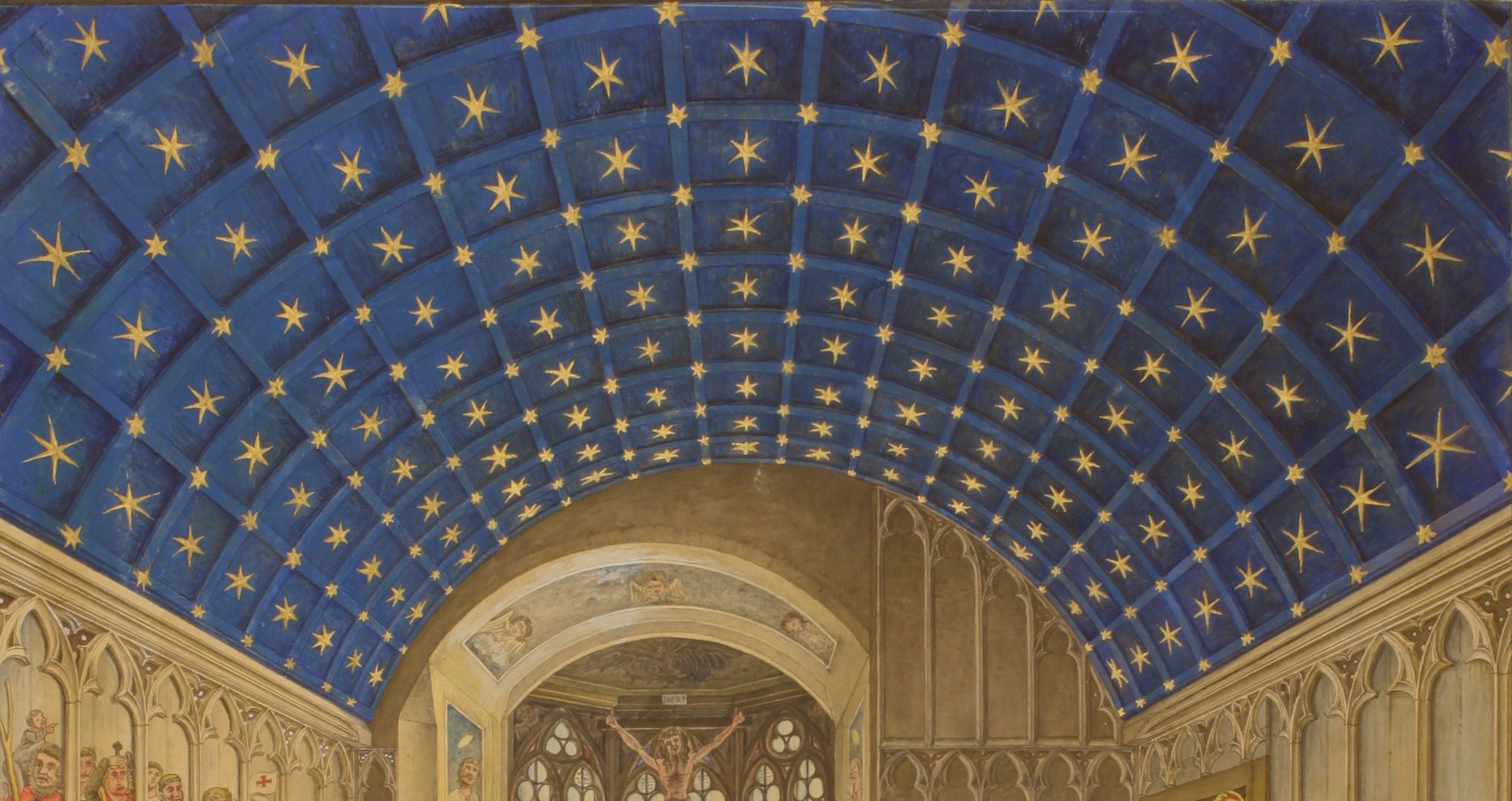
House chapel at Adlerstraße 9/corner of Hörmannsgasse (pre-war numbering); the medieval address was called am Rossmarkt (or at the old Rossmarkt).
In the 16th century, the property to which the chapel belonged came into the possession of the Harsdörffer family and was considered a distinguished address. When the arrival of Emperor Rudolf II was expected in Nuremberg in 1580, Lazarus I. Harsdörffer was supposed to accommodate the Elector of Trier in his house at the Rossmarkt. When the Spanish envoy Balthasar de Zuñiga stayed in Hans Christoph Harsdörffer's house at the old Rossmarkt during the Electoral Collegial Day in Nuremberg, Gregorius N., purchaser of the Viennese Cardinal Bishop Melchior Khlesel, was married to Apollonia, a former maid of the garment tailor Heinrich am Milchmarkt, in the chapel on 10/20 November 1611. The bishop's court servants and other Catholics heard daily mass in the chapel during this time. On the occasion of Duke Maximilian of Bavaria's admission to the Electoral College, which took place in Nuremberg in 1624, he also stayed with Hans Christoph Harsdörffer.
When Christoph Wilder drew the chapel, the house was occupied by the vinegar manufacturer Andreas Volck and his many-headed family, who bought it in 1862. In 1872 the house was demolished by the following owner and replaced by a new building. Today the property belongs to the Karstadt department store complex.
Location: Art Collections of the City of Nuremberg, Gr.A.3793
Design: Wilder, Georg Christoph
Realization: Wilder, Georg Christoph
Material: Watercolor
photo
House chapel formerly in the Adlerstraße 9
1849
. see also: Wartburg Chörlein
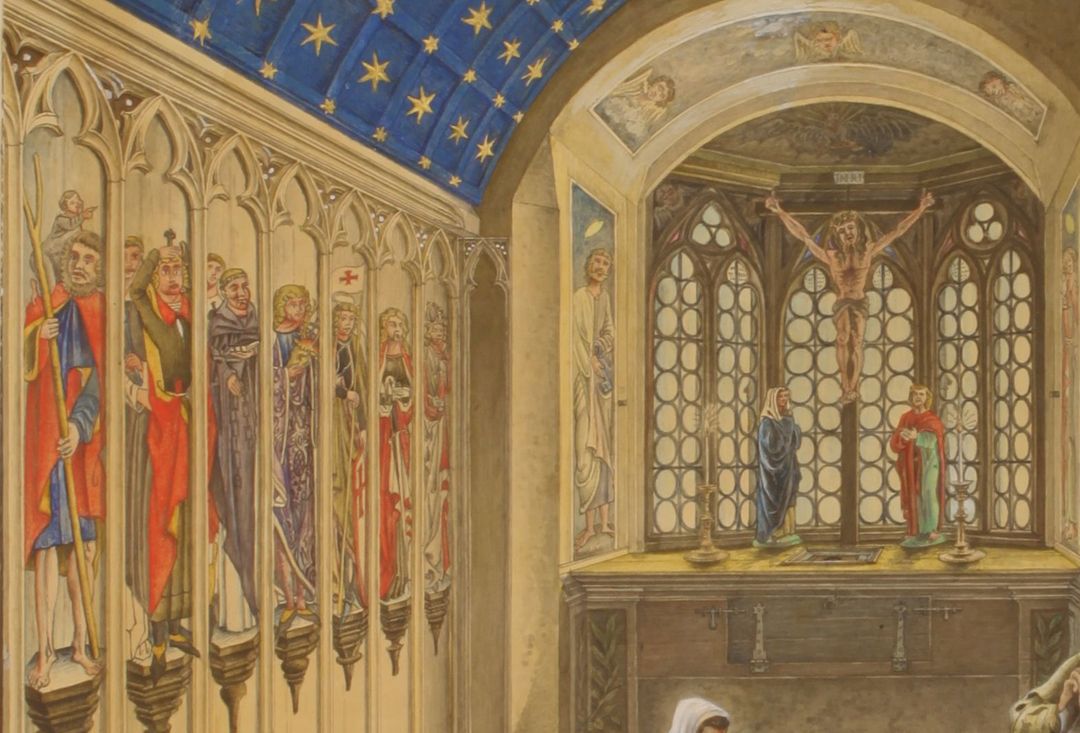
House chapel at Adlerstraße 9/corner of Hörmannsgasse (pre-war numbering); the medieval address was called am Rossmarkt (or at the old Rossmarkt).
In the 16th century, the property to which the chapel belonged came into the possession of the Harsdörffer family and was considered a distinguished address. When the arrival of Emperor Rudolf II was expected in Nuremberg in 1580, Lazarus I. Harsdörffer was supposed to accommodate the Elector of Trier in his house at the Rossmarkt. When the Spanish envoy Balthasar de Zuñiga stayed in Hans Christoph Harsdörffer's house at the old Rossmarkt during the Electoral Collegial Day in Nuremberg, Gregorius N., purchaser of the Viennese Cardinal Bishop Melchior Khlesel, was married to Apollonia, a former maid of the garment tailor Heinrich am Milchmarkt, in the chapel on 10/20 November 1611. The bishop's court servants and other Catholics heard daily mass in the chapel during this time. On the occasion of Duke Maximilian of Bavaria's admission to the Electoral College, which took place in Nuremberg in 1624, he also stayed with Hans Christoph Harsdörffer.
When Christoph Wilder drew the chapel, the house was occupied by the vinegar manufacturer Andreas Volck and his many-headed family, who bought it in 1862. In 1872 the house was demolished by the following owner and replaced by a new building. Today the property belongs to the Karstadt department store complex.
Location: Art Collections of the City of Nuremberg, Gr.A.3793
Design: Wilder, Georg Christoph
Realization: Wilder, Georg Christoph
Material: Watercolor
photo
House chapel formerly in the Adlerstraße 9
1849
. see also: Wartburg Chörlein
House chapel at Adlerstraße 9/corner of Hörmannsgasse (pre-war numbering); the medieval address was called am Rossmarkt (or at the old Rossmarkt).
In the 16th century, the property to which the chapel belonged came into the possession of the Harsdörffer family and was considered a distinguished address. When the arrival of Emperor Rudolf II was expected in Nuremberg in 1580, Lazarus I. Harsdörffer was supposed to accommodate the Elector of Trier in his house at the Rossmarkt. When the Spanish envoy Balthasar de Zuñiga stayed in Hans Christoph Harsdörffer's house at the old Rossmarkt during the Electoral Collegial Day in Nuremberg, Gregorius N., purchaser of the Viennese Cardinal Bishop Melchior Khlesel, was married to Apollonia, a former maid of the garment tailor Heinrich am Milchmarkt, in the chapel on 10/20 November 1611. The bishop's court servants and other Catholics heard daily mass in the chapel during this time. On the occasion of Duke Maximilian of Bavaria's admission to the Electoral College, which took place in Nuremberg in 1624, he also stayed with Hans Christoph Harsdörffer.
When Christoph Wilder drew the chapel, the house was occupied by the vinegar manufacturer Andreas Volck and his many-headed family, who bought it in 1862. In 1872 the house was demolished by the following owner and replaced by a new building. Today the property belongs to the Karstadt department store complex.
Location: Art Collections of the City of Nuremberg, Gr.A.3793
Design: Wilder, Georg Christoph
Realization: Wilder, Georg Christoph
Material: Watercolor
photo
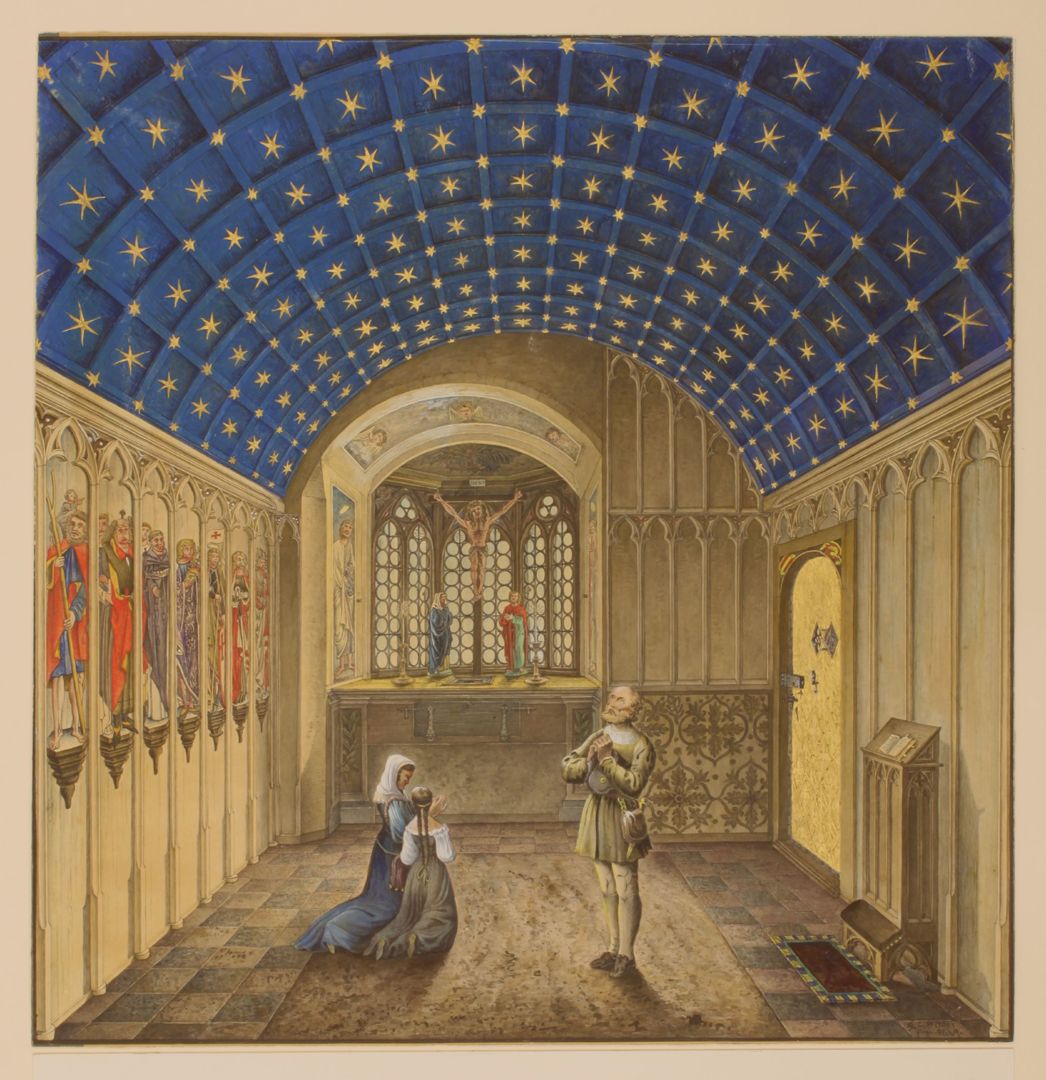
House chapel formerly in the Adlerstraße 9
1849
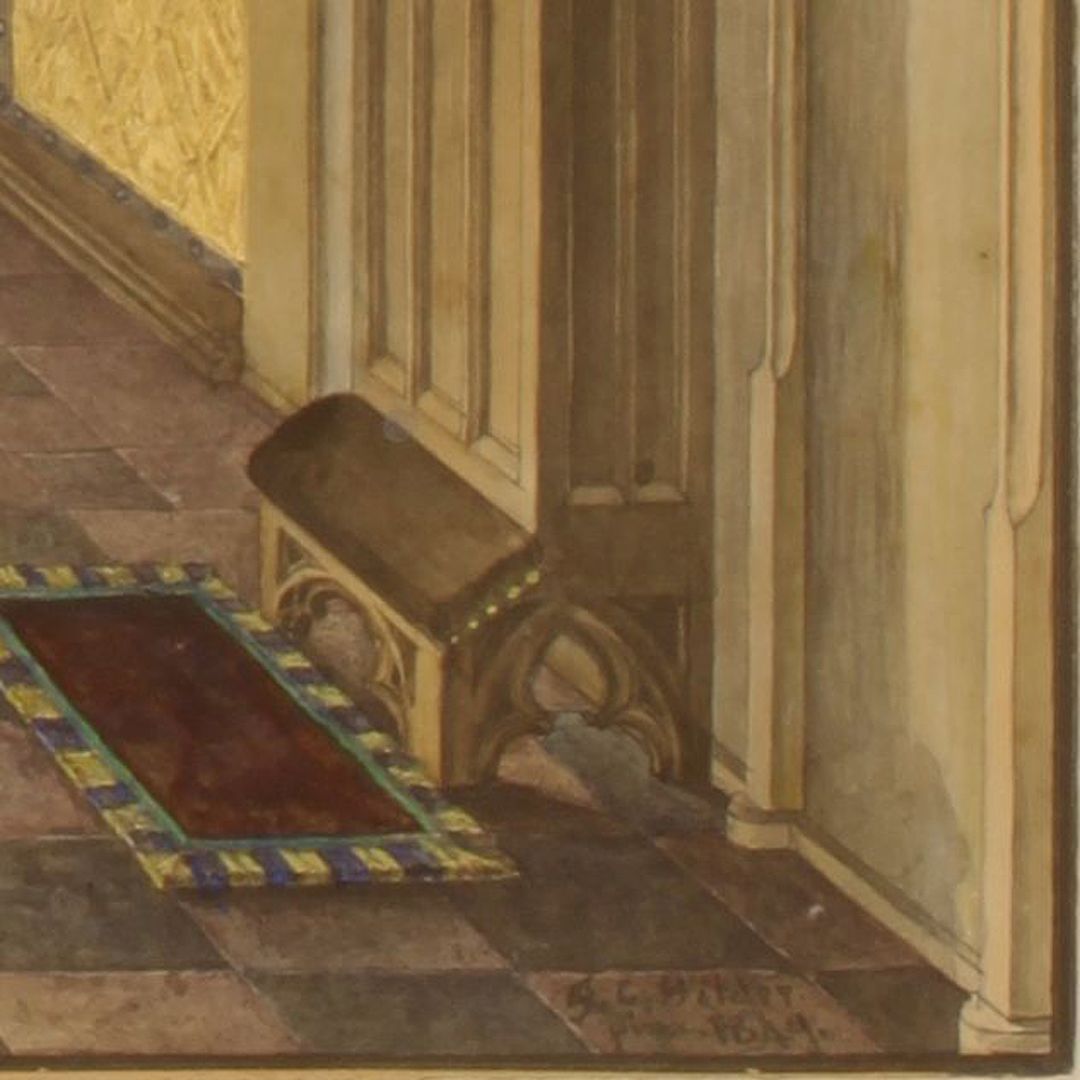
Signature of G. C. Wilder in the lower right corner of the picture
. see also: Wartburg Chörlein
House chapel at Adlerstraße 9/corner of Hörmannsgasse (pre-war numbering); the medieval address was called am Rossmarkt (or at the old Rossmarkt).
In the 16th century, the property to which the chapel belonged came into the possession of the Harsdörffer family and was considered a distinguished address. When the arrival of Emperor Rudolf II was expected in Nuremberg in 1580, Lazarus I. Harsdörffer was supposed to accommodate the Elector of Trier in his house at the Rossmarkt. When the Spanish envoy Balthasar de Zuñiga stayed in Hans Christoph Harsdörffer's house at the old Rossmarkt during the Electoral Collegial Day in Nuremberg, Gregorius N., purchaser of the Viennese Cardinal Bishop Melchior Khlesel, was married to Apollonia, a former maid of the garment tailor Heinrich am Milchmarkt, in the chapel on 10/20 November 1611. The bishop's court servants and other Catholics heard daily mass in the chapel during this time. On the occasion of Duke Maximilian of Bavaria's admission to the Electoral College, which took place in Nuremberg in 1624, he also stayed with Hans Christoph Harsdörffer.
When Christoph Wilder drew the chapel, the house was occupied by the vinegar manufacturer Andreas Volck and his many-headed family, who bought it in 1862. In 1872 the house was demolished by the following owner and replaced by a new building. Today the property belongs to the Karstadt department store complex.
Location: Art Collections of the City of Nuremberg, Gr.A.3793
Design: Wilder, Georg Christoph
Realization: Wilder, Georg Christoph
Material: Watercolor
photo