• A project of the Förderverein Kulturhistorisches Museum Nürnberg e.V. A project of the FKHM Nürnberg e.V.
  • About us
  • Feedback
  • Deutsche Version
Search Virtual museum
Nuremberg Art
  • Artists
  • Works of art
  • Topics
  • New
  • About us
  • Feedback

Remembrance picture of the family Behaim
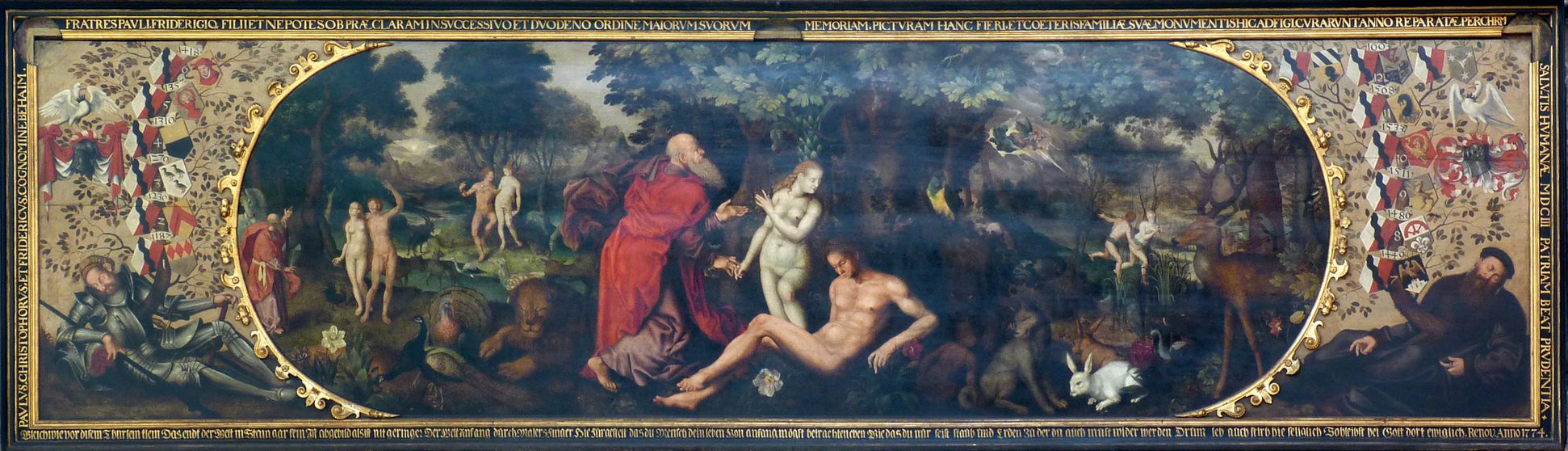
Remembrance picture of the family Behaim

Remembrance picture of the family Behaim

Info

1603


photo 2016, Theo Noll

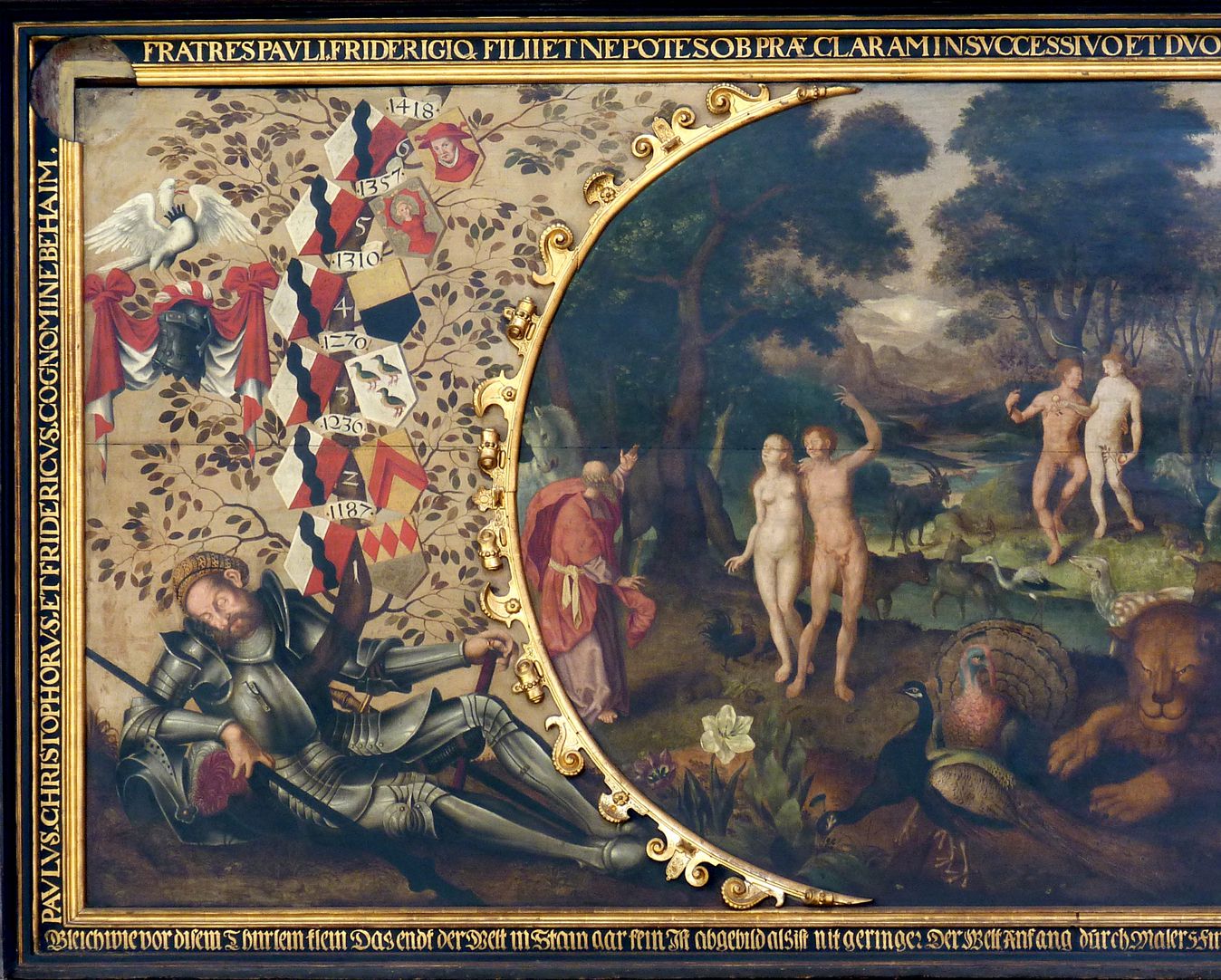
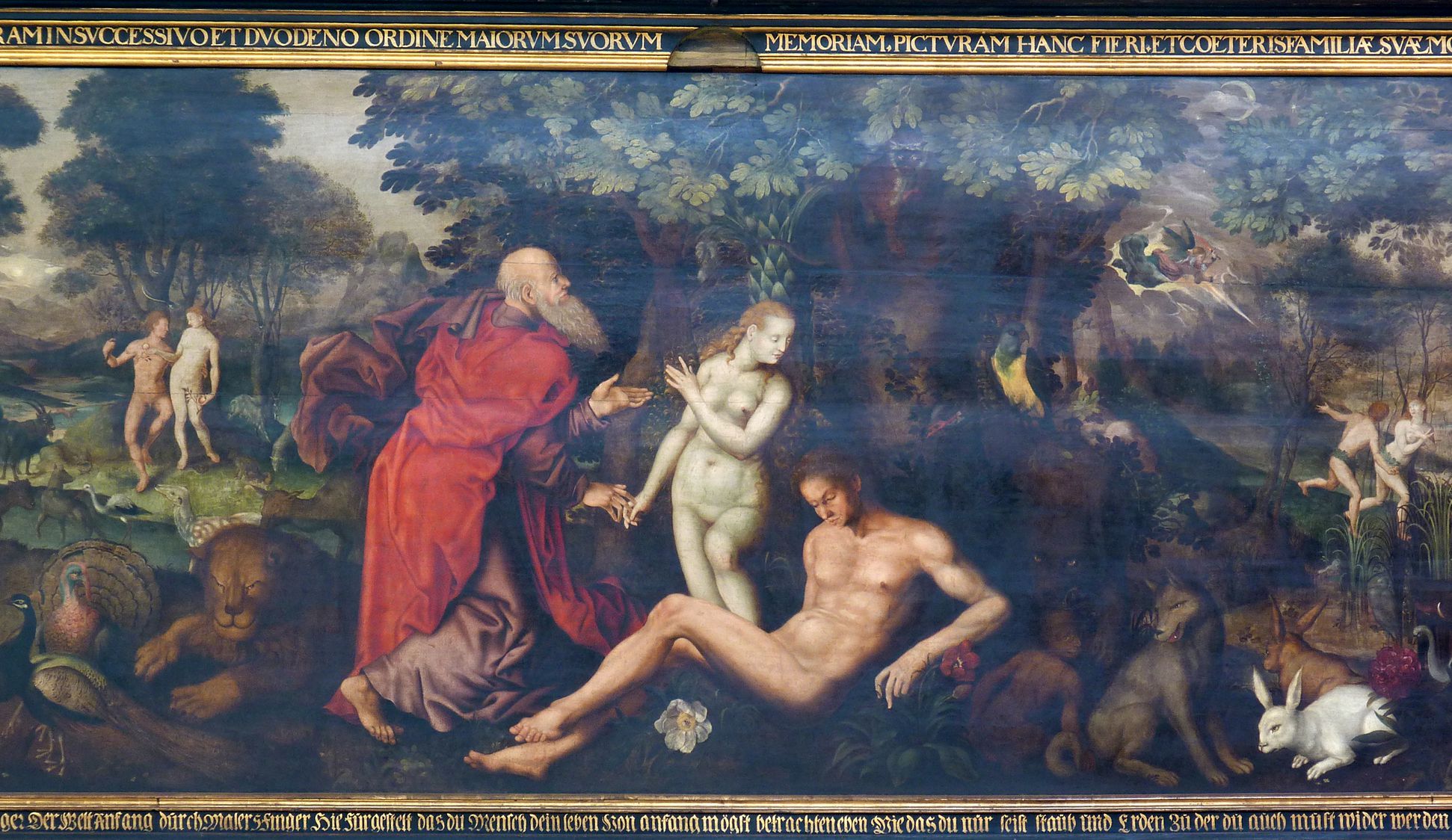
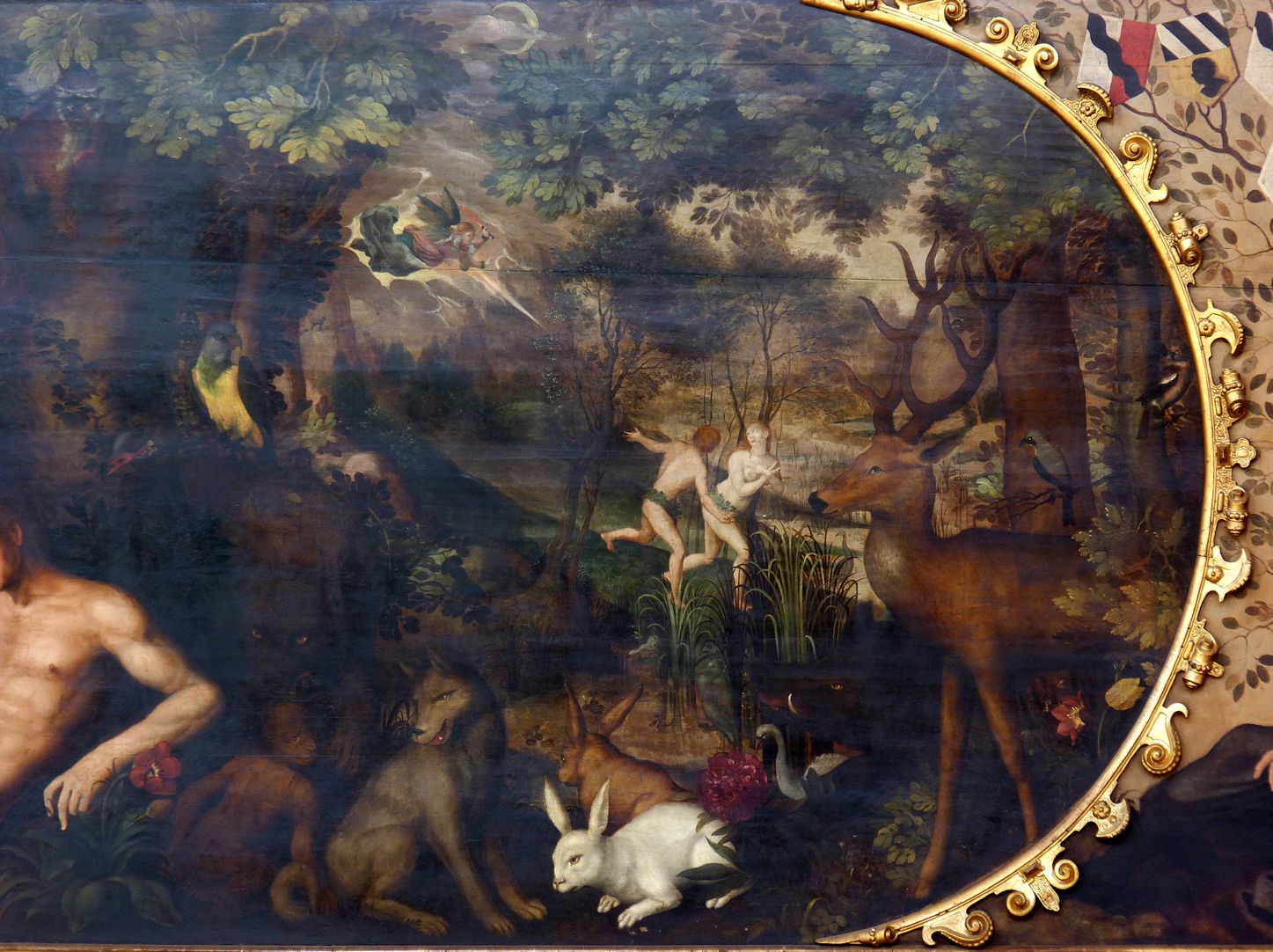
"The direct reference to Adam as the greatest ancestor of humanity was provided by the epitaph donated by the brothers Paul II, Christopher I, and Friedrich Behaim in 1603, which they commissioned from Johann Philipp Kreuzfelder [...] In the center of the rectangular panel, Adam appears, lying in Paradise, from whose rib God the Father is just creating Eve as his wife. Paradise appears as a densely wooded, flower-adorned garden, in which lions, birds, hares, and deer graze peacefully together. On both sides of the central creation of the first human couple, the scenes of the Fall and the Expulsion from Paradise can be seen in reduced form. The oval central section is flanked on both [...] sides by tree tendrils, on which hang, in close succession, the coats of arms of the Behaims and their wives, spanning twelve generations, beginning in 1187. On the left, the tree grows from the figure of a reclining, sleeping knight, elaborately armed, helmet and weapons laid down for sleep. The origin of the Brothers seemed to be fictitiously traced back to the 12th century via the first documented mention of a Nuremberg Behaim in 1288 [...]

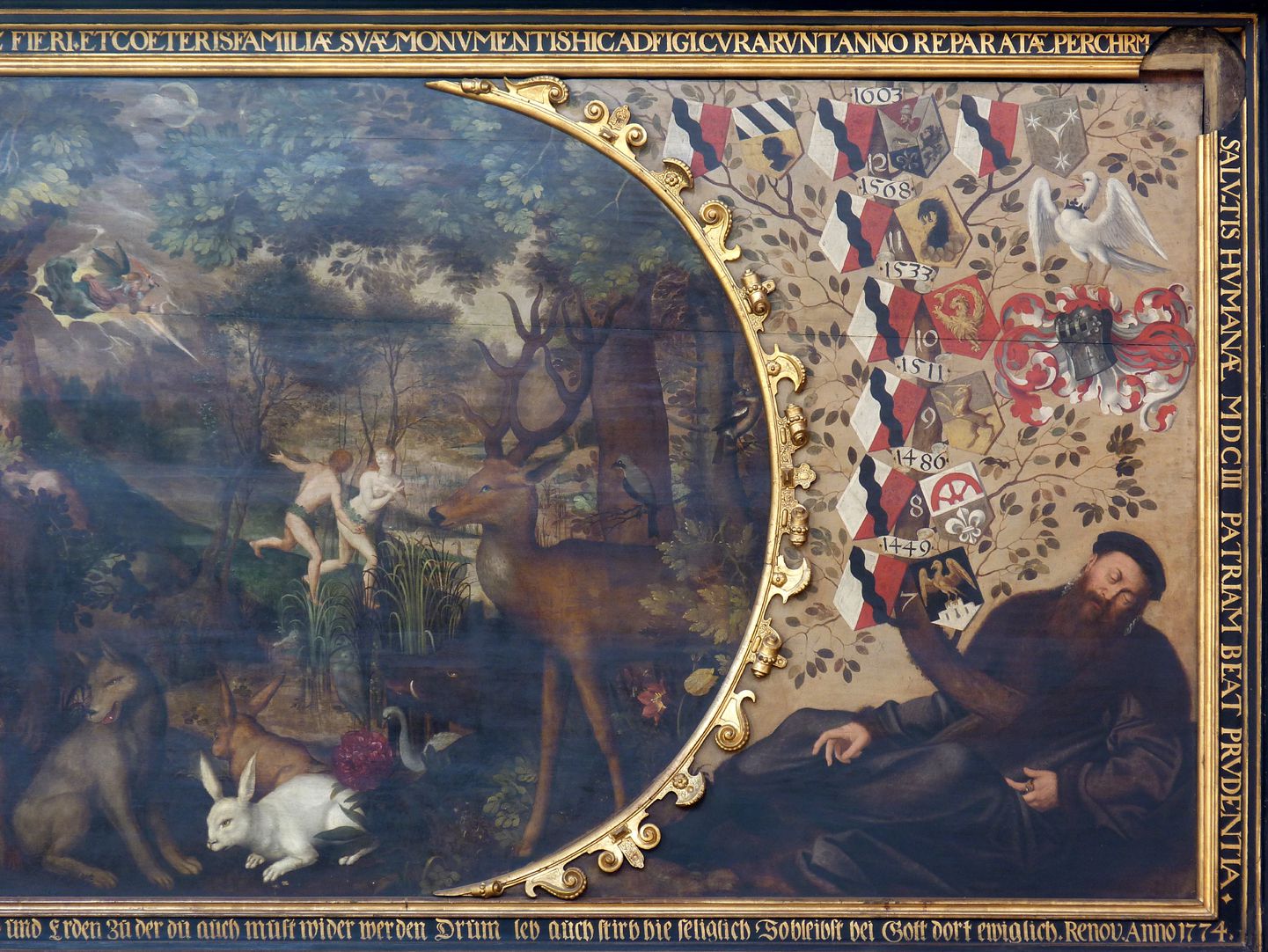
On the right, he rises from a reclining figure in black attire, a doublet, coat, and beret. He is thus recognizable as a member of the city authorities – after the lineage originates from the knight, the patrician now, in a sense, forms the second root of the family [...] The right-hand lineage ends with the coats of arms of the three commissioners and their wives in the year of the commission, 1603. Both figures of the sleeping ancestors, in their posture, directly reference the reclining Adam in the central section and visually connect the origin of humanity with the origin of the family.

Quoted from Anna Pawlik: The Knightly Leading Ancestor - The Genealogy of the Nuremberg Patriciate as Visual Fiction, in: The Material Culture of the City in the Late Middle Ages and Early Modern Times, Vienna 2010, pp. 185-204, here pp. 194-195 florins, which he resold for the same price in 1630. He last lived at Neue Gasse 4, and his executors sold the house in 1635 for 1,150 florins. Georg I. Lauffer was his brother-in-law (his sister's husband), meaning that Krauwinckel's business passed to this family after his death.

Works: For a list of 269 pieces with illustrations, see Stalzer, Rechenpfennige, 1989. MuS: JAMESTOWN/Virginia: Jamestown Rediscovery, Association for the Preservation of Virginia Antiquities: Rechenpfennige. NUREMBERG, GNM. Lit.: Thieme-Becker; C. F. Gebert, in: MBNG, 1917; catalog of the Perko collection at the GNM; Mitchiner, 1988; Kohn, NHb Sebald. Exhibition: 2002/1. (quoted from the Nuremberg Artists' Lexicon, edited by Manfred H. Grieb).


Location: Nuremberg, St. Sebald-Church, Wall section sVI

Design: Kreuzfelder (Creutzfelder, Kreutzfelder), Johann Philipp

Realization: Kreuzfelder (Creutzfelder, Kreutzfelder), Johann Philipp

Remembrance picture of the family Behaim Left part of the picture, lying patriarch of the family Behaim with family tree, coat of arms and banners, right of that introduction into Paradise, the Fall of Man

Remembrance picture of the family Behaim

1603

Left part of the picture, lying patriarch of the family Behaim with family tree, coat of arms and banners, right of that introduction into Paradise, the Fall of Man


"The direct reference to Adam as the greatest ancestor of humanity was provided by the epitaph donated by the brothers Paul II, Christopher I, and Friedrich Behaim in 1603, which they commissioned from Johann Philipp Kreuzfelder [...] In the center of the rectangular panel, Adam appears, lying in Paradise, from whose rib God the Father is just creating Eve as his wife. Paradise appears as a densely wooded, flower-adorned garden, in which lions, birds, hares, and deer graze peacefully together. On both sides of the central creation of the first human couple, the scenes of the Fall and the Expulsion from Paradise can be seen in reduced form. The oval central section is flanked on both [...] sides by tree tendrils, on which hang, in close succession, the coats of arms of the Behaims and their wives, spanning twelve generations, beginning in 1187. On the left, the tree grows from the figure of a reclining, sleeping knight, elaborately armed, helmet and weapons laid down for sleep. The origin of the Brothers seemed to be fictitiously traced back to the 12th century via the first documented mention of a Nuremberg Behaim in 1288 [...]

On the right, he rises from a reclining figure in black attire, a doublet, coat, and beret. He is thus recognizable as a member of the city authorities – after the lineage originates from the knight, the patrician now, in a sense, forms the second root of the family [...] The right-hand lineage ends with the coats of arms of the three commissioners and their wives in the year of the commission, 1603. Both figures of the sleeping ancestors, in their posture, directly reference the reclining Adam in the central section and visually connect the origin of humanity with the origin of the family.

Quoted from Anna Pawlik: The Knightly Leading Ancestor - The Genealogy of the Nuremberg Patriciate as Visual Fiction, in: The Material Culture of the City in the Late Middle Ages and Early Modern Times, Vienna 2010, pp. 185-204, here pp. 194-195 florins, which he resold for the same price in 1630. He last lived at Neue Gasse 4, and his executors sold the house in 1635 for 1,150 florins. Georg I. Lauffer was his brother-in-law (his sister's husband), meaning that Krauwinckel's business passed to this family after his death.

Works: For a list of 269 pieces with illustrations, see Stalzer, Rechenpfennige, 1989. MuS: JAMESTOWN/Virginia: Jamestown Rediscovery, Association for the Preservation of Virginia Antiquities: Rechenpfennige. NUREMBERG, GNM. Lit.: Thieme-Becker; C. F. Gebert, in: MBNG, 1917; catalog of the Perko collection at the GNM; Mitchiner, 1988; Kohn, NHb Sebald. Exhibition: 2002/1. (quoted from the Nuremberg Artists' Lexicon, edited by Manfred H. Grieb).


Location: Nuremberg, St. Sebald-Church, Wall section sVI

Design: Kreuzfelder (Creutzfelder, Kreutzfelder), Johann Philipp

Realization: Kreuzfelder (Creutzfelder, Kreutzfelder), Johann Philipp

photo 2016, Theo Noll

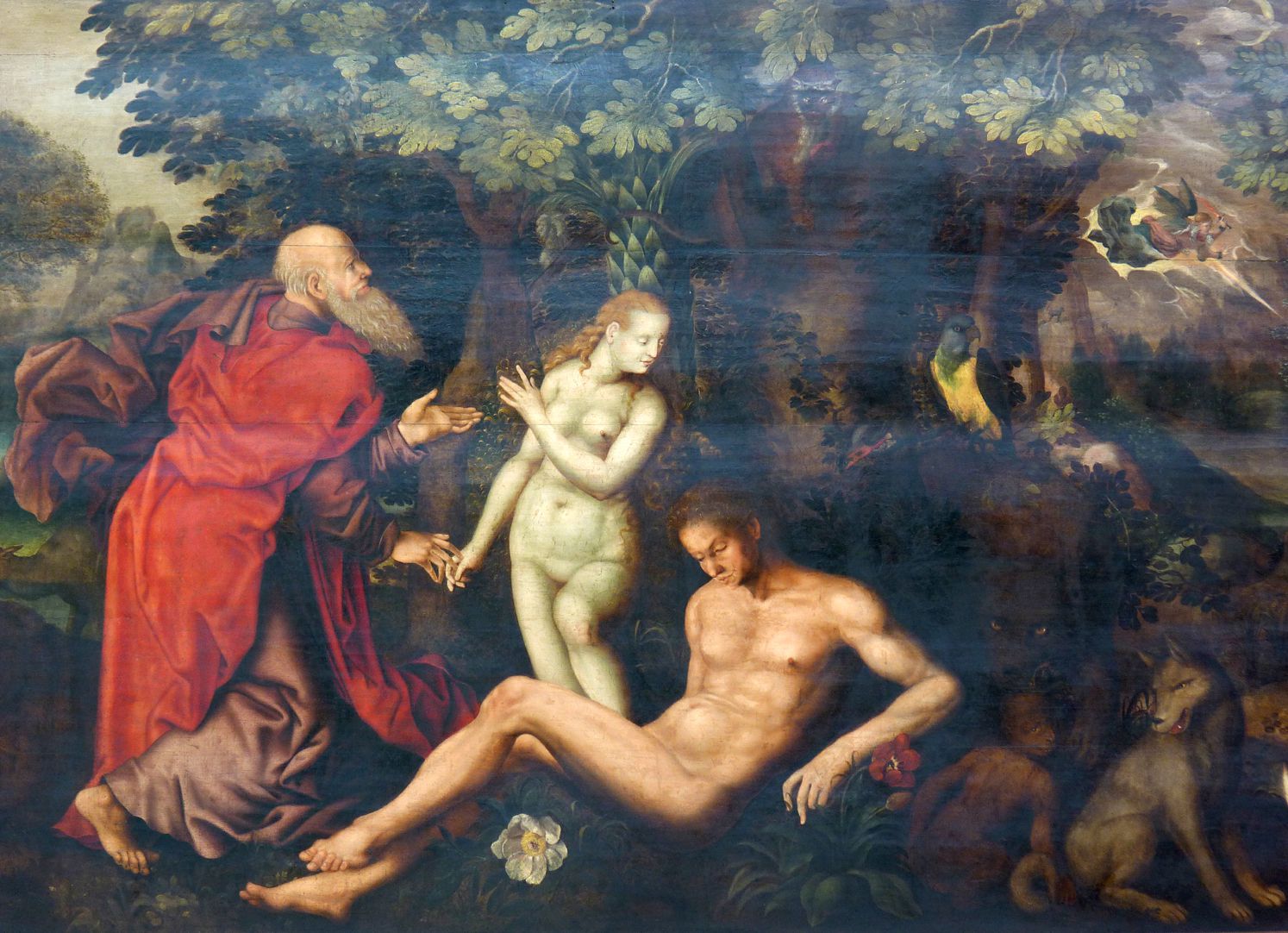
Remembrance picture of the family Behaim Creation of Eve

Remembrance picture of the family Behaim

Info

1603


Creation of Eve


photo 2016, Theo Noll

"The direct reference to Adam as the greatest ancestor of humanity was provided by the epitaph donated by the brothers Paul II, Christopher I, and Friedrich Behaim in 1603, which they commissioned from Johann Philipp Kreuzfelder [...] In the center of the rectangular panel, Adam appears, lying in Paradise, from whose rib God the Father is just creating Eve as his wife. Paradise appears as a densely wooded, flower-adorned garden, in which lions, birds, hares, and deer graze peacefully together. On both sides of the central creation of the first human couple, the scenes of the Fall and the Expulsion from Paradise can be seen in reduced form. The oval central section is flanked on both [...] sides by tree tendrils, on which hang, in close succession, the coats of arms of the Behaims and their wives, spanning twelve generations, beginning in 1187. On the left, the tree grows from the figure of a reclining, sleeping knight, elaborately armed, helmet and weapons laid down for sleep. The origin of the Brothers seemed to be fictitiously traced back to the 12th century via the first documented mention of a Nuremberg Behaim in 1288 [...]

On the right, he rises from a reclining figure in black attire, a doublet, coat, and beret. He is thus recognizable as a member of the city authorities – after the lineage originates from the knight, the patrician now, in a sense, forms the second root of the family [...] The right-hand lineage ends with the coats of arms of the three commissioners and their wives in the year of the commission, 1603. Both figures of the sleeping ancestors, in their posture, directly reference the reclining Adam in the central section and visually connect the origin of humanity with the origin of the family.

Quoted from Anna Pawlik: The Knightly Leading Ancestor - The Genealogy of the Nuremberg Patriciate as Visual Fiction, in: The Material Culture of the City in the Late Middle Ages and Early Modern Times, Vienna 2010, pp. 185-204, here pp. 194-195 florins, which he resold for the same price in 1630. He last lived at Neue Gasse 4, and his executors sold the house in 1635 for 1,150 florins. Georg I. Lauffer was his brother-in-law (his sister's husband), meaning that Krauwinckel's business passed to this family after his death.

Works: For a list of 269 pieces with illustrations, see Stalzer, Rechenpfennige, 1989. MuS: JAMESTOWN/Virginia: Jamestown Rediscovery, Association for the Preservation of Virginia Antiquities: Rechenpfennige. NUREMBERG, GNM. Lit.: Thieme-Becker; C. F. Gebert, in: MBNG, 1917; catalog of the Perko collection at the GNM; Mitchiner, 1988; Kohn, NHb Sebald. Exhibition: 2002/1. (quoted from the Nuremberg Artists' Lexicon, edited by Manfred H. Grieb).


Location: Nuremberg, St. Sebald-Church, Wall section sVI

Design: Kreuzfelder (Creutzfelder, Kreutzfelder), Johann Philipp

Realization: Kreuzfelder (Creutzfelder, Kreutzfelder), Johann Philipp

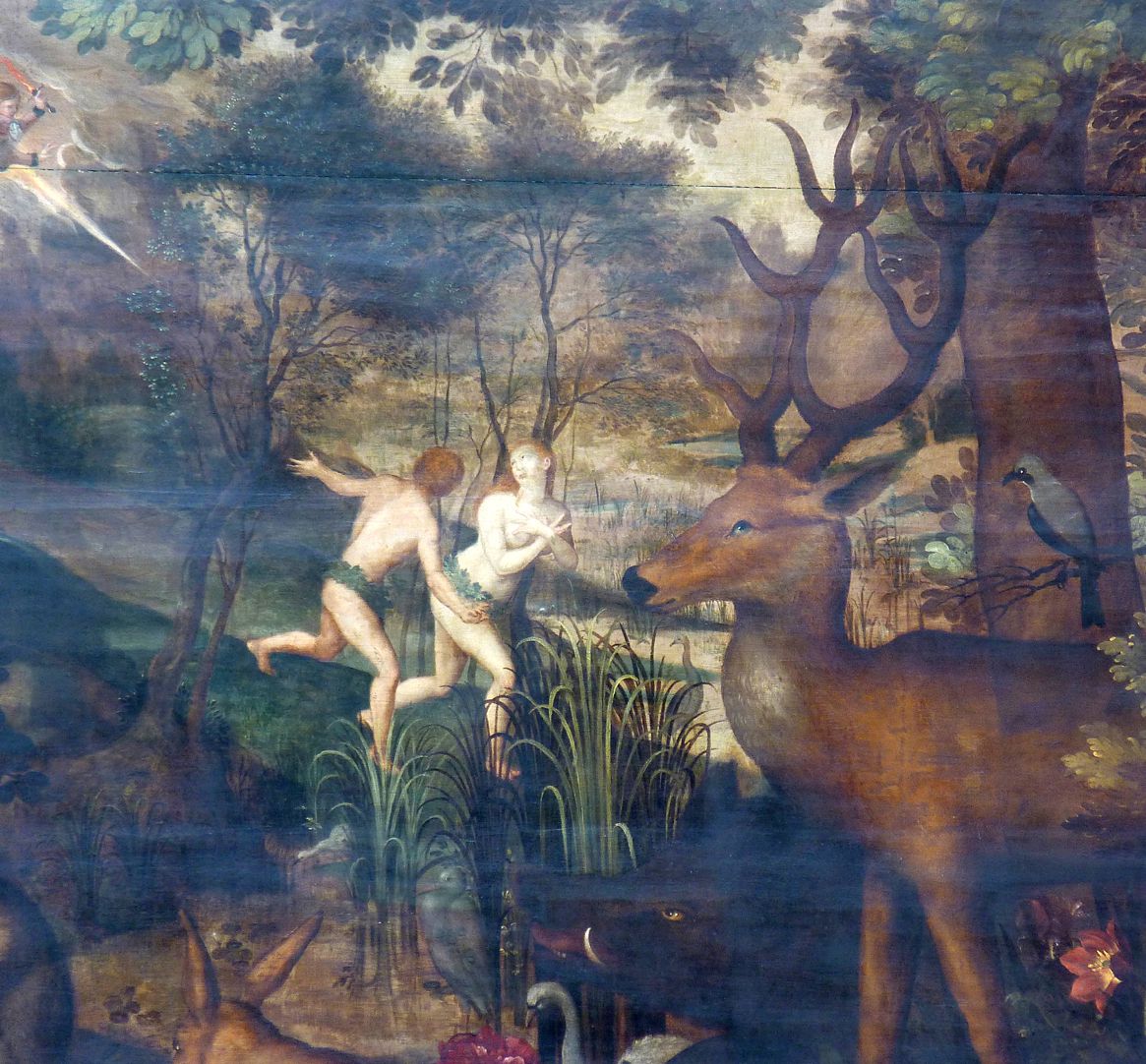
Remembrance picture of the family Behaim Animals in Paradise and Expulsion of Man

Remembrance picture of the family Behaim

1603

Animals in Paradise and Expulsion of Man


"The direct reference to Adam as the greatest ancestor of humanity was provided by the epitaph donated by the brothers Paul II, Christopher I, and Friedrich Behaim in 1603, which they commissioned from Johann Philipp Kreuzfelder [...] In the center of the rectangular panel, Adam appears, lying in Paradise, from whose rib God the Father is just creating Eve as his wife. Paradise appears as a densely wooded, flower-adorned garden, in which lions, birds, hares, and deer graze peacefully together. On both sides of the central creation of the first human couple, the scenes of the Fall and the Expulsion from Paradise can be seen in reduced form. The oval central section is flanked on both [...] sides by tree tendrils, on which hang, in close succession, the coats of arms of the Behaims and their wives, spanning twelve generations, beginning in 1187. On the left, the tree grows from the figure of a reclining, sleeping knight, elaborately armed, helmet and weapons laid down for sleep. The origin of the Brothers seemed to be fictitiously traced back to the 12th century via the first documented mention of a Nuremberg Behaim in 1288 [...]

On the right, he rises from a reclining figure in black attire, a doublet, coat, and beret. He is thus recognizable as a member of the city authorities – after the lineage originates from the knight, the patrician now, in a sense, forms the second root of the family [...] The right-hand lineage ends with the coats of arms of the three commissioners and their wives in the year of the commission, 1603. Both figures of the sleeping ancestors, in their posture, directly reference the reclining Adam in the central section and visually connect the origin of humanity with the origin of the family.

Quoted from Anna Pawlik: The Knightly Leading Ancestor - The Genealogy of the Nuremberg Patriciate as Visual Fiction, in: The Material Culture of the City in the Late Middle Ages and Early Modern Times, Vienna 2010, pp. 185-204, here pp. 194-195 florins, which he resold for the same price in 1630. He last lived at Neue Gasse 4, and his executors sold the house in 1635 for 1,150 florins. Georg I. Lauffer was his brother-in-law (his sister's husband), meaning that Krauwinckel's business passed to this family after his death.

Works: For a list of 269 pieces with illustrations, see Stalzer, Rechenpfennige, 1989. MuS: JAMESTOWN/Virginia: Jamestown Rediscovery, Association for the Preservation of Virginia Antiquities: Rechenpfennige. NUREMBERG, GNM. Lit.: Thieme-Becker; C. F. Gebert, in: MBNG, 1917; catalog of the Perko collection at the GNM; Mitchiner, 1988; Kohn, NHb Sebald. Exhibition: 2002/1. (quoted from the Nuremberg Artists' Lexicon, edited by Manfred H. Grieb).


Location: Nuremberg, St. Sebald-Church, Wall section sVI

Design: Kreuzfelder (Creutzfelder, Kreutzfelder), Johann Philipp

Realization: Kreuzfelder (Creutzfelder, Kreutzfelder), Johann Philipp

photo 2016, Theo Noll

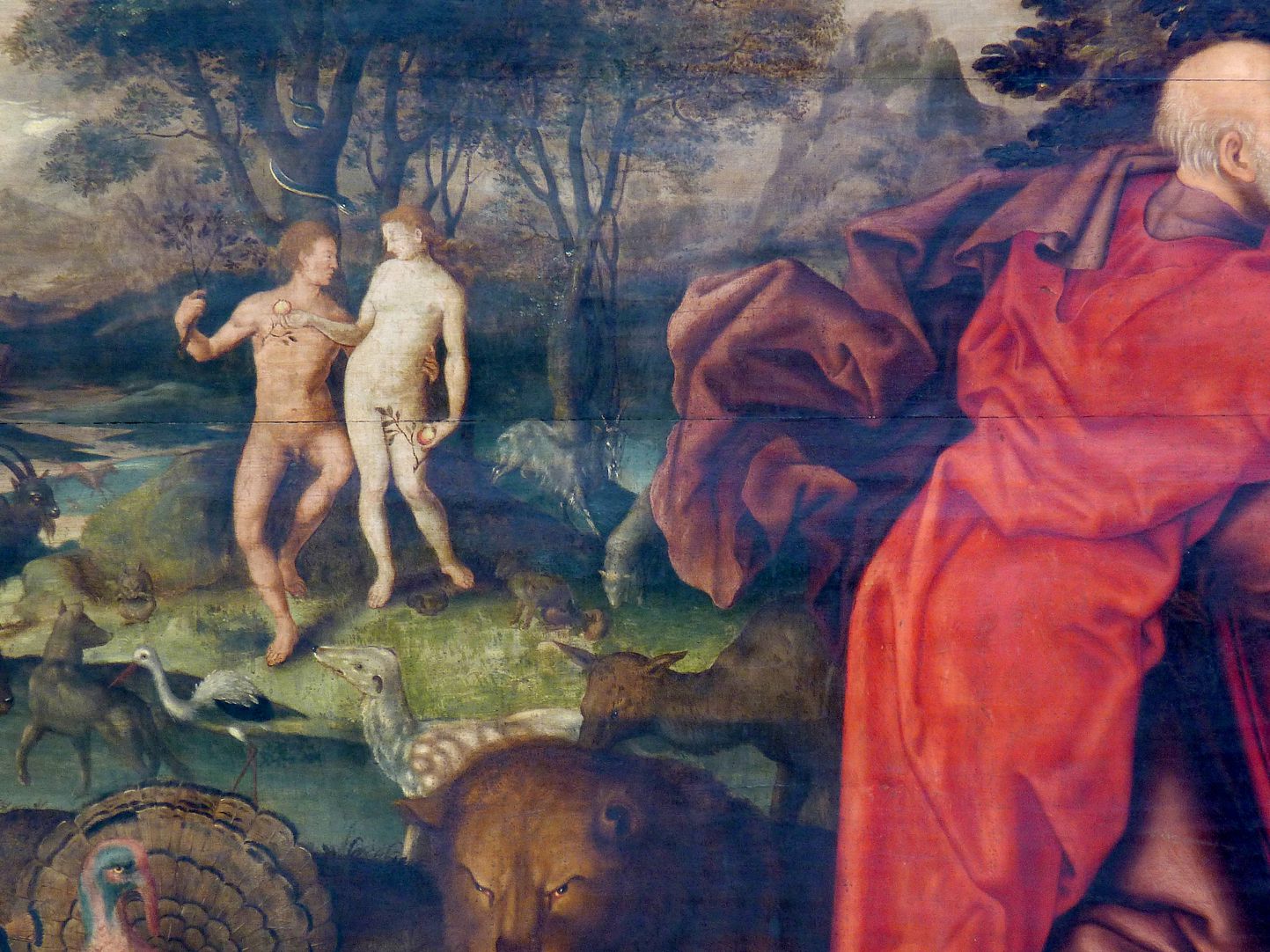
Remembrance picture of the family Behaim Right part of the picture, from left to right: expulsion of Man, animals, lying patriarch of the family Behaim with coat of arms and banners

Remembrance picture of the family Behaim

1603

Right part of the picture, from left to right: expulsion of Man, animals, lying patriarch of the family Behaim with coat of arms and banners


"The direct reference to Adam as the greatest ancestor of humanity was provided by the epitaph donated by the brothers Paul II, Christopher I, and Friedrich Behaim in 1603, which they commissioned from Johann Philipp Kreuzfelder [...] In the center of the rectangular panel, Adam appears, lying in Paradise, from whose rib God the Father is just creating Eve as his wife. Paradise appears as a densely wooded, flower-adorned garden, in which lions, birds, hares, and deer graze peacefully together. On both sides of the central creation of the first human couple, the scenes of the Fall and the Expulsion from Paradise can be seen in reduced form. The oval central section is flanked on both [...] sides by tree tendrils, on which hang, in close succession, the coats of arms of the Behaims and their wives, spanning twelve generations, beginning in 1187. On the left, the tree grows from the figure of a reclining, sleeping knight, elaborately armed, helmet and weapons laid down for sleep. The origin of the Brothers seemed to be fictitiously traced back to the 12th century via the first documented mention of a Nuremberg Behaim in 1288 [...]

On the right, he rises from a reclining figure in black attire, a doublet, coat, and beret. He is thus recognizable as a member of the city authorities – after the lineage originates from the knight, the patrician now, in a sense, forms the second root of the family [...] The right-hand lineage ends with the coats of arms of the three commissioners and their wives in the year of the commission, 1603. Both figures of the sleeping ancestors, in their posture, directly reference the reclining Adam in the central section and visually connect the origin of humanity with the origin of the family.

Quoted from Anna Pawlik: The Knightly Leading Ancestor - The Genealogy of the Nuremberg Patriciate as Visual Fiction, in: The Material Culture of the City in the Late Middle Ages and Early Modern Times, Vienna 2010, pp. 185-204, here pp. 194-195 florins, which he resold for the same price in 1630. He last lived at Neue Gasse 4, and his executors sold the house in 1635 for 1,150 florins. Georg I. Lauffer was his brother-in-law (his sister's husband), meaning that Krauwinckel's business passed to this family after his death.

Works: For a list of 269 pieces with illustrations, see Stalzer, Rechenpfennige, 1989. MuS: JAMESTOWN/Virginia: Jamestown Rediscovery, Association for the Preservation of Virginia Antiquities: Rechenpfennige. NUREMBERG, GNM. Lit.: Thieme-Becker; C. F. Gebert, in: MBNG, 1917; catalog of the Perko collection at the GNM; Mitchiner, 1988; Kohn, NHb Sebald. Exhibition: 2002/1. (quoted from the Nuremberg Artists' Lexicon, edited by Manfred H. Grieb).


Location: Nuremberg, St. Sebald-Church, Wall section sVI

Design: Kreuzfelder (Creutzfelder, Kreutzfelder), Johann Philipp

Realization: Kreuzfelder (Creutzfelder, Kreutzfelder), Johann Philipp

photo 2016, Theo Noll

Remembrance picture of the family Behaim Fall of Man, detail

Remembrance picture of the family Behaim

1603

Fall of Man, detail


"The direct reference to Adam as the greatest ancestor of humanity was provided by the epitaph donated by the brothers Paul II, Christopher I, and Friedrich Behaim in 1603, which they commissioned from Johann Philipp Kreuzfelder [...] In the center of the rectangular panel, Adam appears, lying in Paradise, from whose rib God the Father is just creating Eve as his wife. Paradise appears as a densely wooded, flower-adorned garden, in which lions, birds, hares, and deer graze peacefully together. On both sides of the central creation of the first human couple, the scenes of the Fall and the Expulsion from Paradise can be seen in reduced form. The oval central section is flanked on both [...] sides by tree tendrils, on which hang, in close succession, the coats of arms of the Behaims and their wives, spanning twelve generations, beginning in 1187. On the left, the tree grows from the figure of a reclining, sleeping knight, elaborately armed, helmet and weapons laid down for sleep. The origin of the Brothers seemed to be fictitiously traced back to the 12th century via the first documented mention of a Nuremberg Behaim in 1288 [...]

On the right, he rises from a reclining figure in black attire, a doublet, coat, and beret. He is thus recognizable as a member of the city authorities – after the lineage originates from the knight, the patrician now, in a sense, forms the second root of the family [...] The right-hand lineage ends with the coats of arms of the three commissioners and their wives in the year of the commission, 1603. Both figures of the sleeping ancestors, in their posture, directly reference the reclining Adam in the central section and visually connect the origin of humanity with the origin of the family.

Quoted from Anna Pawlik: The Knightly Leading Ancestor - The Genealogy of the Nuremberg Patriciate as Visual Fiction, in: The Material Culture of the City in the Late Middle Ages and Early Modern Times, Vienna 2010, pp. 185-204, here pp. 194-195 florins, which he resold for the same price in 1630. He last lived at Neue Gasse 4, and his executors sold the house in 1635 for 1,150 florins. Georg I. Lauffer was his brother-in-law (his sister's husband), meaning that Krauwinckel's business passed to this family after his death.

Works: For a list of 269 pieces with illustrations, see Stalzer, Rechenpfennige, 1989. MuS: JAMESTOWN/Virginia: Jamestown Rediscovery, Association for the Preservation of Virginia Antiquities: Rechenpfennige. NUREMBERG, GNM. Lit.: Thieme-Becker; C. F. Gebert, in: MBNG, 1917; catalog of the Perko collection at the GNM; Mitchiner, 1988; Kohn, NHb Sebald. Exhibition: 2002/1. (quoted from the Nuremberg Artists' Lexicon, edited by Manfred H. Grieb).


Location: Nuremberg, St. Sebald-Church, Wall section sVI

Design: Kreuzfelder (Creutzfelder, Kreutzfelder), Johann Philipp

Realization: Kreuzfelder (Creutzfelder, Kreutzfelder), Johann Philipp

photo 2016, Theo Noll

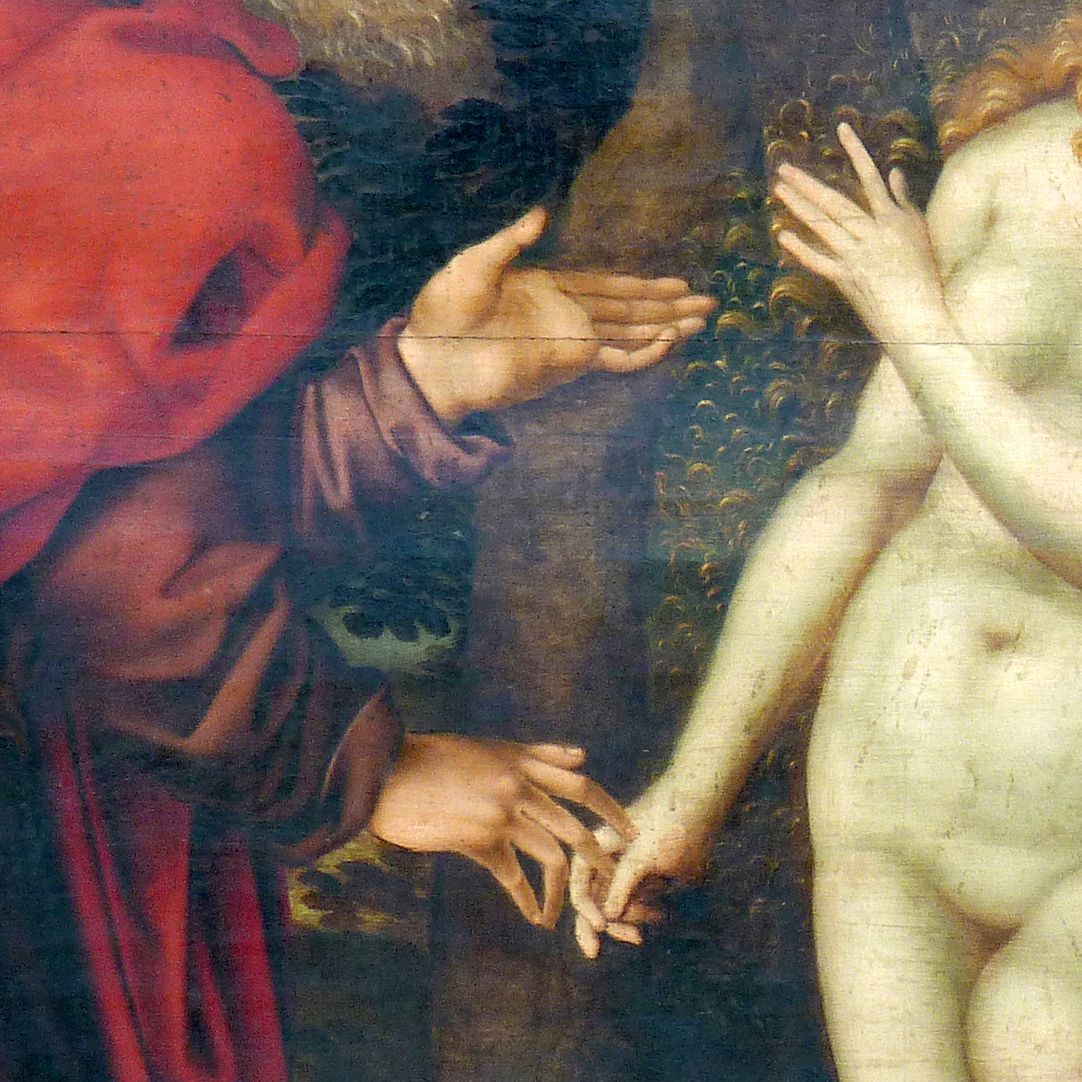
Remembrance picture of the family Behaim God creates Eve, pulling her out of Adam´s side

Remembrance picture of the family Behaim

1603

God creates Eve, pulling her out of Adam´s side


"The direct reference to Adam as the greatest ancestor of humanity was provided by the epitaph donated by the brothers Paul II, Christopher I, and Friedrich Behaim in 1603, which they commissioned from Johann Philipp Kreuzfelder [...] In the center of the rectangular panel, Adam appears, lying in Paradise, from whose rib God the Father is just creating Eve as his wife. Paradise appears as a densely wooded, flower-adorned garden, in which lions, birds, hares, and deer graze peacefully together. On both sides of the central creation of the first human couple, the scenes of the Fall and the Expulsion from Paradise can be seen in reduced form. The oval central section is flanked on both [...] sides by tree tendrils, on which hang, in close succession, the coats of arms of the Behaims and their wives, spanning twelve generations, beginning in 1187. On the left, the tree grows from the figure of a reclining, sleeping knight, elaborately armed, helmet and weapons laid down for sleep. The origin of the Brothers seemed to be fictitiously traced back to the 12th century via the first documented mention of a Nuremberg Behaim in 1288 [...]

On the right, he rises from a reclining figure in black attire, a doublet, coat, and beret. He is thus recognizable as a member of the city authorities – after the lineage originates from the knight, the patrician now, in a sense, forms the second root of the family [...] The right-hand lineage ends with the coats of arms of the three commissioners and their wives in the year of the commission, 1603. Both figures of the sleeping ancestors, in their posture, directly reference the reclining Adam in the central section and visually connect the origin of humanity with the origin of the family.

Quoted from Anna Pawlik: The Knightly Leading Ancestor - The Genealogy of the Nuremberg Patriciate as Visual Fiction, in: The Material Culture of the City in the Late Middle Ages and Early Modern Times, Vienna 2010, pp. 185-204, here pp. 194-195 florins, which he resold for the same price in 1630. He last lived at Neue Gasse 4, and his executors sold the house in 1635 for 1,150 florins. Georg I. Lauffer was his brother-in-law (his sister's husband), meaning that Krauwinckel's business passed to this family after his death.

Works: For a list of 269 pieces with illustrations, see Stalzer, Rechenpfennige, 1989. MuS: JAMESTOWN/Virginia: Jamestown Rediscovery, Association for the Preservation of Virginia Antiquities: Rechenpfennige. NUREMBERG, GNM. Lit.: Thieme-Becker; C. F. Gebert, in: MBNG, 1917; catalog of the Perko collection at the GNM; Mitchiner, 1988; Kohn, NHb Sebald. Exhibition: 2002/1. (quoted from the Nuremberg Artists' Lexicon, edited by Manfred H. Grieb).


Location: Nuremberg, St. Sebald-Church, Wall section sVI

Design: Kreuzfelder (Creutzfelder, Kreutzfelder), Johann Philipp

Realization: Kreuzfelder (Creutzfelder, Kreutzfelder), Johann Philipp

photo 2016, Theo Noll

Remembrance picture of the family Behaim God creates Eve, pulling her out of Adam´s side, detail

Remembrance picture of the family Behaim

1603

God creates Eve, pulling her out of Adam´s side, detail


"The direct reference to Adam as the greatest ancestor of humanity was provided by the epitaph donated by the brothers Paul II, Christopher I, and Friedrich Behaim in 1603, which they commissioned from Johann Philipp Kreuzfelder [...] In the center of the rectangular panel, Adam appears, lying in Paradise, from whose rib God the Father is just creating Eve as his wife. Paradise appears as a densely wooded, flower-adorned garden, in which lions, birds, hares, and deer graze peacefully together. On both sides of the central creation of the first human couple, the scenes of the Fall and the Expulsion from Paradise can be seen in reduced form. The oval central section is flanked on both [...] sides by tree tendrils, on which hang, in close succession, the coats of arms of the Behaims and their wives, spanning twelve generations, beginning in 1187. On the left, the tree grows from the figure of a reclining, sleeping knight, elaborately armed, helmet and weapons laid down for sleep. The origin of the Brothers seemed to be fictitiously traced back to the 12th century via the first documented mention of a Nuremberg Behaim in 1288 [...]

On the right, he rises from a reclining figure in black attire, a doublet, coat, and beret. He is thus recognizable as a member of the city authorities – after the lineage originates from the knight, the patrician now, in a sense, forms the second root of the family [...] The right-hand lineage ends with the coats of arms of the three commissioners and their wives in the year of the commission, 1603. Both figures of the sleeping ancestors, in their posture, directly reference the reclining Adam in the central section and visually connect the origin of humanity with the origin of the family.

Quoted from Anna Pawlik: The Knightly Leading Ancestor - The Genealogy of the Nuremberg Patriciate as Visual Fiction, in: The Material Culture of the City in the Late Middle Ages and Early Modern Times, Vienna 2010, pp. 185-204, here pp. 194-195 florins, which he resold for the same price in 1630. He last lived at Neue Gasse 4, and his executors sold the house in 1635 for 1,150 florins. Georg I. Lauffer was his brother-in-law (his sister's husband), meaning that Krauwinckel's business passed to this family after his death.

Works: For a list of 269 pieces with illustrations, see Stalzer, Rechenpfennige, 1989. MuS: JAMESTOWN/Virginia: Jamestown Rediscovery, Association for the Preservation of Virginia Antiquities: Rechenpfennige. NUREMBERG, GNM. Lit.: Thieme-Becker; C. F. Gebert, in: MBNG, 1917; catalog of the Perko collection at the GNM; Mitchiner, 1988; Kohn, NHb Sebald. Exhibition: 2002/1. (quoted from the Nuremberg Artists' Lexicon, edited by Manfred H. Grieb).


Location: Nuremberg, St. Sebald-Church, Wall section sVI

Design: Kreuzfelder (Creutzfelder, Kreutzfelder), Johann Philipp

Realization: Kreuzfelder (Creutzfelder, Kreutzfelder), Johann Philipp

photo 2016, Theo Noll

Remembrance picture of the family Behaim Expulsion from Paradise, detail

Remembrance picture of the family Behaim

1603

Expulsion from Paradise, detail


"The direct reference to Adam as the greatest ancestor of humanity was provided by the epitaph donated by the brothers Paul II, Christopher I, and Friedrich Behaim in 1603, which they commissioned from Johann Philipp Kreuzfelder [...] In the center of the rectangular panel, Adam appears, lying in Paradise, from whose rib God the Father is just creating Eve as his wife. Paradise appears as a densely wooded, flower-adorned garden, in which lions, birds, hares, and deer graze peacefully together. On both sides of the central creation of the first human couple, the scenes of the Fall and the Expulsion from Paradise can be seen in reduced form. The oval central section is flanked on both [...] sides by tree tendrils, on which hang, in close succession, the coats of arms of the Behaims and their wives, spanning twelve generations, beginning in 1187. On the left, the tree grows from the figure of a reclining, sleeping knight, elaborately armed, helmet and weapons laid down for sleep. The origin of the Brothers seemed to be fictitiously traced back to the 12th century via the first documented mention of a Nuremberg Behaim in 1288 [...]

On the right, he rises from a reclining figure in black attire, a doublet, coat, and beret. He is thus recognizable as a member of the city authorities – after the lineage originates from the knight, the patrician now, in a sense, forms the second root of the family [...] The right-hand lineage ends with the coats of arms of the three commissioners and their wives in the year of the commission, 1603. Both figures of the sleeping ancestors, in their posture, directly reference the reclining Adam in the central section and visually connect the origin of humanity with the origin of the family.

Quoted from Anna Pawlik: The Knightly Leading Ancestor - The Genealogy of the Nuremberg Patriciate as Visual Fiction, in: The Material Culture of the City in the Late Middle Ages and Early Modern Times, Vienna 2010, pp. 185-204, here pp. 194-195 florins, which he resold for the same price in 1630. He last lived at Neue Gasse 4, and his executors sold the house in 1635 for 1,150 florins. Georg I. Lauffer was his brother-in-law (his sister's husband), meaning that Krauwinckel's business passed to this family after his death.

Works: For a list of 269 pieces with illustrations, see Stalzer, Rechenpfennige, 1989. MuS: JAMESTOWN/Virginia: Jamestown Rediscovery, Association for the Preservation of Virginia Antiquities: Rechenpfennige. NUREMBERG, GNM. Lit.: Thieme-Becker; C. F. Gebert, in: MBNG, 1917; catalog of the Perko collection at the GNM; Mitchiner, 1988; Kohn, NHb Sebald. Exhibition: 2002/1. (quoted from the Nuremberg Artists' Lexicon, edited by Manfred H. Grieb).


Location: Nuremberg, St. Sebald-Church, Wall section sVI

Design: Kreuzfelder (Creutzfelder, Kreutzfelder), Johann Philipp

Realization: Kreuzfelder (Creutzfelder, Kreutzfelder), Johann Philipp

photo 2016,

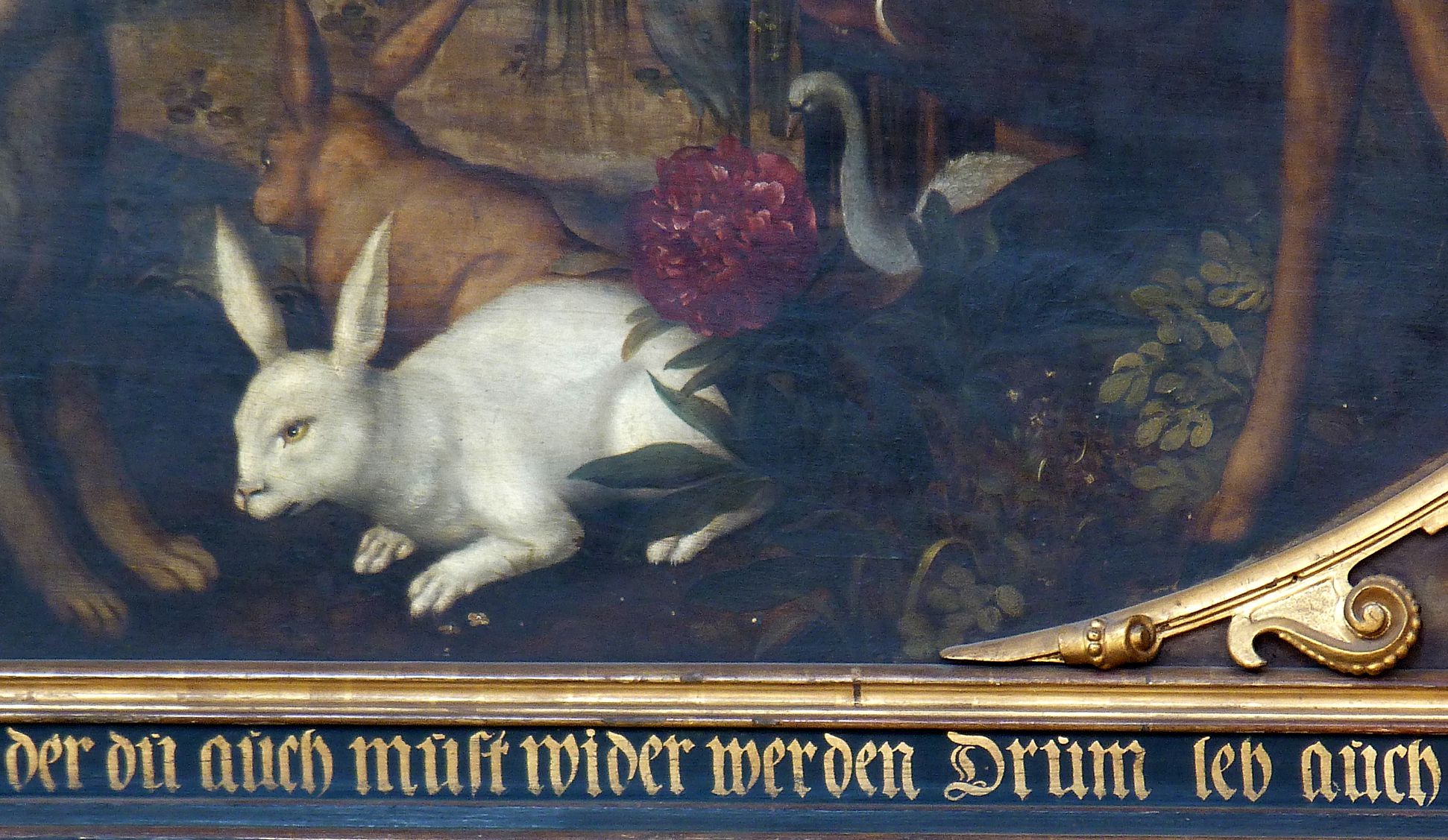
Remembrance picture of the family Behaim Animals of Paradise, hares

Remembrance picture of the family Behaim

Info

1603


Animals of Paradise, hares


photo 2016, Theo Noll

"The direct reference to Adam as the greatest ancestor of humanity was provided by the epitaph donated by the brothers Paul II, Christopher I, and Friedrich Behaim in 1603, which they commissioned from Johann Philipp Kreuzfelder [...] In the center of the rectangular panel, Adam appears, lying in Paradise, from whose rib God the Father is just creating Eve as his wife. Paradise appears as a densely wooded, flower-adorned garden, in which lions, birds, hares, and deer graze peacefully together. On both sides of the central creation of the first human couple, the scenes of the Fall and the Expulsion from Paradise can be seen in reduced form. The oval central section is flanked on both [...] sides by tree tendrils, on which hang, in close succession, the coats of arms of the Behaims and their wives, spanning twelve generations, beginning in 1187. On the left, the tree grows from the figure of a reclining, sleeping knight, elaborately armed, helmet and weapons laid down for sleep. The origin of the Brothers seemed to be fictitiously traced back to the 12th century via the first documented mention of a Nuremberg Behaim in 1288 [...]

On the right, he rises from a reclining figure in black attire, a doublet, coat, and beret. He is thus recognizable as a member of the city authorities – after the lineage originates from the knight, the patrician now, in a sense, forms the second root of the family [...] The right-hand lineage ends with the coats of arms of the three commissioners and their wives in the year of the commission, 1603. Both figures of the sleeping ancestors, in their posture, directly reference the reclining Adam in the central section and visually connect the origin of humanity with the origin of the family.

Quoted from Anna Pawlik: The Knightly Leading Ancestor - The Genealogy of the Nuremberg Patriciate as Visual Fiction, in: The Material Culture of the City in the Late Middle Ages and Early Modern Times, Vienna 2010, pp. 185-204, here pp. 194-195 florins, which he resold for the same price in 1630. He last lived at Neue Gasse 4, and his executors sold the house in 1635 for 1,150 florins. Georg I. Lauffer was his brother-in-law (his sister's husband), meaning that Krauwinckel's business passed to this family after his death.

Works: For a list of 269 pieces with illustrations, see Stalzer, Rechenpfennige, 1989. MuS: JAMESTOWN/Virginia: Jamestown Rediscovery, Association for the Preservation of Virginia Antiquities: Rechenpfennige. NUREMBERG, GNM. Lit.: Thieme-Becker; C. F. Gebert, in: MBNG, 1917; catalog of the Perko collection at the GNM; Mitchiner, 1988; Kohn, NHb Sebald. Exhibition: 2002/1. (quoted from the Nuremberg Artists' Lexicon, edited by Manfred H. Grieb).


Location: Nuremberg, St. Sebald-Church, Wall section sVI

Design: Kreuzfelder (Creutzfelder, Kreutzfelder), Johann Philipp

Realization: Kreuzfelder (Creutzfelder, Kreutzfelder), Johann Philipp

Johann Philipp
Kreuzfelder (Creutzfelder, Kreutzfelder)

Further works

Bancoherren und Banchieri (gentlemen-bankers and banchieri)
Remembrance picture of the family Behaim
Portrait Bartholomäus Viatis

Menu

  • New
  • Search
  • Artists
  • Works of art
  • About us
  • Deutsche Version
  • Instagram

A project of the Förderverein Kulturhistorisches Museum Nürnberg e.V. (Association for the Promotion of the Museum of Cultural History Nuremberg - registered association)

The Förderverein Kulturhistorisches Museum Nürnberg e.V. supports the establishment of a museum of cultural history in Nuremberg. In anticipation of this it presents selected works of Nuremberg art in digital form. The Association will be happy to welcome new members. You will find a declaration of membership on our website.

Support us Feedback

Logo

© Protected under German copyright laws

  • Imprint
  • Privacy policy

Feedback

Please let us know your opinion about our website, the museum, our idea or any other evaluation. We shall be please about any comments and suggestions..