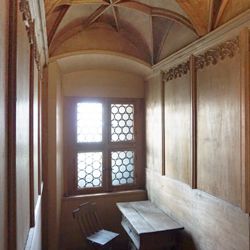
Small studio of Anton Koberger
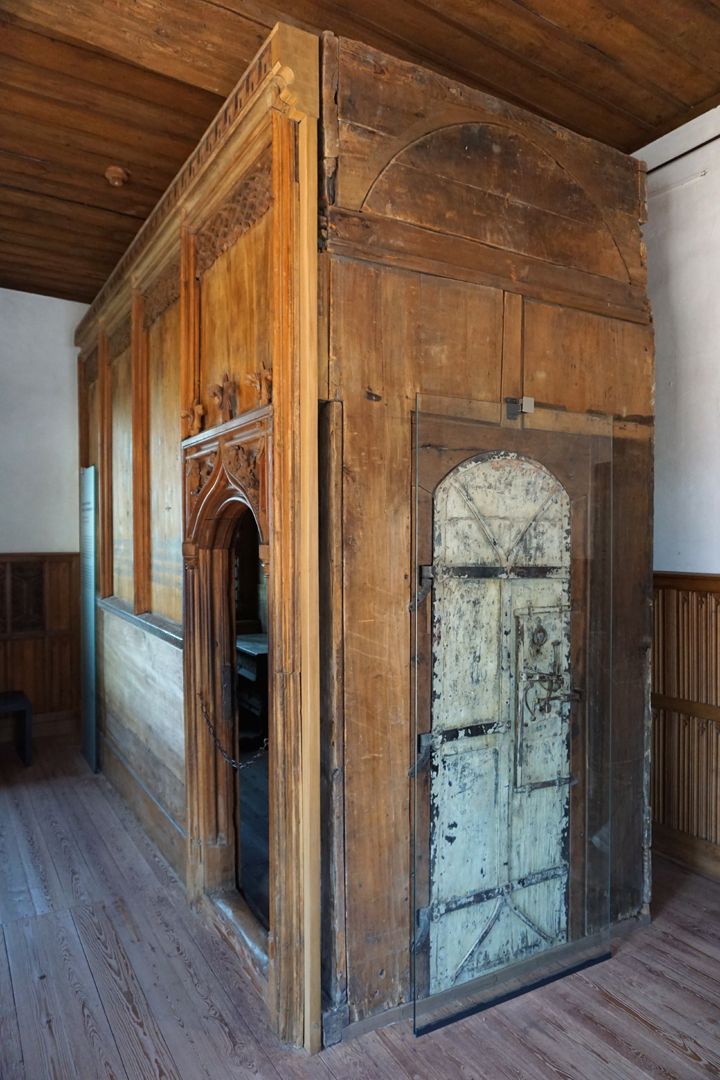
Small studio of Anton Koberger
1490
General view
The former property of the famous publisher Anton Koberger at Egidienplatz 9-13 no longer exists, but its centrepiece has survived the times, since it was brought to Wartburg Castle above Eisenach in the mid-19th century. It is a studiolo, i.e. according to the modern Renaissance concept, an intimate study room of the master of the house. It was commissioned in pure late Gothic formal vocabulary by Koberger around 1490. The work was thoroughly analysed in an article in the Wartburg-Jahrbuch 2016 (Regensburg 2017, Thomas Eissing and Sabrina Kraus: "Vom Pirckheimer Stübchen zum Koberger Schrankstübchen"). The studiolo is an independent construction in noble woods, in the form of a micro-castello, according to the final cornice with inlays as castle battlements. The carpentry work was carried out by Hans Straubinger, who was allowed to hire 3-4 additional journeymen for work on Anton Koberger's house by council resolution of 26.6.1490, when order permitted. The little room is open on the two narrow sides (window and metal door, which used to be connected to a corridor), and beyond that on the front long side. The entrance shows a narrow segmental arch under a keel-arched canopy with abundant overstaffing, crabs and crowning finials. A moulding at chest level bears inlays as a schematic woven fence. The panelling, subdivided into fields, shows blind friezes at the upper end. The same accompanies the interior walls below the imitation of a late Gothic net vault, which, like the rest of the construction, was quite elaborately carpentered. The originality of the vaulting style established in the above-mentioned publication could be compared with the somewhat younger wooden vault imitation of the Holy Sepulchre in the Marienkirche in Zwickau from 1507, which according to Dehio is a Nuremberg work.
Dr. Pablo de la Riestra, September 2020
Location: Eisenach, outer castle of the Wartburg, until 1867 Nuremberg, Egidienberg 13
Realization: Straubinger, Hans
Depicted: Koberger, Anton d. Ä.
photo 2020, Theo Noll
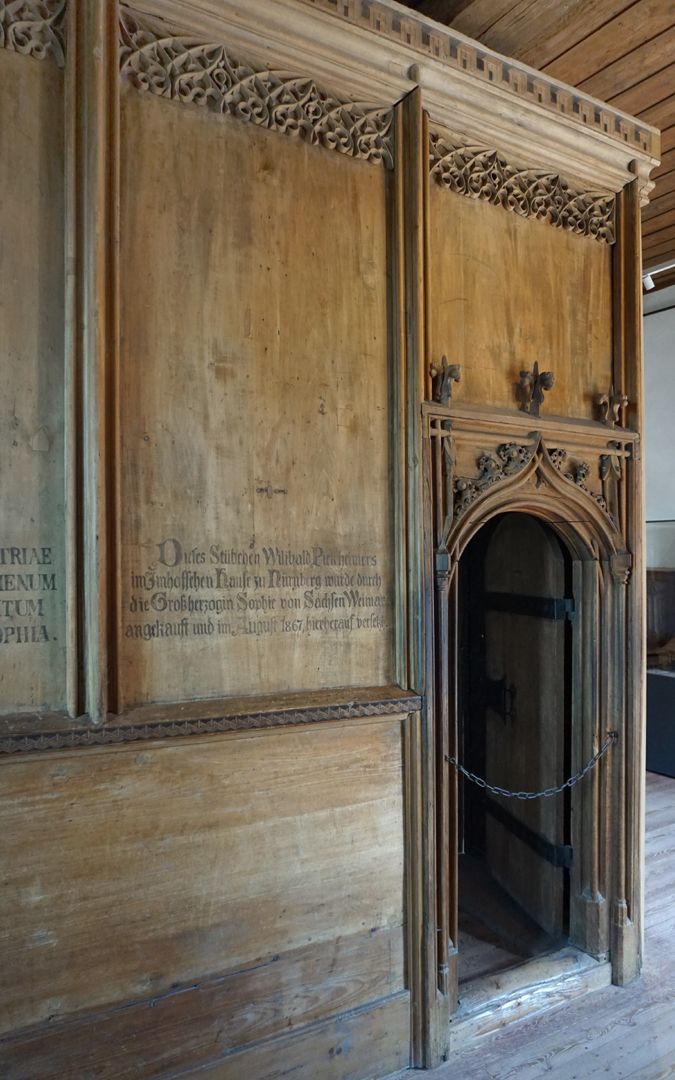
Small studio of Anton Koberger
1490
Entrance area
The former property of the famous publisher Anton Koberger at Egidienplatz 9-13 no longer exists, but its centrepiece has survived the times, since it was brought to Wartburg Castle above Eisenach in the mid-19th century. It is a studiolo, i.e. according to the modern Renaissance concept, an intimate study room of the master of the house. It was commissioned in pure late Gothic formal vocabulary by Koberger around 1490. The work was thoroughly analysed in an article in the Wartburg-Jahrbuch 2016 (Regensburg 2017, Thomas Eissing and Sabrina Kraus: "Vom Pirckheimer Stübchen zum Koberger Schrankstübchen"). The studiolo is an independent construction in noble woods, in the form of a micro-castello, according to the final cornice with inlays as castle battlements. The carpentry work was carried out by Hans Straubinger, who was allowed to hire 3-4 additional journeymen for work on Anton Koberger's house by council resolution of 26.6.1490, when order permitted. The little room is open on the two narrow sides (window and metal door, which used to be connected to a corridor), and beyond that on the front long side. The entrance shows a narrow segmental arch under a keel-arched canopy with abundant overstaffing, crabs and crowning finials. A moulding at chest level bears inlays as a schematic woven fence. The panelling, subdivided into fields, shows blind friezes at the upper end. The same accompanies the interior walls below the imitation of a late Gothic net vault, which, like the rest of the construction, was quite elaborately carpentered. The originality of the vaulting style established in the above-mentioned publication could be compared with the somewhat younger wooden vault imitation of the Holy Sepulchre in the Marienkirche in Zwickau from 1507, which according to Dehio is a Nuremberg work.
Dr. Pablo de la Riestra, September 2020
Location: Eisenach, outer castle of the Wartburg, until 1867 Nuremberg, Egidienberg 13
Realization: Straubinger, Hans
Depicted: Koberger, Anton d. Ä.
photo 2020, Pablo de la Riestra

Small studio of Anton Koberger
1490
Entrance
The former property of the famous publisher Anton Koberger at Egidienplatz 9-13 no longer exists, but its centrepiece has survived the times, since it was brought to Wartburg Castle above Eisenach in the mid-19th century. It is a studiolo, i.e. according to the modern Renaissance concept, an intimate study room of the master of the house. It was commissioned in pure late Gothic formal vocabulary by Koberger around 1490. The work was thoroughly analysed in an article in the Wartburg-Jahrbuch 2016 (Regensburg 2017, Thomas Eissing and Sabrina Kraus: "Vom Pirckheimer Stübchen zum Koberger Schrankstübchen"). The studiolo is an independent construction in noble woods, in the form of a micro-castello, according to the final cornice with inlays as castle battlements. The carpentry work was carried out by Hans Straubinger, who was allowed to hire 3-4 additional journeymen for work on Anton Koberger's house by council resolution of 26.6.1490, when order permitted. The little room is open on the two narrow sides (window and metal door, which used to be connected to a corridor), and beyond that on the front long side. The entrance shows a narrow segmental arch under a keel-arched canopy with abundant overstaffing, crabs and crowning finials. A moulding at chest level bears inlays as a schematic woven fence. The panelling, subdivided into fields, shows blind friezes at the upper end. The same accompanies the interior walls below the imitation of a late Gothic net vault, which, like the rest of the construction, was quite elaborately carpentered. The originality of the vaulting style established in the above-mentioned publication could be compared with the somewhat younger wooden vault imitation of the Holy Sepulchre in the Marienkirche in Zwickau from 1507, which according to Dehio is a Nuremberg work.
Dr. Pablo de la Riestra, September 2020
Location: Eisenach, outer castle of the Wartburg, until 1867 Nuremberg, Egidienberg 13
Realization: Straubinger, Hans
Depicted: Koberger, Anton d. Ä.
photo 2020, Pablo de la Riestra
Small studio of Anton Koberger
1490
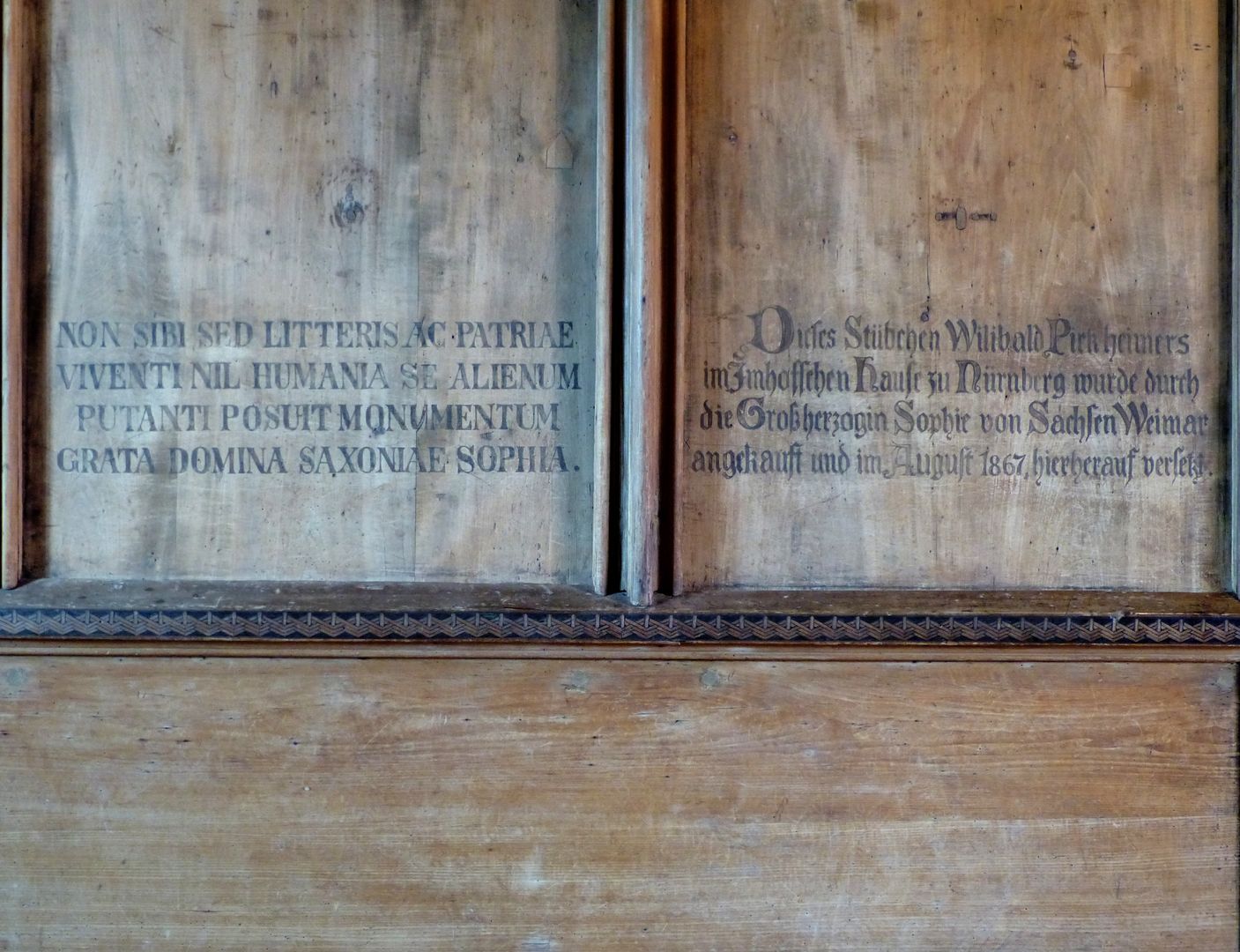
Inscription with the misleading reference to Pirckheimer
The former property of the famous publisher Anton Koberger at Egidienplatz 9-13 no longer exists, but its centrepiece has survived the times, since it was brought to Wartburg Castle above Eisenach in the mid-19th century. It is a studiolo, i.e. according to the modern Renaissance concept, an intimate study room of the master of the house. It was commissioned in pure late Gothic formal vocabulary by Koberger around 1490. The work was thoroughly analysed in an article in the Wartburg-Jahrbuch 2016 (Regensburg 2017, Thomas Eissing and Sabrina Kraus: "Vom Pirckheimer Stübchen zum Koberger Schrankstübchen"). The studiolo is an independent construction in noble woods, in the form of a micro-castello, according to the final cornice with inlays as castle battlements. The carpentry work was carried out by Hans Straubinger, who was allowed to hire 3-4 additional journeymen for work on Anton Koberger's house by council resolution of 26.6.1490, when order permitted. The little room is open on the two narrow sides (window and metal door, which used to be connected to a corridor), and beyond that on the front long side. The entrance shows a narrow segmental arch under a keel-arched canopy with abundant overstaffing, crabs and crowning finials. A moulding at chest level bears inlays as a schematic woven fence. The panelling, subdivided into fields, shows blind friezes at the upper end. The same accompanies the interior walls below the imitation of a late Gothic net vault, which, like the rest of the construction, was quite elaborately carpentered. The originality of the vaulting style established in the above-mentioned publication could be compared with the somewhat younger wooden vault imitation of the Holy Sepulchre in the Marienkirche in Zwickau from 1507, which according to Dehio is a Nuremberg work.
Dr. Pablo de la Riestra, September 2020
Location: Eisenach, outer castle of the Wartburg, until 1867 Nuremberg, Egidienberg 13
Realization: Straubinger, Hans
Depicted: Koberger, Anton d. Ä.
photo 2020, Theo Noll
Small studio of Anton Koberger
1490
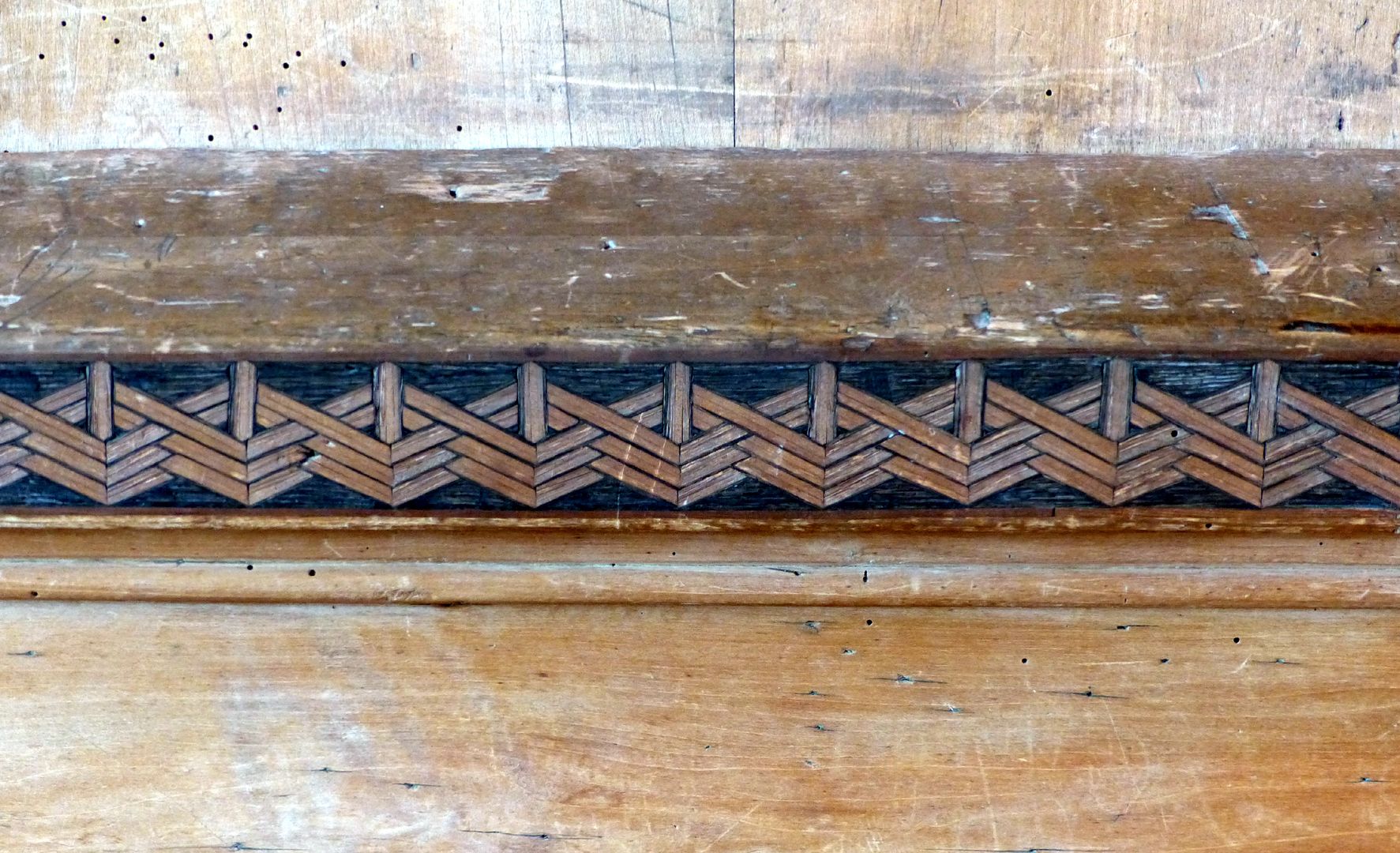
Inlay moulding with schematic wattle fence
The former property of the famous publisher Anton Koberger at Egidienplatz 9-13 no longer exists, but its centrepiece has survived the times, since it was brought to Wartburg Castle above Eisenach in the mid-19th century. It is a studiolo, i.e. according to the modern Renaissance concept, an intimate study room of the master of the house. It was commissioned in pure late Gothic formal vocabulary by Koberger around 1490. The work was thoroughly analysed in an article in the Wartburg-Jahrbuch 2016 (Regensburg 2017, Thomas Eissing and Sabrina Kraus: "Vom Pirckheimer Stübchen zum Koberger Schrankstübchen"). The studiolo is an independent construction in noble woods, in the form of a micro-castello, according to the final cornice with inlays as castle battlements. The carpentry work was carried out by Hans Straubinger, who was allowed to hire 3-4 additional journeymen for work on Anton Koberger's house by council resolution of 26.6.1490, when order permitted. The little room is open on the two narrow sides (window and metal door, which used to be connected to a corridor), and beyond that on the front long side. The entrance shows a narrow segmental arch under a keel-arched canopy with abundant overstaffing, crabs and crowning finials. A moulding at chest level bears inlays as a schematic woven fence. The panelling, subdivided into fields, shows blind friezes at the upper end. The same accompanies the interior walls below the imitation of a late Gothic net vault, which, like the rest of the construction, was quite elaborately carpentered. The originality of the vaulting style established in the above-mentioned publication could be compared with the somewhat younger wooden vault imitation of the Holy Sepulchre in the Marienkirche in Zwickau from 1507, which according to Dehio is a Nuremberg work.
Dr. Pablo de la Riestra, September 2020
Location: Eisenach, outer castle of the Wartburg, until 1867 Nuremberg, Egidienberg 13
Realization: Straubinger, Hans
Depicted: Koberger, Anton d. Ä.
photo 2020, Pablo de la Riestra
Small studio of Anton Koberger
1490
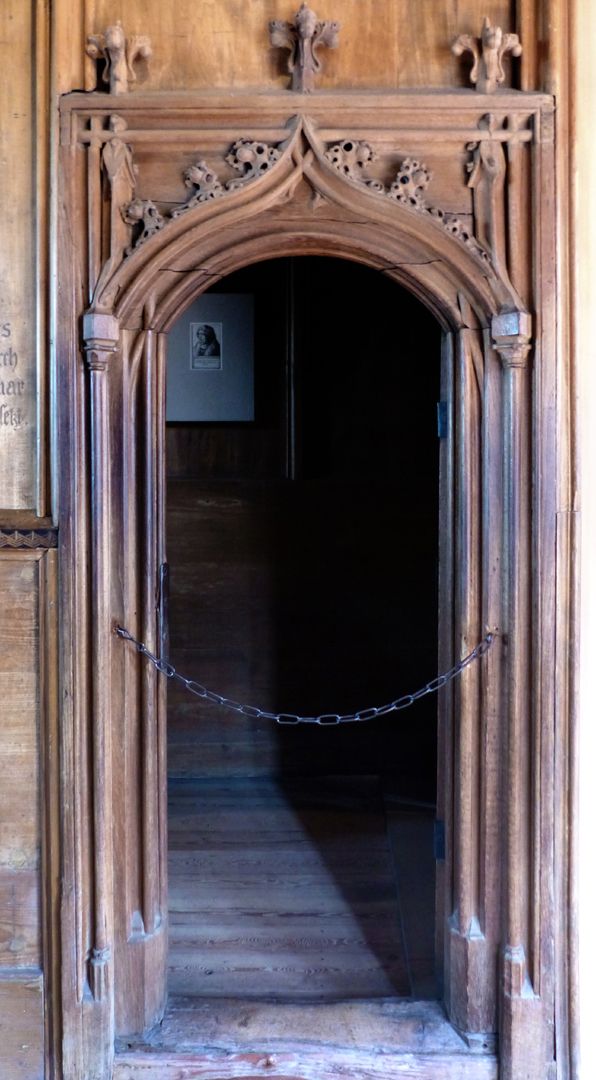
Entrance, front
The former property of the famous publisher Anton Koberger at Egidienplatz 9-13 no longer exists, but its centrepiece has survived the times, since it was brought to Wartburg Castle above Eisenach in the mid-19th century. It is a studiolo, i.e. according to the modern Renaissance concept, an intimate study room of the master of the house. It was commissioned in pure late Gothic formal vocabulary by Koberger around 1490. The work was thoroughly analysed in an article in the Wartburg-Jahrbuch 2016 (Regensburg 2017, Thomas Eissing and Sabrina Kraus: "Vom Pirckheimer Stübchen zum Koberger Schrankstübchen"). The studiolo is an independent construction in noble woods, in the form of a micro-castello, according to the final cornice with inlays as castle battlements. The carpentry work was carried out by Hans Straubinger, who was allowed to hire 3-4 additional journeymen for work on Anton Koberger's house by council resolution of 26.6.1490, when order permitted. The little room is open on the two narrow sides (window and metal door, which used to be connected to a corridor), and beyond that on the front long side. The entrance shows a narrow segmental arch under a keel-arched canopy with abundant overstaffing, crabs and crowning finials. A moulding at chest level bears inlays as a schematic woven fence. The panelling, subdivided into fields, shows blind friezes at the upper end. The same accompanies the interior walls below the imitation of a late Gothic net vault, which, like the rest of the construction, was quite elaborately carpentered. The originality of the vaulting style established in the above-mentioned publication could be compared with the somewhat younger wooden vault imitation of the Holy Sepulchre in the Marienkirche in Zwickau from 1507, which according to Dehio is a Nuremberg work.
Dr. Pablo de la Riestra, September 2020
Location: Eisenach, outer castle of the Wartburg, until 1867 Nuremberg, Egidienberg 13
Realization: Straubinger, Hans
Depicted: Koberger, Anton d. Ä.
photo 2020, Pablo de la Riestra
Small studio of Anton Koberger
1490
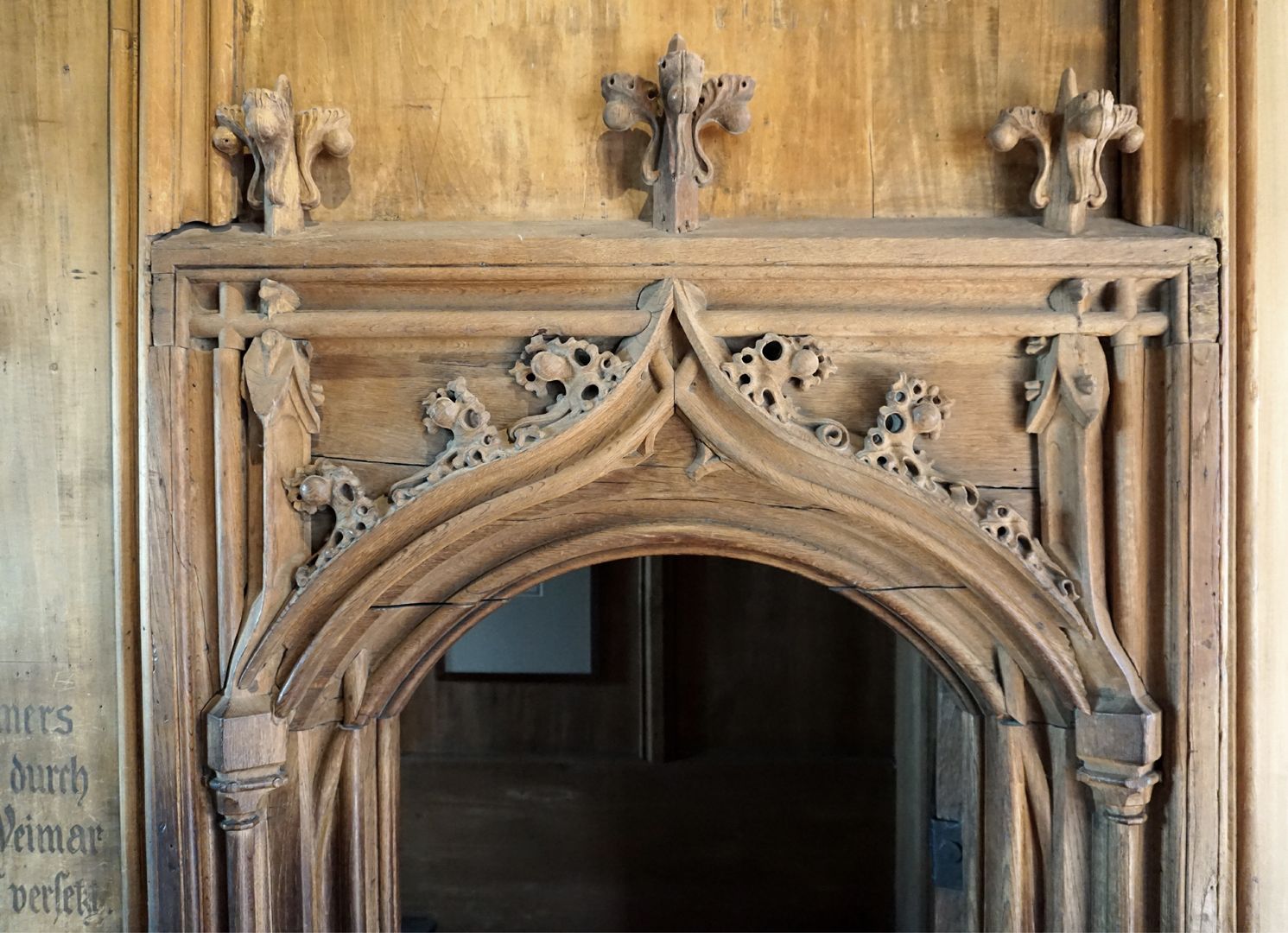
Entrance canopy
The former property of the famous publisher Anton Koberger at Egidienplatz 9-13 no longer exists, but its centrepiece has survived the times, since it was brought to Wartburg Castle above Eisenach in the mid-19th century. It is a studiolo, i.e. according to the modern Renaissance concept, an intimate study room of the master of the house. It was commissioned in pure late Gothic formal vocabulary by Koberger around 1490. The work was thoroughly analysed in an article in the Wartburg-Jahrbuch 2016 (Regensburg 2017, Thomas Eissing and Sabrina Kraus: "Vom Pirckheimer Stübchen zum Koberger Schrankstübchen"). The studiolo is an independent construction in noble woods, in the form of a micro-castello, according to the final cornice with inlays as castle battlements. The carpentry work was carried out by Hans Straubinger, who was allowed to hire 3-4 additional journeymen for work on Anton Koberger's house by council resolution of 26.6.1490, when order permitted. The little room is open on the two narrow sides (window and metal door, which used to be connected to a corridor), and beyond that on the front long side. The entrance shows a narrow segmental arch under a keel-arched canopy with abundant overstaffing, crabs and crowning finials. A moulding at chest level bears inlays as a schematic woven fence. The panelling, subdivided into fields, shows blind friezes at the upper end. The same accompanies the interior walls below the imitation of a late Gothic net vault, which, like the rest of the construction, was quite elaborately carpentered. The originality of the vaulting style established in the above-mentioned publication could be compared with the somewhat younger wooden vault imitation of the Holy Sepulchre in the Marienkirche in Zwickau from 1507, which according to Dehio is a Nuremberg work.
Dr. Pablo de la Riestra, September 2020
Location: Eisenach, outer castle of the Wartburg, until 1867 Nuremberg, Egidienberg 13
Realization: Straubinger, Hans
Depicted: Koberger, Anton d. Ä.
photo 2020, Pablo de la Riestra
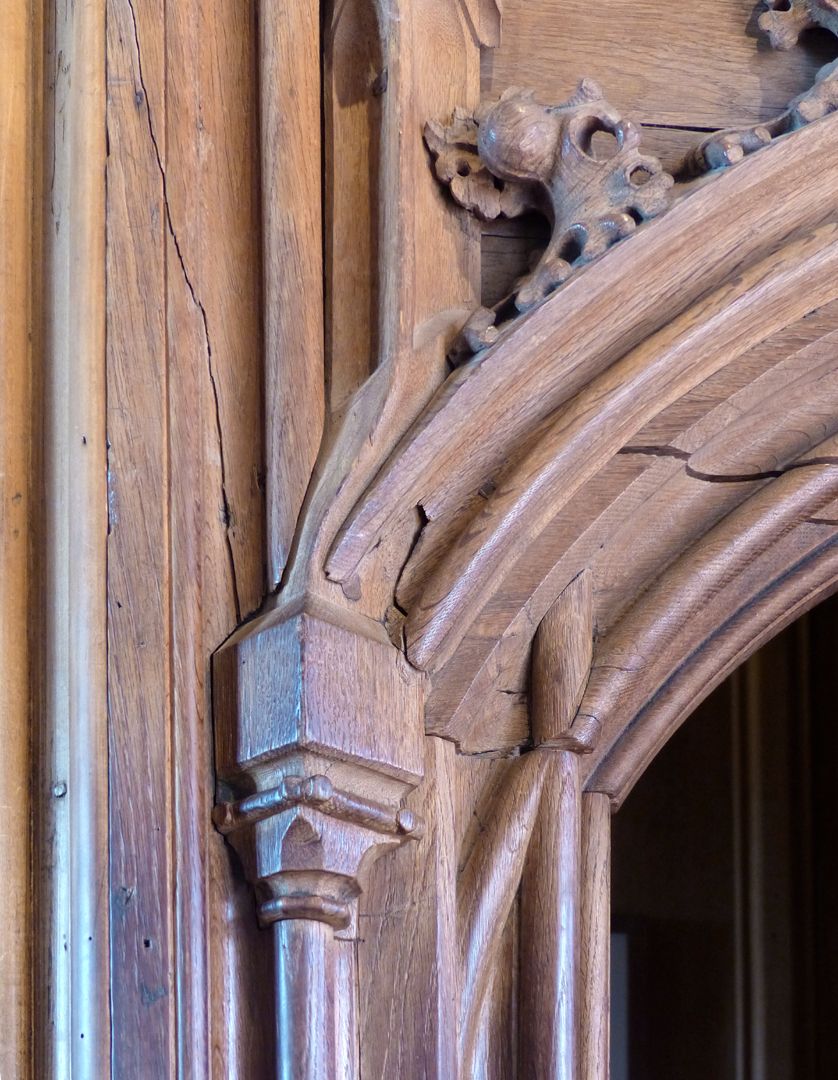
Small studio of Anton Koberger
1490
Entrance canopy, detail
The former property of the famous publisher Anton Koberger at Egidienplatz 9-13 no longer exists, but its centrepiece has survived the times, since it was brought to Wartburg Castle above Eisenach in the mid-19th century. It is a studiolo, i.e. according to the modern Renaissance concept, an intimate study room of the master of the house. It was commissioned in pure late Gothic formal vocabulary by Koberger around 1490. The work was thoroughly analysed in an article in the Wartburg-Jahrbuch 2016 (Regensburg 2017, Thomas Eissing and Sabrina Kraus: "Vom Pirckheimer Stübchen zum Koberger Schrankstübchen"). The studiolo is an independent construction in noble woods, in the form of a micro-castello, according to the final cornice with inlays as castle battlements. The carpentry work was carried out by Hans Straubinger, who was allowed to hire 3-4 additional journeymen for work on Anton Koberger's house by council resolution of 26.6.1490, when order permitted. The little room is open on the two narrow sides (window and metal door, which used to be connected to a corridor), and beyond that on the front long side. The entrance shows a narrow segmental arch under a keel-arched canopy with abundant overstaffing, crabs and crowning finials. A moulding at chest level bears inlays as a schematic woven fence. The panelling, subdivided into fields, shows blind friezes at the upper end. The same accompanies the interior walls below the imitation of a late Gothic net vault, which, like the rest of the construction, was quite elaborately carpentered. The originality of the vaulting style established in the above-mentioned publication could be compared with the somewhat younger wooden vault imitation of the Holy Sepulchre in the Marienkirche in Zwickau from 1507, which according to Dehio is a Nuremberg work.
Dr. Pablo de la Riestra, September 2020
Location: Eisenach, outer castle of the Wartburg, until 1867 Nuremberg, Egidienberg 13
Realization: Straubinger, Hans
Depicted: Koberger, Anton d. Ä.
photo 2020, Pablo de la Riestra
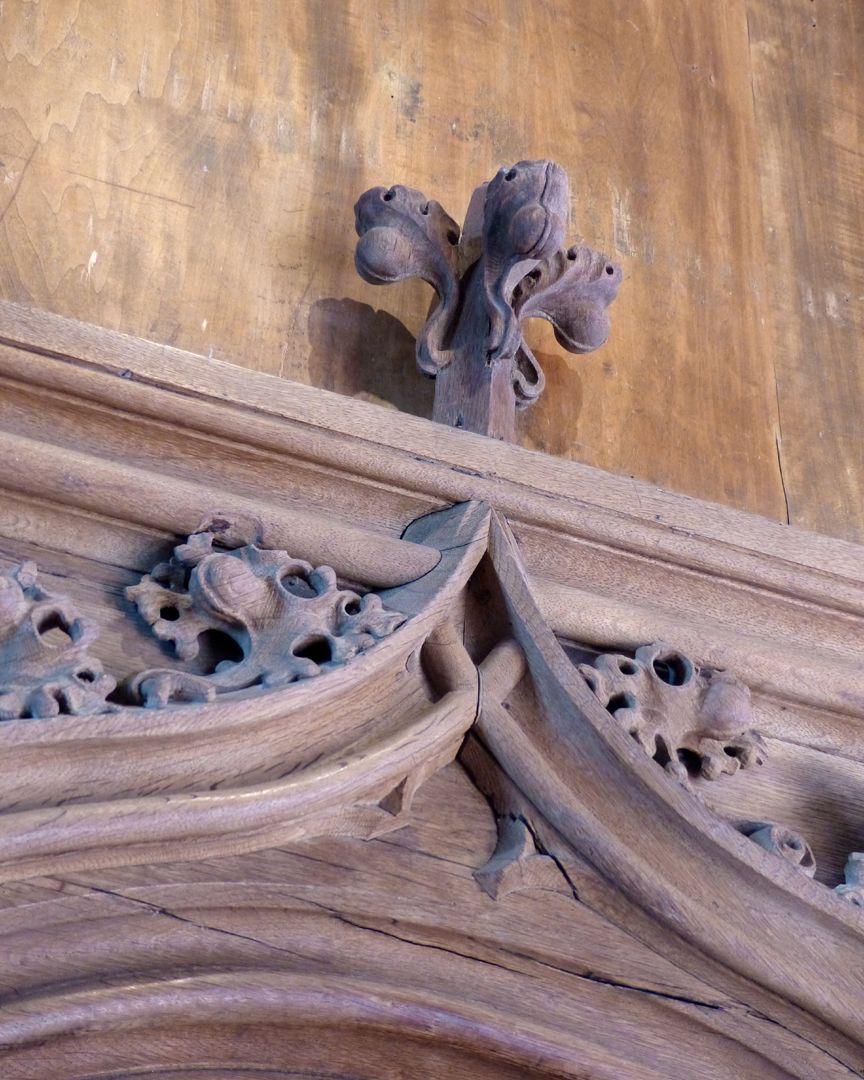
Small studio of Anton Koberger
1490
Entrance canopy, ogee arch apex and finial
The former property of the famous publisher Anton Koberger at Egidienplatz 9-13 no longer exists, but its centrepiece has survived the times, since it was brought to Wartburg Castle above Eisenach in the mid-19th century. It is a studiolo, i.e. according to the modern Renaissance concept, an intimate study room of the master of the house. It was commissioned in pure late Gothic formal vocabulary by Koberger around 1490. The work was thoroughly analysed in an article in the Wartburg-Jahrbuch 2016 (Regensburg 2017, Thomas Eissing and Sabrina Kraus: "Vom Pirckheimer Stübchen zum Koberger Schrankstübchen"). The studiolo is an independent construction in noble woods, in the form of a micro-castello, according to the final cornice with inlays as castle battlements. The carpentry work was carried out by Hans Straubinger, who was allowed to hire 3-4 additional journeymen for work on Anton Koberger's house by council resolution of 26.6.1490, when order permitted. The little room is open on the two narrow sides (window and metal door, which used to be connected to a corridor), and beyond that on the front long side. The entrance shows a narrow segmental arch under a keel-arched canopy with abundant overstaffing, crabs and crowning finials. A moulding at chest level bears inlays as a schematic woven fence. The panelling, subdivided into fields, shows blind friezes at the upper end. The same accompanies the interior walls below the imitation of a late Gothic net vault, which, like the rest of the construction, was quite elaborately carpentered. The originality of the vaulting style established in the above-mentioned publication could be compared with the somewhat younger wooden vault imitation of the Holy Sepulchre in the Marienkirche in Zwickau from 1507, which according to Dehio is a Nuremberg work.
Dr. Pablo de la Riestra, September 2020
Location: Eisenach, outer castle of the Wartburg, until 1867 Nuremberg, Egidienberg 13
Realization: Straubinger, Hans
Depicted: Koberger, Anton d. Ä.
photo 2020, Pablo de la Riestra
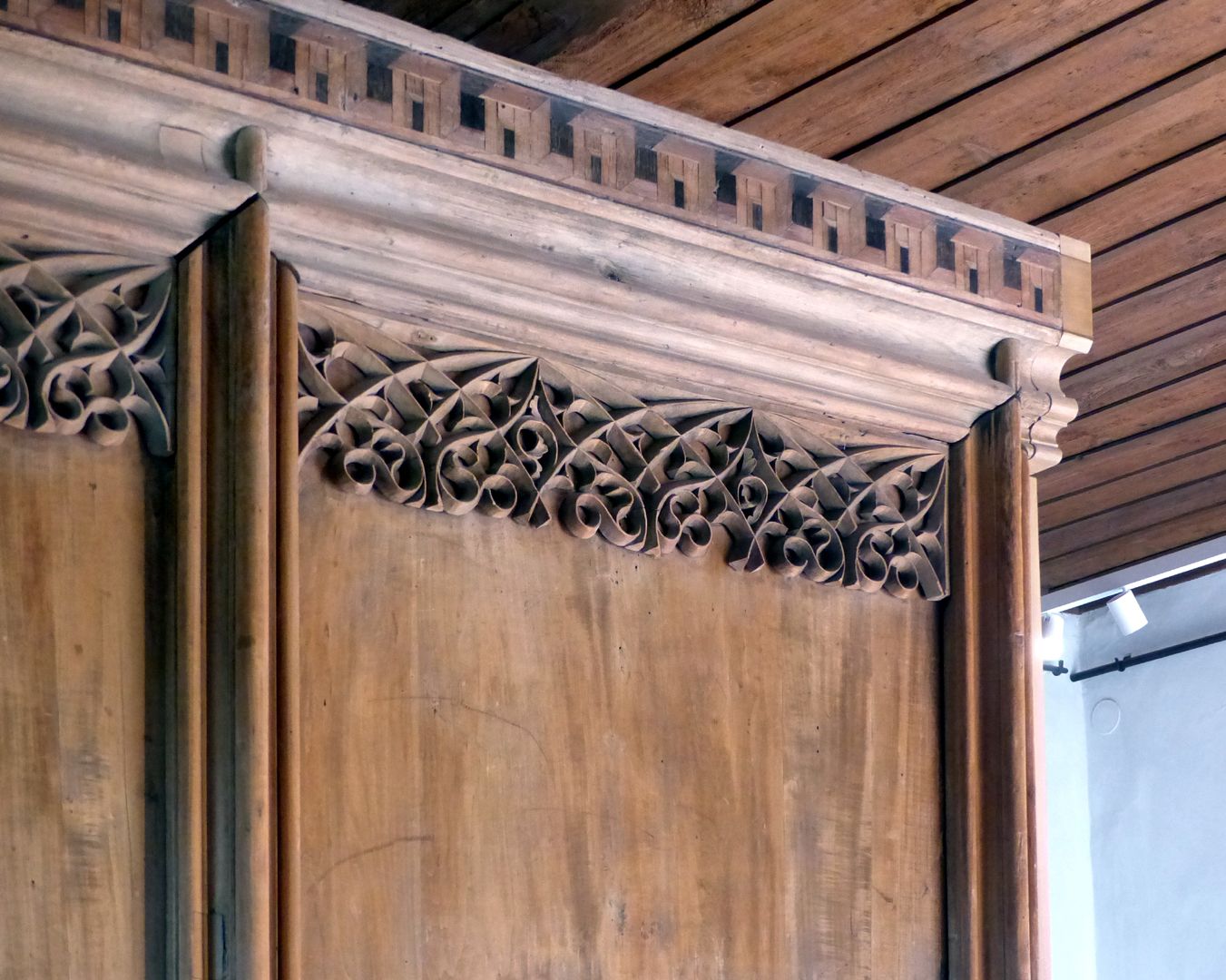
Small studio of Anton Koberger
1490
Front long side, upper area
The former property of the famous publisher Anton Koberger at Egidienplatz 9-13 no longer exists, but its centrepiece has survived the times, since it was brought to Wartburg Castle above Eisenach in the mid-19th century. It is a studiolo, i.e. according to the modern Renaissance concept, an intimate study room of the master of the house. It was commissioned in pure late Gothic formal vocabulary by Koberger around 1490. The work was thoroughly analysed in an article in the Wartburg-Jahrbuch 2016 (Regensburg 2017, Thomas Eissing and Sabrina Kraus: "Vom Pirckheimer Stübchen zum Koberger Schrankstübchen"). The studiolo is an independent construction in noble woods, in the form of a micro-castello, according to the final cornice with inlays as castle battlements. The carpentry work was carried out by Hans Straubinger, who was allowed to hire 3-4 additional journeymen for work on Anton Koberger's house by council resolution of 26.6.1490, when order permitted. The little room is open on the two narrow sides (window and metal door, which used to be connected to a corridor), and beyond that on the front long side. The entrance shows a narrow segmental arch under a keel-arched canopy with abundant overstaffing, crabs and crowning finials. A moulding at chest level bears inlays as a schematic woven fence. The panelling, subdivided into fields, shows blind friezes at the upper end. The same accompanies the interior walls below the imitation of a late Gothic net vault, which, like the rest of the construction, was quite elaborately carpentered. The originality of the vaulting style established in the above-mentioned publication could be compared with the somewhat younger wooden vault imitation of the Holy Sepulchre in the Marienkirche in Zwickau from 1507, which according to Dehio is a Nuremberg work.
Dr. Pablo de la Riestra, September 2020
Location: Eisenach, outer castle of the Wartburg, until 1867 Nuremberg, Egidienberg 13
Realization: Straubinger, Hans
Depicted: Koberger, Anton d. Ä.
photo 2020, Theo Noll
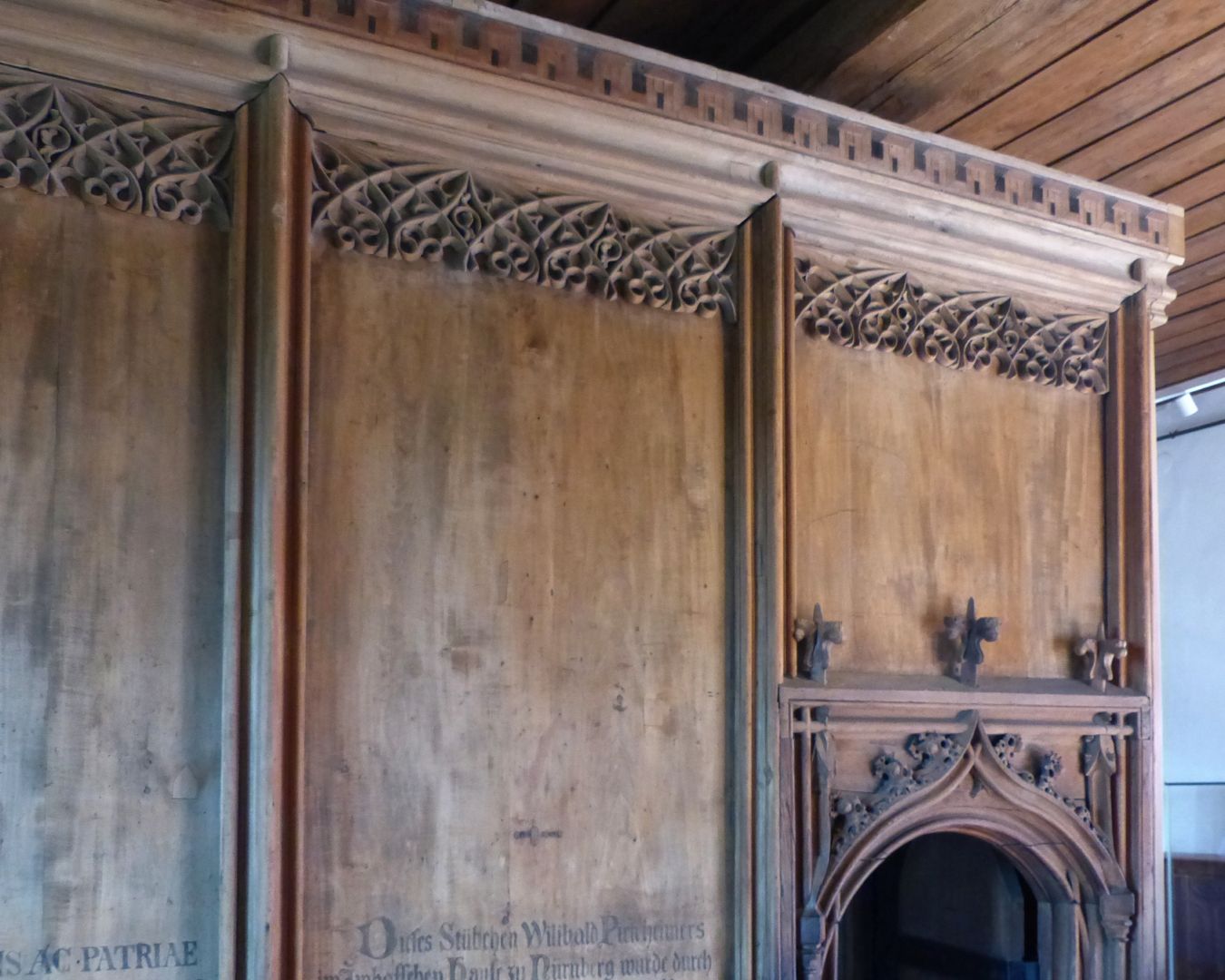
Small studio of Anton Koberger
1490
Front long side, detail of blinded frieze and battlements
The former property of the famous publisher Anton Koberger at Egidienplatz 9-13 no longer exists, but its centrepiece has survived the times, since it was brought to Wartburg Castle above Eisenach in the mid-19th century. It is a studiolo, i.e. according to the modern Renaissance concept, an intimate study room of the master of the house. It was commissioned in pure late Gothic formal vocabulary by Koberger around 1490. The work was thoroughly analysed in an article in the Wartburg-Jahrbuch 2016 (Regensburg 2017, Thomas Eissing and Sabrina Kraus: "Vom Pirckheimer Stübchen zum Koberger Schrankstübchen"). The studiolo is an independent construction in noble woods, in the form of a micro-castello, according to the final cornice with inlays as castle battlements. The carpentry work was carried out by Hans Straubinger, who was allowed to hire 3-4 additional journeymen for work on Anton Koberger's house by council resolution of 26.6.1490, when order permitted. The little room is open on the two narrow sides (window and metal door, which used to be connected to a corridor), and beyond that on the front long side. The entrance shows a narrow segmental arch under a keel-arched canopy with abundant overstaffing, crabs and crowning finials. A moulding at chest level bears inlays as a schematic woven fence. The panelling, subdivided into fields, shows blind friezes at the upper end. The same accompanies the interior walls below the imitation of a late Gothic net vault, which, like the rest of the construction, was quite elaborately carpentered. The originality of the vaulting style established in the above-mentioned publication could be compared with the somewhat younger wooden vault imitation of the Holy Sepulchre in the Marienkirche in Zwickau from 1507, which according to Dehio is a Nuremberg work.
Dr. Pablo de la Riestra, September 2020
Location: Eisenach, outer castle of the Wartburg, until 1867 Nuremberg, Egidienberg 13
Realization: Straubinger, Hans
Depicted: Koberger, Anton d. Ä.
photo 2020, Theo Noll
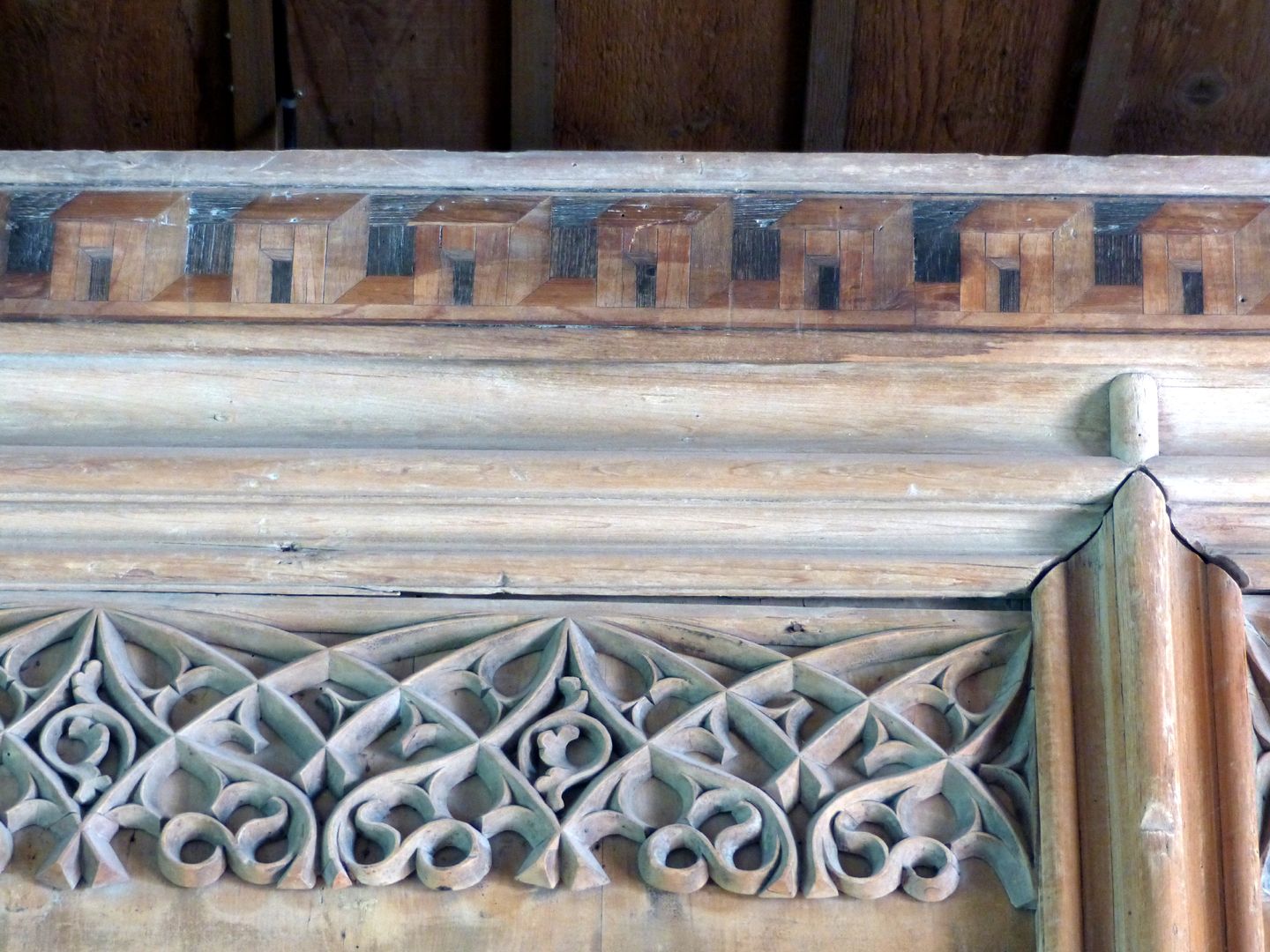
Small studio of Anton Koberger
1490
Front long side, detail of blinded frieze and battlements, front view
The former property of the famous publisher Anton Koberger at Egidienplatz 9-13 no longer exists, but its centrepiece has survived the times, since it was brought to Wartburg Castle above Eisenach in the mid-19th century. It is a studiolo, i.e. according to the modern Renaissance concept, an intimate study room of the master of the house. It was commissioned in pure late Gothic formal vocabulary by Koberger around 1490. The work was thoroughly analysed in an article in the Wartburg-Jahrbuch 2016 (Regensburg 2017, Thomas Eissing and Sabrina Kraus: "Vom Pirckheimer Stübchen zum Koberger Schrankstübchen"). The studiolo is an independent construction in noble woods, in the form of a micro-castello, according to the final cornice with inlays as castle battlements. The carpentry work was carried out by Hans Straubinger, who was allowed to hire 3-4 additional journeymen for work on Anton Koberger's house by council resolution of 26.6.1490, when order permitted. The little room is open on the two narrow sides (window and metal door, which used to be connected to a corridor), and beyond that on the front long side. The entrance shows a narrow segmental arch under a keel-arched canopy with abundant overstaffing, crabs and crowning finials. A moulding at chest level bears inlays as a schematic woven fence. The panelling, subdivided into fields, shows blind friezes at the upper end. The same accompanies the interior walls below the imitation of a late Gothic net vault, which, like the rest of the construction, was quite elaborately carpentered. The originality of the vaulting style established in the above-mentioned publication could be compared with the somewhat younger wooden vault imitation of the Holy Sepulchre in the Marienkirche in Zwickau from 1507, which according to Dehio is a Nuremberg work.
Dr. Pablo de la Riestra, September 2020
Location: Eisenach, outer castle of the Wartburg, until 1867 Nuremberg, Egidienberg 13
Realization: Straubinger, Hans
Depicted: Koberger, Anton d. Ä.
photo 2020, Pablo de la Riestra
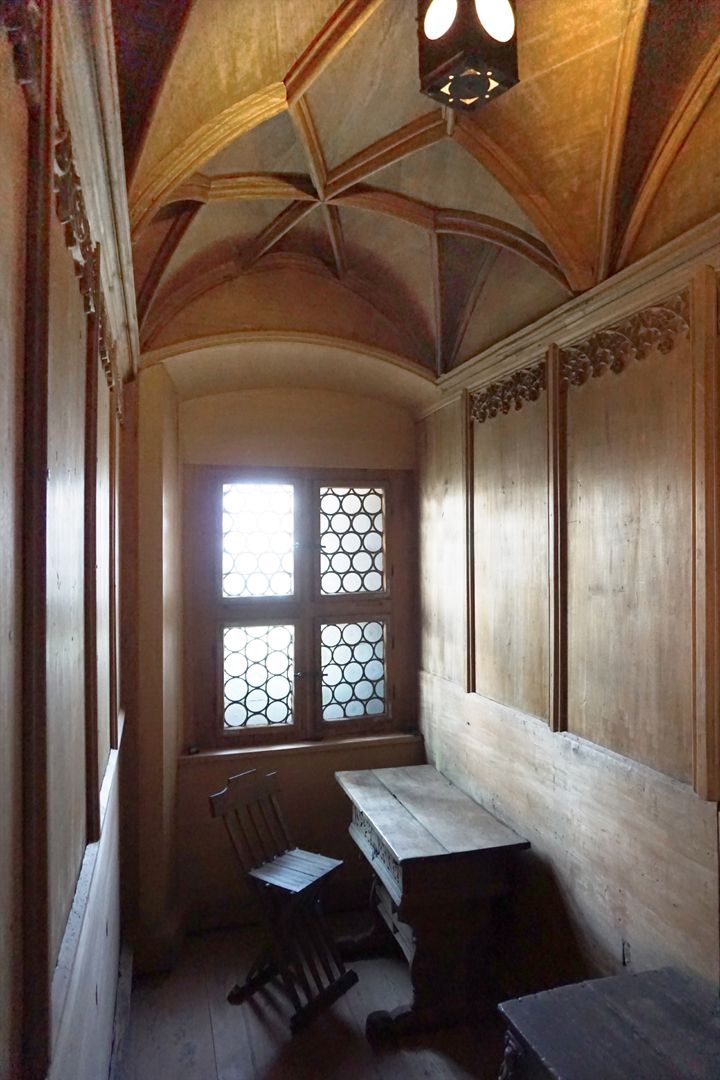
Small studio of Anton Koberger
1490
Parlour in the direction of the window
The former property of the famous publisher Anton Koberger at Egidienplatz 9-13 no longer exists, but its centrepiece has survived the times, since it was brought to Wartburg Castle above Eisenach in the mid-19th century. It is a studiolo, i.e. according to the modern Renaissance concept, an intimate study room of the master of the house. It was commissioned in pure late Gothic formal vocabulary by Koberger around 1490. The work was thoroughly analysed in an article in the Wartburg-Jahrbuch 2016 (Regensburg 2017, Thomas Eissing and Sabrina Kraus: "Vom Pirckheimer Stübchen zum Koberger Schrankstübchen"). The studiolo is an independent construction in noble woods, in the form of a micro-castello, according to the final cornice with inlays as castle battlements. The carpentry work was carried out by Hans Straubinger, who was allowed to hire 3-4 additional journeymen for work on Anton Koberger's house by council resolution of 26.6.1490, when order permitted. The little room is open on the two narrow sides (window and metal door, which used to be connected to a corridor), and beyond that on the front long side. The entrance shows a narrow segmental arch under a keel-arched canopy with abundant overstaffing, crabs and crowning finials. A moulding at chest level bears inlays as a schematic woven fence. The panelling, subdivided into fields, shows blind friezes at the upper end. The same accompanies the interior walls below the imitation of a late Gothic net vault, which, like the rest of the construction, was quite elaborately carpentered. The originality of the vaulting style established in the above-mentioned publication could be compared with the somewhat younger wooden vault imitation of the Holy Sepulchre in the Marienkirche in Zwickau from 1507, which according to Dehio is a Nuremberg work.
Dr. Pablo de la Riestra, September 2020
Location: Eisenach, outer castle of the Wartburg, until 1867 Nuremberg, Egidienberg 13
Realization: Straubinger, Hans
Depicted: Koberger, Anton d. Ä.
photo 2020,
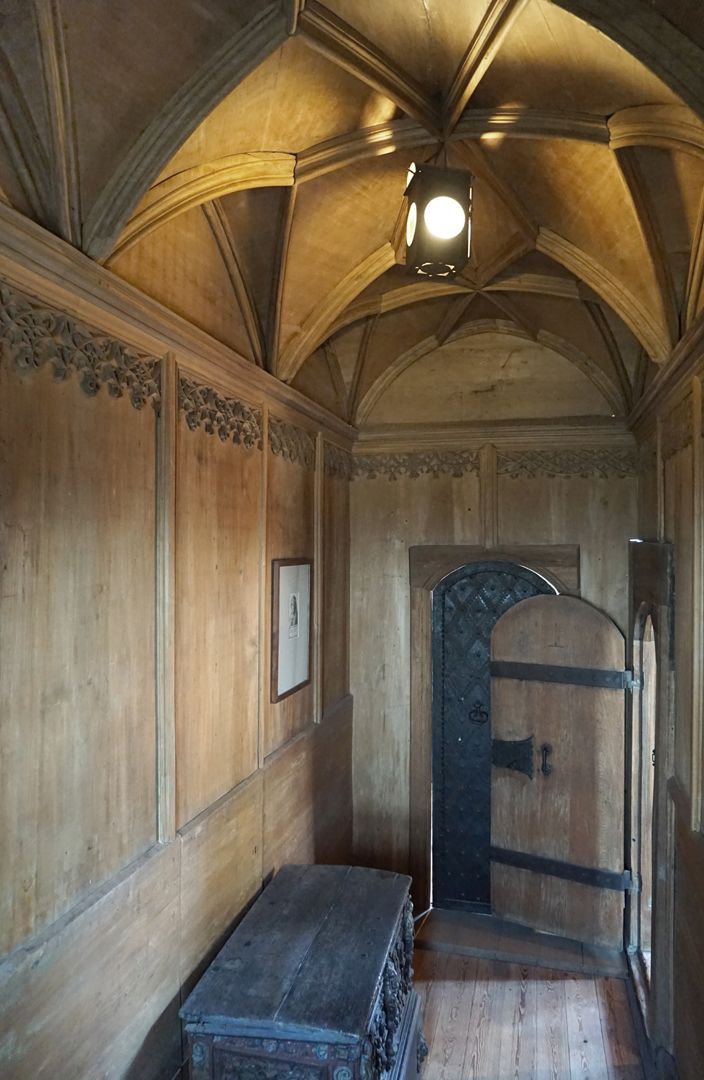
Small studio of Anton Koberger
1490
Parlour in the direction of the rear metal door
The former property of the famous publisher Anton Koberger at Egidienplatz 9-13 no longer exists, but its centrepiece has survived the times, since it was brought to Wartburg Castle above Eisenach in the mid-19th century. It is a studiolo, i.e. according to the modern Renaissance concept, an intimate study room of the master of the house. It was commissioned in pure late Gothic formal vocabulary by Koberger around 1490. The work was thoroughly analysed in an article in the Wartburg-Jahrbuch 2016 (Regensburg 2017, Thomas Eissing and Sabrina Kraus: "Vom Pirckheimer Stübchen zum Koberger Schrankstübchen"). The studiolo is an independent construction in noble woods, in the form of a micro-castello, according to the final cornice with inlays as castle battlements. The carpentry work was carried out by Hans Straubinger, who was allowed to hire 3-4 additional journeymen for work on Anton Koberger's house by council resolution of 26.6.1490, when order permitted. The little room is open on the two narrow sides (window and metal door, which used to be connected to a corridor), and beyond that on the front long side. The entrance shows a narrow segmental arch under a keel-arched canopy with abundant overstaffing, crabs and crowning finials. A moulding at chest level bears inlays as a schematic woven fence. The panelling, subdivided into fields, shows blind friezes at the upper end. The same accompanies the interior walls below the imitation of a late Gothic net vault, which, like the rest of the construction, was quite elaborately carpentered. The originality of the vaulting style established in the above-mentioned publication could be compared with the somewhat younger wooden vault imitation of the Holy Sepulchre in the Marienkirche in Zwickau from 1507, which according to Dehio is a Nuremberg work.
Dr. Pablo de la Riestra, September 2020
Location: Eisenach, outer castle of the Wartburg, until 1867 Nuremberg, Egidienberg 13
Realization: Straubinger, Hans
Depicted: Koberger, Anton d. Ä.
photo 2020, Pablo de la Riestra
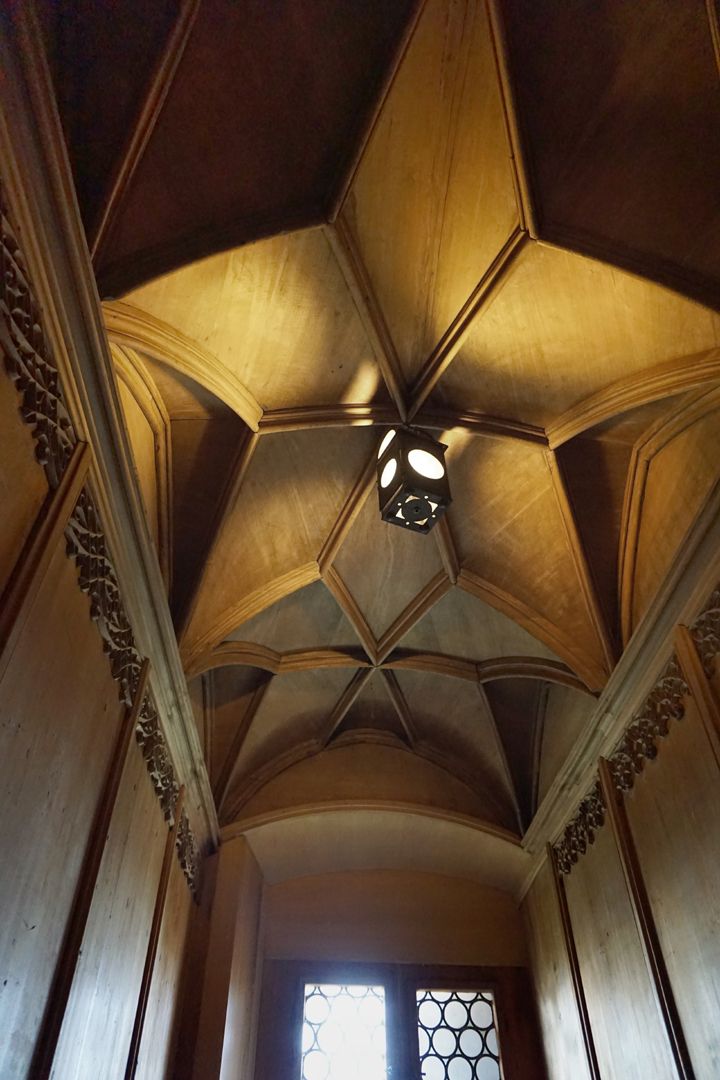
Small studio of Anton Koberger
1490
Net vault
The former property of the famous publisher Anton Koberger at Egidienplatz 9-13 no longer exists, but its centrepiece has survived the times, since it was brought to Wartburg Castle above Eisenach in the mid-19th century. It is a studiolo, i.e. according to the modern Renaissance concept, an intimate study room of the master of the house. It was commissioned in pure late Gothic formal vocabulary by Koberger around 1490. The work was thoroughly analysed in an article in the Wartburg-Jahrbuch 2016 (Regensburg 2017, Thomas Eissing and Sabrina Kraus: "Vom Pirckheimer Stübchen zum Koberger Schrankstübchen"). The studiolo is an independent construction in noble woods, in the form of a micro-castello, according to the final cornice with inlays as castle battlements. The carpentry work was carried out by Hans Straubinger, who was allowed to hire 3-4 additional journeymen for work on Anton Koberger's house by council resolution of 26.6.1490, when order permitted. The little room is open on the two narrow sides (window and metal door, which used to be connected to a corridor), and beyond that on the front long side. The entrance shows a narrow segmental arch under a keel-arched canopy with abundant overstaffing, crabs and crowning finials. A moulding at chest level bears inlays as a schematic woven fence. The panelling, subdivided into fields, shows blind friezes at the upper end. The same accompanies the interior walls below the imitation of a late Gothic net vault, which, like the rest of the construction, was quite elaborately carpentered. The originality of the vaulting style established in the above-mentioned publication could be compared with the somewhat younger wooden vault imitation of the Holy Sepulchre in the Marienkirche in Zwickau from 1507, which according to Dehio is a Nuremberg work.
Dr. Pablo de la Riestra, September 2020
Location: Eisenach, outer castle of the Wartburg, until 1867 Nuremberg, Egidienberg 13
Realization: Straubinger, Hans
Depicted: Koberger, Anton d. Ä.
photo 2020, Theo Noll
Small studio of Anton Koberger
1490
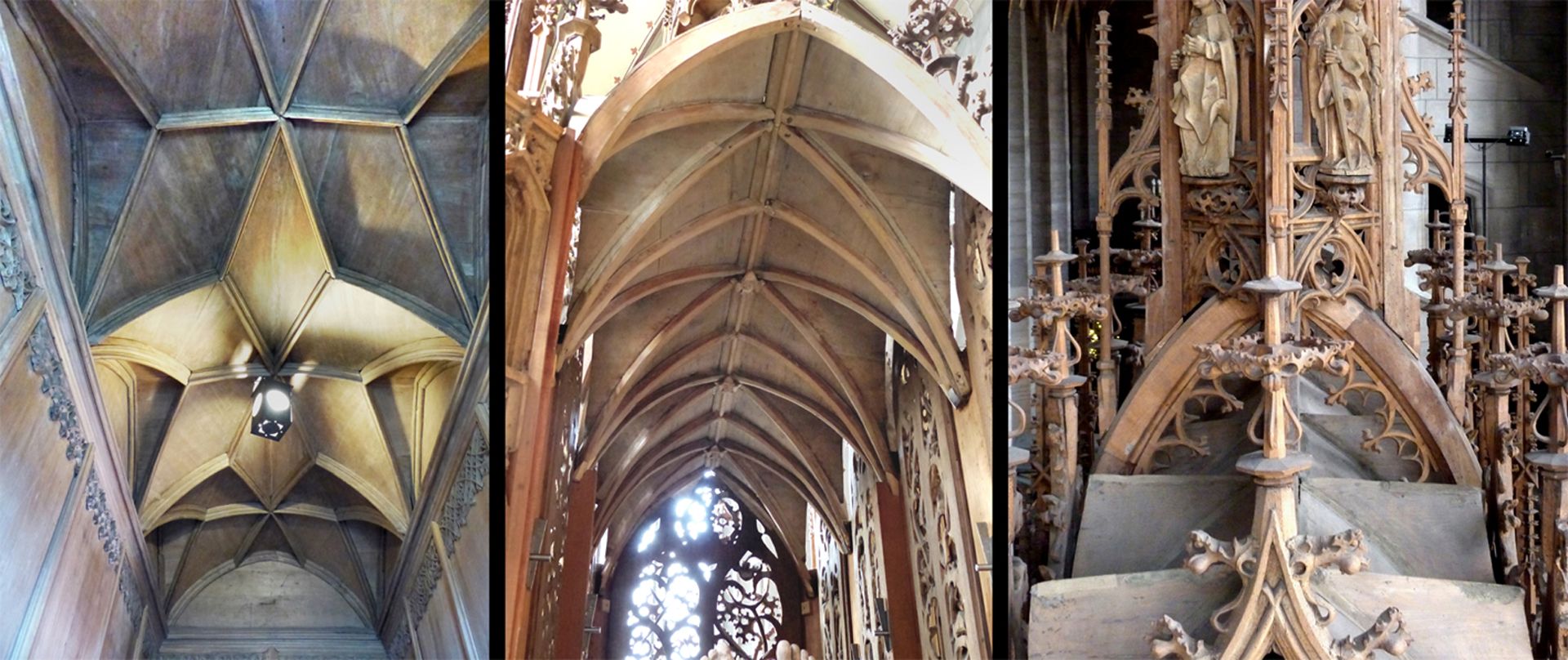
Comparison of the net vault with the ribbed vault in St. Mary's Church in Zwickau
photo 2020, Pablo de la Riestra
The former property of the famous publisher Anton Koberger at Egidienplatz 9-13 no longer exists, but its centrepiece has survived the times, since it was brought to Wartburg Castle above Eisenach in the mid-19th century. It is a studiolo, i.e. according to the modern Renaissance concept, an intimate study room of the master of the house. It was commissioned in pure late Gothic formal vocabulary by Koberger around 1490. The work was thoroughly analysed in an article in the Wartburg-Jahrbuch 2016 (Regensburg 2017, Thomas Eissing and Sabrina Kraus: "Vom Pirckheimer Stübchen zum Koberger Schrankstübchen"). The studiolo is an independent construction in noble woods, in the form of a micro-castello, according to the final cornice with inlays as castle battlements. The carpentry work was carried out by Hans Straubinger, who was allowed to hire 3-4 additional journeymen for work on Anton Koberger's house by council resolution of 26.6.1490, when order permitted. The little room is open on the two narrow sides (window and metal door, which used to be connected to a corridor), and beyond that on the front long side. The entrance shows a narrow segmental arch under a keel-arched canopy with abundant overstaffing, crabs and crowning finials. A moulding at chest level bears inlays as a schematic woven fence. The panelling, subdivided into fields, shows blind friezes at the upper end. The same accompanies the interior walls below the imitation of a late Gothic net vault, which, like the rest of the construction, was quite elaborately carpentered. The originality of the vaulting style established in the above-mentioned publication could be compared with the somewhat younger wooden vault imitation of the Holy Sepulchre in the Marienkirche in Zwickau from 1507, which according to Dehio is a Nuremberg work.
Dr. Pablo de la Riestra, September 2020
Location: Eisenach, outer castle of the Wartburg, until 1867 Nuremberg, Egidienberg 13
Realization: Straubinger, Hans
Depicted: Koberger, Anton d. Ä.
Small studio of Anton Koberger
1490
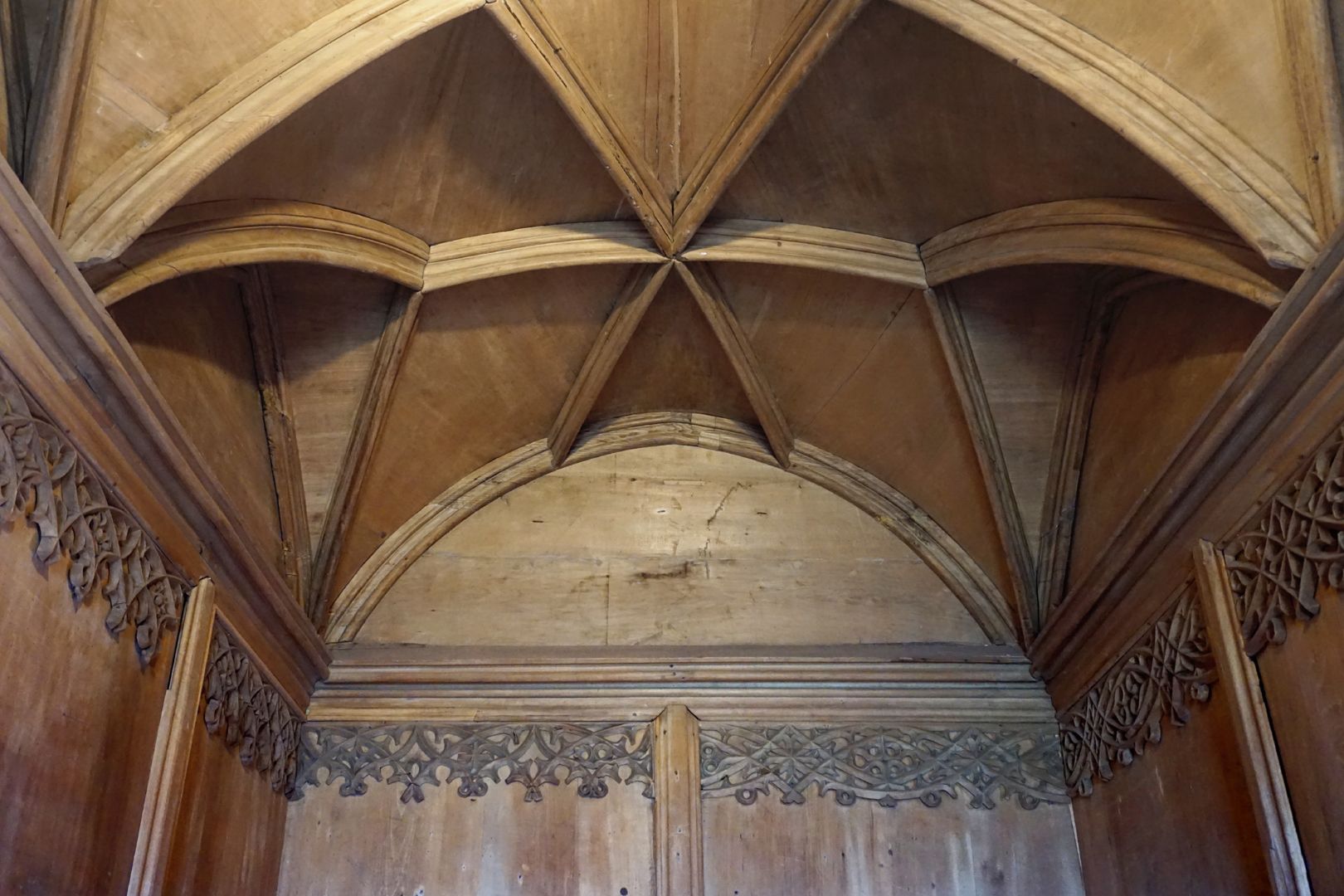
Vault detail
The former property of the famous publisher Anton Koberger at Egidienplatz 9-13 no longer exists, but its centrepiece has survived the times, since it was brought to Wartburg Castle above Eisenach in the mid-19th century. It is a studiolo, i.e. according to the modern Renaissance concept, an intimate study room of the master of the house. It was commissioned in pure late Gothic formal vocabulary by Koberger around 1490. The work was thoroughly analysed in an article in the Wartburg-Jahrbuch 2016 (Regensburg 2017, Thomas Eissing and Sabrina Kraus: "Vom Pirckheimer Stübchen zum Koberger Schrankstübchen"). The studiolo is an independent construction in noble woods, in the form of a micro-castello, according to the final cornice with inlays as castle battlements. The carpentry work was carried out by Hans Straubinger, who was allowed to hire 3-4 additional journeymen for work on Anton Koberger's house by council resolution of 26.6.1490, when order permitted. The little room is open on the two narrow sides (window and metal door, which used to be connected to a corridor), and beyond that on the front long side. The entrance shows a narrow segmental arch under a keel-arched canopy with abundant overstaffing, crabs and crowning finials. A moulding at chest level bears inlays as a schematic woven fence. The panelling, subdivided into fields, shows blind friezes at the upper end. The same accompanies the interior walls below the imitation of a late Gothic net vault, which, like the rest of the construction, was quite elaborately carpentered. The originality of the vaulting style established in the above-mentioned publication could be compared with the somewhat younger wooden vault imitation of the Holy Sepulchre in the Marienkirche in Zwickau from 1507, which according to Dehio is a Nuremberg work.
Dr. Pablo de la Riestra, September 2020
Location: Eisenach, outer castle of the Wartburg, until 1867 Nuremberg, Egidienberg 13
Realization: Straubinger, Hans
Depicted: Koberger, Anton d. Ä.
photo 2020, Pablo de la Riestra
Small studio of Anton Koberger
1490
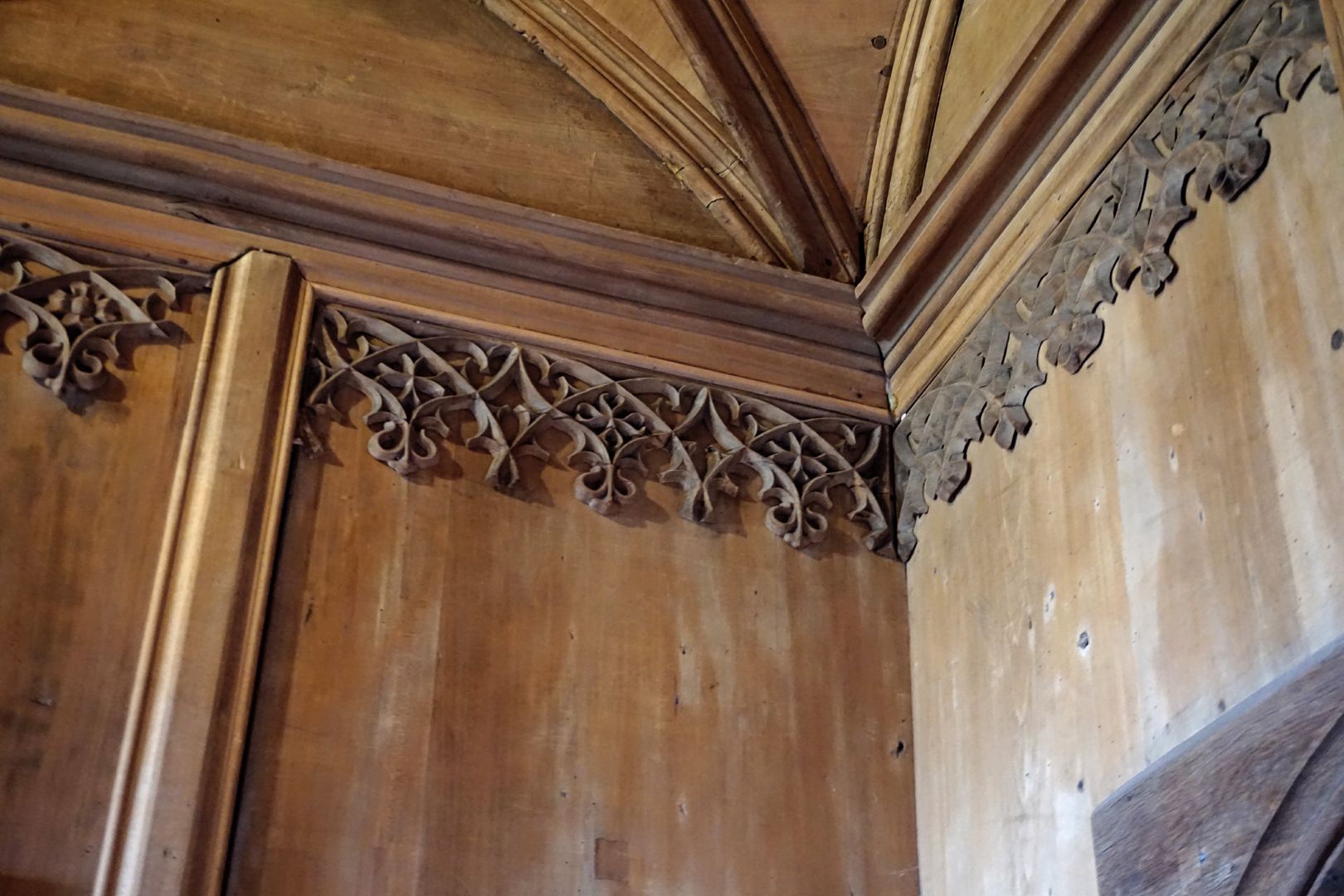
Corner with blind frieze
The former property of the famous publisher Anton Koberger at Egidienplatz 9-13 no longer exists, but its centrepiece has survived the times, since it was brought to Wartburg Castle above Eisenach in the mid-19th century. It is a studiolo, i.e. according to the modern Renaissance concept, an intimate study room of the master of the house. It was commissioned in pure late Gothic formal vocabulary by Koberger around 1490. The work was thoroughly analysed in an article in the Wartburg-Jahrbuch 2016 (Regensburg 2017, Thomas Eissing and Sabrina Kraus: "Vom Pirckheimer Stübchen zum Koberger Schrankstübchen"). The studiolo is an independent construction in noble woods, in the form of a micro-castello, according to the final cornice with inlays as castle battlements. The carpentry work was carried out by Hans Straubinger, who was allowed to hire 3-4 additional journeymen for work on Anton Koberger's house by council resolution of 26.6.1490, when order permitted. The little room is open on the two narrow sides (window and metal door, which used to be connected to a corridor), and beyond that on the front long side. The entrance shows a narrow segmental arch under a keel-arched canopy with abundant overstaffing, crabs and crowning finials. A moulding at chest level bears inlays as a schematic woven fence. The panelling, subdivided into fields, shows blind friezes at the upper end. The same accompanies the interior walls below the imitation of a late Gothic net vault, which, like the rest of the construction, was quite elaborately carpentered. The originality of the vaulting style established in the above-mentioned publication could be compared with the somewhat younger wooden vault imitation of the Holy Sepulchre in the Marienkirche in Zwickau from 1507, which according to Dehio is a Nuremberg work.
Dr. Pablo de la Riestra, September 2020
Location: Eisenach, outer castle of the Wartburg, until 1867 Nuremberg, Egidienberg 13
Realization: Straubinger, Hans
Depicted: Koberger, Anton d. Ä.
photo 2020, Pablo de la Riestra
Small studio of Anton Koberger
1490
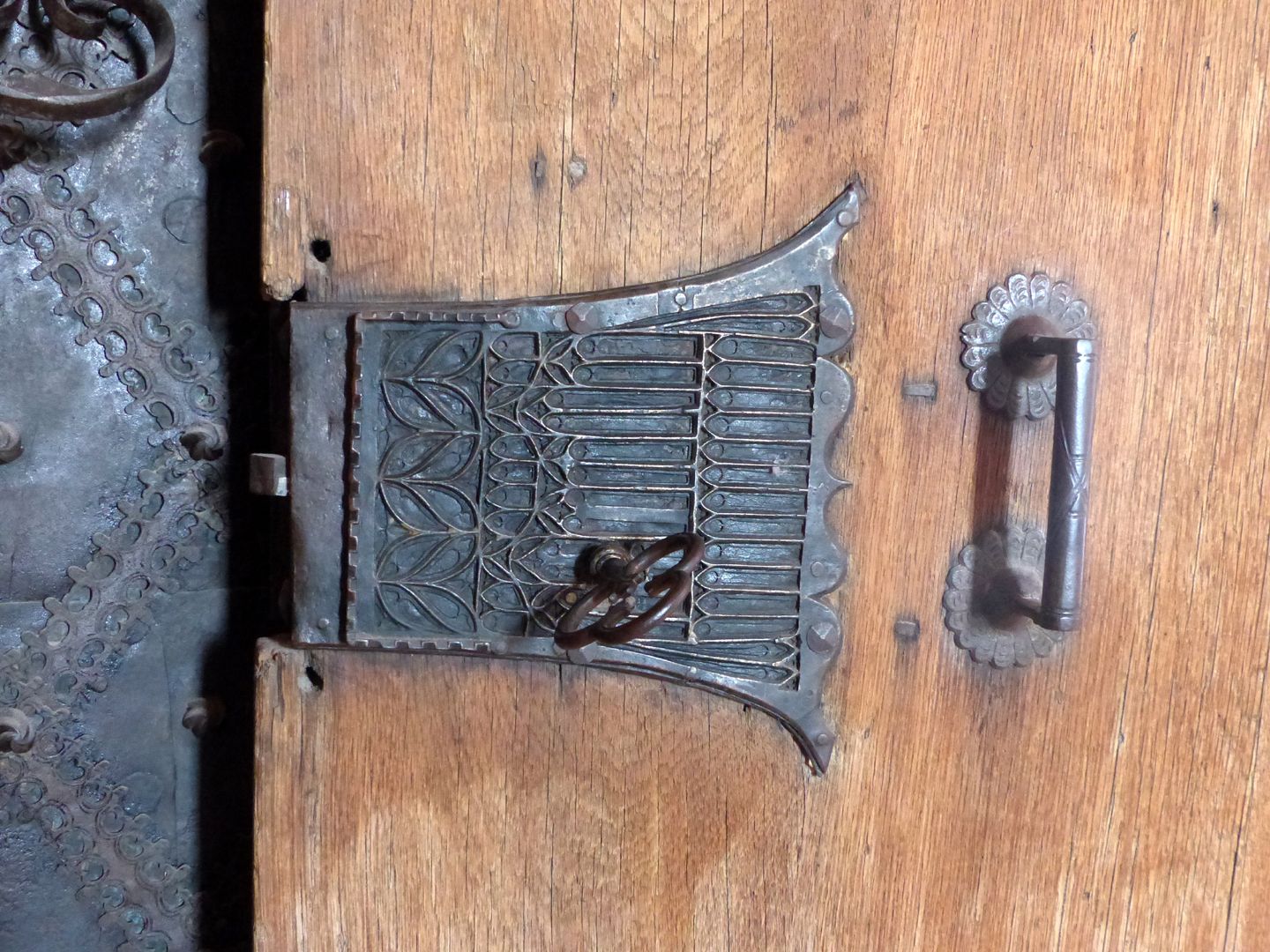
Door lock
The former property of the famous publisher Anton Koberger at Egidienplatz 9-13 no longer exists, but its centrepiece has survived the times, since it was brought to Wartburg Castle above Eisenach in the mid-19th century. It is a studiolo, i.e. according to the modern Renaissance concept, an intimate study room of the master of the house. It was commissioned in pure late Gothic formal vocabulary by Koberger around 1490. The work was thoroughly analysed in an article in the Wartburg-Jahrbuch 2016 (Regensburg 2017, Thomas Eissing and Sabrina Kraus: "Vom Pirckheimer Stübchen zum Koberger Schrankstübchen"). The studiolo is an independent construction in noble woods, in the form of a micro-castello, according to the final cornice with inlays as castle battlements. The carpentry work was carried out by Hans Straubinger, who was allowed to hire 3-4 additional journeymen for work on Anton Koberger's house by council resolution of 26.6.1490, when order permitted. The little room is open on the two narrow sides (window and metal door, which used to be connected to a corridor), and beyond that on the front long side. The entrance shows a narrow segmental arch under a keel-arched canopy with abundant overstaffing, crabs and crowning finials. A moulding at chest level bears inlays as a schematic woven fence. The panelling, subdivided into fields, shows blind friezes at the upper end. The same accompanies the interior walls below the imitation of a late Gothic net vault, which, like the rest of the construction, was quite elaborately carpentered. The originality of the vaulting style established in the above-mentioned publication could be compared with the somewhat younger wooden vault imitation of the Holy Sepulchre in the Marienkirche in Zwickau from 1507, which according to Dehio is a Nuremberg work.
Dr. Pablo de la Riestra, September 2020
Location: Eisenach, outer castle of the Wartburg, until 1867 Nuremberg, Egidienberg 13
Realization: Straubinger, Hans
Depicted: Koberger, Anton d. Ä.
photo 2020, Theo Noll
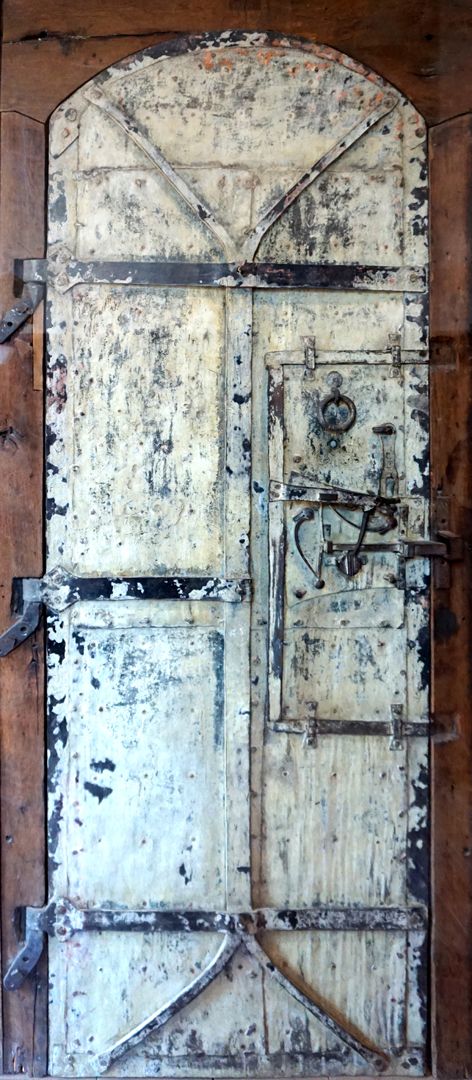
Small studio of Anton Koberger
1490
Metal door from the outside
The former property of the famous publisher Anton Koberger at Egidienplatz 9-13 no longer exists, but its centrepiece has survived the times, since it was brought to Wartburg Castle above Eisenach in the mid-19th century. It is a studiolo, i.e. according to the modern Renaissance concept, an intimate study room of the master of the house. It was commissioned in pure late Gothic formal vocabulary by Koberger around 1490. The work was thoroughly analysed in an article in the Wartburg-Jahrbuch 2016 (Regensburg 2017, Thomas Eissing and Sabrina Kraus: "Vom Pirckheimer Stübchen zum Koberger Schrankstübchen"). The studiolo is an independent construction in noble woods, in the form of a micro-castello, according to the final cornice with inlays as castle battlements. The carpentry work was carried out by Hans Straubinger, who was allowed to hire 3-4 additional journeymen for work on Anton Koberger's house by council resolution of 26.6.1490, when order permitted. The little room is open on the two narrow sides (window and metal door, which used to be connected to a corridor), and beyond that on the front long side. The entrance shows a narrow segmental arch under a keel-arched canopy with abundant overstaffing, crabs and crowning finials. A moulding at chest level bears inlays as a schematic woven fence. The panelling, subdivided into fields, shows blind friezes at the upper end. The same accompanies the interior walls below the imitation of a late Gothic net vault, which, like the rest of the construction, was quite elaborately carpentered. The originality of the vaulting style established in the above-mentioned publication could be compared with the somewhat younger wooden vault imitation of the Holy Sepulchre in the Marienkirche in Zwickau from 1507, which according to Dehio is a Nuremberg work.
Dr. Pablo de la Riestra, September 2020
Location: Eisenach, outer castle of the Wartburg, until 1867 Nuremberg, Egidienberg 13
Realization: Straubinger, Hans
Depicted: Koberger, Anton d. Ä.
photo 2020, Theo Noll
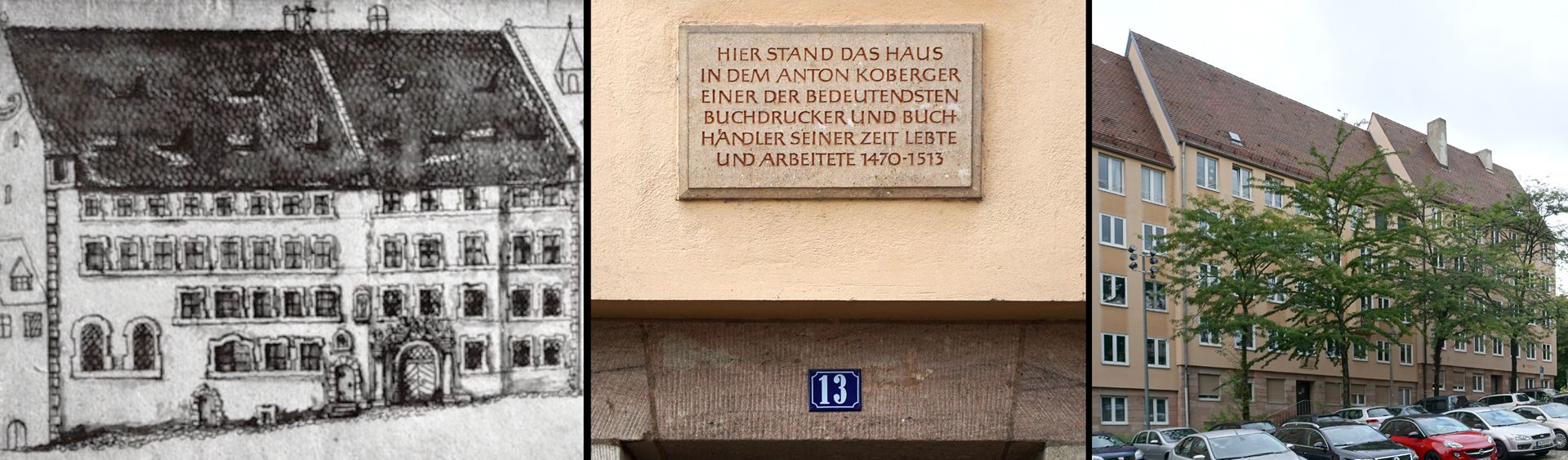
Small studio of Anton Koberger
1490
Comparison of an old engraving by Jan Boener and the present situation with memorial plaque
photo 2020, Theo Noll
The former property of the famous publisher Anton Koberger at Egidienplatz 9-13 no longer exists, but its centrepiece has survived the times, since it was brought to Wartburg Castle above Eisenach in the mid-19th century. It is a studiolo, i.e. according to the modern Renaissance concept, an intimate study room of the master of the house. It was commissioned in pure late Gothic formal vocabulary by Koberger around 1490. The work was thoroughly analysed in an article in the Wartburg-Jahrbuch 2016 (Regensburg 2017, Thomas Eissing and Sabrina Kraus: "Vom Pirckheimer Stübchen zum Koberger Schrankstübchen"). The studiolo is an independent construction in noble woods, in the form of a micro-castello, according to the final cornice with inlays as castle battlements. The carpentry work was carried out by Hans Straubinger, who was allowed to hire 3-4 additional journeymen for work on Anton Koberger's house by council resolution of 26.6.1490, when order permitted. The little room is open on the two narrow sides (window and metal door, which used to be connected to a corridor), and beyond that on the front long side. The entrance shows a narrow segmental arch under a keel-arched canopy with abundant overstaffing, crabs and crowning finials. A moulding at chest level bears inlays as a schematic woven fence. The panelling, subdivided into fields, shows blind friezes at the upper end. The same accompanies the interior walls below the imitation of a late Gothic net vault, which, like the rest of the construction, was quite elaborately carpentered. The originality of the vaulting style established in the above-mentioned publication could be compared with the somewhat younger wooden vault imitation of the Holy Sepulchre in the Marienkirche in Zwickau from 1507, which according to Dehio is a Nuremberg work.
Dr. Pablo de la Riestra, September 2020
Location: Eisenach, outer castle of the Wartburg, until 1867 Nuremberg, Egidienberg 13
Realization: Straubinger, Hans
Depicted: Koberger, Anton d. Ä.