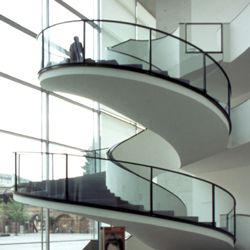
New Museum
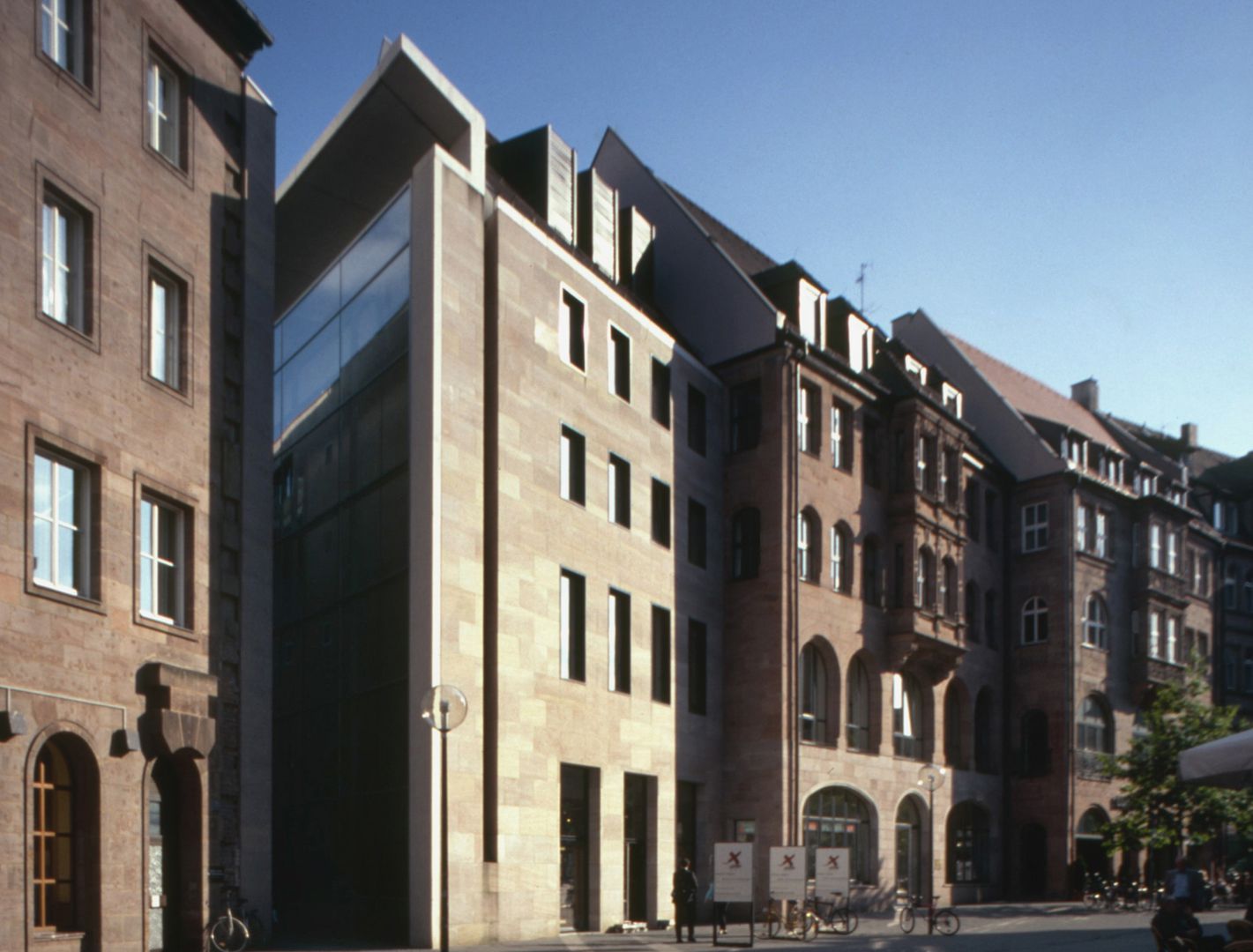
New Museum
1996 to 1999
Luitpoldstraße with front of the narrow side of the museum
The museum shows in an exemplary way, that contemporary architecture is absolutely able to promote excellence even in the Old City of Nuremberg. Integrating a house of the pre-modern era at Luitpoldstraße the building develops a 100 m long concave front completely freely deep into Klarissenplatz. This front makes up one side of Klarissenplatz, which, apart from that, is bordered by the City wall and the historical back fronts of the buildings at Kaiserstraße. The cleft at Luitpoldstraße separates the main building from the tract of the design forum Nuremberg, which is also laterally curved and decorated with bas-reliefs of names and sayings of Nuremberg artists designed by the Swiss artist Rémy Zaugg. The spatial concept of the museum is by no mean sensationalism but good architecture. Dr. Pablo de la Riestra
Location: Nuremberg, Luitpoldstraße 5 and Klarissenplatz
Design: Staab, Volker
photo 2004, Pablo de la Riestra
New Museum
1996 to 1999
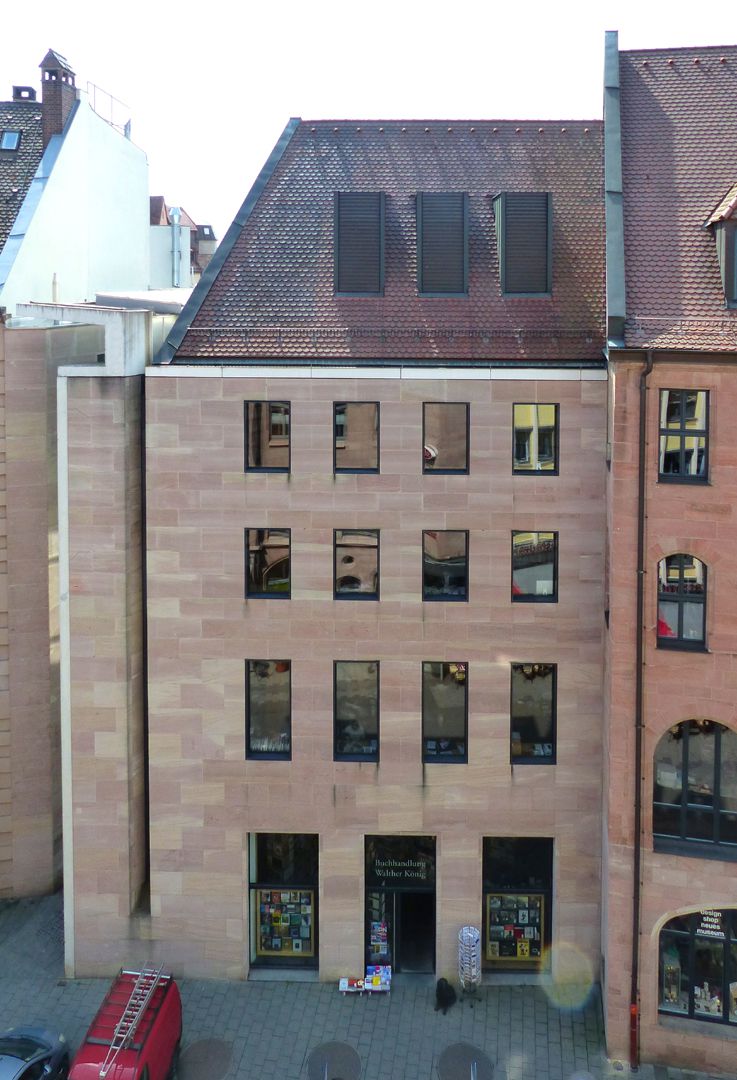
Luitpoldstraße with front at the narrow side of the museum, front view from above
The museum shows in an exemplary way, that contemporary architecture is absolutely able to promote excellence even in the Old City of Nuremberg. Integrating a house of the pre-modern era at Luitpoldstraße the building develops a 100 m long concave front completely freely deep into Klarissenplatz. This front makes up one side of Klarissenplatz, which, apart from that, is bordered by the City wall and the historical back fronts of the buildings at Kaiserstraße. The cleft at Luitpoldstraße separates the main building from the tract of the design forum Nuremberg, which is also laterally curved and decorated with bas-reliefs of names and sayings of Nuremberg artists designed by the Swiss artist Rémy Zaugg. The spatial concept of the museum is by no mean sensationalism but good architecture. Dr. Pablo de la Riestra
Location: Nuremberg, Luitpoldstraße 5 and Klarissenplatz
Design: Staab, Volker
photo 2019, Pablo de la Riestra
New Museum
1996 to 1999
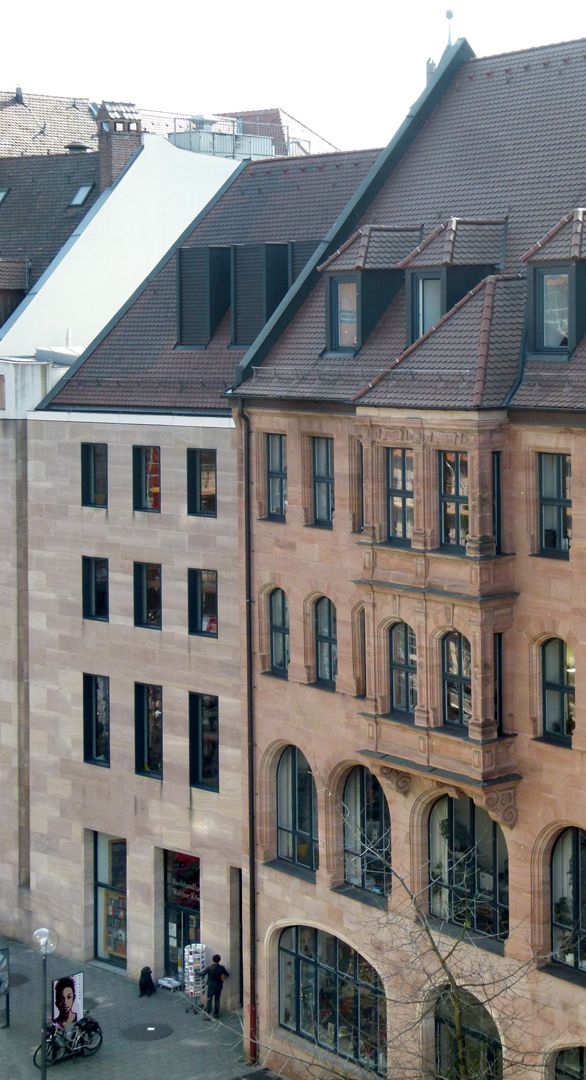
Luitpoldstraße with front at the narrow side of the museum, diagonal view from above
The museum shows in an exemplary way, that contemporary architecture is absolutely able to promote excellence even in the Old City of Nuremberg. Integrating a house of the pre-modern era at Luitpoldstraße the building develops a 100 m long concave front completely freely deep into Klarissenplatz. This front makes up one side of Klarissenplatz, which, apart from that, is bordered by the City wall and the historical back fronts of the buildings at Kaiserstraße. The cleft at Luitpoldstraße separates the main building from the tract of the design forum Nuremberg, which is also laterally curved and decorated with bas-reliefs of names and sayings of Nuremberg artists designed by the Swiss artist Rémy Zaugg. The spatial concept of the museum is by no mean sensationalism but good architecture. Dr. Pablo de la Riestra
Location: Nuremberg, Luitpoldstraße 5 and Klarissenplatz
Design: Staab, Volker
photo 2019, Pablo de la Riestra
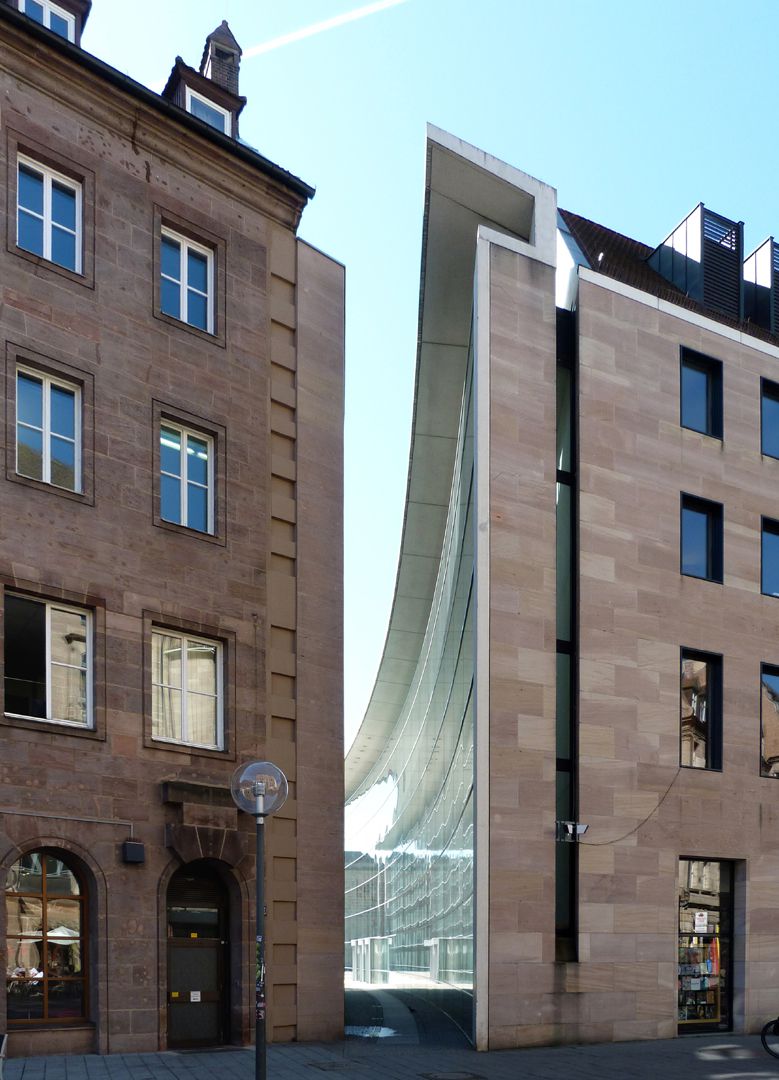
New Museum
1996 to 1999
Passage between museum and design forum
The museum shows in an exemplary way, that contemporary architecture is absolutely able to promote excellence even in the Old City of Nuremberg. Integrating a house of the pre-modern era at Luitpoldstraße the building develops a 100 m long concave front completely freely deep into Klarissenplatz. This front makes up one side of Klarissenplatz, which, apart from that, is bordered by the City wall and the historical back fronts of the buildings at Kaiserstraße. The cleft at Luitpoldstraße separates the main building from the tract of the design forum Nuremberg, which is also laterally curved and decorated with bas-reliefs of names and sayings of Nuremberg artists designed by the Swiss artist Rémy Zaugg. The spatial concept of the museum is by no mean sensationalism but good architecture. Dr. Pablo de la Riestra
Location: Nuremberg, Luitpoldstraße 5 and Klarissenplatz
Design: Staab, Volker
photo 2012, Pablo de la Riestra
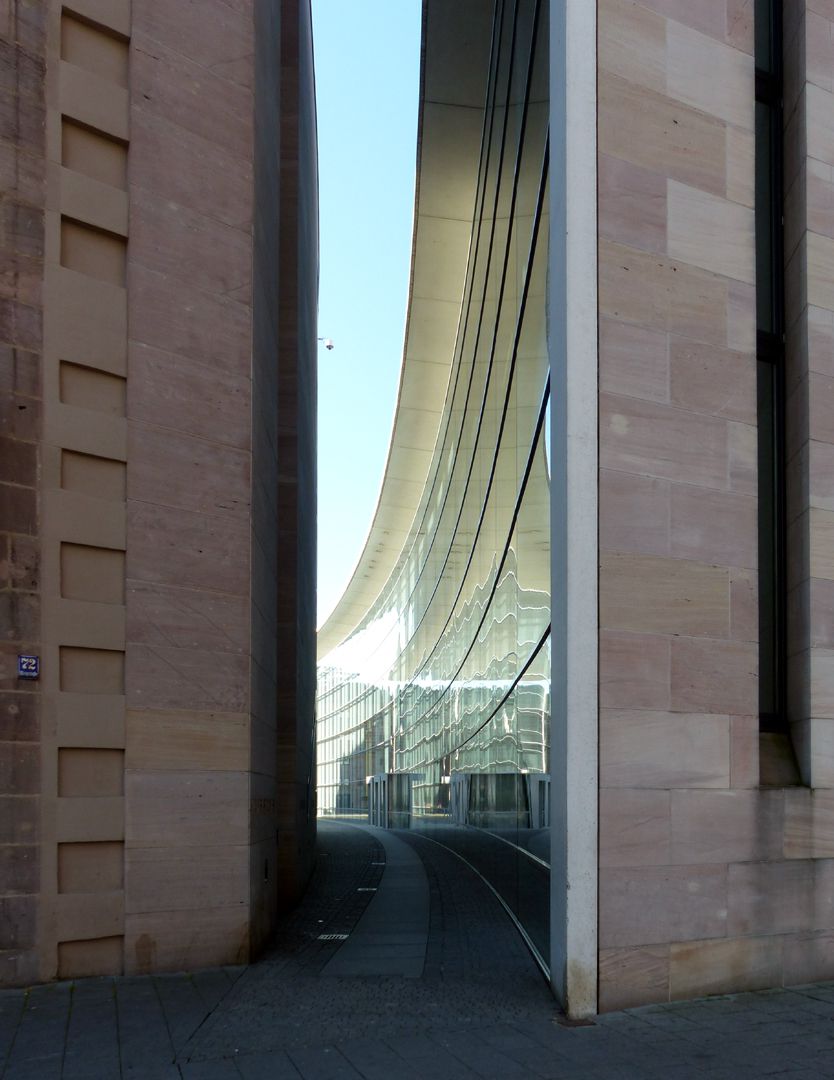
New Museum
1996 to 1999
Passage between museum and design forum, detail
The museum shows in an exemplary way, that contemporary architecture is absolutely able to promote excellence even in the Old City of Nuremberg. Integrating a house of the pre-modern era at Luitpoldstraße the building develops a 100 m long concave front completely freely deep into Klarissenplatz. This front makes up one side of Klarissenplatz, which, apart from that, is bordered by the City wall and the historical back fronts of the buildings at Kaiserstraße. The cleft at Luitpoldstraße separates the main building from the tract of the design forum Nuremberg, which is also laterally curved and decorated with bas-reliefs of names and sayings of Nuremberg artists designed by the Swiss artist Rémy Zaugg. The spatial concept of the museum is by no mean sensationalism but good architecture. Dr. Pablo de la Riestra
Location: Nuremberg, Luitpoldstraße 5 and Klarissenplatz
Design: Staab, Volker
photo 2016, Pablo de la Riestra
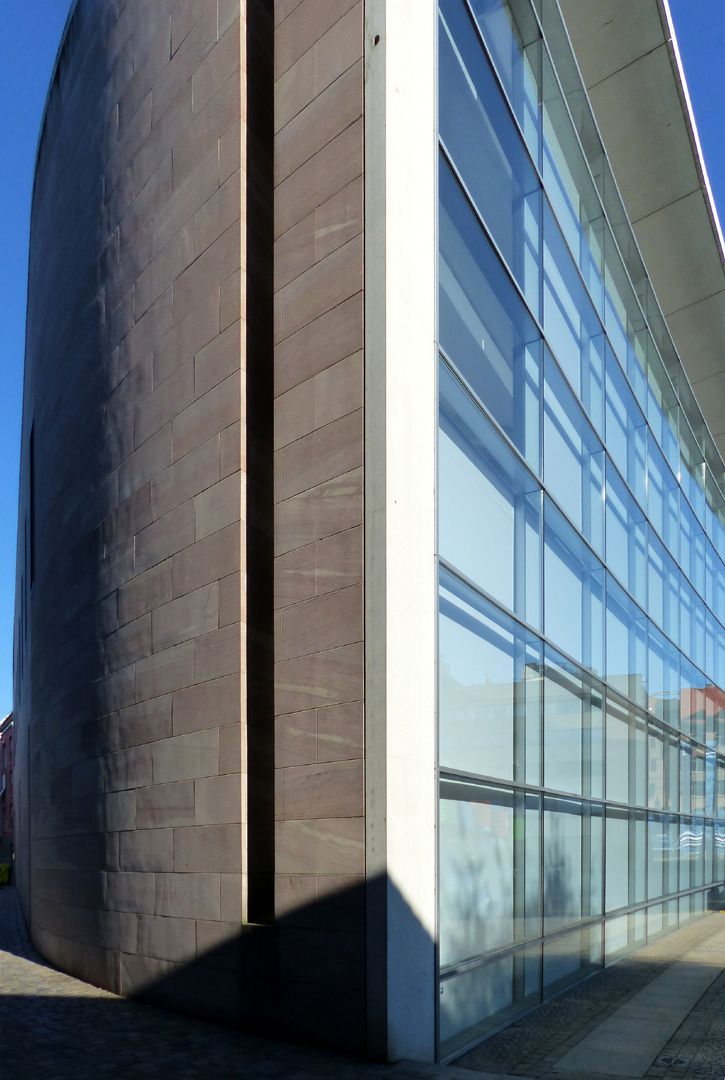
New Museum
1996 to 1999
Main tract from south to north
The museum shows in an exemplary way, that contemporary architecture is absolutely able to promote excellence even in the Old City of Nuremberg. Integrating a house of the pre-modern era at Luitpoldstraße the building develops a 100 m long concave front completely freely deep into Klarissenplatz. This front makes up one side of Klarissenplatz, which, apart from that, is bordered by the City wall and the historical back fronts of the buildings at Kaiserstraße. The cleft at Luitpoldstraße separates the main building from the tract of the design forum Nuremberg, which is also laterally curved and decorated with bas-reliefs of names and sayings of Nuremberg artists designed by the Swiss artist Rémy Zaugg. The spatial concept of the museum is by no mean sensationalism but good architecture. Dr. Pablo de la Riestra
Location: Nuremberg, Luitpoldstraße 5 and Klarissenplatz
Design: Staab, Volker
photo 2016, Pablo de la Riestra
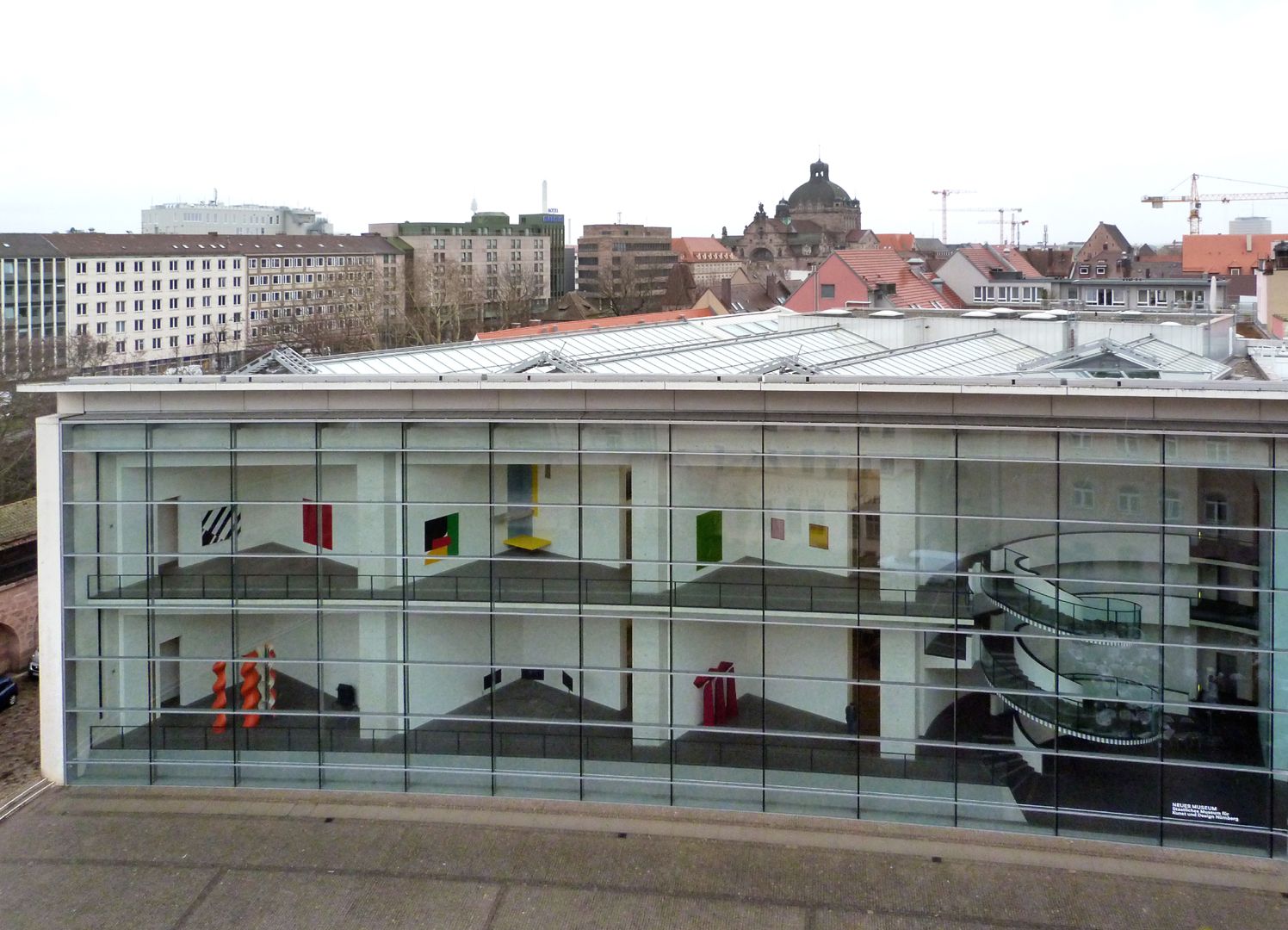
New Museum
1996 to 1999
Main tract with view of the front rooms and the stairwell
The museum shows in an exemplary way, that contemporary architecture is absolutely able to promote excellence even in the Old City of Nuremberg. Integrating a house of the pre-modern era at Luitpoldstraße the building develops a 100 m long concave front completely freely deep into Klarissenplatz. This front makes up one side of Klarissenplatz, which, apart from that, is bordered by the City wall and the historical back fronts of the buildings at Kaiserstraße. The cleft at Luitpoldstraße separates the main building from the tract of the design forum Nuremberg, which is also laterally curved and decorated with bas-reliefs of names and sayings of Nuremberg artists designed by the Swiss artist Rémy Zaugg. The spatial concept of the museum is by no mean sensationalism but good architecture. Dr. Pablo de la Riestra
Location: Nuremberg, Luitpoldstraße 5 and Klarissenplatz
Design: Staab, Volker
photo 2019, Pablo de la Riestra
New Museum
1996 to 1999
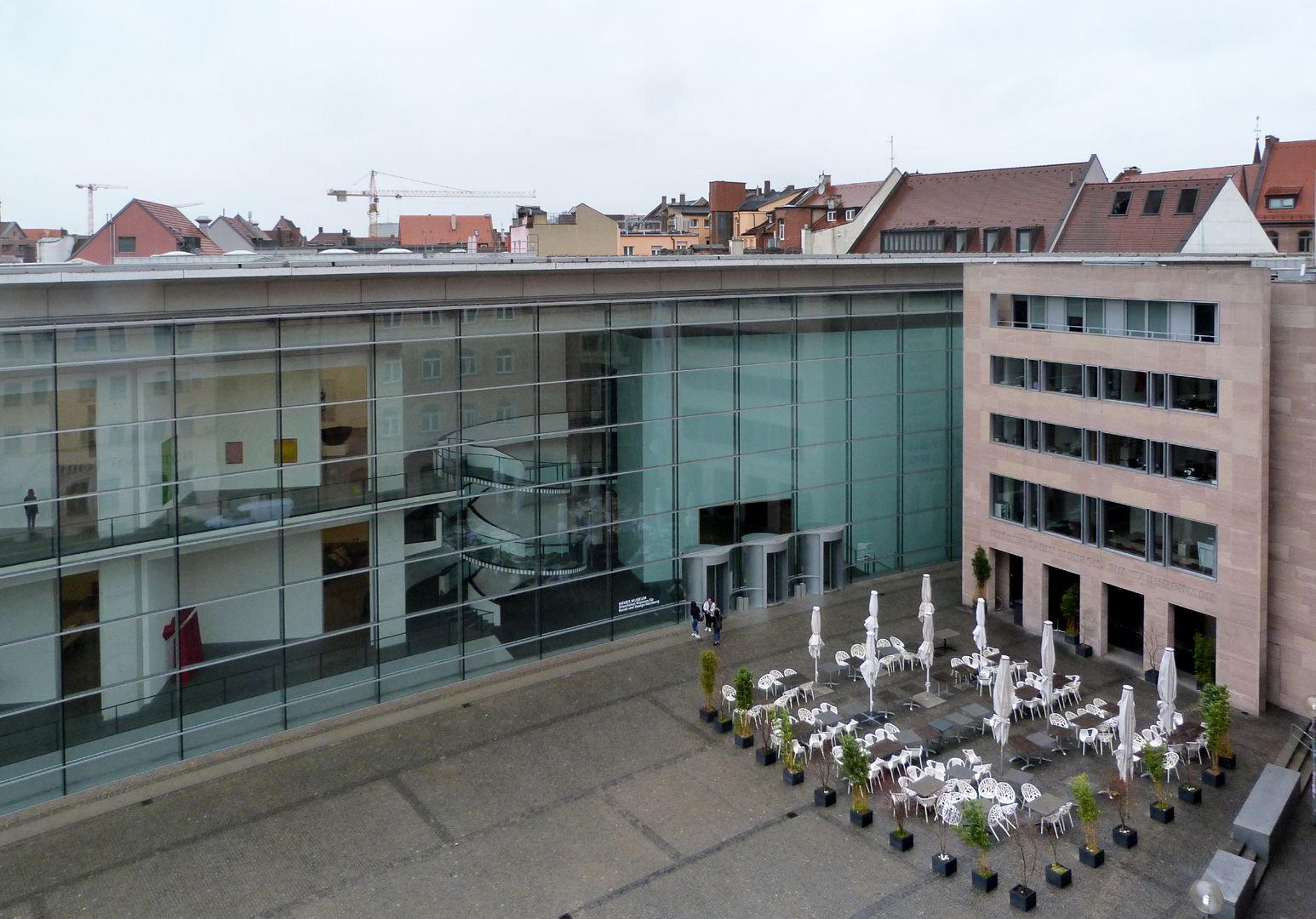
Main tract and design forum from above
The museum shows in an exemplary way, that contemporary architecture is absolutely able to promote excellence even in the Old City of Nuremberg. Integrating a house of the pre-modern era at Luitpoldstraße the building develops a 100 m long concave front completely freely deep into Klarissenplatz. This front makes up one side of Klarissenplatz, which, apart from that, is bordered by the City wall and the historical back fronts of the buildings at Kaiserstraße. The cleft at Luitpoldstraße separates the main building from the tract of the design forum Nuremberg, which is also laterally curved and decorated with bas-reliefs of names and sayings of Nuremberg artists designed by the Swiss artist Rémy Zaugg. The spatial concept of the museum is by no mean sensationalism but good architecture. Dr. Pablo de la Riestra
Location: Nuremberg, Luitpoldstraße 5 and Klarissenplatz
Design: Staab, Volker
photo 2019, Pablo de la Riestra
New Museum
1996 to 1999
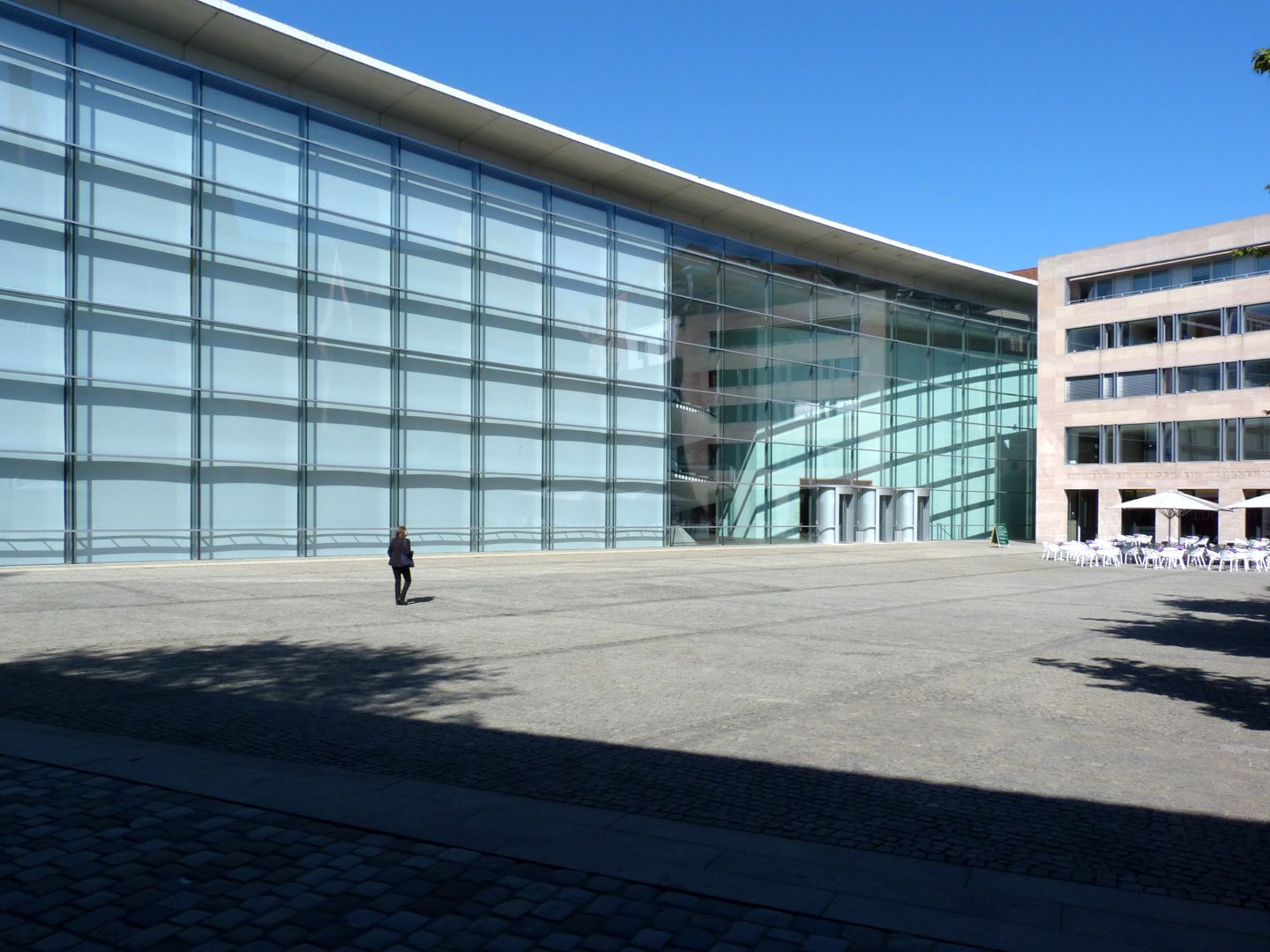
Museum as seen from Klarissenplatz
The museum shows in an exemplary way, that contemporary architecture is absolutely able to promote excellence even in the Old City of Nuremberg. Integrating a house of the pre-modern era at Luitpoldstraße the building develops a 100 m long concave front completely freely deep into Klarissenplatz. This front makes up one side of Klarissenplatz, which, apart from that, is bordered by the City wall and the historical back fronts of the buildings at Kaiserstraße. The cleft at Luitpoldstraße separates the main building from the tract of the design forum Nuremberg, which is also laterally curved and decorated with bas-reliefs of names and sayings of Nuremberg artists designed by the Swiss artist Rémy Zaugg. The spatial concept of the museum is by no mean sensationalism but good architecture. Dr. Pablo de la Riestra
Location: Nuremberg, Luitpoldstraße 5 and Klarissenplatz
Design: Staab, Volker
photo 2012, Pablo de la Riestra
New Museum
1996 to 1999
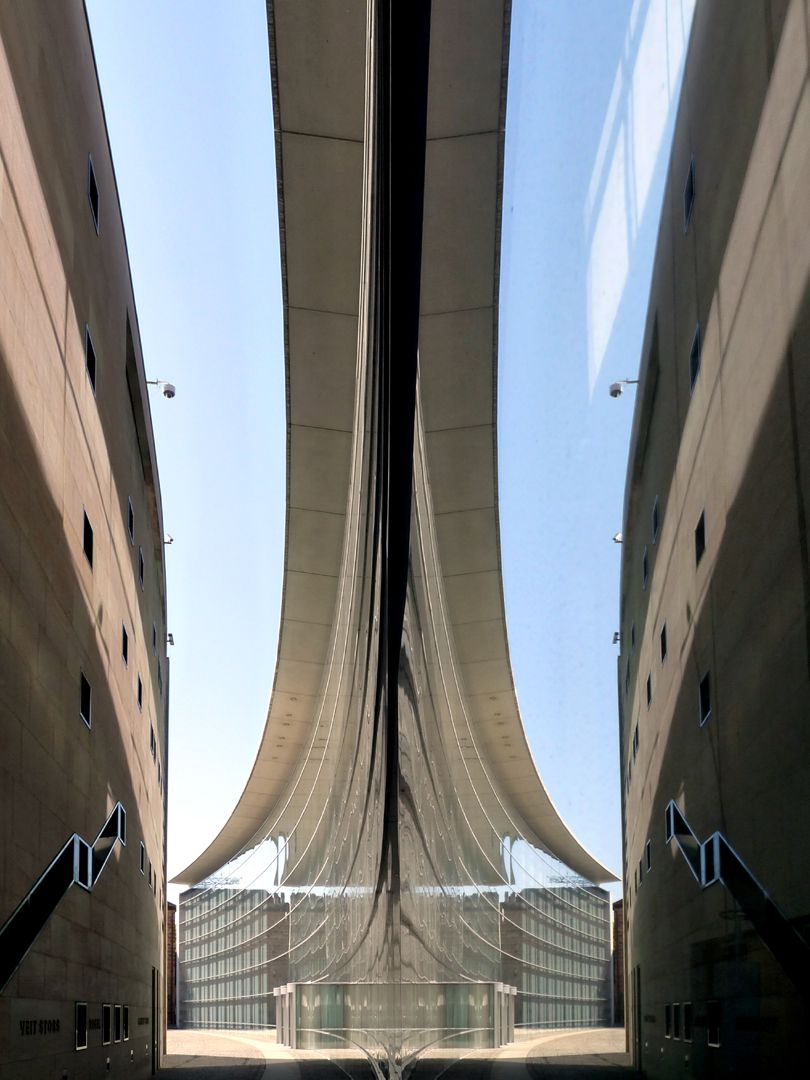
Reflection at the passage
The museum shows in an exemplary way, that contemporary architecture is absolutely able to promote excellence even in the Old City of Nuremberg. Integrating a house of the pre-modern era at Luitpoldstraße the building develops a 100 m long concave front completely freely deep into Klarissenplatz. This front makes up one side of Klarissenplatz, which, apart from that, is bordered by the City wall and the historical back fronts of the buildings at Kaiserstraße. The cleft at Luitpoldstraße separates the main building from the tract of the design forum Nuremberg, which is also laterally curved and decorated with bas-reliefs of names and sayings of Nuremberg artists designed by the Swiss artist Rémy Zaugg. The spatial concept of the museum is by no mean sensationalism but good architecture. Dr. Pablo de la Riestra
Location: Nuremberg, Luitpoldstraße 5 and Klarissenplatz
Design: Staab, Volker
photo 2012, Theo Noll
New Museum
1996 to 1999
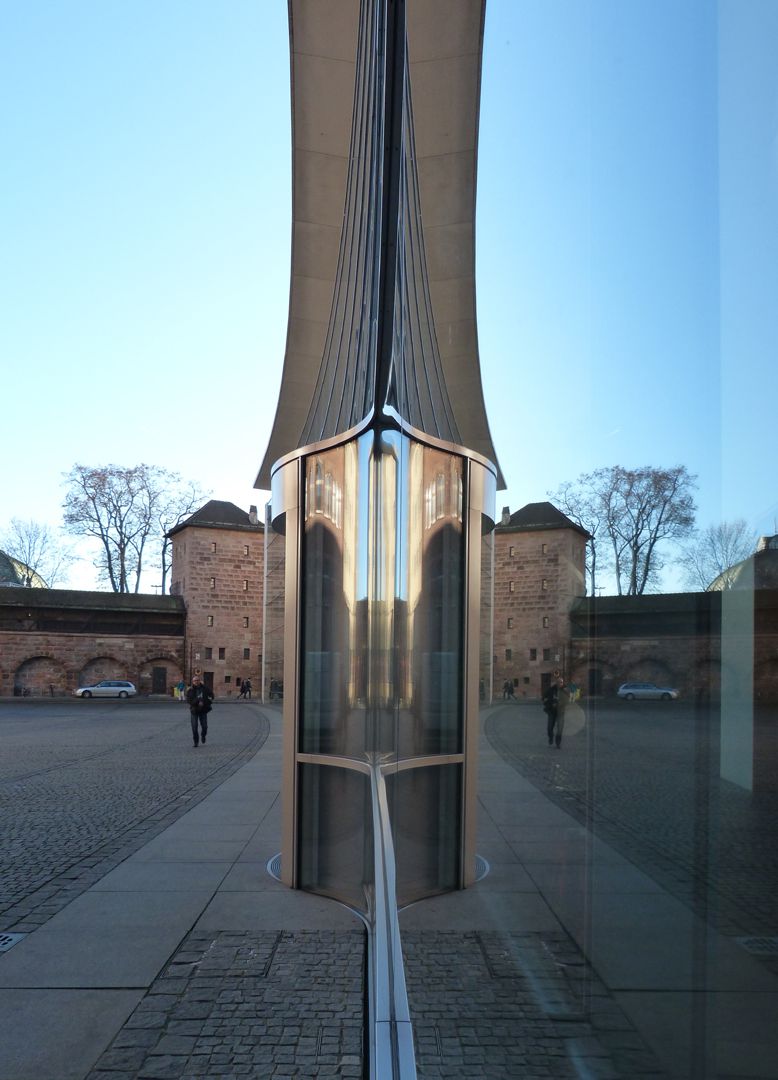
Nuremberg, Luitpoldstraße 5 and Klarissenplatz
The museum shows in an exemplary way, that contemporary architecture is absolutely able to promote excellence even in the Old City of Nuremberg. Integrating a house of the pre-modern era at Luitpoldstraße the building develops a 100 m long concave front completely freely deep into Klarissenplatz. This front makes up one side of Klarissenplatz, which, apart from that, is bordered by the City wall and the historical back fronts of the buildings at Kaiserstraße. The cleft at Luitpoldstraße separates the main building from the tract of the design forum Nuremberg, which is also laterally curved and decorated with bas-reliefs of names and sayings of Nuremberg artists designed by the Swiss artist Rémy Zaugg. The spatial concept of the museum is by no mean sensationalism but good architecture. Dr. Pablo de la Riestra
Location: Reflection at the entrance area
Design: Staab, Volker
photo 2019, Theo Noll
New Museum
1996 to 1999
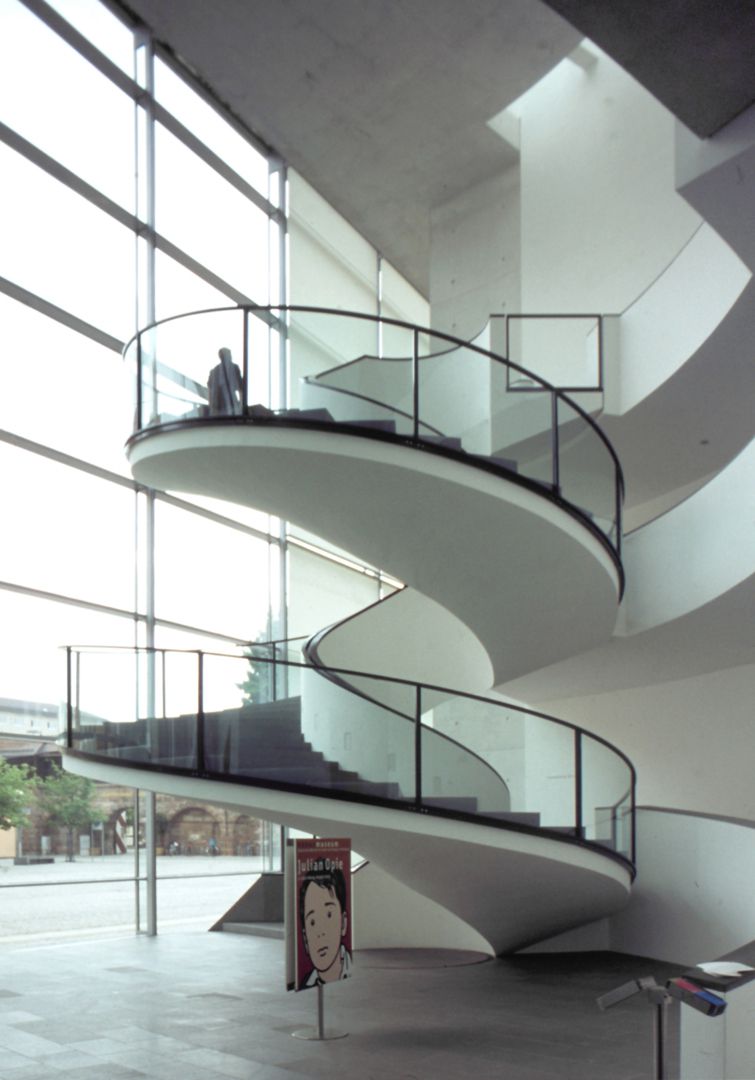
Spiral staircase with Brazilian appearance
The museum shows in an exemplary way, that contemporary architecture is absolutely able to promote excellence even in the Old City of Nuremberg. Integrating a house of the pre-modern era at Luitpoldstraße the building develops a 100 m long concave front completely freely deep into Klarissenplatz. This front makes up one side of Klarissenplatz, which, apart from that, is bordered by the City wall and the historical back fronts of the buildings at Kaiserstraße. The cleft at Luitpoldstraße separates the main building from the tract of the design forum Nuremberg, which is also laterally curved and decorated with bas-reliefs of names and sayings of Nuremberg artists designed by the Swiss artist Rémy Zaugg. The spatial concept of the museum is by no mean sensationalism but good architecture. Dr. Pablo de la Riestra
Location: Nuremberg, Luitpoldstraße 5 and Klarissenplatz
Design: Staab, Volker
photo 2004, Pablo de la Riestra
New Museum
1996 to 1999
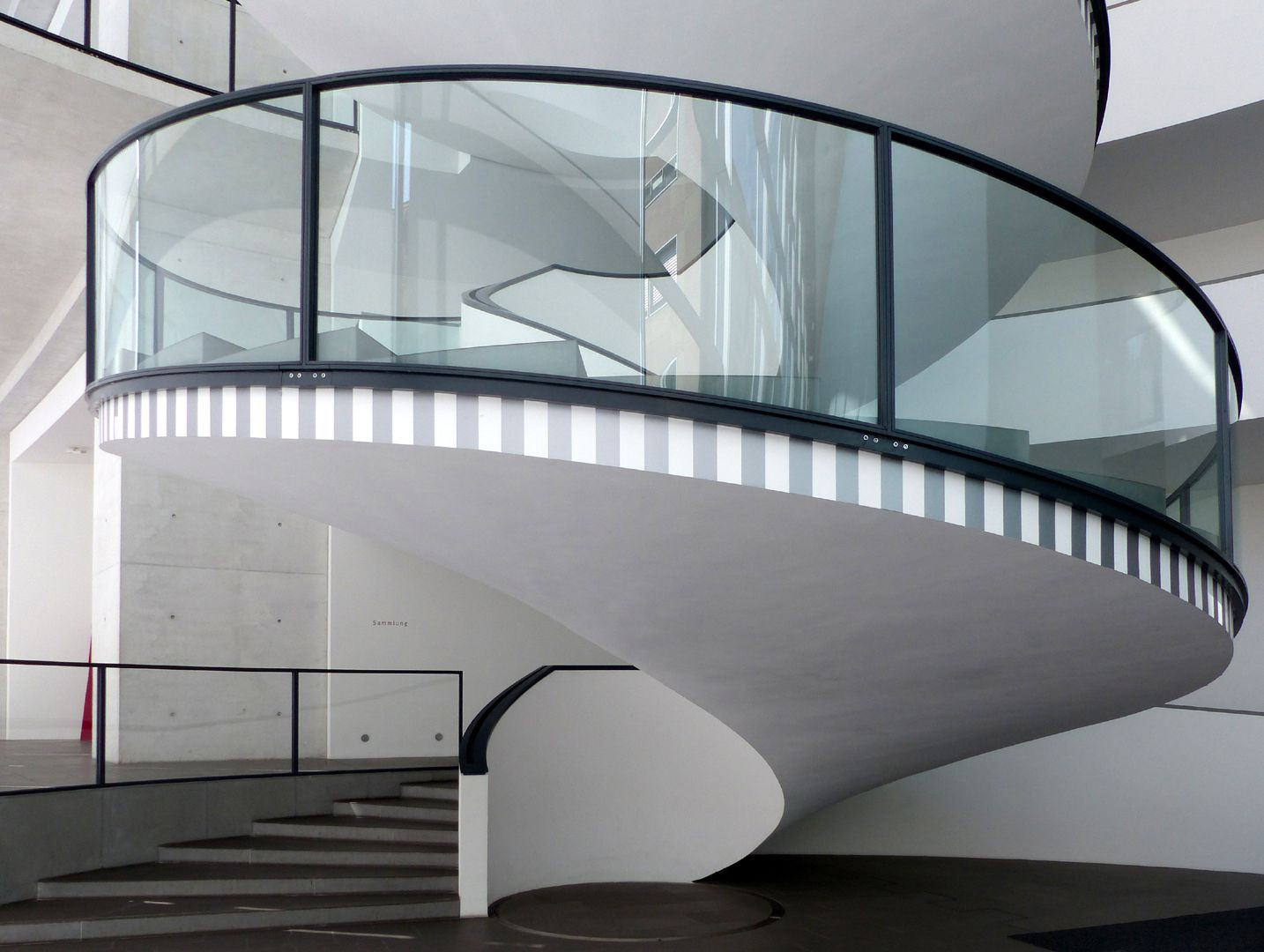
Spiral staircase
The museum shows in an exemplary way, that contemporary architecture is absolutely able to promote excellence even in the Old City of Nuremberg. Integrating a house of the pre-modern era at Luitpoldstraße the building develops a 100 m long concave front completely freely deep into Klarissenplatz. This front makes up one side of Klarissenplatz, which, apart from that, is bordered by the City wall and the historical back fronts of the buildings at Kaiserstraße. The cleft at Luitpoldstraße separates the main building from the tract of the design forum Nuremberg, which is also laterally curved and decorated with bas-reliefs of names and sayings of Nuremberg artists designed by the Swiss artist Rémy Zaugg. The spatial concept of the museum is by no mean sensationalism but good architecture. Dr. Pablo de la Riestra
Location: Nuremberg, Luitpoldstraße 5 and Klarissenplatz
Design: Staab, Volker
photo 2019, Pablo de la Riestra
New Museum
1996 to 1999
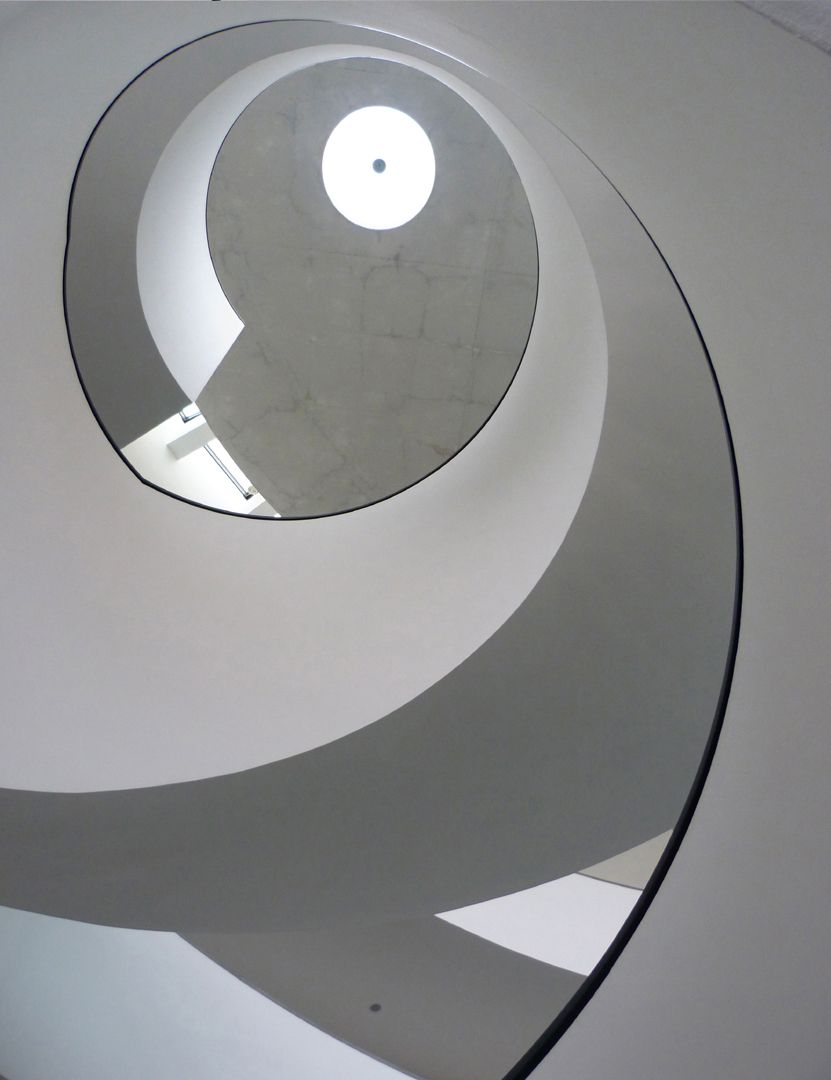
View of the hole of the stair
The museum shows in an exemplary way, that contemporary architecture is absolutely able to promote excellence even in the Old City of Nuremberg. Integrating a house of the pre-modern era at Luitpoldstraße the building develops a 100 m long concave front completely freely deep into Klarissenplatz. This front makes up one side of Klarissenplatz, which, apart from that, is bordered by the City wall and the historical back fronts of the buildings at Kaiserstraße. The cleft at Luitpoldstraße separates the main building from the tract of the design forum Nuremberg, which is also laterally curved and decorated with bas-reliefs of names and sayings of Nuremberg artists designed by the Swiss artist Rémy Zaugg. The spatial concept of the museum is by no mean sensationalism but good architecture. Dr. Pablo de la Riestra
Location: Nuremberg, Luitpoldstraße 5 and Klarissenplatz
Design: Staab, Volker
photo 2016, Theo Noll
New Museum
1996 to 1999
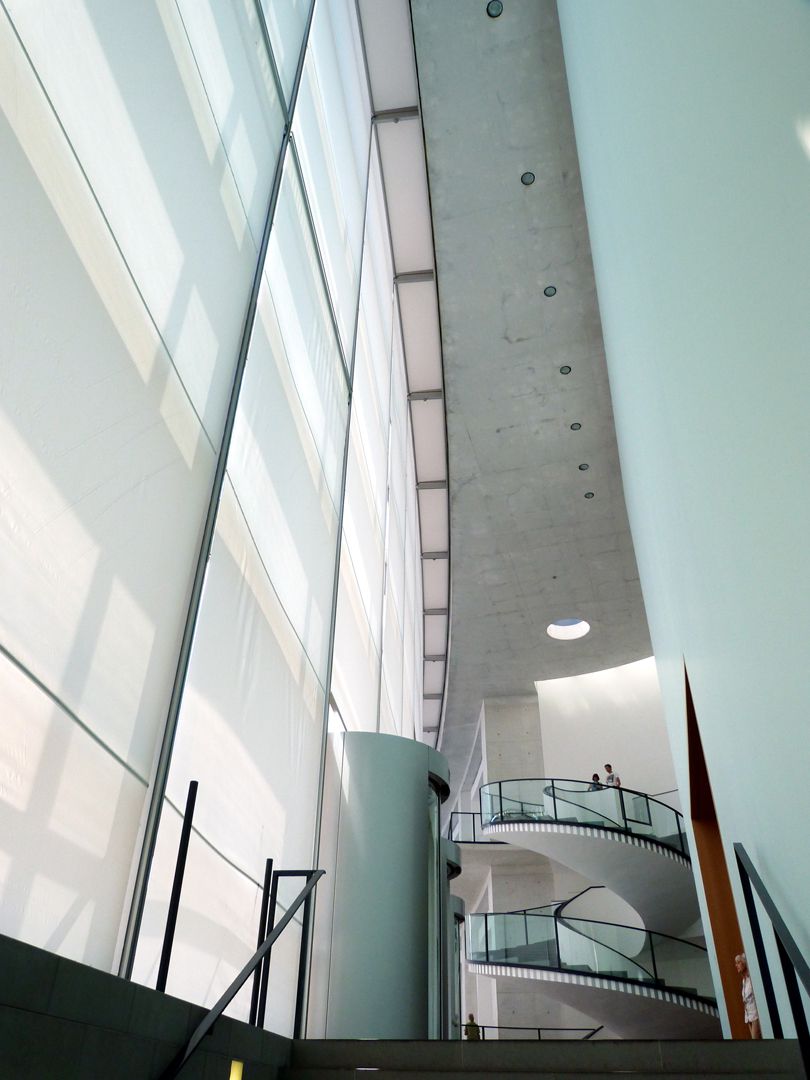
Nuremberg, Luitpoldstraße 5 and Klarissenplatz
The museum shows in an exemplary way, that contemporary architecture is absolutely able to promote excellence even in the Old City of Nuremberg. Integrating a house of the pre-modern era at Luitpoldstraße the building develops a 100 m long concave front completely freely deep into Klarissenplatz. This front makes up one side of Klarissenplatz, which, apart from that, is bordered by the City wall and the historical back fronts of the buildings at Kaiserstraße. The cleft at Luitpoldstraße separates the main building from the tract of the design forum Nuremberg, which is also laterally curved and decorated with bas-reliefs of names and sayings of Nuremberg artists designed by the Swiss artist Rémy Zaugg. The spatial concept of the museum is by no mean sensationalism but good architecture. Dr. Pablo de la Riestra
Location: Nürnberg, Luitpoldstraße 5 und Klarissenplatz
Design: Staab, Volker
photo 2019, Pablo de la Riestra
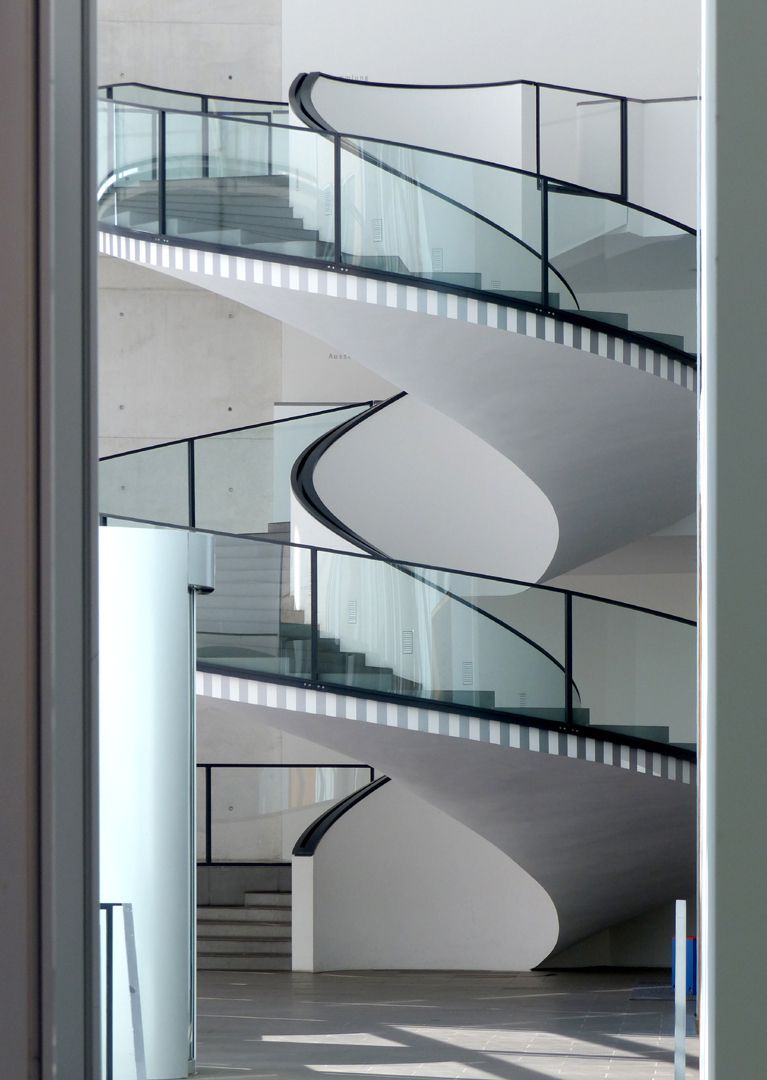
New Museum
1996 to 1999
Spiral staircase, lateral view
The museum shows in an exemplary way, that contemporary architecture is absolutely able to promote excellence even in the Old City of Nuremberg. Integrating a house of the pre-modern era at Luitpoldstraße the building develops a 100 m long concave front completely freely deep into Klarissenplatz. This front makes up one side of Klarissenplatz, which, apart from that, is bordered by the City wall and the historical back fronts of the buildings at Kaiserstraße. The cleft at Luitpoldstraße separates the main building from the tract of the design forum Nuremberg, which is also laterally curved and decorated with bas-reliefs of names and sayings of Nuremberg artists designed by the Swiss artist Rémy Zaugg. The spatial concept of the museum is by no mean sensationalism but good architecture. Dr. Pablo de la Riestra
Location: Nuremberg, Luitpoldstraße 5 and Klarissenplatz
Design: Staab, Volker
photo 2019, Pablo de la Riestra
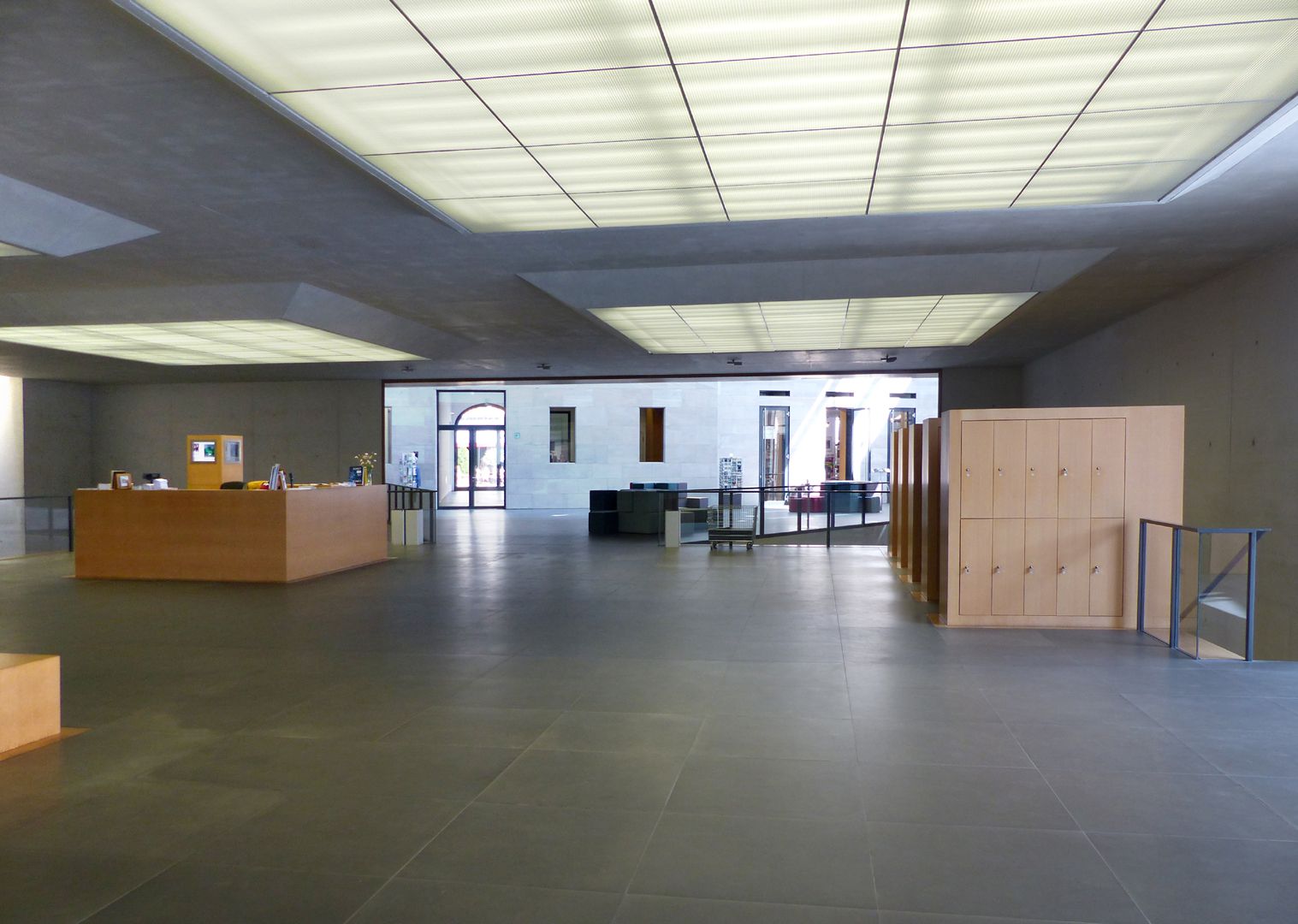
New Museum
1996 to 1999
Foyer
The museum shows in an exemplary way, that contemporary architecture is absolutely able to promote excellence even in the Old City of Nuremberg. Integrating a house of the pre-modern era at Luitpoldstraße the building develops a 100 m long concave front completely freely deep into Klarissenplatz. This front makes up one side of Klarissenplatz, which, apart from that, is bordered by the City wall and the historical back fronts of the buildings at Kaiserstraße. The cleft at Luitpoldstraße separates the main building from the tract of the design forum Nuremberg, which is also laterally curved and decorated with bas-reliefs of names and sayings of Nuremberg artists designed by the Swiss artist Rémy Zaugg. The spatial concept of the museum is by no mean sensationalism but good architecture. Dr. Pablo de la Riestra
Location: Nuremberg, Luitpoldstraße 5 and Klarissenplatz
Design: Staab, Volker
photo 2019, Theo Noll
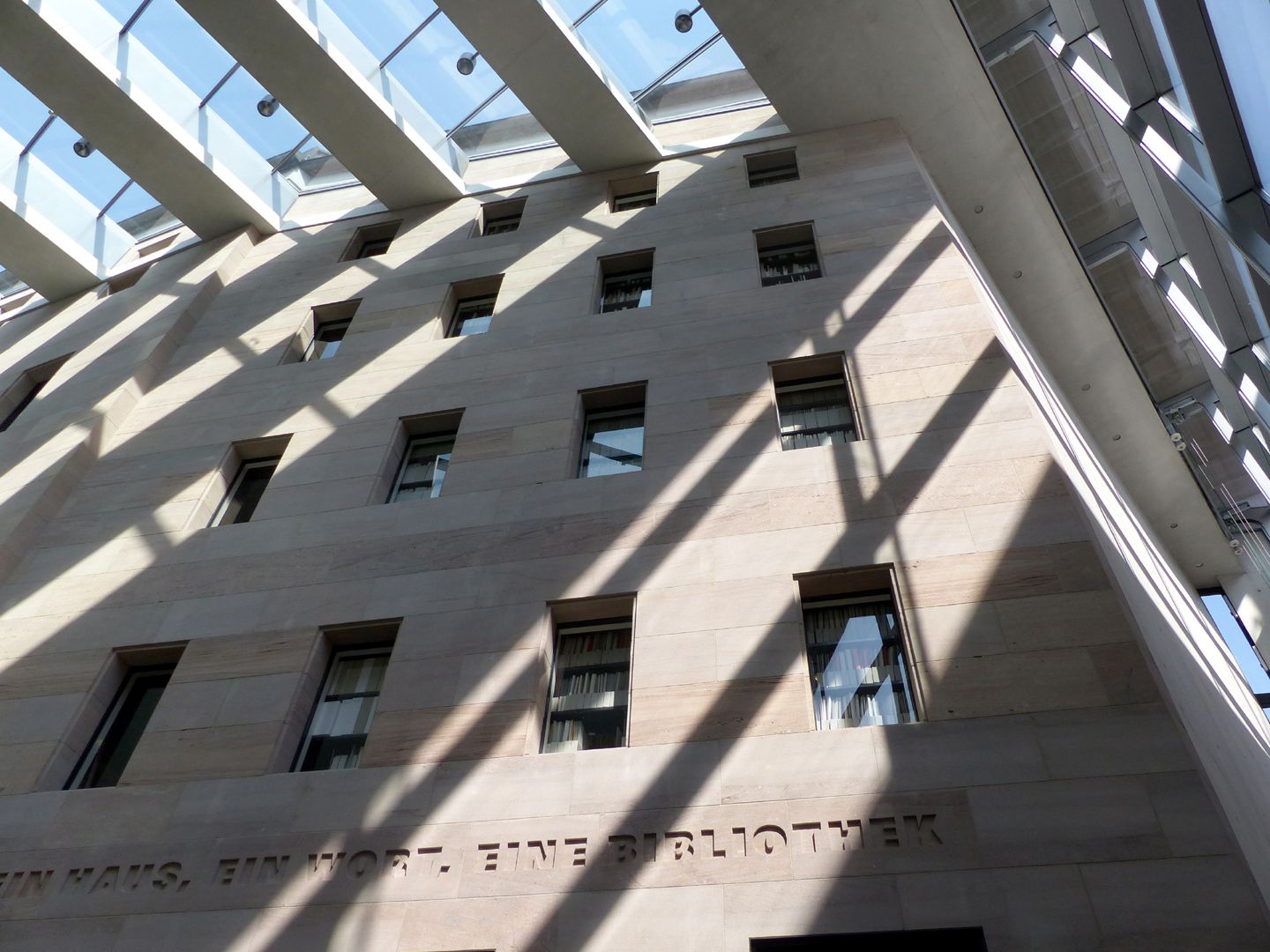
New Museum
1996 to 1999
Inner front of the front building
The museum shows in an exemplary way, that contemporary architecture is absolutely able to promote excellence even in the Old City of Nuremberg. Integrating a house of the pre-modern era at Luitpoldstraße the building develops a 100 m long concave front completely freely deep into Klarissenplatz. This front makes up one side of Klarissenplatz, which, apart from that, is bordered by the City wall and the historical back fronts of the buildings at Kaiserstraße. The cleft at Luitpoldstraße separates the main building from the tract of the design forum Nuremberg, which is also laterally curved and decorated with bas-reliefs of names and sayings of Nuremberg artists designed by the Swiss artist Rémy Zaugg. The spatial concept of the museum is by no mean sensationalism but good architecture. Dr. Pablo de la Riestra
Location: Nuremberg, Luitpoldstraße 5 and Klarissenplatz
Design: Staab, Volker
photo 2019, Theo Noll
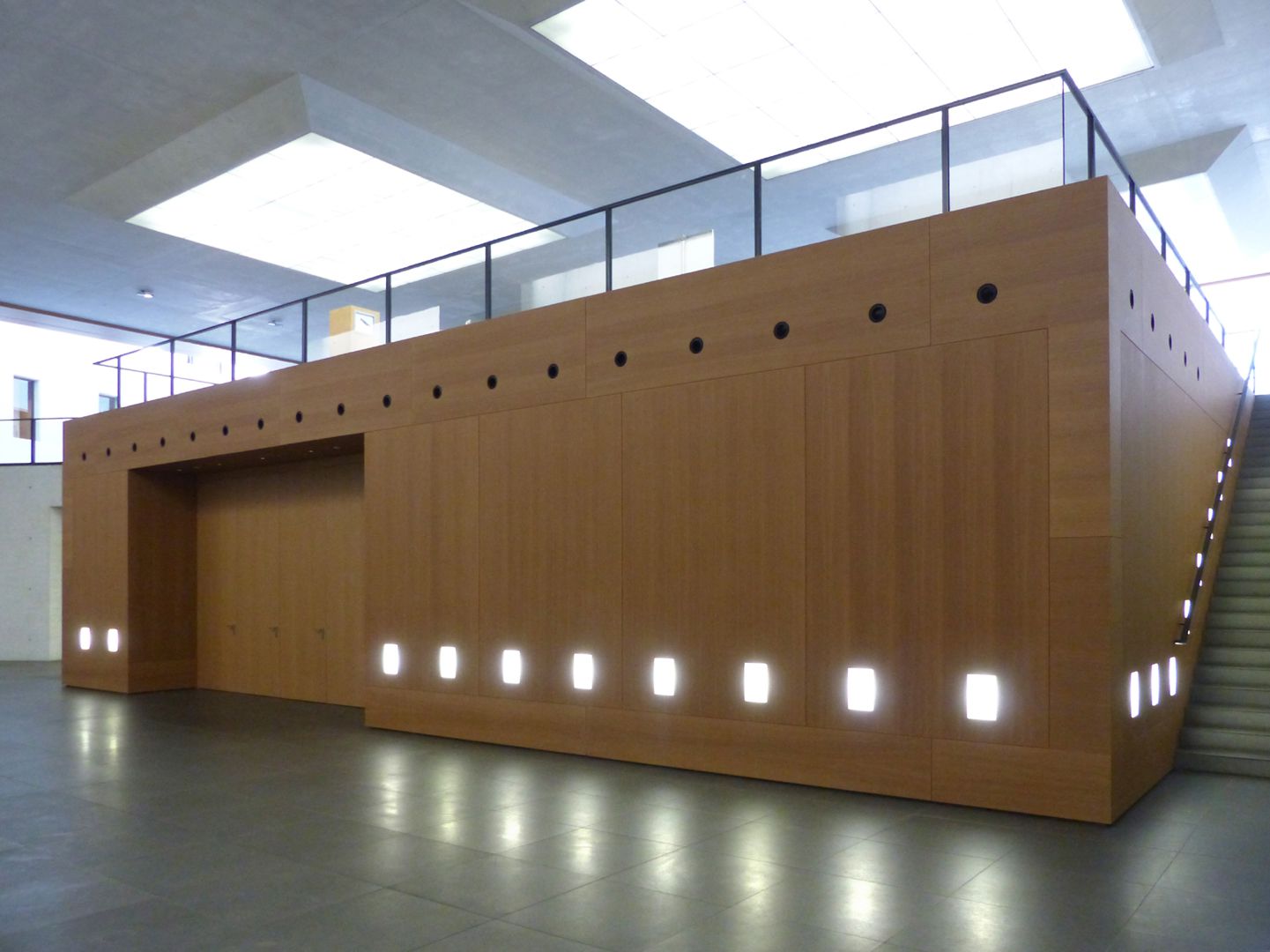
New Museum
1996 to 1999
Auditory in the basement
The museum shows in an exemplary way, that contemporary architecture is absolutely able to promote excellence even in the Old City of Nuremberg. Integrating a house of the pre-modern era at Luitpoldstraße the building develops a 100 m long concave front completely freely deep into Klarissenplatz. This front makes up one side of Klarissenplatz, which, apart from that, is bordered by the City wall and the historical back fronts of the buildings at Kaiserstraße. The cleft at Luitpoldstraße separates the main building from the tract of the design forum Nuremberg, which is also laterally curved and decorated with bas-reliefs of names and sayings of Nuremberg artists designed by the Swiss artist Rémy Zaugg. The spatial concept of the museum is by no mean sensationalism but good architecture. Dr. Pablo de la Riestra
Location: Nuremberg, Luitpoldstraße 5 and Klarissenplatz
Design: Staab, Volker
photo 2019, Pablo de la Riestra
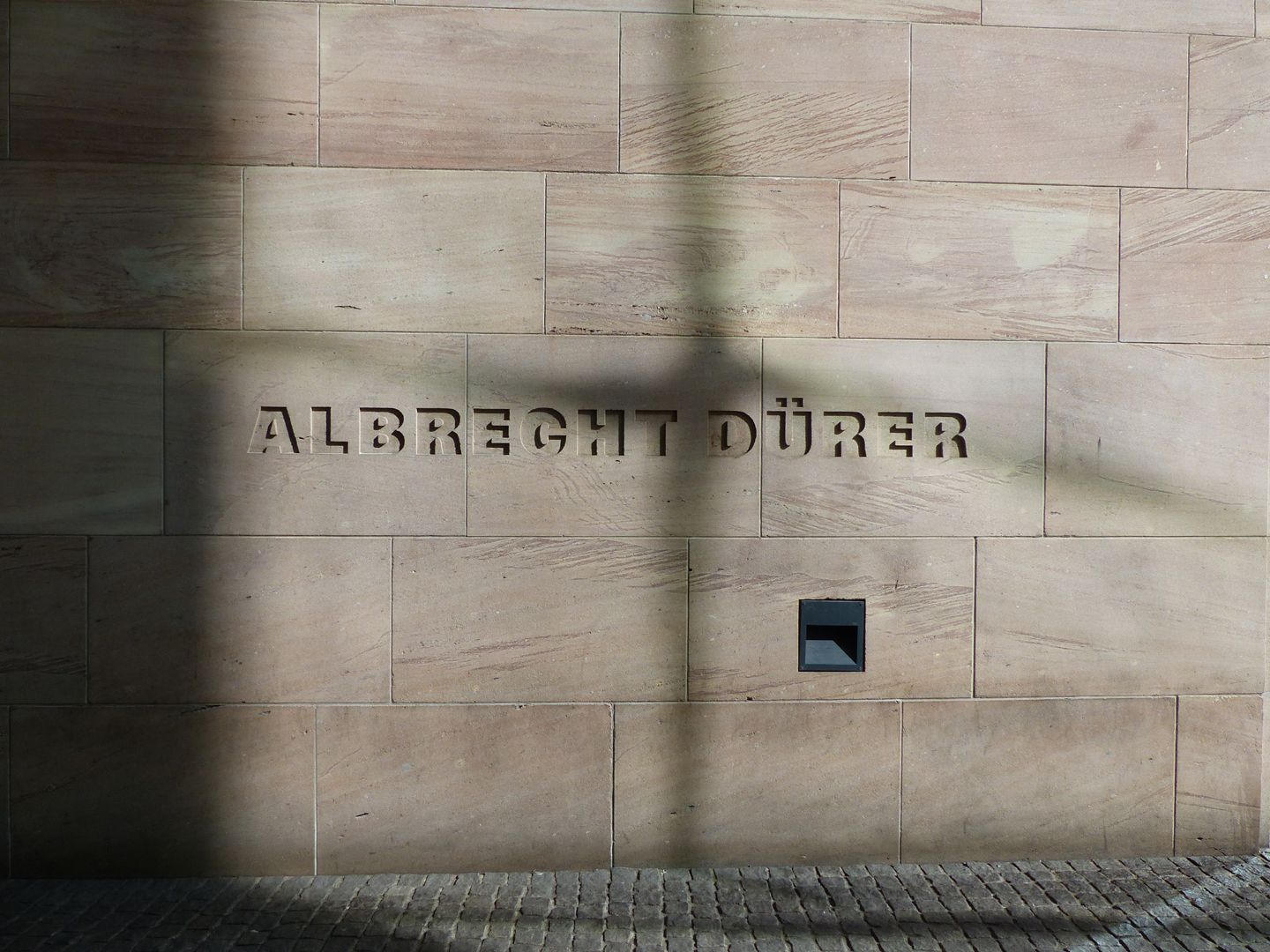
New Museum
1996 to 1999
Bas relief on the design forum
The museum shows in an exemplary way, that contemporary architecture is absolutely able to promote excellence even in the Old City of Nuremberg. Integrating a house of the pre-modern era at Luitpoldstraße the building develops a 100 m long concave front completely freely deep into Klarissenplatz. This front makes up one side of Klarissenplatz, which, apart from that, is bordered by the City wall and the historical back fronts of the buildings at Kaiserstraße. The cleft at Luitpoldstraße separates the main building from the tract of the design forum Nuremberg, which is also laterally curved and decorated with bas-reliefs of names and sayings of Nuremberg artists designed by the Swiss artist Rémy Zaugg. The spatial concept of the museum is by no mean sensationalism but good architecture. Dr. Pablo de la Riestra
Location: Nuremberg, Luitpoldstraße 5 and Klarissenplatz
Design: Staab, Volker
photo 2019, Pablo de la Riestra