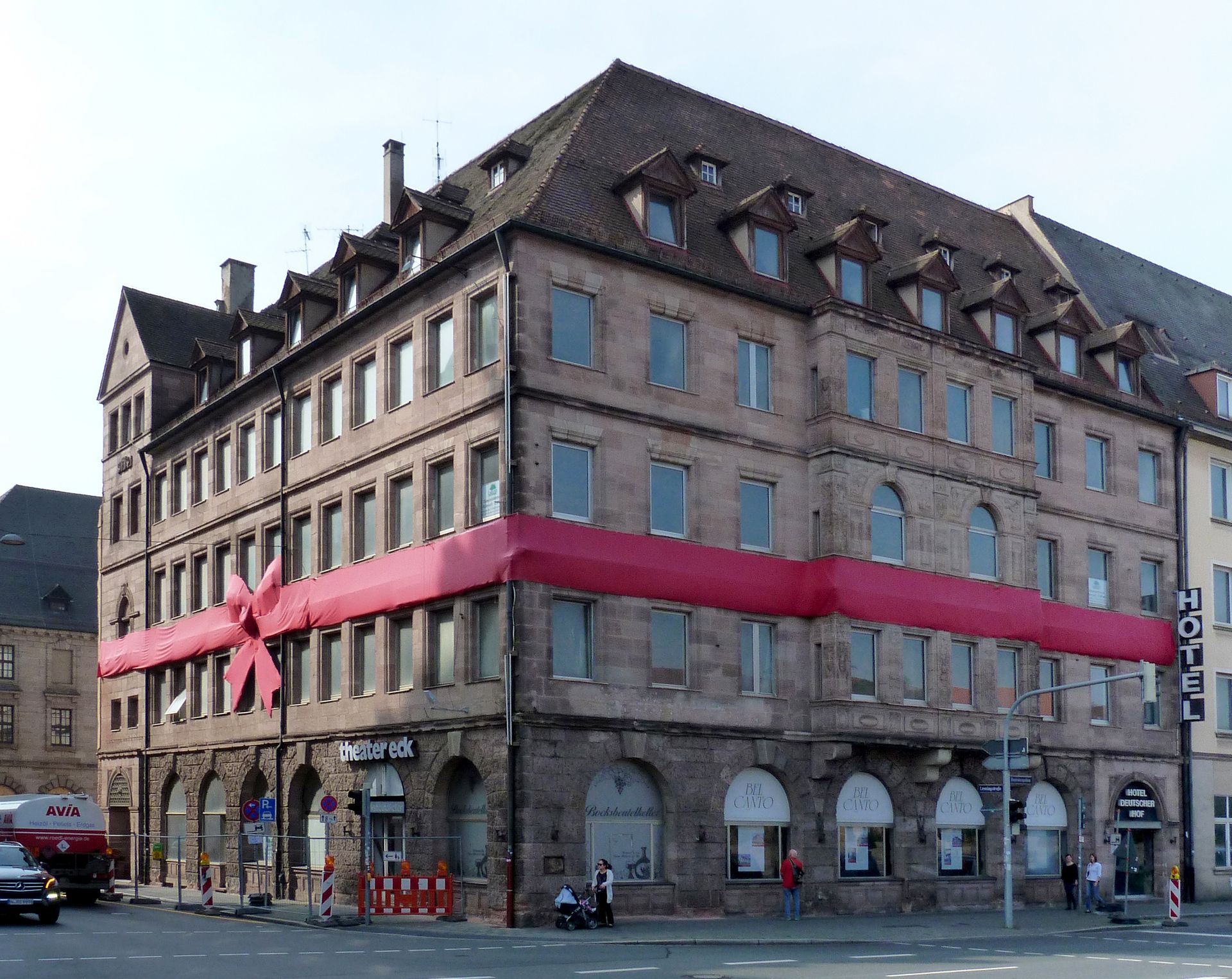
from 1913
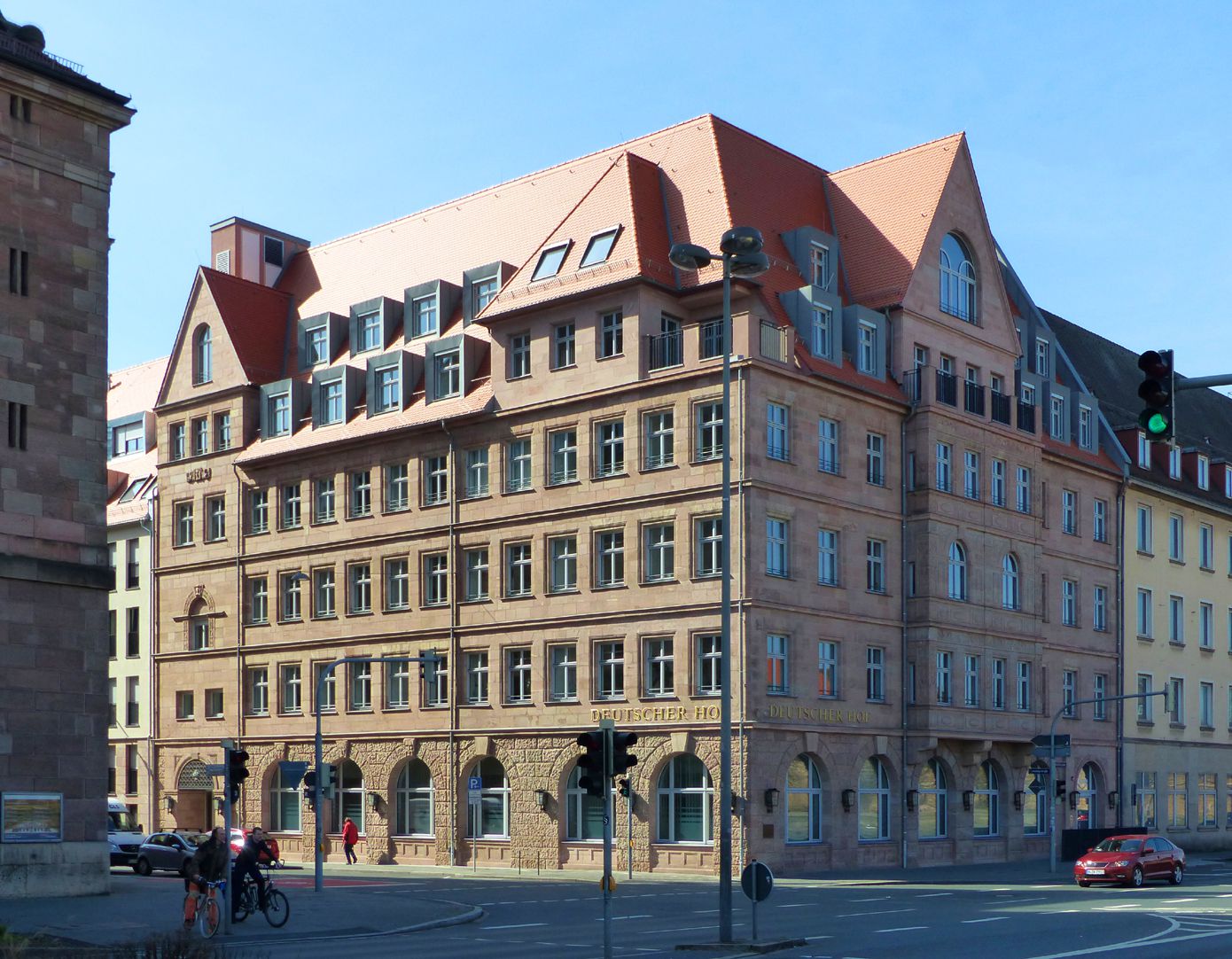
View from Frauentorgraben as of 2014
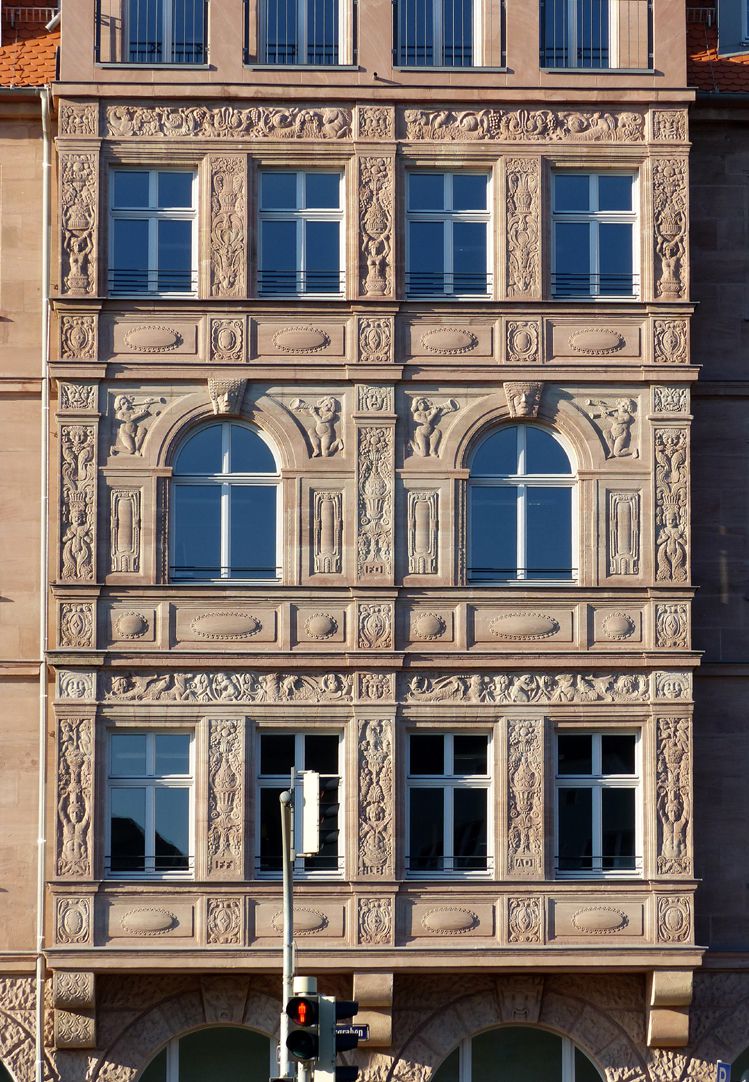
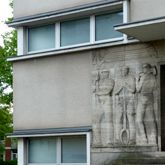
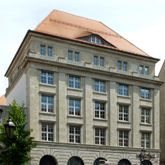
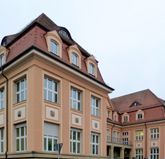
A significant corner building combining Historicism and Heimatstil (local style) with facades in Burgsandstein. It became known as the "Führer Quarter" (Führer Quarter), especially after 1933. The war-damaged roof volumes were restored to their original form in 2015/16 as part of the conversion to the headquarters of a trade association – albeit without contemporary details. Dr. Pablo de la Riestra - Reliefs on the facade and staircases (1912-1913) by Johannes Müller
Location: Nuremberg, Frauentorgraben 29
photo 2014, Theo Noll
from 1913
East and north facades
A significant corner building combining Historicism and Heimatstil (local style) with facades in Burgsandstein. It became known as the "Führer Quarter" (Führer Quarter), especially after 1933. The war-damaged roof volumes were restored to their original form in 2015/16 as part of the conversion to the headquarters of a trade association – albeit without contemporary details. Dr. Pablo de la Riestra - Reliefs on the facade and staircases (1912-1913) by Johannes Müller
Location: Nuremberg, Frauentorgraben 29
photo 2017, Pablo de la Riestra
from 1913
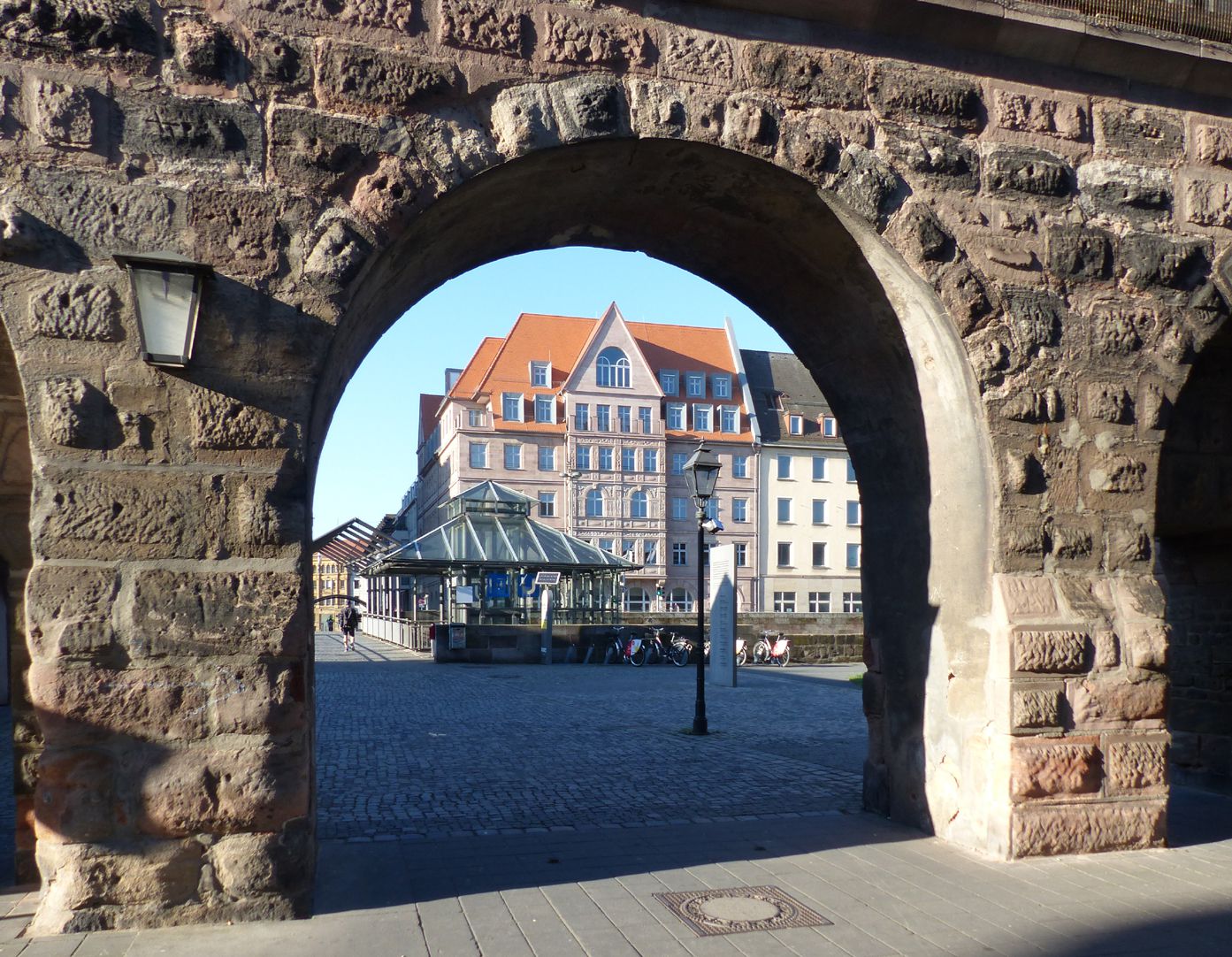
View through the city wall
A significant corner building combining Historicism and Heimatstil (local style) with facades in Burgsandstein. It became known as the "Führer Quarter" (Führer Quarter), especially after 1933. The war-damaged roof volumes were restored to their original form in 2015/16 as part of the conversion to the headquarters of a trade association – albeit without contemporary details. Dr. Pablo de la Riestra - Reliefs on the facade and staircases (1912-1913) by Johannes Müller
Location: Nuremberg, Frauentorgraben 29
photo 2016, Pablo de la Riestra
from 1913
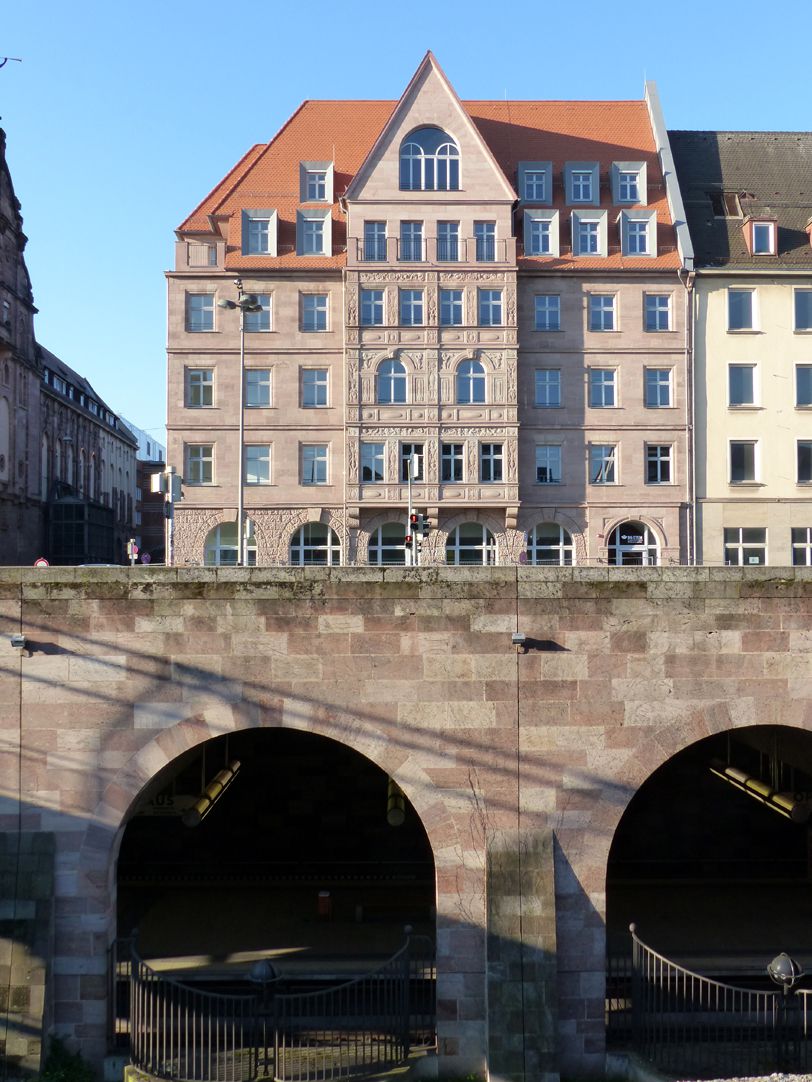
North façade with the "Opernhaus" subway station
A significant corner building combining Historicism and Heimatstil (local style) with facades in Burgsandstein. It became known as the "Führer Quarter" (Führer Quarter), especially after 1933. The war-damaged roof volumes were restored to their original form in 2015/16 as part of the conversion to the headquarters of a trade association – albeit without contemporary details. Dr. Pablo de la Riestra - Reliefs on the facade and staircases (1912-1913) by Johannes Müller
Location: Nuremberg, Frauentorgraben 29
photo 2016, Pablo de la Riestra
from 1913
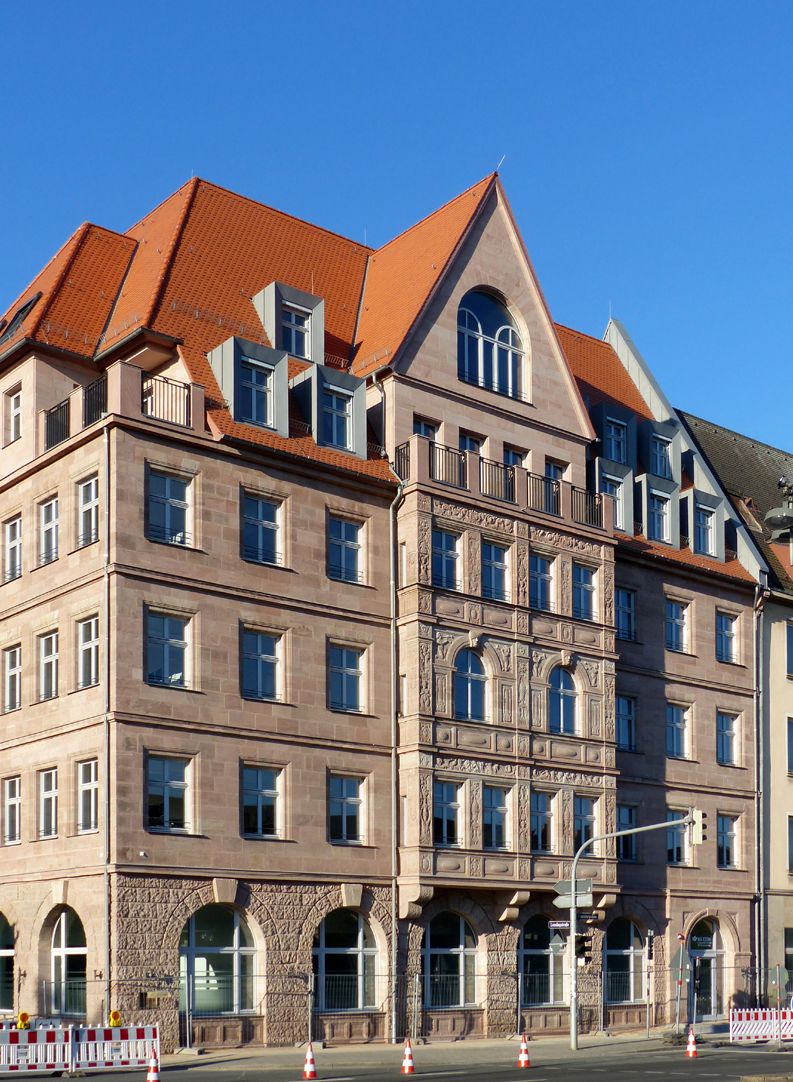
View from the northeast
A significant corner building combining Historicism and Heimatstil (local style) with facades in Burgsandstein. It became known as the "Führer Quarter" (Führer Quarter), especially after 1933. The war-damaged roof volumes were restored to their original form in 2015/16 as part of the conversion to the headquarters of a trade association – albeit without contemporary details. Dr. Pablo de la Riestra - Reliefs on the facade and staircases (1912-1913) by Johannes Müller
Location: Nuremberg, Frauentorgraben 29
photo 2016, Pablo de la Riestra
from 1913
Flat bay window
A significant corner building combining Historicism and Heimatstil (local style) with facades in Burgsandstein. It became known as the "Führer Quarter" (Führer Quarter), especially after 1933. The war-damaged roof volumes were restored to their original form in 2015/16 as part of the conversion to the headquarters of a trade association – albeit without contemporary details. Dr. Pablo de la Riestra - Reliefs on the facade and staircases (1912-1913) by Johannes Müller
Location: Nuremberg, Frauentorgraben 29
photo 2016, Pablo de la Riestra
from 1913
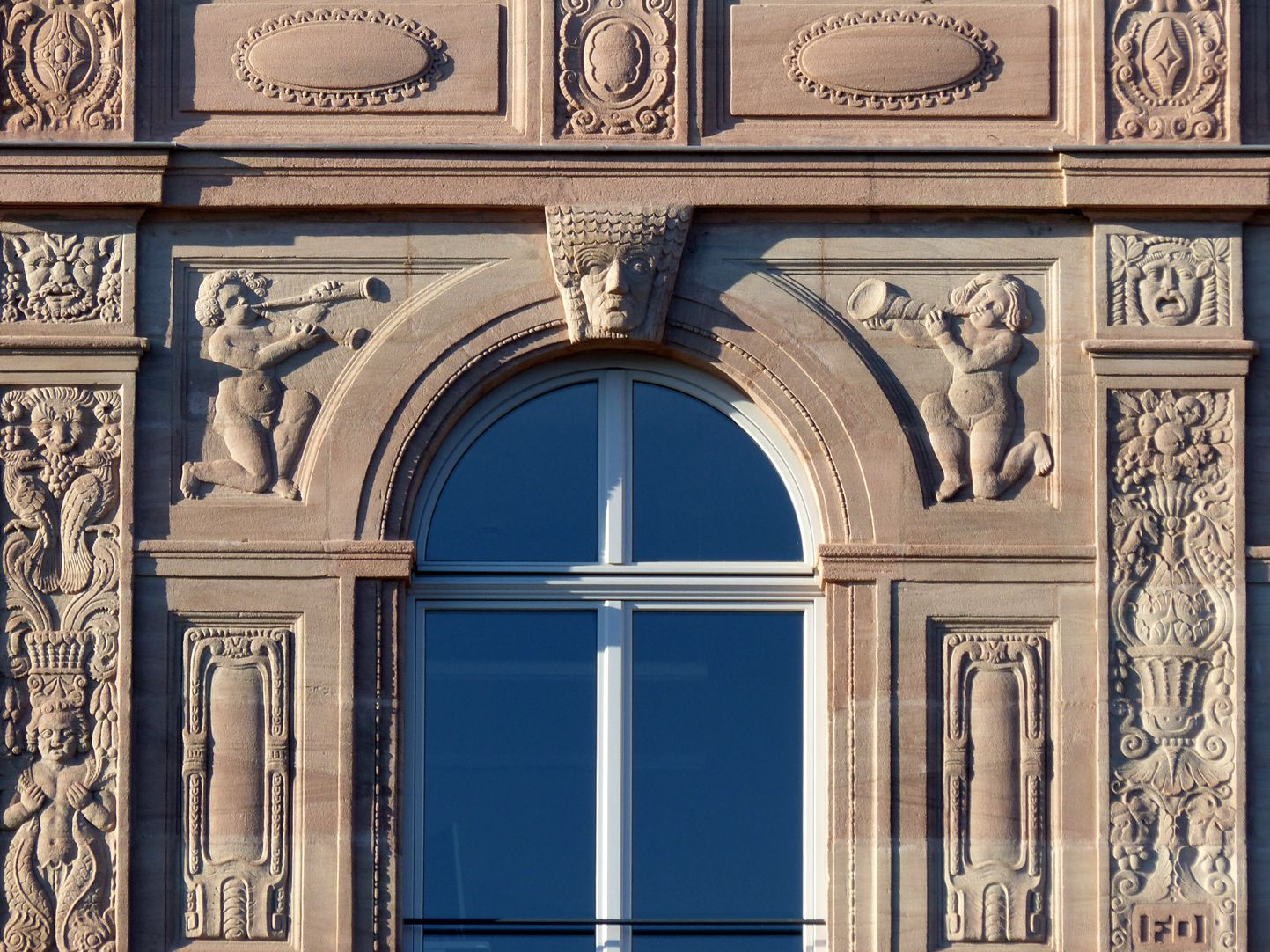
Flat bay window, detail of the arcade floor
A significant corner building combining Historicism and Heimatstil (local style) with facades in Burgsandstein. It became known as the "Führer Quarter" (Führer Quarter), especially after 1933. The war-damaged roof volumes were restored to their original form in 2015/16 as part of the conversion to the headquarters of a trade association – albeit without contemporary details. Dr. Pablo de la Riestra - Reliefs on the facade and staircases (1912-1913) by Johannes Müller
Location: Nuremberg, Frauentorgraben 29
photo 2016, Pablo de la Riestra
from 1913
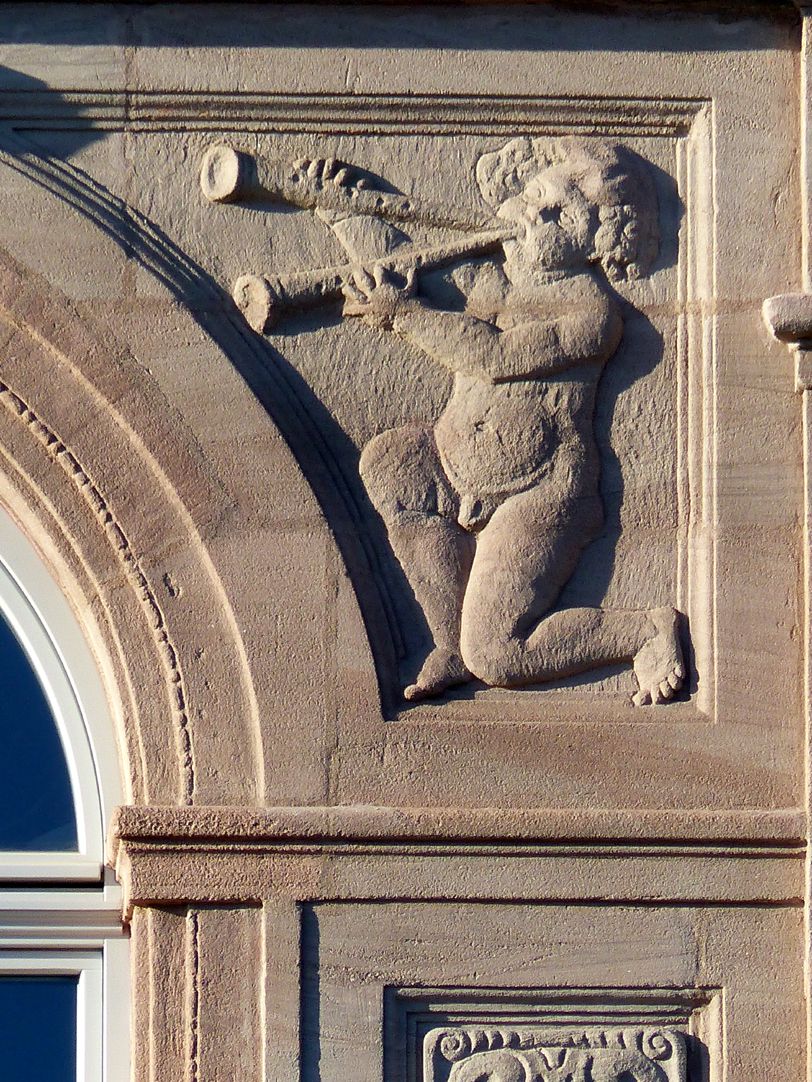
Flat bay window, spandrel with a musical putto
A significant corner building combining Historicism and Heimatstil (local style) with facades in Burgsandstein. It became known as the "Führer Quarter" (Führer Quarter), especially after 1933. The war-damaged roof volumes were restored to their original form in 2015/16 as part of the conversion to the headquarters of a trade association – albeit without contemporary details. Dr. Pablo de la Riestra - Reliefs on the facade and staircases (1912-1913) by Johannes Müller
Location: Nuremberg, Frauentorgraben 29
photo 2016, Pablo de la Riestra
from 1913
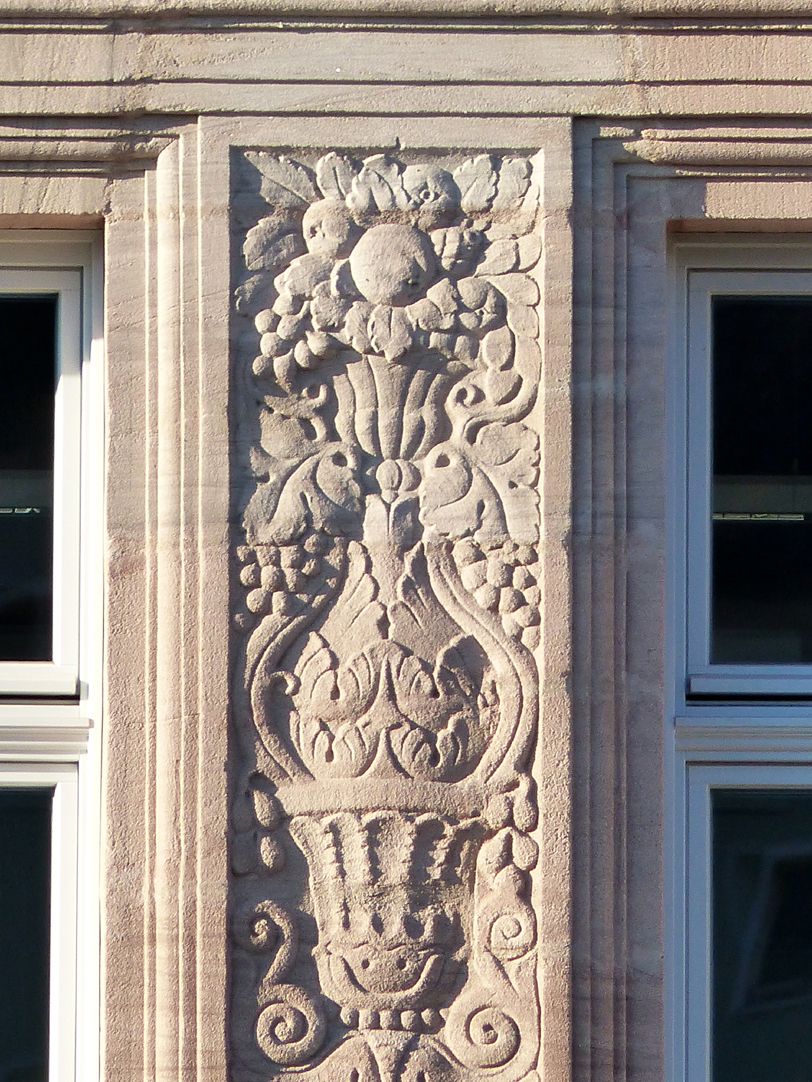
Flat bay window, detail of vase relief
A significant corner building combining Historicism and Heimatstil (local style) with facades in Burgsandstein. It became known as the "Führer Quarter" (Führer Quarter), especially after 1933. The war-damaged roof volumes were restored to their original form in 2015/16 as part of the conversion to the headquarters of a trade association – albeit without contemporary details. Dr. Pablo de la Riestra - Reliefs on the facade and staircases (1912-1913) by Johannes Müller
Location: Nuremberg, Frauentorgraben 29
photo 2016, Pablo de la Riestra
from 1913
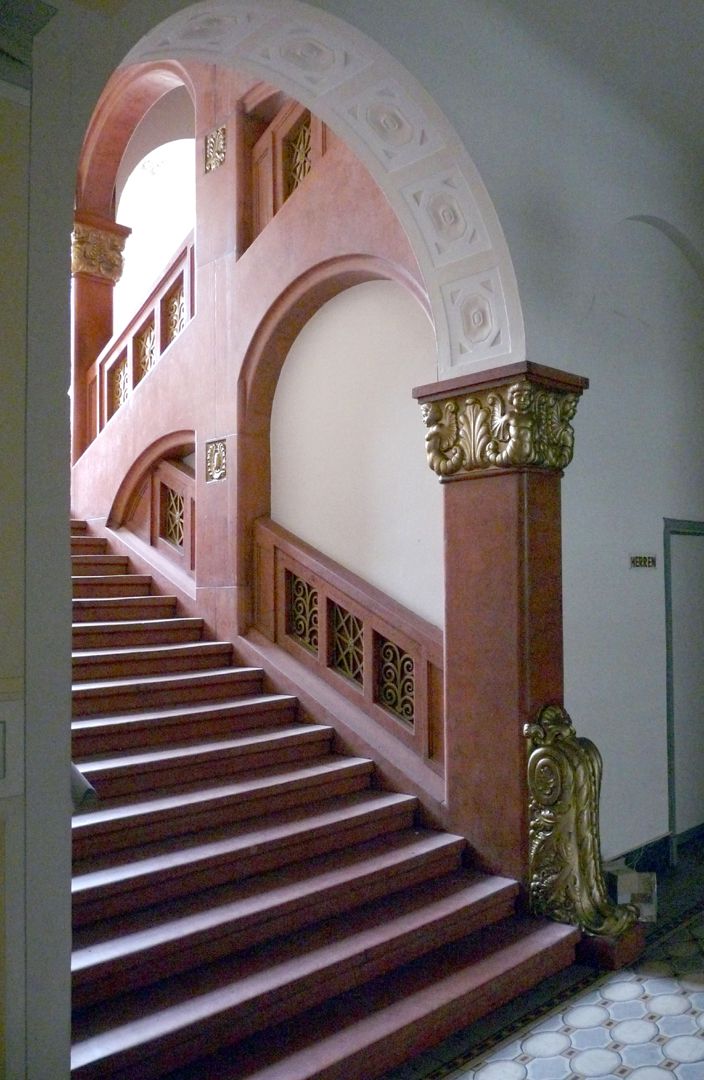
Stairwell, Frauentorgraben
A significant corner building combining Historicism and Heimatstil (local style) with facades in Burgsandstein. It became known as the "Führer Quarter" (Führer Quarter), especially after 1933. The war-damaged roof volumes were restored to their original form in 2015/16 as part of the conversion to the headquarters of a trade association – albeit without contemporary details. Dr. Pablo de la Riestra - Reliefs on the facade and staircases (1912-1913) by Johannes Müller
Location: Nuremberg, Frauentorgraben 29
photo 2010, Theo Noll
from 1913
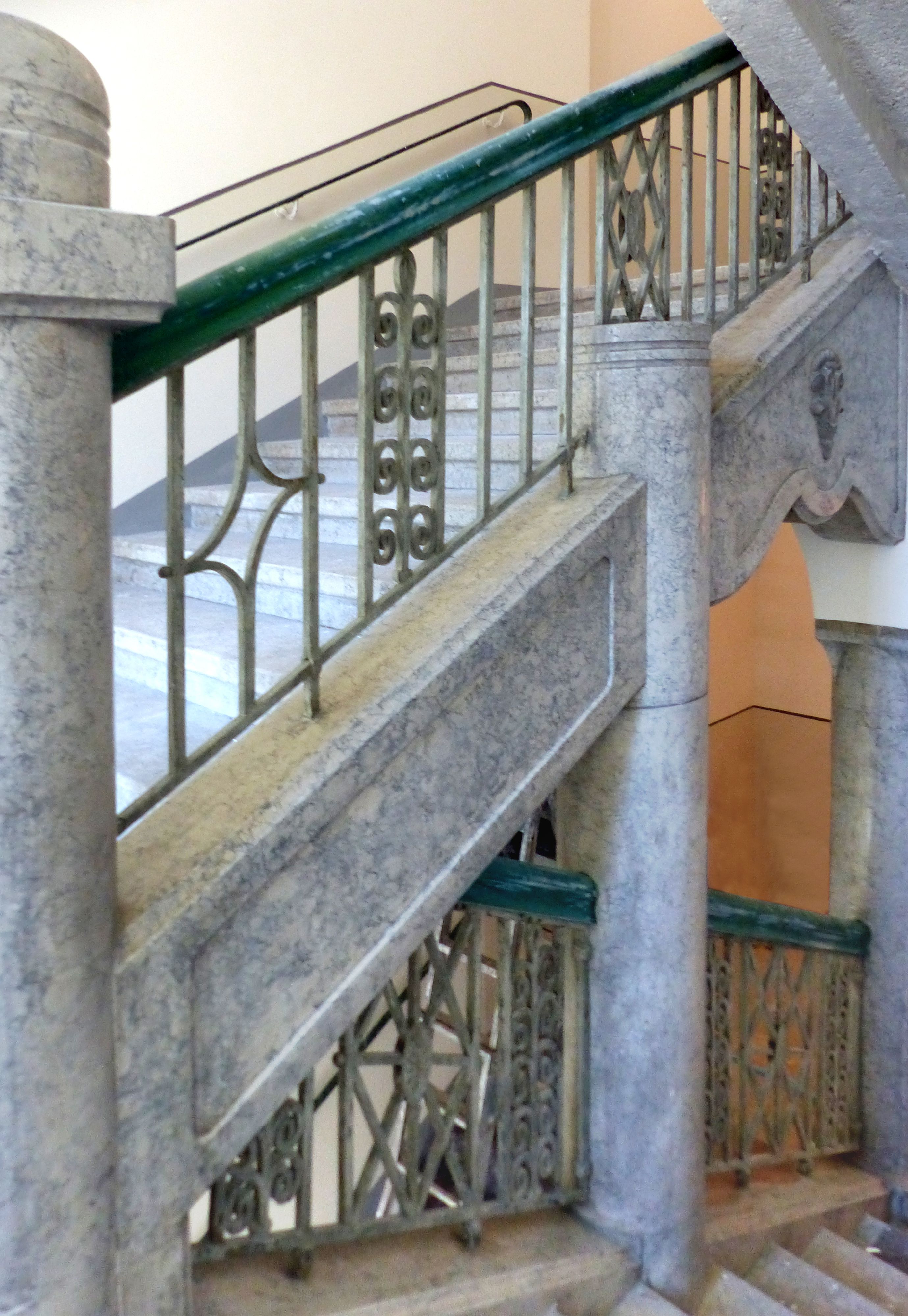
Stairwell Lessingstraße
A significant corner building combining Historicism and Heimatstil (local style) with facades in Burgsandstein. It became known as the "Führer Quarter" (Führer Quarter), especially after 1933. The war-damaged roof volumes were restored to their original form in 2015/16 as part of the conversion to the headquarters of a trade association – albeit without contemporary details. Dr. Pablo de la Riestra - Reliefs on the facade and staircases (1912-1913) by Johannes Müller
Location: Nuremberg, Frauentorgraben 29
photo 2016, Pablo de la Riestra
from 1913
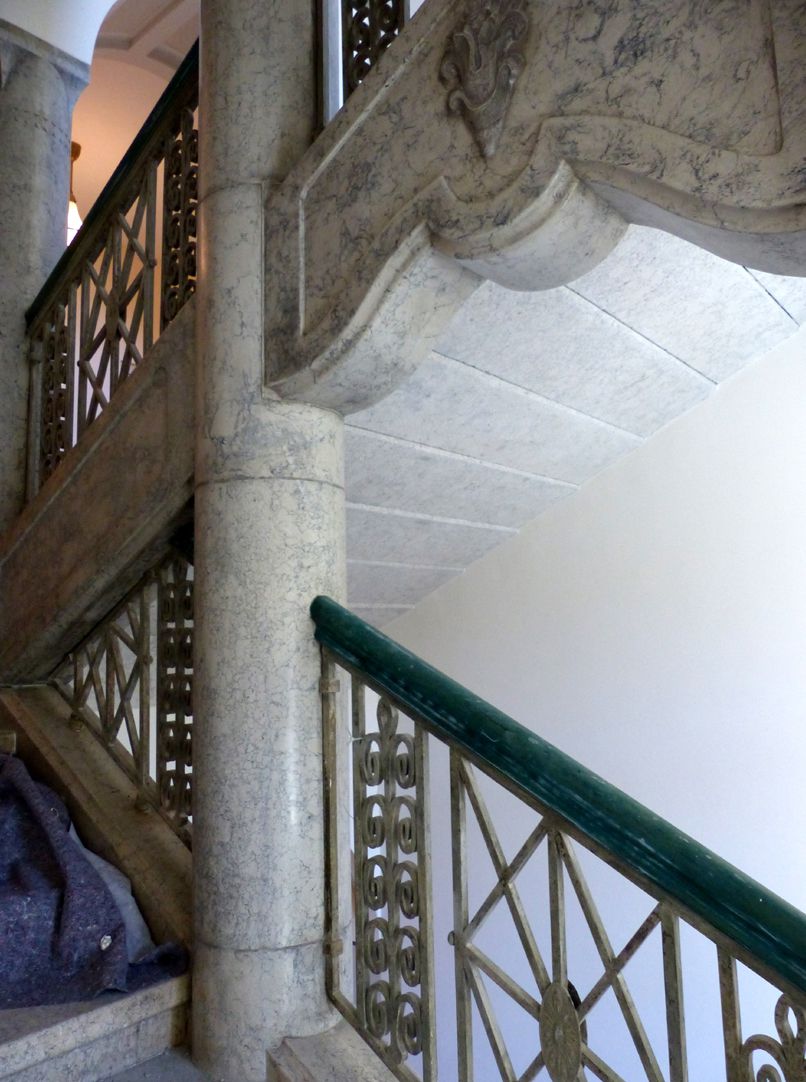
Stairwell Lessingstraße
A significant corner building combining Historicism and Heimatstil (local style) with facades in Burgsandstein. It became known as the "Führer Quarter" (Führer Quarter), especially after 1933. The war-damaged roof volumes were restored to their original form in 2015/16 as part of the conversion to the headquarters of a trade association – albeit without contemporary details. Dr. Pablo de la Riestra - Reliefs on the facade and staircases (1912-1913) by Johannes Müller
Location: Nuremberg, Frauentorgraben 29
photo 2016, Pablo de la Riestra
Please let us know your opinion about our website, the museum, our idea or any other evaluation. We shall be please about any comments and suggestions..