• A project of the Förderverein Kulturhistorisches Museum Nürnberg e.V. A project of the FKHM Nürnberg e.V.
  • About us
  • Feedback
  • Deutsche Version
Search Virtual museum
Nuremberg Art
  • Artists
  • Works of art
  • Topics
  • New
  • About us
  • Feedback

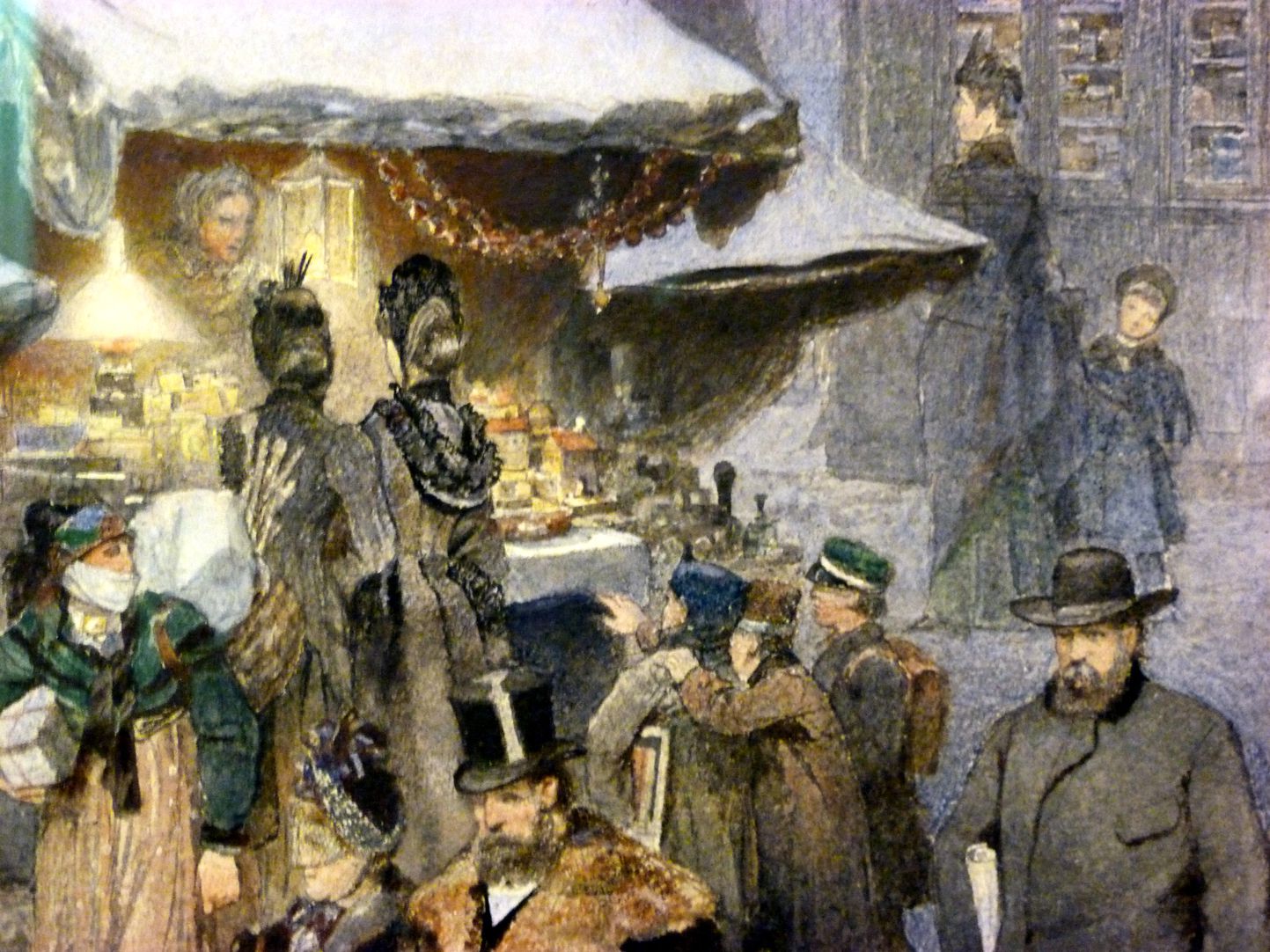
Christkindlesmarkt (Christmas market) with Beautiful Fountain
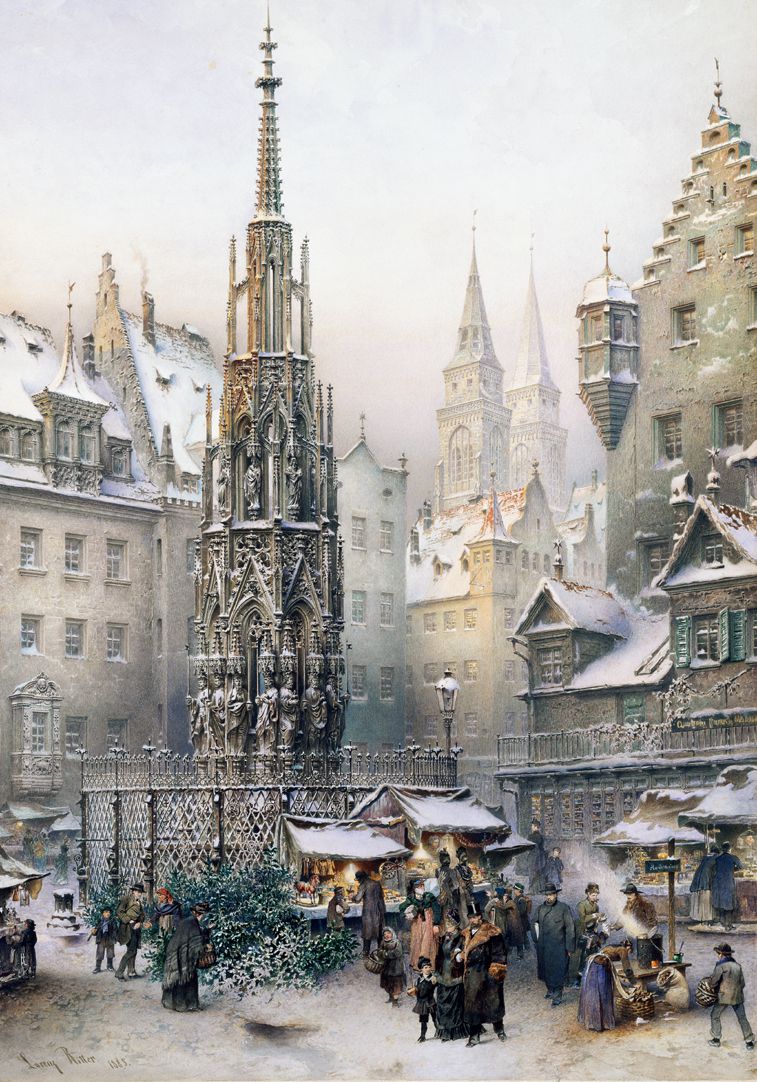
Christkindlesmarkt (Christmas market) with Beautiful Fountain View towards St. Sebaldus-Church

Christkindlesmarkt (Christmas market) with Beautiful Fountain

Info

1885


View towards St. Sebaldus-Church


photoprivate

Watercolor.

The origins of the Nuremberg Christmas Market are unknown. According to a council decision dated 22 December 1610, the woodturner Jobst Friedrich Entner (1576-1616) had his ‘shamefully painted carvings’ confiscated, which he offered for sale as ‘gifts for children’. These were boxes and small chests, ‘also made in the shape of birdhouses,’ which, when opened, revealed offensive items (Erich Nietzsch: Nuremberg – The ‘Christkindlesmarkt,’ in: Journal für Geschichte 7, 1985, pp. 4-6, here p. 6).

Although it is not clear from the council decision that the disputed items were offered for sale at a special Christmas market, the day before the council decision, 21 December, was St Thomas' Day, when the market was traditionally particularly lively and pre-Christmas shopping for the ‘Kindleinbescheren’ (gift-giving to children) took place. Jobst Friedrich Entner offered his objectionable goods for sale on this day.

In 1805, master tinsmith and dialect poet Johann Conrad Grübel (1736-1809) wrote the poem ‘Der Kindleinsmarkt am Thomastage’ (The Children's Market on St. Thomas' Day), which reads:

Dös g'häiert mit zon Kindlesmark
Und mit zon Thomestog,
Dau soucht a Jeder, wos'n g'fällt
Und kafft sih, wos er mog.


Hans Boesch (1849–1905), director of the Germanisches Nationalmuseum, published an article entitled ‘Am Kinderspieltisch unserer Voreltern’ (At our ancestors’ children’s play table) in the magazine Gartenlaube in 1891, pp. 851–854. In it, he also evaluated the notes of the Nuremberg patrician Lukas Friedrich Behaim (1587-1648), who kept careful records of his expenses for festive gifts. The three children, a girl aged 7 1/2 and two boys aged 6 1/2 and 1 1/2, received various ells of fabric, braids, buttons, 100 needles, thread, ‘Häcklein und Schleiflein’ (hooks and eyes), boots, slippers, shoes, an apron, a school basket, hymn books, a tablet, a golden hair cap and other items. Mr Behaim had spent 6 florins and 33 kreuzers on all kinds of ‘Dockenwaar’ (small items). The total expenditure for the ‘Kindleinbescheeren’ amounted to 68 florins and 28 kreuzers, half of which the lady of the house had received in cash. In 1625, the children were allowed to visit the famous Nuremberg ‘Kindlesmarkt’ for the first time. The children received a total of eight kreuzers for their purchases. This means that the Christkindlesmarkt could celebrate its 400th anniversary as early as 2025.

The oldest surviving item purchased at the Christkindlesmarkt is a small painted chipwood box in the Germanisches Nationalmuseum. Written in black ink on the underside of the lid is: ‘Regina Susanna Harßdörfferin von der Jungfrau Susanna Eleonora Elbsin zum Kindles-Marck überschickt 1678.’ The recipient, Regina Susanna Harsdörfer, lived from 1663 to 1731, so she was 15 years old when she received the box. The giver, Susanna Eleonora Elbß, daughter of Georg Sebastian Elbß and Leonora Kraus, lived from 1654 to 1711.


Location: Private

Design: Ritter, Jakob Lorenz

Realization: Ritter, Jakob Lorenz

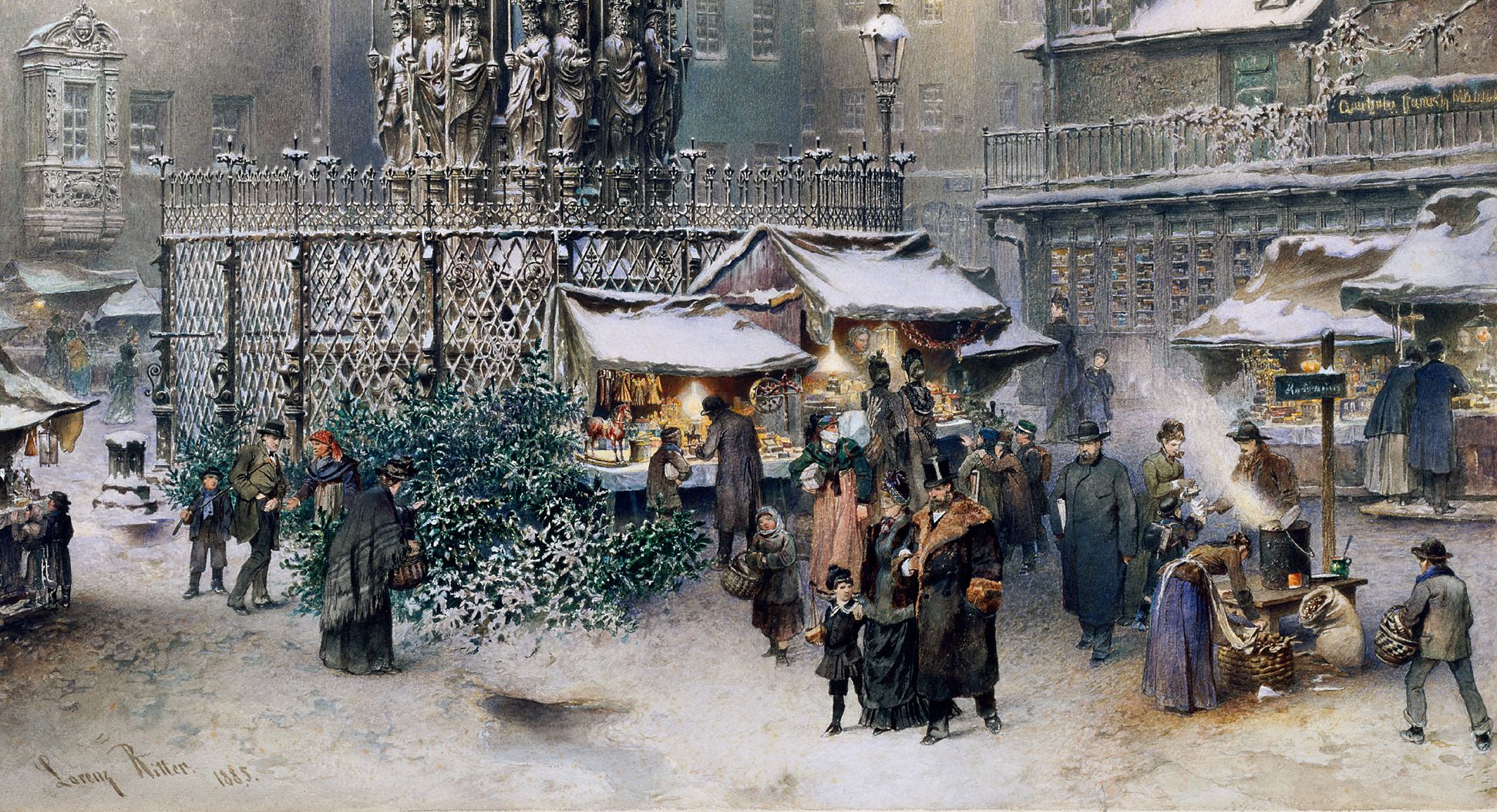
Christkindlesmarkt (Christmas market) with Beautiful Fountain Lower third of the picture

Christkindlesmarkt (Christmas market) with Beautiful Fountain

Info

1885


Lower third of the picture


photoprivate

Watercolor.

The origins of the Nuremberg Christmas Market are unknown. According to a council decision dated 22 December 1610, the woodturner Jobst Friedrich Entner (1576-1616) had his ‘shamefully painted carvings’ confiscated, which he offered for sale as ‘gifts for children’. These were boxes and small chests, ‘also made in the shape of birdhouses,’ which, when opened, revealed offensive items (Erich Nietzsch: Nuremberg – The ‘Christkindlesmarkt,’ in: Journal für Geschichte 7, 1985, pp. 4-6, here p. 6).

Although it is not clear from the council decision that the disputed items were offered for sale at a special Christmas market, the day before the council decision, 21 December, was St Thomas' Day, when the market was traditionally particularly lively and pre-Christmas shopping for the ‘Kindleinbescheren’ (gift-giving to children) took place. Jobst Friedrich Entner offered his objectionable goods for sale on this day.

In 1805, master tinsmith and dialect poet Johann Conrad Grübel (1736-1809) wrote the poem ‘Der Kindleinsmarkt am Thomastage’ (The Children's Market on St. Thomas' Day), which reads:

Dös g'häiert mit zon Kindlesmark
Und mit zon Thomestog,
Dau soucht a Jeder, wos'n g'fällt
Und kafft sih, wos er mog.


Hans Boesch (1849–1905), director of the Germanisches Nationalmuseum, published an article entitled ‘Am Kinderspieltisch unserer Voreltern’ (At our ancestors’ children’s play table) in the magazine Gartenlaube in 1891, pp. 851–854. In it, he also evaluated the notes of the Nuremberg patrician Lukas Friedrich Behaim (1587-1648), who kept careful records of his expenses for festive gifts. The three children, a girl aged 7 1/2 and two boys aged 6 1/2 and 1 1/2, received various ells of fabric, braids, buttons, 100 needles, thread, ‘Häcklein und Schleiflein’ (hooks and eyes), boots, slippers, shoes, an apron, a school basket, hymn books, a tablet, a golden hair cap and other items. Mr Behaim had spent 6 florins and 33 kreuzers on all kinds of ‘Dockenwaar’ (small items). The total expenditure for the ‘Kindleinbescheeren’ amounted to 68 florins and 28 kreuzers, half of which the lady of the house had received in cash. In 1625, the children were allowed to visit the famous Nuremberg ‘Kindlesmarkt’ for the first time. The children received a total of eight kreuzers for their purchases. This means that the Christkindlesmarkt could celebrate its 400th anniversary as early as 2025.

The oldest surviving item purchased at the Christkindlesmarkt is a small painted chipwood box in the Germanisches Nationalmuseum. Written in black ink on the underside of the lid is: ‘Regina Susanna Harßdörfferin von der Jungfrau Susanna Eleonora Elbsin zum Kindles-Marck überschickt 1678.’ The recipient, Regina Susanna Harsdörfer, lived from 1663 to 1731, so she was 15 years old when she received the box. The giver, Susanna Eleonora Elbß, daughter of Georg Sebastian Elbß and Leonora Kraus, lived from 1654 to 1711.


Location: Private

Design: Ritter, Jakob Lorenz

Realization: Ritter, Jakob Lorenz

Christkindlesmarkt (Christmas market) with Beautiful Fountain Detail

Christkindlesmarkt (Christmas market) with Beautiful Fountain

1885

Detail


Watercolor.

The origins of the Nuremberg Christmas Market are unknown. According to a council decision dated 22 December 1610, the woodturner Jobst Friedrich Entner (1576-1616) had his ‘shamefully painted carvings’ confiscated, which he offered for sale as ‘gifts for children’. These were boxes and small chests, ‘also made in the shape of birdhouses,’ which, when opened, revealed offensive items (Erich Nietzsch: Nuremberg – The ‘Christkindlesmarkt,’ in: Journal für Geschichte 7, 1985, pp. 4-6, here p. 6).

Although it is not clear from the council decision that the disputed items were offered for sale at a special Christmas market, the day before the council decision, 21 December, was St Thomas' Day, when the market was traditionally particularly lively and pre-Christmas shopping for the ‘Kindleinbescheren’ (gift-giving to children) took place. Jobst Friedrich Entner offered his objectionable goods for sale on this day.

In 1805, master tinsmith and dialect poet Johann Conrad Grübel (1736-1809) wrote the poem ‘Der Kindleinsmarkt am Thomastage’ (The Children's Market on St. Thomas' Day), which reads:

Dös g'häiert mit zon Kindlesmark
Und mit zon Thomestog,
Dau soucht a Jeder, wos'n g'fällt
Und kafft sih, wos er mog.


Hans Boesch (1849–1905), director of the Germanisches Nationalmuseum, published an article entitled ‘Am Kinderspieltisch unserer Voreltern’ (At our ancestors’ children’s play table) in the magazine Gartenlaube in 1891, pp. 851–854. In it, he also evaluated the notes of the Nuremberg patrician Lukas Friedrich Behaim (1587-1648), who kept careful records of his expenses for festive gifts. The three children, a girl aged 7 1/2 and two boys aged 6 1/2 and 1 1/2, received various ells of fabric, braids, buttons, 100 needles, thread, ‘Häcklein und Schleiflein’ (hooks and eyes), boots, slippers, shoes, an apron, a school basket, hymn books, a tablet, a golden hair cap and other items. Mr Behaim had spent 6 florins and 33 kreuzers on all kinds of ‘Dockenwaar’ (small items). The total expenditure for the ‘Kindleinbescheeren’ amounted to 68 florins and 28 kreuzers, half of which the lady of the house had received in cash. In 1625, the children were allowed to visit the famous Nuremberg ‘Kindlesmarkt’ for the first time. The children received a total of eight kreuzers for their purchases. This means that the Christkindlesmarkt could celebrate its 400th anniversary as early as 2025.

The oldest surviving item purchased at the Christkindlesmarkt is a small painted chipwood box in the Germanisches Nationalmuseum. Written in black ink on the underside of the lid is: ‘Regina Susanna Harßdörfferin von der Jungfrau Susanna Eleonora Elbsin zum Kindles-Marck überschickt 1678.’ The recipient, Regina Susanna Harsdörfer, lived from 1663 to 1731, so she was 15 years old when she received the box. The giver, Susanna Eleonora Elbß, daughter of Georg Sebastian Elbß and Leonora Kraus, lived from 1654 to 1711.


Location: Private

Design: Ritter, Jakob Lorenz

Realization: Ritter, Jakob Lorenz

photo 2014, Theo Noll

Christkindlesmarkt (Christmas market) with Beautiful Fountain Total view

Christkindlesmarkt (Christmas market) with Beautiful Fountain

1885

Total view


Watercolor.

The origins of the Nuremberg Christmas Market are unknown. According to a council decision dated 22 December 1610, the woodturner Jobst Friedrich Entner (1576-1616) had his ‘shamefully painted carvings’ confiscated, which he offered for sale as ‘gifts for children’. These were boxes and small chests, ‘also made in the shape of birdhouses,’ which, when opened, revealed offensive items (Erich Nietzsch: Nuremberg – The ‘Christkindlesmarkt,’ in: Journal für Geschichte 7, 1985, pp. 4-6, here p. 6).

Although it is not clear from the council decision that the disputed items were offered for sale at a special Christmas market, the day before the council decision, 21 December, was St Thomas' Day, when the market was traditionally particularly lively and pre-Christmas shopping for the ‘Kindleinbescheren’ (gift-giving to children) took place. Jobst Friedrich Entner offered his objectionable goods for sale on this day.

In 1805, master tinsmith and dialect poet Johann Conrad Grübel (1736-1809) wrote the poem ‘Der Kindleinsmarkt am Thomastage’ (The Children's Market on St. Thomas' Day), which reads:

Dös g'häiert mit zon Kindlesmark
Und mit zon Thomestog,
Dau soucht a Jeder, wos'n g'fällt
Und kafft sih, wos er mog.


Hans Boesch (1849–1905), director of the Germanisches Nationalmuseum, published an article entitled ‘Am Kinderspieltisch unserer Voreltern’ (At our ancestors’ children’s play table) in the magazine Gartenlaube in 1891, pp. 851–854. In it, he also evaluated the notes of the Nuremberg patrician Lukas Friedrich Behaim (1587-1648), who kept careful records of his expenses for festive gifts. The three children, a girl aged 7 1/2 and two boys aged 6 1/2 and 1 1/2, received various ells of fabric, braids, buttons, 100 needles, thread, ‘Häcklein und Schleiflein’ (hooks and eyes), boots, slippers, shoes, an apron, a school basket, hymn books, a tablet, a golden hair cap and other items. Mr Behaim had spent 6 florins and 33 kreuzers on all kinds of ‘Dockenwaar’ (small items). The total expenditure for the ‘Kindleinbescheeren’ amounted to 68 florins and 28 kreuzers, half of which the lady of the house had received in cash. In 1625, the children were allowed to visit the famous Nuremberg ‘Kindlesmarkt’ for the first time. The children received a total of eight kreuzers for their purchases. This means that the Christkindlesmarkt could celebrate its 400th anniversary as early as 2025.

The oldest surviving item purchased at the Christkindlesmarkt is a small painted chipwood box in the Germanisches Nationalmuseum. Written in black ink on the underside of the lid is: ‘Regina Susanna Harßdörfferin von der Jungfrau Susanna Eleonora Elbsin zum Kindles-Marck überschickt 1678.’ The recipient, Regina Susanna Harsdörfer, lived from 1663 to 1731, so she was 15 years old when she received the box. The giver, Susanna Eleonora Elbß, daughter of Georg Sebastian Elbß and Leonora Kraus, lived from 1654 to 1711.


Location: Private

Design: Ritter, Jakob Lorenz

Realization: Ritter, Jakob Lorenz

photoprivate

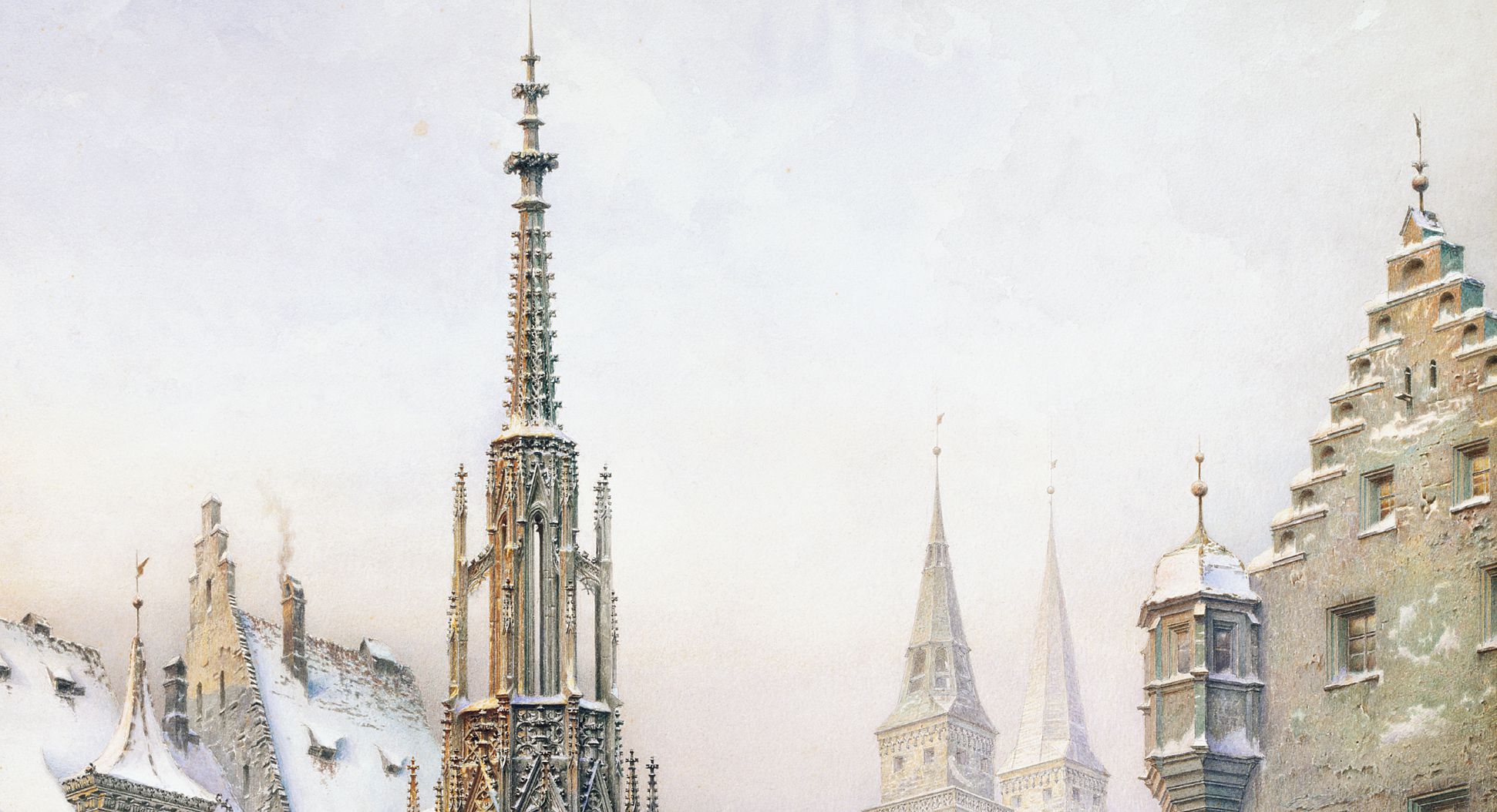
Christkindlesmarkt (Christmas market) with Beautiful Fountain Upper third of the picture

Christkindlesmarkt (Christmas market) with Beautiful Fountain

Info

1885


Upper third of the picture


photoprivate

Watercolor.

The origins of the Nuremberg Christmas Market are unknown. According to a council decision dated 22 December 1610, the woodturner Jobst Friedrich Entner (1576-1616) had his ‘shamefully painted carvings’ confiscated, which he offered for sale as ‘gifts for children’. These were boxes and small chests, ‘also made in the shape of birdhouses,’ which, when opened, revealed offensive items (Erich Nietzsch: Nuremberg – The ‘Christkindlesmarkt,’ in: Journal für Geschichte 7, 1985, pp. 4-6, here p. 6).

Although it is not clear from the council decision that the disputed items were offered for sale at a special Christmas market, the day before the council decision, 21 December, was St Thomas' Day, when the market was traditionally particularly lively and pre-Christmas shopping for the ‘Kindleinbescheren’ (gift-giving to children) took place. Jobst Friedrich Entner offered his objectionable goods for sale on this day.

In 1805, master tinsmith and dialect poet Johann Conrad Grübel (1736-1809) wrote the poem ‘Der Kindleinsmarkt am Thomastage’ (The Children's Market on St. Thomas' Day), which reads:

Dös g'häiert mit zon Kindlesmark
Und mit zon Thomestog,
Dau soucht a Jeder, wos'n g'fällt
Und kafft sih, wos er mog.


Hans Boesch (1849–1905), director of the Germanisches Nationalmuseum, published an article entitled ‘Am Kinderspieltisch unserer Voreltern’ (At our ancestors’ children’s play table) in the magazine Gartenlaube in 1891, pp. 851–854. In it, he also evaluated the notes of the Nuremberg patrician Lukas Friedrich Behaim (1587-1648), who kept careful records of his expenses for festive gifts. The three children, a girl aged 7 1/2 and two boys aged 6 1/2 and 1 1/2, received various ells of fabric, braids, buttons, 100 needles, thread, ‘Häcklein und Schleiflein’ (hooks and eyes), boots, slippers, shoes, an apron, a school basket, hymn books, a tablet, a golden hair cap and other items. Mr Behaim had spent 6 florins and 33 kreuzers on all kinds of ‘Dockenwaar’ (small items). The total expenditure for the ‘Kindleinbescheeren’ amounted to 68 florins and 28 kreuzers, half of which the lady of the house had received in cash. In 1625, the children were allowed to visit the famous Nuremberg ‘Kindlesmarkt’ for the first time. The children received a total of eight kreuzers for their purchases. This means that the Christkindlesmarkt could celebrate its 400th anniversary as early as 2025.

The oldest surviving item purchased at the Christkindlesmarkt is a small painted chipwood box in the Germanisches Nationalmuseum. Written in black ink on the underside of the lid is: ‘Regina Susanna Harßdörfferin von der Jungfrau Susanna Eleonora Elbsin zum Kindles-Marck überschickt 1678.’ The recipient, Regina Susanna Harsdörfer, lived from 1663 to 1731, so she was 15 years old when she received the box. The giver, Susanna Eleonora Elbß, daughter of Georg Sebastian Elbß and Leonora Kraus, lived from 1654 to 1711.


Location: Private

Design: Ritter, Jakob Lorenz

Realization: Ritter, Jakob Lorenz

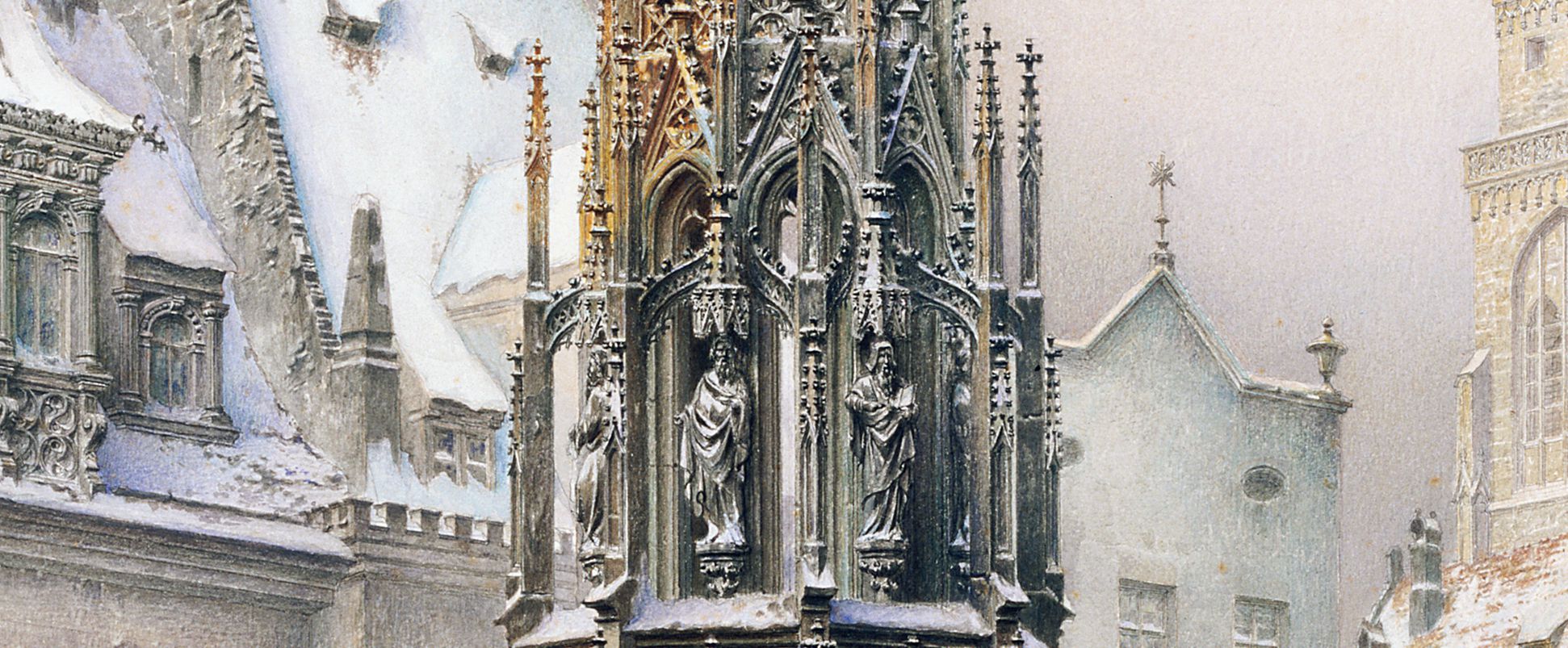
Christkindlesmarkt (Christmas market) with Beautiful Fountain Fountain, detail

Christkindlesmarkt (Christmas market) with Beautiful Fountain

Info

1885


Fountain, detail


photoprivate

Watercolor.

The origins of the Nuremberg Christmas Market are unknown. According to a council decision dated 22 December 1610, the woodturner Jobst Friedrich Entner (1576-1616) had his ‘shamefully painted carvings’ confiscated, which he offered for sale as ‘gifts for children’. These were boxes and small chests, ‘also made in the shape of birdhouses,’ which, when opened, revealed offensive items (Erich Nietzsch: Nuremberg – The ‘Christkindlesmarkt,’ in: Journal für Geschichte 7, 1985, pp. 4-6, here p. 6).

Although it is not clear from the council decision that the disputed items were offered for sale at a special Christmas market, the day before the council decision, 21 December, was St Thomas' Day, when the market was traditionally particularly lively and pre-Christmas shopping for the ‘Kindleinbescheren’ (gift-giving to children) took place. Jobst Friedrich Entner offered his objectionable goods for sale on this day.

In 1805, master tinsmith and dialect poet Johann Conrad Grübel (1736-1809) wrote the poem ‘Der Kindleinsmarkt am Thomastage’ (The Children's Market on St. Thomas' Day), which reads:

Dös g'häiert mit zon Kindlesmark
Und mit zon Thomestog,
Dau soucht a Jeder, wos'n g'fällt
Und kafft sih, wos er mog.


Hans Boesch (1849–1905), director of the Germanisches Nationalmuseum, published an article entitled ‘Am Kinderspieltisch unserer Voreltern’ (At our ancestors’ children’s play table) in the magazine Gartenlaube in 1891, pp. 851–854. In it, he also evaluated the notes of the Nuremberg patrician Lukas Friedrich Behaim (1587-1648), who kept careful records of his expenses for festive gifts. The three children, a girl aged 7 1/2 and two boys aged 6 1/2 and 1 1/2, received various ells of fabric, braids, buttons, 100 needles, thread, ‘Häcklein und Schleiflein’ (hooks and eyes), boots, slippers, shoes, an apron, a school basket, hymn books, a tablet, a golden hair cap and other items. Mr Behaim had spent 6 florins and 33 kreuzers on all kinds of ‘Dockenwaar’ (small items). The total expenditure for the ‘Kindleinbescheeren’ amounted to 68 florins and 28 kreuzers, half of which the lady of the house had received in cash. In 1625, the children were allowed to visit the famous Nuremberg ‘Kindlesmarkt’ for the first time. The children received a total of eight kreuzers for their purchases. This means that the Christkindlesmarkt could celebrate its 400th anniversary as early as 2025.

The oldest surviving item purchased at the Christkindlesmarkt is a small painted chipwood box in the Germanisches Nationalmuseum. Written in black ink on the underside of the lid is: ‘Regina Susanna Harßdörfferin von der Jungfrau Susanna Eleonora Elbsin zum Kindles-Marck überschickt 1678.’ The recipient, Regina Susanna Harsdörfer, lived from 1663 to 1731, so she was 15 years old when she received the box. The giver, Susanna Eleonora Elbß, daughter of Georg Sebastian Elbß and Leonora Kraus, lived from 1654 to 1711.


Location: Private

Design: Ritter, Jakob Lorenz

Realization: Ritter, Jakob Lorenz

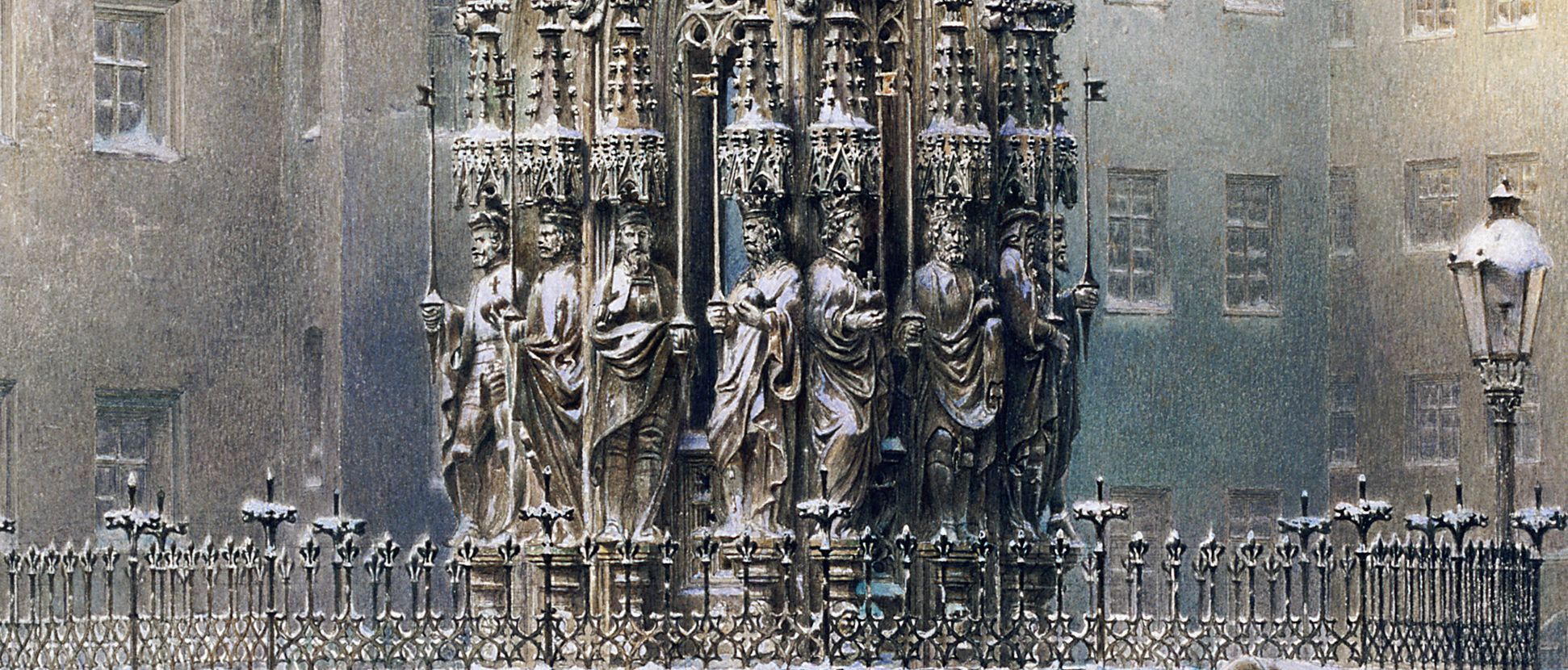
Christkindlesmarkt (Christmas market) with Beautiful Fountain Fountain, detail

Christkindlesmarkt (Christmas market) with Beautiful Fountain

Info

1885


Fountain, detail


photoprivate

Watercolor.

The origins of the Nuremberg Christmas Market are unknown. According to a council decision dated 22 December 1610, the woodturner Jobst Friedrich Entner (1576-1616) had his ‘shamefully painted carvings’ confiscated, which he offered for sale as ‘gifts for children’. These were boxes and small chests, ‘also made in the shape of birdhouses,’ which, when opened, revealed offensive items (Erich Nietzsch: Nuremberg – The ‘Christkindlesmarkt,’ in: Journal für Geschichte 7, 1985, pp. 4-6, here p. 6).

Although it is not clear from the council decision that the disputed items were offered for sale at a special Christmas market, the day before the council decision, 21 December, was St Thomas' Day, when the market was traditionally particularly lively and pre-Christmas shopping for the ‘Kindleinbescheren’ (gift-giving to children) took place. Jobst Friedrich Entner offered his objectionable goods for sale on this day.

In 1805, master tinsmith and dialect poet Johann Conrad Grübel (1736-1809) wrote the poem ‘Der Kindleinsmarkt am Thomastage’ (The Children's Market on St. Thomas' Day), which reads:

Dös g'häiert mit zon Kindlesmark
Und mit zon Thomestog,
Dau soucht a Jeder, wos'n g'fällt
Und kafft sih, wos er mog.


Hans Boesch (1849–1905), director of the Germanisches Nationalmuseum, published an article entitled ‘Am Kinderspieltisch unserer Voreltern’ (At our ancestors’ children’s play table) in the magazine Gartenlaube in 1891, pp. 851–854. In it, he also evaluated the notes of the Nuremberg patrician Lukas Friedrich Behaim (1587-1648), who kept careful records of his expenses for festive gifts. The three children, a girl aged 7 1/2 and two boys aged 6 1/2 and 1 1/2, received various ells of fabric, braids, buttons, 100 needles, thread, ‘Häcklein und Schleiflein’ (hooks and eyes), boots, slippers, shoes, an apron, a school basket, hymn books, a tablet, a golden hair cap and other items. Mr Behaim had spent 6 florins and 33 kreuzers on all kinds of ‘Dockenwaar’ (small items). The total expenditure for the ‘Kindleinbescheeren’ amounted to 68 florins and 28 kreuzers, half of which the lady of the house had received in cash. In 1625, the children were allowed to visit the famous Nuremberg ‘Kindlesmarkt’ for the first time. The children received a total of eight kreuzers for their purchases. This means that the Christkindlesmarkt could celebrate its 400th anniversary as early as 2025.

The oldest surviving item purchased at the Christkindlesmarkt is a small painted chipwood box in the Germanisches Nationalmuseum. Written in black ink on the underside of the lid is: ‘Regina Susanna Harßdörfferin von der Jungfrau Susanna Eleonora Elbsin zum Kindles-Marck überschickt 1678.’ The recipient, Regina Susanna Harsdörfer, lived from 1663 to 1731, so she was 15 years old when she received the box. The giver, Susanna Eleonora Elbß, daughter of Georg Sebastian Elbß and Leonora Kraus, lived from 1654 to 1711.


Location: Private

Design: Ritter, Jakob Lorenz

Realization: Ritter, Jakob Lorenz

Jakob Lorenz
Ritter

Further works

German National Museum, Augustine wing, so-called Wittelsbach Court with Wittelsbach clock
Königstraße with St. Lorenz-Church
Christkindlesmarkt (Christmas market) with Beautiful Fountain
Rückersdorf with Moritz Hill (Moritzberg)
At Maxtor wall (Max Gate Wall)
Part of the wall at Laufertorgraben (Laufer Gate Moat)
View from the mayor's garden

Menu

  • New
  • Search
  • Artists
  • Works of art
  • About us
  • Deutsche Version
  • Instagram

A project of the Förderverein Kulturhistorisches Museum Nürnberg e.V. (Association for the Promotion of the Museum of Cultural History Nuremberg - registered association)

The Förderverein Kulturhistorisches Museum Nürnberg e.V. supports the establishment of a museum of cultural history in Nuremberg. In anticipation of this it presents selected works of Nuremberg art in digital form. The Association will be happy to welcome new members. You will find a declaration of membership on our website.

Support us Feedback

Logo

© Protected under German copyright laws

  • Imprint
  • Privacy policy

Feedback

Please let us know your opinion about our website, the museum, our idea or any other evaluation. We shall be please about any comments and suggestions..